
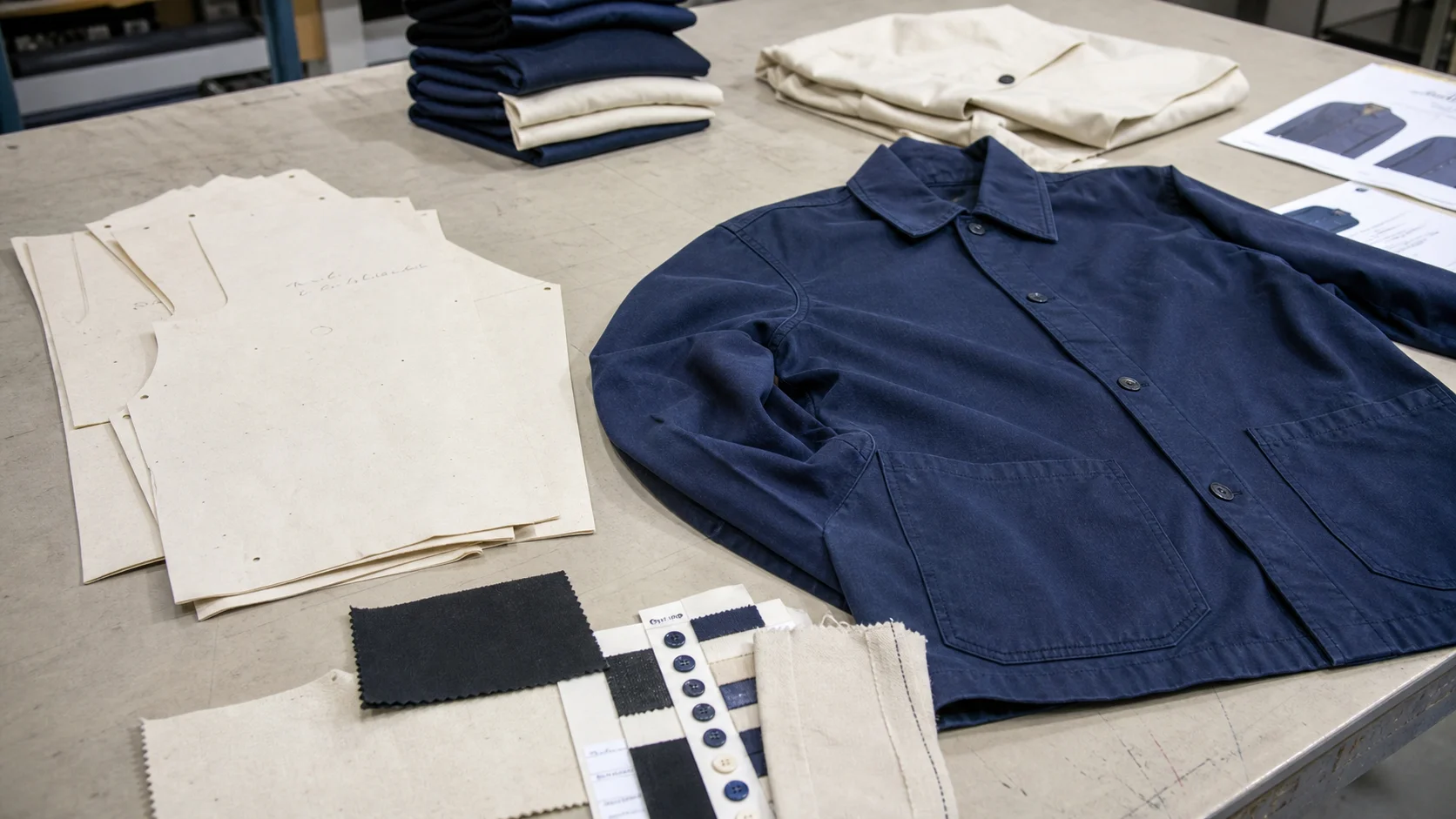
A practical review of reclaimed cotton coat size grading for construction safety teams, covering fit consistency, mobility, layering, compliance, and...
Reclaimed cotton coat size grading is not a niche detail. For construction safety teams, it affects fit, mobility, visibility, layering, and the actual willingness of workers to wear the coat in the field. A coat that looks acceptable on a spec sheet can still fail on site if the sleeves catch on tools, the body blocks harness movement, or the size run forces teams to overbuy expensive outerwear that sits unused in storage.
This review looks at reclaimed cotton coat size grading from a practical sourcing angle, with a focus on construction safety teams working in demanding conditions. The goal is not just a sustainable fabric story. It is about making size ranges that work across a mixed workforce, keep compliance-minded buyers comfortable, and reduce waste through better planning. For teams evaluating a new supplier or revising an existing spec, the details below are the ones that tend to matter most.
Reclaimed Cotton Coat Size Grading for Safety Teams - Fabrikn production reference
Reclaimed cotton usually refers to cotton recovered from pre-consumer or post-consumer waste streams and processed into usable fiber or yarn. In coat production, buyers may see reclaimed cotton blended with virgin cotton, recycled polyester, or other fibers to improve strength, consistency, and durability. That blend choice matters because reclaimed cotton alone can be less predictable in hand feel, shrinkage behavior, and batch consistency than conventional virgin cotton.
For safety teams, the interest in reclaimed cotton is often twofold. First, it supports sustainability reporting and procurement goals. Second, it can reduce the environmental burden of outerwear programs, especially when teams are issuing coats seasonally or replacing garments frequently. The practical challenge is maintaining performance across all sizes while working within the limitations of a reclaimed material system.
Construction workwear is not fashion-led outerwear. The coat needs to layer over base garments, allow movement through shoulders and elbows, and remain usable after repeated washing. A reclaimed cotton program can meet those needs, but only if the size grading, construction, and testing are controlled carefully.
Size grading is the pattern adjustment between base sizes. In a safety context, it determines whether a medium and a 3XL both fit correctly in shoulder width, chest, sleeve length, and body length, rather than simply scaling up the same shape. Poor grading creates a series of small failures that add up quickly.
Workers who cannot move freely are less likely to wear the coat consistently. A coat that is too tight across the back can restrict lifting and reaching. A coat that is too large can snag, trap wind, or interfere with harness use. A size run that is too narrow also creates procurement inefficiency, since the buyer may have to overorder the most common sizes and leave smaller or larger workers with poor options.
For construction safety teams, the grading review is also a governance issue. If a coat is intended for field use, the buyer should know how the grade rules were developed, whether they align with actual body measurement data, and how the supplier handles shrinkage in reclaimed cotton fabric after washing. In practice, this is one of the most overlooked areas in outerwear sourcing.
A workable size system starts with a clear size chart based on actual garment measurements, not just body measurements. A body size chart is helpful for sales or onboarding, but a workwear spec should show finished garment dimensions for each size. That gives procurement and QA teams a realistic check against samples and production runs.
For reclaimed cotton coats used by safety teams, a typical size range may run from XS to 5XL, with some programs extending to 6XL if the workforce requires it. The grading interval should be consistent and should reflect how the garment is worn. A coat intended for layering usually needs more chest and sleeve ease than a lighter overshirt style.
A practical size system normally includes:
Grading should also consider whether the coat is straight-fit, regular-fit, or relaxed-fit. Safety teams often benefit from a slightly more generous cut than retail outerwear. That extra ease supports base layers, allows movement, and reduces complaints from workers who would otherwise size up to gain room and end up with sleeves that are too long.
A proper grading review begins by confirming the measurements that matter most in field use. The chest is important, but it is not the only dimension. Many outerwear problems come from shoulder balance and sleeve geometry, not from chest width alone.
Measurement Point Why It Matters Common Risk if Poorly Graded Chest width Determines torso comfort and layering room Restricted movement or excessive bulk Shoulder width Affects arm reach and jacket balance Seam pull, restricted lift, poor drape Sleeve length Supports wrist coverage during work Sleeves riding up or hanging too low Center back length Protects lower back and improves coverage Exposed waist during bending Bicep width Important for layered movement Tight upper arm fit, limited reach Hem sweep Controls ease at the bottom of the coat Snagging or blocked strideIn a reclaimed cotton coat, fabric behavior can affect all of these dimensions. If the material relaxes after wear or shrinks after washing, the finished garment must be graded with that movement in mind. Buyers should ask for pre-shrink testing or wash test reports before approving a size chart.
Size grading is not a one-size-fits-all formula. The increments should match the body zone and the purpose of the coat. Chest may increase steadily across sizes, while shoulder and sleeve changes need to be more restrained. If grading is too aggressive, the larger sizes can look boxy and wear poorly. If it is too conservative, larger wearers will be squeezed into garments that are technically within spec but functionally unusable.
For workwear coats, common grading practice may use moderate increments in chest and hem and smaller increments in shoulder width. Sleeve length often increases in steps that reflect arm length trends without overshooting the wearer’s wrist. The exact spec depends on the target market and whether the coat is designed for men, women, or a unisex fit.
A cautious buyer should expect to review the following during sampling:
Unisex grading is common in safety apparel, but it can be a weak point if the team does not define acceptable fit parameters. Women in construction roles may need a different block or at least a better size range, particularly if the original pattern has been scaled from a men’s medium with only linear expansion. That approach often creates excess width in some areas and not enough room in others.
Construction environments create fit challenges that are different from office or retail use. Workers bend, lift, climb, carry, and reach overhead. A coat that works while standing still may fail during real tasks. This is why fit approval should include movement testing, not only static fitting.
One common issue is hem rise during bending. If the back length is too short or the hem is too tight, the lower back becomes exposed when a worker crouches. Another issue is sleeve ride-up. If the shoulder seam or armhole is not positioned correctly, sleeves will shift upward during repetitive motion. That creates discomfort and can expose wrists in colder conditions.
Safety teams should also think about compatibility with other PPE. Coats may need to fit over reflective vests, base layers, or site-specific PPE without trapping excess volume. If the coat has a hood, storm flap, or heavy placket, the grader must check whether these features create extra bulk around the chest and neck.
In workwear sourcing, the biggest sizing mistake is often assuming a “good fit” at sample stage means the size run is safe to bulk order. The sample may fit one tester well and still fail across the larger or smaller sizes if the grade rules are weak.
Reclaimed cotton coats are often specified with fabric weights that balance durability and wearability. For construction safety teams, the fabric should not feel flimsy. A midweight to heavier woven cloth is usually more suitable than a light casual cotton. Exact GSM depends on whether the coat is a shell, utility overshirt, or lined outer layer.
Common sourcing decisions include blended constructions. A reclaimed cotton-rich fabric may be paired with recycled polyester for better tear strength and improved shape retention. Linings may be quilted or brushed, depending on climate. In cold-weather programs, insulation and lining add complexity to size grading because the inside volume changes the fit.
Trims are not secondary details. Buttons, zips, snaps, collar inserts, and cuff adjusters all affect usability and inspection outcomes. For example, a coat with a metal zipper may outperform buttons in wind resistance, but the zipper gauge, puller style, and placket construction must be set early so the final garment matches sample fit. If cuffs include adjusters, the grader should check wrist width and forearm balance carefully.
Buyers should ask suppliers to confirm:
MOQ in reclaimed cotton workwear depends on the pattern complexity, fabric availability, and whether the supplier can source reclaimed yarn or fabric in stable lots. For a coat program, MOQ may begin around 300 to 500 pieces per color or style with some suppliers, while more complex constructions or custom trims may require higher volumes. That range is not a promise; it is a typical sourcing starting point, and buyers should confirm with each factory.
Sampling should be handled in stages. A common process includes prototype, size set, and pre-production sample. For safety teams, a size set is especially important because one fit sample in a single size does not validate the full grade. The team should request at least a representative spread, often including a small size, base size, and larger size, so grading issues can be seen before production.
A cautious approval sequence usually looks like this:
Lead time depends heavily on material availability. If the reclaimed cotton fabric has to be custom milled or reserved from a limited batch, buyers should expect longer timelines than with standard stock fabric. Labor scheduling, embroidery or printing, and seasonal demand can also extend the critical path. A realistic plan leaves time for at least one revision cycle if the first sample reveals grading problems.
Inspection for reclaimed cotton coats should cover both appearance and function. The most obvious risks are mismatched size measurements, inconsistent stitching, and trim defects. In a size grading review, the more important risk is that a sample passes visually while the entire size run drifts out of tolerance.
Critical checkpoints include measurement tolerance, seam strength, shrinkage after wash, and consistency of grading between sizes. If the garment is intended for repeated laundering, buyers should ask how the size chart was calculated after wash testing. A coat that shrinks in sleeve length or chest width can become noncompliant with the original size spec even if the first fit sample looked correct.
Inspection should also include alignment of closures, symmetry of pockets, and consistency in collar shape and placket width. These details affect worker acceptance and perceived quality. A poorly aligned pocket on a safety coat is not just cosmetic. It can signal that the production line did not control the garment well enough to trust the size range.
Where possible, buyers should request:
The most sustainable coat is not always the one with the highest reclaimed content. If the garment fails early, the waste created by replacement can outweigh the material story. Buyers should judge reclaimed cotton coats on fit stability, durability, repairability, and total program cost, not on fiber claim alone.
There is also a balance between generous fit and controlled sizing. A looser coat may please more workers initially, but if it becomes bulky or unsafe around machinery, the complaint rate rises. A tighter coat may look cleaner on paper, yet it can create low compliance in the field. The right answer depends on working conditions, layering needs, and seasonal temperature.
From a purchasing standpoint, the main tradeoffs are clear:
That tradeoff analysis is what separates a useful safety uniform program from a marketing-driven order. Buyers should not accept vague reassurances. They need measurable fit criteria, wash expectations, and a clear approval trail.
A supplier handling reclaimed cotton workwear should be able to discuss size grading in practical terms, not only fabric claims. Ask for tech packs, grading rules, measurement tolerances, and sample approval steps. If a supplier cannot explain how shrinkage affects the final size spec, that is a warning sign.
For teams building a sustainable workwear program, it helps to work with a supplier that can support development, sampling, and production control across the whole process. Fabrikn provides a starting point for that kind of conversation, including service information at /services/, company background at /about-us/, and direct inquiry access at /contact-us/. Those pages are useful when a buyer wants to move from concept to a structured sourcing discussion.
Before issuing a purchase order, the buyer should still verify the essentials: size set approval, final fabric confirmation, trim matching, and inspection terms. Sustainable sourcing is strongest when it is controlled like any other serious workwear program.
Reclaimed cotton coat size grading for safety teams is a sourcing issue with direct operational consequences. A coat that is sustainably positioned but poorly graded will not serve workers well, and it may create more waste through returns, replacement, and low usage. The better approach is to treat size grading as part of product safety, not a last-minute fit detail.
For construction teams, the best reclaimed cotton coat programs are the ones that combine durable fabric, controlled grading, realistic sampling, and inspection discipline. That means checking the right measurement points, testing movement, verifying wash performance, and refusing to assume that one good sample proves a workable size run. Sustainable workwear should be fit for purpose first.
Get a free quote from Fabrikn — your trusted B2B clothing manufacturer with 10+ years of experience. MOQ as low as 200 pieces.
Get a Free Quote →It usually means cotton recovered from waste streams and processed into fiber, yarn, or fabric for reuse. In coats, it is often blended with other fibers for strength and consistency.
A typical workwear range may run from XS to 5XL, though the best range depends on the workforce profile. Some programs need extended sizes to avoid poor fit and low compliance.
Poor shoulder, sleeve, and back-length balance are common risks. These can limit movement, expose the lower back, or create snag hazards during field work.
Typical MOQ may start around 300 to 500 pieces per style or color, but this varies by fabric availability, trim complexity, and supplier setup.
No. A single fit sample is not enough to validate a full size run. Buyers should ask for a graded size set and check how the garment behaves in both smaller and larger sizes.
Buyers should confirm fabric composition, shrinkage, fit on target wearers, size grading, trim quality, and final measurement tolerances before releasing bulk production.