
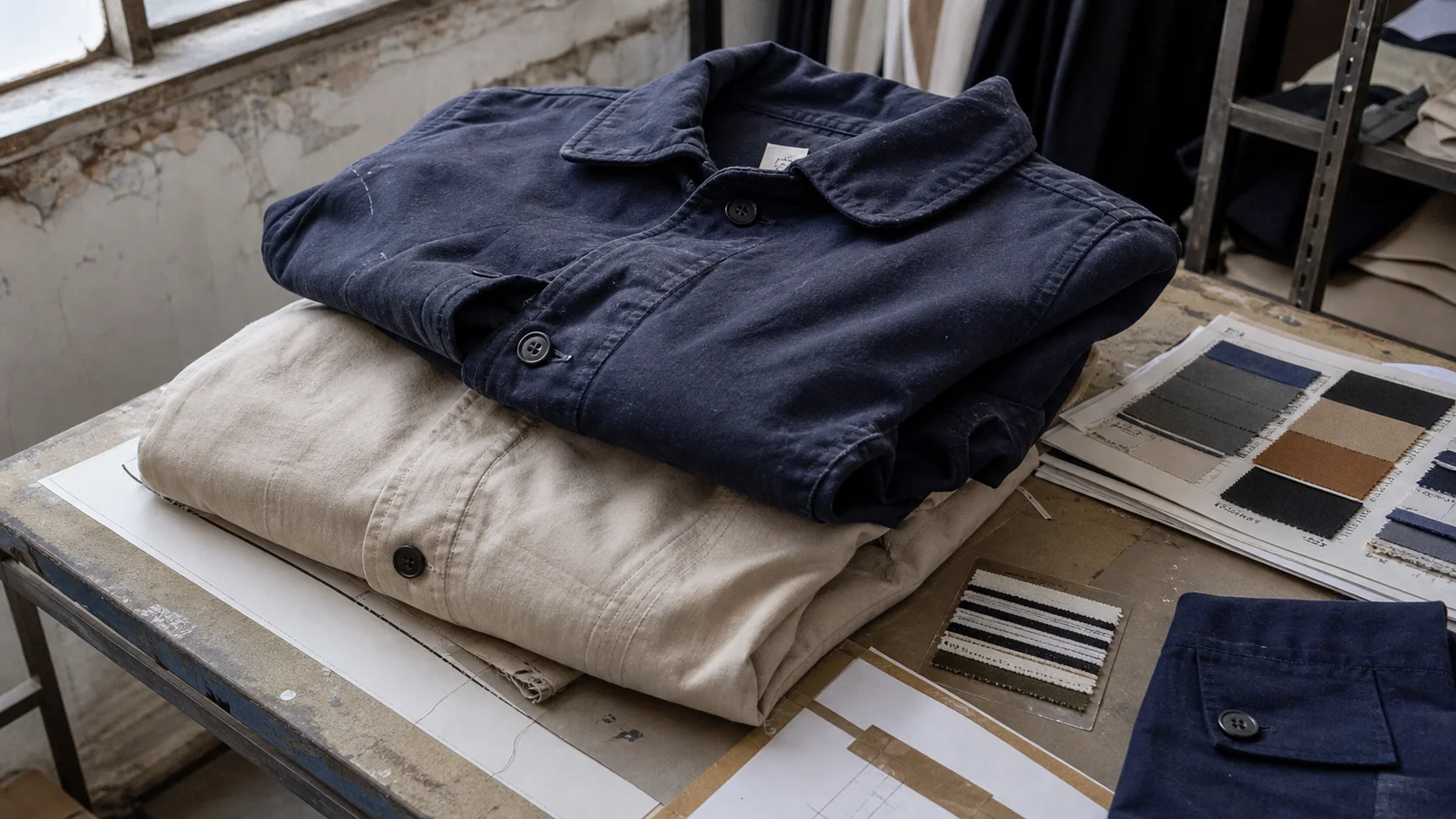
A product-specific SEO outline for outdoor school buyers evaluating reclaimed cotton coat size grading, fit consistency, durability, and procurement readiness.
Reclaimed Cotton Coat Grading Review for School Buyers - Sustainable Fashion manufacturing guide
Outdoor schoolwear has a difficult job. It must look consistent across year groups, survive playground abrasion, fit over uniforms, and stay within a budget that is often reviewed line by line. When the coat uses reclaimed cotton, the buying decision becomes more technical. The buyer is no longer only asking whether the coat looks right. The buyer must check how reclaimed fibres affect size grading, shrinkage, bulk, colour consistency, durability, and repeat-order reliability.
This reclaimed cotton coat size grading review is written for outdoor school buyers, uniform distributors, procurement teams, and sustainable fashion sourcing managers comparing greener coat options. The focus is practical: how to review a size chart, what to ask before sampling, which risks to inspect, and where reclaimed cotton works well or needs careful engineering.
Reclaimed cotton is usually made from pre-consumer textile waste, post-consumer garments, or cutting-room scraps that are sorted, shredded, re-spun, or blended into new yarns. In schoolwear, it is attractive because it can reduce reliance on virgin cotton and support a clearer sustainability story. For buyers working under a sustainable fashion policy, a reclaimed cotton coat can be easier to justify than a conventional cotton-rich outer layer.
The environmental argument is strong, but it does not remove the need for commercial discipline. School coats are not seasonal fashion pieces that can tolerate loose sizing or one-off fabric variation. They need repeatable grading from small child sizes through larger teen sizes, and the product must remain practical for daily outdoor use.
Reclaimed cotton can be used in different ways. Some coats use reclaimed cotton in the outer shell. Others use it in a brushed lining, internal quilt layer, canvas panel, or blended fabric with polyester, recycled polyester, nylon, or elastane. The best construction depends on the school’s climate, wear expectations, washing requirements, and price point.
Direct purchasing judgment: reclaimed cotton is usually easier to manage in stable woven blends and linings than in unsupported outer shells that must carry water resistance, abrasion performance, and long-term shape retention on their own.
For outdoor school buyers, the main question is not whether reclaimed cotton is good or bad. The question is whether the specific reclaimed cotton fabric has been engineered, tested, and graded correctly for children’s outerwear.
Size grading is the process of increasing or decreasing garment measurements across a size range. In school coats, grading is more complex than in simple T-shirts because the coat must fit over other clothing. A coat may need to sit over a shirt, jumper, blazer, sports layer, or fleece. If the grade is too tight, the garment restricts movement. If it is too generous, the coat looks oversized and parents may complain that the fit is untidy.
Common graded points of measure for school coats include chest, waist, hem, across shoulder, sleeve length, bicep, cuff opening, back length, front length, neck width, hood opening, armhole depth, and sweep. For padded or lined coats, garment thickness also affects perceived fit. A coat with the same flat chest measurement can feel tighter if the insulation is bulky.
A school buyer should ask for a complete measurement specification, not only a sales size chart. A retail-facing chart may show age or height guidance, but the production specification should include garment measurements, tolerances, measurement method diagrams, and sample size base measurements.
For coats, tolerance control matters. A typical tolerance might be plus or minus 1 cm for smaller widths, plus or minus 1.5 cm for larger body widths, and plus or minus 0.5 cm for smaller trim placements. These are only general examples. The correct tolerance depends on fabric stability, construction, and the size of the garment.
Reclaimed cotton fibres are often shorter than virgin fibres because mechanical recycling breaks down fibre length. Shorter fibres can affect yarn strength, pilling, surface fuzz, shrinkage behaviour, and fabric stability. This is one reason reclaimed cotton is commonly blended with stronger fibres. In outerwear, blending can improve dimensional stability and abrasion resistance.
For grading, the key concern is that the fabric must behave predictably across sizes. If the fabric shrinks unevenly, relaxes after cutting, or stretches during sewing, the approved size chart may not hold in bulk production. A coat can pass a first fit review and still fail in bulk if the fabric lot changes or if the cutting room does not control lay tension.
Reclaimed cotton can still be a good choice. The risk is manageable when buyers specify fibre blend, yarn count, fabric construction, GSM, finishing, shrinkage performance, colour standard, and testing requirements before approving the size range.
For outdoor school buyers, fabric stability should be confirmed before grading is locked. If the fabric is not finalized, the approved pattern may become unreliable. A small change from one cotton-rich blend to another can alter sleeve hang, hem shape, and chest fit.
A reclaimed cotton coat grading review should be structured. Buyers should not rely only on a single sample size and a supplier’s assurance that the rest of the range will grade correctly. Children’s schoolwear spans different body proportions. Younger sizes need mobility and easy dressing. Larger sizes need better shoulder balance, sleeve length, and body length.
The base size is the size from which the full range is graded. For school coats, the base may be age 7-8, age 9-10, age 11-12, or a medium youth size, depending on the range. The chosen base size should reflect the highest-volume size if sales history is available. If the base size is too small, grading into teen sizes may create poor proportions. If the base size is too large, smaller sizes can become boxy.
A practical school coat range may cover age 3-4 through age 15-16, or it may use height-based sizing such as 104 cm to 176 cm. Some school buyers also require adult XS to XL for older pupils or staff uniform programs. The size range should be confirmed before pattern development, because adding sizes later can create grading compromises.
Outdoor school coats need wearing ease. A coat that fits neatly over a polo shirt may fail over a jumper and blazer. Buyers should define the intended layering condition at the start. The fit model or mannequin review should reflect how the coat will actually be worn.
As a rough guide, children’s outerwear often needs more chest ease than indoor garments. The exact amount depends on fabric thickness, lining, padding, and silhouette. Slimmer styles look modern but increase return risk in schoolwear. A slightly more generous fit is often safer for bulk uniform purchases, especially where parents expect at least one season of growth room.
Not every measurement should increase at the same rate. Chest, body length, sleeve length, shoulder width, and hood dimensions need separate grade logic. A common mistake is increasing width too much while under-grading length, which creates short, wide coats in larger sizes. Another mistake is lengthening sleeves without adjusting armhole and bicep properly.
At minimum, buyers should review the base size, one small size, and one large size before bulk approval. For broad school programs, reviewing four sizes is safer. This is especially important when using reclaimed cotton blends, padded linings, or bound seams that may change garment bulk across the range.
Direct purchasing judgment: if the order covers a wide age range, approving only one sample size is a false economy. The cost of extra size-set samples is usually lower than the cost of returns, parent complaints, or unsold inventory.
A clear sample path reduces risk. Reclaimed cotton coat development should move through defined stages, with each stage answering a different question. Buyers should avoid treating a good-looking prototype as production approval.
Each sample should be measured against the technical specification. Comments should be written clearly: measurement, observed issue, required correction, and target outcome. Vague comments such as “make better fit” or “improve sleeve” can cause confusion. A better comment would be “increase bicep by 1 cm in sizes 9-10 and above to improve arm movement over jumper.”
Buyers working with a manufacturing partner can use a formal product development route through service teams such as Fabrikn services to align fabric sourcing, sample review, and production planning. The main value is not simply making a sample. The value is locking specifications before the order becomes expensive to change.
Minimum order quantities for reclaimed cotton coats vary widely. MOQ depends on fabric availability, dyeing requirements, trim customization, size range, colour count, and whether the supplier is using stock fabric or custom-developed material.
These figures are not fixed rules. They are working ranges for buyer planning. A supplier may accept a lower MOQ if the fabric is already available, trims are standard, and the colour is not exclusive. A supplier may require a higher MOQ if the buyer wants a proprietary colour, school crest embroidery, custom zipper pullers, branded snaps, special lining, or unusual size grading.
Lead time for reclaimed cotton coats can range from around 8 to 16 weeks after final approval, with longer timelines for custom fabrics or complex trims. Sampling may add 3 to 8 weeks before bulk production, especially if fabric testing or size-set corrections are needed.
School buyers should build a calendar backwards from the required delivery date. Distribution to schools, retailer intake, labeling, packing, and any local quality checks need time. A coat that ships just before term starts is not truly on time if it cannot be processed and allocated before parents need to buy it.
A reclaimed cotton coat should not be specified only by fibre content. “Reclaimed cotton blend” is too broad for purchasing. Buyers need a full material specification that links sustainability claims to performance requirements.
For outdoor schoolwear, reclaimed cotton outer shells may need a performance finish if the coat is expected to resist light rain. A cotton-rich fabric without water-repellent treatment absorbs moisture more readily than synthetic outerwear. That can make the garment heavier and slower to dry. If the school wants a sustainable story and weather protection, a blended shell with a durable water-repellent finish may be more practical than a high-cotton shell.
Lining choice strongly affects size grading. A brushed reclaimed cotton lining can feel comfortable but may cling to knitwear. A smooth woven lining improves ease of dressing. Padded linings add warmth but reduce internal space. Quilting can compress unevenly if stitch spacing and padding weight are not controlled.
For school coats, smooth sleeve lining is often a better choice than brushed lining inside the sleeves. Children need to put coats on quickly, and sleeves that drag against jumpers create frustration. A reclaimed cotton-rich body lining can still be used if sleeve function is protected.
Drawcords require special caution in children’s outerwear because safety regulations may restrict their use depending on age group and placement. Buyers should confirm applicable market requirements before approving hood or hem adjustment details. Elastic, tabs, toggles, and safer closure systems may be more suitable for younger school sizes.
Inspection should cover measurement, workmanship, material performance, safety, labeling, and packing. Reclaimed cotton does not require a completely different inspection system, but it does require closer attention to fabric variation and dimensional stability.
Bulk garments should be measured across sizes and colours. The inspection plan should include high-volume sizes and edge sizes, not only the base size. For coats, measuring flat can be inconsistent if padding is bulky, so the method must be standardized. Garments should be laid without stretching, zipped or buttoned as specified, and measured at defined points.
Key measurement risks include chest width outside tolerance, sleeve length variation, uneven body length, hood opening inconsistency, tight bicep, and mismatched left-right sleeve lengths. A small sleeve difference may be visible once worn, especially in school coats with contrast cuffs or reflective bands.
Reclaimed cotton fabrics can show shade variation between panels if fabric rolls are not controlled. Shade bands, roll numbering, and marker planning should be managed before cutting. In darker school colours such as navy, black, bottle green, maroon, or charcoal, shade variation may be more noticeable under daylight.
Buyers should ask how the factory controls shade grouping. A practical approach is to cut panels from the same roll for the same garment where possible and to avoid mixing visibly different lots within one coat. Inspection should include light box or daylight review if colour consistency is commercially important.
Outdoor school coats are handled roughly. Pocket corners, zipper bases, and underarm seams deserve particular attention. If a coat fails at these points, parents usually treat it as a quality failure rather than normal wear.
A reclaimed cotton coat may need tests for dimensional stability, colourfastness to washing, colourfastness to rubbing, seam strength, tear strength, pilling, abrasion, nickel release for metal trims where applicable, and restricted substances depending on the selling market. If the coat claims water resistance, testing should define the method and minimum result.
Care labels must match real performance. If the coat shrinks beyond tolerance after a standard wash, the issue is not solved by writing a gentler care label unless that care instruction is realistic for parents. Schoolwear should be easy to maintain. A coat that requires unusual care may not suit mainstream school distribution.
Reclaimed cotton coats sit between sustainability ambition and schoolwear practicality. The right decision depends on the buyer’s priorities. A high reclaimed cotton percentage may look stronger in a sustainability presentation, but it may not be the best choice for outdoor durability. A lower reclaimed cotton percentage blended with stronger fibres may deliver better wear performance, lower return risk, and more consistent grading.
The commercial tradeoff is clear. Reclaimed cotton can support a responsible sourcing message, but it must be bought as a performance-controlled schoolwear product. Buyers should not pay a sustainability premium for a coat that has weak grading, unclear fabric content, or poor repeatability.
For organizations comparing suppliers, it is sensible to evaluate both sustainability credentials and production discipline. Company background, sourcing capabilities, and development support can be reviewed through pages such as Fabrikn about us. Buyers needing project-specific advice can also open a conversation through Fabrikn contact us before confirming specifications or timelines.
A concise buying specification helps prevent misunderstandings. It should include enough detail for costing, sampling, inspection, and repeat production.
Specification Area Recommended Detail Product Type Outdoor school coat, lined or padded, age or height-based size range. Fabric Reclaimed cotton blend percentage, supporting fibres, GSM, weave, finish, shrinkage target. Fit Regular schoolwear fit with layering allowance over jumper or blazer. Grading Full graded measurement chart with tolerances and measurement method diagrams. Trims Zipper gauge, snaps, reflective tape, labels, badge, cuff construction, hood details. Testing Shrinkage, colourfastness, pilling, seam strength, tear strength, safety checks, water resistance if claimed. Sampling Proto, fit, size set, pre-production, and shipment sample approvals. Packing Size stickers, carton ratio, polybag policy, barcode requirements, school or retailer allocation.This type of specification also makes quotations easier to compare. If one supplier quotes a low price without testing, fabric controls, or size-set samples, the quotation is not equal to a more complete offer. School buyers should compare like with like.
Younger pupils need easy movement, simple closures, and safe trim choices. Sleeve openings should not be so narrow that children struggle to dress themselves. Hoods should provide coverage without blocking vision. If reclaimed cotton fabric is used in a heavier construction, the coat must not become too stiff for small children.
This group often sees the heaviest playground wear. Pocket strength, zipper durability, and seam reinforcement matter. Growth allowance is important, but excessive width can make the coat look sloppy. The grade should balance comfort with a tidy school appearance.
Older pupils may reject coats that feel childish or bulky. A cleaner silhouette can improve acceptance, but the coat still needs to fit over school layers. Shoulder width, sleeve length, and back length become more important in this range. Teen sizes should not simply be enlarged children’s patterns; proportions need review.
A reclaimed cotton coat can be a credible sustainable fashion option for school buyers when the material, grading, and inspection plan are handled with care. The strongest programs usually start with a realistic fabric blend, a disciplined size chart, proper fit testing, and clear acceptance standards.
The weakest programs often start with a sustainability claim and treat technical development as an afterthought. That creates predictable problems: tight sleeves, inconsistent lengths, shade variation, poor shrinkage, and unclear responsibility when bulk goods do not match samples.
For outdoor school buyers, the best route is to approve the product in stages. Confirm fabric performance first. Fit the base size next. Review the size set before bulk cutting. Inspect production against measurable standards. This approach protects the school, the distributor, the parents, and the sustainability promise attached to the garment.
Get a free quote from Fabrikn — your trusted B2B clothing manufacturer with 10+ years of experience. MOQ as low as 200 pieces.
Get a Free Quote →A reclaimed cotton school coat is an outerwear garment that uses cotton recovered from textile waste, garment waste, or production scraps. The reclaimed cotton may be used in the shell, lining, or blended fabric. For school use, it is often blended with stronger fibres to improve durability and dimensional stability.
It can be durable enough if the fabric is properly engineered and tested. A cotton-rich reclaimed fabric without support may not suit heavy outdoor wear or water resistance claims. Blends with recycled polyester, polyester, or other reinforcing fibres are often more practical for school outerwear.
Chest, sleeve length, across shoulder, armhole depth, bicep, back length, hood opening, and hem width should be checked carefully. Buyers should review more than one size, especially when the range covers both young children and teenagers.
A sensible process includes fabric swatch approval, proto sample, fit sample, size-set sample, pre-production sample, and shipment sample. Smaller orders may compress the process, but skipping size-set review increases risk when grading is critical.
Typical MOQ may range from 300-800 pieces per colour for stock reclaimed cotton blend fabric, 800-1,500 pieces for custom colour fabric, and 1,000-3,000 pieces for custom-developed outerwear fabric. Lower quantities may be possible with stock materials and limited customization, usually at a higher unit cost.
Bulk production may take around 8 to 16 weeks after final approval, depending on fabric availability, testing, trims, order size, and factory capacity. Sampling, testing, and size-set corrections can add several weeks before production begins.
A standard cotton-rich reclaimed fabric is not naturally waterproof. Water resistance or waterproof performance requires suitable finishing, coating, lamination, seam construction, and testing. Buyers should be cautious about waterproof claims unless a test method and performance level are clearly stated.
The main risks are size measurements outside tolerance, shrinkage, colour variation between panels, weak seams, zipper failure, pilling, poor badge placement, reflective tape peeling, and incorrect care or fibre labels. Reclaimed cotton programs also need careful fabric lot control.
Not always. A higher reclaimed cotton percentage may support a stronger sustainability message, but it can reduce performance if the fabric is not well engineered. A balanced blend with reliable grading, durability, and wash performance is often the better schoolwear purchase.
The specification should include fibre content, reclaimed cotton percentage, fabric construction, GSM, finish, colour standard, shrinkage limits, graded measurements, tolerances, trims, labels, testing requirements, sample approval stages, and packing instructions.