
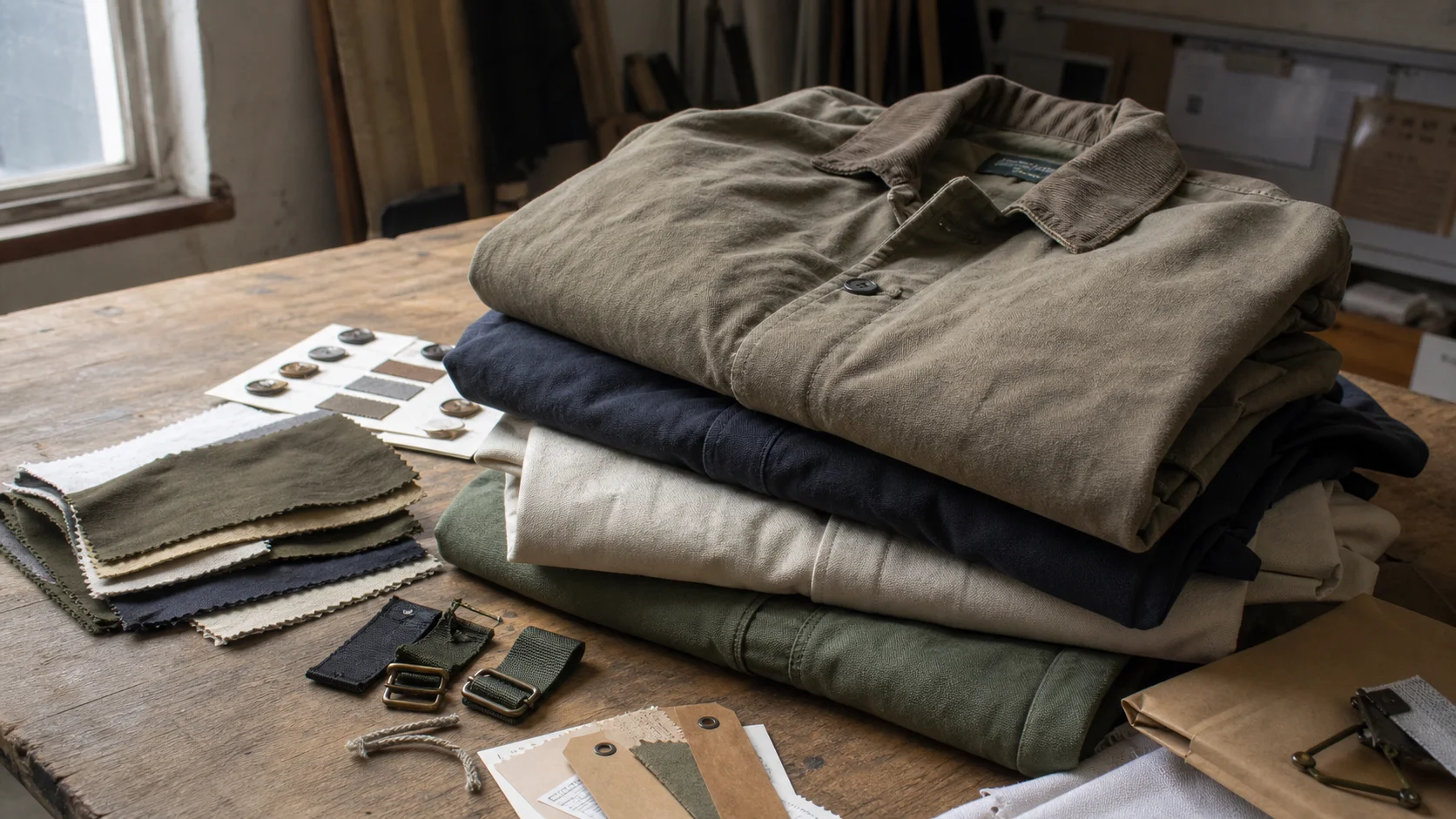
A distributor-focused SEO outline for evaluating reclaimed cotton coat bulk orders, from fiber inputs and fabric specs to sampling, compliance, costing,...
Reclaimed Cotton Coats Bulk Order Guide - Sustainable Fashion manufacturing guide
Reclaimed cotton coats sit in a different sourcing category from standard cotton outerwear. The product is still a coat, but the buying logic changes because the base material carries more variability. Distributor buyers need to manage sustainability claims, fabric consistency, shrinkage behavior, color tolerance, hand feel, and repeat-order planning before committing to bulk production.
A reclaimed cotton coat factory bulk order guide should not treat recycled or reclaimed cotton as a simple substitute for virgin cotton. Reclaimed cotton can come from pre-consumer cutting waste, post-industrial yarn waste, or post-consumer textile recovery. Each source affects fiber length, yarn strength, shade consistency, and available volume. The right factory will be clear about the reclaimed content percentage, blending fiber, fabric construction, and realistic production capacity.
For distributors, the commercial opportunity is strong. Sustainable fashion buyers are looking for outerwear with a credible material story, especially coats that feel durable rather than novelty-driven. Reclaimed cotton coats can serve independent boutiques, eco-focused retailers, uniform programs, hospitality merchandise, campus stores, and private-label fashion accounts. The product has enough perceived value to support better margins, but only when the sourcing is controlled.
Purchasing judgment: reclaimed cotton coats are a good bulk category when the distributor can accept controlled variation. They are a poor fit when the buyer expects perfect shade continuity across every repeat order without reserving fabric or accepting dyed-to-match limitations.
The most important sourcing decision is not simply finding the lowest FOB price. Distributor buyers should evaluate whether the supplier can stabilize fabric quality, document material inputs, make reliable pre-production samples, and manage inspection issues typical to heavier garments. A low quote can become expensive if the coat fabric pills early, lining tears during wear testing, or the factory cannot repeat the approved shade for a reorder.
Buyers looking for broader apparel development support can review Fabrikn services to understand how sourcing, sampling, and production management may be structured for private-label programs.
Reclaimed cotton coats are best suited to distributors selling into channels where sustainability has commercial value and buyers understand natural-material character. The strongest positioning usually combines responsible sourcing, practical styling, and reliable wearability. A coat made with reclaimed cotton should not rely only on the recycled claim. It must still fit well, handle normal use, and meet the target retail price.
Distributors should be cautious with fashion programs that require many colors in low quantities. Reclaimed cotton fabric often becomes less economical when split into too many small dye lots or custom developments. A focused program with two to four colors and one or two silhouettes usually performs better than a wide assortment with shallow units per SKU.
The safest first bulk order is usually a structured, mid-weight style rather than a highly tailored coat. Chore coats, utility coats, and relaxed shackets tolerate the natural character of reclaimed cotton better than sharp tailored silhouettes. They also reduce fit risk, pressing issues, and lining complications.
A factory that can sew cotton coats is not automatically qualified to handle reclaimed cotton coat bulk orders. The buyer needs to confirm both garment-making capability and material-control discipline. Many problems begin when the supplier focuses on the sewing quotation but gives vague answers about fabric source, reclaimed percentage, and test standards.
Distributor buyers should ask for fabric swatches and garment samples before discussing aggressive price targets. The material choice drives most of the final cost. A reclaimed cotton twill coat with lining, metal zipper, snap buttons, and enzyme wash will not price like an unlined lightweight overshirt. Asking for a quote without a technical package often produces numbers that change later.
The factory’s communication quality also matters. If the supplier cannot explain reclaimed content, fabric limitations, and test tolerances clearly during the quotation stage, the risk increases during bulk production. Sustainable fashion claims require careful wording. A factory should not promise “100% sustainable” or “fully recycled” without documentation.
For distributors comparing factory models and sourcing support, the company background at Fabrikn about us may be useful when evaluating how a manufacturing partner presents its role and responsibilities.
Fabric specification is the center of a reclaimed cotton coat order. The buyer should define content, construction, weight, finish, color, and performance requirements in writing. Reclaimed cotton can be very workable, but it must be engineered for the coat’s intended use.
Reclaimed cotton is often blended with virgin cotton, recycled polyester, conventional polyester, viscose, or other fibers to improve yarn strength and fabric stability. From a sourcing standpoint, a 30-70% reclaimed cotton blend may be more practical than chasing 100% reclaimed cotton if the coat requires durability, repeatable color, and consistent hand feel. Higher reclaimed content can support stronger marketing, but it may create higher technical risk depending on fiber quality and yarn spinning.
Trim selection should match the sustainable positioning without creating unnecessary sourcing complexity. Recycled polyester labels, cotton drawcords, corozo buttons, metal snaps, and recycled paper hangtags are common options. Each trim needs its own approval. Zippers and snaps should be tested on the actual fabric because heavy reclaimed cotton canvas can require different snap pressure than lighter twill.
Do not over-spec every trim as custom on the first order. A distributor trying to customize buttons, zipper pullers, labels, lining print, packaging, and hangtags at low volume will face higher MOQ pressure and longer lead times. Standard trims with custom labels are often the better first-order decision.
Minimum order quantity depends on fabric availability, dyeing requirements, style complexity, size range, and trim customization. For reclaimed cotton coats, MOQ is often driven more by fabric than by sewing capacity. If the fabric is stock-supported, the factory may accept lower quantities. If the fabric requires custom spinning, weaving, dyeing, or finishing, the MOQ rises quickly.
These ranges are not universal. Some suppliers can produce lower quantities if they hold fabric or operate small-batch lines. Other factories will require higher commitments because reclaimed cotton yarn and fabric are not always available on demand. Distributor buyers should treat very low MOQs with caution when the program requires custom fabric. The supplier may be using leftover stock rather than a repeatable material platform.
Pricing is usually built from fabric cost, consumption, trims, labor, washing or finishing, packaging, testing, overhead, and margin. Coats have higher material consumption and more operations than T-shirts, sweatshirts, or basic trousers. A lined coat may require shell fabric, lining fabric, interlining, shoulder reinforcement, sleeve head construction, pocketing, buttons, snaps, zippers, labels, hangtags, and polybags or paper packaging.
Purchasing judgment: the cheapest reclaimed cotton coat quote is rarely the safest option for distributor buyers. A slightly higher price from a factory that can document fabric, maintain tolerances, and pass inspection is usually better than a low-cost order with unclear sourcing and unstable shade control.
Sampling should move in steps. Skipping stages may save two weeks on paper but can create expensive bulk errors. Reclaimed cotton coat development needs more than a single photo sample because fabric behavior, fit, and trims must be tested together.
The pre-production sample is the most important approval sample. It should use the approved bulk fabric, actual trims, correct label placement, final stitching, confirmed wash or finish, and intended packaging. Distributor buyers should not approve bulk production from a proto sample made in substitute fabric unless the risk is clearly understood.
Measurement tolerance should be defined before size set approval. Coats usually need tolerances by point of measure. Chest, sweep, sleeve length, shoulder width, and body length are especially important. A coat that is too narrow across the chest or tight in the armhole will create return risk, even if the sustainability story is strong.
Sample comments should be written in a technical format. Photos help, but written instructions are still necessary. Mark whether each comment is a pattern correction, construction correction, trim correction, color correction, or workmanship correction. Vague comments such as “make it better” or “premium feel” are not useful for bulk production.
Lead time for reclaimed cotton coats depends on material readiness, sample approvals, order quantity, factory capacity, washing, testing, and shipping method. Buyers often underestimate the time needed for lab dips, fabric finishing, trim procurement, and inspection rework. Outerwear also takes longer to sew and finish than basic knitwear.
These timelines are practical planning ranges, not guaranteed commitments. A factory may quote a shorter schedule, but distributor buyers should ask what is already secured. Is greige fabric available? Are trims booked? Has the lab dip been approved? Is the wash recipe tested? Is the production line available during the requested window?
Lead-time risk is highest when buyers approve late changes. Changing pocket shape, label placement, color standard, lining fabric, or zipper specification after pre-production approval can reset parts of the schedule. Sustainable trim changes can be especially slow if the buyer requires recycled certification or special packaging materials.
Seasonality also matters. Coats are time-sensitive. A late outerwear delivery can miss the selling window and force markdowns. Distributor buyers should build a calendar backward from warehouse delivery, not from factory shipment. Include customs clearance, inland freight, warehouse receiving, retail allocation, photography, and sales launch dates.
Quality control for reclaimed cotton coats should combine fabric testing, in-line production checks, and final random inspection. The inspection plan must reflect both reclaimed material risks and coat construction risks. A coat can pass visually and still fail in wear if seams split, snaps pull out, or fabric shrinks beyond tolerance.
Some irregularity may be acceptable and even expected in reclaimed cotton fabric. The commercial question is whether the irregularity is controlled, approved, and consistent with the brand position. Buyers should define acceptable fabric character during swatch and sample approval. If slubs are part of the look, approve a boundary sample. If shade variation is unacceptable, set a stricter roll inspection requirement.
Inspection standards should include AQL level, measurement tolerance, defect classification, carton check, packaging check, and needle detection where applicable. Many distributors use final random inspection, but in-line inspection is more valuable for coats because construction mistakes are harder to fix once garments are finished.
Testing should be confirmed before bulk cutting. At minimum, consider shrinkage, colorfastness to washing or dry cleaning, colorfastness to rubbing, pilling, tear strength, seam slippage, and appearance after care. If the coat includes snaps, buttons, or zippers, test pull strength and functionality. If the product makes recycled or reclaimed claims, documentation should support the claim language used on labels and marketing materials.
Purchasing judgment: do not cut bulk fabric until the buyer has approved fabric test results or accepted the risk in writing. Reclaimed cotton quality cannot be managed only at final inspection.
Labeling and packaging are not minor details in sustainable fashion. A reclaimed cotton coat needs accurate fiber content, country-of-origin marking, care instructions, size labeling, and any required legal labels for the destination market. Distributor buyers should check requirements for their sales region before bulk production begins.
The care label must match tested garment performance. If the coat shrinks after machine wash, dry clean only may be necessary, but that choice affects retail appeal. If the coat is garment washed, the care label should reflect the finished garment behavior rather than assumptions from greige fabric. A mismatch between care instructions and actual performance can lead to claims, returns, and retailer chargebacks.
Packaging choices should be practical. Coats need protection from moisture, dirt, and compression damage during transit. Eliminating all protective packaging can create higher damage rates, especially for export shipments. A balanced approach is usually better: reduce unnecessary packaging while keeping garments clean and saleable.
Claims must be conservative. “Made with reclaimed cotton” is safer when the exact percentage is disclosed. “100% recycled” should not be used unless every relevant component and claim standard supports it. Trims, thread, lining, labels, and padding may not be reclaimed or recycled. Marketing should match documentation.
Distributor buyers need clear terms before deposit payment. Price is only one part of the negotiation. The purchase agreement should address samples, approved standards, payment terms, inspection rights, late delivery, defect handling, overage or shortage tolerance, and documentation.
For first orders, many factories request a 30-50% deposit with balance before shipment or against documents. Established accounts may negotiate better terms over time. Distributor buyers should avoid paying full balance before inspection unless there is a strong trust basis and documented quality history.
Cost negotiation should focus on specification choices rather than pressuring the factory to reduce price blindly. If the target price is too high, adjust fabric weight, lining, hardware, wash, or packaging. Cutting supplier margin without changing specifications often leads to hidden compromises in fabric, trims, or inspection discipline.
Buyers ready to discuss a specific reclaimed cotton coat project can use Fabrikn contact us to start a sourcing conversation with clearer details, including target quantity, style references, fabric preference, and delivery timeline.
A disciplined checklist reduces errors across sourcing, sampling, production, and shipment. Distributor buyers should treat reclaimed cotton coat orders as technical products, not just seasonal fashion items.
Purchasing judgment: the strongest distributor programs usually start with one well-controlled reclaimed cotton coat style, then expand after sell-through data and quality feedback. A cautious first order protects cash flow and gives the buyer real performance data before committing to deeper seasonal assortments.
Get a free quote from Fabrikn — your trusted B2B clothing manufacturer with 10+ years of experience. MOQ as low as 200 pieces.
Get a Free Quote →Reclaimed cotton is cotton recovered from textile waste streams and processed for reuse in yarn, fabric, or blended materials. It may come from pre-consumer cutting waste, post-industrial textile waste, or post-consumer garments. In coat manufacturing, reclaimed cotton is often blended with other fibers to improve strength, stability, and consistency.
Typical MOQ ranges from about 100-300 pieces per style when using available stock fabric, 200-500 pieces for stock fabric with private-label trims, and 500-1,000 pieces per color for custom dyed fabric. Custom fabric development can require 1,000-3,000 pieces or a fabric-based commitment. Actual MOQ depends on fabric source, trim choices, color count, and factory capacity.
They can be more expensive, especially when the fabric requires custom development, testing, certification support, or smaller production runs. Stock reclaimed cotton blends may be closer to conventional cotton pricing. The main cost drivers are fabric availability, reclaimed content percentage, garment weight, lining, hardware, wash process, and inspection requirements.
In some cases, yes, but 100% reclaimed cotton may create challenges with fiber strength, yarn consistency, shrinkage, and repeatability. Many commercial coat programs use reclaimed cotton blends because they offer better performance and more stable production. Buyers should balance marketing value against durability and quality risk.
Important tests include shrinkage, colorfastness to washing or dry cleaning, colorfastness to rubbing, pilling, tear strength, seam slippage, and appearance after care. Hardware pull strength should be checked for snaps, buttons, and zippers. Testing should reflect the final care label and actual bulk fabric.
Stock fabric orders may take around 45-75 days after sample approval and order confirmation. Custom dyed reclaimed cotton coats may take around 75-110 days after lab dip approval. Custom fabric development can take around 100-150 days depending on yarn, weaving, dyeing, finishing, trim sourcing, and factory capacity.
The biggest risks are fabric inconsistency, shrinkage, pilling, shade variation, and lower strength if the reclaimed fiber is not properly blended. Coat-specific risks include seam puckering, weak stress points, snap pull-out, lining problems, and measurement variation. These issues should be managed through fabric testing, pre-production samples, in-line checks, and final inspection.
A distributor should provide a tech pack, style reference, target fabric composition and weight, size chart, order quantity by color and size, trim requirements, label details, packaging requirements, destination market, testing needs, and delivery deadline. Clear information produces more reliable pricing and reduces revisions later.
Yes. Private-label branding is common for reclaimed cotton coat programs. Buyers can usually customize main labels, care labels, hangtags, packaging, buttons, snaps, zipper pullers, and sometimes lining. Trim customization can raise MOQ and lead time, so first orders often work better with standard hardware and custom labels.
Claims should be specific and supported by documentation. “Made with reclaimed cotton” plus the actual percentage is safer than broad claims such as “fully sustainable.” If the coat includes non-reclaimed lining, trims, thread, or packaging, the marketing language should not imply that the entire garment is reclaimed or recycled unless evidence supports that claim.