
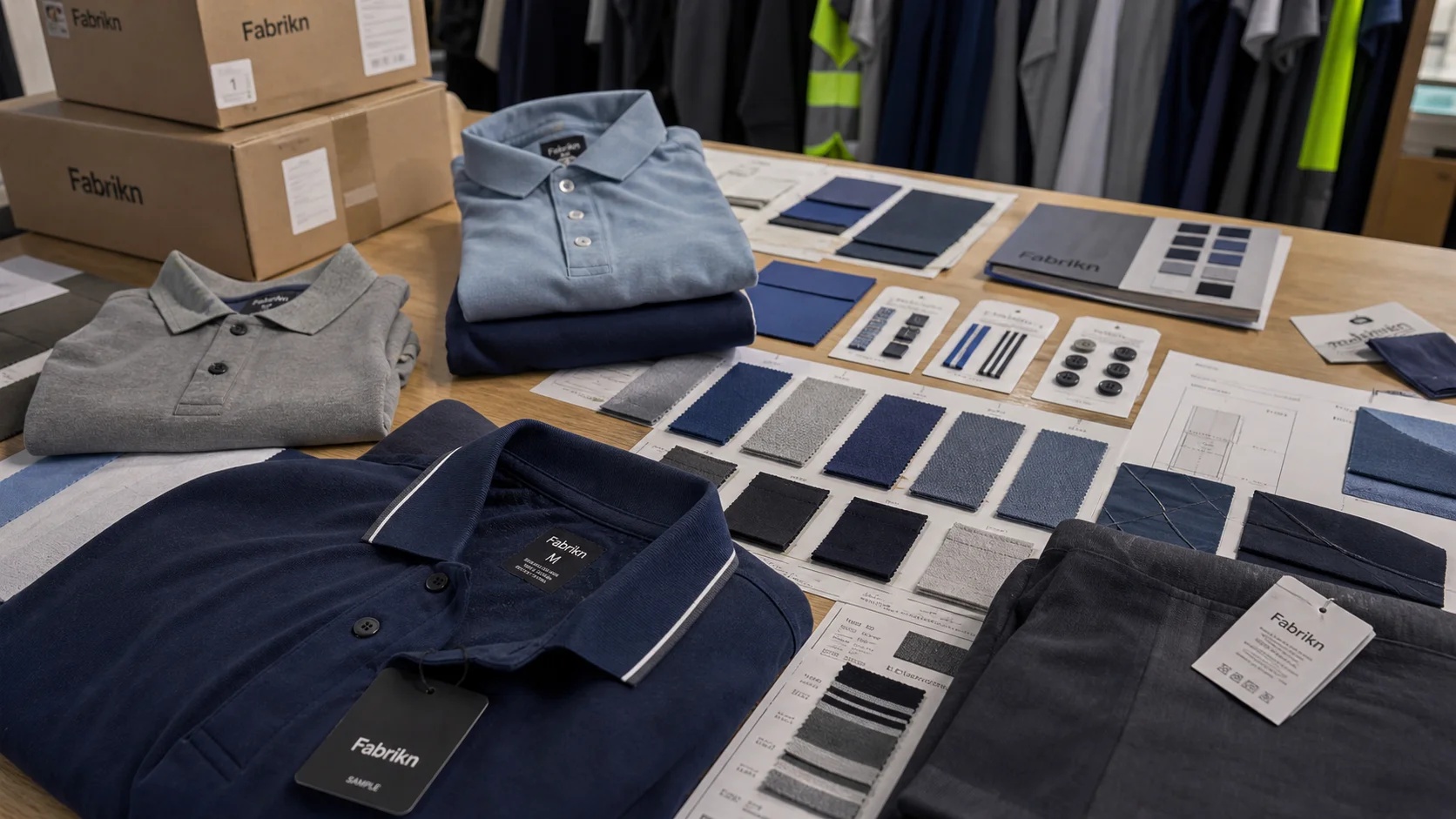
Recycled Cardboard Apparel Mailers with checks for samples, fit, MOQ, QC evidence, pricing terms, and delivery risk.
Fast answer: Recycled Cardboard Apparel Mailers: Board Claims, Pricing, and MOQ should be judged by production evidence, not by a generic sourcing promise. The buyer needs sample proof, cost breakdowns, QC checkpoints, and delivery buffers in writing.
Ask for recent sample photos, measurement tolerances, fabric or print test assumptions, decoration test notes, packing examples, and a named inspection checkpoint. These details show whether the team can repeat an approved sample at bulk volume.
Separate garment cost, decoration, labels, packaging, sampling, testing, freight, and rush charges. When every cost line is visible, it becomes easier to reduce colorways, adjust size depth, or reserve more time for sampling.
The wrong mailer can quietly tax every parcel you send. I’ve watched oversized apparel boxes add 20–40% to shipped weight, and the billable-weight penalty shows up faster than most brands expect. For buyers of recycled cardboard apparel mailer boxes wholesale, the decision is no longer about good intentions alone. It is about freight, damage rates, and the amount of air you are paying to ship.
In Germany and the United Arab Emirates, I saw the same pattern in different accents and currencies. A carton that was 20 mm too tall pushed 3,000 units a week into a higher billable-weight tier. A tighter mailer cut shipping costs by 5–12% per order, depending on carrier rules and zone. In one London operation, switching from an oversized 14" x 10" x 4" carton to a 12" x 9" x 2.5" mailer shaved £0.28 off each domestic parcel, and 1,800 parcels a month made that impossible to ignore.
Recycled stock is not just for niche eco labels with organic cotton tees and a polished conscience. Premium DTC brands, mall-based basics programs, and subscription apparel boxes all showed up with recycled board on 10,000-unit and 50,000-unit runs. The budget side moved too. A basic underwear brand in Spain switched because recycled mailers came in cheaper than its old virgin board once freight and waste were counted.
Thicker-looking boxes are not always stronger; some are just better at pretending. A recycled fiber blend with the right flute and compression rating can outperform virgin board in crush tests, even when the panel feels less rigid in hand. I’ve seen recycled E-flute mailers survive a 1.2-meter drop and 32 kg edge compression while a glossy virgin board split at the lock tab. Testing beats assumption every time.
The business case is plain: reduce waste, lower dimensional weight, improve presentation, and keep returns cleaner. If your apparel line depends on margin discipline, packaging is part of the unit economics, not a decorative afterthought. For brands building assortments through private label clothing services, the packaging spec should be written alongside the garment spec, not after production starts.
Ask for the full spec sheet, not a polished brochure. Recycled content percentage, board grade, flute type, ECT or GSM target, moisture resistance. For lightweight apparel mailers, 60–80% recycled content is common in mainstream supply, while some suppliers can certify 100% recycled liners with mixed recycled medium. If you do not request the number in writing, “recycled” can mean almost anything.
The board choice should match the product. Tees, socks, and scarves usually fit 1.2–1.8 mm caliper boards with E-flute or microflute. Denim, knitwear, or footwear add-ons often need stronger 32 ECT or 44 ECT structures, especially for export lanes that sit in trucks for 7–14 days. A 320 GSM recycled liner can work for a 6 oz tee set, while a heavier knit kit may need a 400–500 GSM build and more disciplined locking tabs.
Print and finish matter too. Soy-based inks, water-based coatings, unlaminated finishes—those are the safest defaults when the brand can tolerate a natural paper look. Gloss lamination makes boxes harder to recycle in some municipal systems and can hide board weaknesses in samples. A matte, uncoated surface shows wear faster in transit, but that visibility helps buyers catch weak rub resistance before they place 25,000 pieces. Useful, not precious.
Factories cut corners in predictable places. Inconsistent recycled fiber content can make one batch stiffer and the next batch soft. Weak glue lines fail at the corner seam after 200–300 shipments. Poor die-cut tolerances create locking tabs that do not hold under pressure, especially on smaller mailer formats below 250 mm in width. I have rejected beautiful sample boxes because the fold score was off by 1.5 mm and the lid would not close square.
Ask for sample packs and test reports before you place a bulk order. A proper sample pack should include 2–3 board options, 2 print finishes, and one structural variant with a different lock style. If your supplier also supports cut and sew manufacturing, ask them to match the box opening to your folded garment dimensions, because a 2 cm error in internal space often causes the garment to shift and crease. That is a packaging problem, not a folding problem.
Pricing comes down to four variables: volume tier, material grade, print complexity, and shipping distance. A simple one-color recycled mailer at 5,000 units may land at $0.42–0.68 per piece ex-factory. The same box at 50,000 units can fall to $0.24–0.39, depending on board availability and whether the plant buys recycled liner by the truckload or by the container. Add foil, embossing, or a two-sided print and the unit price moves quickly.
Small runs often cost 18–35% more per unit than higher-volume orders. That is not a penalty for being small; it is tooling, setup, and waste absorption. A 2,000-piece order for a 12" x 9" recycled mailer came in at $0.74 each, while a 20,000-piece run from the same factory dropped to $0.51. The difference was not the paper. It was make-ready time, print calibration, and a slower line speed on short batches.
Recycled cardboard mailers usually beat virgin fiber mailers on total landed cost when the box fits better. A slightly higher unit price can still lower the shipment cost if it cuts dimensional weight by 5–12%. One brand I worked with moved from a virgin 14" x 12" x 4" carton at $0.31 to a recycled 12" x 10" x 2.5" mailer at $0.38. The box cost rose by $0.07, but the parcel rate fell by $0.46, and returns handling improved because fewer items arrived crushed.
Poly mailers look cheap on paper. On a per-order basis, they can be $0.08–0.18, while recycled cardboard may sit at $0.24–0.68. That gap narrows once you factor in damage rates, fewer reships, and retail presentation. A soft goods brand shipping 30,000 orders a month told me its damage rate fell from 3.2% to 1.1% after changing to a structured mailer. The savings from avoided replacements were larger than the packaging delta.
Regional freight matters, too. Factories near recycled paper mills often quote 6–9% lower than inland suppliers after freight is added, because they buy liner closer to the source and move finished boxes in denser truckloads. If your supplier is 600 miles from the mill and your competitor’s is 60 miles away, the quote on paper can be misleading. For price benchmarking and trade context, I use data from the U.S. International Trade Administration and packaging standards from ASTM International when comparing board performance across regions.
For a quick read, the pattern is simple: 1,000 units sit at the high-cost tier, 5,000 units land in the middle, and 25,000 units reach the lowest realistic unit cost. Freight can erase the savings if the supplier is far from your warehouse, so ask for landed cost, not ex-factory fantasy math. Need a fast benchmark? You can get a free quote and compare it against two other suppliers before committing.
Quality control starts with tests, not trust. I ask a manufacturer and factory team for edge crush, compression, drop, and print rub resistance results before I review a single mockup. A good apparel mailer should survive a 1.0–1.2 meter drop, show no lid pop, and keep the print readable after abrasion against straps and pallet wrap. If a supplier cannot provide a structured test sheet, I move on.
Recycled content claims also need documentation. Ask for certification, chain-of-custody paperwork, and mill declarations that show where the liner and medium came from. Many brands accept a “recycled board” claim without checking whether the recycled fraction is post-consumer, pre-consumer, or a blend. Those distinctions matter. Standards bodies such as OEKO-TEX and certification systems like Global Organic Textile Standard have trained buyers to demand documents in apparel, and packaging should face the same scrutiny.
Warped panels, weak locking tabs, print scuffing in transit—that’s where the failures show up. On a bad run, the box looks fine at packing table speed but bows after humidity exposure or cracks at the thumb notch when cartons are stacked 6–8 high. Some low-cost suppliers can pass a basic appearance check and still fail after 200–300 shipments because the glue line opens, usually on the bottom seam. Not cosmetic. Replacement cost.
Request three samples: pre-production, production, and retained. The pre-production sample proves the dieline and print placement. The production sample shows whether the plant can hold tolerances at scale. The retained sample becomes your reference if you later see shifts in board caliper or color density. I keep all three in separate bags, labeled by date and shipment number, because the day a supplier argues about a defect is the day you want evidence.
Asia usually offers the lowest ex-factory pricing, especially on higher-volume orders of 10,000 pieces or more. Lead times often run 20–35 days, plus 20–40 days on the water, depending on port congestion. Recycled board is widely available in China, Vietnam, and parts of India, but availability can swing with mill capacity and seasonal paper demand. For brands comfortable managing longer planning cycles, the numbers can work.
Europe can win on shorter freight routes for EU-based brands and stricter recycled content standards. A supplier in Poland or Portugal may quote higher than an Asian factory, but 7–12 days of transit instead of 35–45 days on ocean freight changes the total picture. I have seen EU retailers pay more per unit and still reduce stock risk because replenishment windows were tighter. That matters when you are moving 40 styles with 3 colorways each.
North American suppliers often score well on communication, fast replenishment, and easier quality escalation. They are usually not the cheapest on unit price, but they can save money when you need a reprint in 5–7 days or a smaller follow-up run of 500–2,000 boxes. For brands using multi-node fulfillment, that responsiveness offsets higher box pricing more often than procurement teams admit.
The cheapest quote is often not the cheapest delivered box. Ocean freight, duties, inland trucking, and warehouse holding fees can add 15–28% to the landed cost if you chase the lowest ex-factory number. I have compared three bids where the Asian plant was 12% cheaper on paper, yet the European supplier won on delivered cost by 4% because the brand shipped inside the EU and avoided a second domestic transfer.
My rule of thumb is simple. Startups with under 5,000 monthly orders often do best with nearby suppliers or regional converters. Mid-market apparel labels shipping 10,000–50,000 units can source internationally if they have stable forecasts and a 60–90 day planning window. Large retailers with multi-node fulfillment should split volume across two regions. That is how they protect against port delays, paper shortages, and single-source failures.
Forecasting starts with shipment volume, not wishful thinking. Take the last 3 months of orders, project the next 90 days, then add a 10–15% buffer for print errors, launches, and returns. If you ship 8,000 units a month and your average order uses 1.1 mailers, your 90-day need is roughly 26,400 boxes before buffer. That keeps the math honest.
Do not order too many sizes. Three to five standardized box sizes usually cover most apparel assortments. I have seen brands keep 11 SKUs for packaging and spend more time managing box inventory than garment inventory. A lean system uses one small mailer for accessories, one mid-size for tees and knitwear, one larger format for hoodies or denim, and maybe one premium presentation box for launches.
The approval sequence should be disciplined: dieline, sample, proof, test shipment, production, then inbound QC. Each step should have a date, a sign-off, and a named owner. Larger MOQ savings can be tempting, but warehouse holding costs eat those gains if boxes sit for 6–9 months. Cardboard also absorbs humidity, so old stock may warp before you use it. I have seen that happen in coastal warehouses more than once.
For brands that want to align packaging with assortment planning, it helps to browse our product catalog and map mailer sizes to actual garment folds. A hoodie folded to 280 x 220 x 50 mm should not be forced into a flat tee mailer. That mismatch creates returns, wrinkling, and customer complaints that cost more than a slightly larger box ever would.
Start with a clean RFQ. Request quotes from 3–5 suppliers and ask each one for recycled content proof, board grade, print method, production lead time, and shipping terms. Compare landed cost, not just unit price. Then score each supplier on price, lead time, recycled percentage, print quality, and defect rate. A simple 1–5 scorecard works well if you keep the categories consistent.
Run a pilot order of 500–2,000 units before you scale. That pilot should include your real garments, your real fold method, and your real pack-out team. Watch what happens in transit for at least 2 weeks, and check for corner crush, lid failure, and print scuffing. One bad sample means nothing. Three failed cartons out of 100 in a pilot tells you a lot.
There are clear red flags: vague sustainability claims with no paperwork, no test data, inconsistent board caliper across samples, and refusal to share shipment references. If a supplier will not give you a straight answer on recycled fiber percentage or glue composition, walk away. I have never regretted removing a weak vendor early. I have regretted giving one another chance.
Your final move should be boring and practical. Choose one primary supplier and one backup supplier, then split your forecast so a stockout does not stop your shipment cycle. That is how brands keep service levels steady when paper markets tighten or factories slip by 7–10 days. If you need a starting point, send the RFQ today, request sample packs this week, and lock your pilot before the next reorder window opens.
Typical ex-factory pricing runs about $0.24–0.68 per box at 5,000 to 50,000 units, depending on board grade, print, and structural complexity. Small runs of 1,000–2,000 units often cost 18–35% more per piece.
Ask for recycled content percentage, board grade, flute type, ECT or GSM target, print method, lead time, MOQ, and shipping terms. Also request test data, certification documents, and a sample pack before you approve production.
Most orders take 20–35 days to produce after approval, and overseas shipping can add 20–40 days. Regional suppliers in North America or Europe may replenish in 5–12 days if the design is already approved.
Yes. If the box fits more tightly, dimensional weight charges can drop by 5–12% per order. I have also seen damage rates fall from 3.2% to 1.1% after switching from padded mailers to structured recycled boxes.
Start with 3 supplier quotes and pilot 500–2,000 units from the strongest candidate. If you need a quick reference point, compare regional suppliers, ask for landed cost, and keep one backup source ready before you scale.