
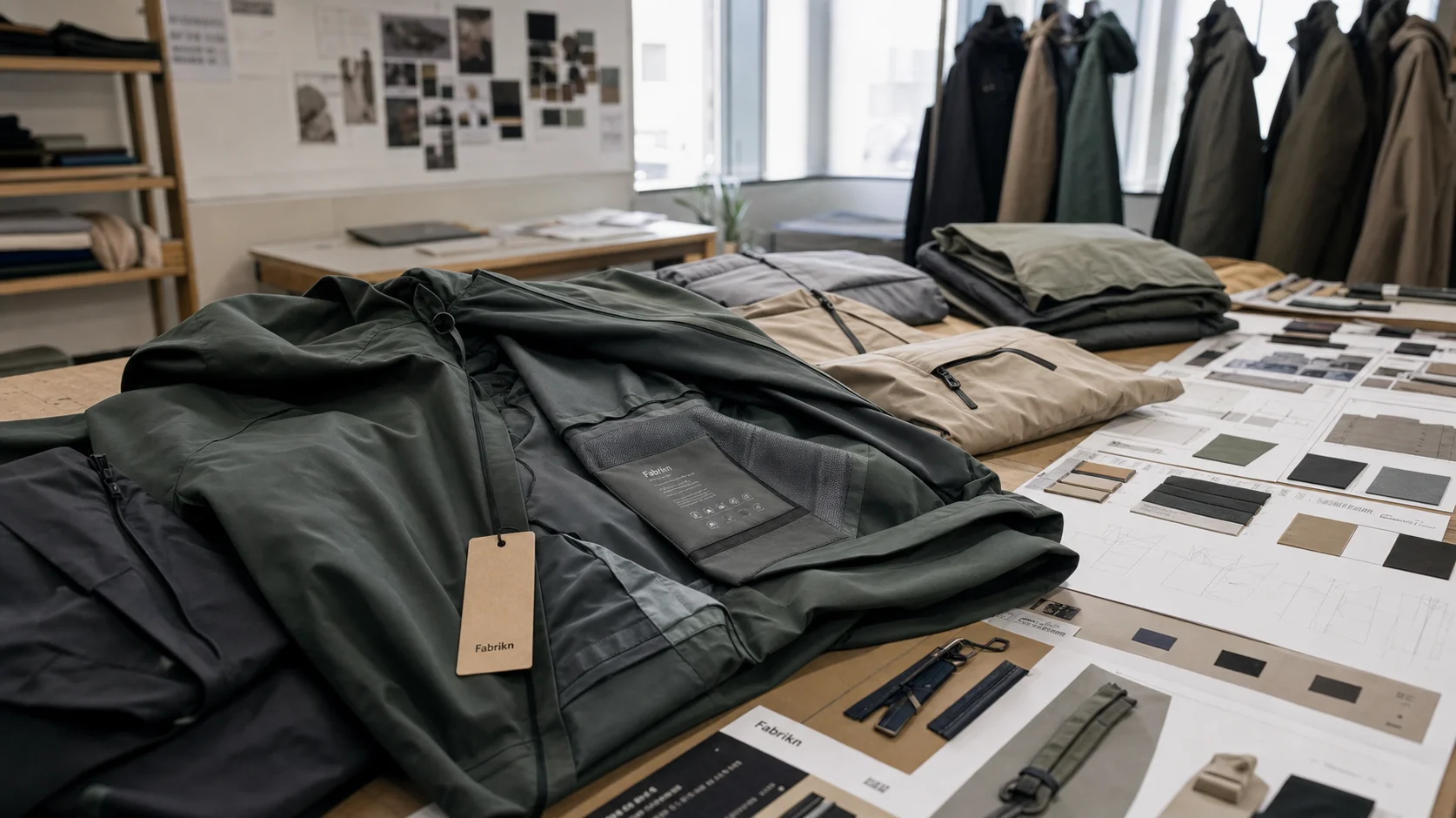
Apparel Mailer QA Checklist with checks for samples, fit, MOQ, QC evidence, pricing terms, and delivery risk.
Fast answer: Apparel Mailer QA Checklist: Material, Closure, Print, and Shipment Fit should be judged by production evidence, not by a generic sourcing promise. The buyer needs sample proof, cost breakdowns, QC checkpoints, and delivery buffers in writing.
Ask for recent sample photos, measurement tolerances, fabric or print test assumptions, decoration test notes, packing examples, and a named inspection checkpoint. These details show whether the team can repeat an approved sample at bulk volume.
Separate garment cost, decoration, labels, packaging, sampling, testing, freight, and rush charges. When every cost line is visible, it becomes easier to reduce colorways, adjust size depth, or reserve more time for sampling.
Damaged returns rose 12 percent. Unboxing complaints doubled. Last year, while reviewing one mid-size apparel brand, I watched it ditch plastic poly mailers for recycled kraft clothing mailer boxes supplier china options. Sustainability wasn’t the starting point. Margin leakage was. Crushed collars, dented hems, scuffed logos — all of it was bleeding cash, and the customer service logs made that obvious.
China keeps winning these orders for a simple reason: cluster effect. Carton mills, board converters, printing houses, glue suppliers, die-cutting shops — often within a 200 km radius. Less transport. Less coordination. Less rework. On factory visits across Guangdong and Zhejiang, I kept seeing unit costs land 15-30 percent below fragmented regional sourcing, especially on runs above MOQ 3,000 pieces.
And the price spread? Wider than many buyers expect. Low-cost factories may quote $0.22-0.35 per box for a basic mailer at 5,000 units. Mid-tier export specialists often sit at $0.38-0.65. Premium custom packaging mills can hit $0.75-1.20 once embossing, specialty inks, and tighter tolerances enter the picture. Sounds tidy until tooling, palletization, and domestic trucking show up. A 1,000-unit order can look cheap on paper, then balloon 30-60 percent once setup fees and waste are counted.
Here’s what I saw on the floor: the lowest quote was not always the weakest box. One small plant outside Dongguan, with 28 workers and an older flexo line, produced flatter die-cuts and cleaner glue lines than a much larger mill shipping 50,000 units a week. Discipline did it. Not size. Crease memory held tighter, corner squareness stayed within 1.5 mm, and compression failures were rare in a 200 kg stack test. Small does not equal sloppy.
Cheap packaging is not the same as sustainable packaging. A recycled kraft mailer only earns the label if the paper grade, recycled fiber percentage, ink system, and shipping efficiency all hold up. I’ve seen brands pay for “eco” packaging that arrived in oversized cartons, used heavy coatings, and added 8-10 percent to outbound freight. Branding theater. Not business logic. If the box can’t protect a rib knit tee or a 320 GSM French terry sweatshirt over a 3-4 week transit window, the story collapses fast.
In Guangzhou’s Shunde and Baiyun districts, packaging parks combine inline corrugator boards, white top liner mills, and finishing houses that operate Bobst Mastercut 106 die-cutters and Heidelberg Speedmaster CX 102 presses. Those plants also run water-based adhesive stations and inline gluing, so a full self-locking mailer can move from flexo print to stack-out in 6-8 hours. A boutique factory there recently quoted $2.50-4.00 per unit at 500 MOQ for a two-tone self-locking mailer that included matte aqueous coating, custom micro-perforation, and pallet stretch wrapping; exports arrive in 18-22 business days when booked on the Guangzhou Port lane. While Guangzhou handles matching, finished garments flowing north from Dhaka or Ho Chi Minh City still need the same box specs; the packaging line times must align with the knitwear lines so the entire shipment leaves together without idle warehousing.
Start with the board spec sheet. Recycled kraft liner should show basis weight, usually 120-250 GSM for apparel mailers. The inner board may be single-wall E-flute, B-flute, or a fold-flat paperboard structure, depending on garment weight. Adhesive type matters too — water-based glue is common, hot-melt sets faster, and solvent-heavy systems should raise eyebrows. If mill certificates or batch records are missing, the recycled-content claim is just marketing.
Apparel packaging usually falls into four useful formats: tuck-end mailers, self-locking mailers, rigid-style kraft boxes, and fold-flat shippers. Tuck-end styles work well for T-shirts at MOQ 500 pieces. Self-locking versions handle hoodies, denim, and heavier sets better. Rigid-style kraft boxes cost more, often 20-40 percent above simple mailers, but they signal luxury and can support higher retail margins. Fold-flat shippers save warehouse space by 30-50 percent.
Print and finish decisions affect both appearance and recyclability. Flexo works well for 1-3 color branding. Offset gives sharper detail for complex artwork. Digital printing suits short runs of 300-1,000 units. Water-based coatings and soy inks usually keep the recycling path cleaner than heavy lamination. Too much coating contaminates the fiber stream and makes a supposedly recyclable box behave like coated board. According to the ISO, quality systems and traceability only matter if the process is repeatable.
The factory floor should show the machines and measurements you expect. Die lines should be cut on a Bobst Mastercut or similar, stackers should feed into Kolbus folding stations, and finishing should happen on a Heidelberg stitching or gluing platform. For double-wall panels, check that the corrugator (often a Fosber or BHS) calibrates flute height within ±0.3 mm and that moisture content stays at 6-8 percent before die-cutting. In the finishing hall, compression testers should record 15-18 kPa crush resistance for light-duty mailers and over 22 kPa for rigid boxes. A proper operation can pull historic job sheets for a run that went through their GRS-certified fiber line, the same machinery that handled your mock-up.
Factory proof points are not decorative. Ask for ISO certification, FSC or PEFC chain-of-custody documents, BSCI or Sedex audit results, in-house compression and burst testing, and export paperwork for your destination market. I also check for a sample room with dated reference samples. A real operation can show last month’s print run, not just a polished brochure.
Red flags show up quickly. Vague recycled-content claims. Factory photos that hide the machines. Creased samples with inconsistent fold lines. No compression-test data. Any of those, and risk is already climbing. I’ve seen samples with 2 mm print drift turn into 6 mm drift in production after a vendor changed paper stock without telling the buyer. That’s why sample stage matters. Not a formality. The audit in miniature.
Packaging pricing is a stack, not a single number. For a 10,000-unit order, I model box price, printing, die-cut tooling, inner packing, export cartons, ocean freight, duties, and warehouse intake. A supplier might quote $0.41 per box ex-works, but the landed number can move to $0.58 or higher once tooling amortization, pallet wrapping, and domestic drayage get added. The gap widens quickly when the order is split across multiple sizes.
Small runs are expensive. At 1,000 units, the same box can cost 30-60 percent more than at 10,000 units because press setup, paper spoilage, and cutting calibration get spread over fewer pieces. On a 2-color logo with a simple tuck design, a buyer may pay $420 in setup alone, then another $180-250 in sample and proofing fees. A 5,000-unit run absorbs that overhead far better than a 1,000-unit test.
Regional differences are real. Guangdong suppliers often charge more for labor, but they usually have stronger export documentation and faster communication. Zhejiang plants can be highly competitive on board sourcing and print consistency, especially for brands that need repeat orders every 60-90 days. Shandong mills tend to be strong on paperboard cost and bulk capacity, though some buyers find their color control less flexible on fashion packaging. If your line includes cut and sew manufacturing, packaging timing must match garment completion, or the whole shipment slips.
When garments arrive from Dhaka or Ho Chi Minh City, the packaging loading bay in Guangzhou will usually wait for a consolidated container; any hold-up adds per diem to the forwarder and risks a 40-foot reefer or 40HQ slot. Istanbul-based brands that source both from Turkey and China often treat packaging as a separate PO, then reconcile costs in their ERP, but those that synchronize the flows save both freight and storage. The savings hide in engineering. I’ve seen a 5 mm reduction in box height cut carton volume by 8-12 percent over a season, which lowers shipping charges and warehouse space. That kind of adjustment matters more than swapping a $0.44 box for a $0.42 box.
Last year I worked with a brand that spent $0.09 per unit on an insert nobody noticed. We removed it, improved the fit by 3 mm, and reduced outbound damage by 7 percent. That’s the math packaging deserves. If you’re balancing packaging against private label clothing services, the box has to support the brand promise, not drain it.
The timeline is usually more predictable than buyers think, provided the brief is clean. Inquiry comes first, then design review, material sampling, and prototyping. Once you confirm paper grade (typically 170 GSM kraftliner with 70 percent post-consumer fiber), a supplier will route the sample through a Heidelberg Speedmaster or Mimaki digital press, then die-cut on the Bobst Mastercut and hand-glue a few units to test the fold sequence.
Lab-ready samples often take 10-12 business days, especially when die-line and board lamination need co-development. After sample approval, the factory books the corrugator and finishing lines. The production run itself normally requires 18-22 business days from start to finish — substrate prep, print, die-cut, glue, stack, pack, and label. Premium finishes like soft-touch aqueous coatings or gold foil add 2-4 extra production days, since the press must slow down and the oven must cure the coating evenly.
During production, I expect daily updates with live photos of the press sheet, a log of glue tack readings, and the shipping mark proof. Any variation in Pantone, board moisture, or adhesive application should surface before the entire run completes. What often slows things is waiting for the export carton supplier to send skid crates sized to your pallet; the best partners build those jigs ahead of time.
Once goods clear inspection, the factory schedules inland drayage to the port (Guangzhou, Shanghai, or sometimes Shenzhen if the slot matches your container). Combined with ocean transit, you usually predict 30-35 days to the West Coast and 40-45 days to Northern Europe if you ship from Guangzhou; chunking those shipments with garments from Dhaka or Ho Chi Minh City can lower your per-unit landed cost (and spare Istanbul-based marketing teams from juggling multiple warehouses).
Claims without proof are marketing. The strongest packaging suppliers hold certifications such as GOTS (Global Organic Textile Standard) when they handle organic fiber mailers, OEKO-TEX Standard 100 for inks and adhesives, WRAP for socially compliant operations, BSCI for supply chain transparency, and GRS (Global Recycled Standard) for recycled content and traceability. I check that the factory’s third-party auditor visits the warehouse floor, not just the office.
Guangzhou plants tend to have the deepest portfolio of these certificates, thanks to audited export corridors and frequent European brand partners. I’ve also seen smaller mills near Ho Chi Minh City and Dhaka align with OEKO-TEX and WRAP when they partner with mainland converters — the converters bring the die-cutting and finishing under one roof while the original fiber still carries its recycled claim. Istanbul-based designers sometimes require additional proof for European eco-labels, so the supplier must be comfortable sharing the GRS batch sheet, stock IDs, and polymer-coated adhesive specs.
Material transparency is part of sustainability. A genuine recycled kraft board will show over 60 percent post-consumer fiber, a moisture content of 5.8-7 percent, and will use water-based adhesives or solvent-free hot melt. Excessive lamination or PET film voids the recyclability; the best suppliers run the paper through an inline tester that ensures the board still passes pulp recovery tests in a Chinese recycling plant and delivers the same quality to Dhaka’s salvaged fiber lines.
Any supplier who promises environmental sustainability should also share process data: scrap rates, ink VOC counts, energy monitoring, and how they reuse starch water. If a factory tells you their MDO (Machine Direction Orientation) ratio is stable at 1.03, you know they control the corrugator energy setpoint. Sustainability is measurable. Look for the documents that prove it.
Auditing a new packaging supplier means examining three things: documentation, people, and process. Ask for ISO 9001, ISO 14001, and the latest WRAP/BSCI certificates. Review their GRS and OEKO-TEX reports. Confirm the recycle content by checking mill test certificates (MTCs) showing fiber composition, tensile strength, and tear resistance.
On-site, inspect the equipment: Bobst die-cutters, Kolbus folding machines, inline glue applicators, and Heidelberg presses should all show maintenance logs and calibrated sensors. Check the corrugator’s flute accuracy and the pre-press operator’s proofing routine. Observe the sample room; a proper plant keeps dated reference sheets from the last 3-4 jobs, allowing you to compare previous coloration or coatings.
Trace the material flow. Watch incoming recycled liners hit a moisture booth, move through the water-based glue puddle tank, and exit as a finished mailer with custom adhesive tapes. Ask the floor manager how scrap is recorded. The best factories run daily QC reports with compression testing results, moisture readings, and color measurements, and they share an online portal with buyers so everyone stays aligned.
Start by locking in your specs: board weight, recycled content percentage, print colors, finishing, and inner packing requirements. Share those with at least three vetted suppliers and confirm their minimum order quantities, tooling costs, and certification status. Ask about their access to Guangzhou, Shanghai, and Shenzhen ports, and if they coordinate with garment makers in Dhaka or Ho Chi Minh City to consolidate containers.
Request a pre-production sample, allow 18-22 business days, then run it through your own compression and shelf-life tests. Compare that sample to the plant’s reference runs and make sure the PDF artwork matches their press sheet. Only after the sample passes should you place a production PO, and always factor in 12-14 percent extra in your MOQ budget for logistics, palletization, and inspection (which is often done in the packaging hub before the container seals). Good packaging partners in Guangzhou will also help you plan future reorders, ensuring your next batch ships faster than the first.
Q: What’s the cost for a short run of self-locking mailers? A: For 500 units with matte aqueous coating and a custom logo, expect $2.50-4.00 per unit at most Guangzhou vendors, depending on trim size and whether they need to source specialty inks.
Q: How long does a production run take? A: Once the sample is signed off, a full production run typically takes 18-22 business days, inclusive of printing, die-cutting, gluing, and packing. Add another 5-7 days if you require foil or embossing and need the press to slow down.
Q: What certifications should I look for? A: Ask for GOTS and OEKO-TEX Standard 100 if you’re using organic or skin-sensitive materials; WRAP and BSCI for labor compliance; and GRS for recycled fiber content. The best suppliers will happily share audit reports from Guangzhou labs or Istanbul-based certifiers.
Q: How can I link packaging to my garment factories in Dhaka or Ho Chi Minh City? A: Coordinate production windows so your packaging arrives a week before the finished garments. Combine documentation so the forwarder handles one consolidated container, which cuts per-unit freight and avoids duplication at the port.
Q: Is it worth auditing your Chinese supplier? A: Absolutely. Auditing verifies the machines (Bobst, Kolbus, Heidelberg), materials, test reports, and sustainability credentials in real time. A thorough audit minimizes surprises once the PO is live.