
A 2500-word SEO outline for hotel procurement teams auditing recycled polyester safety vest colorfastness, wash durability, visibility, and supplier...
Recycled Poly Safety Vest Audit for Hotel Buyers - Fabrikn production reference
Hotel procurement teams buying recycled polyester safety vests have a narrow job: make staff visible, protect the brand presentation, and avoid quality failures that show up after the first laundry cycle. The colorfastness audit is where many “sustainable” vest programs succeed or fail. A vest can meet the recycled-content target and still bleed fluorescent dye onto white shirts, fade under sunlight at the loading dock, or lose reflective performance after repeated washing.
This guide is written for hotel buyers, sourcing managers, uniform coordinators, and ESG procurement teams auditing recycled poly safety vests for valet, security, engineering, housekeeping support, night receiving, parking, events, and back-of-house operations. It focuses on practical buying decisions: fabric specs, trim risks, typical MOQ ranges, sample approval steps, lead-time dependencies, and inspection points that should be checked before bulk production is released.
Recycled polyester safety vests are attractive to hotel procurement teams because they support visibility, uniform consistency, and sustainability messaging in one product. They are commonly made from recycled PET yarn, often promoted as rPET, and used in lightweight mesh, birdseye knit, woven polyester, or Oxford-style utility vest constructions.
In a hotel environment, these vests are not only functional PPE-adjacent garments. They also sit inside a guest-facing brand system. A valet vest that fades unevenly or a loading dock vest that stains staff shirts creates a different problem from a minor defect in a hidden warehouse uniform. Hotels need safety visibility without making staff look temporary, mismatched, or poorly supplied.
Recycled poly vests are usually purchased for several departments:
The purchasing judgment is simple: recycled polyester is a strong option when durability and color control are specified properly. It becomes risky when the buyer approves a vest based only on a supplier’s sustainability claim, a low unit price, or a single showroom sample that has not been washed, rubbed, exposed to light, or checked against trim compatibility.
For hotel buyers, the audit should not ask only whether the vest is recycled. It should ask whether the recycled vest still performs after laundry, sunlight, body movement, reflective tape bonding, and daily staff handling.
Colorfastness means the fabric and trims hold their color when exposed to conditions that normally affect garments. For hotel safety vests, the important conditions are washing, perspiration, rubbing, light exposure, water spotting, and contact with other uniform pieces.
Hotel procurement teams should not treat colorfastness as a laboratory phrase with no buying consequence. Poor colorfastness can cause direct operational problems. Fluorescent yellow may become dull, orange may shift toward red or brown, navy binding may crock onto light shirts, and black zipper tape may stain the vest panel during washing. Reflective tape can also look worse if the surrounding fabric fades quickly.
Colorfastness is especially important for recycled polyester because recycled-content claims do not automatically control dyeing quality. rPET yarn can perform well, but the final result depends on fiber quality, dye selection, heat setting, fabric construction, finishing, and the supplier’s process control. The same recycled polyester content can produce very different vest performance depending on the mill and finishing route.
A reasonable audit request should specify the test method, expected grade, sample conditioning, and whether the result is measured after one wash or multiple washes. Many procurement failures occur because the buyer receives a generic “passed colorfastness” statement without knowing the standard, grade, or test condition.
Hotel safety vests are usually ordered in fluorescent yellow, fluorescent lime, fluorescent orange, navy, black, royal blue, or brand-custom colors. Each color brings a different audit concern.
Fluorescent yellow and lime are common for high-visibility use, especially where vehicles are present. These colors are useful, but they are sensitive to fading and dulling. A recycled poly vest that looks bright at sample stage can lose its fluorescent impact if the dyeing process, finishing, or lightfastness is weak.
Hotel buyers should be cautious when choosing the lowest-cost fluorescent rPET mesh. Lightweight mesh may be comfortable in warm climates, but it can also show uneven dyeing, snagging, and rapid shade loss if the fabric is poorly finished. For valet and exterior security teams, lightfastness is not optional. It should be part of the audit.
Orange vests are often selected for loading docks, engineering, and traffic control. Orange can be more forgiving than fluorescent yellow in some staining situations, but shade consistency is still a concern. Poorly controlled lots may range from bright orange to reddish orange, creating a mixed appearance across departments.
If orange is used across several hotel properties, procurement should approve a master shade standard and require lot-to-lot shade comparison before bulk shipment. A hotel group ordering replenishment quantities every few months should pay close attention to shade continuity.
Dark recycled polyester vests may be used when safety visibility is less regulated and the buyer wants a more discreet hotel look. These colors can create dye transfer risks. Navy and black bindings, tapes, zippers, pockets, and printed logos may crock onto light-colored shirts.
The tradeoff is clear. Dark vests often look more premium and easier to coordinate with hotel uniforms, but they may reduce visibility and require stricter rubbing and perspiration checks. If the vest is meant for traffic exposure, do not let brand aesthetics override visibility requirements.
Some hotels request custom recycled poly vests in brand-specific colors. This can work for concierge logistics, resort transport teams, or event staff, but the sourcing burden increases. Custom dyeing usually raises MOQ, lengthens lead time, and requires lab dip approval before sampling.
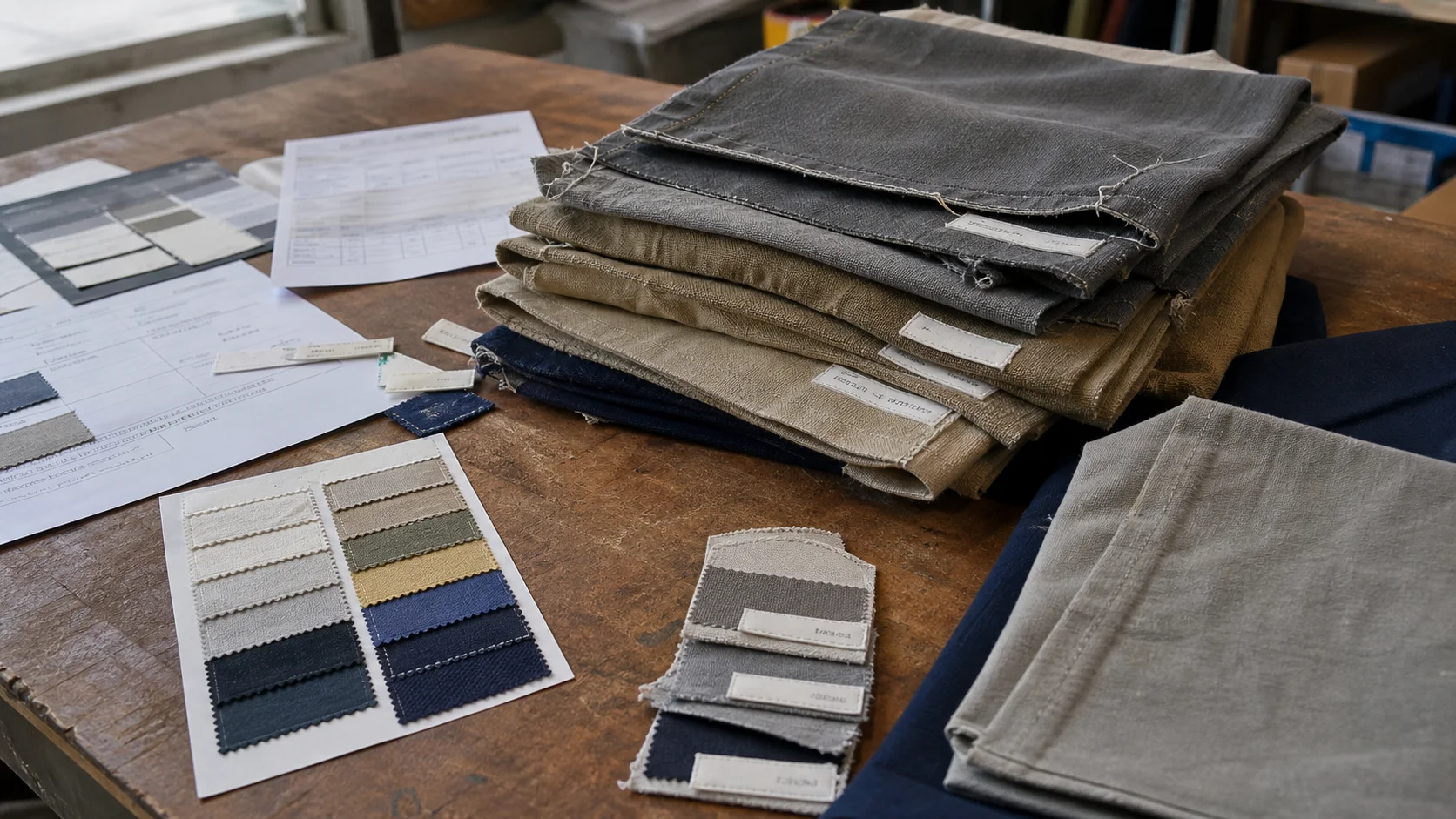
Custom colors should not be approved by screen view or supplier photo. Hotel procurement teams should use physical swatches under agreed lighting conditions. For group programs, keep an approved fabric cutting, trim card, and reflective tape reference in the procurement file.
A colorfastness audit works best when the product specification is clear. If the tech pack only says “recycled polyester safety vest,” the supplier has too much room to choose fabric, trim, and finishing options that may reduce cost at the expense of performance.
For broader sourcing support, buyers can review apparel development and production options through Fabrikn services. The main point is to document the vest standard before price negotiation becomes the only discussion.
Reflective tape deserves special attention. Some lower-cost tapes look acceptable on the first sample but degrade after washing or show edge lifting after heat exposure. Tape performance should not be assumed from appearance. Ask for test evidence for the exact tape type and attachment method used in production.
A useful audit should connect lab testing, sample handling, and bulk inspection. Hotel buyers do not need to become textile chemists, but they do need enough structure to stop avoidable failures before the order ships.
Start with a physical approved shade standard. This may be a lab dip, fabric swatch, or approved pre-production sample. The standard should be signed, dated, and kept by both buyer and supplier.
For fluorescent shades, evaluate under consistent lighting. Office lighting, warehouse lighting, daylight, and phone photos can all make color look different. Use a practical approval rule: if the vest will be used outside, review it in daylight as well as indoor lighting. For multi-property hotel groups, define an acceptable shade tolerance before production.
Ask for test results from the actual bulk fabric or the fabric quality intended for production. A report from a different fabric, different color, or previous season should not be treated as full evidence.
Common requested areas include washing, rubbing, perspiration, light, and water. Many buyers specify minimum grades based on their risk level. For non-critical apparel, a grade 3-4 may be acceptable in some categories, while high-visibility hotel vests may need stricter internal expectations for visible color change and staining. The exact requirement should be aligned with applicable standards, intended use, and local regulations.
Do not approve only an unwashed sample. Run a controlled wash based on the intended care label. If hotel laundry will wash the vests in-house, test conditions should reflect the real process as closely as possible: water temperature, detergent type, drying method, and wash frequency.
After washing, check:
Hotel staff often wear safety vests over white, light blue, or pale grey shirts. A vest that passes a simple visual check may still transfer dye during movement, sweat, rain, or contact with bag straps and radios.
Procurement teams should request dry and wet rubbing results. A practical internal check is also useful: rub a white cotton cloth against high-risk zones such as navy binding, printed logos, pocket edges, and shoulder seams. This does not replace a lab test, but it can flag obvious risk before a bulk order proceeds.
Valet, parking, resort transport, and outdoor security teams may spend long periods in sunlight. Fluorescent fabrics can degrade visually faster than standard colors if the dye and finishing are not suitable.
Lightfastness should be considered when vests are used outdoors for repeated shifts. If the vest is only used indoors or briefly at the loading dock, the requirement may be less demanding. The purchasing decision should match the operational reality rather than using one generic safety vest specification for every department.
Recycled polyester vest orders can involve multiple fabric lots, especially when the order is split across sizes, departments, or phased deliveries. Lot variation is one of the most common reasons hotel teams receive vests that look inconsistent on staff.
Before shipment, ask the supplier to confirm whether the full order was cut from one dyed lot. If multiple lots are used, they should be separated, identified, and inspected against the approved shade standard. Mixing shade lots within the same department should be avoided where possible.
Sample approval should be staged. A single sample rarely proves enough for recycled poly safety vests, especially when custom color, reflective tape, logos, and recycled-content claims are involved.
The pre-production sample should be the control sample. It should include the actual recycled polyester fabric, actual reflective tape, actual labels, final logo technique, correct size grading, and agreed packaging. If the hotel buyer signs off on a substitute sample, the supplier may have room to interpret the bulk order differently.
For buyers still defining supplier expectations or a specification pack, contacting a sourcing team can help clarify what should be confirmed before a purchase order is issued.
Minimum order quantity depends on fabric availability, color, trim, logo method, size range, and whether the supplier is using stock recycled polyester fabric or custom dyeing. Hotel teams often underestimate how much MOQ changes once a custom color or certified recycled-content chain is required.
These are typical planning ranges, not fixed rules. Some suppliers may accept lower MOQs using stock materials and simple decoration. Custom dyeing, special reflective tape, certified recycled inputs, or complex packaging can push MOQ higher.
Lead time is not only sewing time. The production calendar often includes yarn or fabric booking, lab dip approval, trim sourcing, sample rounds, testing, bulk dyeing, cutting, sewing, inspection, packing, and freight.
For a straightforward stock vest, production may be possible in a shorter window if fabric and trims are available. A custom recycled polyester safety vest program may require more time, especially if the buyer requests lab testing before bulk cutting. A realistic planning window often ranges from 30-60 days for simpler programs and 60-90 days or more for custom color, certified recycled-content, or multi-property rollout orders.
Procurement should build extra time for sample revisions. Fit over uniforms is frequently missed. A safety vest that fits a model form may not fit comfortably over a hotel blazer, rain jacket, utility shirt, radio harness, or tool belt. Size grading should reflect the actual staff use case.
The cheapest recycled poly safety vest is not always the lowest-cost program. If the vest fades, stains shirts, or needs replacement after a few wash cycles, the hotel pays again through reorders, staff complaints, inconsistent appearance, and sustainability credibility loss.
Common cost decisions include:
Direct purchasing judgment: if the vest is guest-facing or used outdoors, spend more attention on colorfastness, reflective tape, and shade consistency. If the vest is occasional back-of-house use, a stock recycled polyester vest may be enough, provided it still passes washing and rubbing checks.
Bulk inspection should compare actual production against the sealed pre-production sample, approved shade standard, purchase order, size spec, trim card, care label, and packaging instruction. Safety vest failures are often visible if the inspector knows where to look.
For hotel groups, size and department sorting deserves more attention than it usually gets. If the order serves multiple properties, each carton should be marked clearly by property, department, size, and quantity. A good vest can still create operational frustration if receiving teams must sort hundreds or thousands of pieces manually.
Many buyers use AQL-style inspection, but the acceptable quality level should match the risk. Cosmetic defects may be handled differently from safety-related or visibility-related failures. Reflective tape failure, incorrect color, serious staining, and wrong labels should be treated as major concerns.
Do not rely only on carton-level inspection. Pull samples from different cartons, sizes, and production lots. If the supplier used multiple fabric lots, inspect each lot separately against the approved standard.
Recycled polyester supports sustainable fashion goals, but procurement teams should avoid vague claims. A vest is not more sustainable simply because a supplier uses the word “eco.” The claim must be tied to material content, documentation, durability, and realistic end use.
Hotel buyers should request clear answers to these points:
The strongest sustainable purchasing decision is not always the highest recycled percentage. A durable vest with verified recycled content and strong colorfastness may be a better choice than a higher-claim vest that fades quickly and must be replaced. Durability is part of sustainability.
Buyers can also review company background and sourcing approach through Fabrikn’s about page when comparing supplier fit for responsible apparel programs.
Before issuing a purchase order, hotel procurement teams should ask direct questions. The goal is not to overload the supplier with paperwork. The goal is to identify whether the supplier controls the product or is simply reselling a generic vest with limited visibility into fabric and trims.
Good suppliers answer these questions clearly. Weak suppliers often respond with generic claims, unclear photos, or assurances that “all customers accept it.” Hotel procurement teams should treat vague answers as a risk signal, especially when the vest will be worn by guest-facing staff or tied to sustainability reporting.
A recycled poly safety vest audit should balance compliance, brand presentation, sustainability, comfort, and cost. Procurement teams do not need the most expensive product in every case. They need the right specification for the job.
For exterior valet and security use, prioritize high-visibility color, lightfastness, reflective tape performance, and fit over outerwear. For back-of-house receiving and engineering, durability, pocket function, wash resistance, and dark-trim color transfer may matter more. For event teams, appearance, logo clarity, and easy size distribution may be the main concerns.
A sensible hotel buying framework looks like this:
The main tradeoff is between speed and control. A stock recycled polyester vest can move quickly and cost less, but it may limit color, documentation, and trim choices. A custom audited vest takes longer and usually costs more, yet it gives the buyer better control over brand appearance, ESG claims, and service life.
Recycled poly safety vests can be a practical sustainable fashion purchase for hotels, but only when the audit goes beyond recycled-content language. Colorfastness is central because it affects appearance, guest perception, staff confidence, uniform compatibility, and replacement cost.
The best hotel procurement approach is cautious and specific. Approve physical color standards. Test the actual fabric. Wash the sample before signing off. Check reflective tape and dark trims. Confirm recycled-content documentation. Inspect bulk production by shade lot and size range.
For buyers managing multiple properties, the cost of poor control is multiplied across departments and locations. A slightly stronger audit at the start can prevent inconsistent rollout, emergency replacement orders, and sustainability claims that do not hold up under scrutiny.
Get a free quote from Fabrikn — your trusted B2B clothing manufacturer with 10+ years of experience. MOQ as low as 200 pieces.
Get a Free Quote →A recycled poly safety vest is a visibility garment made partly or fully from recycled polyester, often sourced from recycled PET. It may use mesh, knit, or woven fabric and can include reflective tape, bindings, pockets, closures, and hotel branding.
Colorfastness affects whether the vest fades, bleeds, stains other garments, or loses its professional appearance after washing, sweating, rubbing, rain, or sunlight exposure. For hotels, poor colorfastness can damage both uniform presentation and staff confidence.
Common requests include colorfastness to washing, rubbing, perspiration, light, and water. Buyers should ask for results linked to the actual fabric, color, and production lot whenever possible.
Yes, recycled polyester safety vests can meet hotel uniform standards if the fabric, dyeing, reflective tape, trim, sizing, and inspection process are properly controlled. The recycled claim alone does not guarantee quality.
Typical MOQ may range from 300-1,000 pieces for stock recycled poly vests and 1,000-3,000 pieces or more for custom colors. Certified recycled-content programs or complex utility vests may require higher quantities.
Simple stock programs may be faster, while custom recycled polyester vests often require 60-90 days or more when lab dips, sample approvals, testing, and bulk inspection are included. Lead time depends on fabric availability, trim sourcing, documentation, and freight method.
No. Hotels should review an unwashed sample and a washed sample before bulk approval. Washing can reveal fading, staining, reflective tape lifting, trim shrinkage, logo defects, and fit changes.
The main risks include shade variation, reflective tape defects, incorrect measurements, weak stitching, logo misplacement, inaccurate recycled-content labels, wrong care labels, and poor carton sorting by size or property.
Not always. A higher recycled percentage is useful only if the vest remains durable, colorfast, and fit for purpose. A verified recycled-content vest with better wash and color performance may be the stronger sustainable choice.
They can reduce problems by setting a clear specification, approving physical shade standards, requesting relevant colorfastness tests, washing samples before approval, sealing a pre-production sample, and inspecting bulk goods before shipment.