
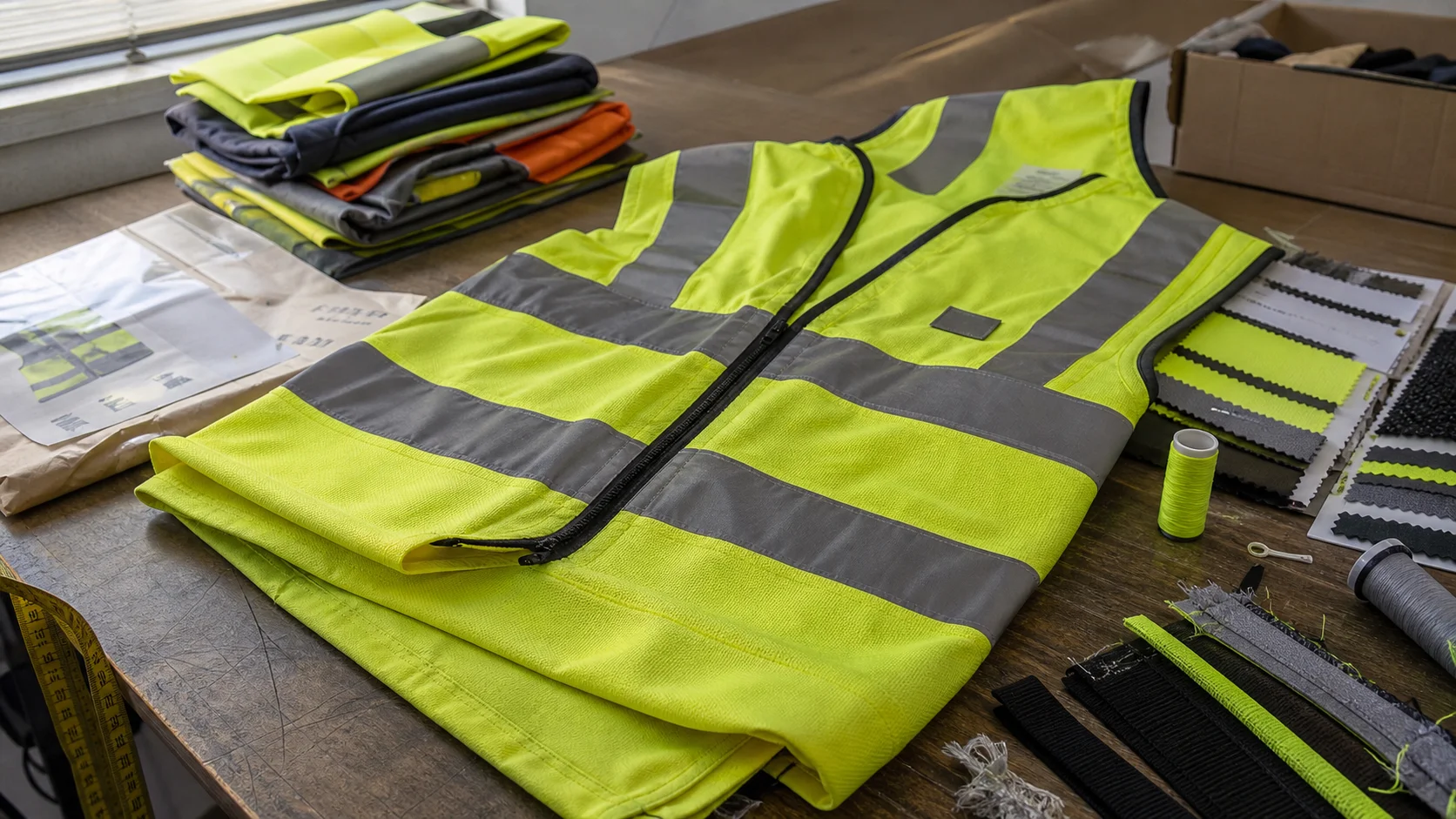
A 2500-word SEO outline for restaurant group buyers auditing recycled polyester safety vest manufacturers for colorfastness, visibility retention, wash...
Recycled Poly Safety Vest Colorfastness Audit - Fabrikn production reference
Category: Sustainable Fashion
Restaurant groups buy safety vests for more than basic visibility. The garment has to work across delivery teams, parking attendants, curbside pickup staff, catering crews, commissary workers, warehouse handlers, and event teams. In many operations, these vests move through repeated washing, heat exposure, food-service soil, sanitizer contact, rain, vehicle interiors, and outdoor sunlight. A bright vest that looks acceptable at first delivery can become a brand and safety problem after only a few cleaning cycles if colorfastness was not controlled properly.
For a recycled poly safety vest manufacturer, colorfastness is one of the most important audit points because recycled polyester can vary more than virgin polyester if raw material sourcing, yarn quality, dyeing conditions, and finishing controls are loose. Buyers should not treat “recycled” as a complete quality claim. It is a material direction, not a performance guarantee.
Restaurant groups usually need a balance between sustainability, safety visibility, uniform consistency, and cost control. The sourcing decision is not only whether the vest is made with recycled polyester. The decision is whether the supplier can deliver repeatable fluorescent shade, stable reflective trim placement, controlled shrinkage, durable print or logo application, and acceptable performance after laundering.
A good recycled poly safety vest program should be audited as a uniform and safety product at the same time. If the vest fades, bleeds, stains permanently, or loses visibility too quickly, the sustainability claim will not protect the buyer from replacement cost or operational risk.
Recycled polyester used in safety vests is commonly made from post-consumer PET bottles or post-industrial polyester waste. The fiber can be spun into yarn, knitted or woven into mesh or solid fabric, dyed in fluorescent colors, and finished for use in high-visibility garments. For restaurant groups, the most common safety vest fabrics are lightweight recycled polyester mesh, bird-eye knit, warp-knit mesh, or plain woven polyester depending on breathability, durability, and price target.
The main benefit is reduced reliance on virgin petroleum-based polyester. The practical sourcing concern is consistency. Recycled feedstock quality, chip processing, yarn spinning, fabric construction, and dyeing all affect final performance. A mill using recycled polyester should be able to identify recycled content percentage, fiber source type, yarn count, fabric weight, dyeing route, and certification status if certification is being claimed.
Common recycled content levels for safety vest programs range from 50% to 100% recycled polyester. Full recycled polyester is possible, but trims may not always match the same sustainability target. Reflective tape, hook-and-loop closures, zippers, binding tape, thread, labels, and printed logos may include virgin synthetic materials unless specified otherwise. Buyers should ask for a bill of materials rather than accepting a broad “eco vest” description.
Restaurant groups should also decide whether recycled content is a marketing requirement, procurement requirement, or compliance requirement. If the vest is part of a public sustainability initiative, stronger documentation is needed. If it is an internal purchasing preference, the buyer may accept supplier declarations with periodic checks. For larger programs, chain-of-custody certification or transaction certificates may be appropriate.
A colorfastness audit is not a single lab test. It is a structured review of how color performance is designed, produced, checked, and protected through the supply chain. For restaurant groups, the audit should focus on realistic use conditions rather than only showroom appearance.
The audit should include document review, sample review, production process review, lab testing, and shipment inspection. A supplier can pass one stage and still create problems in another. For example, a lab dip may meet the approved shade, but bulk fabric can shift if the dyeing mill changes recycled yarn input or finishing conditions. A production sample may look correct, but poor packaging can cause color transfer in humid transit.
Restaurant groups should treat the audit as a risk filter before scaling. Small pilot orders are useful, but they should not replace test discipline. A pilot worn by a few staff members may not expose the vest to enough laundering, detergent variation, sunlight, or sanitizer contact to reveal weaknesses.
The purchase specification should be written clearly enough that suppliers quote the same product. Vague terms such as “recycled safety vest, good quality, bright color” leave too much room for substitution. A stronger specification should define fabric, recycled content, color, weight, trim, stitching, logo, packaging, and testing requirements.
For restaurant groups, breathable mesh is often preferred for staff moving between indoor and outdoor zones. A heavier fabric may last longer, but it can reduce wearer compliance if staff find it uncomfortable. The better purchase decision depends on working conditions, cleaning process, seasonality, and replacement cycle.
Most safety vest programs use fluorescent yellow-green, fluorescent orange, or bright red-orange. If the garment is intended to meet a specific high-visibility standard, the buyer should specify the standard, class, background material requirements, reflective material requirements, and test obligations. If the vest is for internal visibility rather than regulated roadside work, the buyer should still set clear colorfastness and visibility expectations.
Fluorescent shades are more difficult to control than standard fashion colors. They are sensitive to dye selection, heat setting, UV exposure, and washing. Recycled polyester does not automatically perform worse, but the production controls need to be tighter. Bulk fabric should be checked against an approved color standard under consistent lighting, ideally with both visual review and instrumental shade measurement.
Logo decoration is a common weak point. Heat transfer films can peel if wash temperature, pressure, adhesive, or fabric finish is mismatched. Screen prints can crack or lose opacity. Embroidery is durable, but it adds cost and can distort lightweight mesh. For restaurant groups using brand colors, logo performance should be tested on the actual vest fabric, not on a generic polyester swatch.
Testing requirements should match the intended use. Restaurant groups do not always need the most expensive testing package, but they should avoid relying on visual inspection alone. Colorfastness failures can be expensive once vests are distributed across locations.
Buyers should agree on acceptable grading before ordering. A common approach is to set minimum grades for shade change and staining based on the grey scale used in textile testing. The exact standard depends on the market, safety claims, and buyer policy. For many commercial uniform applications, a grade of 4 or better is often targeted for major colorfastness areas, while tougher conditions may require stricter performance. Final requirements should be confirmed with a qualified lab or compliance advisor if the vest is sold or used under a regulated safety category.
Testing should be performed on production-equivalent materials. Lab dips and small development samples are useful, but they do not always represent bulk. The best sequence is lab dip approval, salesman sample or fit sample, pre-production sample, bulk fabric test, and final random inspection. For repeat orders, periodic retesting is sensible because recycled yarn feedstock, dye lots, and trim batches may change.
Restaurant groups expose uniforms to conditions that standard apparel tests may not fully cover. Grease, tomato-based sauces, coffee, bleach-based cleaners, quaternary ammonium sanitizers, alcohol wipes, and alkaline detergents can all affect color and print. Not every exposure needs a formal lab test, but the buyer should run practical wear and wash trials before major rollout.
A cautious approach is to test a small batch under the actual care routine used by the restaurant group. If stores wash garments locally, conditions may vary widely. If a laundry service handles cleaning, the buyer should request detergent type, wash temperature, drying process, and chemical exposure details. High heat drying can accelerate print failure and fabric distortion.
A recycled poly safety vest manufacturer should be qualified on both sustainability documentation and production reliability. Buyers should avoid choosing solely by unit price. Low quotes can hide fabric substitution, thin reflective tape, weak stitching, inconsistent recycled content, or limited testing.
Supplier qualification should begin with a technical questionnaire. Ask for product category experience, fabric sourcing routes, recycled polyester documentation, standard MOQ ranges, testing capability, production capacity, decoration options, and quality control process. If the supplier cannot answer basic questions about fabric weight, yarn type, colorfastness testing, and trim specifications, the risk is high.
If third-party certification is required, define it at the quotation stage. Certification costs, documentation lead time, and transaction certificate handling can affect both timeline and price. A supplier may claim recycled fabric availability but not be prepared for formal chain-of-custody paperwork. That gap becomes a problem if procurement, ESG reporting, or retail compliance teams ask for proof later.
For broader product development, sourcing, and production management support, buyers can review Fabrikn services. A structured sourcing process is useful when the vest program has multiple stakeholders, including operations, sustainability, marketing, and safety teams.
Sampling is where restaurant groups can prevent most color and quality disputes. The workflow should be written before the supplier starts development. Each approval stage should have a clear purpose, and buyers should avoid approving production based only on a digital photo.
Restaurant groups should keep sealed approval samples. One sample should stay with the buyer, one with the supplier, and one may be kept by the inspection team if third-party inspection is used. This creates a reference point for disputes about shade, trim placement, measurement, or logo quality.
Digital approval has limits. Fluorescent colors can appear different depending on camera settings, screen calibration, lighting, and file compression. Photos are useful for checking layout and packaging, but physical samples remain important for colorfastness-sensitive purchases.
Minimum order quantities vary by supplier, material availability, color, decoration method, and certification requirement. For recycled polyester safety vests, typical MOQ ranges may start around 300 to 500 pieces for stock fabric and simple decoration. Custom fluorescent colors, private-label trims, certified recycled content documentation, or special reflective tape can push MOQ to 1,000 to 3,000 pieces per color or style. Fully custom programs with dedicated fabric knitting, dyeing, and trim development may require 3,000 to 5,000 pieces or more.
Buyers should separate garment MOQ from fabric MOQ. A supplier may offer 500 vests if stock recycled fabric is available, but a custom-dyed recycled polyester fabric may require a larger fabric batch. Reflective tape and binding can also have separate minimums. Logo decoration may be flexible, but the base fabric often drives the true MOQ.
A realistic end-to-end timeline for a custom recycled poly safety vest program is often 6 to 12 weeks after technical details are settled. Rush orders can be possible when stock fabric and trims are available, but compressed timelines increase the risk of skipping lab testing, shade review, or top-of-production inspection.
Cost depends on fabric weight, recycled content documentation, reflective tape grade, number of pockets, closure type, logo method, size range, packaging, inspection, and freight. The lowest-price vest usually uses lighter fabric, simpler trim, minimal testing, and basic packaging. That may be acceptable for short-term event use. It is a poor choice for restaurant groups expecting repeated laundering, multi-location consistency, and brand presentation.
For buyers still defining the program scope, contacting a sourcing team early can help clarify whether the target price matches the required test performance and documentation level.
Final inspection should not be treated as a formality. Safety vests are simple garments, but they can fail in many small ways that matter once distributed. AQL inspection or a buyer-defined random inspection should check workmanship, measurements, shade, labeling, packing, and function.
Color inspection should compare bulk garments with the approved sample under consistent lighting. For fluorescent shades, inspection under random warehouse lighting is not enough. Shade bands should be agreed in advance. If the buyer accepts wide shade variation, the product may look inconsistent when staff stand together at a store opening, catering event, or stadium concession operation.
Restaurant groups should also check packaging format. Individual polybags may improve distribution control but add plastic waste unless recycled or alternative packaging is specified. Bulk packing reduces packaging but can create sorting work at the warehouse or store level. A sustainable uniform program should consider packaging waste alongside recycled garment content.
The right recycled poly safety vest is not always the highest-spec option. It is the option that matches the actual operating environment. A parking team working in direct sun and rain needs stronger lightfastness, reflective durability, and wash performance. A short-term event team may prioritize price and delivery speed. A national restaurant group with brand standards should prioritize repeatable shade, logo consistency, and reorder control.
Buyers should decide where they are willing to compromise. Reducing fabric weight can lower cost and improve breathability, but it may shorten service life. Choosing stock fluorescent fabric can reduce lead time, but color may not match a brand palette exactly. Requiring certified recycled content can support sustainability reporting, but it may increase cost, MOQ, and paperwork. Using heat transfer logos can create a clean branded appearance, but wash conditions must be controlled.
For most restaurant groups, the safest sourcing route is a mid-weight recycled polyester mesh or bird-eye knit, approved fluorescent shade, tested wash and crocking performance, durable reflective tape, and a decoration method proven on the actual fabric. This may not be the cheapest quote, but it usually reduces replacement risk.
A sourcing partner should be able to connect sustainability goals with production reality. To understand the type of company support behind apparel sourcing and product development, buyers can review Fabrikn’s background.
Restaurant groups should also build reorder terms into the first purchase. Ask how long the supplier can hold the approved fabric standard, whether the same mill and trim suppliers will be used, and how repeat orders will be matched. If the first order is a pilot, reserve enough approved fabric or document the color standard carefully before scaling.
For a restaurant group, a recycled poly safety vest colorfastness audit should be mandatory before rollout, not optional after a complaint. The vest is a visible uniform item, a safety tool, and a sustainability signal. Those three roles create a higher bar than a generic promotional vest.
The most reliable buying strategy is to start with a clear technical specification, require production-equivalent colorfastness testing, approve physical samples, and inspect bulk goods against a sealed reference. MOQ and lead time should be negotiated after the quality target is defined. If price is negotiated first, the supplier may remove the very controls that protect the program.
Recycled polyester can be a strong material choice for safety vests when the manufacturer controls dyeing, trim compatibility, and final inspection. The buyer’s job is to verify those controls before committing to scale. That is where a disciplined colorfastness audit protects budget, brand consistency, staff compliance, and sustainability credibility.
Get a free quote from Fabrikn — your trusted B2B clothing manufacturer with 10+ years of experience. MOQ as low as 200 pieces.
Get a Free Quote →It is a review of how well a recycled polyester safety vest resists fading, bleeding, staining, and shade change during washing, rubbing, perspiration, sunlight, and normal use. The audit can include document checks, lab testing, sample approval, production review, and final inspection.
Restaurant staff may wear safety vests during curbside pickup, delivery, parking, catering, commissary work, and outdoor events. Poor colorfastness can lead to faded garments, color transfer onto uniforms, weak brand presentation, and reduced visibility.
Not automatically. Recycled polyester can perform well when yarn quality, dyeing, finishing, and testing are properly controlled. The risk is higher when recycled feedstock and fabric processing are inconsistent or poorly documented.
Stock recycled polyester safety vests may start around 300 to 500 pieces. Custom colors, certified recycled content, special reflective tape, or private-label trims often require 1,000 to 3,000 pieces per color or style. Fully custom fabric programs may require 3,000 to 5,000 pieces or more.
A realistic timeline is often 6 to 12 weeks after specifications are confirmed. Lead time depends on fabric availability, lab dips, sample approvals, testing, order size, production capacity, inspection, and freight method.
Colorfastness to washing, rubbing or crocking, perspiration, and light are usually the most relevant. Reflective tape wash durability, logo durability, and dimensional stability should also be checked for restaurant uniform programs.
No. Photos are useful for layout checks, but fluorescent colors can shift on screen. Physical lab dips, trim cards, and pre-production samples are better for color approval.
Shade variation is one of the biggest risks, especially across sizes, dye lots, or cartons. Other common risks include reflective tape defects, weak stitching, logo peeling, incorrect labels, and poor carton allocation.
Yes. Buyers can request recycled polybags, paper bands, reduced packaging, or bulk packing. The right choice depends on warehouse handling, store distribution, moisture protection, and waste reduction goals.
The specification should include recycled polyester percentage, fabric type, weight, color standard, reflective tape details, closure type, logo method, size chart, care label, packaging, testing requirements, MOQ, lead time, and inspection criteria.