
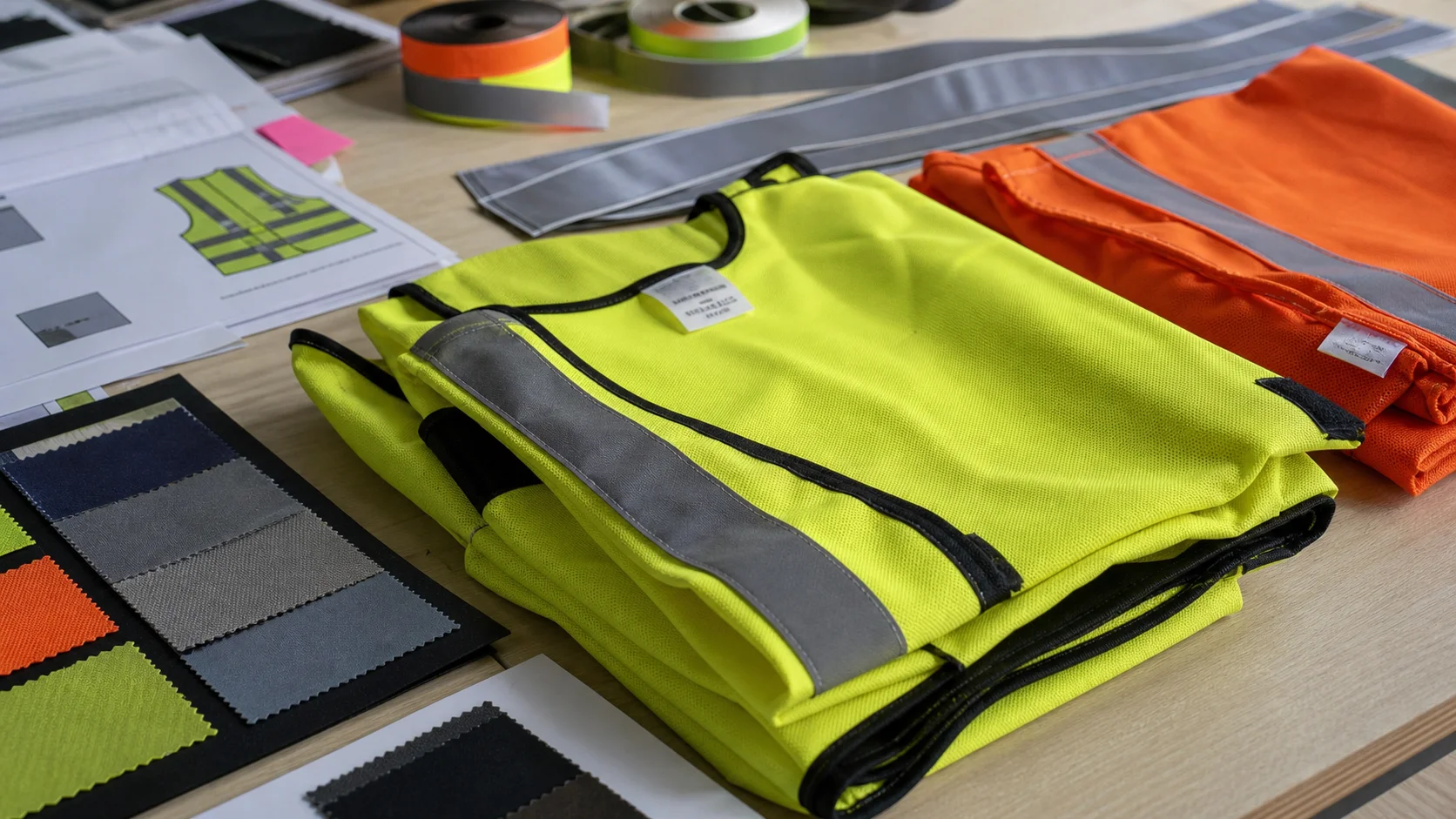
A practical fabric testing outline for pharmacy operations teams buying recycled polyester safety vests, covering visibility, durability, laundering,...
Buy Recycled Poly Safety Vests With Fabric Tests - Sustainable Fashion manufacturing guide
Pharmacy operations teams do not buy safety vests for show. They buy them because people move through receiving bays, fulfillment rooms, parking areas, delivery handoff points, automated packing zones, and back-of-house corridors where visibility, role identification, and garment durability matter. A recycled poly safety vest can meet those needs, but only if the fabric, reflective tape, stitching, trims, and color performance are checked before a bulk order is released.
The keyword in this purchasing category is not only “recycled.” It is “tested.” Recycled polyester can be a practical sustainable material choice for pharmacy operations, especially when teams want lightweight, washable, and quick-drying garments. Yet recycled content alone does not prove the vest will hold color, survive repeated laundering, resist seam failures, or maintain reflective performance after use.
For pharmacy operations teams, the buying decision usually sits between three pressures: compliance, worker comfort, and sustainability reporting. A vest that looks good in a digital mockup can fail in daily use if the mesh snags on shelving, the binding curls after washing, the hook-and-loop closure loses grip, or the reflective tape cracks. A practical fabric testing guide helps buyers avoid those problems before the purchase order becomes an inventory problem.
This guide explains how to source recycled poly safety vests with fabric tests, what specs to request, how to approve samples, where MOQs and lead times usually land, and which inspection risks deserve attention. It is written for procurement managers, pharmacy operations leads, safety coordinators, and branded workwear buyers who need a cleaner purchasing process rather than vague sustainability claims.
Purchasing judgment: recycled poly safety vests are a strong option when visibility, washability, and sustainability targets all matter. They are not automatically better than virgin polyester unless recycled content, performance tests, and production consistency are verified.
Recycled poly, usually recycled polyester or rPET, is commonly made from post-consumer plastic bottles or recycled polyester waste. In safety vests, it may be used in mesh fabric, solid woven fabric, binding tape, or sometimes in pocket materials. Reflective tape, zippers, hook-and-loop closures, labels, and thread may or may not contain recycled content.
That distinction matters. A supplier may describe a vest as “recycled polyester” even when only the main body fabric is recycled. For sustainability reporting, pharmacy operations teams should define whether they require recycled content in the shell fabric only or across multiple components. Full-component recycled sourcing is harder, more expensive, and may limit trim choices. Main-fabric recycled sourcing is more common and easier to scale.
Pharmacy operations teams often prefer lightweight mesh for daily indoor use because staff may already wear scrubs, polos, lab coats, or temperature-sensitive work layers. Solid woven recycled poly makes more sense for delivery coordinators, parking-lot pickup teams, loading dock staff, or supervisors who need pockets and stronger structure.
Request the recycled content percentage in writing. A common spec may say “100% recycled polyester main fabric” or “GRS-certified recycled polyester fabric,” but certification should be treated carefully. Certification may apply to the yarn, fabric mill, or transaction chain depending on documentation. Ask for the scope rather than assuming the whole vest is certified.
If your company needs structured sourcing support, a supplier development partner can help translate sustainability goals into garment specs. Fabrikn’s apparel manufacturing services page is a useful starting point for teams planning custom uniform or workwear programs.
Fabric testing gives buyers a clearer view of risk before production. It does not remove all problems, because sewing quality, trim selection, packing, and handling still matter. It does create a performance baseline. For pharmacy operations teams buying recycled poly safety vests, the following tests are the most useful.
Composition testing confirms whether the fabric is polyester and whether blended fibers are present. This is separate from recycled content verification. A fabric can test as polyester but still require documents to prove recycled origin.
For recycled content, request transaction certificates where available, yarn or fabric declarations, and supplier compliance documents. If using GRS or RCS claims, ask whether the certification applies to the fabric supplier, garment manufacturer, or full chain of custody. A garment hangtag claim should match the paperwork.
GSM measures grams per square meter. Safety vest fabrics commonly range from about 90 to 160 GSM for mesh and 120 to 220 GSM for solid woven or oxford styles. Lightweight mesh is comfortable but may tear more easily. Heavier woven fabric improves structure but can feel hot during long shifts.
For pharmacy distribution centers and fulfillment teams, a practical range is often 110 to 140 GSM recycled polyester mesh for breathable indoor vests. For delivery staging or supervisor vests, 150 to 200 GSM solid recycled polyester may provide better pocket support.
Tensile strength measures how fabric performs under pulling force. Tear strength measures resistance once a tear starts. These tests are important for teams working around carts, bins, shelving edges, conveyor systems, and equipment handles.
Mesh fabrics can perform differently by construction. A lower-cost mesh may look acceptable but fail when caught on a tote corner. Ask the supplier for test values and, more importantly, compare results between submitted sample fabric and bulk fabric. A lab report from an old material batch is less useful than a report tied to the actual nominated fabric.
Pharmacy safety vests may be washed frequently, especially in environments where dust, packaging debris, vehicle exhaust, or product handling residues are present. Colorfastness to washing checks whether the fluorescent yellow, orange, blue, green, or role-identification color fades or bleeds.
High-visibility colors are especially sensitive. Bright fluorescent shades can shift after laundering, heat exposure, or poor dye control. If the vest color is tied to role identification—such as pharmacy tech lead, receiving, quality check, delivery pickup, or visitor—color drift can cause operational confusion.
Rubbing tests, often dry and wet crocking, check whether color transfers onto other garments or surfaces. This matters if pharmacy staff wear white coats, light scrubs, or pale uniforms under the vest. Poor rubbing fastness may stain uniforms, especially around armholes, collars, and side seams.
Do not treat this as a minor issue. A vest that transfers dye onto uniforms creates staff complaints and replacement costs. It may also undermine confidence in the product quality.
Dimensional stability checks shrinkage or distortion after washing. Polyester usually performs better than cotton in shrinkage, but vest construction can still twist, pucker, or curl if binding tape, mesh, thread, and reflective tape react differently to laundering.
Ask for wash testing on the full garment, not only the fabric. Reflective tape and binding can distort the vest even when the main fabric is stable. A size run that fits well before washing may become short in the torso or tight across closure points after repeated care cycles.
Pilling is less severe on many polyester mesh vests than on fleece or knitwear, but snagging is a real concern. Pharmacy warehouse and fulfillment areas often include carton edges, plastic totes, scanner lanyards, ID badges, shelf labels, packing stations, and conveyor zones.
Snagging tests help determine whether a recycled poly mesh is suitable for daily operations. If the vest is mainly for visitors or short-duration use, a lighter mesh may be acceptable. For staff wearing vests all shift, stronger mesh or tricot is usually worth the added cost.
Fabric tests are not enough if the stitching fails. Request seam strength checks at shoulder seams, side seams, pocket attachments, reflective tape attachment points, and closure areas. The shoulder area is often stressed when users pull the vest on quickly. Pockets fail when workers carry scanners, pens, small notebooks, or access cards.
For pharmacy operations, pocket load expectations should be written into the spec. If the vest includes radio loops, badge holders, clear ID windows, or pen slots, each added trim becomes a potential failure point.
Reflective tape is a critical component. Ask whether the tape meets the applicable visibility standard for the intended market and use case. Some pharmacy teams need ANSI/ISEA-style high-visibility garments for outdoor or vehicle-adjacent work. Other teams need enhanced visibility and role identification inside controlled facilities.
Retroreflective performance should be checked before and after laundering if the vest will be washed repeatedly. Lower-cost tape may look bright at first but crack, peel, or lose reflectivity after use. Heat transfer reflective tape can create a cleaner look, while sewn-on tape is often more durable when properly attached.
Safety vests are not all the same. A vest used by delivery staff in a parking lot has a different risk profile from a vest worn by an inventory checker inside a pharmacy fulfillment center. Start with the use case before choosing color, fabric, and tape layout.
High-visibility vests are designed to make workers noticeable in hazardous or vehicle-adjacent environments. Role-identification vests are designed to show who is a supervisor, visitor, quality inspector, trainer, or receiving team member. Some pharmacy operations need both functions in one garment.
Fluorescent yellow-green and fluorescent orange are common high-visibility colors. Blue, black, grey, purple, or green may be used for internal role coding, but they may not provide the same visibility performance. If compliance is required, do not rely on color preference alone. Confirm the standard, class, background material, reflective tape width, and tape placement.
Typical safety vest tape layouts include vertical tape over the shoulders and horizontal tape around the torso. Wider tape usually increases visibility but also adds cost and stiffness. For indoor pharmacy operations, a lighter tape layout may improve comfort. For loading dock, parking pickup, or last-yard delivery activity, stronger visibility may be necessary.
Use Case Suggested Vest Approach Key Risk Indoor picking and packing Light recycled poly mesh with reflective strips or contrast trim Snagging, overheating, poor closure durability Receiving and loading dock High-visibility recycled poly vest with tested reflective tape Reflective failure, seam stress, color fading Parking lot pickup coordination Compliant high-visibility design where required Insufficient visibility in low light or vehicle zones Visitor or auditor identification Lower-cost recycled poly vest with clear labeling Poor size fit, weak closures, inconsistent branding Supervisor or lead role Structured vest with pockets, ID holder, and stronger fabric Pocket tearing, logo placement issues, added heatA good vest specification is direct. It should tell the supplier what to make, what to test, and what will be rejected. Vague wording such as “good quality recycled fabric” leaves too much room for substitution.
Closures are often overlooked until they fail. Hook-and-loop is inexpensive and easy to use, but low-grade material loses grip after lint exposure or repeated washing. Zippers create a more secure closure but increase cost and introduce sizing sensitivity. Snap closures are durable but may pull through light mesh if not reinforced.
Pockets need realistic planning. Pharmacy staff may carry scanners, pens, gloves, small forms, ID cards, keys, or mobile devices. A lightweight mesh vest with overloaded patch pockets will not perform like a utility vest. If pockets are required, consider reinforced bartacks, stronger pocket fabric, and clear limits on pocket size and load.
Logo application should not interfere with visibility or compliance. Screen printing is common on polyester safety vests, but ink adhesion can vary by finish and fabric structure. Heat transfer logos offer clean detail but may peel if the transfer, temperature, pressure, or washing conditions are poorly controlled.
For pharmacy operations, branding often includes department names, visitor labels, role titles, or company marks. Confirm placement before production. A logo that sits over reflective tape, pocket seams, or mesh openings may look uneven or fail inspection.
Teams developing a broader uniform or operational apparel program can review Fabrikn’s about page to understand how a sourcing partner frames production, development, and supplier coordination.
A disciplined sample approval process prevents many bulk-order failures. The goal is not to collect samples casually. The goal is to approve the exact material, fit, trims, colors, decoration, and workmanship that production must follow.
Start with a written spec. Include vest type, size range, fabric type, recycled content requirement, GSM, color, reflective tape layout, closure, pocket details, logo placement, care label requirements, packaging, and testing needs. If a full tech pack is not available, create a practical purchase spec sheet.
Approve fabric swatches before full garment sampling. For high-visibility colors, request lab dips or color standards under controlled lighting. Do not approve fluorescent colors only from phone photos. Digital images distort color and brightness.
For recycled poly, ask whether the swatch is from current stock or planned bulk production. Stock fabric can shorten lead time, but replenishment risk is higher if future orders need the same shade. Custom-dyed recycled poly gives better control but usually increases MOQ and lead time.
The proto sample checks construction and design. At this stage, expect adjustments. Pocket placement may need to shift, armholes may need more room, and reflective tape may need grading changes across sizes. Do not judge only the front view. Check side seams, shoulder comfort, closure alignment, and back length.
Safety vests often have a looser fit than standard apparel because they are worn over uniforms or outer layers. Pharmacy operations teams should define whether the vest is worn over scrubs, lab coats, jackets, or polo shirts. A vest that fits over a T-shirt may not fit over a cold-room layer.
Request a size set if the order covers multiple worker groups. Common size ranges include S to 3XL, S to 5XL, or dual sizes such as M/L and XL/2XL for visitor vests. Extended sizes can increase cost, fabric usage, and production complexity but reduce worker fit complaints.
The pre-production sample should use bulk fabric, bulk trims, final logo method, approved label, approved packaging, and final construction. This sample is the production reference. If the supplier changes fabric or tape after approval, new testing or buyer approval should be required.
Test reports should be linked to the actual fabric or garment batch wherever possible. Review fabric weight, composition, colorfastness, dimensional stability, seam strength, reflective tape performance, and any required compliance testing. Ask questions if report dates, supplier names, fabric references, or colors do not match the approved order.
Keep one sealed approved sample with the buyer and one with the manufacturer. Use it for production comparison and final inspection. A sealed sample is especially useful when color, tape quality, pocket construction, and logo placement must be consistent across repeat orders.
Purchasing judgment: never release bulk production based only on a sales sample if your order requires recycled content, custom color, reflective tape performance, or printed branding. Sales samples often use substitute materials.
MOQ depends on fabric availability, color, trim customization, branding, and factory capacity. Recycled poly safety vests can be simple products, but custom requirements quickly change the order economics.
These ranges are typical planning numbers, not fixed rules. A supplier may accept lower MOQ at a higher unit price, especially when using stock fabric and standard trims. Custom-dyed recycled polyester, certified material claims, and specialty reflective tape usually push MOQ upward.
Lead time depends on how much development is needed. A stock vest with a simple print may be ready faster than a custom tested garment. A realistic timeline for a custom recycled poly safety vest program often includes two to four weeks for sampling, one to three weeks for testing depending on lab queue and test scope, and three to eight weeks for bulk production after approval. Shipping time, inspection timing, and customs clearance add more time.
If the order is seasonal or tied to a facility launch, start earlier than the production lead time suggests. Delays often come from lab dip rejections, reflective tape sourcing, extended-size corrections, print approval, or missing recycled-content documents. Rush orders reduce review time and increase substitution risk.
Recycled polyester may cost more than commodity virgin polyester, especially if certified material and documentation are required. The premium varies by market conditions, yarn availability, dyeing requirements, and order volume. The cheapest recycled poly vest is rarely the safest buying choice if it uses weak mesh, low-grade tape, or inconsistent trims.
Buyers should compare total program cost rather than only unit price. A vest that costs slightly more but lasts longer, washes better, and passes inspection can be cheaper over time than a low-cost vest that needs replacement after a few months. For visitor-only use, a lower-cost vest may be acceptable. For daily operational wear, durability deserves more weight in the decision.
Final inspection should compare production to the approved sample and purchase spec. Safety vests are simple enough that buyers sometimes skip inspection, but that is where problems enter the shipment. Fabric shade, tape placement, logo alignment, closure strength, and size grading can vary across bulk production.
Substitution is one of the biggest risks in cost-sensitive safety vest orders. A supplier may replace the approved fabric with a similar-looking mesh, use a different reflective tape, switch thread, or use weaker binding if controls are loose. The change may not be obvious at first glance.
Use fabric weight checks, shade comparison, hand-feel comparison, tape appearance, and random seam checks during inspection. For large orders, consider pulling samples for confirmatory testing. If the vest must meet a safety standard, production testing and certification checks should be handled before shipment, not after goods arrive.
Safety vests are often graded too narrowly. A 3XL vest that is only slightly wider than an XL will create fit complaints. Staff may leave the vest unfastened, which reduces visibility and creates a snagging risk. Check chest width, body length, shoulder width, armhole opening, and closure overlap across the full size range.
Pharmacy operations teams should also think about shared vests versus assigned vests. Shared vests need broader fit tolerance, easy cleaning, and clear size labels. Assigned vests can be fitted more precisely and may justify better trims or personalization.
Care labels must reflect actual garment performance. If the reflective tape cannot tolerate high heat, the label should state appropriate washing and drying instructions. If heat transfer logos require low-temperature care, that needs to be clear. Industrial laundering may require stronger testing than home laundering.
Do not assume recycled poly safety vests can handle every wash process. High heat, harsh detergents, bleach, and aggressive tumble drying can damage reflective tape, distort binding, or weaken decoration.
Good supplier questions reveal whether the vendor understands workwear production or is only quoting a generic vest. Ask specific questions and expect practical answers.
If your team is ready to brief a custom recycled poly vest program, use Fabrikn’s contact page to start a sourcing conversation with the right specifications prepared.
A simple written template helps align procurement, operations, safety, and supplier teams. The final version should be adjusted for legal, compliance, and safety requirements in the buyer’s market.
Spec Area Recommended Detail Product Recycled polyester safety vest for pharmacy operations team use Main Fabric 100% recycled polyester mesh or woven fabric, defined GSM, approved color Recycled Claim Documentation required for recycled-content percentage and chain-of-custody scope Reflective Tape Width, layout, attachment method, wash durability, applicable standard if required Closures Hook-and-loop, zipper, snap, or breakaway design with reinforcement details Pockets Quantity, position, size, reinforcement, ID window, scanner or pen use if needed Decoration Logo method, placement, color, size, and approval sample Testing Composition, GSM, colorfastness, dimensional stability, tear strength, seam strength, reflectivity Inspection Final inspection against sealed sample, measurement chart, packing list, and test documents Packing Size ratio, facility allocation, carton labeling, recycled or reduced packaging preferenceThe best recycled poly safety vest program starts with segmentation. Not every worker needs the same vest. A visitor vest can be simple. A receiving team vest needs stronger visibility and durability. A supervisor vest may need pockets and identification. A parking-lot pickup vest may need compliance-driven high visibility. Buying one low-cost vest for every use case can look efficient, but it often creates comfort, safety, or durability problems.
Build the program in tiers. Use a lightweight recycled poly mesh vest for general indoor identification. Use a more durable reflective vest for receiving, delivery handoff, and vehicle-adjacent areas. Use a pocketed supervisor vest only where the added storage is needed. This approach controls cost without forcing the same product into every environment.
Testing should match the risk level. Visitor vests may need basic fabric and construction checks. Daily-use staff vests need stronger wash, seam, and snagging review. Vehicle-adjacent vests need visibility standard checks and reflective tape performance. Branded executive-looking sustainability language should never replace physical product testing.
Reorder planning also matters. Recycled fabric lots may vary more than buyers expect, especially in fluorescent colors. If consistent color is important, ask the supplier about fabric reservation, repeat-lot control, and shade tolerance. For large pharmacy networks, it may be worth ordering a buffer quantity for replacements rather than relying on a small reorder months later.
Recycled poly safety vests can support sustainable fashion goals inside practical pharmacy operations. They reduce reliance on virgin polyester in the main garment fabric and can provide the lightweight, washable performance that operational teams need. The right version is not chosen by a catalog image. It is chosen through clear specs, sample control, fabric testing, trim verification, and final inspection.
For procurement teams, the most reliable buying route is straightforward: define the use case, confirm whether compliance is required, specify recycled content clearly, approve fabric and trims before production, test the actual materials, inspect finished goods, and keep a sealed sample for reorders. That process may take longer than buying generic stock vests, but it reduces quality disputes and protects the sustainability claim.
Choose stock recycled poly vests when speed and budget matter more than customization. Choose custom tested vests when pharmacy operations require consistent branding, role coding, wash durability, reflective performance, or documented recycled-content reporting. The added development work is justified when the vest is part of daily operations rather than a short-term giveaway.
Get a free quote from Fabrikn — your trusted B2B clothing manufacturer with 10+ years of experience. MOQ as low as 200 pieces.
Get a Free Quote →Yes, they can be durable enough when the fabric and construction are properly specified. Recycled polyester mesh is suitable for lightweight indoor visibility, while recycled polyester woven or oxford fabric is better for higher-stress roles. Buyers should request tear strength, seam strength, snagging, and wash testing before approving bulk production.
Useful tests include fiber composition, fabric weight, tear strength, tensile strength, colorfastness to washing, colorfastness to rubbing, dimensional stability, seam strength, and reflective tape performance. For recycled claims, documentation such as supplier declarations, transaction certificates, or certification scope should also be reviewed.
Stock styles with a simple logo may start around 100 to 500 pieces. Custom colors, tape layouts, or trims often require 500 to 1,500 pieces. Custom-dyed recycled polyester or multi-role branded programs may require 1,000 to 5,000 pieces or more depending on the supplier and fabric source.
A simple stock vest with branding may be faster, but a custom tested recycled poly vest often requires two to four weeks for sampling, one to three weeks for testing, and three to eight weeks for bulk production after approval. Fabric availability, lab queues, logo method, size range, and shipping mode can change the timeline.
They can, but the buyer must specify the required standard and verify compliant background fabric, reflective tape, tape layout, and garment design. Recycled content does not automatically make a vest compliant. Compliance should be confirmed through proper documentation and testing.
Mesh is better for breathable indoor work and general role identification. Woven recycled polyester is better for durability, pockets, outdoor handoff areas, and structured supervisor vests. The best choice depends on heat, shift length, pocket use, wash frequency, and visibility requirements.
The main risks are fabric substitution, shade variation, weak reflective tape, poor seam strength, shrinking or distortion after washing, logo peeling, pocket tearing, and inconsistent sizing. A sealed pre-production sample and final inspection reduce these risks.
Stock vests are better for fast deployment, small teams, visitors, or short-term use. Custom vests are better when teams need consistent branding, role colors, tested fabric, documented recycled content, stronger pockets, extended sizes, or compliance-driven visibility. The higher development cost is easier to justify for daily-use garments.