
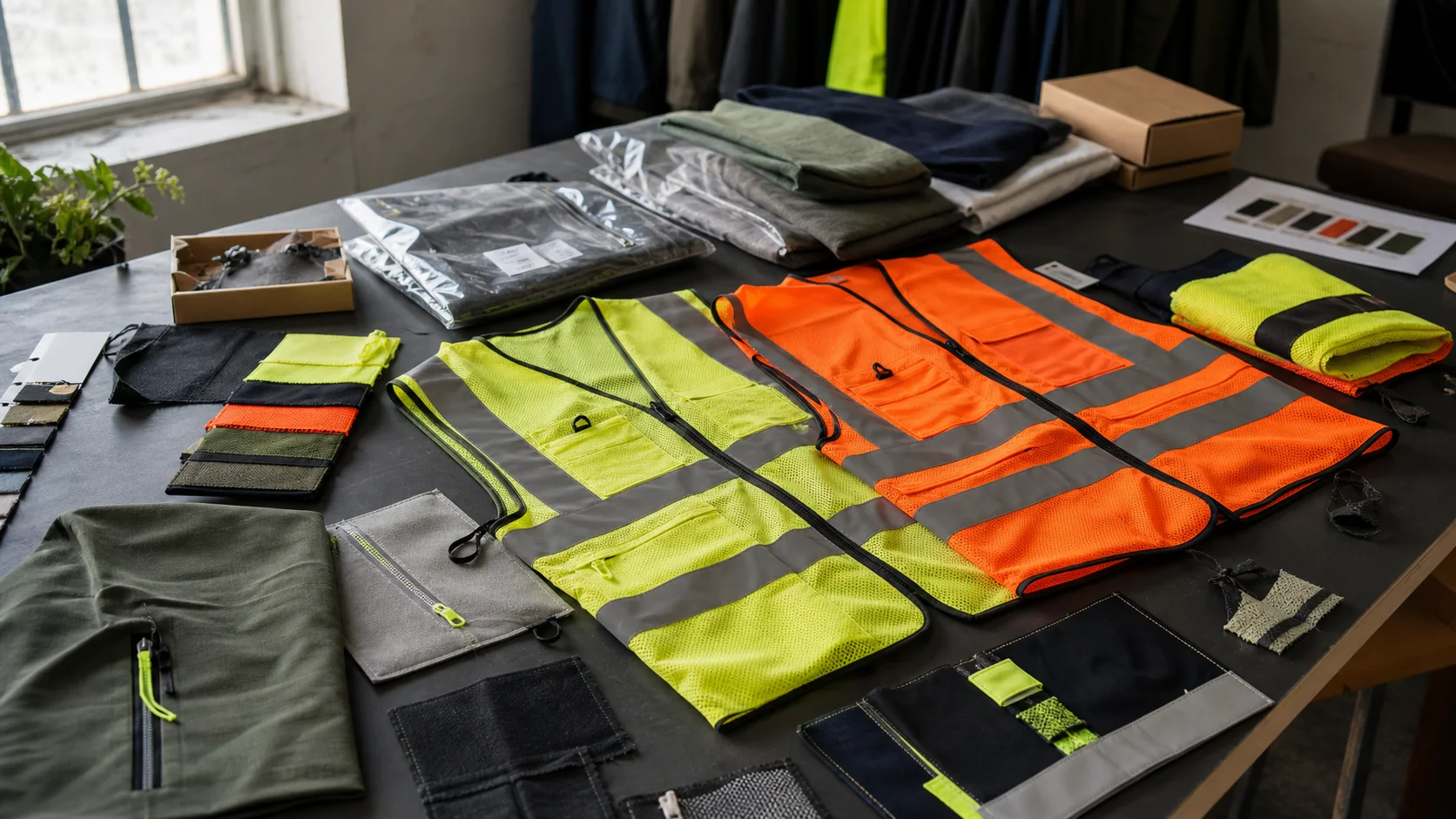
A practical checklist for restaurant groups ordering recycled polyester safety vests, covering ANSI visibility needs, sustainable material claims, logo...
Ordering recycled polyester safety vests for a restaurant group looks simple until the details arrive: multiple job roles, multiple sites, different state requirements, food-service laundering realities, logo approvals, and a sustainability claim that must hold up under buyer and compliance review. A recycled poly safety vest order compliance checklist for restaurant groups should do more than confirm color and logo placement. It should connect worker visibility, fabric certification, fit, labeling, durability, and purchasing documentation into one controlled buying process.
Restaurant groups usually buy safety vests for receiving teams, valet staff, curbside pickup employees, commissary workers, parking attendants, delivery coordination teams, facilities crews, and event support staff. Some need ANSI-rated high-visibility garments. Others need lightweight identification vests for operational visibility rather than regulated road work. The purchasing risk is ordering one recycled polyester vest across every role without checking whether the vest is compliant, practical, and durable enough for the use case.
This guide gives sourcing teams, procurement managers, sustainability leads, and uniform buyers a structured checklist for ordering recycled poly safety vests for restaurant operations.
Order Recycled Poly Safety Vests: Compliance Checklist - Fabrikn production reference
Recycled polyester safety vests give restaurant groups a practical way to connect uniform purchasing with sustainability goals. Most recycled poly used in safety vests comes from recycled PET feedstock, commonly post-consumer plastic bottles or industrial polyester waste. The finished fabric can be knitted, woven, or mesh depending on the required breathability, structure, and compliance target.
For restaurants, the appeal is straightforward. Vests are high-volume, high-visibility uniform items with frequent turnover. Switching from virgin polyester to recycled polyester can reduce reliance on virgin fossil-based inputs while keeping the functional properties buyers expect: light weight, quick drying, colorfastness, and low unit cost at scale.
The purchasing judgment is not that recycled poly is automatically better for every use. It is better when the recycled content is traceable, the garment still meets visibility requirements, and the vest survives normal restaurant operating conditions. A low-cost recycled vest that shrinks, bleeds color, loses reflective performance, or fails a required standard will create more waste and more replacement orders.
Restaurant groups should treat recycled poly safety vests as both compliance apparel and sustainability merchandise. That means two proof points matter: the vest must be fit for safety use, and the recycled content claim must be backed by documentation. If either side is weak, the order is not ready for rollout.
The most important early decision is whether the vest must meet a high-visibility safety standard. In the United States, many buyers refer to ANSI/ISEA 107, which classifies high-visibility safety apparel by type and performance class. Restaurant groups may not always need ANSI-rated vests, but some roles clearly require closer review.
Examples include employees working in parking lots, curbside pickup lanes, delivery loading zones, valet areas, roadside event setups, commissary docks, or facilities operations where vehicles, forklifts, or low-light risks are present. For those roles, purchasing teams should not rely on a generic “safety vest” description. They should ask for the applicable standard, class, test reports, and garment labeling.
ANSI/ISEA 107 categories are typically discussed by garment type and class. Type O is for off-road use, Type R is for roadway and temporary traffic control exposure, and Type P is for public safety personnel. Classes relate to the amount of background fluorescent material and retroreflective material. A restaurant group may only need a lower class for internal parking lot or receiving work, but the answer depends on the hazard assessment, not on catalog convenience.
Buying rule: if employees are exposed to moving vehicles or low-light traffic patterns, confirm the required visibility standard before approving price, color, or decoration.
A compliant vest should include proper labeling, usually showing the standard, type, class, size, care instructions, manufacturer or supplier identification, and fiber content. If recycled content is claimed, that claim should be supported separately through certification or chain-of-custody documents. The label alone is not enough for sustainability substantiation.
Different restaurant roles need different vest features. A single national order can still work, but only if the base specification covers the highest-risk use case or the group separates orders by function.
Employees assisting guests near vehicles need strong visibility, comfortable movement, and easy identification. Lightweight recycled polyester mesh can work well in warm climates and fast-paced service windows. Bright fluorescent yellow-green or orange-red may be appropriate, depending on brand standards and safety requirements.
Key features include reflective tape, secure closure, proper length, and clear logo placement that does not interfere with reflective performance. If workers are outside during dusk, rain, or winter operations, do not treat this as a simple promotional vest purchase.
Valet teams need visibility and a more polished appearance. Solid recycled polyester fabric may look cleaner than open mesh, but it can be warmer. A two-tier program is common: ANSI-rated or high-visibility vests for active traffic areas, and branded recycled poly identification vests for greeters or supervisors in lower-risk zones.
Dark brand colors may look premium, but they usually reduce visibility. If safety is the purpose, fluorescent background fabric and compliant reflective tape should take priority over a subtle aesthetic.
Back-of-house receiving teams may work around trucks, pallet jacks, forklifts, and early morning deliveries. Durability matters more here. Mesh vests are breathable but can snag on racks, cartons, and dock equipment. Woven recycled polyester may be more durable, though less breathable.
Facilities crews may need pockets for radios, pens, keys, or checklists. Pocket placement should be reviewed carefully because pockets and logos can reduce available fluorescent background area on compliant garments.
For events and catering, vests often serve dual purposes: visibility and quick staff identification. These orders may be seasonal, with tighter lead times and uncertain size curves. Buyers should keep a core stock of undecorated or minimally decorated recycled poly vests if event volume is unpredictable.
Temporary staff also increases sizing risk. Adjustable side tabs, hook-and-loop closures, or a wider size range may reduce fit problems. Oversized vests can catch on equipment, while tight vests restrict movement and may not close properly over jackets.
Recycled polyester safety vest fabric should be specified with more detail than “100% recycled poly.” That phrase does not tell the supplier enough and does not protect the buyer. A workable specification should include recycled content percentage, fabric construction, weight, color, finish, performance expectations, and certification requirements.
Common recycled polyester vest fabrics include lightweight mesh, birdseye knit, tricot, and woven polyester. Mesh improves airflow and is common for warm environments. Birdseye knit can feel smoother and still breathe reasonably well. Woven polyester tends to provide better structure and snag resistance, but may feel hotter during long shifts.
Typical fabric weight ranges may fall around 80 to 160 gsm for lightweight vest bodies, depending on construction and application. Very light mesh can reduce cost and improve comfort, but it may distort after washing or tear at stress points. Heavier fabric improves stability but may be less comfortable in kitchens, parking lots, or warm climates.
For restaurant groups, fabric choice should follow the working environment. A vest worn for short curbside shifts does not need the same durability as a vest worn daily at a commissary loading dock. Price comparisons are only meaningful when the same fabric weight, recycled content, reflective tape, and decoration method are being quoted.
Reflective tape is one of the most common failure points in safety vest sourcing. Buyers often focus on the body fabric and recycled claim while treating tape as a commodity trim. That is risky. If the vest is meant to meet a high-visibility standard, the reflective material must meet the required performance level, be placed correctly, and remain functional through reasonable use and care.
Reflective tape can be sewn on, heat transferred, or laminated depending on the garment design and supplier capability. Sewn tape is common and durable, though stitching quality matters. Heat-transfer reflective material can look clean and reduce stitching bulk, but it must be tested for adhesion after washing, flexing, and heat exposure.
Trim specifications should include tape width, placement, performance standard, color, wash durability, and supplier source. Typical reflective tape widths for safety vests may include 2-inch tape in many ANSI-style designs, but the correct width and layout depend on the target class. Do not reduce tape width or interrupt tape with large logos unless compliance has been checked.
The tradeoff is simple: cheaper reflective trim may reduce unit cost, but it can also create the highest compliance risk. If visibility is the reason for the vest, reflective materials deserve the same scrutiny as the recycled polyester body fabric.
A recycled poly safety vest order needs documentation that supports the sustainability claim. Restaurant groups increasingly report progress against procurement or ESG goals, and apparel claims can be questioned by internal legal, sustainability, or brand teams. The documentation should be requested before bulk production, not after shipment.
Common documentation may include a recycled content certificate, transaction certificate where applicable, supplier declaration, bill of materials, and chain-of-custody support. Certifications such as Global Recycled Standard (GRS) or Recycled Claim Standard (RCS) are often used in the market, but buyers should check the scope carefully. A certificate for a yarn mill does not automatically prove the finished vest order is certified.
Ask whether the final garment is certified, whether transaction certificates can be issued for the order, and whether the claim applies to the fabric only or the full garment. Many vests include non-recycled trims such as reflective tape, zippers, hook-and-loop closures, binding, labels, and thread. If the marketing copy says “made with recycled polyester,” that may be more accurate than “100% recycled safety vest” unless all relevant components support the claim.
Good purchasing discipline protects the brand. Sustainability language should match the actual bill of materials and certification scope. A cautious claim is better than a bold claim that cannot survive review.
Restaurant groups usually need safety vests to look organized and brand-consistent. That does not mean branding should override safety function. Logos, department labels, and color blocking must be planned around compliance needs, staff comfort, and operational clarity.
Decoration methods include screen printing, heat transfer, reflective printing, woven patches, embroidered patches, and direct embroidery. For lightweight recycled poly mesh, screen printing can bleed or look uneven if the mesh holes are large. Heat transfer can give sharper logos but may reduce breathability and must be tested for adhesion. Embroidery is usually not ideal on very light mesh because it can distort the fabric and add weight.
Logo placement should be approved on a full-size sample, not only on a digital mockup. A logo that looks balanced on a flat drawing may sit too low on smaller sizes or interfere with reflective tape on larger sizes. For chain-wide orders, artwork scaling must be controlled across the size range.
Most safety vests are worn over base uniforms, jackets, hoodies, or rain layers depending on climate and role. Restaurant buyers should not size them like fitted apparel. A functional vest should close securely over workwear without hanging so loosely that it catches on equipment.
Typical size ranges may include S to 5XL for broad employee coverage, with some suppliers offering dual sizes such as S/M, L/XL, and 2XL/3XL. Dual sizing can simplify inventory and reduce MOQ pressure, but it may create a less precise fit. Individual sizing gives a cleaner appearance but requires more careful order planning.
Branding can be valuable, especially for guest-facing curbside and valet staff. The direct tradeoff is that every logo, pocket, and color panel adds complexity. Complexity increases sample rounds, approval time, and inspection risk. A clean, compliant vest with one strong logo often performs better than a heavily decorated vest that is harder to produce consistently.
Minimum order quantities vary by supplier, fabric availability, trim sourcing, certification needs, and decoration method. For recycled poly safety vests, typical MOQ ranges may start around 300 to 500 units for simple stock-based programs using available fabric and standard trims. Custom colors, certified recycled fabric, private-label packaging, multiple logos, or custom pocket layouts may push MOQs into the 1,000 to 3,000 unit range or higher.
Restaurant groups with many locations can usually meet MOQ, but distribution by size, role, and site can still create problems. A 2,000-unit order split across five colors, eight sizes, and three logo versions is not the same as a 2,000-unit order in one style. Each variation may carry its own MOQ, setup cost, or production constraint.
For sourcing support on apparel programs, buyers can review production and development options through Fabrikn’s services. Early supplier alignment is useful when the order includes recycled content requirements, compliance targets, and multi-location distribution.
Skipping sample stages can save a few days and create a much larger problem later. A restaurant group rolling out vests to dozens or hundreds of sites needs predictable execution. The pre-production sample should become the control sample for inspection.
Lead time depends on fabric availability, certification requirements, sample rounds, order complexity, factory capacity, decoration method, inspection scheduling, and freight method. A basic stock vest with simple decoration may be ready faster than a custom recycled poly vest with certified fabric, custom colors, private labels, and multi-site packing.
As a general planning range, sampling may take 1 to 3 weeks for straightforward styles and longer if custom fabric or certified materials are being developed. Bulk production may take 4 to 8 weeks after approval for many custom apparel orders, with longer timelines during peak capacity periods or when raw materials are not in stock. Ocean freight, air freight, customs clearance, and domestic distribution add further time.
Restaurant groups should back-plan from the operational launch date. If vests are needed for a seasonal patio program, holiday curbside campaign, new store opening, or safety initiative, late sample approval is the most common cause of missed delivery.
Rush orders often force compromises. The supplier may use available fabric rather than preferred certified fabric, reduce sample rounds, limit size options, or ship by expensive air freight. If the sustainability claim and compliance rating are non-negotiable, build more time into the calendar.
Safety vests are not technically complicated garments, but bulk orders still fail inspection for predictable reasons. Restaurant groups should use a written inspection checklist tied to the approved pre-production sample and purchase order.
Inspection should verify quantity, size breakdown, measurements, fabric, color, reflective tape, decoration, labels, packing, and workmanship. If the order is compliance-rated, inspectors should also check that required labeling is present and that reflective tape placement matches the approved design. Laboratory testing may be needed for performance verification; visual inspection alone cannot prove reflective performance or recycled content.
Restaurant groups should also consider laundering behavior. Many vests are wiped down, machine washed, or handled inconsistently by employees. Care labels should be realistic. If reflective tape cannot tolerate high heat, bleach, or industrial laundering, the care instructions need to be clear and distributed with the rollout.
A supplier that can make a vest is not automatically the right supplier for a recycled poly safety vest order. The supplier needs to understand compliance apparel, recycled material documentation, restaurant operating conditions, and multi-location order management.
For restaurant groups developing a new uniform or safety apparel program, it is sensible to speak with a production partner before locking the design. Fabrikn provides apparel development and manufacturing support through its services page, and buyers can start a project conversation through Fabrikn’s contact page.
A branded vest used around vehicles, loading zones, or low-light areas should not be sourced like a giveaway item. Promotional apparel standards may not be enough for safety-critical roles. The buyer should confirm whether a regulated visibility standard applies.
“Recycled” must be supported. A supplier statement may be useful, but stronger documentation is preferred when the order supports company sustainability reporting. Claims should match the exact scope of recycled content.
A vest body may be recycled polyester while reflective tape, binding, thread, closures, and labels are not. That does not make the vest unusable, but it changes the correct claim language. Overstating the claim creates brand risk.
Large logos, multiple department marks, and decorative panels can reduce visibility or create production inconsistency. Keep the design functional first. Branding should support identification, not compete with safety performance.
Digital mockups do not show mesh distortion, reflective tape quality, heat-transfer adhesion, actual fluorescent color, or fit over uniforms. A physical pre-production sample is necessary for any meaningful approval.
Restaurant groups often need the same vest across different regions, climates, and employee profiles. A weak size plan causes shortages in common sizes and excess inventory in slow-moving sizes. Build a size curve from workforce data where possible, then add replacement stock.
One vest may be cheaper because it uses lighter fabric, lower-grade trim, fewer stitches, uncertified recycled material, or a non-compliant layout. Price is only comparable after specifications are aligned.
A controlled workflow reduces rework and protects the rollout schedule. Restaurant groups should define requirements first, then request pricing. Starting with price usually leads to incomplete quotes and weak comparisons.
This workflow is not excessive for a multi-site restaurant group. It is the normal discipline needed when a vest has to satisfy safety, sustainability, branding, and operations at the same time.
A recycled poly safety vest can be a strong choice for restaurant groups when the order is managed properly. The best programs start with role-based safety requirements, then select recycled polyester fabric and trims that support the required performance. The weakest programs start with a low-cost vest and try to add compliance and sustainability proof later.
Buyers should be especially careful with three areas: visibility compliance, recycled content documentation, and bulk inspection. These are the areas most likely to create real risk after the order ships. A vest that looks acceptable in a catalog may not be suitable for curbside pickup, valet, receiving docks, or commissary traffic zones.
The practical approach is to keep the design clean, specify the fabric and reflective trim clearly, approve physical samples, and require documentation before production. For restaurant groups trying to standardize sustainable uniform purchasing, recycled polyester safety vests are a useful category to improve. They just need to be treated as operational apparel, not a generic accessory.
Buyers who want to understand manufacturing support, sourcing structure, or company background can review Fabrikn’s about page before starting a custom apparel program.
Get a free quote from Fabrikn — your trusted B2B clothing manufacturer with 10+ years of experience. MOQ as low as 200 pieces.
Get a Free Quote →A recycled poly safety vest is a visibility or identification vest made with recycled polyester fabric, often from recycled PET feedstock. It may include reflective tape, closures, binding, pockets, labels, and printed logos. If it is intended for regulated high-visibility use, it should meet the applicable safety standard and include proper labeling.
Some restaurant roles may need ANSI-rated high-visibility apparel, especially employees working near moving vehicles, parking lots, curbside lanes, delivery zones, or loading docks. The requirement depends on the work environment and hazard assessment. Buyers should not assume that every branded vest is compliant.
Typical MOQs may start around 300 to 500 units for simpler stock-based vests with standard fabric and trims. Custom recycled fabric, special colors, multiple logo versions, private labels, or certified materials may push MOQs closer to 1,000 to 3,000 units or more. Each color, size range, or logo version can affect the minimum.
Useful documents may include recycled content certificates, GRS or RCS certification where applicable, transaction certificates, supplier declarations, fabric specification sheets, and a bill of materials. Buyers should confirm whether certification applies to the yarn, fabric, or finished garment.
Yes, but logo placement must not interfere with required reflective tape or fluorescent background material. Large logos can reduce compliant surface area or create visual distraction. Artwork should be approved on a physical sample, not only a mockup.
Recycled polyester mesh works well for warm environments and short shifts because it is breathable and light. Woven recycled polyester may be better for receiving, commissary, and facilities teams that need more snag resistance. The best fabric depends on the role, climate, durability requirement, and compliance target.
Sampling may take 1 to 3 weeks for straightforward orders. Bulk production often takes 4 to 8 weeks after approvals, depending on fabric availability, certification needs, decoration, order size, and factory capacity. Freight and multi-location distribution add more time.
Inspection should cover quantities, size ratios, measurements, fabric color, reflective tape placement, logo quality, stitching, labels, packaging, and carton markings. If the vest is compliance-rated, the label and approved reflective layout should be checked carefully. Performance testing may be needed beyond visual inspection.
They can be slightly more expensive, especially when certified recycled materials or custom colors are required. The price gap depends on fabric availability, order volume, trim quality, and documentation requirements. For large restaurant groups, the difference may be manageable if the specification is standardized.
A cautious claim such as “vest body made with recycled polyester” is often safer than “100% recycled vest,” unless every relevant component and certification supports the broader claim. Sustainability language should match the actual bill of materials and documentation.