
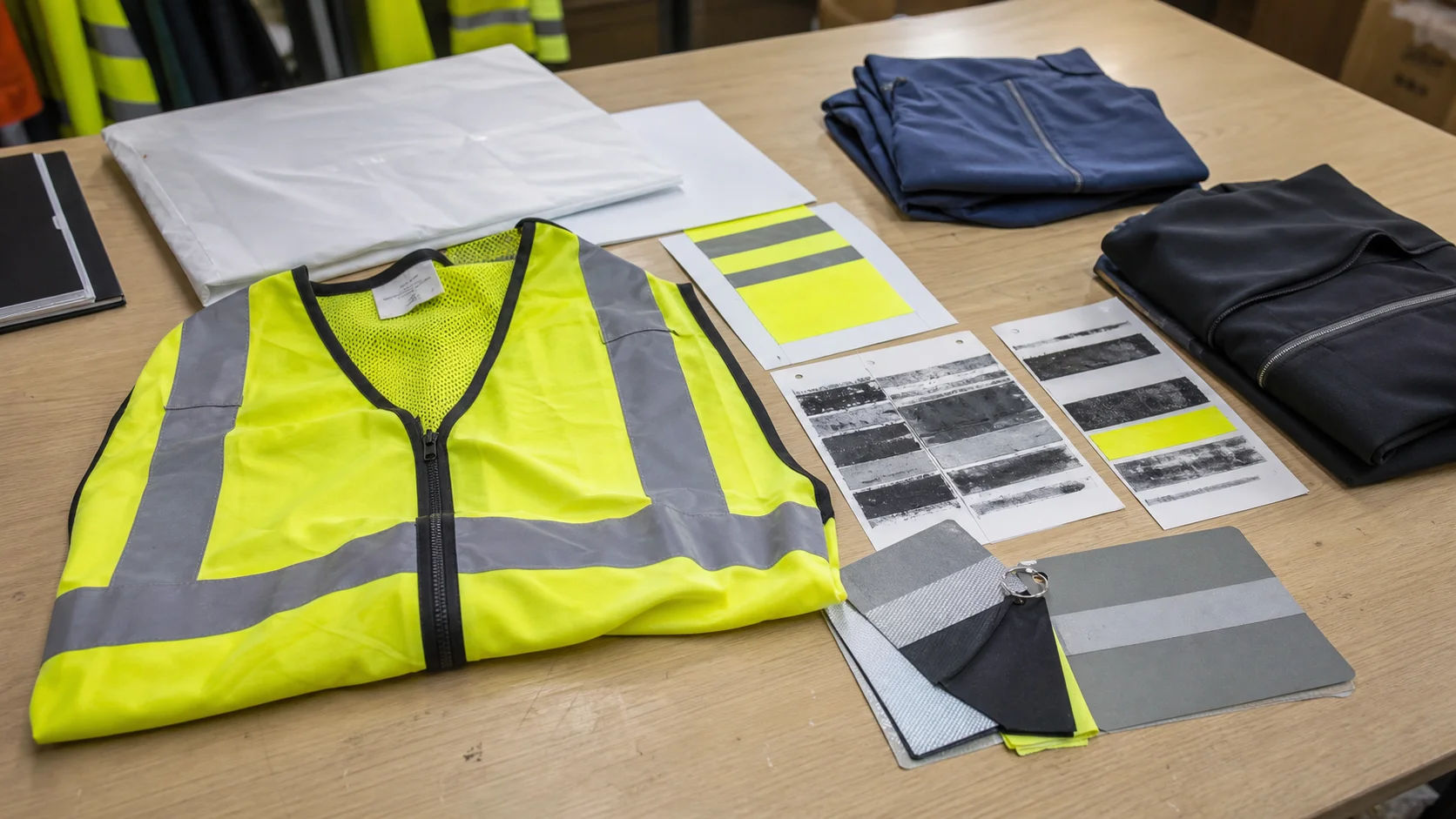
A buyer-focused durability review of printed recycled polyester safety vests, covering decoration methods, wash performance, reflective tape compatibility,...
Recycled Poly Safety Vest Print Durability Review - Sustainable Fashion manufacturing guide
Category: Sustainable Fashion
Distributor buyers evaluating recycled poly safety vest print durability have a practical problem: the vest is a low-cost product, but the print carries the brand, jobsite identification, or compliance message. If the fabric performs but the logo cracks, peels, bleeds, or fades after limited use, the product fails commercially even when the vest is still wearable.
Recycled polyester safety vests are now common in sustainable workwear and promotional PPE programs. They appeal to corporate buyers because they reduce reliance on virgin polyester and support sustainability reporting. The sourcing risk is that recycled content does not automatically mean the vest will accept print well. Print durability depends on fabric structure, dye quality, surface finish, ink chemistry, curing, washing conditions, reflective tape placement, and packing method.
For distributors, the buying decision should not be framed as “recycled versus virgin” only. The better question is whether the recycled poly substrate, print method, and supplier process are aligned with the expected use case. A warehouse visitor vest has different durability needs from a road crew vest that sees sweat, abrasion, sun exposure, rain, and repeated laundering.
Direct purchasing view: recycled polyester safety vests can print well, but only when the buyer controls fabric weight, coating, print method, curing standard, and sample testing. Treat the print as a performance component, not decoration added at the end.
This review is written for distributor buyers placing bulk orders, private label programs, safety catalog replenishment, or custom corporate PPE projects. It covers practical sourcing decisions: what to specify, what to test, where failure usually appears, and when paying slightly more upfront prevents expensive claims later.
Most recycled poly safety vests use rPET, typically made from post-consumer plastic bottles or post-industrial polyester waste. The polymer is processed into yarn, knitted or woven into fabric, dyed in high-visibility colors, and cut into vest panels. Many safety vests use lightweight warp knit or tricot mesh because it is breathable, inexpensive, and fast to sew.
The recycled content percentage varies. Common commercial claims include 30%, 50%, 70%, or 100% recycled polyester in the shell fabric. Buyers should ask whether the percentage applies to the main fabric only or to the whole garment including binding, thread, reflective tape backing, zipper, hook-and-loop closure, labels, and packaging.
Print durability starts with the fabric surface. A very open mesh can make fine lettering difficult because ink bridges across holes or sinks unevenly into the yarn. A smoother solid knit panel usually prints better, but it may reduce breathability. This is one of the core tradeoffs in safety vest sourcing.
For most distributor programs, 120-150 gsm recycled polyester is a practical middle ground. It gives enough fabric body for handling and printing while keeping cost and weight under control. Ultra-light mesh may win on price, but it is more vulnerable to print distortion, snagging, and inconsistent logo edges.
There is no single best print method for every recycled poly safety vest. The right choice depends on order volume, artwork detail, expected laundering, visibility requirements, and budget. Buyers should confirm whether printing is done in the same facility as sewing or subcontracted after garment completion. Subcontracting is common and not automatically a problem, but it adds coordination risk.
Screen printing remains common for safety vests because it is cost-effective at volume and works well for simple logos, large back prints, and one- or two-color artwork. On polyester, the ink system must be selected carefully to avoid dye migration. High-visibility yellow and orange fabrics can bleed into white or light-colored prints if the ink lacks a proper blocker or low-bleed formulation.
For recycled poly vests, screen printing usually performs best on solid knit panels or tighter mesh. On open mesh, buyers should avoid very fine lines, small text, and large heavy ink deposits that can stiffen the garment. A soft-hand ink may feel better, but it may not cover dark or fluorescent fabric as strongly. A more opaque system improves coverage but may feel heavier.
Heat transfer is widely used for distributor customization because it supports smaller runs, multi-color logos, and cleaner artwork edges. Transfers can be made from vinyl, digital print films, or screen-printed transfer sheets. The weak point is adhesion if temperature, pressure, dwell time, or fabric finish is not controlled.
Heat transfer can be a strong choice for recycled poly vests when the order includes multiple logos, department names, or variable customization. It is less attractive for very large solid areas because the print can feel plasticky and may reduce breathability. On mesh vests, transfer films can bridge over holes, creating a patch-like surface that may crack or lift under repeated flexing.
Sublimation bonds dye into polyester fibers and can produce excellent wash durability on white or light polyester. It is less suitable for standard high-visibility yellow or orange safety vests because sublimation inks are transparent and do not print opaque white or bright logos over saturated fluorescent colors.
Sublimation is better suited to all-over printed polyester panels designed from the start for that process. For conventional ANSI-style safety vests, it is usually not the first choice for distributor logo application.
Embroidery is not a print method, but distributors often compare it with print for logo durability. On lightweight mesh safety vests, embroidery can pull, distort, or create uncomfortable backing. It may also compromise breathability. Woven patches or heat-applied badges can look premium, but they add cost and may affect compliance if placed near reflective tape or visibility zones.
For safety vests, embroidery is usually better on heavier utility vests with solid panels, not entry-level recycled mesh vests.
Print durability is not a single test result. It is the combined outcome of adhesion, stretch recovery, abrasion resistance, colorfastness, wash resistance, and resistance to cracking. A print that survives washing may still fail from abrasion against seat belts, tool belts, harnesses, or outerwear. A print that looks sharp on day one may fade rapidly under sunlight if pigment selection is poor.
Some polyester fabrics include softeners, wicking treatments, anti-static finishes, or water-repellent coatings. These finishes can interfere with ink bonding or heat transfer adhesion. Buyers should ask whether the print supplier has tested the exact greige, dye lot, and finish being used for production.
A common sourcing error is approving a print on one fabric lot, then producing bulk on another lot with a slightly different finish. The vest may look the same, but the print bond can change. This is especially risky when mills switch yarn sources or dyeing auxiliaries to meet price targets.
Dye migration occurs when polyester dye moves into the print layer, changing its color. White logos on fluorescent orange or yellow vests are particularly vulnerable. The issue may appear after curing, after packing in warm conditions, or after warehouse storage.
Low-bleed inks, blocker bases, correct curing temperatures, and pre-production heat testing reduce the risk. Buyers should not accept a white logo sample immediately after printing without checking it again after 24-72 hours, especially when the vests are packed tightly or shipped in hot climates.
Polyester is sensitive to heat. Too little heat can leave ink under-cured, causing wash failure and poor abrasion resistance. Too much heat can scorch fabric, distort mesh, shrink panels, damage reflective tape, or trigger dye migration. Heat transfer also requires exact pressure and dwell time; a few seconds can matter.
For bulk orders, the supplier should define the curing window and record actual settings during production. Buyers do not need to micromanage the print room, but the purchase order should require the supplier to maintain approved print parameters.
Durability can be designed into the artwork. Large solid blocks of ink on stretchy mesh are more likely to crack than smaller, segmented graphics. Very fine text may break up on open fabric. Thin outlines can disappear after abrasion. Reflective or metallic effects may look attractive but can add compliance and durability questions.
For distributor buyers, practical artwork rules help avoid claims. Use bold type, avoid tiny legal copy on mesh, keep large back logos moderate in ink coverage, and test any white print on fluorescent fabric. If the customer insists on detailed artwork, move it to a solid panel or use a transfer method designed for fine detail.
A strong purchase order for recycled poly safety vests should not only state quantity, color, and logo size. It should define the garment, the recycled content claim, print placement, performance expectations, and approval process. The more the order relies on price-only wording, the more room suppliers have to substitute materials and methods.
Distributor buyers can work with manufacturing partners through structured sourcing support, sample development, and production coordination. If you need help translating buyer requirements into a workable production brief, review the apparel development and sourcing capabilities at fabrikn.com/services/.
Performance requirements should be realistic for the vest category. A disposable visitor vest should not be specified like a heavy-duty industrial uniform. At the same time, a recycled claim does not excuse poor print adhesion.
Requirement Practical Buyer Standard Notes Wash resistance 5-10 domestic wash cycles for basic programs; higher for workwear programs Set the target based on actual use and care label. Rub resistance No major peeling, powdering, or transfer after dry and wet rub checks Important for seat belt and harness contact areas. Dye migration No unacceptable color shift after heat aging or storage simulation Most important for white or light prints on fluorescent fabric. Adhesion No lifting at edges after flex and wash testing Critical for heat transfers. Reflective tape impact No print overlap unless approved Incorrect placement can reduce visibility or fail inspection.Sample approval should be staged. Rushing from digital mockup to bulk production is risky because recycled polyester print performance must be verified on the actual material. A distributor does not need laboratory testing for every small order, but higher-volume or repeat programs should use a consistent approval checklist.
For repeat distributor programs, the print strike-off is especially useful. It allows the buyer to catch dye migration, poor coverage, and edge quality before cutting and sewing hundreds or thousands of units. It is cheaper to reject a print panel than a finished vest.
Not every order has the budget for third-party lab testing. The supplier can still perform basic checks and provide photos or short reports. These checks are not substitutes for formal compliance testing, but they help identify obvious failures.
For programs involving safety compliance, third-party testing may be required. Buyers should confirm applicable regulations by market and end use. A vest sold as a high-visibility safety garment may need more than a recycled content claim and a logo approval.
MOQ and lead time depend on whether the distributor is buying blank stock vests for decoration, ordering custom recycled fabric, or developing a private label vest from scratch. Recycled polyester can sometimes extend lead time if the required yarn, fabric certification, or color is not already in stock.
Order Type Typical MOQ Range Typical Lead Time Best Use Case Stock blank vest with local print 50-300 pcs 1-3 weeks depending on decoration capacity Small corporate orders, events, urgent replenishment. Factory-decorated stock style 300-1,000 pcs 3-6 weeks after sample approval Distributor catalog programs and standard logo runs. Custom recycled poly vest 1,000-3,000 pcs per color/style 6-10 weeks after approvals Private label, custom trims, custom packaging. Custom certified recycled fabric program 3,000-10,000 pcs or fabric-based MOQ 8-14 weeks or longer Retail, enterprise uniform programs, documented sustainability claims.These ranges are typical, not guaranteed. Small factories may accept lower quantities at a higher unit price. Larger factories may require stronger volume commitment, especially if fabric dyeing and reflective trim procurement are custom.
Fast orders are possible when buyers accept stock fabric, standard vest construction, and simple printing. Fully customized recycled programs need more discipline. A rushed approval cycle often pushes risk into bulk production, where corrections become expensive.
Recycled poly safety vests may cost slightly more than virgin polyester versions, especially when certification is required. Print durability improvements can also add cost. Low-bleed inks, blocker bases, better transfer films, heavier fabric, and extra testing all affect the final price.
The cheapest vest is not always the best distributor margin product. If the product generates complaints, replacements, credit notes, or damaged customer relationships, the apparent savings disappear. For repeat B2B customers, a modestly higher unit price is usually easier to defend than inconsistent decoration quality.
Purchasing judgment: if the vest carries a customer-facing corporate logo, do not buy the thinnest mesh and cheapest print system. Reserve that combination for short-term event use where durability expectations are clearly limited.
Safety vest inspection should cover both garment construction and print quality. AQL inspection can catch visible defects, but print durability issues may not appear unless the inspection protocol includes wash, rub, adhesion, and heat-related checks before shipment.
Distributors should also check carton packing. Heavy compression can mark prints, especially heat transfers. If vests are individually polybagged, confirm that ink or transfer surfaces are fully cooled and cured before packing. Some prints look fine at the factory table but develop pressure marks during transit.
Inspection should be tied to the approved sealed sample. Without a sealed sample, disputes become subjective. A supplier may argue the print is commercially acceptable, while the distributor sees a customer claim coming. The sealed sample gives both sides a reference point.
Recycled poly safety vests sit at the intersection of PPE, promotional products, and sustainable fashion. That makes claims management important. Buyers should avoid broad statements such as “eco-friendly vest” unless documentation supports the claim and the market permits that wording.
More precise language is safer: “main fabric made with recycled polyester,” “contains recycled polyester,” or “made with 100% recycled polyester shell fabric,” assuming the claim is accurate. If the trim, reflective tape, thread, binding, and packaging are not recycled, the claim should not imply the entire garment is recycled.
The level of documentation should match the order value and sales claim. A small internal-use order may only require basic supplier declarations and sample approval. A retail or enterprise program may need third-party testing, chain-of-custody documentation, and stricter packaging claims.
Buyers comparing production partners should also assess transparency. A manufacturer that clearly explains recycled content limits, decoration risks, and testing options is usually safer than one that approves every claim without qualification. For background on sourcing approach and manufacturing coordination, see fabrikn.com/about-us/.
Recycled polyester safety vests make strong commercial sense when the buyer has a sustainability requirement and the product is specified correctly. They are especially suitable for corporate ESG programs, construction groups with sustainability targets, facility management companies, event operators, logistics teams, and distributors building a greener safety products range.
The main caution is expectation setting. Recycled poly does not automatically outperform virgin poly. It also does not automatically underperform. The difference usually comes from material consistency, finish, dyeing, decoration method, and factory control. A well-specified recycled poly vest can be a dependable distributor product. A poorly specified one can turn into a claims problem quickly.
For distributor buyers, the best sourcing path is usually a controlled standardization strategy. Choose two or three approved vest bodies, qualify one or two print methods on each, and restrict artwork rules for each fabric type. This approach reduces risk while still giving customers reasonable customization options.
If a customer needs a premium recycled safety vest with strong print presentation, move away from the lowest-cost mesh. A solid knit or birdseye recycled poly panel provides a better print base. If the customer needs maximum breathability and low cost, accept that print detail and long wash durability may be limited.
Before placing a bulk order, distributor buyers should confirm the following points in writing. This checklist is not complicated, but it prevents many avoidable disputes.
Buyers working on new recycled safety vest programs should involve manufacturing and decoration partners early. Late-stage decoration changes can affect compliance, lead time, and cost. For project discussions, specification review, or custom sourcing support, contact the team through fabrikn.com/contact-us/.
Recycled poly safety vest print durability is commercially reliable when the order is properly engineered. The strongest results usually come from stable recycled polyester fabric, controlled dyeing, low-bleed ink or approved transfer systems, sensible artwork, and staged approval. The weakest results come from price-only sourcing, open mesh fabric, rushed decoration, and vague recycled claims.
Distributor buyers should treat recycled poly safety vests as a performance product with branding attached. That means specifying fabric, trim, print method, testing, packing, and documentation before bulk production. The sustainable angle can help sell the product, but the vest still has to survive real use and represent the end customer’s brand clearly.
The practical recommendation is straightforward: use recycled poly when sustainability matters, but do not strip out the controls that protect print quality. A small investment in better fabric, print testing, and inspection is usually cheaper than replacing a failed order.
Get a free quote from Fabrikn — your trusted B2B clothing manufacturer with 10+ years of experience. MOQ as low as 200 pieces.
Get a Free Quote →They can be, but durability depends on yarn quality, fabric construction, dyeing, finishing, and sewing. Recycled content alone does not determine performance. Buyers should compare actual fabric specs and test samples rather than assuming recycled polyester is either weaker or stronger.
Screen printing is usually cost-effective for simple bulk logos, while heat transfer works well for smaller runs and multi-color artwork. Solid knit fabrics generally print better than open mesh. The best method depends on artwork detail, wash expectations, fabric surface, and order volume.
This is usually dye migration from fluorescent polyester fabric into the print layer. It is common when light ink is printed on bright orange or yellow polyester without the right low-bleed ink, blocker, curing control, or heat testing.
Typical MOQs range from 300-1,000 pieces for factory-decorated stock styles and 1,000-3,000 pieces for custom vest production. Certified recycled fabric programs may require 3,000-10,000 pieces or fabric-based minimums. Smaller runs may be possible at higher unit cost.
Basic promotional or visitor vests may only need limited wash resistance, often around 5-10 domestic wash cycles. Workwear programs may require more. Buyers should define the expected wash performance before ordering and make sure the care label matches the decoration method.
Detailed logos are harder to print cleanly on open mesh because the surface is uneven and has holes. Fine text, thin lines, and small icons may lose clarity. For detailed artwork, choose a solid panel, tighter knit fabric, or an appropriate transfer method.
Not every small order needs full lab testing. Higher-volume, regulated, retail, or enterprise programs should use stronger testing and documentation. At minimum, buyers should request pre-production samples, wash checks, rub checks, and dye migration review for printed recycled poly vests.
Yes. Printing over reflective tape or placing large graphics in visibility zones can affect garment performance and customer acceptance. Buyers should confirm placement rules before production, especially if the vest is sold as a compliant high-visibility safety garment.
The biggest risks are dye migration, poor print adhesion, inconsistent logo placement, and heat damage near reflective tape. These problems are easier to prevent through strike-off approval and production checks than to fix after bulk shipment.
Yes, if the program has clear specifications, consistent suppliers, approved print methods, and accurate sustainability documentation. It is less suitable when the buyer needs the absolute lowest cost and cannot allow time for sample testing or claim verification.