
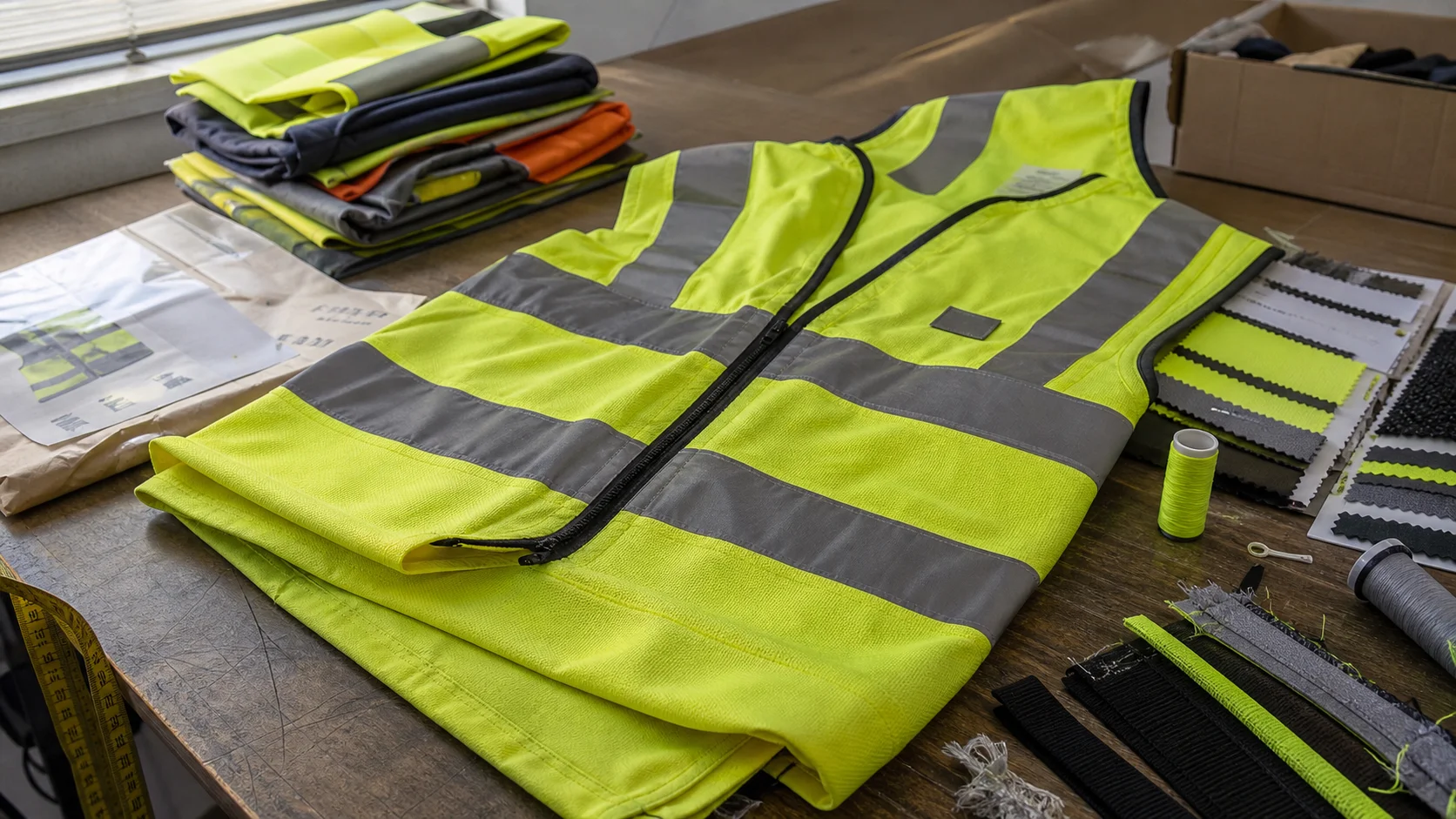
A product-specific quality control outline for restaurant groups buying recycled polyester safety vests, covering fabric verification, visibility...
Recycled Poly Safety Vest QC Checklist for Buyers - Sustainable Fashion manufacturing guide
A recycled poly safety vest for a restaurant group is not the same purchase as a generic warehouse vest. Restaurant teams use these garments in parking lots, curbside pickup lanes, loading areas, drive-through queues, catering setups, and after-hours receiving zones. The vest has to be visible, washable, comfortable over uniforms, and consistent across locations. It also has to support sustainability claims without creating quality problems at store level.
For buyers, the main risk is assuming that “recycled polyester” and “safety vest” are enough of a specification. They are not. Recycled poly can vary in yarn strength, color consistency, hand feel, and dimensional stability. Reflective tape can look acceptable in a sample room but crack, peel, or dull after a few wash cycles. Binding can twist. Hook-and-loop closures can snag uniforms. Printed logos can migrate, blur, or crack when applied to open mesh.
A restaurant group usually needs repeatable quality more than fashion-level novelty. The vest may be issued to hundreds or thousands of employees across regions. If one production run is neon yellow and the next is dull greenish yellow, brand presentation suffers. If the vest runs too small, stores will complain and reorder pressure increases. If reflective tape placement is uneven, the product may fail internal safety expectations even if it is inexpensive.
This recycled poly safety vest QC checklist is written for sourcing teams, procurement managers, uniform program owners, and sustainability buyers who need practical inspection controls before shipment. It focuses on restaurant group use cases, where visibility, durability, employee comfort, easy care, and brand consistency all matter.
Purchasing judgment: do not buy recycled poly safety vests on price alone. A low unit cost can disappear quickly if reflective tape fails, sizing is inconsistent, or locations reject the garment because it feels stiff over restaurant uniforms.
Quality control starts before production. A factory cannot consistently produce what a buyer has not clearly defined. The technical package should identify the vest type, fabric content, color standard, reflective trim, closure, label details, size range, packing method, and testing expectations.
For restaurant groups, the most common recycled polyester safety vest styles are lightweight mesh vests, solid woven vests, and hybrid styles with mesh panels and solid lower pockets. Mesh is breathable and often preferred for outdoor curbside pickup teams in warm climates. Solid woven recycled polyester can feel more structured and may support cleaner logo printing, but it can be hotter during long shifts. Hybrid styles cost more but can solve practical problems when teams need pen slots, radio pockets, or reinforced badge areas.
The buyer should decide whether the vest is intended for general visibility or formal high-visibility compliance. If the vest must meet ANSI/ISEA, EN ISO, or another visibility standard, that requirement must be stated in the purchase specification and supported by certified materials and testing documentation. A restaurant group should not assume that any neon vest with reflective tape is automatically compliant.
If your team needs help converting a uniform concept into a production-ready specification, fabrikn’s apparel manufacturing services page is a useful starting point for understanding the sourcing and development steps that should happen before bulk production.
Recycled polyester is commonly made from post-consumer PET bottles or pre-consumer polyester waste. For buyers, the key question is not only whether recycled content is claimed, but whether it is verified, stable, and suitable for repeated wear. Restaurant operations can be harder on vests than buyers expect. Garments may be stored in hot back rooms, worn over greasy uniforms, washed frequently, or shared between employees.
The purchase order should specify the required recycled content percentage. Many buyers request 50% to 100% recycled polyester depending on cost, availability, certification requirements, and performance expectations. A 100% recycled polyester vest can be appropriate, but the buyer should confirm strength, color, and shrinkage performance rather than treating recycled content as the only success metric.
Certification systems and documentation can add cost and lead time. That tradeoff may be worthwhile for corporate ESG reporting or public-facing sustainability programs. For a small internal-use order, a buyer may accept supplier declarations with reduced claim language. The safe purchasing decision is to align documentation level with the marketing risk.
Typical recycled polyester mesh safety vests may range from about 90 to 140 GSM. Lightweight mesh can reduce heat stress, but it may snag more easily and may not hold printed logos cleanly. Solid recycled polyester woven fabric may range from about 110 to 180 GSM depending on the structure. Heavier fabric often feels more durable but may be less comfortable for outdoor restaurant staff during summer operations.
Buyers should approve both numerical fabric weight and physical hand feel. A fabric can meet GSM but still feel boardy, scratchy, or weak. For restaurant teams, comfort affects actual use. Employees are less likely to wear a vest consistently if it traps heat, rubs the neck, or catches on apron straps.
Purchasing judgment: if restaurant employees work in hot climates, breathable mesh is usually worth considering. If the vest needs a crisp logo and a more uniform retail-facing appearance, solid or hybrid fabric may justify the extra cost.
Reflective tape is one of the highest-risk components in a recycled poly safety vest. It is also one of the easiest areas for suppliers to downgrade if the specification is vague. The buyer should define tape width, color, construction, reflectivity requirement, placement, and wash durability. Common tape widths include 2 inches or 5 cm, though requirements vary by market and standard.
Restaurant groups often use safety vests in parking lots during dusk, rain, early morning delivery windows, or high-traffic curbside lanes. Visibility matters even when the garment is not sold as formal protective equipment. A vest that looks bright indoors may not perform well at night if the reflective tape is poor quality or placed incorrectly.
Sewn-on tape is common and practical. It can be durable when stitch tension is balanced and the tape is not perforated excessively. Heat-applied tape can look cleaner, but adhesion risk increases on textured mesh or low-energy fabric surfaces. Segmented tape improves flexibility and comfort, though it may cost more and requires careful inspection for missing or misaligned segments.
If a supplier cannot identify the reflective tape source or provide basic durability data, the buyer should treat the order as higher risk. This does not always mean rejecting the supplier, but it does mean using stricter incoming material checks and production inspection.
Safety vests are simple garments, but simple garments still fail when factories rush cutting, sewing, and finishing. Recycled polyester mesh can stretch during sewing. Binding can ripple around curves. Reflective tape can pucker if stitched with poor tension. Pockets can sit crooked. Loose threads can create a cheap appearance even when the material is acceptable.
Restaurant group uniforms usually need clean, repeatable presentation. Employees may wear the vest in customer-facing areas such as pickup lanes, patios, and catering events. The garment does not need luxury tailoring, but it should look deliberate and consistent.
Common stitch counts may range from 8 to 12 stitches per inch depending on fabric and seam type. Too few stitches can weaken seams and look crude. Too many stitches can perforate lightweight mesh or reflective tape. The best specification is not always the highest stitch count; it is the count that balances strength, flexibility, and appearance.
Binding deserves close attention. It sits against the neck and arms, so poor binding causes discomfort. It also frames the garment visually. Narrow binding can miss the seam edge. Wide binding may look bulky and twist after washing. Buyers should specify binding material, width, color, and finish. Recycled polyester binding can support sustainability goals, but it should be tested for stretch recovery and color consistency.
Reject or repair vests with exposed raw edges, open binding, skipped stitches on binding, frayed tape ends, sharp melted edges, or heavy puckering. Minor thread tails can usually be trimmed before shipment, but repeated thread problems suggest weak finishing control.
Restaurant groups may ask for clear badge pockets, radio loops, pen pockets, or lower patch pockets. Each added feature increases cost and inspection points. A plain vest is easier to source and usually has lower defect risk. A pocketed vest can improve manager adoption and operational convenience, especially for catering leads, parking attendants, or outdoor event teams.
Purchasing judgment: keep the vest simple unless the team truly needs pockets. Every pocket, loop, and badge holder creates another failure point and can complicate laundering.
Fit is often underestimated in safety vest buying. A vest may be technically acceptable but operationally poor if it does not fit over uniforms, jackets, hoodies, aprons, or maternity wear. Restaurant teams include a broad range of body types, and many locations need quick issue with limited size sorting. Sizing strategy should be practical.
Common size ranges for group uniform programs include S to 3XL, M to 4XL, or dual-size ranges such as S/M, L/XL, and 2XL/3XL. Dual-size vests simplify inventory but can look loose on smaller employees. Individual sizes improve fit but create more SKU management. Adjustable side tabs can help, though they add trim cost and possible failure points.
Tolerance should be realistic. A typical woven or mesh vest tolerance may be around 1 cm to 2 cm for key measurements, depending on size and construction. Tight tolerances can increase rejection rates and cost. Loose tolerances can create store-level fit complaints. The measurement chart should identify critical points, not just list every possible dimension.
Buyers should approve fit on real wearers when possible. A flat measurement chart is useful, but it cannot reveal all problems related to movement, layering, or heat. For a restaurant group ordering across multiple climates, consider whether one vest works everywhere or whether warm-weather and cold-weather versions are needed.
Restaurant groups usually need the vest to match brand standards. That may mean a left chest logo, back logo, department label, color-coded role marking, or location-specific packout. These details can create significant quality risk if not controlled before production.
Logo application on recycled polyester safety vests requires care. Screen printing can be cost-effective for larger runs, but ink must bond properly to the fabric and avoid excessive stiffness. Heat transfer can deliver sharper artwork, though it may crack or peel if the transfer is not compatible with mesh or repeated washing. Embroidery is usually less common on lightweight safety vests because it can distort mesh and add weight, but it may work on solid woven panels.
Trim should also be specified clearly. Hook-and-loop closures vary widely in quality. A rough hook tape can damage polo shirts or aprons when the vest is stored together with uniforms. Zippers improve appearance but increase cost and may fail if low-grade sliders are used. Snaps can be fast and inexpensive, but they may pull out of lightweight mesh unless reinforced.
Labels should be accurate, legible, and compliant with destination-market requirements. Fiber content labeling should not overstate recycled content. If only the main fabric is recycled and trims are virgin polyester, the claim should be worded carefully. Care labels should match tested performance. If the reflective tape cannot withstand industrial laundry, do not approve a care label that implies heavy-duty washing.
Packaging can influence both quality and distribution efficiency. Individual polybags protect vests and simplify store allocation, but they create more plastic waste unless recycled-content or recyclable packaging is used. Bulk packing reduces packaging material, but it increases the risk of mixed sizes, creasing, and handling marks. For a sustainability-focused restaurant group, packaging decisions should be part of the responsible sourcing discussion rather than an afterthought.
If your team is building a broader uniform sourcing program, the background on fabrikn’s approach to apparel manufacturing may help frame the role of product development, supplier coordination, and quality control in a single workflow.
A disciplined sample process prevents expensive bulk mistakes. Restaurant groups should avoid moving directly from a generic supplier sample to bulk production. The approved sample should represent actual fabric, trim, color, branding, construction, and sizing. If any component changes after approval, the buyer should request confirmation or a revised sample.
Lead time depends on material availability, certification requirements, logo development, sample revisions, and production capacity. A simple recycled poly mesh vest with standard reflective tape may sample faster than a certified vest with custom color, recycled trims, special packaging, and multi-location packouts. Buyers should allow time for sample review and correction rather than forcing the factory to solve problems during bulk sewing.
Typical MOQ ranges vary by supplier and customization level. For a basic private-label recycled polyester safety vest, many factories may quote in the range of 300 to 1,000 pieces per color or style. Custom dyed fabric, certified recycled materials, custom reflective tape, or complex branding can push MOQ higher, sometimes 1,000 to 3,000 pieces or more. Smaller quantities may be possible through stock blanks with decoration, but stock programs limit fabric control, color consistency, and sustainability documentation.
Purchasing judgment: stock-decorated vests can work for pilots, temporary campaigns, or small restaurant groups. For national rollouts with sustainability claims and strict brand standards, a controlled custom production route is usually safer.
Inspection should not wait until cartons are sealed. A recycled poly safety vest has several quality risks that are easier to correct during production than after finishing. Buyers should align inspection timing with order size, supplier history, and product complexity.
Incoming material checks should happen before cutting. Inspect fabric rolls for shade consistency, width, GSM, holes, stains, and fluorescence. Check reflective tape rolls for width, surface quality, lot consistency, and adhesion or sewability. Confirm labels, closures, binding, thread, and packaging materials match approved specifications.
If fabric lots vary, the factory should not mix panels from different lots in the same garment. Shade banding across front panels is especially visible on fluorescent safety colors. For restaurant groups, this can make a new vest look cheap even before it is issued.
During production inspection is useful once a meaningful quantity is sewn, often around 20% to 50% completion depending on the inspection plan. The inspector should check workmanship, measurements, tape placement, logo placement, closure function, and size segregation. Problems found at this stage can still be corrected without sorting the entire shipment.
Final inspection should occur when production is complete and most goods are packed. Buyers can use an AQL-based sampling plan or a custom inspection level depending on risk. Common AQL settings for apparel may use stricter limits for critical defects and practical limits for major and minor defects. The exact AQL should be agreed before inspection, not debated after defects are found.
Critical defects include unsafe sharp objects, severe reflective failure if visibility is a required function, wrong fiber content labeling, or non-compliant claims. Major defects include wrong measurements outside tolerance, poor tape attachment, open seams, wrong logo placement, mixed sizes, major stains, or closure failure. Minor defects include small thread tails, slight uneven stitching, or minor packing wrinkles that do not affect use.
Buyers placing recurring orders should keep inspection records by production lot. Defect trends matter. If three shipments show reflective tape puckering, the root issue may be tape quality, stitch tension, operator training, or unrealistic construction. Fixing the root cause is better than repeatedly trimming threads and accepting repairs.
Not every defect deserves the same response. A sourcing team should define reject, repair, accept with concession, and monitor categories before inspection. This prevents emotional decisions when goods are already packed and a delivery deadline is close.
These defects can affect safety perception, brand consistency, employee use, or legal claims. The buyer should not accept them casually. A discount rarely solves store-level rejection or employee non-use.
Lower-risk defects may be acceptable if they fall within agreed AQL limits. The practical question is whether the defect affects function, appearance, compliance, or store distribution. If not, rejection may create unnecessary delay and cost.
For a restaurant group recycled poly safety vest quality control checklist, the most important purchasing discipline is to separate cosmetic tolerance from functional risk. A slightly imperfect stitch may be acceptable. Reflective tape that does not stay attached is not. A small color variation may be acceptable for back-of-house use. A noticeable shade mismatch across customer-facing curbside teams may not be.
MOQ and lead time are not fixed numbers. They depend on whether the factory uses stock fabric, custom-dyed recycled polyester, certified materials, special reflective tape, custom branding, and complex packout. Buyers should ask suppliers to separate lead time into material sourcing, sampling, production, inspection, packing, and shipping. This makes delays easier to manage.
A typical development timeline may include one to two weeks for initial sampling if materials are available, longer if custom recycled fabric or certification documents are required. Bulk production may take several weeks depending on quantity and factory capacity. Peak uniform seasons, holiday promotions, and large restaurant rollouts can extend timelines. Shipping mode and destination customs clearance should also be considered.
Cost tradeoffs should be reviewed line by line. Certified recycled polyester, better reflective tape, stronger binding, reliable closures, and individual store packing all add cost. Some costs are worth paying because they reduce operational problems. Other features may be unnecessary. A buyer should not over-specify a short-term event vest, but should not under-specify a vest intended for daily curbside operations across many locations.
For sourcing support, specification review, or a custom recycled polyester vest program, buyers can reach fabrikn through the contact page to discuss requirements before sampling or bulk production.
The following checklist can be used as a working control list before purchase order release, during sample approval, and at final inspection. It should be adapted to the restaurant group’s actual use case, safety expectations, sustainability claims, and distribution model.
A recycled poly safety vest can be a strong fit for restaurant groups that want practical visibility and more responsible material choices. The garment is not complicated, but the buying process needs discipline. The best results come from clear specifications, realistic MOQ planning, controlled sampling, material verification, and inspection focused on the risks that matter: visibility, durability, fit, branding, and claim accuracy.
Get a free quote from Fabrikn — your trusted B2B clothing manufacturer with 10+ years of experience. MOQ as low as 200 pieces.
Get a Free Quote →The best option depends on use. Mesh recycled polyester is usually better for warm outdoor curbside work because it is breathable. Solid woven recycled polyester can look cleaner and support sharper logos. Hybrid styles work well when teams need pockets or more structure. Buyers should choose based on climate, visibility needs, branding, and wash frequency.
Typical MOQs may range from about 300 to 1,000 pieces per color or style for relatively standard custom vests. Orders with custom-dyed recycled fabric, certification requirements, special reflective tape, or complex branding may require 1,000 to 3,000 pieces or more. Stock decorated vests can sometimes be sourced in smaller quantities, but specification control is limited.
Recycled polyester does not automatically reduce quality. The risk depends on yarn quality, fabric construction, dyeing control, finishing, and supplier consistency. Buyers should verify GSM, tear strength, shrinkage, color consistency, and hand feel before approving bulk production.
If employees work in environments where a formal high-visibility standard is required by policy, regulation, or risk assessment, the vest should be specified and tested accordingly. If the vest is for general visibility in restaurant parking or pickup areas, buyers may still use high-visibility design principles, but they should avoid claiming compliance unless documentation supports it.
Common defects include reflective tape peeling or puckering, uneven tape placement, shade variation, weak binding, incorrect measurements, poor logo adhesion, rough closures, loose threads, and mixed sizes in cartons. Reflective tape problems, wrong labels, and major measurement failures should be treated as higher-risk defects.
Buyers should request supplier declarations and, when needed, recognized recycled-content certification documents or transaction certificates. The documentation should match the actual production lot and material scope. If only the main fabric is recycled, claims should not imply that the full garment is recycled unless trims and components support that statement.
Many buyers use an AQL-based final random inspection, supported by incoming material checks and during-production inspection for larger or higher-risk orders. The inspection level should reflect order size, supplier history, compliance requirements, and whether the vest is part of a national rollout.
Screen printing can be cost-effective for larger runs, while heat transfers can deliver sharper artwork. Mesh fabric can make printing more difficult, so buyers should approve logo samples on the actual production fabric. Wash and flex tests are important before approving bulk decoration.