
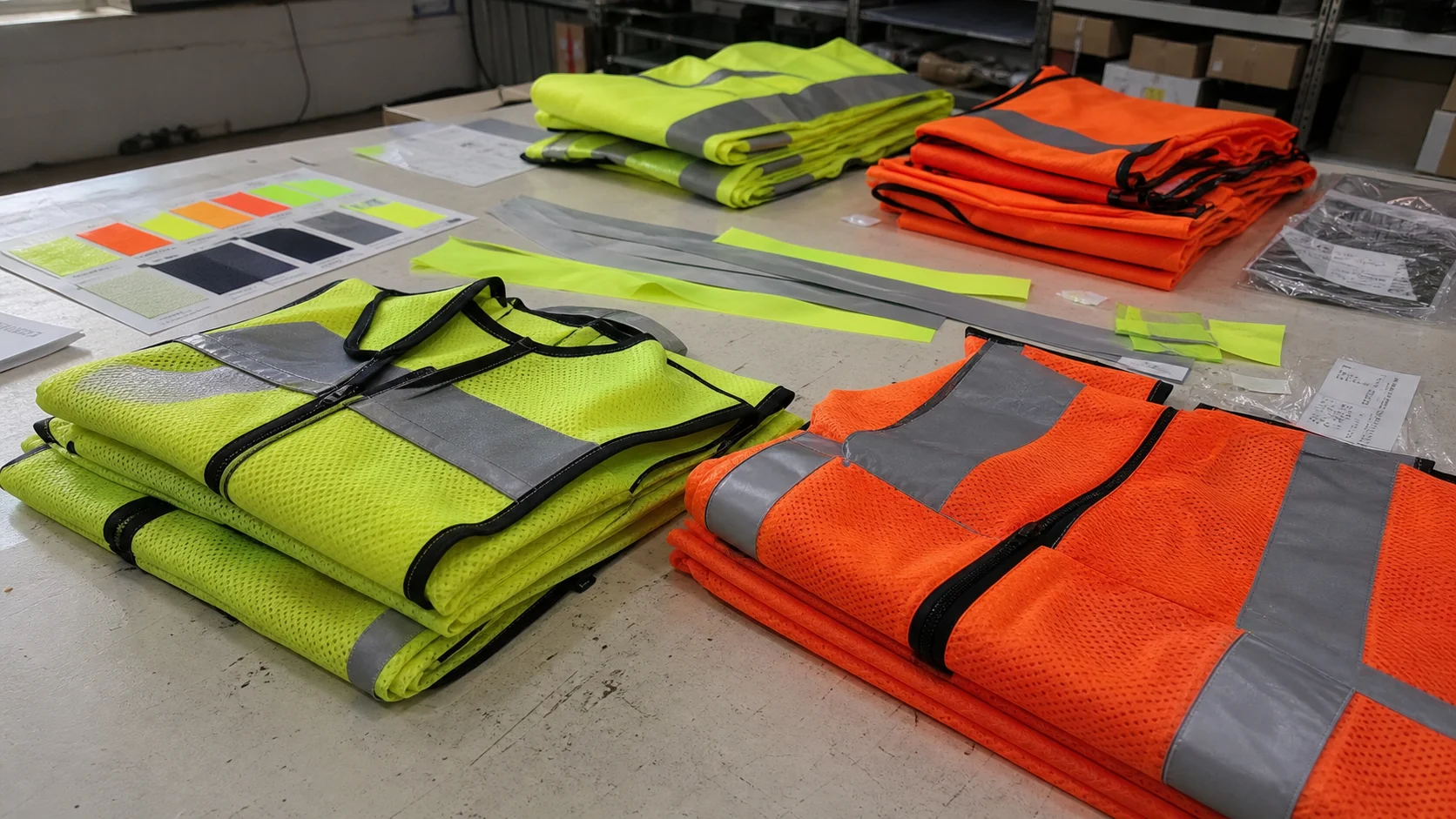
A practical SEO-focused outline for security contractors sourcing recycled polyester safety vests with a shrinkage control plan that protects ANSI...
Recycled Poly Safety Vest Shrinkage Control Plan - Fabrikn production reference
A recycled poly safety vest looks like a simple product until it fails in the field. For security contractors, shrinkage is not only a fit issue. It can affect compliance, employee comfort, visibility, branding consistency, and reorder accuracy across multiple job sites. A vest that becomes tight after laundering may restrict movement during patrols. A vest that twists, curls, or loses length can sit poorly over uniforms, jackets, or body equipment. If reflective tape puckers or the front closure shifts, the garment also looks less professional.
The keyword for buyers is control, not guesswork. Recycled polyester can be a dependable material for safety vests when the sourcing plan is written clearly and checked at each stage. The risk increases when buyers approve a vest by appearance only, then place bulk orders without shrinkage testing, fabric relaxation, heat exposure checks, or wash simulation. A security contractor recycled poly safety vest shrinkage control plan should define acceptable shrinkage limits, testing methods, construction details, trim compatibility, inspection points, and responsibility at each approval stage.
Security contractors often buy vests in repeat programs. That makes shrinkage control even more important. A one-time event order may tolerate a wider fit range, but a contractor supplying guards, traffic marshals, event staff, parking teams, or patrol units needs consistent sizing from order to order. If the first shipment fits well and the second shipment shrinks more, complaints will land with procurement, not the fabric mill.
For B2B buyers, the practical target is usually to keep dimensional change within a narrow and documented range after washing or heat exposure. Many buyers request shrinkage of 3% or less in length and width after specified laundering, though the correct tolerance depends on the garment type, standard, fabric, finishing process, and end-use care instructions. Some woven or knitted recycled polyester mesh constructions may perform better than that. Others may move more if heat-set poorly, finished aggressively, or combined with unstable trims.
Purchasing judgment: recycled polyester is a sensible sustainability choice for safety vests, but it should not be treated as automatically stable. Stability comes from yarn selection, fabric construction, heat-setting, trim matching, sample testing, and disciplined bulk inspection.
Fabrikn supports apparel development and production planning through structured sourcing services. Buyers comparing material choices, sample routes, and production controls can review available support at fabrikn.com/services/ or contact the team through fabrikn.com/contact-us/.
Recycled polyester used in safety vests is commonly made from post-consumer PET bottles or other polyester waste streams. The feedstock is converted into chips, yarn, and then fabric. For safety vests, common fabric choices include warp knit mesh, bird-eye knit, plain woven polyester, Oxford polyester, and lightweight woven or knitted high-visibility fabrics. The exact construction matters more than the broad fiber label.
Polyester is generally more dimensionally stable than cotton, viscose, or many natural blends. That does not mean it never shrinks. Polyester can still show dimensional change due to residual yarn tension, fabric construction, heat-setting quality, finishing temperature, dyeing conditions, lamination, coating, washing, tumble drying, and ironing exposure. Recycled polyester adds another variable: yarn quality and consistency may vary by supplier, especially when traceability, denier, tenacity, and thermal behavior are not tightly specified.
Most safety vest shrinkage problems come from one of five sources. The first is fabric relaxation. Knitted mesh can stretch during fabric making, dyeing, finishing, rolling, spreading, and cutting. Once laundered, the fabric may relax back, causing measurable shrinkage. The second is heat exposure. Polyester responds to heat, and poor heat-setting can leave the fabric unstable. The third is trim mismatch. Reflective tape, binding, zipper tape, hook-and-loop, webbing, labels, or elastic may shrink differently from the shell fabric. The fourth is sewing tension. Overly tight stitching can cause seam puckering after washing or heat exposure. The fifth is inaccurate care labeling. If a vest is labeled in a way that permits high-temperature drying, the garment may face harsher conditions than it was built to withstand.
Security contractors should also consider how vests are cleaned. Some guards wash their own garments at home. Some contractors use laundry services. Event or traffic teams may wear vests over outerwear and wash them less frequently, while warm-weather security staff may wash them often. Vests may sit in hot vehicles, storage rooms, or outdoor posts. That real usage profile should shape the test method.
A shrinkage control plan starts with a precise specification. A loose tech pack invites supplier interpretation, and interpretation is where fit inconsistencies begin. The buyer should define the safety classification requirement, fabric construction, recycled content claim, GSM range, color standard, reflective tape grade, trims, measurements, packaging, care label, and test requirements.
For high-visibility safety vests, buyers may need to align with applicable visibility standards in the target market. Standards can include requirements for fluorescent background material, reflective material placement, minimum reflective area, colorfastness, and garment design. The sourcing team should confirm the required standard before sampling. A vest for general security identification is not always the same as a certified high-visibility safety garment for roadway or industrial use.
The recycled claim also needs documentation. Buyers can request transaction certificates, recycled content declarations, or chain-of-custody documentation where relevant. Sustainability claims should be specific and supportable. “Made from recycled polyester” is not enough if the contract requires a certain recycled content percentage, such as 50%, 80%, or 100% recycled polyester in the shell fabric.
A practical shrinkage tolerance for many recycled polyester safety vests is often set around 0% to 3% after a defined wash method. Some buyers may accept up to 5% for low-cost event vests if the fit is generous and the garment is not safety-certified. That tradeoff should be intentional. For security contractors issuing uniforms across a workforce, a tighter tolerance is usually worth the extra sampling and fabric control.
Fabric control begins before garment cutting. The mill or fabric supplier should provide fabric test results for dimensional stability, GSM, colorfastness, and physical performance. The garment factory should not rely only on a mill certificate. Bulk fabric may behave differently from lab dips or sample yardage, especially if produced in a different dye lot, finished on different equipment, or held under tension during rolling.
Fabric relaxation is a simple control that prevents many problems. Knitted recycled polyester mesh should be opened and allowed to relax before cutting. The relaxation time depends on fabric construction and supplier practice, but 12 to 24 hours is common for many knits. Tightly rolled or highly elastic fabric may need longer. Woven fabric may need less relaxation, but it still benefits from proper storage, humidity control, and tension-free spreading.
Heat-setting is central to polyester stability. If the fabric is not heat-set correctly, shrinkage may appear after washing, tumble drying, pressing, or hot storage. The buyer does not need to manage the stenter settings directly, but the purchase specification should require stable heat-set fabric and bulk shrinkage confirmation. A supplier unwilling to test bulk fabric before cutting is pushing risk downstream.
Trim compatibility is a frequent weak point. Reflective tape can pull, pucker, or ripple if its backing shrinks differently than the shell fabric. Binding tape may tighten around armholes and hems, causing the vest to curl or shorten. Zipper tape may wave after laundering. Hook-and-loop closures may stiffen or distort the front panel. The solution is not simply buying expensive trims. The solution is testing the exact combination of shell fabric, reflective tape, binding, thread, closure, and construction.
Buyers should ask for actual test reports rather than accepting verbal confirmation. A short internal test can still be useful, but third-party testing may be needed for larger programs, regulated markets, or certified claims. Security contractors ordering across multiple regions should document the method clearly so every reorder follows the same standard.
Shrinkage control is not only a material issue. Pattern planning matters because a safety vest is usually worn over another garment. Security staff may wear it over a polo, shirt, fleece, softshell, rain jacket, or tactical uniform. If the vest is cut too close to body measurements, even small shrinkage becomes a complaint.
The fit block should include wearing ease. For standard adult safety vests, buyers often use unisex sizing with generous chest and sweep measurements. Common size ranges include S to 5XL, though security contractors may need XS to 7XL depending on workforce profile. Larger sizes should not be scaled mechanically without checking tape placement, pocket position, and front closure alignment. A vest that looks balanced in size M may place reflective tape too high or too low in size 5XL if grading is careless.
Pattern allowances can account for expected shrinkage, but they should not hide poor fabric control. If a fabric is expected to shrink 2%, the pattern can be adjusted so the washed garment lands within tolerance. If shrinkage swings from 1% to 6% across lots, pattern compensation will not solve the problem. Stable fabric must come first.
Safety vest measurement points should be practical and repeatable. Length should be measured from the high shoulder point or center back neck, depending on the tech pack. Chest should be measured at a defined distance below the armhole. Tape placement should be measured from fixed reference points. Armhole and sweep measurements should be included because binding shrinkage often changes these areas.
For security contractors, pocket placement can be just as important as garment length. Radio loops, ID badge windows, mic tabs, and pen compartments must stay usable after washing. Shrinkage around these details can make the vest look cheap even if the main body measurement remains within tolerance.
A serious shrinkage control plan needs staged sampling. Skipping sample stages may save two weeks at the beginning and create months of field complaints later. The number of sample rounds depends on project complexity, but the basic route should include proto sample, fit sample, size set sample, pre-production sample, and sealed approval sample.
The proto sample confirms the concept, construction, and approximate material direction. It may be made in available fabric, so it should not be used for shrinkage approval unless it uses the exact bulk fabric and trims. The fit sample checks measurements, wearing ease, pocket placement, and closure function. The size set sample verifies grading across the selected size range. The pre-production sample should use correct bulk fabric, trims, reflective tape, labels, and packaging. That is the sample to wash and measure carefully before authorizing cutting.
Buyers should seal one approved sample for reference. The factory should keep one, and the buyer or inspection team should keep one. The sealed sample should include signed labels or approval records, date, version number, fabric lot reference, trim reference, and measurement sheet. Without a sealed sample, disputes become subjective.
Sample lead times vary by supplier workload and material availability. A simple recycled poly mesh vest with standard trims may need 7 to 14 days for first samples after tech pack confirmation. A custom reflective layout, special recycled fabric, certified tape, printed logos, multiple pockets, or unusual size range can extend sampling to 2 to 4 weeks or more. Lab testing adds time. Buyers should treat that time as risk reduction, not delay.
For more complex uniform programs, buyers can review sourcing and production development support through fabrikn.com/about-us/ to understand how structured apparel programs are typically managed.
Bulk production control should begin with incoming material inspection. The factory should check fabric roll width, GSM, shade, defects, roll length, and shrinkage. Roll-by-roll shade segregation is important for high-visibility colors because fluorescent yellow, lime, orange, and red-orange can show visible lot differences. A vest program for security contractors may not tolerate mixed shade panels within the same shipment.
Before cutting, fabric should be relaxed and spread without excessive tension. Cutting markers should account for fabric direction if the fabric has a visible structure, sheen, or stretch direction. Reflective tape placement should be marked clearly. If reflective tape is sewn too tightly, it may pucker after washing. If the operator stretches mesh while applying tape, the garment can shrink back and distort the tape line.
Sewing tension must be controlled. Polyester thread is common and usually compatible, but machine settings still matter. High stitch density may create stiffness and puckering. Low stitch density may reduce seam strength. Binding operations need particular attention because narrow binding can pull around curves. Armholes and hems are common distortion points.
Heat processes should be limited and defined. Some vests use heat transfer logos, heat-applied reflective details, or printed contractor branding. Heat can change fabric dimensions if the fabric is not stable or if pressing conditions are too aggressive. If logos are required, test the full decorated garment, not only the blank vest. A blank vest may pass shrinkage while the decorated version waves around the print or tape.
Packing can also influence appearance. Vests packed too tightly while warm may crease around reflective tape or folded edges. Recycled polyester mesh is lightweight, but reflective tape and binding can hold fold marks. For premium security uniform programs, flat folding, consistent carton packing, and moisture control are worth specifying.
Final inspection should not be limited to counting cartons and checking visible defects. Shrinkage control requires measurement and, where possible, wash verification. Full wash testing at final inspection may not be practical for every shipment because it takes time. Still, the inspection plan should include test records from bulk fabric, pre-production sample, and retained production samples. For larger orders, random garments can be pulled for post-wash measurement before release if the timeline allows.
Inspection risks for recycled poly safety vests usually fall into four categories: dimensional problems, reflective material problems, construction distortion, and documentation gaps. Dimensional problems include short body length, tight chest, uneven sweep, and size grading errors. Reflective problems include puckering, cracking, poor placement, low reflectivity, and edge lifting. Construction distortion includes twisted panels, curled armholes, wavy zippers, and misaligned closures. Documentation gaps include missing recycled content proof, incorrect care labels, and absent test results.
AQL levels depend on the buyer’s quality policy and order value. Many apparel buyers use general inspection levels with separate critical, major, and minor defect limits. For safety-related garments, critical defects should include anything that may compromise visibility, labeling accuracy, or safe use. A missing reflective strip, incorrect reflective layout, or wrong certification label should not be treated as a minor issue.
Colorfastness is another risk. High-visibility colors must remain bright enough for the intended use. Washing, perspiration, rubbing, and light exposure can degrade appearance. Recycled polyester can perform well, but dye quality and finishing matter. Buyers should request colorfastness tests relevant to the end use, especially for outdoor guards, traffic control teams, and event security staff working in sun and rain.
MOQ depends on fabric availability, trim customization, color, certification, and decoration. For a basic recycled polyester safety vest using available fabric and standard trims, typical MOQ may start around 300 to 500 pieces per color or style with some suppliers. For custom recycled fabric, special high-visibility color matching, certified reflective tape, private labels, or extensive size ranges, MOQ may move to 1,000 to 3,000 pieces or more. If the fabric must be knitted or dyed specially, the fabric mill MOQ can become the real driver.
Small orders are possible in some sourcing setups, but they often carry tradeoffs. The buyer may need to accept stock fabric, limited color options, standard tape layouts, higher unit cost, and fewer test options. Larger orders give more control over fabric, trims, labeling, packaging, and test discipline. That control is useful when a security contractor wants the same vest across multiple sites or contract periods.
Lead time also depends on the material path. A stock recycled poly vest with logo decoration may ship faster than a fully custom vest. A realistic lead time for simple repeat production may be 30 to 45 days after sample approval, assuming materials are available and capacity is open. Custom fabric, lab testing, special trims, or certification steps can push production timelines to 60 to 90 days or longer. Sampling time should be added before bulk production.
Cost should be assessed beyond the FOB unit price. Shrinkage failure creates replacement costs, staff complaints, delayed deployment, rework, and reputational damage. A vest that costs slightly more but keeps size, visibility, and appearance after repeated washing is usually the better buy for a contractor program.
Buyers should also consider reorder continuity. If the first production uses one recycled yarn source and the reorder uses another, shrinkage may change. The purchase order should reference the approved fabric quality, trim specifications, test requirements, and sealed sample. If substitutions are needed, they should be declared and tested before production.
A security contractor recycled poly safety vest shrinkage control plan should be written into the development calendar and purchase documentation. Verbal agreements are weak. The checklist below can be used as a practical sourcing control tool.
The most reliable sourcing approach is not the cheapest or the most complicated. It is the one that matches the vest’s risk level. A simple visitor vest may not need the same testing as a contractor uniform program. A security company supplying hundreds of guards across active sites should not treat shrinkage testing as optional.
A clear plan can be built in six steps. First, define the end use and safety requirement. Second, lock the material specification. Third, test fabric and trims before production. Fourth, approve fit, grading, and pre-production samples. Fifth, control production through relaxation, cutting, sewing tension, and decoration checks. Sixth, inspect final goods and retain records for reorders.
Each step should have an owner. The buyer owns the requirement. The supplier owns production control. The mill owns fabric consistency. The inspection team owns verification. Problems occur when every party assumes another party is checking shrinkage.
Plan Step Owner Key Document Pass Condition End-use definition Buyer Product brief Safety, branding, and laundering requirements are clear Material specification Buyer and supplier Tech pack and BOM Fabric, trims, and recycled content are documented Fabric and trim testing Supplier or third-party lab Test report Shrinkage and appearance meet tolerance Sample approval Buyer Sample comments and sealed sample Fit, measurements, tape placement, and wash result approved Bulk production control Factory Production records Relaxation, cutting, sewing, and finishing follow approved method Final inspection Inspection team or buyer Inspection report Measurements, workmanship, labels, and documents pass requirementsThe direct purchasing judgment is simple: do not approve bulk recycled poly safety vests without seeing post-wash measurements from the actual fabric and trim combination. If the supplier offers a lower price by skipping shrinkage testing, the buyer is accepting hidden risk. If the vest is part of a security uniform contract, that risk can become expensive quickly.
Buyers developing a sustainable safety vest program can use internal sourcing support to reduce back-and-forth, compare supplier routes, and define approval gates. A structured development process through fabrikn.com/services/ can help align sustainability goals with practical production controls.
Get a free quote from Fabrikn — your trusted B2B clothing manufacturer with 10+ years of experience. MOQ as low as 200 pieces.
Get a Free Quote →It is a written sourcing and production plan that controls dimensional change in recycled polyester safety vests. It covers fabric selection, heat-setting, trim compatibility, sample testing, measurement tolerances, production handling, and final inspection.
Many buyers target 3% or less in length and width after a defined laundering method. Some lower-cost programs may accept wider tolerance, while uniform programs for security contractors usually benefit from tighter control. The tolerance should be stated in the tech pack and purchase order.
Not automatically. Recycled polyester can be stable when yarn quality, fabric construction, heat-setting, and finishing are controlled. Risk increases when recycled yarn source, fabric setting, or trim compatibility is inconsistent.
Reflective tape, binding, armholes, hems, zipper areas, and pocket panels are common problem points. These areas combine different materials and sewing tensions, so they should be checked after wash testing.
Both blank and decorated garments may need checking, especially when heat transfer logos, screen prints, or embroidery are used. Heat and decoration can change how the fabric behaves, so the final approved version should be tested as it will be delivered.
Basic custom programs may start around 300 to 500 pieces per style or color, while custom fabric, certified reflective layouts, or broad size ranges may require 1,000 to 3,000 pieces or more. Stock vest programs can be lower but give less control.
Simple repeat production may take 30 to 45 days after sample approval when materials are available. Custom recycled fabric, lab testing, special trims, and certification steps can extend the timeline to 60 to 90 days or longer.
Buyers should request a tech pack, bill of materials, fabric shrinkage report, trim specifications, reflective tape information, recycled content documentation, measurement report, care label details, and final inspection report.
Pattern allowance can compensate for predictable shrinkage, but it cannot fix unstable fabric or trim mismatch. If shrinkage varies across lots, the root issue is material control, not pattern size.
Start with end-use requirements, safety standard needs, recycled content goals, and laundering conditions. Then build the fabric specification, sample approval route, and inspection plan before requesting bulk pricing. Buyers can contact Fabrikn at fabrikn.com/contact-us/ to discuss sourcing requirements.