
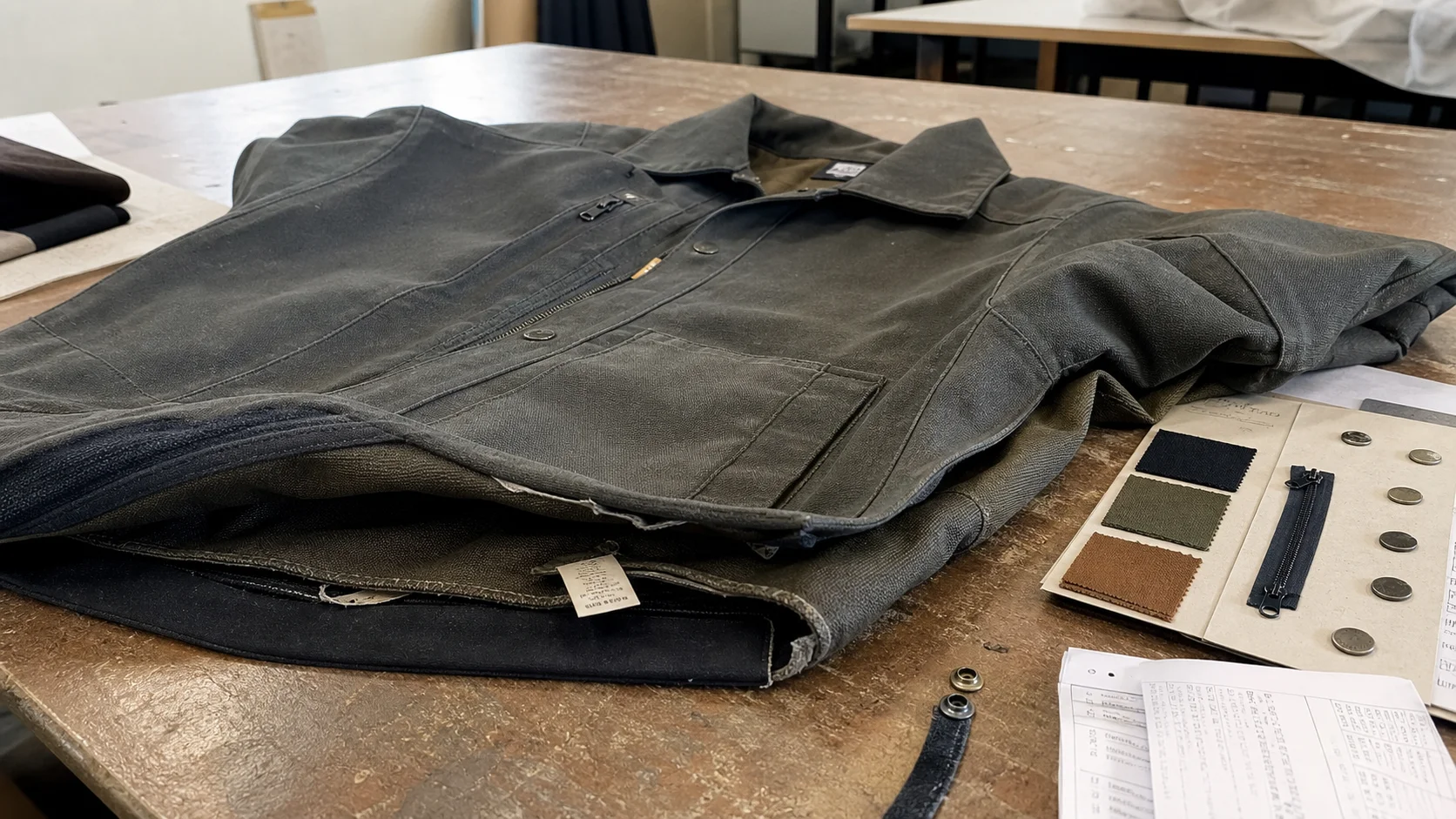
A practical SEO outline for buyers evaluating repairable work jacket defects, sorting methods, and quality decisions for sustainable fashion programs.
For gym program buyers, a repairable work jacket defect sorting guide is not just a quality-control document. It is a practical buying tool that protects margin, reduces waste, and keeps a sustainable apparel program moving without unnecessary rejections. In workwear and branded outerwear, not every defect means the garment must be scrapped. Some defects are repairable at the factory, at a finishing partner, or sometimes at the buyer’s own warehouse if the issue is clearly defined and the repair cost is justified.
This matters more in sustainable fashion buying than many teams expect. A jacket that can be corrected with a seam resew, zipper replacement, bartack reinforcement, or trim reattachment may still meet the program standard if the defect is documented, traceable, and within agreed tolerance. The key is to sort defects by function, visibility, repair effort, and long-term durability risk. Buyers who set this up early usually get better use of production output, fewer disputes over final inspection, and a cleaner path for replenishment orders.
For sourcing teams that need support on sustainable production, product development, or vendor communication, fabrikn.com offers useful starting points at /services/, /about-us/, and /contact-us/.
Repairable Work Jacket Defect Sorting Guide - Fabrikn production reference
Gym program buyers often source work jackets for staff, trainers, maintenance teams, or promotional use. These programs usually have a tighter cost target than premium retail, but they still need a dependable standard. The jacket has to function well, look presentable, and hold up under repeated wear. If the product is part of a sustainable fashion program, the buyer may also be expected to reduce waste and improve yield from production.
That creates a simple sourcing reality: not every imperfection should be treated equally. A loose thread near a hidden seam may be worth repairing. A broken zipper slider may be a straightforward correction. A misaligned logo placement, by contrast, may be unacceptable if it affects branding consistency. Sorting defects well helps buyers avoid over-rejecting usable goods while still protecting the program from weak product quality.
Repairable sorting also affects cost planning. Rework is not free. It consumes labor, time, and sometimes extra trims. A buyer who knows the likely repair categories can negotiate more realistic quality terms, set inspection thresholds, and decide whether to accept, repair, or downgrade units.
A repairable defect is a fault that can be corrected without changing the core identity, fit, or performance of the jacket. The repair should restore function or appearance to the agreed standard, or to a level acceptable for the program if the buyer allows controlled downgrade.
Typical repairable defects in work jackets include:
Not every repairable issue is worth repairing. That judgment depends on the location of the defect, the labor cost, the time available before shipment, and the probability that the same problem appears in volume. A buyer should not assume that a technical repair is automatically a commercial repair.
The most useful sorting method is to group defects by impact. A clean visual defect may be repairable if it sits in a low-visibility area. A structural defect may be repairable if it does not affect garment safety or durability. A branding or compliance defect is usually harder to accept, especially if the buyer has strict logo placement, fiber content, or care label requirements.
These affect function or durability. They are often the easiest to justify for repair if the failure is local and the material remains intact.
Sorting rule: repair if the defect can be corrected without distorting the panel shape, comfort, or wear life. Reject if the damage suggests broader construction weakness or repeated failure across the lot.
Hardware is one of the most common repairable categories in outerwear. A zipper slider, snap, or cord stop can often be replaced quickly if the base tape, attachment point, and surrounding fabric remain sound.
Sorting rule: repair if replacement parts match spec and the repair will not leave visible damage. Reject if the zipper coil is damaged, the tape is distorted, or the hardware issue is linked to poor pattern alignment.
These matter more in branded or uniform programs where appearance is part of the product promise. Some visual issues are repairable; others are not, especially if the repair would remain obvious after finishing.
Sorting rule: repair if the final appearance can meet the buyer’s acceptable standard. Reject if the defect is in a high-visibility area like the chest, back yoke, or logo panel and would still be obvious after repair.
These require extra caution. Care labels, content labels, country-of-origin marking, and logo placement can carry regulatory or brand risk. Some mistakes can be fixed with relabeling. Others may require full rework or rejection.
Sorting rule: repair only if the defect is documented, the corrected label is accurate, and the original error does not create a legal or traceability problem. Buyers should be conservative here.
Defect sorting works best when the buyer defines the rules before production starts. Once goods are on the floor, teams often argue over what is acceptable. That slows shipment and pushes cost into correction work that was never budgeted properly.
A practical inspection framework should cover the following:
Buyers should also define what “good enough” means in a gym program context. A staff jacket for maintenance use may allow a slightly broader appearance tolerance than a retail-ready promotional jacket. That does not mean standards should be loose. It means the sourcing spec should match the end use.
Good defect sorting is not about accepting poor quality. It is about separating manageable repair from true product failure before the shipment is blocked.
This is the most important commercial decision in the guide. Repair makes sense when the garment can be restored quickly, the repair cost is lower than replacement cost, and the result will still meet the program standard. Reject makes sense when the defect is linked to structural risk, repeated process failure, or weak visual consistency that cannot be corrected cleanly.
Defect type Typical action Buyer judgment point Loose seam in hidden area Repair Repair is clean and durable Broken zipper slider Repair Replacement matches spec and function Misshaped panel or major puckering Often reject Repair may not restore appearance Incorrect logo placement Depends Accept only if brand rule allows correction Wrong care label content Usually reject or strict rework Compliance and traceability come firstThe cost tradeoff is straightforward. A cheap repair that introduces new damage is not a bargain. A quick fix that fails in use creates returns, brand complaints, and more waste later. For sustainable fashion buyers, the real metric is not only “how many units were saved,” but “how many units stayed reliable after repair.”
Repairable defect sorting should be linked to production scale. Minimum order quantities for work jackets often vary by fabric type, decoration method, and factory capability. A small custom run may need more flexible inspection handling because setup losses are higher. Larger programs can usually support stricter sorting, but they also create bigger rework volumes if the issue is repeated.
Typical MOQ ranges for work jackets can sit anywhere from about 300 to 1,000 pieces per color or style, depending on construction, fabric availability, and decoration method. Technical outerwear or recycled-fiber programs may require higher minimums if mills need extra yardage or custom dye lots. Buyers should confirm whether the supplier can support repairs without interrupting the main line or delaying packed goods.
Sample approval matters just as much. A proper approval process should include:
Lead time depends on more than sewing capacity. Repair windows may be limited by trim availability, factory finishing capacity, and inspection schedule. If a zipper or label needs replacement, the parts must be on hand. If a jacket requires rework on a coated shell or bonded fabric, repair may be slower and riskier because the fabric can show needle marks or distortion.
Fabric choice changes how easy a jacket is to repair. Lightweight woven shells, brushed fleece, softshell, and coated performance fabrics all behave differently under needle work. Some can handle a reseam neatly. Others may show needle holes, pilling, or seam stress after repair.
Important spec points include:
Trim specs matter just as much. Zippers, snaps, drawcords, elastic, thread, and labels should be specified clearly before production. If the replacement zipper does not match the original chain size, tape width, or finish, the repair may look uneven or fail in use. Thread ticket size also matters. A strong stitch line on a lightweight shell can leave visible puncture marks, while too fine a thread can fail under stress.
For sustainable programs, buyers should also ask whether trims are available in lower-impact or recycled versions without compromising repairability. That can support the program narrative, but the sourcing team should verify performance before scaling.
Inspection risk usually appears in the same places: seams, closures, labels, reinforcement points, and decoration. Work jackets often have more structure than basic tops, so there are more points where a repair can go wrong.
Buyers should watch for over-repair. A factory may try to save units by fixing too many defects, but the garment can end up with visible rework marks or reduced strength. One clean repair is better than three borderline corrections. If the garment needs repeated intervention, rejection may be the more responsible call.
A workable sorting flow does not need to be complicated. It does need to be consistent.
Create three bins: repairable, review, and reject. Avoid mixing everything into one inspection pile. Sorting gets slower and less reliable when the team tries to make final decisions too early.
Check whether the defect is in a high-visibility or high-stress area. A hidden side seam and a front chest logo panel should not be judged the same way.
Count the labor time, trim replacement need, and risk of secondary damage. If the repair is simple and repeatable, it is more likely to be worth doing.
Use the pre-agreed quality standard. If the team needs to debate every unit, the spec is too vague.
Repaired goods should not skip review. A repaired seam or replaced zipper still needs final confirmation before packing.
Track defect type, location, and frequency. That information helps buyers see whether the issue is random or process-related. If the same defect repeats, the answer is not more repair. The answer is better production control.
Before placing or repeating an order, buyers should confirm the following:
If the program is tied to sustainability claims, the buyer should also ask whether repaired goods remain compliant with the brand’s quality and durability expectations. Sustainability should not become an excuse for lower standards. It should be a way to reduce avoidable waste while keeping product integrity intact.
For sourcing teams building a more controlled development and production process, fabrikn.com can be a useful reference point for services, company background at about us, or direct inquiry through contact us.
Get a free quote from Fabrikn — your trusted B2B clothing manufacturer with 10+ years of experience. MOQ as low as 200 pieces.
Get a Free Quote →A repairable defect is a fault that can be corrected without changing the garment’s core fit, function, or approved identity. Common examples include loose seams, a broken zipper slider, or a missing bartack that can be added cleanly.
No. Repair only makes sense when the correction is durable, cost-effective, and still leaves the jacket within spec. Visible branding mistakes, compliance issues, or repeated construction failures often deserve rejection.
Many custom work jacket orders fall somewhere around 300 to 1,000 pieces per style or color, though the exact MOQ depends on fabric, trims, decoration, and factory setup. Technical fabrics or recycled materials may require larger minimums.
Because repair can introduce new risk. A seam resew, zipper replacement, or label correction may leave visible marks, weak points, or mismatched components that should be checked before packing.
Coated, bonded, or laminated fabrics are often riskier to repair because needle work can leave marks or weaken the material. High-visibility logo areas and compliance labels also need extra caution.
They should lock the sample approval process, define trim and fabric specs clearly, confirm repair rules in advance, and review top-of-production units early. Good pre-production alignment usually saves more cost than late-stage rework.