
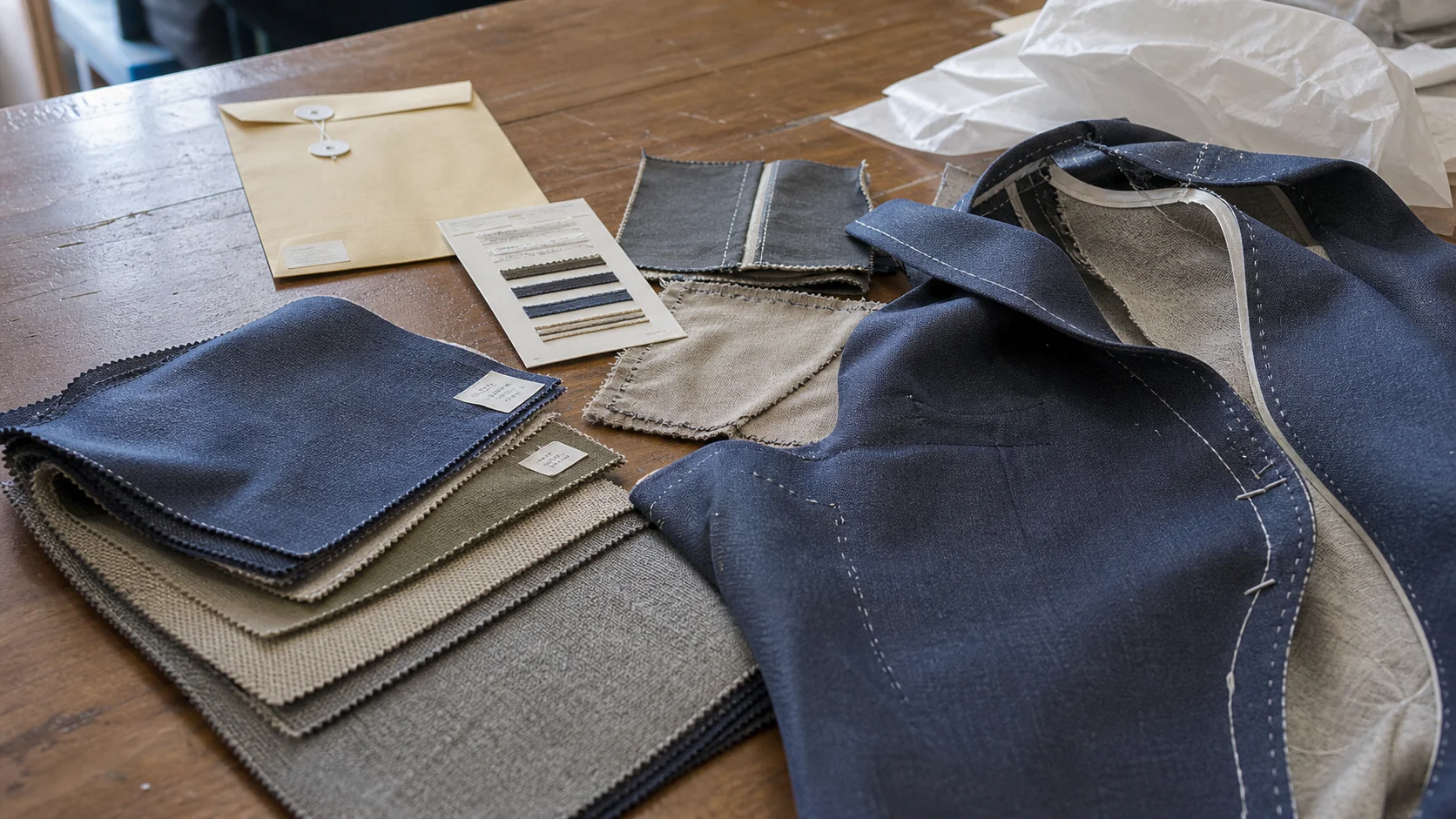
A practical SEO outline for cleaning crews evaluating work jacket fabrics, with repairability, durability, wash performance, and sustainable production...
Repairable Work Jacket Fabric Testing Guide - Fabrikn production reference
A repairable work jacket has to do more than survive rough shifts. For cleaning crews, it also needs to tolerate repeated laundering, chemical exposure, abrasion from carts and equipment, and the kind of small damage that often happens on the job: torn pockets, worn cuffs, broken zippers, and frayed seams. If the jacket cannot be repaired cleanly and repeatedly, it is not truly repairable. It is only durable until the first failure.
This guide focuses on the fabric testing and factory controls that matter most when sourcing repairable work jackets for cleaning crews. The goal is practical: choose fabrics, trims, and construction methods that support long service life, easier mending, and lower replacement rates. That is a useful sustainability outcome, but it also affects cost control and uniform consistency.
Cleaning crews put garments through a harsher use pattern than many uniform categories. A work jacket may be exposed to bleach-based products, disinfectants, repeated wash cycles, mechanical drying, constant bending, and frequent snagging on handles or shelving. Fabric that looks strong on a spec sheet can still fail early if shrinkage is uncontrolled, colorfastness is weak, or the weave opens after washing.
Testing matters because repairability depends on predictable material behavior. A jacket is easier to mend when fabric edges do not distort, seam lines stay stable, and reinforcements do not delaminate after laundering. Buyers should think in terms of service life, not just first impression. A heavier fabric is not automatically better if it becomes stiff, slow-drying, or hard to patch without creating uncomfortable bulk.
For sourcing teams, the most useful question is not “What is the strongest fabric?” It is “What fabric survives real work, accepts repairs, and still looks acceptable after repeated wear and wash?” That is the balance worth paying for.
For repairable work jackets, common fabric options include cotton/polyester blends, recycled polyester blends, and workwear twills with moderate to heavy GSM. The best choice depends on the cleaning crew’s duties, laundering frequency, and the customer’s sustainability targets. Cotton-rich fabrics usually feel more comfortable and are easier to sew during repairs, while polyester content improves drying speed, shape retention, and general abrasion resistance.
A practical starting point is a durable twill or canvas in the range of 220 to 320 GSM. Lighter fabrics may be more comfortable in warm environments, but they can wear through faster at cuffs, elbows, and pocket edges. Heavier fabrics generally last longer, yet they may reduce mobility and increase drying time. That tradeoff matters for cleaning operations where uniforms are washed often and turnaround is tight.
If the jacket is intended to be repaired several times, fabric structure matters as much as fiber content. Tight, stable weaves are easier to patch and reinforce. Extremely textured surfaces, loose constructions, and highly coated fabrics can complicate repairs because they fray unpredictably or show visible differences after mending.
Factories should not simply say a fabric is “durable.” Request measurable tests and ask for the results before approval. For work jackets used by cleaning crews, the following tests are especially relevant.
Check shrinkage and skew after multiple wash cycles. Cleaning crews usually expect frequent washing, so a fabric that shrinks too much will distort fit, reduce repair accuracy, and create complaints. A typical buyer target is controlled shrinkage within an agreed tolerance after several washes, with the exact limit depending on the fabric blend and market requirements.
Dark uniforms often fade unevenly at cuffs, seams, and high-contact areas. Ask for wash fastness, dry and wet crocking results, and perspiration resistance. If the jacket will be used around cleaning chemicals, color stability after repeated laundering becomes more important than initial shade depth. A repair patch is less noticeable when the base fabric retains color more evenly.
Tensile and tear testing helps confirm whether the fabric will resist pulling at stress points like pocket openings, underarms, and elbow areas. Tear resistance is especially important for repairable garments, because small rips should remain localized instead of traveling across the panel. If a fabric tears too easily, repair work becomes repetitive and less economical.
Cleaning crews lean, kneel, lift, and brush against hard surfaces all day. Abrasion testing should reflect that use. A fabric that pills badly or thins out at contact points will look worn before the garment is structurally exhausted. Buyers should ask for the test method and abrasion cycle count, not just a passing statement.
Repairability depends on seam integrity. Even if the fabric itself is strong, weak seams can fail at the first heavy tug. Seam slippage is particularly relevant for woven workwear fabrics. If stitches pull open too easily, repairs become less effective and the jacket may require panel replacement instead of straightforward mending.
For garments worn during long shifts, fabric pH should be within a reasonable range to reduce discomfort and avoid compliance issues. This is not always the headline test, but it is worth including, especially for uniforms worn directly over base layers or for long periods in warm conditions.
Not every market requires the same chemistry list, yet workwear buyers should still confirm that finishing agents and dyes comply with applicable standards. A repairable garment that performs well but fails chemical compliance is not a usable product. If the jacket is intended for broad resale or institutional use, ask the factory to specify the relevant restricted substance controls up front.
Test Area Why It Matters Buyer Focus Dimensional stability Controls shrinkage and fit drift Multiple wash cycles Colorfastness Preserves appearance after laundering Washing, rubbing, perspiration Tear and tensile strength Prevents early fabric failure Stress points and repairs Abrasion resistance Measures surface wear High-contact areas Seam strength Shows how well construction holds Repairable seams and reinforcements Chemical compliance Reduces regulatory risk Restricted substances and finishing agentsGood fabric testing is only one part of the job. A repairable work jacket must be designed so the factory can actually fix it later without compromising performance. That means the construction spec should support patching, seam re-stitching, and component replacement.
Reinforced stress points are essential. Ask the factory to add bar tacks at pocket corners, sleeve openings, and zipper ends. Elbow overlays may be useful if the crew spends time reaching or kneeling. The repair strategy should be set before production, not after returns start arriving.
Trims matter too. Metal zippers often last well, but they may be less comfortable in some environments and can add cost. Resin zippers can be lighter, though quality varies widely. For repairable jackets, zipper consistency and replacement availability are more important than saving a small amount on the initial order. Buttons and snaps should be chosen with spare parts in mind.
Thread should not be an afterthought. A high-tenacity polyester thread is usually a sensible choice for work jackets because it balances strength, abrasion resistance, and wash durability. Stitch density should be high enough to hold but not so dense that the fabric perforates and becomes prone to tearing. This is a judgment call, and it should be validated during sample approval.
Repairable workwear is only economical when the factory can reproduce the same fabric, trims, and stitch quality later. If the replacement panel or reinforcement does not match the original build, the garment may still be mendable but no longer suitable for uniform use.
Never approve a repairable work jacket from a visual sample alone. The sample stage should confirm fabric behavior, construction quality, and after-care performance. A smart approval process usually includes a first proto sample, a fit sample, and a pre-production sample or sealed reference sample. The exact sequence depends on how much development is needed, but skipping stages usually creates bigger problems later.
At minimum, the buyer should check fit on real wearers, wash the sample, inspect seam recovery, and confirm that repairs can be made without destroying the garment’s appearance. If the jacket warps after washing, the repair strategy is already weakened. If the fabric pills heavily, even a successful mend will look temporary.
Ask the factory to provide clear test reports from the nominated fabric mill or an approved third-party lab. If the supplier uses in-house testing, verify the method and keep a record of the submission. For custom workwear programs, a sealed fabric swatch and a construction reference sample can save arguments later when bulk production starts.
If you are still selecting a manufacturing partner, review the company’s production capabilities and communication process before moving into sampling. A useful starting point is the services page. For direct project discussions, the contact page is the most efficient route.
Repairable work jacket programs usually do not work well as tiny one-off orders. Factories need enough volume to source stable fabric lots, set up trimming, and run consistent quality checks. Typical MOQ ranges vary by factory, but a common starting point is 300 to 1,000 pieces per color or style for custom workwear. Some suppliers can go lower, especially for simpler constructions, while others require higher volume if the fabric is custom-dyed or the trim package is complex.
Lead time depends on fabric availability, testing, sample revisions, and whether trims are stock items. A rough planning range is 30 to 60 days for sample and development stages, followed by 45 to 90 days for bulk production once approval is complete. Custom fabric development, special finishing, or lab testing delays can extend the timeline. Buyers should assume that repair-focused details, such as reinforcement panels and replacement trim sets, add time, even if they do not dramatically change unit cost.
Order timing should also account for wash testing and pilot wear checks. If uniforms are for cleaning crews, a short trial with actual users can uncover pocket placement issues, sizing problems, or heat retention concerns that are not obvious on a hanger. That trial is often cheaper than remaking a bad bulk order.
Inspection teams should pay close attention to consistency, not just overall appearance. A repairable jacket can still fail commercially if bulk pieces vary too much from the approved sample.
One common risk is color lot variation between fabric rolls. Even small differences can make repaired sections stand out, which reduces the usable life of the garment. Another risk is weak reinforcement stitching at high-stress areas. A jacket may pass a visual inspection and still fail under repeated use if bar tacks are poorly placed or stitches are skipped.
Trim mismatch is another issue. If buttons, zippers, or snap components are not consistent across the run, replacement parts become a headache. Buyers should ask whether the factory can hold spare trims and fabric by lot for future repairs or reorders. That is a practical feature for a repairable program, not a luxury.
Inspection should also include laundering checks on a small production lot. Shrinkage, twisting, puckering, and seam failure often appear after washing rather than before. If the garment is meant for cleaning crews, this step should not be optional. It is part of the real-use test.
Repairability is one of the clearest sustainability strategies in workwear because it extends product life without requiring a complete redesign. A jacket that can be patched, resewn, and re-trimmed is more valuable than one that must be discarded after a small tear. That said, sustainability claims should be grounded in performance. A weak eco story is worse than no story at all if the garment fails early.
Recycled polyester can be a sensible choice if the fabric quality is stable and the supplier can prove consistent performance. Organic cotton can also support a better sustainability narrative, but it may come with higher shrinkage or slower drying if the blend is not balanced. Buyers should weigh environmental goals against maintenance practicality. Cleaning crews usually need uniforms that dry quickly, hold shape, and survive frequent laundering. Those operational requirements should guide the fabric decision.
Repairability also reduces the need for overbuilt garments that are hard to move in. A balanced fabric with good seam design may last longer in practice than a much heavier fabric that nobody likes to wear. Comfort affects compliance. If workers avoid the jacket, sustainability metrics become irrelevant.
Use this checklist before approving a repairable work jacket program for cleaning crews:
If you need a broader understanding of the company background before placing a sourcing request, review the about page. That is usually a better place to assess positioning, service scope, and fit for your program than jumping straight into a quote.
Get a free quote from Fabrikn — your trusted B2B clothing manufacturer with 10+ years of experience. MOQ as low as 200 pieces.
Get a Free Quote →A stable twill or canvas blend in the medium-to-heavy GSM range is usually the safest starting point. Cotton/polyester blends often offer the best balance of comfort, wash durability, and repairability for cleaning crews.
At minimum, buyers should request wash shrinkage, colorfastness, abrasion, tear strength, and seam strength. More demanding programs may also need chemical compliance and repeated laundering checks.
Many factories start around 300 to 1,000 pieces per style or color, though the exact MOQ depends on fabric availability, trim complexity, and whether the design uses stock or custom materials.
Because the garment has to survive mending as well as wear. Reinforced seams, accessible panels, durable thread, and replaceable trims make repairs cleaner and extend the jacket’s service life.
They can, provided performance is consistent. Recycled content supports sustainability goals, but the fabric still has to meet practical requirements for shrinkage, abrasion, laundering, and repairability.
Inconsistent fabric lots and weak stitching at stress points are among the most common problems. Both can shorten the usable life of the jacket and make repairs less effective.