
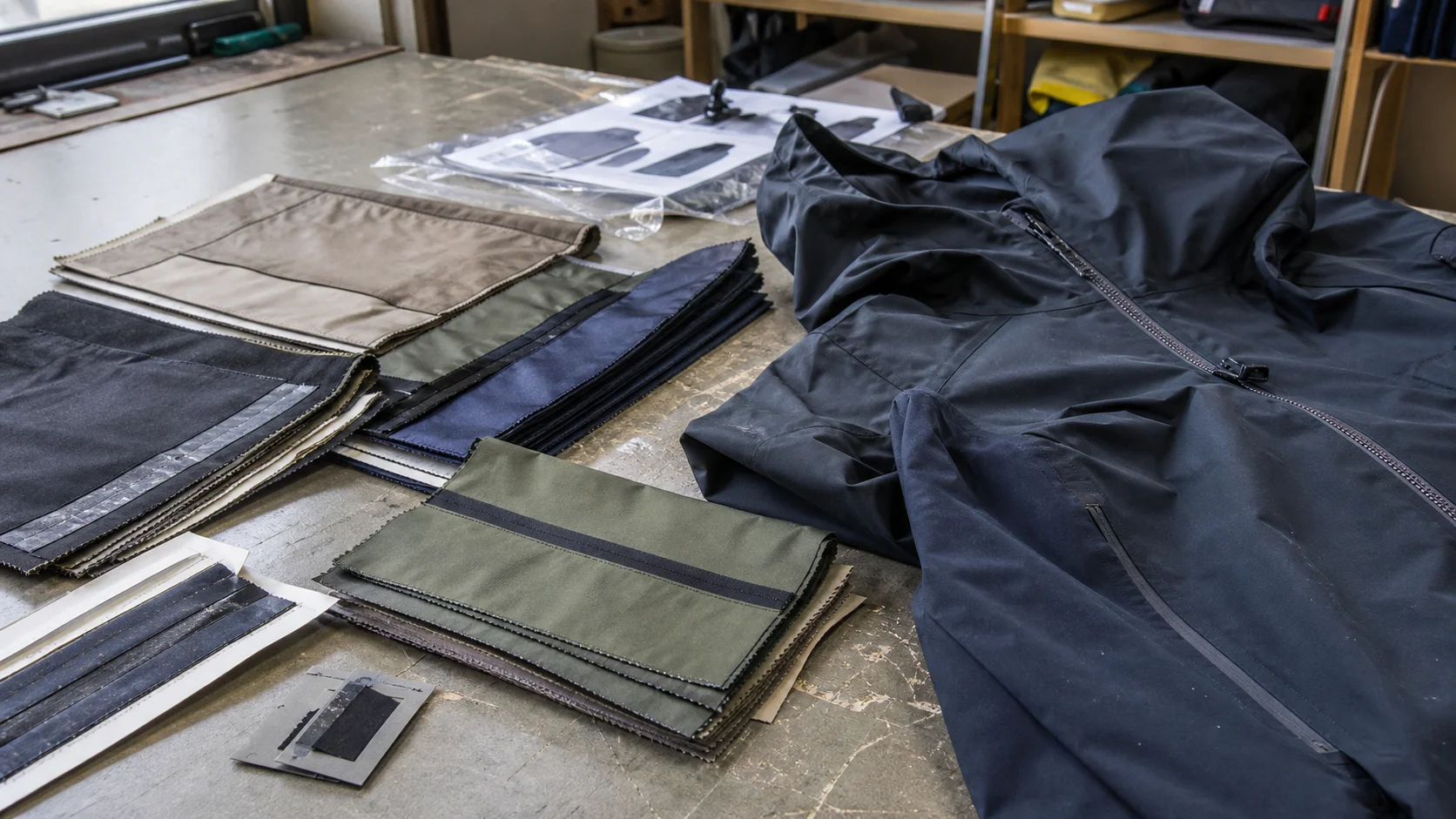
A product-specific fabric testing outline for security contractors sourcing repairable work jackets, covering abrasion, seams, panels, reflective trim,...
Repairable Work Jackets: Fabric Tests for Security Buyers - Fabrikn production reference
Security contractors buy work jackets for a hard-use environment: outdoor posts, mobile patrols, loading docks, event gates, parking facilities, warehouse perimeters, and overnight sites where visibility, weather protection, and professional appearance all matter. A jacket that cannot be repaired becomes expensive fast. Seams split, reflective tape peels, zippers fail, cuffs abrade, and one damaged panel can send the whole garment to landfill.
This fabric testing guide is written for procurement teams, uniform managers, and security buyers sourcing repairable work jackets from a supplier. The goal is simple: specify jackets that last longer, can be repaired economically, and still meet the operational needs of security contractors.
Purchasing judgment: A repairable work jacket is not just a “durable jacket.” It is a jacket designed with replaceable components, accessible seams, stable fabrics, compatible trims, and test data that supports real-world repair decisions.
Security uniforms are not fashion basics. They are operational tools. Jackets must support authority, identification, comfort, safety, and long shift wear. For contractors managing multiple sites, replacement jackets can become a recurring hidden cost, especially when staff turnover, seasonal weather, and varied job roles are involved.
Repairability helps control that cost. A jacket with a replaceable zipper, patchable shell fabric, modular badge area, and durable seams can stay in service after minor damage. That matters when a single uniform issue can disrupt deployment or create inconsistent presentation across a team.
There is also a sustainability argument, but it should be practical rather than decorative. Extending garment life reduces waste and lowers the replacement frequency. For a security buyer, the stronger business case is usually cost per wear, stock control, and consistent field appearance.
For sustainable sourcing support and garment development options, buyers can review service capabilities at fabrikn.com/services/.
A repairable work jacket starts with material selection, but construction is just as important. Some fabrics are tough but difficult to repair cleanly. Some jackets look strong at first wear but use bonded layers, decorative trims, or sealed seams that make repairs costly.
The tradeoff is cost. A jacket designed for repair may cost more than a basic promotional outerwear piece. It may also use slightly heavier fabric or more internal seam allowance. Security contractors should judge that premium against replacement cost, uniform downtime, and the value of consistent presentation.
Fabric test reports are useful only when the tests match the job. A lightweight softshell for reception security does not need the same performance profile as a waterproof patrol jacket used in cold rain. The buyer’s role is to define risk: abrasion, tearing, fading, rain exposure, laundering, reflective tape failure, or seam stress.
Ask suppliers for current test reports from recognized laboratories where possible. In many sourcing programs, a mill test report is provided first, followed by garment-level checks after bulk production. For high-volume or contract-sensitive orders, buyers may require third-party testing on production fabric before cutting.
Test values should be interpreted with end use in mind. A very high abrasion rating may be less useful if the fabric has poor tear recovery or cannot accept a repair patch. A waterproof membrane may look impressive on paper, but if it delaminates after repeated flexing, it may not be a good choice for repairable workwear.
Abrasion is one of the first failure points in security jackets. Guards lean against concrete walls, wear radios over shoulders, sit in vehicles, carry bags, open metal gates, and work near rough fixtures. Cuffs and lower sleeves often show wear before the body fabric fails.
Common abrasion methods include Martindale and Taber testing, depending on fabric type and market expectations. For security work jackets, buyers should request abrasion data for the outer shell and, where relevant, contrast panels or reinforced zones.
Typical purchasing direction:
Reinforcement can improve durability, but it adds weight and may reduce mobility. A fully reinforced jacket may be overbuilt for a mobile security supervisor who needs a cleaner, more formal appearance. A targeted reinforcement strategy usually gives better value.
Tear strength matters after the first snag. Fabric that punctures but does not continue ripping is easier to repair. Security workers may catch jackets on fencing, door hardware, vehicle edges, tools, pallets, or temporary barriers. A small snag should not become a long open tear by the end of a shift.
Ripstop fabrics can help, especially for lighter shells. Heavy plain-weave polyester or poly-cotton blends may also perform well if yarn strength and construction are appropriate. The supplier should explain whether tear resistance comes from fiber content, yarn size, weave structure, coating, or reinforcement.
Snagging is often overlooked. It affects both function and appearance. Softshells and knits can look worn quickly if the face fabric pulls. For public-facing security roles, a jacket that looks tired after a few weeks may be unacceptable even if it is technically intact.
Ask for snagging or pilling test data when using knit-faced fabrics, fleece-backed softshells, or stretch panels. Stretch fabrics are comfortable, but buyers should check whether they recover shape after stress and whether repairs remain stable after sewing.
Not every security jacket needs to be waterproof. This is an important sourcing decision. Waterproof jackets usually require coatings, membranes, seam sealing, or special construction. These features can increase cost and complicate repair. Water-resistant jackets are easier to repair, more breathable in many cases, and suitable for light rain or short outdoor exposure.
Durable water repellent finishes help rain bead on the fabric surface. Buyers should ask how the finish performs after laundering or abrasion. A finish that looks good on a new sample may decline quickly if not tested after wash cycles.
For repairable jackets, confirm whether the outer shell can be re-treated with a water-repellent finish after repair. Some patching methods and heat applications can affect surface repellency.
Waterproof fabrics are often measured by hydrostatic head. Higher ratings generally indicate stronger resistance to water penetration. Security buyers should not over-specify waterproofing without considering breathability and repair.
Jacket Type Typical Weather Need Repairability Consideration Water-resistant softshell Light rain, wind, short exposure Usually easier to sew and patch than laminated waterproof shells Coated woven jacket Moderate rain, general outdoor duty Repairs may need compatible tape or seam seal treatment Waterproof membrane jacket Long outdoor posts, heavy rain Repairs are more technical; seam sealing and delamination risks must be managed Insulated waterproof jacket Cold wet weather Bulkier repair process; lining access and insulation migration matterSecurity staff may alternate between standing still and walking patrols. A jacket that traps moisture can become uncomfortable and may be worn open, defeating weather protection and uniform appearance. Breathability test data is useful, but field comfort also depends on lining, vents, fit, and layering.
A practical specification may include underarm vents, breathable lining, adjustable cuffs, and a two-way zipper for vehicle use. These features add cost, but they can improve wear compliance.
Security jackets are often black, navy, charcoal, dark green, or high-visibility yellow/orange. Color consistency is not cosmetic only. It affects brand standards, team recognition, and client confidence. A faded jacket can look unprofessional even when it remains functional.
Ask for colorfastness to washing results for shell fabric, lining, rib trims, reflective tape base materials, and contrast panels. Dark colors can bleed onto light logos, labels, or high-visibility panels. If jackets will be washed by workers rather than a managed laundry provider, tolerance should be realistic because wash temperatures and detergents will vary.
Rubbing tests, often called crocking tests, matter for dark security jackets worn over light shirts or under tactical vests. Poor rubbing fastness can stain shirts, vehicle seats, or equipment straps. Wet rubbing performance is especially relevant during rain.
Outdoor posts create UV exposure. Black and navy fabrics can fade at shoulders and upper sleeves. High-visibility fabrics can lose brightness. Ask suppliers whether the fabric has been tested for lightfastness, especially if the jacket will be used in sunny regions or long outdoor shifts.
Color consistency should also be controlled across repeat orders. A supplier may use a different dye lot or mill batch in future production. For contractor uniform programs, keeping an approved color standard is essential.
Fabric testing is incomplete without seam testing. A strong fabric with weak seams will fail at stress points. Security jackets carry loads at pockets, shoulders, and front closures. Radios, keys, gloves, torches, notebooks, and access devices create repeated pulling.
Request seam strength data for the intended construction, not just fabric strength. Armholes, shoulder seams, side seams, and pocket attachments should be reviewed. If the jacket includes stretch fabric, the seam type must allow movement without thread breakage.
Common construction details for stronger work jackets include double-needle seams, safety stitching, bartacks at pocket corners, reinforced zipper ends, and adequate seam allowance. Too much stitch density can weaken some fabrics by perforating them. The supplier should balance stitch type, thread size, needle size, and fabric structure.
Repairable jackets should be tested for practical repair methods. Buyers can ask suppliers to prepare trial repairs on production fabric:
The repair should be inspected after laundering or flexing. A patch that looks acceptable at first may lift, pucker, crack, or create a stiff uncomfortable area. For waterproof jackets, any repair that penetrates the shell may need seam sealing. That adds time and skill requirements.
Thread choice affects repair quality. Polyester thread is common for workwear because it balances strength, durability, and wash performance. Cotton thread may not be appropriate for many security jackets because it can weaken under moisture and repeated laundering. Bonded nylon may be used in heavier applications, but compatibility depends on fabric and machine setup.
Suppliers should specify thread type, ticket size, color, and stitch per inch. This allows future repairs to match original construction more closely.
Many jacket failures are trim failures, not fabric failures. A broken zipper can make a jacket unusable even if the shell is perfect. Reflective tape peeling may create safety and compliance concerns. Snaps can corrode. Hook-and-loop panels can lose grip. Drawcords can fray.
For security work jackets, zippers should be tested for slider durability, tooth strength, tape stability, and corrosion resistance where relevant. A two-way front zipper is useful for driving and sitting, but it is more expensive and can be more failure-prone if low quality.
Specify zipper size and type clearly. Common options include molded plastic, coil, and metal zippers. Molded plastic zippers are often durable for outerwear and easier to operate with gloves. Coil zippers offer flexibility and are common in waterproof or lightweight jackets. Metal zippers can look premium but may add weight and corrosion risk depending on finish.
Security jackets may require reflective tape for visibility, especially in parking, logistics, event, construction-adjacent, or roadside environments. Buyers should confirm whether the jacket must meet any recognized high-visibility standard in the target market. If a standard applies, fabric color, tape placement, tape width, and garment class may be regulated.
Reflective tape should be tested for wash durability, peel strength, cracking, and reflectivity after abrasion or laundering. Sewn reflective tape can be easier to replace than heat-applied tape, but it creates needle holes. Heat-applied tape may look cleaner, yet replacement can be difficult if adhesive residue remains.
Hardware should resist corrosion, cracking, and pull-out. Hook-and-loop panels are practical for removable badges and name panels, but they collect lint and lose grip over time. Ask suppliers for cycle testing or practical performance data if hook-and-loop is central to the jacket design.
For repairable programs, keep spare trims in the same color and specification. A jacket cannot be repaired efficiently if matching snaps, zipper sliders, or badge tabs are unavailable.
A strong repairable work jacket specification is precise. Vague descriptions like “durable polyester” or “heavy-duty zipper” leave too much room for substitution. Security buyers should build a tech pack that defines the target fabric, construction, repair features, labeling, and testing requirements.
Linings affect repair access. A fully bagged lining can look clean but may make repairs slower if no access opening is included. Mesh linings can snag. Taffeta linings slide easily over layers but may tear at stress points. Fleece linings add warmth but can pill and trap debris.
For insulated security jackets, specify insulation type, weight, quilting pattern, and migration control. Recycled polyester insulation may support sustainability goals, but buyers should verify loft recovery, wash durability, and availability for repeat orders.
For buyers developing a new repairable jacket program, it is useful to discuss garment engineering, sampling, and production planning early. General company information is available at fabrikn.com/about-us/.
Sampling should test both appearance and repair logic. A showroom sample that fits well is not enough. Before bulk approval, buyers should review fabric, fit, trims, markings, repair access, and performance testing.
Define the end-use environment. A jacket for airport perimeter patrol has different needs from a jacket for retail security or building reception. Include climate, shift length, layering, visibility needs, branding, laundering method, and expected replacement cycle.
Review swatches with test reports where available. Check hand feel, noise, drape, color, stretch, opacity, surface finish, and repair compatibility. Request matching trims early because zipper tape, reflective tape, rib, and hook-and-loop color can create approval delays.
The proto sample checks construction concept, general fit, pocket layout, badge position, and repair access. Expect revisions. Pocket height, sleeve mobility, collar shape, and hem coverage often need adjustment for security work.
Fit should be checked over likely base layers. Security staff may wear shirts, sweaters, vests, or body armor depending on the role. A jacket that fits over a T-shirt may restrict movement over a uniform shirt and radio harness.
Approve the grading across sizes. Large-size mobility is often a risk in work jackets. Sleeve length, hem sweep, shoulder width, and chest ease must be checked carefully.
The pre-production sample should use bulk fabric, bulk trims, final labels, final construction, and approved colors. This is the sample to review against the purchase order before cutting bulk production.
Damage one sample in controlled ways and test repairs. This may feel excessive, but it reveals whether the design is truly repairable. Try zipper replacement, patching, pocket repair, badge panel replacement, and reflective tape repair if relevant.
Minimum order quantity depends on fabric availability, customization level, trims, color, and factory setup. Security contractors should be cautious when comparing suppliers because MOQ is often tied to fabric mill minimums, not just garment sewing capacity.
These ranges are typical planning references, not fixed rules. A supplier may accept lower quantities at a higher unit cost, or require higher MOQ if fabric must be woven, dyed, laminated, coated, or printed specifically for the order.
Repairable work jacket lead times are affected by fabric testing, lab dips, trim sourcing, sample revisions, production capacity, inspection, and freight. A basic stock-fabric jacket may move faster. A waterproof insulated jacket with custom reflective layout and repair testing needs more time.
Buyers should avoid approving bulk production before final fabric and trim confirmations are complete. Fast approval saves time only when the specification is stable.
Inspection protects the buyer from receiving jackets that are technically complete but operationally flawed. Security contractors should define inspection criteria before production, not after cartons are packed.
Final random inspection is common, but repairable work jackets may also need in-line inspection. Early inspection can catch seam, trim, and measurement issues before the full order is completed. For higher-risk programs, buyers may request fabric inspection before cutting and top-of-production review after the first bulk units are made.
Garment inspection should include function tests: zipper operation, snap pull, pocket stress, reflective tape placement, drawcord function, cuff adjustment, and hood attachment if included. Waterproof jackets may need spray testing or seam tape review according to the agreed standard.
The right supplier should be able to discuss fabric performance, repair methods, production constraints, and testing without relying on vague claims. Security buyers should ask direct questions and expect practical answers.
If a supplier cannot answer these questions, the jacket may still be purchasable, but the buyer should treat it as a standard outerwear item rather than a repairable uniform asset.
Repairable work jackets fit into sustainable fashion because they are designed for longer use. The strongest sustainability claim is not a hangtag or recycled content alone. It is a system: durable fabric, repairable construction, replaceable trims, responsible production planning, and a buyer willing to maintain garments instead of discarding them after minor damage.
Recycled polyester, organic cotton blends, low-impact dyeing, and PFC-free water repellents may all support a sustainable program. Each option has tradeoffs. Recycled polyester can reduce dependence on virgin inputs, but buyers should verify strength, color consistency, and supply continuity. PFC-free water repellents can reduce chemical concerns, but may require more careful performance testing after washing. Cotton-rich fabrics can feel comfortable and repair well, but may absorb moisture and dry more slowly than synthetic shells.
The best route is to define the operational requirement first, then select lower-impact materials that still meet the job. A weak “eco” jacket that fails quickly is not a sustainable purchase for a security contractor.
A repairable jacket program works best when purchasing, operations, and maintenance are aligned. The buyer can specify a jacket that accepts repairs, but someone must decide when to repair, when to retire, and how spare parts are controlled.
Create simple rules for field teams. For example, a broken zipper, torn pocket, missing puller, or small sleeve tear may be repairable. A badly delaminated waterproof shell, heavy contamination, or extensive reflective tape loss may justify retirement. Clear thresholds prevent inconsistent decisions.
Spare trim kits can include zipper sliders, pullers, snaps, cuff tabs, hook-and-loop patches, reflective tape pieces, fabric patches, and matching thread. These low-cost components can reduce downtime.
Uniform managers should record recurring failures. If the same pocket corner fails repeatedly, the next production run needs better reinforcement. If reflective tape cracks after washing, review tape quality or care instructions. If cuffs wear too quickly, consider reinforcement or replaceable cuff design.
Security contractors often need repeat orders. Confirm fabric continuity, color standards, trim availability, and pattern retention before placing the first order. A repairable program loses value if repeat batches look different or use incompatible trims.
Buyers ready to discuss specifications, sampling, or production planning can use fabrikn.com/contact-us/ to start a sourcing conversation.
Before placing a repairable work jacket order, security buyers should confirm the following points in writing:
The safest buying decision is rarely the cheapest jacket. It is the jacket with the best balance of durability, repairability, comfort, compliance, appearance, and supply continuity. For security contractors, that balance can reduce replacement spend and support a more sustainable uniform program without compromising field performance.
Get a free quote from Fabrikn — your trusted B2B clothing manufacturer with 10+ years of experience. MOQ as low as 200 pieces.
Get a Free Quote →A repairable work jacket is designed so common damage can be fixed without replacing the whole garment. Typical features include accessible seams, replaceable zippers, patch-friendly shell fabric, reinforced stress points, spare trim availability, and modular badge or reflective components.
There is no single best fabric. Polyester oxford, nylon blends, ripstop woven fabrics, poly-cotton twills, and softshell laminates can all work depending on climate, role, and repair needs. Outdoor patrol jackets usually need stronger abrasion and weather resistance. Indoor security jackets may prioritize comfort and professional appearance.
Request abrasion resistance, tear strength, tensile strength, seam strength, colorfastness to washing and rubbing, dimensional stability, pilling or snagging, and water resistance if needed. For waterproof jackets, ask about hydrostatic head, seam sealing, and durability after flexing or laundering.
Waterproof jackets are usually harder to repair than water-resistant jackets. Stitching can create needle holes, and repairs may require seam sealing or compatible waterproof tape. Buyers should choose waterproof construction only when the work environment genuinely requires it.
Typical MOQs may range from 100 to 300 pieces for stock fabric with simple customization, 300 to 800 pieces for custom colors or trims, and 800 to 1,500 pieces or more for custom fabric or performance finishes. Exact MOQ depends on fabric, trims, testing, and supplier capacity.
Lead time depends on sample rounds, fabric availability, lab dips, trim sourcing, testing, production capacity, inspection, and freight. Stock fabric programs move faster. Custom waterproof or insulated jackets with special trims and testing require more planning time.
Sewn tape can be easier to replace, but it creates needle holes. Heat-applied tape can look cleaner and may support waterproof design, but replacement can be more difficult. The best choice depends on visibility requirements, waterproofing needs, repair method, and garment standard.
Ask for repair trials during sampling. Test zipper replacement, fabric patching, pocket repair, reflective tape replacement, and lining access. Inspect the repaired sample after laundering or flexing. Repairability should be proven before bulk approval, not assumed after delivery.
Common risks include weak seams, shade variation, incorrect trims, poor zipper function, reflective tape defects, measurement problems, missing bartacks, waterproof seam failures, and wrong care labels. Repair access points can also be missed if they are not clearly shown in the tech pack.
Not necessarily. Recycled polyester, lower-impact finishes, and responsible trims can perform well when properly specified and tested. The buyer should verify abrasion, tear strength, colorfastness, wash durability, and repair compatibility rather than relying on sustainability claims alone.