
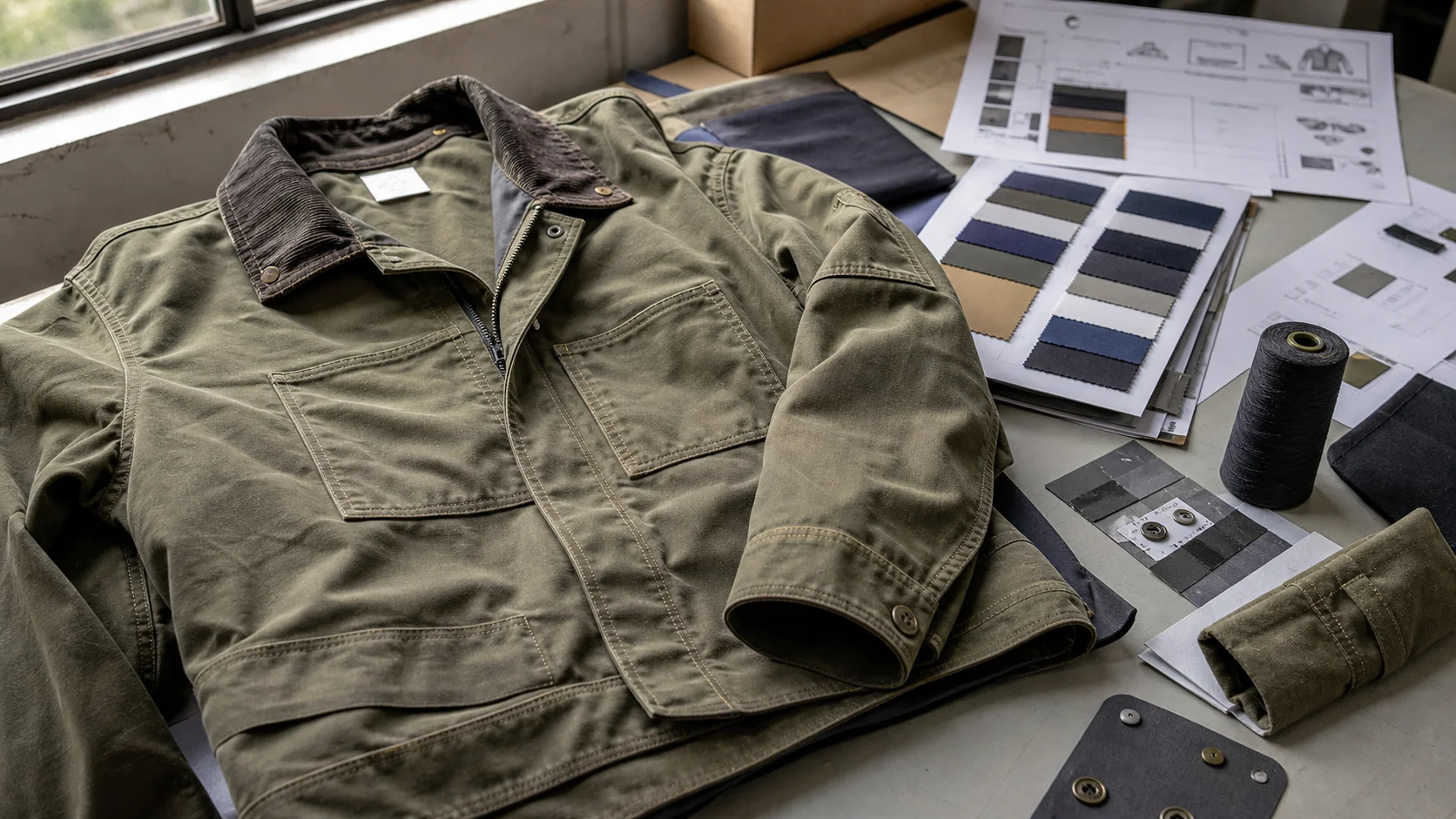
A product-specific SEO outline for restaurant groups evaluating wholesale repairable work jacket reorders, durability risks, repair programs, sizing...
Repairable Work Jacket Reorder Risk Review - Sustainable Fashion manufacturing guide
Restaurant groups buying wholesale repairable work jackets are not just purchasing outerwear. They are buying operational continuity, staff presentation, replacement discipline, and a sustainability claim that must survive real kitchen, delivery, receiving, and maintenance use. A jacket that looks good in the first rollout can still become a reorder problem if fabric lots shift, repair panels are not standardized, trim suppliers change, or the garment cannot be patched without looking mismatched.
This reorder risk review is written for purchasing teams, uniform managers, sustainability leads, and brand operators comparing repairable work jacket programs for multi-location restaurant groups. The core question is practical: can the jacket be reordered, repaired, and kept consistent across locations without excessive cost, slow replenishment, or visible uniform drift?
Restaurant uniform programs fail quietly before they fail visibly. The first delivery may pass internal review, staff may like the fit, and the opening photos may look consistent. Six months later, the same jacket may be difficult to reorder in the same fabric. The replacement lot may have a slightly different shade. The zipper tape may not match. The supplier may ask for a higher MOQ because the original fabric is no longer stocked. These are not cosmetic details for a restaurant group with multiple units. They affect brand consistency, staff morale, repair feasibility, and inventory carrying cost.
Repairable work jackets create an extra layer of risk because repairability depends on repeatable components. A jacket cannot be repaired cleanly if the original fabric is unavailable, the patch fabric shrinks differently, or the elbow reinforcement is cut from a discontinued roll. If the garment is marketed internally or externally as part of a sustainable fashion initiative, weak repair planning can make the program look more like a claim than a system.
For restaurant groups, reorder risk is higher than for one-time promotional apparel because staff turnover, seasonal hiring, location openings, and damage replacement create recurring demand. Jackets used by chefs, prep teams, delivery staff, receiving teams, facilities staff, and front-of-house support may face different wear patterns. One reorder calendar rarely fits all roles.
A good wholesale repairable work jacket program should answer four buying questions before the first bulk order is placed:
These questions belong at the sourcing stage, not after the first sleeve seam fails or the first reorder quote comes back with a new fabric substitute.
“Repairable” is often used loosely in sustainable fashion. For wholesale restaurant uniforms, it should mean the jacket is designed, specified, and supplied so common damage can be fixed at a reasonable cost. Repairability is not just stronger stitching. It is a combination of fabric selection, construction choices, spare component planning, and repair instructions.
A repairable work jacket should normally include reinforced or replaceable high-wear zones. Common examples include elbow patches, cuff facings, pocket corners, placket edges, underarm seams, and lower front panels. These zones should be easy to access with standard industrial sewing equipment. If a repair requires full lining removal, special machinery, or a rare replacement part, the repair system may be too expensive for a restaurant group.
The better purchasing judgment is to define repairability by damage type. Abrasion, seam failure, broken zipper, missing snap, stained panel, torn pocket, and logo damage each require different solutions. A jacket may be repairable for elbow abrasion but not for zipper failure if the zipper is a custom color with long replacement lead time.
For restaurant groups, repairable should mean “repeatably serviceable across locations,” not “technically possible to mend once.”
Specifications should include spare fabric yardage, spare buttons or snaps, zipper details, thread color references, patch dimensions, logo placement files, and repair tolerance guidance. If the supplier cannot provide a technical pack or at least a clear bill of materials, reorder risk increases.
Restaurant groups should not source repairable jackets as if every employee uses the garment the same way. A chef jacket-inspired work layer, a receiving jacket, a maintenance jacket, and a delivery jacket may all sit under one brand uniform program, but the wear risks are different.
Back-of-house teams often need breathability, wash resistance, and controlled sleeve mobility. Grease, steam, detergents, and frequent laundering are bigger risks than outdoor abrasion. Receiving and facilities teams may need more abrasion resistance at elbows, shoulders, and pocket openings. Delivery or curbside teams may need weather protection, visibility details, and stronger zipper performance. Front-of-house support may prioritize brand appearance and quiet trims over heavy-duty reinforcement.
Common wear points in restaurant work jackets include:
A repairable program should map these wear points before approving the style. Reinforcement should not be added everywhere by default. Extra layers can trap heat, slow drying, add cost, and reduce comfort. The better approach is to reinforce predictable damage zones while keeping the garment wearable for a full shift.
Fabric is the largest reorder risk in most work jacket programs. For restaurant groups, the fabric has to balance durability, wash performance, comfort, appearance, and availability. Sustainable fabric claims add another layer because recycled cotton, organic cotton, recycled polyester, and blended fabrics may have more lot variation than commodity uniform fabrics unless tightly managed.
Typical fabric options include cotton twill, poly-cotton twill, canvas, ripstop, stretch woven blends, recycled polyester blends, and cotton-rich workwear cloth. A midweight jacket may sit around 220 to 320 gsm, while heavier workwear styles may run 330 to 450 gsm or more. Heavier is not automatically better. In restaurants, overly heavy fabric can cause heat discomfort, slower laundering, and lower staff acceptance.
Fabric reorder risk usually appears in five areas:
For repairable jackets, fabric continuity matters beyond the full garment. The program should include spare fabric from the same lot or pre-approved patch fabric that is intentionally tonal rather than pretending to be an invisible match. If the jacket is garment-washed, repair panels need to account for wash-down effects. A raw patch on a washed jacket can look like an obvious mistake.
Buyers should request fabric test data where relevant. Useful tests may include dimensional stability, colorfastness to washing, colorfastness to crocking, pilling resistance, tear strength, seam slippage, and abrasion resistance. Not every restaurant group needs a full laboratory package for every reorder, but the first approved fabric should have enough evidence to support repeat use.
A practical sourcing route is to lock a fabric article number, composition, construction, gsm, finish, color standard, and acceptable tolerance. If the supplier only describes fabric as “durable cotton blend,” the specification is too weak for a reorderable program.
Trims are often treated as small details until they delay a reorder. Zippers, snaps, buttons, drawcords, toggles, hook-and-loop, elastic, woven labels, care labels, and logo applications can all create continuity issues. A jacket can be technically reorderable but visually inconsistent if zipper tape, snap finish, or label placement changes.
Zippers deserve special attention. Restaurant work jackets may use coil zippers, molded tooth zippers, or metal zippers depending on the style. Coil zippers are flexible and common, molded tooth zippers can be durable for outerwear, and metal zippers may suit heritage styling but can add weight and laundering concerns. The zipper should be specified by type, gauge, tape color, puller style, slider finish, length, and supplier reference where possible.
Snaps and buttons also affect repairability. Standard snaps are easier to replace than custom logo snaps, but custom snaps may support brand identity. The tradeoff is simple: custom hardware can improve the uniform look, but it increases MOQ, replacement planning, and reorder exposure. If custom hardware is used, spare units should be ordered with the first bulk production.
Logo trims need the same discipline. Embroidery is durable but can distort lighter fabrics if backing and stitch density are not controlled. Patches can be replaceable but may curl, shrink, or delaminate depending on the backing. Heat transfers may look clean at launch but can crack or peel under industrial laundering if poorly specified. For restaurant groups with repairable goals, removable or replaceable branding can be useful, but it must still withstand the actual wash process.
Trim Main Reorder Risk Purchasing Judgment Zipper Color, gauge, puller, and length changes Use standard components unless custom appearance is essential Snaps Finish variation and custom MOQ Order spare snaps with bulk production Woven labels Lead time and artwork revisions Freeze artwork before sales sample approval Patch branding Edge wear, shrinkage, and color mismatch Test after wash before approving bulk Thread Shade mismatch and seam strength Specify thread color and ticket size for repair useFit inconsistency is one of the most frustrating reorder problems because it is hard to explain to staff. The label says medium, the style looks the same, but the sleeve feels tighter or the shoulder sits differently. This often happens when patterns are adjusted without a controlled revision history, grading rules are changed, or shrinkage was not stable in the first production.
Restaurant jackets need enough mobility for reaching, lifting, carrying, and working around counters. A repairable work jacket should not be so fitted that seam stress becomes routine. Underarm gussets, action backs, articulated sleeves, and slightly relaxed chest measurements can improve durability. They can also increase pattern complexity and cost.
The size range should be planned around the workforce, not only the sample size. Many wholesale programs approve a medium sample, then discover that the grading creates sleeve or body length problems at smaller and larger sizes. For restaurant groups, size inclusivity is also an operational issue. If fringe sizes require special production later, reorder timing and MOQ become harder to manage.
Before bulk production, buyers should approve a size spec with tolerance. Common garment measurement tolerances may run around 0.5 cm to 1.5 cm depending on the point of measure and fabric type. Critical areas such as chest, sleeve length, body length, shoulder, cuff opening, and hem should be checked carefully. Larger tolerances may be acceptable on relaxed workwear, but they should not undermine fit consistency.
A basic risk control is to assign a version number to the pattern and tech pack. If the supplier improves a seam, changes a pocket depth, or updates the sleeve cap, that change should be recorded. Silent changes are dangerous in uniform programs because they can create mixed inventory that looks similar but wears differently.
MOQ planning is where sustainability and operations often collide. A restaurant group may want to avoid overproduction, but factories and mills need minimum quantities to cut fabric, dye colors, source trims, and run efficient sewing lines. The goal is not to force an unrealistically low MOQ. The goal is to structure the program so reorders are predictable and not wasteful.
Typical MOQ ranges vary by supplier, fabric, customization, and country of production. For a custom repairable work jacket, buyers may see factory MOQs around 300 to 800 pieces per style and color for a relatively standard fabric. More specialized fabrics, custom dyeing, or custom trims can push practical MOQs to 1,000 pieces or more. Smaller runs around 100 to 300 pieces may be possible with stock fabrics and limited customization, but unit costs are usually higher and fabric continuity may be less secure.
Reorder MOQs may differ from first-order MOQs. A supplier might accept a 500-piece first order but require 300 pieces per reorder, or they may allow lower replenishment if fabric and trims are kept in stock. Buyers should get this in writing before launch. “We can reorder later” is not a production plan.
For restaurant groups, MOQ planning should include:
A common tradeoff is whether to hold more inventory or accept higher reorder cost. Holding inventory ties up cash and creates size imbalance risk. Smaller reorders reduce inventory exposure but may increase unit price and create shade-lot variation. For multi-unit restaurant groups, a rolling forecast usually beats emergency reorders.
Teams needing development support can review apparel production options through Fabrik’s services page and compare whether a custom program or stock-based program better fits their volume and timeline.
Sample approval should be stricter for repairable work jackets than for basic branded apparel. The sample is not only confirming appearance. It is validating construction, fabric behavior, logo durability, wash performance, and repair logic.
A typical sample path may include a proto sample, fit sample, sales or photo sample, pre-production sample, and size set. Not every program needs every stage, but skipping the pre-production sample is risky when custom fabric, custom trims, or repair features are involved.
A practical approval sequence looks like this:
Restaurant groups should include actual work movement during wear testing. Staff should be able to reach overhead shelving, bend, carry boxes, move around prep tables, and work with aprons. A jacket that feels fine in a standing fit review may pull at the back or cuff during real tasks.
Sampling lead times depend on fabric availability, trim sourcing, factory capacity, and the number of revisions. A simple stock-fabric sample may take a few weeks. Custom fabric, dyed trims, or special branding can take longer. Buyers should avoid locking launch calendars around best-case sampling estimates.
Lead time is not one number. It is a chain of dependencies. Fabric booking, dyeing, trim production, sample approval, bulk cutting, sewing, finishing, inspection, packing, export, freight, customs, and domestic distribution can each add time. Restaurant groups often underestimate lead time because they count only sewing time.
Typical production lead times for custom wholesale work jackets may range from 60 to 120 days after final approvals, depending on complexity and supply chain conditions. Stock fabric and standard trims can shorten the calendar. Custom-dyed fabric, recycled-content materials, special finishes, custom hardware, and heavy embroidery can extend it. Freight method also matters. Air freight can rescue an urgent launch but can damage sustainability and margin goals.
Reorder windows should be built around usage data. If a restaurant group expects staff turnover, new location openings, or seasonal outdoor work, the reorder plan should start before inventory drops to a critical level. Waiting until popular sizes are gone usually forces expensive decisions.
Practical lead-time controls include:
A reorder plan should also identify the decision owner. If procurement, operations, and brand teams all need approval, the calendar must include internal review time. Supplier lead time does not begin until specifications and payment terms are settled.
A repairable jacket program needs a repair pathway. Without one, damaged garments pile up, local managers improvise, and the brand look becomes inconsistent. The pathway can be centralized, local, supplier-supported, or handled by a uniform service provider. The right answer depends on volume, geography, labor resources, and quality expectations.
A basic repair kit for work jackets may include spare fabric panels, elbow patch templates, pocketing fabric, matching thread, spare snaps, zipper pulls or full zippers, replacement labels, and repair instructions. The kit should be linked to the approved garment version. If the jacket changes in year two, repair kits should not create mismatched repairs on year-one inventory.
Repair standards should define what is acceptable. A visible tonal patch may be acceptable for back-of-house and receiving staff if it is neat and consistent. Front-of-house roles may require cleaner or less visible repairs. Some damage may not be worth repairing. Grease saturation, chemical damage, severe shrinkage, or large tears through multiple panels can cost more to fix than to replace.
The most important repair decision is whether repairs should be invisible or standardized. Invisible repair is difficult when fabrics age, fade, and shrink. Standardized repair, such as intentional elbow patches or pocket corner reinforcements, can look deliberate and be easier to repeat. This is often the better route for sustainable workwear.
Restaurant groups should also decide how repaired jackets return to inventory. If a repaired jacket is assigned back to the same employee, sizing and personalization are easier. If it returns to a shared stock pool, labeling, sanitation, grading, and appearance standards need more control.
Sourcing teams evaluating whether a repairable uniform program fits their operating model can start a discussion through Fabrik’s contact page with clear notes on volume, use case, repair expectations, and launch dates.
Inspection for repairable work jackets should go beyond general appearance. The inspection checklist must cover construction details that affect long-term use and repair. A jacket can pass a basic visual inspection but fail in the field because pocket corners were not bartacked, zipper ends were weak, or seam allowances were too narrow for repair.
Common inspection risks include:
Restaurant groups should request inspection against the approved pre-production sample and measurement spec. AQL inspection can be useful, but the defect classification must fit the garment. A missing bartack on a high-stress pocket should not be treated as a minor issue if it will cause early field failure.
Repairability should also be inspected. Are reinforcement panels sewn as approved? Are seam allowances sufficient? Are spare trims packed and labeled? Is patch fabric included where ordered? Are repair kits separated by color and size where needed? These details can prevent expensive confusion after delivery.
Wash testing is another risk area. If the jacket will be industrially laundered, domestic wash testing may not be enough. The supplier should understand the expected wash environment. High heat, strong detergents, and repeated tumble drying can expose weaknesses in fabric finish, embroidery, snaps, and seam construction.
Wholesale buyers often ask for a jacket that is durable, sustainable, repairable, low-cost, low-MOQ, fast, and fully custom. In practice, every one of those goals creates tradeoffs. A serious reorder risk review should make those tradeoffs visible before the purchase order is issued.
Durable fabrics may cost more and feel heavier. Repairable construction may require extra seam allowance, reinforcement, spare materials, and better trim choices. Sustainable materials may have higher MOQ or longer development timelines. Low-cost production may reduce unit price but increase failure risk if stitching, fabric testing, or inspection is weak. Fast production may require stock fabrics and standard trims, limiting brand customization.
The cheapest jacket is rarely the lowest-cost program if replacements are frequent. At the same time, the most expensive jacket is not automatically the best choice. Overbuilt garments can be uncomfortable in restaurants, causing staff to avoid wearing them. The best value usually comes from targeted durability: reinforce the damage zones that matter, use stable fabrics, standardize trims, and keep the design repairable without overcomplicating it.
Buying Priority Likely Benefit Likely Tradeoff Lowest unit price Lower upfront spend Higher replacement risk and fewer repair features Maximum durability Longer wear life Higher cost, heavier feel, possible comfort issues Strong sustainability story Better alignment with brand values Material availability and testing requirements may increase Low MOQ Less inventory exposure Higher unit price and weaker continuity control High customization Stronger brand identity Longer lead time and more trim reorder riskA good purchasing decision starts with the operating reality. If jackets are mainly used indoors by back-of-house teams, breathability and wash durability may matter more than heavy abrasion resistance. If jackets are used for delivery, receiving, or facilities, stronger outer fabric and hardware may justify the extra cost. If the jacket is part of a public sustainability program, repair documentation and material traceability become more important.
Supplier evaluation should be direct. The goal is not to find a supplier who says yes to everything. The goal is to identify where the program is stable and where it needs controls. Buyers should ask specific questions and expect specific answers.
Answers should be reflected in the purchase order, tech pack, or supplier agreement. If a reorder guarantee is important, it needs a defined period, material reference, and conditions. No supplier can guarantee indefinite availability of every fabric and trim, especially in sustainable materials. A realistic commitment is more valuable than a vague promise.
Restaurant groups that want to understand a manufacturer’s production approach, values, and service model can also review Fabrik’s about page as part of early supplier qualification.
A reorder risk scorecard helps teams compare jacket options without relying on taste alone. The scorecard should include both product and supply-chain factors. A good-looking sample with weak reorder support should not score as high as a slightly simpler style with stable fabric, standard trims, and clear repair planning.
Risk Area Low Risk Medium Risk High Risk Fabric availability Stock or repeatable article with clear reference Available but subject to mill MOQ One-off fabric or unclear substitute plan Color continuity Color standard and tolerance approved Supplier-managed shade only No shade standard or lot control Trim continuity Standard trims with spare inventory Some custom trims with known MOQ Custom trims without spare plan Repairability Repair zones, kits, and instructions defined Repair possible but not standardized Repair claim without process MOQ fit Matches forecast and reorder cycle Manageable with inventory buffer Forces overbuying or emergency gaps Lead time Fits launch and replenishment plan Tight but manageable Depends on best-case assumptions Inspection readiness Clear checklist and approved sample Basic inspection only No garment-specific inspection planUse the scorecard before approving the final style. If two or more categories are high risk, the program needs revision. That may mean switching to a more stable fabric, simplifying trims, increasing initial spare components, adjusting the MOQ plan, or splitting the jacket program by role.
For most restaurant groups, the safest route is a repairable jacket built around a stable stock or repeatable fabric, standard trims, intentional reinforcement, and a controlled repair kit. This may be less dramatic than a heavily customized sustainable fashion statement, but it is more likely to hold up across reorders.
Custom elements should be used where they matter most: silhouette, color, logo placement, pocket function, and selected trims. Avoid custom hardware or specialty fabrics unless the order volume and reorder forecast support them. A restaurant group ordering thousands of units over several seasons can justify more custom development. A group ordering a few hundred units should usually prioritize continuity and serviceability.
The jacket should be tested after washing, not only reviewed when new. Repair samples should be evaluated visually and functionally. If repaired garments look inconsistent after one wash, the repair system needs revision. If staff reject the jacket because it runs hot or restricts movement, durability gains will not matter.
Inventory planning should include both finished garments and repair materials. The purchasing team should know how many jackets are in use, how many are held by size, how many are damaged, how many are repaired, and why garments are retired. This data turns sustainability from a broad intention into a managed uniform program.
The final buying judgment is straightforward: a repairable work jacket is only as strong as its reorder plan. If the supplier cannot define fabric continuity, trim availability, sample approvals, repair materials, and inspection controls, the jacket may still be wearable, but it is not a low-risk wholesale program for a restaurant group.
Get a free quote from Fabrikn — your trusted B2B clothing manufacturer with 10+ years of experience. MOQ as low as 200 pieces.
Get a Free Quote →A repairable work jacket is a uniform jacket designed so common damage, such as worn elbows, torn pockets, broken snaps, or zipper issues, can be repaired with planned materials and standard methods. For restaurant groups, it should also be reorderable across multiple locations with consistent fabric, fit, trims, and branding.
Typical custom wholesale MOQs may range from about 300 to 800 pieces per style and color, depending on fabric and trim choices. Stock fabric programs may sometimes support smaller runs around 100 to 300 pieces, usually at higher unit costs. Specialty sustainable fabrics, custom dyeing, or custom hardware can push MOQs to 1,000 pieces or more.
Custom work jacket production often takes around 60 to 120 days after final sample approval, though timelines vary. Fabric availability, trim sourcing, factory capacity, revisions, inspection, freight, and customs all affect lead time. Sampling should be planned separately and should not be squeezed into the bulk production calendar.
Cotton twill, poly-cotton twill, canvas, ripstop, recycled polyester blends, and cotton-rich workwear fabrics can all work depending on the role. Indoor restaurant use usually needs comfort, wash durability, and stain performance. Receiving, delivery, and facilities roles may need more abrasion resistance. The best fabric is the one that meets performance needs and can be reordered consistently.
Buyers should approve a color standard, keep sealed samples, define shade tolerance, and confirm whether fabric is stock, custom-dyed, or mill-order only. Ordering spare repair fabric from the first bulk lot can also reduce mismatch in early repairs. Later repairs may still show tonal differences as garments age and fade.
Custom trims can improve brand identity, but they increase MOQ, lead time, and reorder risk. Standard zippers, snaps, and buttons are usually easier to replace and reorder. If custom trims are important, buyers should order spare components with the first production and confirm reorder minimums in advance.
A basic repair kit may include spare shell fabric, pocketing, elbow patch templates, matching thread, spare snaps or buttons, zipper components, replacement labels, and repair instructions. The kit should match the approved garment version and color. It should also define which repairs are acceptable and which garments should be replaced instead.
Not automatically. A repairable jacket supports sustainability only if the garment is actually repaired, worn longer, and managed properly. Overbuilt jackets that staff avoid wearing, or repair programs without spare materials, may not deliver meaningful benefit. Durability, repair process, usage tracking, and responsible inventory planning all matter.
Key inspection points include fabric shade, measurements, seam strength, bartacks, zipper function, snap attachment, logo placement, label accuracy, stitching quality, and packing by size. Repair-specific checks should confirm reinforcement placement, spare trim packing, seam allowance, and repair fabric availability.
Reorder timing depends on staff turnover, jacket wear rates, location openings, and inventory buffers. Many groups benefit from quarterly or seasonal review cycles rather than emergency purchasing. Reorder triggers should be based on size-level inventory, not just total units available.