
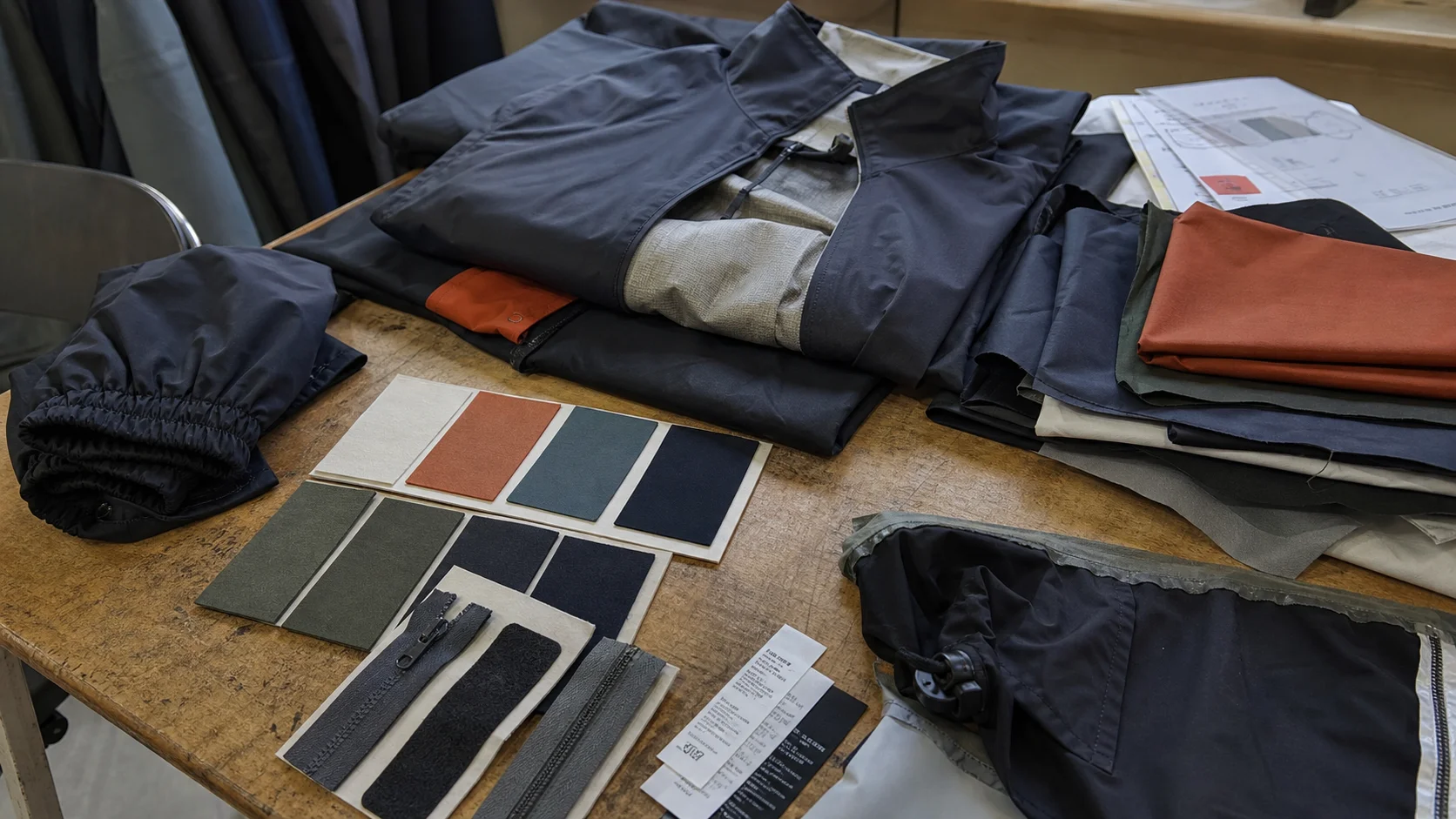
A buyer-focused outline for evaluating rowing jacket size grading, fit consistency, and production details for resort uniform programs in Activewear & Teamwear.
Rowing Jacket Size Grading Review for Buyers - Fabrikn production reference
Buying rowing jackets for a resort uniform program is not the same as ordering casual outerwear. The fit has to work across a mixed workforce, the styling has to stay sharp after repeated wear, and the size grading has to make sense for staff who may layer over polos, base layers, or lightweight knits. For resort uniform buyers, the wrong grading scale creates avoidable returns, inconsistent presentation, and complaints from frontline teams. The right approach is to treat sizing as a production decision, not just a fit-chart exercise.
This review looks at rowing jacket size grading from a buyer’s point of view. The focus is on what matters when sourcing for resorts, hospitality groups, and branded uniform programs: how patterns are graded, where fit usually goes wrong, what specifications deserve attention, and how to judge whether a supplier’s size set is practical for production. The goal is simple: reduce risk before bulk order approval.
Resort uniforms need consistency, but staff bodies are not consistent. Front desk teams, activity staff, marina crews, and guest-facing service teams often share the same outerwear program even though they have different build profiles and layering needs. A rowing jacket can look polished in a showroom and still fail on the floor if the chest grading is too aggressive, the sleeve pitch is off, or the hem spreads too much in larger sizes.
Rowing jackets are often chosen because they feel sporty, compact, and presentable. That same close-cut look is also the reason grading deserves close review. These jackets tend to have narrower bodies, shaped sleeves, and elastic or ribbed finish points that can magnify fit issues. When a size run is not scaled well, smaller sizes can feel tight across the shoulder, while larger sizes may hang awkwardly or distort the branding position.
For resort buyers, grading is not only about comfort. It affects staff adoption, uniform image, and replenishment control. If a jacket fits only a narrow body range, procurement ends up over-ordering the most common sizes and running short on the sizes that are most needed. That usually increases replacement costs and complicates stock planning.
Size grading is the systematic increase or decrease of garment dimensions from one size to the next. In a rowing jacket, the key points usually include chest width, bottom sweep, shoulder width, body length, sleeve length, bicep width, and collar or neckline opening. Good grading keeps the silhouette balanced as sizes increase. Poor grading changes the shape, not just the scale.
In practical sourcing terms, buyers should expect a supplier to show a graded spec sheet with measurement points and grade rules. A serious factory will usually base grading on a fit sample approved in one master size, then build adjacent sizes from that block. The main question is whether the grading preserves proportion. If sleeve length grows too quickly, cuffs can cover the hand. If chest growth is too small, larger sizes become restrictive.
Rowing jackets used in resort uniform programs often need a relaxed but neat fit. That usually means enough room for movement and layering without crossing into oversized leisurewear. A useful grading range is one where the smallest and largest sizes still share the same design identity. The jacket should look like the same product in every size, not a different garment that happens to use the same trims.
Many buyers focus too much on chest measurement and ignore the rest. That is a mistake. Uniform wearers notice sleeve balance, hem behavior, and shoulder mobility first. A jacket that fits in the body but pulls at the upper arm will be rejected just as quickly as one that is too small overall.
Before approving a grading set for resort uniforms, ask for more than a size chart. The buyer should review the full development package, including the master pattern, graded spec sheet, lab dip or color approval where relevant, and a fit sample in the target base size. If the program is brand-sensitive, request branded placement confirmation early because print and embroidery positions can shift with size grading.
Sampling should usually follow a clear sequence. First comes the proto sample or development sample, then the fit sample, then the size-set or pre-production sample if the order is large enough to justify it. For more technical programs, a full size set is useful because it shows whether the grading behaves properly across the run, not just in the middle size. A supplier that skips this step may be saving time now and creating risk later.
Pay close attention to how the fit sample is worn. If resort staff will wear the jacket over a polo or lightweight knit, the sample should be tested that way. If the jacket is intended for cooler climates or outdoor service, layer allowances matter. Buyers often approve based on a model photo or flat measurement sheet and then discover that the real wear situation is different. That gap is avoidable.
A buyer should also confirm the tolerance range. Grading can be technically correct but still poor in production if tolerances are loose. For many woven or knit outerwear programs, common tolerances may sit around plus or minus 1 cm for some points and wider for others, but this depends on the factory, fabric type, and measurement location. The important part is not the exact number alone; it is whether the factory can hold consistency across the order.
Size grading is connected to material choice. A rowing jacket built in a structured woven shell behaves differently from one made in a stretch blend or bonded fabric. Fabric shrinkage, recovery, drape, and seam bulk all affect the final fit. A buyer who approves grading without confirming fabric behavior is taking unnecessary risk.
For resort uniforms, common shell options include polyester, polyester-spandex blends, nylon blends, or lightweight bonded fabrics. Lining choices may include mesh, taffeta, or brushed tricot depending on season and price point. If the jacket includes elastane, grading may need to account for recovery and stretch distribution. A pattern that looks balanced in a static spec sheet can change once fabric tension is introduced during wear.
Trims deserve equal attention. Zippers, elastic cuffs, rib collar inserts, hem cords, and snap closures all influence how the jacket sits on the body. A zipper that is too stiff or a cuff that is too tight can make a correctly graded jacket feel wrong. Logos, badges, and reflective details also need placement review because they may not stay visually centered when sizes scale up or down.
Construction details such as seam allowance, topstitch density, and lining attachment affect production consistency. If the factory uses multiple sewing lines or subcontracted operations, the same grading file may produce slightly different results unless the operation sheet is tightly controlled. Buyers should ask how the supplier manages size integrity across production lines.
For custom rowing jackets, MOQ expectations vary widely by factory and customization level. A common practical range for made-to-order resort uniform programs is often 300 to 1,000 pieces per style or color, with higher minimums possible for fully customized trims, special fabrics, or multiple branding locations. Some suppliers can work below that range, but the buyer usually pays more per unit and has fewer options on fabric or hardware.
Sampling lead time usually depends on how many approval stages are required and whether the factory already has the right material in stock. A simple development sample may take one to two weeks, while revised fit samples can add another week or more. If special fabrics, printed linings, or custom zipper pulls are involved, the timeline can stretch. Production lead time often runs from 30 to 60 days after sample approval, but fabric procurement and peak season demand can push it longer.
Resort buyers should be careful with schedules tied to opening dates or seasonal launches. A uniform program may look straightforward until the supplier has to source matching trim colors, test wash performance, or repeat corrections after fit comments. The safe approach is to treat the stated lead time as conditional on fast approvals and stable material availability.
Purchase judgment: if the supplier cannot explain how grading, sample approval, and production timing connect, the order is not ready for release. A lower unit price does not compensate for late delivery or misfit sizes in a guest-facing uniform program.
One common grading problem is over-scaling at the larger end of the range. Some patterns gain too much width but not enough vertical balance, so larger sizes look boxy. Another risk is under-scaling in the shoulder and armhole, which limits movement and creates stress at the sleeve seam. Both problems are visible in wear tests and should be caught before bulk production.
Inspection should not stop at checking measurements against the spec sheet. A good review also tests how the jacket hangs, whether the zipper tracks smoothly, whether the hem stays level, and whether the collar sits correctly after repeated movement. If the jacket includes elastic or rib trims, inspect for twist, waviness, and inconsistent recovery across sizes.
Color consistency can also be affected by size grading indirectly. Larger sizes may use more panels or different marker layouts, which can reveal shade variation if dye lots are not well controlled. The same applies to print placement. A logo that looks centered in medium size may drift in 2XL if the artwork position is not adjusted for proportional scaling.
For larger resort programs, a pre-shipment inspection should include at least a visual check, measurement audit, workmanship review, and packing verification. Buyers should insist on a clear AQL or quality standard before production starts. That saves time later and gives both sides a common benchmark.
The best size grading for a rowing jacket is not the widest range; it is the most commercially workable range. Resort buyers need a size run that matches staff demographics, limits dead inventory, and preserves a consistent look across uniforms. If the workforce needs many extras in the upper sizes, the supplier should not force a standard chart that underperforms in real wear.
Good buying judgment means balancing fit inclusivity, production efficiency, and brand presentation. A tighter fit may look premium in a sample but fail under daily use. A looser fit may improve comfort but weaken the team image. The right answer usually sits in the middle, with grading that is generous enough for movement and layering but controlled enough to keep the silhouette clean.
Buyers should also avoid assuming that a factory’s standard size set will suit a resort uniform program without modification. Uniform wear is different from retail fashion. Staff need repeatable sizing, easy reordering, and a fit that works across roles. A supplier that understands this distinction is more valuable than one offering a low quote and a generic chart.
When comparing suppliers, ask how they handle grade rule changes, size set corrections, and post-approval measurement control. Suppliers with a disciplined process can save money through fewer revisions, fewer rejects, and fewer emergency reorders. For a broader look at manufacturing capability and sourcing support, see services, about us, and contact us.
For buyers who need help moving from spec sheet to production, a sourcing partner can help interpret grading risks, verify sample logic, and coordinate with factories on uniform programs. The value is not just in finding a supplier. It is in asking the right development questions early, before fit problems turn into reorder problems.
In activewear and teamwear categories, the strongest programs usually come from clear communication: target user profile, layer plan, size distribution, branding method, and acceptable tolerance range. Once those points are documented, the supplier can grade with less guesswork and more consistency. That is especially important when a resort needs multiple delivery windows or mixed-size replenishment over time.
If the buyer is sourcing rowing jackets for hospitality, leisure, or front-of-house teams, the safest path is to request a sample approval schedule, size chart, and graded spec sheet at the same time. This keeps everyone aligned and reduces the chance of approving a fit that cannot be reproduced in bulk. A disciplined process usually costs less than repeated corrections.
Rowing jacket size grading deserves serious review in resort uniform sourcing because it affects comfort, presentation, and long-term cost. A jacket can pass a style review and still fail in actual use if the grading is uneven, the fabric behaves differently than expected, or the trim creates fit pressure. Buyers should look beyond the middle size and examine how the full range scales.
The practical standard is straightforward: confirm the master sample, review the graded spec, test the jacket in real wear conditions, and verify that the supplier can control measurement and workmanship during production. For resort buyers, that approach is safer than chasing the lowest unit price or assuming a standard chart will work without adjustment. A well-graded rowing jacket is a better uniform investment because it supports staff comfort and preserves brand consistency.
Get a free quote from Fabrikn — your trusted B2B clothing manufacturer with 10+ years of experience. MOQ as low as 200 pieces.
Get a Free Quote →Most custom programs use a standard run from XS to XXL, with some extending to 3XL or 4XL depending on the uniform audience. The exact range should match staff demographics and the intended use, not a generic retail chart.
At minimum, expect a development sample and a fit sample. Larger orders may justify a size-set sample or pre-production sample, especially when the jacket includes custom trims, multiple logos, or special fabric behavior.
Many factories work in the 300 to 1,000 piece range per style or color for custom programs. Complex branding, special fabrics, or multiple colorways can push the MOQ higher.
The most common issues are chest overgrowth, poor sleeve balance, shoulder tightness, and trim distortion in larger sizes. Fabric shrinkage and inconsistent tolerances can make those problems worse after bulk production.
Fabric confirmation should happen early because stretch, shrinkage, and drape all affect fit. A size chart alone is not enough if the actual material behaves differently from the sample fabric.
Not always, but it is useful when the style is sensitive to fit or when the buyer has limited time for corrections. For simple programs, a strong fit sample and clear tolerance sheet may be enough, provided the factory has reliable grading control.