
A product-specific SEO outline for resort uniform buyers evaluating rowing jacket trims, from zippers and drawcords to reflective piping, binding, snaps,...
Rowing Jacket Trim Review for Resort Buyers - Activewear & Teamwear manufacturing guide
A rowing jacket looks simple from a distance: clean front, athletic collar, light weather protection, and enough polish for guest-facing teams. The buying risk sits in the trim package. Zippers, snaps, drawcords, stoppers, labels, piping, reflective details, and branded patches decide whether the jacket feels like a resort uniform or a generic teamwear shell.
For resort buyers, the rowing jacket usually serves more than one department. It may be issued to marina staff, fitness instructors, front desk runners, pool attendants, golf cart teams, beach club hosts, valet crews, or outdoor event staff. That mixed usage changes the trim review. A racing-team jacket can tolerate bold contrast, visible hardware, and sport-specific detailing. A resort uniform needs a cleaner balance: durable enough for active shifts, refined enough for guest interaction, and consistent enough across replenishment orders.
The phrase “rowing jacket trim sourcing review” should not be treated as a decorative checklist. It is a purchasing control point. A good trim review prevents mismatched zipper tape, corroded hardware near saltwater, loose drawcord ends, uneven logo placement, and color drift between jacket bodies and accessories. These issues often appear after sample approval if the buyer approves only the silhouette and shell fabric while leaving trims to the supplier’s nearest available option.
For resort uniform programs, trim should be specified with the same discipline as fabric. Hardware finish, cord diameter, zipper brand level, label construction, and corrosion resistance can affect both appearance and wear life.
Buyers sourcing rowing jackets for resorts should lock the trim bill of materials early. That means agreeing on component type, material, color, finish, dimensions, placement, testing expectations, and substitution rules before bulk purchasing starts. The cost impact is real, but not always large. A better zipper, clean woven badge, or salt-resistant snap can raise unit cost modestly while reducing returns, repairs, and visual inconsistency across staff teams.
This review is written for resort uniform buyers, procurement teams, merchandisers, and apparel sourcing managers comparing trim options for rowing-style jackets in the Activewear & Teamwear category. It focuses on practical purchasing decisions rather than abstract design language.
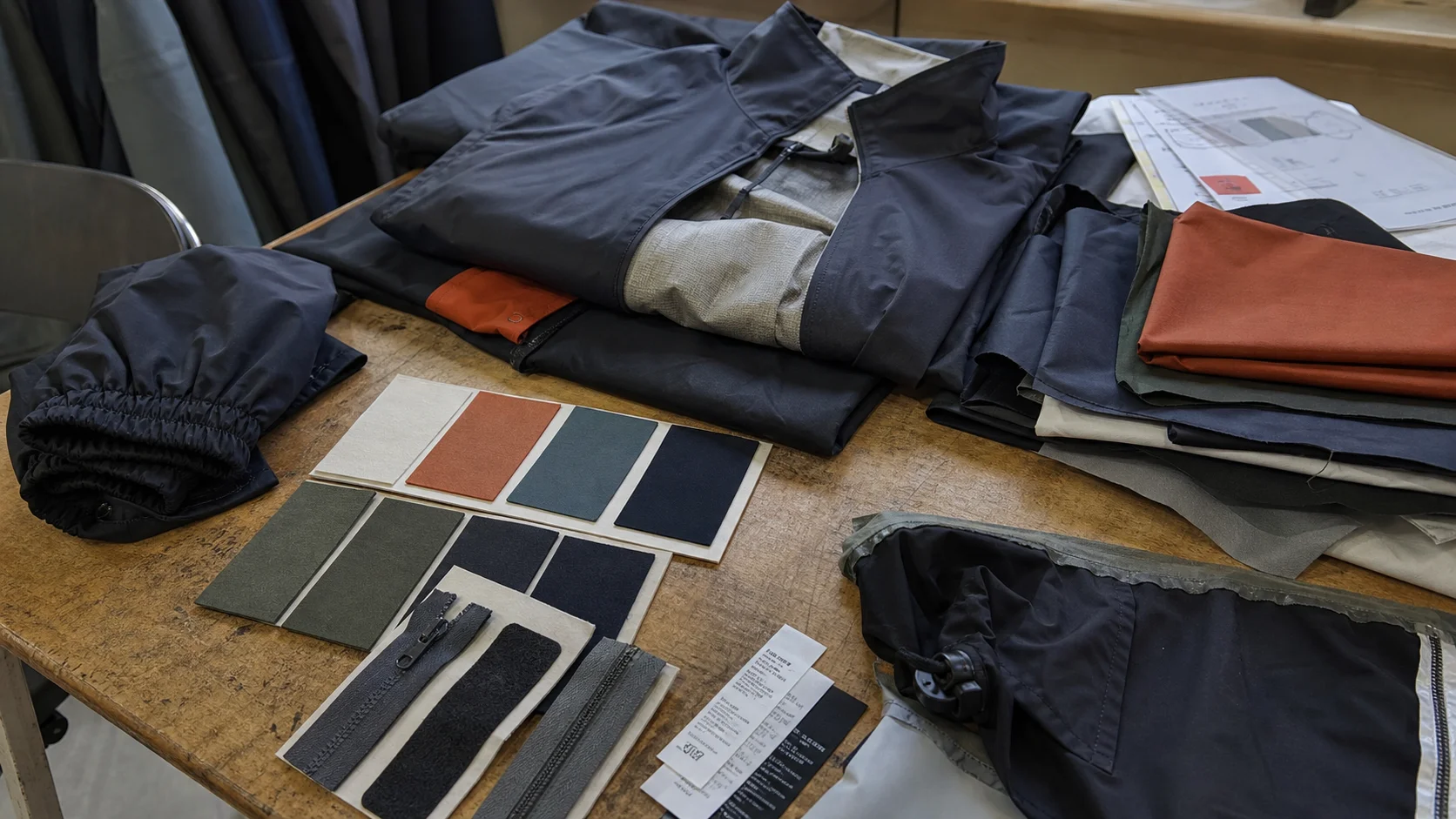
A rowing jacket trim package can be divided into functional trims, branding trims, finishing trims, and compliance trims. Resort buyers should ask suppliers to prepare a trim card that includes physical samples, Pantone or lab dip references, supplier codes, and proposed alternatives. The trim card should match the approved sample and the production bill of materials.
Trim Area Common Options Buyer Risk Recommended Review Point Front closure Coil zipper, molded zipper, snap placket, button placket Jamming, color mismatch, poor puller finish Check zipper gauge, tape color, puller style, and wash durability Cuffs and hem Elastic, rib, snap tabs, adjustable cords Stretch loss, twisting, uncomfortable grip Confirm elastic recovery, width, tension, and stitch method Hood or collar Drawcord, stopper, chin guard, collar tape Loose cords, safety concerns, rough edges Confirm cord diameter, end finish, stopper strength, and local rules Pockets Zippered pockets, welt pockets, snap pockets Bagging, weak pocket bags, visible waviness Test pocket entry size, bartacks, bag fabric, and zipper smoothness Branding Embroidery, woven patch, heat transfer, silicone badge Peeling, puckering, inconsistent logo color Approve artwork size, placement, backing, and wash test Labels Main label, size label, care label, QR label Incorrect fiber content, irritation, poor readability Check legal content, language, position, and label softnessThe basic mistake is treating these trims independently. A glossy molded zipper may look strong, but it can feel too sporty for a premium resort. Matte snaps may suit a coastal uniform, but low-grade plating can tarnish quickly in humid or salt-air environments. Elastic cuffs may improve fit during movement, but they can trap heat and look casual if the resort wants a sharper front-of-house presentation.
A rowing jacket used by resort staff should usually avoid unnecessary trim clutter. Too many contrast cords, branded tabs, reflective hits, and badge layers can make the uniform look like retail sportswear. That may be acceptable for beach club activity teams, but not always for a luxury concierge or arrivals team. The trim map should support the uniform hierarchy: more technical for active outdoor staff, more restrained for guest-facing roles.
Trim sourcing cannot be separated from shell fabric. A lightweight nylon rowing jacket needs a different trim package from a cotton-blend twill interpretation or a polyester mechanical-stretch active shell. The trim must match the fabric’s weight, hand feel, recovery, color depth, and care requirements.
Common shell fabrics for resort rowing jackets include 70D to 150D polyester or nylon plain weave, polyester pongee, taslan, recycled polyester, stretch woven blends, cotton-nylon blends, and water-repellent microfibre. Linings may include mesh, taffeta, tricot, or partial lining depending on climate and cost. Fabric weights often sit around 70 to 160 gsm for lightweight shells, with heavier cotton-blend styles going above that. These are typical ranges, not fixed rules.
Water-repellent finishes create another issue. DWR fabric improves light rain performance, but some trims compromise that function. Needle-heavy embroidery can create moisture entry points. Poorly placed pocket openings can allow water collection. A decorative cotton cord may absorb moisture and dry slowly. If the jacket is marketed internally as weather-resistant, trim choices must support that claim.
Resort buyers should be careful with fabric and trim color matching. Black zipper tape on a navy jacket may be acceptable for cost control, but it changes the uniform appearance. White cords on a cream shell may look elegant in a showroom and become visibly dirty after a week of outdoor service. Tonal trims are safer for most uniform programs, especially where the jacket is worn daily.
For procurement teams building a full program, it can help to develop trim standards across several uniform styles. A resort might use the same matte navy snap, woven label quality, zipper puller finish, and logo patch construction across rowing jackets, vests, and lightweight rain shells. That simplifies replenishment and strengthens visual consistency. Buyers can review related manufacturing support through Fabrikn’s services when structuring broader apparel programs.
The front closure is the highest-touch trim on a rowing jacket. It also carries much of the perceived value. Staff members zip and unzip the jacket throughout the shift, often with wet hands, sunscreen residue, or light sand exposure. A weak zipper may pass a showroom review and still fail in daily resort use.
Coil zippers are common for lightweight rowing jackets because they are flexible, relatively smooth, and easier to color match. They work well with polyester and nylon shells. For resort uniforms, a reverse coil zipper can give a cleaner appearance because the teeth are less visible. Typical gauge choices include #3 for very light jackets and #5 for more durable outerwear. A #3 zipper can look refined but may not be ideal for heavy daily use by active outdoor teams.
The buying tradeoff is clear. A finer zipper supports a cleaner uniform look. A larger zipper improves handling and durability, especially for staff wearing gloves or working around water. For most resort rowing jackets, #5 coil is a practical middle ground unless the style is intentionally very lightweight.
Molded plastic zippers look sportier and can feel more robust. They are common in teamwear and active outerwear. They may be less suitable for polished resort uniforms unless the jacket is assigned to activity staff, marina teams, or outdoor operations. Molded zippers also need close color review. Off-white molded teeth against a cream jacket can look cheap if the match is not deliberate.
Metal zippers can elevate a fashion version of a rowing jacket, but they are not always the best choice for resort operations. They add weight, can feel cold or stiff, and may be more vulnerable to corrosion if plating quality is not controlled. If a buyer insists on metal, request clear finish specifications and corrosion testing suitable for the intended climate.
Snap plackets give a classic boating or club look, especially on jackets inspired by vintage rowing and sailing uniforms. Snaps can also hide a zipper, creating a cleaner front. The risk is plating quality, pull strength, and inconsistent setting pressure. Loose snaps are a common inspection issue. Overly tight snaps can tear lightweight fabric.
Buttons create a softer lifestyle appearance, but they are usually slower for staff and less protective against wind. If used, buttons should be tested for attachment strength, edge smoothness, and wash performance. Natural corozo or imitation horn can look premium, but resin or polyester buttons may be more stable for uniform laundering.
Closure Type Best Use Tradeoff Buyer Recommendation #5 coil zipper General resort rowing jackets Less rugged than large molded styles Strong default option for most programs #3 coil zipper Lightweight premium shells Lower durability under rough handling Use only after wear-use review Molded zipper Sport, marina, activity teams More casual and technical look Good for active departments, less ideal for front desk Snap placket Classic resort styling Needs strong reinforcement and setting control Use with backing reinforcement on light fabrics Button front Lifestyle or hospitality styling Slower to operate, less weather protection Best for low-activity rolesDrawcords and elastics are small components with high failure visibility. Frayed cord ends, cracked stoppers, twisted elastic channels, and loose adjusters make a jacket look poorly made even when the shell fabric is acceptable.
For resort uniforms, drawcords should be controlled carefully. A hood drawcord may be useful for marina or outdoor staff, but it can look too casual for premium guest-facing teams. A hem drawcord improves fit and wind protection, but loose cord tails may snag on carts, dock equipment, or service tools. Some buyers prefer internal hem adjustment for a cleaner look and lower snag risk.
Metal aglets can look premium, but they introduce corrosion and noise risks. Plastic aglets are practical and lighter. Silicone-dipped ends can look modern, though quality varies. Poor dipping cracks quickly and becomes unattractive after laundering.
Elastic cuffs and hems improve movement and wind control. They also change the jacket’s appearance. A full elastic hem gives a sportier silhouette, while partial elastic or an internal drawcord can look more refined. Rib cuffs may feel comfortable, but cotton-rich rib can fade or stretch after repeated washing. Polyester or polyester-spandex rib usually performs better for active uniforms.
Buyers should ask for elastic recovery testing or at least supplier standards for stretch and recovery. A simple fitting session is not enough. Elastic may feel good in a new sample and relax after bulk laundering. For high-use resort teams, this is not a minor issue; stretched cuffs make the jacket look tired before the shell fabric is actually worn out.
Branding trims are where resort buyers often overspend or under-control. A jacket can carry the property identity through embroidery, woven patches, heat transfers, silicone badges, rubber patches, zipper pullers, interior labels, neck tape, or small sleeve tabs. The right method depends on fabric, department use, brand tone, wash process, and budget.
Embroidery is familiar and durable when properly executed. It works well on stable fabrics and heavier shells. On thin nylon or polyester, dense embroidery can pucker, especially around curved logos or small lettering. Backing quality matters. So does stitch count. Buyers should approve the actual embroidery sample on production fabric, not only a digital mockup.
Woven patches are useful when logo detail is fine and the shell fabric cannot support dense embroidery. They can give a club, nautical, or heritage feel that suits rowing jacket styling. Edge finish should be reviewed: merrowed edges look classic but thicker; laser-cut or heat-cut edges look flatter but can feel less traditional.
Heat transfers can look clean and modern. They are common in activewear and teamwear. The main risk is adhesion. Coated shells, stretch fabrics, water-repellent finishes, and textured surfaces can reduce bond strength. Buyers should request wash testing, abrasion review, and stretch recovery review where relevant.
Silicone badges can create a premium activewear look, especially for sport clubs and outdoor teams. They add weight and may not suit every resort aesthetic. Stitching or bonding method must be checked carefully. A thick badge on a lightweight shell can sag or distort the fabric.
Branding Method Appearance Durability Concern Best Resort Use Embroidery Traditional, professional Puckering on light shells Front desk, concierge, golf, general staff Woven patch Club, nautical, detailed Edge lifting or bulky border Rowing-inspired resort collections Heat transfer Clean, lightweight, modern Peeling if fabric finish is incompatible Fitness, activewear, performance teams Silicone badge Premium sport look Weight, bonding, and edge durability Beach club, marina, outdoor recreationLogo placement deserves measurement control. A badge placed 1 cm too low may not sound serious, but it becomes visible when a full team stands together. Buyers should specify placement from fixed points such as center front, shoulder seam, armhole seam, or hem. Use size-specific grading rules where needed, because a logo that looks correct on size M may sit awkwardly on XS or 3XL.
Internal branding should not be ignored. Neck labels, hanging loops, locker loops, and inside neck tape influence perceived quality. A clean woven main label and soft care label can support the resort image without adding visible decoration. Care labels must include accurate fiber content and washing instructions. Wrong care labeling can create real liability and laundering problems.
Trim sourcing affects MOQ more than many buyers expect. A supplier may accept a low jacket MOQ using stock trims, but custom zipper pullers, dyed-to-match cords, branded snaps, woven patches, or silicone badges can push component MOQs higher than garment MOQs. This creates a mismatch: the garment factory may offer 300 pieces, while a custom zipper supplier may require 1,000 to 3,000 units of a specific color or puller.
Typical MOQ ranges vary by factory, market, trim type, and season. For resort uniform rowing jackets, common practical ranges may look like this:
Item Typical MOQ Range Notes for Buyers Stock rowing jacket with stock trims 100 to 300 pieces per style/color Best for quick resort replenishment, limited customization Custom shell color with standard trims 300 to 800 pieces per style/color Fabric dyeing or greige booking may drive the real minimum Custom zipper tape or puller 500 to 3,000 pieces or equivalent length Depends on zipper supplier and color development Woven patch or woven label 500 to 1,000 pieces Artwork complexity and loom setup affect cost Silicone badge or rubber patch 500 to 2,000 pieces Mold cost may apply; reorder consistency is usually good Custom snaps or branded hardware 1,000 to 5,000 pieces Good for large programs, often excessive for small resort ordersThese ranges are directional. A buyer should not treat them as guaranteed offers. The useful point is that trim MOQs can decide the sourcing route. For a 120-piece resort order, stock zippers with a custom woven patch may be sensible. Fully branded hardware is usually hard to justify unless the resort has ongoing multi-season demand.
A disciplined sample process reduces trim surprises. Resort buyers should request approval stages that match the risk level of the program.
Not every small order can afford every stage, but skipping the trim proposal and pre-production review is risky. If time is tight, the buyer should at least approve a physical trim card, logo strike-off, and pre-production sample photo set with key measurements. For larger or more premium programs, physical approvals are worth the time.
Lead times depend on fabric availability, trim sourcing, logo development, factory capacity, testing, shipping method, and approval speed. A stock-trim rowing jacket may move quickly if fabric is available. Custom trims can add two to six weeks, especially where molding, dyeing, plated hardware, or repeat lab dip approval is involved.
Typical planning windows may include 5 to 10 days for artwork and trim confirmation, 7 to 20 days for proto or fit sampling, 10 to 25 days for custom trim development, 25 to 60 days for bulk production after approvals, and additional time for inspection, packing, freight, customs, and delivery. Air freight can rescue a deadline but damages margin. Sea freight is more economical but requires earlier order placement.
Approval delays are often the hidden cause of late delivery. If a resort buyer takes two weeks to approve a zipper tape color, the production calendar shifts. The factory cannot safely cut or assemble a jacket while uncertain trims are pending. Clear internal decision ownership helps. One person should control trim approval, logo approval, and final sample signoff.
Teams that need structured development support can review Fabrikn’s background and sourcing approach before setting up a resort uniform brief.
Rowing jacket inspection should include general garment checks and trim-specific checks. Trim defects are highly visible and can affect function, safety, and brand presentation. Buyers should define acceptable quality levels with the supplier before production. AQL inspection may be used for larger orders, but small uniform batches still need a documented final review.
Saltwater, humidity, sunscreen, chlorine, and frequent laundering make resort uniforms harder on trims than a normal corporate jacket. Inspection should reflect the real environment. A jacket for a marina team needs a tougher hardware review than a jacket used indoors by event staff. Poolside teams may need trims that tolerate sunscreen and chlorine exposure. Outdoor dining teams may need darker cords and pocket trims to hide handling marks.
Buyers can request lab testing for colorfastness, dimensional stability, seam strength, pilling, water repellency, and trim performance where budgets allow. For trim-specific review, useful checks include zipper cycling, snap pull strength, colorfastness to washing, corrosion resistance for metal parts, logo wash durability, and elastic recovery. Not every order requires a full lab package, but high-value resort uniforms should not rely only on visual approval.
Practical in-house checks also help. Open and close every zipper on the approval sample repeatedly. Pull snaps at different angles. Rub the zipper puller against the fabric to check abrasion. Stretch cuffs and let them recover. Wash one approved sample using the intended care method. Hang the jacket damp and check whether trims bleed, rust, wrinkle, or distort the shell.
Packaging can create trim issues too. Heavy zipper pullers may mark light fabrics during compression. Metal snaps can imprint on coated shells. Silicone badges can stick or leave impressions if packed under pressure in heat. Buyers should review folding method, tissue placement, polybag size, and carton compression when the jacket uses heavier trims or light-colored fabric.
The best trim choice is not always the most premium trim. Resort buyers need a practical balance of image, durability, MOQ, replacement continuity, and cost. A custom metal puller may look impressive in a presentation, but if the order is small and replacement units are needed throughout the year, a standard puller with a strong woven patch may be the smarter purchase.
For front-of-house resort teams, prioritize tonal trims, smooth zipper operation, discreet branding, soft labels, and clean logo placement. For marina, beach club, and recreation teams, prioritize corrosion-resistant hardware, stronger pocket construction, reliable drawcords, and trims that tolerate moisture and sunscreen. For events and seasonal teams, prioritize stock availability, easy replenishment, and moderate customization that does not trap the buyer in high MOQ components.
Buyers should also decide which trims are “locked” and which can be substituted. A locked trim might be the logo patch, zipper tape color, or snap finish. A flexible trim might be an internal care label format or hidden pocket bag color. This helps suppliers manage supply-chain changes without compromising the garment’s visible standard.
Cost negotiation should not reduce the wrong trims. Downgrading the zipper, snap, or logo method can create visible problems quickly. If budget pressure is high, look first at less visible areas: lining type, inner pocket complexity, custom puller, or decorative tabs. Simplifying the design often protects quality better than using cheaper trims.
A resort uniform buyer should ask, “Which trim failure would make this jacket unusable or off-brand?” Protect those components first. Negotiate around the rest.
Documentation is the buyer’s leverage. A complete tech pack should include trim descriptions, supplier references if available, dimensions, colors, placement diagrams, logo artwork, stitch details, testing expectations, and approved sample photos. A vague note such as “navy zipper” leaves too much room for interpretation. A stronger note would define zipper type, gauge, tape color standard, teeth finish, puller style, length, and acceptable substitute process.
For buyers ready to discuss resort rowing jacket development, trim sourcing, or broader activewear and teamwear programs, the next step is to share the garment brief, target quantity, delivery window, branding requirements, and intended use case through Fabrikn’s contact page.
A trim checklist keeps sourcing conversations efficient. It also helps compare supplier quotes fairly. Two suppliers may quote the same jacket style, but one may include a stronger zipper, better logo patch, and corrosion-resistant snaps while the other uses basic stock components. Without a trim checklist, the cheaper quotation may look better than it is.
Specification Area What to Confirm Why It Matters Zipper Type, gauge, tape color, teeth finish, puller, length Controls function, appearance, and durability Snaps Diameter, finish, cap style, setting pressure, reinforcement Prevents tearing, tarnish, and loose hardware Drawcord Material, diameter, color, end finish, stopper type Affects safety, hand feel, and daily usability Elastic Width, recovery, tension, stitch method Protects fit and long-term appearance Logo Method, size, placement, color, backing, wash test Maintains brand consistency across staff Labels Main, size, care, fiber, origin, language Supports compliance and wearer comfort Packaging Fold method, tissue, polybag, carton count Reduces trim marks and transit damageThe sourcing review should end with a clear trim approval record. The record should state what was approved, when it was approved, who approved it, and what substitutions are allowed. This is especially important for resort groups with several stakeholders. Design, operations, procurement, and property management may all have opinions. Production needs one final answer.
For most resort rowing jacket programs, the safest trim package is a tonal #5 coil zipper, restrained branded patch or embroidery, soft woven labels, durable polyester drawcord where needed, corrosion-conscious hardware for coastal use, and minimal decorative trims. This combination gives enough activewear function without making the jacket look overly technical.
Buyers should spend more attention on zipper quality, logo execution, snap reinforcement, and trim color consistency than on novelty details. Custom trims are valuable when the resort has scale, brand discipline, and repeat demand. Stock trims are usually smarter for small seasonal orders, pilot programs, or departments with uncertain reorder needs.
A good rowing jacket trim sourcing review does not slow purchasing down. It prevents late-stage arguments, rejected samples, inconsistent bulk production, and avoidable wear complaints. For resort uniform buyers, that is the real value: a jacket that looks aligned on opening day and still looks controlled after staff have worn it through heat, salt air, movement, and repeated laundering.
Get a free quote from Fabrikn — your trusted B2B clothing manufacturer with 10+ years of experience. MOQ as low as 200 pieces.
Get a Free Quote →The most important trims are the front zipper or closure, logo application, cuffs, hem adjustment, pocket trims, labels, and any exposed hardware. These parts affect daily function and the visible quality of the uniform.
A #5 coil zipper is often the most practical choice. It offers a good balance of durability, flexibility, clean appearance, and usability. Very lightweight styles may use #3 coil zippers, but they are less suitable for rough daily handling.
Custom branded hardware is worth considering for larger, repeatable programs where MOQ and lead time are manageable. For small seasonal orders, standard hardware with a well-executed logo patch or embroidery is usually a better purchasing decision.
Stock-trim jackets may start around 100 to 300 pieces per style or color. Custom trims often require higher minimums, commonly 500 to 3,000 pieces depending on the component. Branded snaps or custom molded hardware may require even higher quantities.
Simple stock trims can be confirmed quickly, sometimes within a few days if available. Custom trims may add two to six weeks depending on dyeing, molding, logo development, lab dips, testing, and approval speed.
Embroidery can work, but it must be tested on the actual shell fabric. Dense embroidery may pucker lightweight nylon or polyester. Woven patches or heat transfers may be cleaner options for thin activewear fabrics.
Common risks include zipper jamming, wavy zipper insertion, loose snaps, frayed drawcords, weak aglets, twisted elastic, crooked patches, peeling transfers, and incorrect care labels. These should be included in final inspection criteria.
Metal trims can be used, but buyers should review plating quality and corrosion resistance. Salt air, humidity, sunscreen, and moisture can damage low-grade metal components. Plastic or coated alternatives may be more practical for some teams.
There is no single best method. Embroidery suits classic professional uniforms, woven patches suit club-inspired jackets, heat transfers suit activewear programs, and silicone badges suit sportier departments. The decision should be based on fabric, usage, wash method, and brand tone.
Buyers should approve a physical trim card, logo strike-off, pre-production sample, and clear bill of materials before bulk production. The supplier should not be allowed to substitute visible trims without written approval.