
A focused checklist for auditing safety vest colorfastness so airport uniform teams can reduce fading, keep visibility standards consistent, and source...
Airport uniform buyers do not have much patience for faded safety vests. A vest that looks bright in the sample room can quickly lose value if the dye bleeds, dulls, or migrates after washing, rubbing, sweat exposure, or sunlight. For airport teams, colorfastness is not just a cosmetic issue. It affects visibility, brand consistency, replacement frequency, and the credibility of a supplier’s quality control.
This guide is written for sourcing teams evaluating a safety vest supplier colorfastness audit for airport uniform teams. It focuses on the practical checks that matter most in procurement: what to ask for, what to test, where failures usually appear, and how MOQ, cost, and lead time shape the decision.
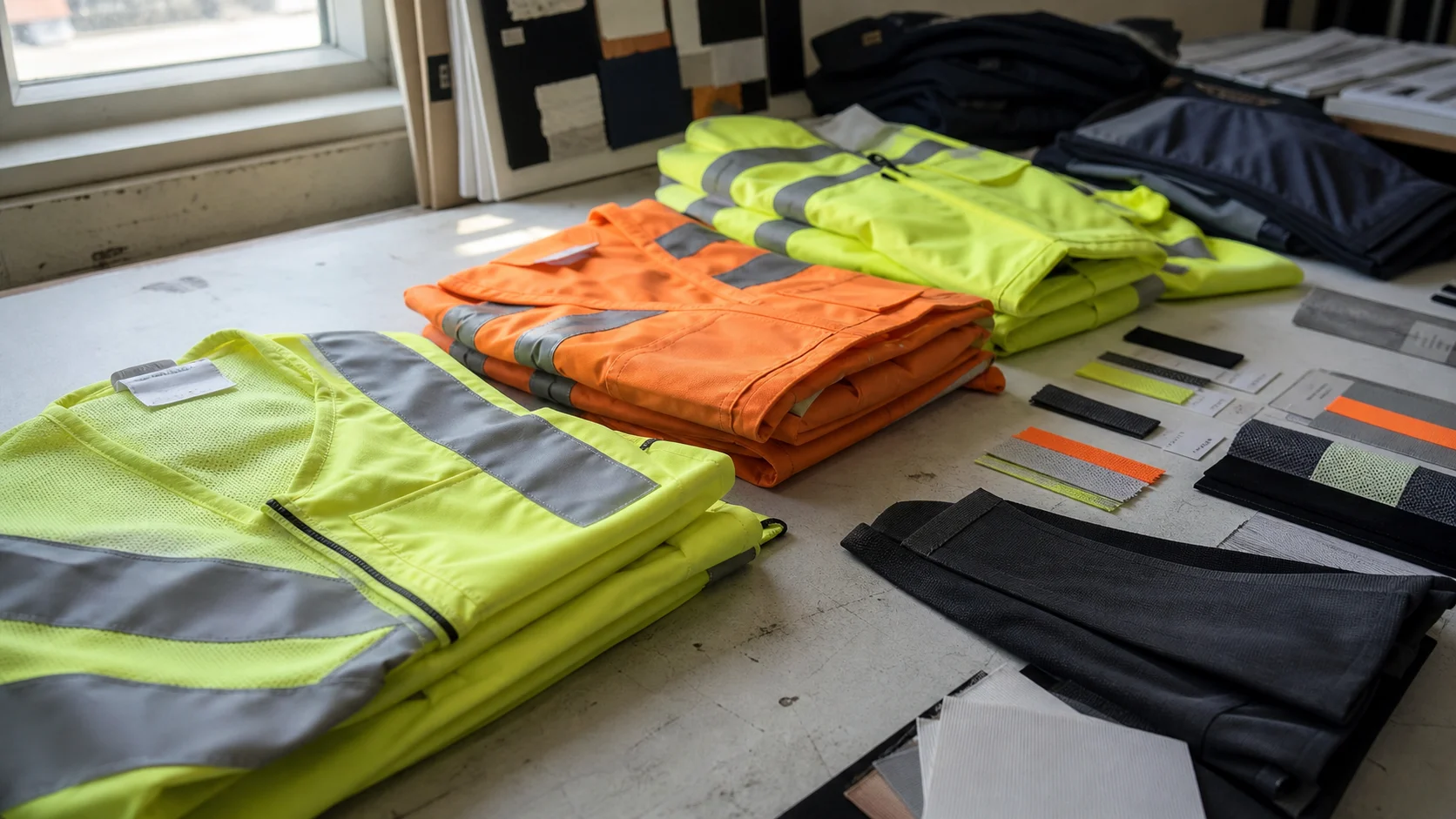
Safety Vest Colorfastness Audit for Airport Teams - Fabrikn production reference
Airport teams use safety vests in environments that are hard on dyed fabrics. There is frequent movement, repeated laundering, exposure to sunlight, friction against seat belts and equipment, and contact with sweat, fuel residue, cleaning chemicals, or rain. In that setting, poor colorfastness shows up fast.
The most common commercial problems are predictable:
For airport procurement teams, that means a vest can be technically usable and still fail a uniform standard. Brightness must hold up across the lifecycle of the garment, not only at receiving.
A strong sourcing decision is not based on the sample’s first impression alone. It is based on whether the supplier can prove consistent performance after real-world wear and wash conditions.
A useful audit should go beyond a one-page test report. The goal is to understand whether the supplier has control over fabric source, dyeing consistency, trim compatibility, and finishing. For airport teams, the audit scope should include both the garment body and all visible components.
Ask where the base fabric is sourced, how it is dyed, and whether the supplier controls the dye house or buys pre-dyed material. This matters because colorfastness risk often sits upstream. A supplier that only assembles finished panels may not be able to correct a weak dye process later.
Request details on:
If the vest includes reflective tape, the audit should check whether the tape has any color shift after heat, wash, or abrasion. Some tapes remain reflective but develop yellowing, edge lifting, or stain marks. For airport teams, that is enough to trigger a quality concern even when the garment still meets minimum visibility expectations.
Many airport uniforms need logos, department names, or role identifiers. Printed artwork can influence the vest’s color stability. Check whether screen print, heat transfer, sublimation, or embroidery is used, and whether the artwork is likely to crack, bleed, or migrate during laundering.
Stitching thread and seam tape can affect color appearance, especially on bright lime, orange, or red vests. Colorfastness problems sometimes appear at seam intersections first because of heat during finishing or dye concentration differences at folded edges.
Color issues are not always caused by washing. Long storage under heat, humidity, or direct light can accelerate fading or yellowing. Ask how the supplier packages finished vests and whether cartons are protected from moisture and UV exposure during transit.
An airport uniform team should ask for actual test methods, not just a general statement that “the fabric passed.” The exact standard depends on your region and internal policy, but the logic stays the same: assess washing, rubbing, light exposure, and sweat resistance.
Wash fastness measures how much color changes after laundering and whether dye transfers onto adjacent fabrics. This is especially important if airport teams wash uniforms in bulk and use industrial detergents.
Look for tests covering:
A practical procurement rule is to ask for performance after repeated cycles, not only initial wash results. A vest that passes one wash can still lose appeal after ten or twenty cycles.
Rub fastness, also called crocking resistance, shows whether the surface color will transfer when the vest rubs against uniforms, seats, bags, or equipment. Airport staff move constantly, so this test deserves close attention.
Pay special attention to:
Wet rubbing often exposes issues that dry rubbing misses. If the supplier only provides dry results, that is not enough for a serious airport program.
Airport teams may work outdoors, near apron areas, or in spaces with strong sunlight exposure. Light fastness matters because some bright colors fade quickly under UV stress. This can be a bigger issue for fluorescent safety vests than for standard workwear colors.
A supplier should be able to explain how the fabric responds to light exposure and whether accelerated testing was done. If the color is a custom fluorescent tone, ask for a controlled repeat sample from the same dye batch.
Human sweat, deodorant residue, cleaning sprays, and light chemical exposure can affect color stability. For airport teams, this is a realistic issue because garments are worn in shifts and often handled during long work periods. A fabric that appears stable in dry conditions may still show patching or staining after sweat exposure.
Ask whether the supplier has tested:
Colorfastness should not be judged alone. Garments also need to hold shape. If a vest shrinks, twists, or puckers after washing, the appearance can become unacceptable even if the color technically stays within range.
The fabric choice has a major impact on cost and risk. Airport teams often need vests that are light, breathable, and visibly bright, but those same priorities can create tradeoffs.
From a sourcing standpoint, the cheapest option is not always the safest bet. A low-cost fabric that fades quickly can cost more over the contract cycle because replacement orders come sooner than planned.
Reflective tape can vary widely in quality. Some tape systems handle repeated washing well, while others lose adhesion, crack, or edge-fray. The tape’s backing, adhesive, and stitch method all matter.
Ask the supplier whether the tape is:
Thread shade is often ignored until a garment fails a visual inspection. If the thread bleeds or the label material fades faster than the main fabric, the vest may look mismatched and low-quality. Airport teams should confirm that thread, labels, and any contrast bindings are color-stable under the same wash regime as the main body fabric.
Custom branding can raise the risk of inspection failure. Bold prints may wash well in lab conditions but still show cracking at folds or on high-contact areas. If the vest is used daily, keep decoration simple and position artwork away from the most stressed areas.
A controlled sample approval process reduces costly mistakes. The strongest programs do not approve a vest after one visual check. They approve it after lab review, wear testing, and a confirmed production reference.
Ask for a sample made from the intended fabric, tape, trim, and print method. A mockup that uses substitute materials is only useful for layout, not final approval.
Do not rely on a screen image. Compare the sample to a physical color reference under consistent lighting. If your airport has a standard safety color, define the tolerance for shade variation before moving ahead.
Before production, run a small internal test if your process allows it. Even simple in-house checks can reveal obvious issues in bleeding, surface transfer, or tape reaction.
Colorfastness is only one part of acceptance. Confirm that seams are secure, fasteners work correctly, labels are legible, and all panels line up properly.
Keep one signed-off sample as the benchmark for bulk production. This is especially important when orders are split across multiple months or production batches.
If the supplier will not commit to a sealed reference sample and matching dyelot control, the order carries higher replacement risk later.
MOQ is a real issue in airport sourcing because uniform programs often start with a controlled pilot order and then expand. Safety vest suppliers usually price better at higher volume, but airport teams should not accept scale pricing without quality proof.
For custom safety vests, typical MOQ ranges can vary widely depending on fabric, print, and trim complexity:
These are only practical sourcing ranges, not fixed rules. A supplier may accept a lower MOQ for repeat business or simplified construction, while special materials can push the minimum much higher.
Better colorfastness usually adds cost in one or more of these ways:
Procurement teams should separate unit price from lifecycle cost. A cheaper vest that fails after a few wash cycles can cost more than a slightly better garment that lasts longer and keeps its appearance.
Lead time is usually shaped by material availability, dyeing, printing, and testing. If the vest uses a custom fluorescent shade, the supplier may need extra time for color matching and sample approval. If reflective tape or branded labels are imported, that can slow the schedule further.
Common lead time dependencies include:
A practical planning window for a custom order is often several weeks from approval to shipment, and longer if the program requires multiple sample rounds. Buyers should avoid compressing testing into the final week before production.
Inspection failures for safety vests are often basic, not exotic. The problem is that they appear late, after the order has already been approved visually. Airport teams should watch for the following issues.
One carton can look brighter than another if dyelot control is weak. This is common when suppliers mix fabric lots or split production across multiple runs. If your airport uses vests for different departments, visible shade mismatch can become a brand issue quickly.
Collars, armhole bindings, side seams, and fold lines often fade first. Those zones experience higher friction and heat, so they deserve extra attention during inspection.
Some tape looks fine at packing but lifts after washing or storage. Edge lift can start small and then spread. A yellowed or wrinkled reflective strip reduces the professional look of the vest.
Custom logos that crack after washing create a poor impression and can transfer color to adjacent garments. Ask the supplier what print method is used and what wash resistance was verified.
One batch may appear smooth and bright while another has dull patches caused by poor finishing control. This often points to variation in heat setting, washing, or drying conditions.
Airport uniform buyers should treat a colorfastness audit as a supplier capability check, not just a fabric test. The best supplier is the one that can repeat the result consistently, not the one that can produce a single good sample.
Useful questions to ask include:
Look for a supplier that speaks clearly about process control, not just pricing. A low quote without test discipline is usually not a good procurement outcome for airport teams.
If you are comparing partners for custom airport workwear, the resources at fabrikn.com/services/ can help frame what to ask during sourcing. For direct inquiries, the contact page is the most efficient way to request product details or a quotation. Buyers who want to understand the company background before moving forward can review fabrikn.com/about-us/.
Before sending a purchase request, lock the essential specifications in writing. That prevents arguments later if the delivered goods differ from the approved sample.
Specification area What to define Fabric Composition, weight, weave or mesh type, dyed color code Color standard Approved shade reference, tolerance limit, match method Reflective tape Width, placement, stitching method, wash performance requirement Decoration Logo type, print method, location, color stability expectation Testing Wash fastness, rub fastness, light fastness, perspiration resistance MOQ Minimum order quantity, split size tolerance, reorder terms Lead time Sample approval time, bulk production time, shipping allowance Inspection Pre-shipment check, AQL level if used, carton marking, shade sorting rulesA complete spec sheet also helps procurement compare suppliers on the same basis. Without that, unit price comparisons are not meaningful.
For airport uniform programs, the safest buying decision is usually a supplier that can demonstrate stable color control, not merely a low first-order price. If the vest is part of a visible, repeated-use uniform system, it should be treated like a managed consumable with quality risk, not a simple commodity.
The right balance is usually found by asking for:
When those five pieces are in place, the purchasing decision becomes much easier. If they are missing, the order has hidden risk even if the sample looks attractive.
Get a free quote from Fabrikn — your trusted B2B clothing manufacturer with 10+ years of experience. MOQ as low as 200 pieces.
Get a Free Quote →Colorfastness is the ability of the vest fabric, reflective tape, and decoration to retain color under washing, rubbing, light, and sweat exposure without fading or bleeding.
Airport teams need consistent visibility and a professional uniform look. Poor colorfastness can reduce brightness, create shade mismatch, and increase replacement frequency.
At minimum, ask for wash fastness, rub fastness, light fastness, and perspiration resistance results on the exact material combination used in production.
Typical MOQ ranges often start around 300 to 500 pieces for simpler styles and can reach 1,000 pieces or more for custom fabrics, colors, or reflective layouts.
It depends on how many revisions are needed, whether custom dyeing is required, and how quickly test results are returned. A few weeks is common for a disciplined process.
Yes. A vest can look acceptable at first delivery and still fail after washing or use if the dye fixation, tape quality, or print method is weak.
Yes. A sealed approved sample gives both buyer and supplier a clear benchmark for future production and reduces disputes over shade or finish.
No. In uniform programs, the lowest unit price can become expensive if fading, transfer, or tape failure shortens the garment’s usable life.