
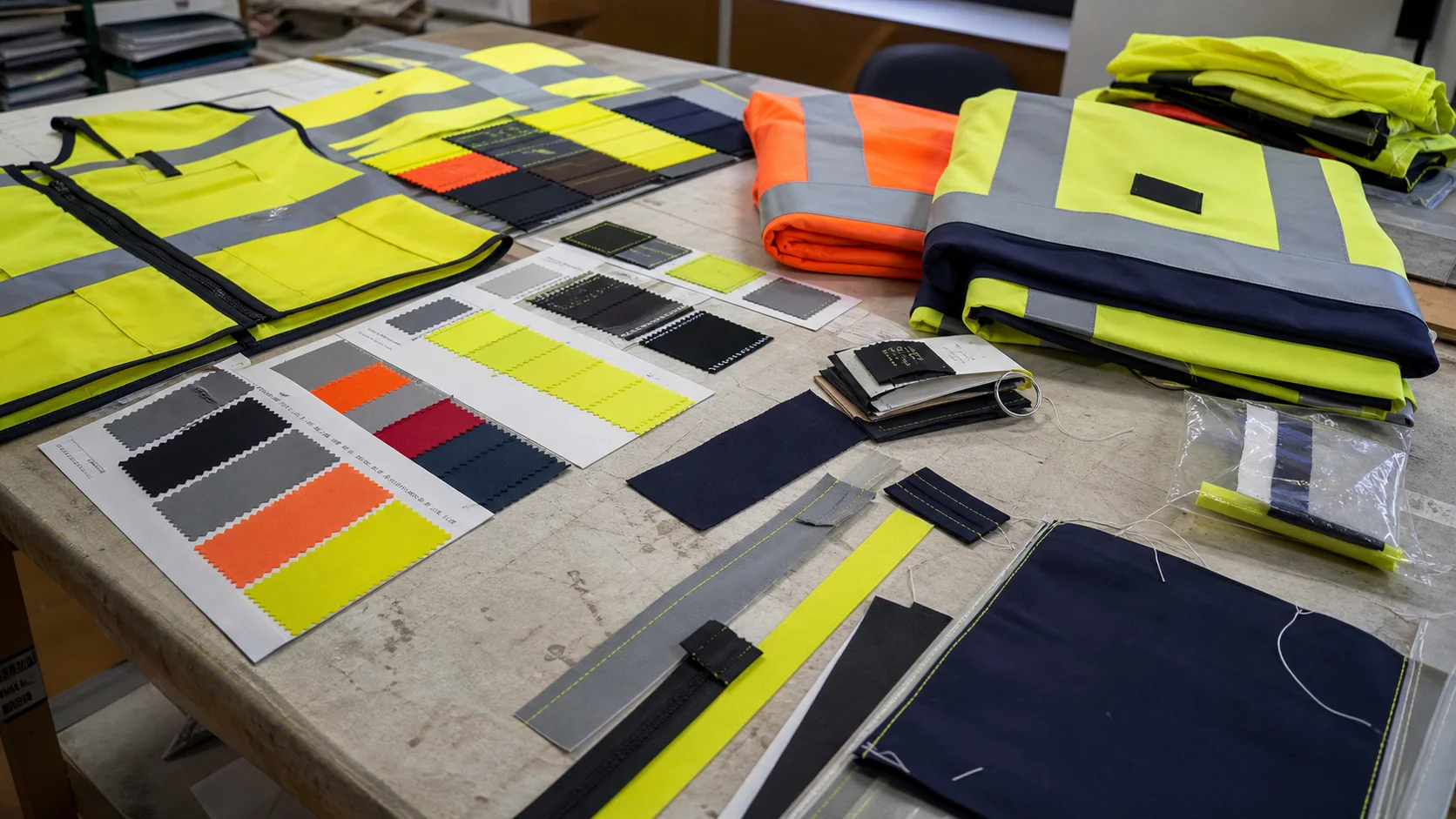
A sourcing-focused outline for airport uniform buyers auditing safety vest manufacturers for colorfastness, visibility retention, wash durability, and cost...
Safety Vest Colorfastness Audit for Airport Buyers - MOQ, Cost & Sourcing manufacturing guide
Airport safety vests are not ordinary promotional hi-vis garments. They sit at the intersection of visibility, uniform control, laundering durability, and daily operational safety. For airport buyers, colorfastness is not just a cosmetic issue. A vest that fades too quickly, bleeds onto shirts, or loses fluorescent brightness can create compliance problems and replacement costs long before the garment should be retired.
The phrase “safety vest manufacturer colorfastness audit for airport uniform teams” sounds technical, but the purchasing logic is simple: confirm that the manufacturer can keep color performance consistent across fabric lots, trims, print methods, reflective tape, and production batches. Airport teams often buy vests for ramp agents, baggage handlers, ground support crews, marshalling staff, contractors, security teams, and maintenance personnel. Each group may use different colors, logos, striping patterns, and laundering rules. Without a proper audit, color variation appears after the first few wash cycles or after a few weeks of UV exposure on the ramp.
Colorfastness issues create three direct problems for airport uniform buyers. First, safety visibility drops when fluorescent yellow, orange, or lime fabric loses chroma. Second, uniform consistency suffers when one production lot looks different from another. Third, replacement planning becomes unpredictable because some vests fail earlier than others.
A low unit price is not a saving if the vest fades, stains adjacent garments, or fails visual inspection before the expected service period. For airport procurement, colorfastness is a lifecycle cost issue.
Airport buyers should treat colorfastness as part of the pre-production approval process, not as a post-shipment complaint. Once thousands of vests arrive at multiple terminals, replacing them is expensive and operationally disruptive. A tighter audit at the sourcing stage protects the uniform budget and reduces arguments between the buyer, distributor, and factory.
A practical audit checks whether the supplier can control color from material selection through bulk shipment. It should not be limited to asking for one lab report. Lab testing is useful, but it only reflects the submitted sample. Airport buyers need evidence that the manufacturer’s routine production system can maintain the same performance.
The audit should begin with the color standard. The buyer should define whether the color target is based on ANSI/ISEA high-visibility requirements, EN ISO 20471 classification, a Pantone reference, a physical approved swatch, or a previous approved vest. For airport use, many programs specify fluorescent yellow-green or fluorescent orange-red. Some teams also use blue, black, navy, or role-specific contrast colors for supervisors or contractors. These colors do not all behave the same under washing, sunlight, and abrasion.
A complete audit should include fabric dyeing control, fluorescent color performance, reflective tape compatibility, trim color stability, logo print resistance, wash testing, crocking resistance, perspiration resistance, light exposure risk, and shade continuity across production lots. The buyer should also ask how the supplier separates color lots during cutting and sewing. Mixing rolls from different dye lots without control can create visible panel-to-panel shade differences on the finished vest.
These questions reveal whether the factory understands airport durability requirements or is simply quoting a vest style. A reliable safety vest manufacturer should be able to discuss testing, shade bands, washing instructions, and bulk control without treating them as unusual requests.
Airport vests face a harsher environment than many warehouse or event vests. Ramp teams work in sunlight, rain, fuel-adjacent areas, grease exposure, dust, baggage belt abrasion, and repeated laundering. Vests are often stored in lockers, carts, vehicles, or shared uniform rooms, where damp garments may remain folded before drying. These conditions increase the risk of color migration and premature fading.
Sunlight is a major issue. Fluorescent colors are designed for high visibility, but some fluorescent dyes are more sensitive to UV exposure than standard disperse dyes. A vest that looks correct when delivered may lose brightness after extended ramp use if the fabric is not properly specified. Airport buyers should ask for lightfastness test data when crews work outdoors for long shifts.
Washing is another critical variable. Some airport teams launder garments through industrial laundries, while others rely on employee home washing. Industrial laundering can expose vests to higher temperatures, stronger detergents, longer mechanical action, and mixed-load contamination. Home washing introduces inconsistent detergent types and water temperatures. The specification should state the expected wash method, not just a generic “washable” claim.
Contact staining can also be overlooked. A vest may rub against navy uniforms, white shirts, baggage straps, rainwear, seat belts, and equipment harnesses. Poor wet or dry crocking performance can transfer color onto other garments. That creates complaints even when the vest itself still appears bright.
The strongest procurement approach is to map the vest specification to the real-use environment. A visitor vest worn indoors does not need the same durability package as a ramp vest worn five days a week under sun and rain. Paying for unnecessary testing on a low-use garment wastes money. Skipping tests on a high-use garment creates bigger replacement costs later.
Colorfastness starts with the bill of materials. Airport buyers should not approve a vest based only on a photo, GSM, and color name. The fabric composition, knit structure, dye method, reflective tape type, binding, zipper, hook-and-loop tape, labels, and logo application method all affect performance.
Most airport safety vests use polyester warp knit, bird-eye mesh, tricot, or solid woven polyester. Mesh improves breathability but can snag and may show shade variation differently because of the open structure. Solid fabric can look brighter and provide better print coverage, but it may feel warmer. Buyers should decide whether the job role needs comfort, durability, or stronger branding surface.
Typical fabric weights for safety vests range from 120 gsm to 180 gsm for lightweight mesh and about 120 gsm to 220 gsm for solid polyester or mixed panel designs. Heavier is not automatically better. Heavier fabric can improve durability, but it may increase heat stress and unit cost. For airport ramp teams, a balanced specification often works better than simply choosing the cheapest mesh.
Reflective tape needs special attention. The reflective component may survive washing while the surrounding fluorescent fabric fades, or the fabric may stay acceptable while tape edges curl, crack, or stain. Buyers should request wash performance data for the full garment, not only for the tape as a separate trim. Tape placement and stitching can also affect appearance after laundering.
Contrast trims are another common source of trouble. Black binding on fluorescent yellow can bleed if the trim dyeing is poor. Navy or red pocket panels may stain adjacent fabric when wet. Hook-and-loop tape can collect lint and become visually dirty, which makes the vest look aged even when colorfastness is acceptable. For large airport programs, trims should be tested together in the exact color combination planned for bulk production.
Logo application should be chosen based on the expected service life. Screen printing is cost-effective for simple marks but may crack or fade if the ink system is not matched to polyester and wash conditions. Heat transfers can look clean and consistent, but low-quality transfers may peel or discolor. Embroidery is durable but adds needle holes, weight, and cost, and it may not be suitable over some reflective or lightweight mesh zones. Woven patches can perform well but require separate attachment and edge durability checks.
For buyers building or revising a uniform sourcing package, it helps to organize material requirements before requesting quotes. A sourcing partner can structure the spec sheet, sample plan, and inspection criteria around the intended airport use case. Fabrikn’s broader apparel production support is outlined on the services page, which is useful when buyers need help translating uniform requirements into factory-ready documentation.
Colorfastness testing should be specific. A supplier saying “color is good” or “fabric passed testing” is not enough. The buyer should define the test method, acceptable grade, sample source, and testing stage. Airport buyers usually need a combination of colorfastness to washing, rubbing, perspiration, and light. Some programs may also need testing against chlorine, sea water, rain, or dry cleaning, depending on maintenance practices.
Testing results are commonly graded using gray scales, often from 1 to 5, where 5 is excellent and 1 is poor. For many uniform applications, grade 4 or 4-5 is a practical target for staining and color change. Some fluorescent materials may face tradeoffs in lightfastness, so buyers should discuss realistic targets before locking the order. Demanding an unrealistic grade can raise cost sharply or reduce supplier options.
Test Area What It Checks Airport Buyer Concern Practical Purchasing Note Colorfastness to Washing Color change and staining after laundering Fading, bleeding, dulling after wash cycles Request testing based on expected home or industrial wash conditions Colorfastness to Rubbing/Crocking Dry and wet color transfer under friction Staining shirts, jackets, belts, or equipment Wet crocking is often more revealing for ramp use Colorfastness to Perspiration Color stability under acidic or alkaline sweat exposure Bleeding during hot-weather shifts Important for vests worn over light uniform shirts Lightfastness Resistance to fading under simulated light UV-related fluorescent color loss Needed for outdoor ramp and ground support teams Dimensional and Appearance After Washing Shrinkage, distortion, tape adhesion, print damage Garment looks old or non-uniform after cleaning Test the complete vest, not only fabric swatchesBuyers should be careful with old test reports. A report from a previous fabric batch may not represent the current order. For repeat programs, it is reasonable to request updated testing when changing color, mill, reflective tape, printing method, or laundry instructions. For high-volume airport orders, pre-production fabric lot testing is a better safeguard than relying only on a supplier’s historical certificate.
Testing should also match the approved sample. If the salesman sample uses one fabric and bulk production uses another, the report loses value. The purchase order should state that bulk fabric, trims, and decoration must match the approved tested sample unless the buyer gives written approval for changes.
A structured sample process reduces disputes. Many colorfastness failures happen because buyers approve a vest style visually, then discover that the bulk garment uses a different fabric, binding, tape, or logo method. Airport teams should separate fit approval, color approval, branding approval, and wash-performance approval.
The first sample is usually a development sample. It confirms construction, pocket layout, closure, general color direction, and reflective tape placement. This sample may not use final bulk fabric, so it should not be treated as final colorfastness evidence.
The second step is a lab dip or fabric strike-off. For fluorescent fabrics, a physical swatch under controlled lighting is more useful than a digital photo. Airport buyers should review color under daylight and indoor lighting because fluorescent materials can shift visually. If the program uses multiple role colors, each color should be approved separately.
The third step is a pre-production sample using nominated bulk fabric, nominated reflective tape, final trims, and the final logo method. This is the sample that should be tested or washed according to the agreed protocol. For critical programs, buyers can request multiple wash cycles before approval. A common practical approach is to review appearance after 5 wash cycles for early risk and 25 wash cycles for stronger durability evidence, depending on budget and timeline.
The fourth step is size set approval. This confirms sizing consistency across the range. Colorfastness is not the main purpose of this stage, but buyers should still check whether all sizes use the same material lot and trim package. For safety vests, size grading, armhole comfort, closure overlap, and tape alignment can affect wearability and appearance.
The fifth step is a sealed approval sample. The buyer, supplier, and inspection team should all reference the same approved sample before bulk production. The sample should include color standard notes, fabric lot details if available, reflective tape type, logo method, and care label instructions.
Sampling timelines depend on material availability. A basic sample can sometimes be prepared within 7 to 14 days if the factory has stock fabric and tape. Custom fluorescent dyeing, special reflective tape, branded labels, and custom heat transfers can extend sampling to 2 to 5 weeks. Lab testing can add another 3 to 10 working days, sometimes longer if multiple test methods are required.
Airport buyers should build this into the sourcing calendar. Rushing sample approval to meet a deployment date often transfers risk into bulk production. A better approach is to approve a core vest platform early, then manage color and logo variations inside an agreed specification system.
MOQ is one of the biggest sourcing questions for airport uniform teams. Safety vest MOQ depends on whether the buyer selects stock fabric, custom-dyed fabric, custom reflective tape, special pocketing, branded packaging, or multiple role colors. A stock-color vest with standard reflective tape may be available at lower quantities. A fully customized airport program usually needs higher quantities to control material purchasing and production efficiency.
Typical MOQ ranges vary by supplier and specification. For basic safety vests using available fabric, buyers may see MOQs around 300 to 500 pieces per style or color. For customized colors, special trims, multiple pockets, or branded decoration, MOQs often move into the 500 to 1,000 piece range. For custom-dyed fluorescent fabric, special tape, or strict shade control across multiple deliveries, 1,000 to 3,000 pieces can be more realistic. Very small orders are possible through stock wholesalers, but colorfastness control and customization options are usually limited.
Order Type Typical MOQ Range Cost Impact Colorfastness Control Stock safety vest with logo 100-500 pieces Lower setup cost, faster delivery Limited control over fabric source and dye lot Standard custom vest 500-1,000 pieces Moderate unit cost with better spec control Reasonable if final materials are locked Custom airport uniform program 1,000-3,000 pieces Higher upfront commitment, better consistency Better testing, shade control, and repeatability Multi-color role-based program 500-1,000 pieces per color is common Cost rises due to smaller color lots Requires separate approvals and lot trackingThe lowest MOQ is not always the best sourcing decision. Small orders often rely on available market fabric. That can work for visitor vests or temporary contractor programs, but it may be risky for core airport uniform teams that need repeat shade consistency. If the buyer expects reorder continuity, it is worth discussing fabric reservation, dye lot controls, and repeat production tolerances.
Cost is affected by more than garment sewing. Colorfastness control adds cost through better fabric, approved trims, testing fees, rejected material risk, sample rounds, and inspection. These costs are easier to accept when the buyer compares them against early replacement, rework, staff complaints, and non-compliant visibility.
Lead times depend on how many of these items are customized. Stock vest decoration may ship within 2 to 4 weeks after artwork approval. Custom safety vest production often takes 45 to 75 days after final sample approval, depending on fabric availability, production capacity, testing, and shipment method. Programs requiring custom fabric dyeing or multiple approval rounds can require 90 days or more. Air freight can save transit time but usually damages the cost model for bulky vest orders.
Airport buyers should avoid comparing quotes unless the specifications match. One quote may include certified fabric, tested reflective tape, and pre-production sampling. Another may use generic fabric, no lab testing, and limited quality control. The second quote will look cheaper until the vest fails in service.
For teams evaluating whether a supplier can support airport-level sourcing discipline, it helps to speak directly with a production-focused partner rather than relying only on catalog pricing. Buyers can use the contact page to discuss order size, sampling needs, material standards, and inspection expectations before committing to a quotation.
Pre-shipment inspection should not be limited to counting cartons and checking logos. Colorfastness-related failures may be visible before shipment if the inspection plan is specific enough. The inspector should compare bulk garments against the sealed approval sample under consistent lighting. Shade variation between panels, sizes, cartons, or production lots should be recorded.
A garment can pass basic visual inspection but still fail after laundering. For larger programs, buyers may require wash testing from randomly pulled bulk garments before shipment release. This adds time, but it gives stronger evidence than testing only the pre-production sample. At minimum, bulk fabric lot reports and trim confirmations should be checked against approved materials.
Packing also matters. Damp garments should never be packed. Polybags, cartons, and storage conditions can trap moisture, which increases the risk of staining and odor. If vests include dark trims against fluorescent fabric, prolonged pressure in humid shipping conditions may reveal migration risk. Factories should confirm garments are dry and clean before packing.
Inspection sampling should reflect program risk. A small decorative vest order may only need standard AQL inspection. A high-volume airport uniform deployment may need additional shade-band checks, carton-level lot tracking, and pulled-sample laundering. The purchasing decision should be based on use case, not only order value.
A supplier scorecard turns subjective claims into measurable buying criteria. Airport buyers can use a simple scoring model during quotation and sampling. The goal is not to create paperwork for its own sake. The goal is to identify which manufacturer can control repeat production and which one is only competitive on initial price.
Audit Area Strong Supplier Response Weak Supplier Response Color Standard Control Works from physical swatch, Pantone, or certified visibility standard Relies on photos or vague color names Fabric Traceability Tracks fabric mill, dye lot, roll numbers, and usage Cannot identify fabric source or dye batch Testing Discipline Provides current test reports tied to actual materials Sends old reports or unrelated certificates Trim Compatibility Tests fabric, binding, tape, and logo together Tests fabric only and ignores trims Sampling Process Separates development, color, pre-production, and size approvals Pushes buyer to approve one quick sample for all purposes Bulk Inspection Allows shade checks, random pulls, and wash verification Limits inspection to carton count and workmanshipBuyers should give extra weight to traceability. A supplier that can identify every fabric roll and link it to finished cartons is easier to manage if a problem appears. Without traceability, a small defect can become a full shipment dispute because no one can isolate the affected batch.
Communication speed is also part of the audit. If the supplier avoids technical questions during sampling, the same pattern may continue after shipment. Clear answers about fabric, testing, and production controls are a sign that the manufacturer has handled structured uniform programs before.
Airport buyers should also assess whether the supplier understands the difference between compliance and durability. A vest can meet a visibility standard at the time of testing but still have weak long-term wash appearance. Procurement teams should define both the regulatory requirement and the expected service life.
A good purchase specification gives the manufacturer enough detail to quote correctly and produce consistently. It should include style drawings or photos, size range, fabric type, GSM, color references, reflective tape type and width, logo placement, pocket layout, closure type, packaging, wash requirements, testing standards, inspection plan, and acceptable shade tolerance.
The purchase order should also state that no material substitution is allowed without written approval. This clause matters because suppliers may replace fabric or trim when the nominated material is delayed or more expensive. Material substitution is one of the most common reasons bulk colorfastness differs from approved samples.
Uniform teams should decide who owns approval authority. Operations may care about visibility and function. Brand teams may care about logo and color appearance. Safety departments may care about compliance. Procurement may focus on MOQ and cost. If all stakeholders approve at different times, timelines stretch and the supplier receives mixed direction. A single approved specification reduces confusion.
For buyers who want to understand how a supplier positions itself before starting detailed technical discussions, the about page can provide useful context on sourcing approach and company background.
Airport uniform rollouts are often tied to contract starts, seasonal staffing, rebranding, safety reviews, or new terminal operations. Colorfastness auditing should be planned backward from the deployment date. The most common mistake is leaving testing until the order is already urgent.
A practical calendar may include 1 to 2 weeks for initial supplier review and quotation, 2 to 5 weeks for sampling depending on customization, 1 to 2 weeks for testing and approvals, 6 to 10 weeks for bulk production, and 2 to 6 weeks for freight and customs depending on origin and destination. Local or regional production can shorten transit time, but material availability may still define the critical path.
Repeat orders can be faster if the buyer has a stable spec, approved supplier, and reserved material plan. A repeat order can also fail if the original fabric is no longer available or the mill changes dye chemistry. Buyers should request a reorder confirmation sample or at least updated swatches when there is a long gap between production runs.
For multi-location airport groups, staged delivery may be better than one large shipment. This can reduce storage pressure and allow early feedback from the first deployment. The tradeoff is that multiple production batches may increase shade variation risk unless fabric is purchased and controlled together.
A colorfastness audit is worth the effort when the vest is part of a recurring airport uniform program, a safety-critical outdoor role, or a branded team identity. It may be too heavy for a short-term visitor vest order where low cost and fast delivery matter more than long service life. The buyer’s job is to match audit depth to operational risk.
For airport ramp and ground support teams, the better sourcing decision is usually not the cheapest vest. It is the vest with controlled fluorescent fabric, compatible trims, tested decoration, realistic wash durability, and a supplier that can repeat the result in later orders. The difference may be modest at unit price level, but it becomes significant across replacement cycles.
Airport buyers should ask for clear evidence before approving bulk production: current material test reports, final pre-production sample, wash-tested appearance, shade approval, and a shipment inspection plan. If a supplier resists these controls, the order may still be possible, but the buyer should price in the risk of inconsistent appearance and shorter garment life.
For airport uniform teams, colorfastness is not a lab formality. It is a control point that protects safety visibility, brand consistency, and total uniform cost.
Get a free quote from Fabrikn — your trusted B2B clothing manufacturer with 10+ years of experience. MOQ as low as 200 pieces.
Get a Free Quote →A safety vest colorfastness audit checks whether the fabric, trims, reflective tape, and decoration can resist fading, bleeding, staining, and appearance loss during use and laundering. For airport buyers, it should include material traceability, test reports, sample approval, and bulk inspection controls.
The most useful tests are colorfastness to washing, rubbing or crocking, perspiration, and light. Outdoor ramp teams should pay particular attention to lightfastness because fluorescent colors can fade under UV exposure.
Basic stock vests with logos may start around 100 to 500 pieces, while standard custom vests often require 500 to 1,000 pieces. Custom-dyed fluorescent fabric, special trims, or airport-wide uniform programs commonly require 1,000 to 3,000 pieces, depending on supplier and material availability.
A practical process includes a development sample, color swatch or lab dip, pre-production sample, size set, and sealed approval sample. Large airport programs should not rely on one visual sample because it may not represent final bulk materials or wash performance.
Reflective tape itself may not bleed, but it can create appearance problems if it stains, cracks, curls, dulls, or reacts poorly with the garment fabric after washing. Buyers should test the complete vest construction, not only the reflective tape as a separate component.
Fluorescent dyes are designed for brightness and visibility, but some are more sensitive to UV exposure, heat, and harsh laundering. Better fabric selection and realistic lightfastness testing can reduce early fading risk.
Third-party testing is advisable for high-volume, safety-critical, or repeat uniform programs. Smaller temporary orders may not justify extensive testing, but buyers should still request basic material information and review sample wash performance where possible.
The biggest mistake is approving a sample without locking final materials. If bulk production uses a different fabric, binding, reflective tape, or logo method, the approved sample does not prove colorfastness performance.
Buyers can reduce variation by keeping a sealed approval sample, specifying shade tolerance, requiring fabric lot traceability, requesting reorder swatches, and avoiding unapproved material substitutions. Repeat orders should still be checked because dye lots can shift over time.
Not always. A higher price only adds value if it reflects better fabric, tested trims, stronger wash durability, reliable production control, or improved inspection. Buyers should compare quotations against the same specification instead of comparing unit price alone.