
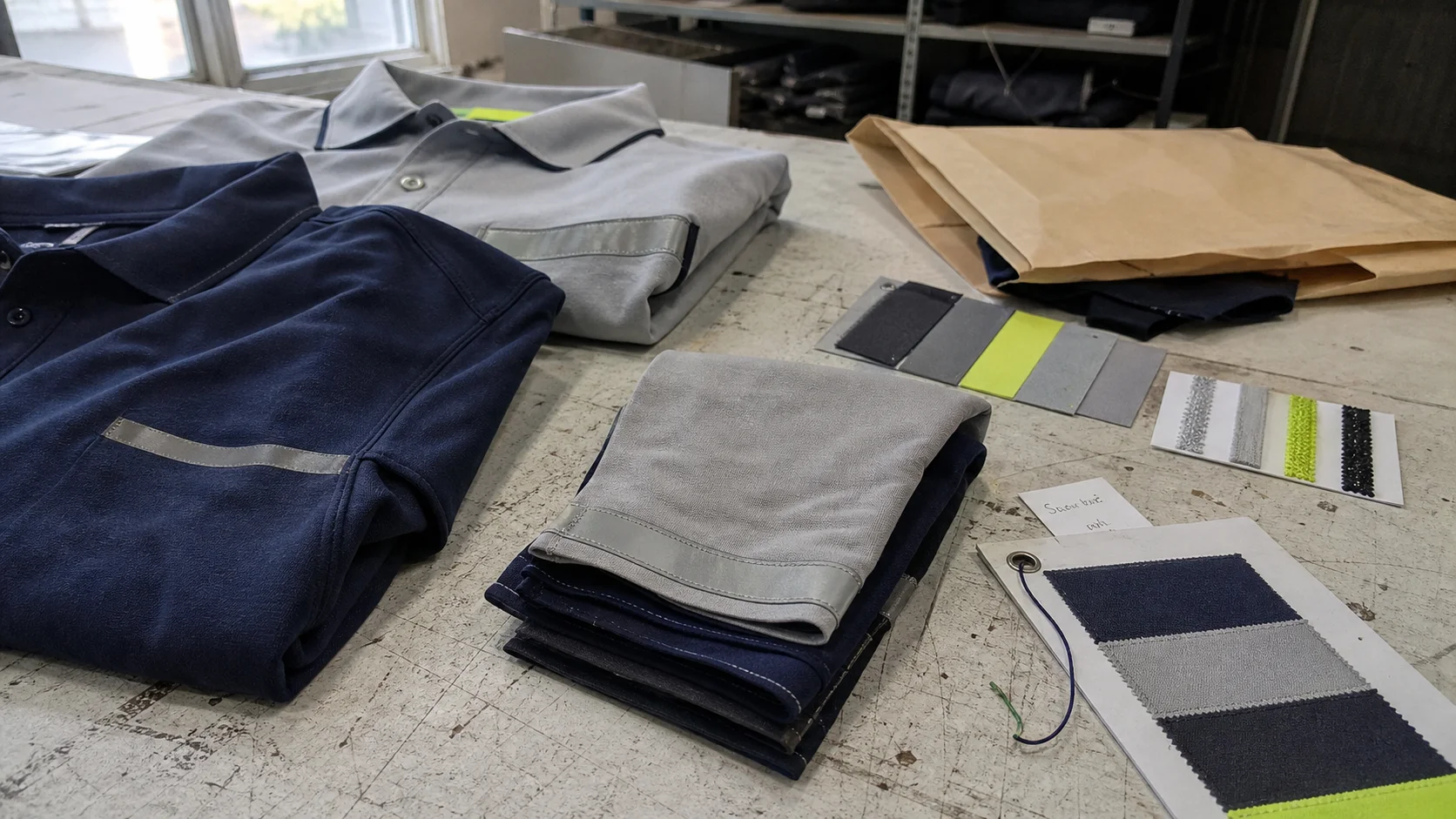
A sourcing-focused outline for auditing safety vest colorfastness before ordering cleaning crew uniforms, with emphasis on wash durability, high-visibility...
Safety Vest Colorfastness Audit for Buyers - Fabrikn production reference
Safety vest colorfastness is not a cosmetic detail for cleaning crew uniforms. It affects visibility, brand consistency, replacement cost, and worker acceptance after repeated laundering. For buyers sourcing from a safety vest manufacturer, a colorfastness audit is one of the most useful checks before committing to bulk production, especially when the garments will be used by janitorial teams, sanitation contractors, facility service providers, airport cleaners, mall cleaning crews, road-adjacent cleaning teams, or night-shift maintenance staff.
Cleaning crews put safety vests through harder wear than many office-based uniform programs. Vests may be exposed to detergent, disinfectant residue, sweat, alkaline cleaning chemicals, rubbing from equipment straps, wet mops, high-visibility tape abrasion, and frequent industrial laundry cycles. A vest that looks acceptable in a showroom sample can fade, bleed, or stain reflective tape after only a few washes if the fabric, dyeing, trims, and care label were not matched to the real cleaning environment.
This guide explains how buyers can structure a practical safety vest manufacturer colorfastness audit for cleaning crews, what to ask for before sampling, which tests matter, what MOQ and cost tradeoffs to expect, and where common inspection risks appear before shipment.
Colorfastness means the ability of a fabric, print, or trim to keep its color when exposed to washing, rubbing, perspiration, light, chemicals, or contact with other materials. In safety vests, colorfastness is tied directly to visibility. Fluorescent yellow, fluorescent orange, and lime green fabrics are selected because they stand out under daylight or workplace lighting. When these colors dull after cleaning, the vest may still be wearable, but it may no longer deliver the same visibility performance.
Cleaning crew buyers face a specific problem: laundering is frequent, and contamination is unpredictable. A warehouse picker may wash a vest once a week. A cleaning worker may wear the vest over damp garments, brush against chemical bottles, wipe hands on the front panels, or send the vest through a high-temperature wash with mixed textiles. These conditions increase the chance of fading, dye transfer, reflective tape discoloration, and printed logo degradation.
For procurement teams, the practical issue is not only whether the first shipment looks bright. The stronger question is whether the vest still looks acceptable after 10, 20, or 25 wash cycles. If the contract requires crews to appear professional at client sites, a faded vest can make a uniform program look poorly managed. If the job site requires high visibility, color loss may create compliance and safety concerns.
Purchasing judgment: for cleaning crews, do not approve a safety vest based only on an unwashed pre-production sample. A washed and rubbed sample tells the buyer far more about real-life performance.
A colorfastness audit helps buyers move from appearance-based approval to evidence-based sourcing. It does not remove all risk, but it gives the buyer a structured way to compare manufacturers, reject weak materials early, and set measurable expectations before production starts.
A useful audit should not be limited to one lab report. The buyer should check the full path from fabric selection to final packing. Colorfastness failures often come from a combination of small decisions: a cheaper mesh fabric, low-grade fluorescent dye, poor washing resistance, unstable binding tape, or reflective tape that stains when exposed to detergent.
The audit should cover five areas:
Buyers should also define the end use clearly. A safety vest for indoor office cleaning may not need the same test plan as a vest for parking lot cleaning or sanitation crews working near vehicle traffic. A disposable low-cost vest may be acceptable for occasional visitors, but it is usually the wrong choice for contracted cleaning teams wearing garments daily.
For buyers building a broader uniform or workwear program, it can be useful to review manufacturing support options through Fabrikn services. A supplier-facing specification is stronger when the product category, usage environment, decoration method, and testing expectations are written before sampling begins.
Most cleaning crew safety vests use polyester because it is lightweight, quick drying, cost efficient, and suitable for fluorescent colors. Common options include woven polyester, knitted mesh polyester, bird-eye mesh, tricot, Oxford polyester, and polyester blends with a small amount of spandex in specialized designs. The fabric choice affects color retention, wash performance, hand feel, and price.
Woven polyester tends to offer better structure and may hold shape well after repeated washing. Mesh polyester improves breathability, which is useful for cleaners working indoors, in warm buildings, or during long shifts. Oxford polyester is heavier and more durable, but it can feel stiff and may be excessive for indoor cleaning teams. Low-denier lightweight mesh keeps cost down, but it may snag, twist, or lose brightness faster if dyeing and finishing are weak.
Fluorescent colors are more sensitive than standard dark colors. They may fade under UV exposure, lose brightness in harsh washing, or change shade after contact with alkaline cleaning chemicals. This is why a buyer should specify not only the color name but also the color reference, acceptable shade tolerance, and test method.
Useful specifications include Pantone reference, fabric GSM, weave or knit type, fiber composition, colorfastness grade target, washing temperature, reflective tape width, and decoration method. A vague request such as “yellow mesh safety vest with logo” leaves too much room for substitution. A stronger request would specify fluorescent yellow polyester bird-eye mesh, target GSM, contrast trim color, wash cycle requirement, reflective tape type, and logo process.
Fabric Type Typical Use Colorfastness Consideration Buyer Judgment Polyester mesh Indoor cleaning, warm work areas, daily uniforms Check snagging, shade change, and detergent resistance Good balance of comfort and cost if GSM is not too low Woven polyester General facility use, structured vest programs Check creasing, washing stability, and fluorescent brightness More stable appearance, slightly less breathable Oxford polyester Outdoor cleaning, parking areas, tougher use Check heavy fabric dyeing and tape adhesion after wash Durable but may be too heavy for indoor crews Two-tone polyester Brand uniforms, supervisor vests, contractor teams Check dark-to-light color migration Professional look, higher testing riskReflective tape is often treated as a visibility component only, but it is also a colorfastness risk area. Tape can become stained by dark fabric, yellowed by washing, cracked by heat, or dulled by abrasion. If the reflective tape is sewn onto a fluorescent body fabric, the edge where tape and fabric meet should be inspected after washing and rubbing.
Cleaning crews often wear vests over uniforms, aprons, hoodies, or jackets. Friction from movement can cause dry rubbing or wet rubbing. If a dark binding tape, navy collar, black zipper tape, or contrast pocket fabric bleeds onto fluorescent yellow fabric, the defect becomes highly visible. It can also make the vest look dirty even when it has been washed.
Reflective tape should be checked both before and after wash testing. A tape that looks bright on an initial sample can lose reflectivity if it is not designed for repeated laundering. For cleaning crew uniforms, buyers should ask whether the tape is intended for domestic wash, industrial wash, or limited-use garments. Industrial laundry resistance usually costs more, but it may be justified when the buyer operates a centralized uniform cleaning program.
Purchasing judgment: if the vest is for daily cleaning crews, cheap reflective tape is usually a false economy. Tape failure is visible, hard to repair, and often causes the whole garment to be replaced.
A buyer does not need to test every possible standard for every order, but the test plan should match the risk. The most relevant tests for cleaning crew safety vests are washing, rubbing, perspiration, light exposure, and color migration between trims and body fabric. If cleaning chemicals are likely to contact the vest, a buyer may also request a chemical spot or detergent compatibility check.
Testing grades are usually measured on a gray scale, where higher numbers indicate better performance. A grade of 5 is excellent, while grade 1 is poor. Many commercial apparel programs accept grade 3-4 or grade 4 depending on the location of the material and the severity of use. For high-visibility safety garments, buyers should be stricter because color loss affects both appearance and function.
Cleaning crew buyers should define the number of wash cycles. A one-cycle wash test is useful for screening, but it does not represent daily use. A more practical approval may include 5 washes for early material comparison and 10 to 25 washes for final validation, depending on budget, order size, and contractual requirements. Higher wash-cycle testing adds time and cost, so it should be planned before the production calendar is locked.
Cleaning crews may contact disinfectants, degreasers, bleach residue, floor cleaner, glass cleaner, and other chemical products. It is not realistic to test against every chemical used in the field, but buyers can identify the most likely exposures. A simple spot test with diluted cleaning chemicals may reveal major vulnerabilities, especially on fluorescent fabric and reflective tape.
Bleach exposure is a special case. Many fluorescent polyester safety vests are not designed for bleach. If the cleaning program uses bleach-heavy laundering or the workers regularly handle bleach solutions, the buyer should state that early. The manufacturer may recommend a different fabric, darker contrast panels, better tape, or a care instruction that prohibits bleach. The tradeoff is clear: stronger chemical resistance usually costs more, and some high-visibility colors will still be sensitive.
Sample approval should be staged. Buyers often lose control when they approve a photo sample or a single unwashed garment, then discover performance issues after production. A better process starts with fabric and trim review, moves into prototype sampling, then confirms performance through wash and colorfastness checks before bulk cutting.
The pre-production sample is important because lab dips and initial samples may not use the exact same bulk materials. A manufacturer may submit a good sample from available fabric, then source a different shade lot or trim batch for production. This is not always intentional; sometimes it happens because the buyer’s MOQ is too low for custom dyeing or because the original material is not available in bulk. Written approval should state that bulk production must match the signed pre-production sample and approved test results.
Logo decoration needs separate attention. Screen printing, heat transfer, reflective printing, embroidery, and woven patches behave differently after washing. A logo that cracks, peels, bleeds, or stains the fluorescent body fabric can trigger rejection even if the base fabric passes testing. Buyers should test the decorated vest, not only the blank vest.
If the buyer needs help defining a sourcing brief or comparing supplier options, contacting Fabrikn can help structure the conversation around specification, MOQ, sampling, and production expectations before money is committed to bulk orders.
MOQ and cost depend on whether the buyer selects stock materials or custom-developed fabric, trims, and colorways. Safety vests can be low-cost products, but colorfastness requirements can push the order into a more controlled sourcing process. Buyers should decide early whether the vest is a disposable item, a basic uniform piece, or a durable safety garment for repeated use.
These ranges are typical, not fixed. A manufacturer’s MOQ depends on fabric availability, dye house minimums, reflective tape sourcing, decoration method, size breakdown, packaging requirements, and whether the buyer needs certification or third-party testing. Small buyers can often start with stock fabric and a limited color range. Larger buyers should use their volume to demand clearer test results, better shade control, and stronger trim consistency.
The cheapest vest is rarely the best value for cleaning crews if it must be replaced frequently. A low-cost vest may be suitable for visitors, temporary staff, event cleaning crews, or short contracts. Daily-use cleaning teams usually need a higher grade of fabric, better reflective tape, and proven wash resistance. The unit price may be higher, but the cost per wear can be lower.
Purchasing judgment: if the order is under 300 pieces and the buyer needs fast delivery, use stock colors and accept limited customization. If the order is above 1,000 pieces and the vest will be washed repeatedly, invest in testing and tighter material controls.
Lead time is often underestimated because safety vests look simple. The garment may be simple, but colorfastness testing, reflective trim sourcing, custom logo work, and production approvals can add days or weeks. Buyers should separate sample lead time, testing lead time, bulk production lead time, and shipping lead time.
Stage Typical Time Range What Can Delay It Material swatch collection 3-10 days Custom colors, unavailable tape, unclear specifications Prototype sample 5-15 days Pockets, logo artwork, size grading, trim changes Colorfastness and wash testing 5-20 days Multiple wash cycles, lab backlog, retesting failures Pre-production sample 7-15 days Bulk fabric delays, trim substitutions, decoration correction Bulk production 15-45 days Order quantity, size range, custom dyeing, factory capacity Final inspection and shipping 3-30 days Inspection booking, rework, carton labeling, transport modeA realistic sourcing calendar for a customized cleaning crew safety vest may run 6 to 10 weeks before shipping, longer if the buyer requires custom dyed fabric, high-spec reflective tape, or multi-cycle lab testing. Stock vest programs can move faster, but they offer less control over colorfastness and trims.
Buyers should avoid approving bulk production while colorfastness tests are still pending unless the risk is understood and documented. If a test fails after fabric has been cut, the cost of correction rises sharply. The factory may be able to improve care labels or adjust washing instructions, but it cannot easily fix weak dyeing once production is underway.
Good manufacturers should be able to answer practical questions without overpromising. Buyers should be cautious when a supplier says “no problem” to every request but cannot provide fabric details, tape specifications, or previous test standards. The goal is not to interrogate the supplier; it is to confirm whether the supplier understands colorfastness risk for cleaning crew use.
Buyers should ask for answers in writing. A short specification sheet with material references, test targets, and approval conditions is more useful than long email threads. When supplier claims are unclear, third-party testing may be the safer route, especially for larger uniform rollouts.
Final inspection should verify that bulk goods match the approved sample and that no visible colorfastness-related defects are present. A standard garment inspection may check measurements, sewing, quantity, packing, and workmanship, but buyers should add safety vest-specific points. The inspector should compare body color, reflective tape, binding, logo, labels, and shade variation across cartons.
Inspection should include packed garments as well as unpacked garments. Packed safety vests can develop pressure marks, dye transfer, or tape impressions if folded poorly or stored in humid conditions. If the vest has dark contrast panels, avoid packing dark surfaces directly against fluorescent fabric unless testing confirms no migration. Simple tissue separation or revised folding can reduce risk, but it should be agreed before production packing begins.
AQL inspection can be used for visual and workmanship defects. For safety-related performance, buyers may set critical defects separately. For example, missing reflective tape, wrong color, severe shade mismatch, or incorrect warning label may be treated as critical or major defects depending on the buyer’s policy. Colorfastness lab results are usually not replaced by final inspection; they work together. The lab test verifies performance, while inspection verifies that the shipped goods match the tested and approved materials.
Inspection Point Suggested Check Defect Severity Consideration Body fabric shade Compare to approved swatch under consistent lighting Major if visibly different across shipment Reflective tape Check placement, width, surface condition, and adhesion Critical or major depending on safety requirement Trim staining Check binding edges, zipper areas, and folded contact points Major if visible on fluorescent panels Logo durability Rub check and visual review after sample wash if possible Major if peeling, cracking, or bleeding Care label Confirm washing instructions match test conditions Major if misleading or missingA safety vest can pass initial testing and still fail in the field if the care instructions are unrealistic or ignored. Cleaning crew supervisors may send garments into mixed laundry with towels, uniforms, aprons, and cloths exposed to chemicals. The care label should be practical, visible, and aligned with the tested conditions.
Common care instructions may include machine wash cold or warm, do not bleach, do not dry clean, tumble dry low or line dry, do not iron reflective tape, wash with like colors, and close hook-and-loop fasteners before washing. If the vest is tested only for domestic washing, the label should not imply industrial wash resistance. If industrial laundering is required, the buyer should specify that before sampling.
Buyers should also consider issuing a simple uniform care sheet to cleaning crew managers. This is especially important when vests are distributed across multiple client sites. A short instruction can reduce avoidable claims caused by bleach, high heat drying, or washing with heavily contaminated textiles.
Price comparison alone does not show which manufacturer is the safer choice. Buyers should compare responsiveness, material transparency, sample accuracy, testing support, MOQ flexibility, and willingness to document specifications. A supplier that offers the lowest price but resists testing may be suitable for short-term promotional vests, not daily cleaning crew uniforms.
A stronger manufacturer profile usually includes clear fabric specifications, access to washable reflective tape options, consistent sample-to-bulk control, realistic MOQ guidance, and practical answers about colorfastness limitations. The best sourcing outcome comes from aligning product expectations with order volume. Demanding premium performance at a tiny MOQ and lowest price usually leads to compromise somewhere: fabric quality, trim quality, testing, or delivery time.
Buyers comparing partners may also review company background and sourcing approach through Fabrikn about us. The key is to choose a supply process that matches the level of risk in the uniform program, not just a supplier that can quote quickly.
A safety vest manufacturer colorfastness audit for cleaning crews should be practical, not overcomplicated. The buyer’s goal is to identify the parts of the garment most likely to fail under washing, rubbing, chemical exposure, and daily handling. For most cleaning crew programs, the highest-risk areas are fluorescent polyester body fabric, dark trims, reflective tape, and logo decoration.
For small orders, buyers may need to work within stock material limitations and use basic wash checks before purchase. For larger or repeated uniform orders, buyers should require proper testing, bulk-material pre-production samples, and documented inspection criteria. The extra sourcing work usually costs less than replacing faded vests, handling worker complaints, or explaining inconsistent uniforms to facility clients.
The best purchasing decision is not always the highest specification. It is the specification that matches the work environment, wash process, order size, budget, and acceptable replacement cycle. Cleaning crews need safety vests that remain visible and professional after real use. A disciplined colorfastness audit gives buyers a reliable way to source that product with fewer surprises.
Get a free quote from Fabrikn — your trusted B2B clothing manufacturer with 10+ years of experience. MOQ as low as 200 pieces.
Get a Free Quote →Colorfastness is the ability of the vest fabric, trims, reflective tape, and decoration to resist fading, staining, and color transfer during washing, rubbing, perspiration, light exposure, and daily use.
Cleaning crews wash garments frequently and may contact detergents, disinfectants, sweat, and cleaning chemicals. Poor colorfastness can make fluorescent safety vests fade, stain, or look dirty quickly, reducing both visibility and professional appearance.
Buyers should usually request colorfastness to washing, dry and wet rubbing, perspiration, and light exposure. For cleaning crews, trim staining and detergent or chemical spot checks are also useful.
Stock safety vests may start around 100-500 pieces. Customized vests using stock fabric often fall around 300-1,000 pieces. Custom fabric colors, special trims, or industrial wash specifications may require 1,000-5,000 pieces or more.
Yes. Reflective tape can yellow, crack, dull, stain, or lose performance after washing and abrasion. Buyers should check tape condition before and after wash testing, especially for daily-use cleaning crew uniforms.
Some materials may tolerate limited chemical exposure better than others, but many fluorescent polyester safety vests are not designed for bleach. If bleach exposure is likely, the buyer should disclose this before sampling and request specific testing.
A one-cycle wash test is only a basic screen. For daily cleaning crew uniforms, buyers should consider 5 washes for material comparison and 10 to 25 washes for stronger validation, depending on order size and risk level.
The most common mistake is approving bulk production from an unwashed sample. Buyers should test the actual fabric, trims, reflective tape, and logo decoration under realistic laundering conditions before bulk cutting begins.
Not always, but very low-cost vests often use basic fabric and trims with limited wash durability. They may be acceptable for temporary use, but daily cleaning crews usually need better materials and clearer testing.
Final inspection should check shade consistency, reflective tape condition, trim staining, logo quality, care labels, packing method, measurements, sewing quality, quantity, and comparison against the approved pre-production sample.