
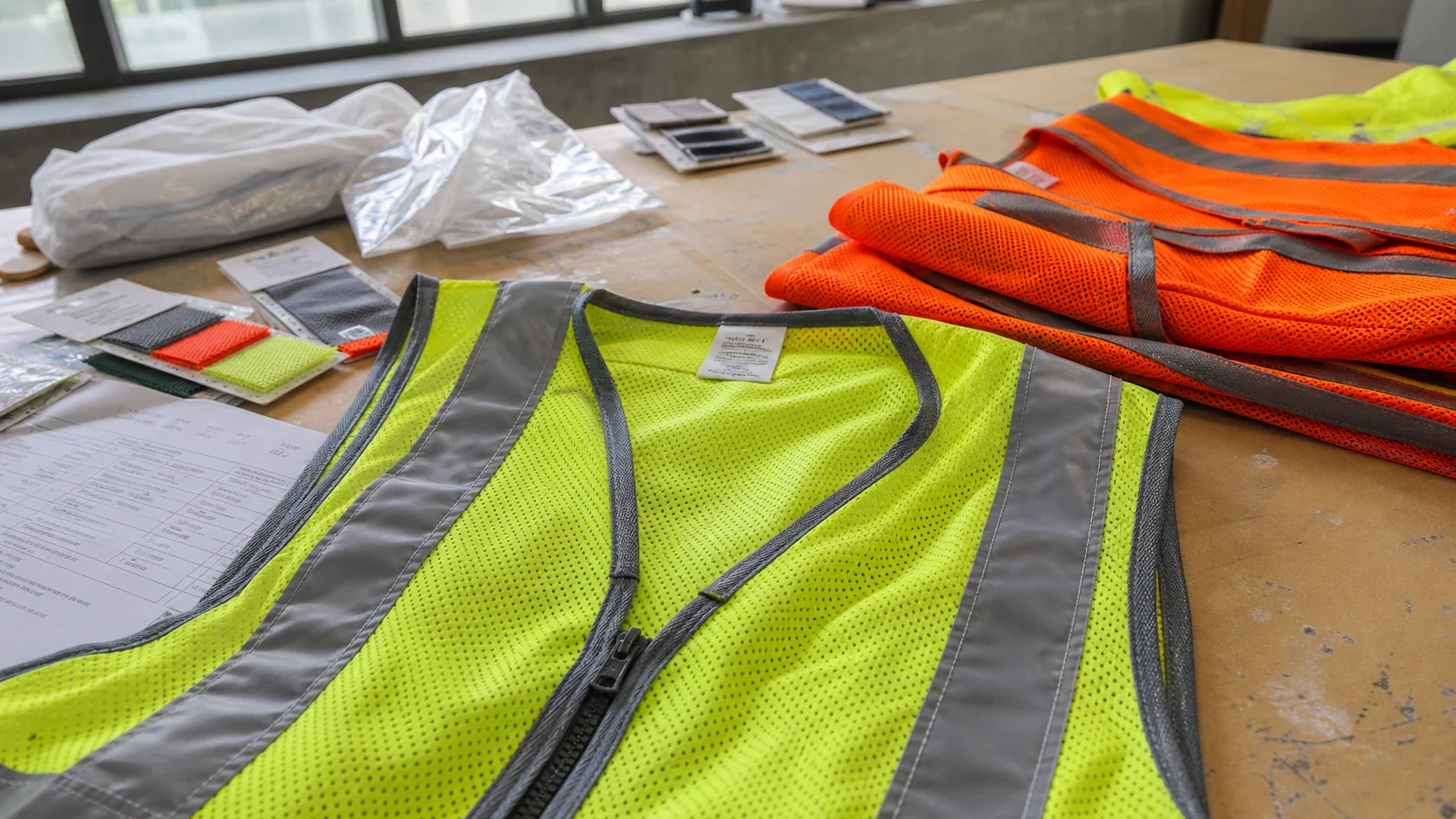
A sourcing-focused outline for airport uniform buyers auditing safety vest suppliers on needle control, broken-needle logs, metal detection, and production...
Safety Vest Needle Audit for Airport Uniform Buyers - MOQ, Cost & Sourcing manufacturing guide
Airport uniform teams buy safety vests for a high-risk, high-visibility environment. Ramp agents, baggage handlers, fuel teams, ground support crews, maintenance staff, cleaners, catering handlers, and airside contractors may all rely on safety vests to stay visible around aircraft, vehicles, loaders, tugs, belt systems, and low-light work areas. The vest is a simple garment, but the sourcing risk is not simple.
A safety vest supplier needle policy audit is one of the most practical checks an airport uniform buyer can run before awarding production. Broken needle fragments, loose metal parts, poor sewing controls, and undocumented repairs can create safety, compliance, and reputational problems. For airport teams, the issue is not only garment quality. It is operational risk.
A good needle policy does not need to be complicated, but it must be real. It should cover needle storage, issue records, breakage procedures, machine checks, fragment recovery, metal detection where applicable, and final inspection discipline. If the supplier cannot explain these controls clearly, the buyer should not treat the vest as a low-risk commodity.
This article focuses on how airport uniform buyers can audit the needle policy of a safety vest supplier, especially when managing MOQ, cost, and sourcing decisions. It also covers typical MOQ ranges, sample approval steps, lead-time dependencies, fabric and trim specifications, and inspection risks that often appear in reflective vest programs.
Safety vests are often bought in bulk and distributed across multiple teams. A single shipment may include several sizes, job roles, logo placements, reflective tape layouts, color variants, radio loop options, ID windows, and pocket configurations. Once delivered, the stock may move quickly into airport operations.
If a broken needle fragment is discovered after distribution, the buyer faces an immediate problem. The supplier may need to hold replacement stock. The uniform team may need to quarantine cartons, recover issued vests, notify internal safety teams, and inspect inventory again. That adds cost, delay, and avoidable disruption.
Airport environments also have a lower tolerance for foreign object risk. Airside operations already pay attention to loose parts, metal fragments, and dropped objects. A garment program that ignores needle control can conflict with the broader safety culture expected on airport premises.
Purchasing judgment: if the vest supplier treats needle control as “standard sewing practice” but cannot show records, the buyer should ask for proof before approving bulk production. Verbal assurance is not enough for airport uniform programs.
The supplier does not need to be a luxury apparel factory to manage needle control properly. Safety vests are usually straightforward garments. That makes weak needle discipline less acceptable, not more acceptable. Basic garments should have basic controls performed consistently.
A needle policy audit should be practical. The goal is not to create paperwork for its own sake. The goal is to confirm whether the supplier can prevent, detect, document, and resolve needle breakage during production.
Ask for the supplier’s written needle control procedure before sample approval or before confirming a purchase order. The document should define who controls needles, how needles are issued, what happens when a needle breaks, and how production resumes after breakage.
A useful procedure usually includes:
The procedure should match factory reality. A polished document that operators do not follow is not useful. During an on-site or video audit, ask the supplier to show the needle log, broken needle container, sewing line practice, and the area where rejected or held garments are stored.
The needle issue log should identify date, machine or operator, needle type, quantity issued, quantity returned, and supervisor approval. For safety vest production, the log does not need to be overly complex, but it must be traceable.
If a supplier issues needles freely from an unlocked box, that is a weak control point. If operators can replace needles without returning the old one, the supplier has no reliable way to prove a broken fragment did not enter a garment.
Audit Item Acceptable Practice Buyer Concern Needle storage Controlled by supervisor or nominated staff Open access creates poor accountability Issue record Needle type, machine, operator, date recorded No record makes breakage tracing weak Used needle return Old needle returned before new one issued Missing needle may hide breakage risk Broken needle handling All fragments taped or logged together Partial recovery is not enough Release after breakage Garments checked and supervisor signs off Line restart without inspection is unsafeThis is the most important part of the audit. A broken needle procedure should stop production at the affected machine, isolate garments near the machine, recover all needle fragments, inspect the machine area, inspect the garment being sewn, and document the result.
Buyers should ask the supplier what happens if all fragments cannot be found. A serious supplier will quarantine the affected pieces and perform additional checking. Depending on the buyer’s standard, those pieces may need to be rejected, passed through metal detection, or held for buyer decision.
A weak answer is: “The operator checks and continues.” That is not a controlled process. The supervisor must be involved, and the action should be recorded.
Airport safety vests are often made with lightweight woven polyester, mesh, binding tape, hook-and-loop fastener, zipper tape, reflective tape, and sometimes clear PVC ID windows. Different materials may require different needle sizes or needle points. A supplier should not be using damaged, bent, or oversized needles simply to push through thick seams.
Common needle concerns include:
For many safety vest constructions, suppliers may use industrial lockstitch and overlock machines, plus binding or bar-tack machines where needed. The exact needle size depends on fabric weight, thread, seam construction, and machinery. Buyers do not need to prescribe every needle detail, but they should confirm that the supplier has evaluated the production materials before bulk sewing starts.
Metal detection is common in some apparel categories, especially children’s products and sensitive workwear programs. For safety vests, it may or may not be standard depending on the buyer requirement, supplier capability, and destination market expectations.
If metal detection is required, define it clearly in the purchase order and quality manual. The buyer should specify whether 100% finished goods metal detection is needed, what machine sensitivity is acceptable, how rejected pieces are handled, and how records are retained.
If metal detection is not required, the needle recovery procedure becomes even more important. The buyer should not assume that “needle policy” automatically means finished garment scanning.
Safety vest construction choices affect both cost and needle risk. Uniform buyers often focus on color, reflective layout, logo, and price. Sewing complexity matters just as much for production control.
Common safety vest fabrics include lightweight polyester tricot, polyester mesh, bird-eye knit, oxford woven fabric for reinforced areas, and sometimes recycled polyester options. Mesh improves breathability for ramp and baggage teams, while solid woven panels may support better print clarity and pocket strength.
Typical fabric considerations include:
Fabric weight affects drape, durability, and sewing behavior. Lightweight fabrics can reduce cost, but they may feel flimsy and may not hold heavy pockets well. Heavier fabrics can improve durability but increase material cost and may create thicker seam intersections where needle breakage is more likely.
Reflective tape is one of the most important trims in airport safety vests. Buyers should define tape width, placement, performance standard, wash expectations, and layout. Many programs use 50 mm reflective tape, but the exact requirement should follow the buyer’s safety standard and local regulation.
Reflective tape can create needle stress because it is denser than the base fabric. Multiple tape intersections, tight curves, and heavy bar-tacks increase sewing difficulty. If the design includes segmented reflective tape, confirm whether the supplier has experience sewing it cleanly without peeling, puckering, or skipped stitches.
Buyers should request tape test information where relevant, especially for wash durability, retroreflective performance, and compatibility with the base fabric. Do not accept generic “reflective tape included” wording for airport uniform tenders. The tape specification should be named by performance requirement, not only by appearance.
Closures may include hook-and-loop tape, zipper, snap buttons, or breakaway systems. Hook-and-loop is cost-effective and easy to adjust, but it can catch on mesh and collect lint. Zippers look cleaner and may last longer in some programs, but they add cost and require better sewing alignment.
Airport vest trims may include:
Every trim adds sewing operations. More sewing operations mean more opportunities for broken needles, loose threads, uneven seams, and incorrect placement. A complex vest is not a problem if the supplier controls production properly. It does need stronger inline inspection.
Airport uniform teams may require printed logos, heat transfer logos, embroidery, woven patches, or role labels. For safety vests, heat transfer and screen printing are common because they avoid extra stitching. Embroidery can look durable, but it adds needle penetration, backing material, and potential puckering on lightweight mesh.
If the program requires embroidered patches, ask how the supplier controls needles during embroidery and patch attachment. Embroidery machines use multiple needles, so the needle control policy should cover that department too. A sewing line policy that ignores embroidery is incomplete.
Safety vest MOQ depends on fabric availability, reflective tape sourcing, color, trim complexity, logo method, size spread, packaging, compliance testing, and whether the order uses standard materials or custom specifications.
Typical MOQ ranges can vary widely, but buyers often see these broad patterns:
Program Type Typical MOQ Range Cost and Sourcing Notes Stock-style vest with basic logo 100-300 pieces Lower MOQ possible if supplier has fabric and tape in stock Custom color or custom pocket layout 300-800 pieces MOQ depends on fabric dyeing, trim sourcing, and cutting efficiency Multi-role airport vest program 500-1,500 pieces Better unit cost, but higher risk if specs are not frozen early Certified high-visibility program 500-2,000 pieces Testing, tape performance, and documentation may increase cost and lead time Recycled or special fabric program 800-3,000 pieces MOQ may be driven by fabric mill minimums and certification paperworkThese ranges are not universal. A supplier with ready stock may accept lower quantities. A supplier making custom fabric may require higher minimums. Buyers should ask what part of the MOQ is driven by sewing capacity and what part is driven by raw materials.
A low safety vest price can hide weak controls. The cheapest quote may reduce cost by using generic tape, thin fabric, loose inspection, no metal detection, no documented needle process, or minimal packaging checks. That can be acceptable for some low-risk promotional garments. It is not a good default for airport operations.
Main cost drivers include:
Needle policy itself should not add a large cost if the supplier already runs a disciplined factory. It may add time and administrative handling. If a supplier quotes a meaningful surcharge for basic needle control, that can indicate the process is not standard in their operation.
Airport buyers often want lower MOQ to test a new supplier. That is sensible. A pilot run of 100-300 pieces can verify fit, fabric, logo durability, reflective layout, and supplier communication. The tradeoff is that small custom orders may carry a higher unit cost.
For larger rollouts, the buyer gains better pricing but takes on greater inventory and defect exposure. If needle controls are weak, a larger order multiplies the risk. A 2,000-piece order with poor line records is harder to quarantine than a 200-piece trial.
Direct purchasing judgment: use a lower MOQ pilot when the supplier is new, the vest has custom trims, or the airport team is still confirming role requirements. Move to bulk only after samples, documentation, and inspection results are stable.
For structured sourcing support, buyers can review service options at fabrikn.com/services/. Teams that need supplier qualification before issuing a bulk PO can also contact the sourcing team through fabrikn.com/contact-us/.
Sample approval is where many airport safety vest problems should be caught. Treat sampling as a technical checkpoint, not a visual formality.
Start with a clear tech pack or product specification. Include fabric type, fabric weight target, color reference, reflective tape width and layout, size chart, seam allowance expectations, closure type, pocket placement, logo artwork, packaging, labeling, and compliance requirements.
The needle policy requirement should be included in the supplier onboarding documents or PO terms. If the buyer expects broken needle logs, metal detection records, or final inspection documentation, state that before pricing is finalized.
The proto sample checks design feasibility. At this stage, buyers should focus on layout, fit, pocket function, closure placement, and visibility zones. Needle audit questions can begin here, especially if the design includes thick seam intersections, multiple reflective tape layers, or embroidery.
Do not overreact to every minor proto issue. Proto samples often need adjustment. Do pay attention to supplier response quality. If the supplier cannot explain why a seam is puckering or why reflective tape is uneven, bulk production may be risky.
Airport teams often need sizes from small to 4XL or 5XL, depending on workforce requirements and whether the vest is worn over jackets or cold-weather layers. The size set should check body length, chest width, shoulder opening, armhole comfort, closure overlap, and pocket accessibility.
Oversized vests may need adjusted reflective tape placement to remain compliant and visually balanced. Small sizes may struggle with pocket crowding. Every size change can alter sewing operations and trim placement, so approve the full size range before bulk cutting.
The pre-production sample should use bulk fabric, bulk reflective tape, bulk trims, approved logo method, final size grading, and final packaging if possible. This is the sample that should be signed off before mass production.
At PP sample stage, request the supplier’s needle control plan for the order. The plan should identify production line, responsible supervisor, needle log format, broken needle procedure, and inspection method. If metal detection is required, confirm machine availability before production starts.
Keep one sealed approved sample with the buyer or inspection team, and require the supplier to keep one. The production file should include final specs, measurement tolerances, artwork, color standards, packaging rules, inspection checklist, and needle control requirements.
A sealed sample helps inspectors judge the shipment consistently. It also reduces arguments about whether a pocket, tape angle, or logo placement was changed during production.
A good supplier audit looks beyond documents. The buyer should understand how the sewing line will actually manage the order.
The supplier should confirm fabric and trims before cutting. Reflective tape shortages, substitute trims, and late logo changes often create rushed production. Rushed production increases the chance of poor needle discipline.
Pre-production checks should include:
Lead time depends on material availability, testing, approval speed, production capacity, and inspection timing. A basic stock-material vest may take around 2-4 weeks after approval. Custom fabrics, certified reflective tape, special trims, or large multi-size programs may require 5-10 weeks or more. International shipping, airport rollout deadlines, and customs clearance can extend the timeline.
Inline inspection should check seam quality, skipped stitches, tape alignment, pocket placement, loose threads, and closure strength. Needle breakage records should be monitored daily, not collected only at the end of the order.
Supervisors should pay attention to high-risk operations such as sewing reflective tape ends, attaching hook-and-loop to reinforced panels, bar-tacking pocket corners, and sewing through layered binding. These areas create more needle stress than straight seams on single-layer mesh.
If a needle breaks, affected garments should be isolated. The supplier should recover all needle fragments and inspect the machine, sewing table, floor area, and garment. The supervisor should sign off before production restarts.
Finished garments should pass through trimming, measurement inspection, visual inspection, and packing checks. If metal detection is part of the requirement, it should happen after all sewing and trimming operations are complete.
Do not let the supplier metal-detect only random samples if the PO requires 100% detection. Random checks and 100% checks are different controls. The buyer should define the required method clearly.
Final inspection for airport safety vests should cover more than measurements. It should include construction, visibility, labeling, packaging, and contamination controls.
Needle-related inspection risk is harder to see. A garment can look clean and still contain a fragment if the breakage procedure failed. That is why documentation and production controls matter. Final visual inspection alone is not a substitute for needle policy compliance.
Many buyers use AQL inspection for garment shipments. The exact AQL level depends on buyer policy, order size, and risk tolerance. For airport safety vests, critical defects should include any sharp object, metal fragment, or unsafe component. Major defects may include reflective tape placement errors, wrong logo, failed seam strength, or incorrect size. Minor defects may include small thread ends or slight cosmetic issues within tolerance.
If the order is high risk or the supplier is new, consider inline inspection during production rather than only final inspection. Inline checks catch systemic issues before the whole order is packed.
Airport uniform buyers often need cartons sorted by department, role, terminal, shift, or location. This creates another inspection risk: correct garments may be packed in the wrong cartons. A strong packing list and carton label system is essential.
Packaging checks should confirm style, size, color, role label, logo, quantity, carton marks, and any required polybag warnings. If the buyer wants plastic-free or reduced-plastic packaging, state that in the spec before production.
Before placing an order, airport uniform buyers should ask direct questions. The supplier’s answers will usually reveal whether the needle policy is active or only theoretical.
Ask these questions before price negotiation is complete. If the supplier needs to add metal detection, extra inspection, or stricter documentation, those requirements may affect cost and lead time.
Airport buyers comparing sourcing partners can review company background information at fabrikn.com/about-us/. A sourcing partner should be able to discuss both product specification and factory control, not only unit price.
A needle policy audit should lead to a decision. Buyers do not need perfect suppliers, but they do need suppliers that understand risk and can control production.
Holding the supplier does not mean rejecting them. It means the buyer needs corrective action before bulk production. For a new airport safety vest supplier, this is often the right middle ground.
Direct purchasing judgment: reject low-cost quotes that cannot support needle control. The savings are not worth the potential disruption of quarantined stock, delayed rollout, or internal safety escalation.
Lead time is not only the sewing period. It starts with spec confirmation and ends when usable garments arrive at the airport or distribution point. Buyers should build a schedule that includes sampling, revisions, material booking, production, inspection, shipping, customs, and internal allocation.
Typical lead-time dependencies include:
Airport teams should avoid approving production too close to a uniform launch date. Late changes create rushed sewing, rushed packing, and rushed inspection. A safety vest is not complex compared with a tailored uniform, but timing pressure still creates quality risk.
The purchase order should include needle policy requirements in plain language. Do not rely only on email discussions. If the buyer requires daily needle records, broken needle reports, metal detection logs, or shipment release documents, those should be listed as order conditions.
A practical PO requirement may include:
This wording keeps the expectation clear without overengineering the process. For higher-risk programs, buyers may add more detailed requirements through a supplier quality manual.
A safety vest supplier needle policy audit is a small step with large practical value. Airport uniform buyers are not just buying bright fabric and reflective tape. They are buying garments that must support daily work in a safety-sensitive environment.
The strongest sourcing approach balances MOQ, cost, lead time, and control. Low MOQ helps test a supplier. Competitive cost matters across large workforce programs. Fast lead time is useful when onboarding new teams or replacing worn stock. None of these benefits should override needle control, material clarity, or inspection discipline.
Choose suppliers that can show how they manage needles, not only suppliers that can quote quickly. Ask for records. Check the PP sample. Confirm reflective tape and trims. Define inspection standards. Put needle policy requirements into the PO. This gives airport uniform teams a better chance of receiving safety vests that are visible, wearable, traceable, and safe to distribute.
Get a free quote from Fabrikn — your trusted B2B clothing manufacturer with 10+ years of experience. MOQ as low as 200 pieces.
Get a Free Quote →A safety vest supplier needle policy audit checks how the factory controls sewing needles during production. It reviews needle storage, issue logs, broken needle recovery, garment quarantine, metal detection if required, and final inspection records.
Airport environments have high sensitivity to loose objects and safety risks. A broken needle fragment in a safety vest can trigger stock quarantine, rollout delays, internal safety reviews, and supplier disputes.
Not always. Metal detection depends on buyer policy, supplier capability, and risk level. If it is required, the PO should state whether finished garments need 100% metal detection or sample-based checks.
Basic stock-style safety vests may start around 100-300 pieces. Custom color, pocket layout, reflective tape, or certified programs often range from 300 to 2,000 pieces or more. Special fabrics or recycled materials may require higher MOQ due to mill minimums.
The pre-production sample should confirm bulk fabric, reflective tape, trims, logo placement, size grading, closures, pockets, packaging, and workmanship. Buyers should also confirm the supplier’s needle control plan before mass production starts.
Yes. Embroidery uses multiple needles and adds extra penetration through the garment. If embroidered logos or patches are used, the embroidery department should be covered by the supplier’s needle control policy.
The biggest warning sign is lack of traceability. If the supplier cannot show who issued needles, what happens during breakage, and how fragments are recovered, the buyer should not approve bulk production without corrective action.
Start with a pilot MOQ, approve a full pre-production sample, review the needle policy, define inspection standards in the PO, and require records before shipment release. This is especially important for new suppliers or custom airport vest programs.