
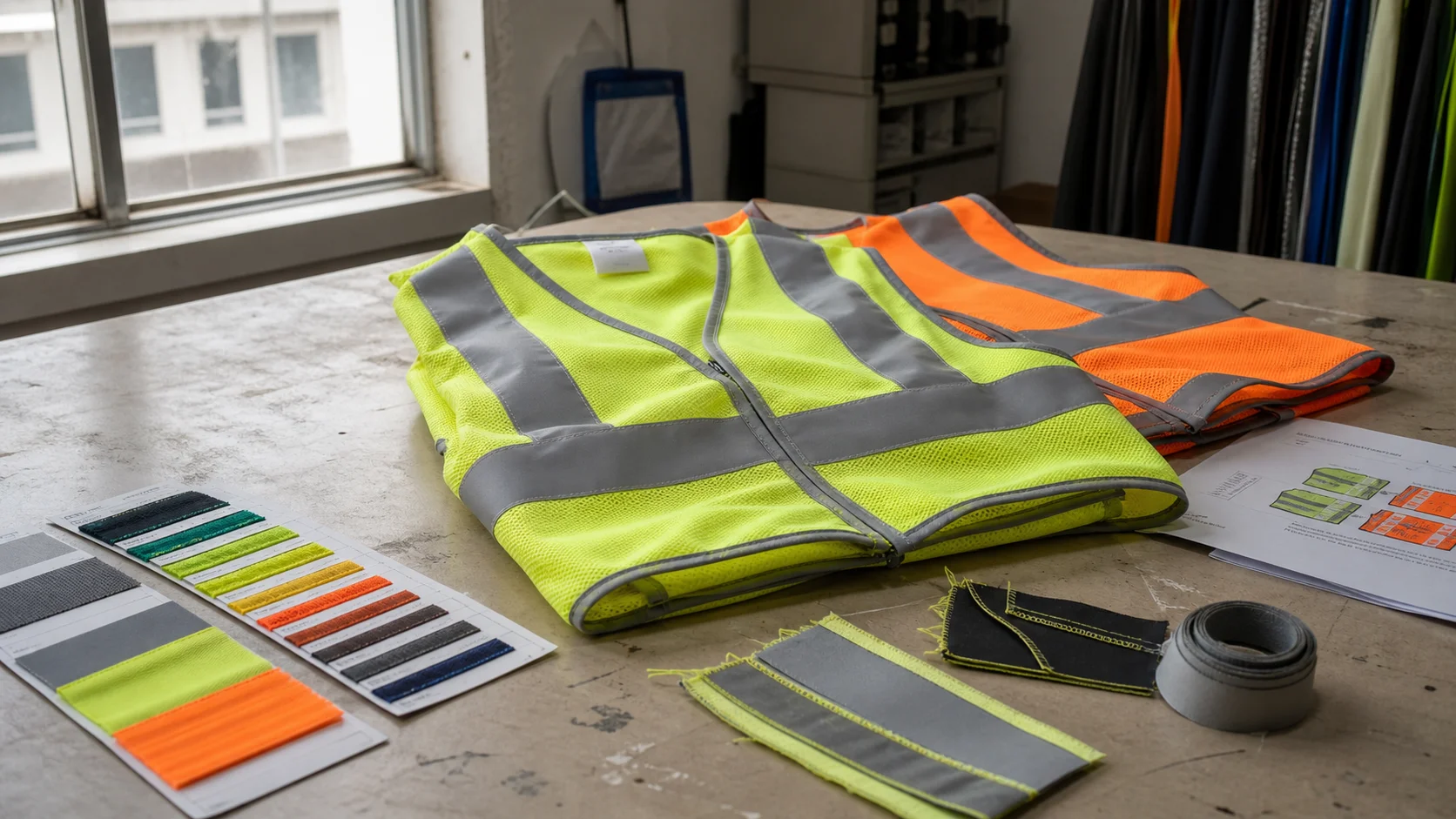
A production-control outline for buyers sourcing safety vests for cleaning crews, covering fabric, reflectivity, sizing, branding, packaging, QC checks,...
Safety Vest Production Brief for Cleaning Crew Buyers - MOQ, Cost & Sourcing manufacturing guide
Safety vests for cleaning crews look simple on a purchase order, but production control matters. A vest that fits poorly, fades after washing, loses reflective performance, or arrives with inconsistent sizing can create avoidable safety and compliance problems for janitorial contractors, facility management companies, hotel housekeeping teams, waste handling crews, and night-shift cleaning operators.
This production brief is written for buyers sourcing safety vests from a manufacturer, distributor, or private-label apparel supplier. It focuses on MOQ, cost, fabric selection, trims, sampling, quality control, lead times, and inspection risks. The goal is not to over-engineer a basic vest. The goal is to specify the right details before production starts, so the final shipment is usable, consistent, and commercially sensible.
Cleaning crews often work in mixed-risk environments. A team may move through parking garages, warehouses, hospitals, schools, malls, airports, food service corridors, hotel back-of-house areas, or office buildings after hours. The safety vest is not only a visibility item. It can also identify authorized staff, support task allocation, and reduce confusion in shared work zones.
For buyers, the mistake is assuming that any low-cost high-visibility vest will be acceptable. A vest used by a cleaning crew may face frequent washing, chemical exposure, bending, lifting, and long shifts in warm indoor environments. If the fabric is too heavy, workers may avoid wearing it. If it is too flimsy, it can tear at the binding or zipper. If reflective tape peels after laundering, the vest fails its purpose.
The production brief should connect safety requirements with actual use. A cleaning crew vest does not always need the same construction as a road construction vest. Still, it must be visible, comfortable, durable enough for repeated use, and easy to reorder in consistent colors and sizes.
Buyers sourcing uniform programs or bulk workwear can review broader manufacturing support through Fabrikn’s services page when planning safety apparel, uniforms, and related private-label production.
Most cleaning crew safety vest programs fall into a few practical categories. The correct product type depends on work location, shift time, washing frequency, and branding needs.
This is the lowest-cost option. It usually uses polyester mesh or lightweight woven polyester, with reflective tape and front hook-and-loop closure. It is suitable for short-term use, visitor identification, temporary crews, or low-wash environments.
The tradeoff is durability. Hook-and-loop can collect lint, lose grip, and damage nearby fabrics during washing. If crews wear the vest daily, a zipper or snap closure may be better.
A zipper vest gives a cleaner appearance and better closure reliability. It works well for contract cleaning companies that want staff to look organized in client facilities. It usually costs more than a hook-and-loop vest, especially if the zipper quality is specified properly.
For high-turnover or shared-use uniforms, zipper durability should be checked carefully. Cheap zippers are one of the most common failure points on economy safety vests.
Cleaning teams may need pockets for gloves, keys, access cards, pens, radios, checklists, small tools, or phones. A multi-pocket vest can improve productivity, but it also increases sewing operations, trim usage, and inspection points.
Buyers should avoid adding too many pocket types without a real use case. Every pocket adds cost and potential defects, especially if the vest is produced at a tight price.
Color coding can help separate supervisors, day-shift cleaners, waste handling staff, restroom attendants, maintenance support, and event cleanup teams. Common colors include fluorescent yellow, fluorescent orange, lime green, royal blue, navy, red, and black with reflective tape.
Fluorescent yellow and orange are best for high visibility. Darker corporate colors may look better indoors but are less visible unless reflective tape and contrast panels are designed correctly.
Fabric choice affects comfort, cost, appearance, and wash life. Cleaning crew buyers should not approve fabric based only on gram weight. Fiber content, knit or woven structure, color fastness, shrinkage, and hand feel all matter.
For most cleaning crew safety vests, polyester is the practical choice. It dries quickly, supports bright colors, and is easier to source in high-visibility shades. Mesh is economical and breathable, but it is not always the best choice for daily commercial uniform programs. A slightly heavier knit or woven fabric may reduce replacement rates.
Cleaning crews are often exposed to detergents, disinfectants, bleach, floor chemicals, and general grime. A standard vest may not resist all chemical exposure, so buyers should define realistic wash and use expectations. If the vest will be industrial-laundered, that must be stated before quotation. Industrial laundry can damage low-grade reflective tape and trims faster than home-style washing.
Reflective tape is the most important trim on a safety vest. It is also a frequent source of production shortcuts. Buyers should specify tape width, layout, color, wash resistance, and applicable standard if required.
Common reflective tape widths are 2.5 cm, 5 cm, and sometimes wider for special standards or design needs. For safety vests, 5 cm reflective tape is widely used because it gives stronger visibility and a more recognizable safety appearance.
Cleaning crew buyers should ask for reflective tape test data if performance standards are required. It is not enough for a supplier to say the tape is “high visibility.” If the vest must comply with ANSI/ISEA, EN ISO, or another local standard, the full garment design, background fabric, tape placement, and certification status must be checked. A compliant-looking vest is not the same as a certified vest.
Purchasing judgment: If the vest is used in parking lots, loading docks, roadside building exteriors, or vehicle zones, do not buy purely on the lowest vest price. Upgrade the reflective tape and verify the layout. The cost difference is usually easier to justify than replacing a failed shipment.
Safety vests are often ordered in broad sizes such as M, L, XL, and 2XL. Some programs use one-size-fits-most, especially for visitor vests or temporary labor. Cleaning crew uniforms usually need better sizing because workers wear the vest during active tasks.
A poor fit creates two problems. If the vest is too tight, workers may not wear it over uniforms, sweatshirts, or light jackets. If it is too loose, it can catch on carts, handles, shelving, doors, or equipment.
Unisex safety vests are common, but buyers should be realistic. A rectangular unisex pattern works for basic visibility, not tailored comfort. For large uniform programs, women’s fit or adjustable side tabs may be worth considering. The tradeoff is higher pattern complexity and possibly higher MOQ per size.
MOQ depends on fabric availability, color, printing, reflective tape, trims, sizing, and factory line setup. For basic safety vests using stock fabric and standard reflective tape, typical MOQs may start around 300 to 500 pieces per style or color. For customized fabric colors, special pocket layouts, branded trims, certified reflective materials, or multiple size sets, MOQ can move into the 1,000 to 3,000 piece range.
Buyers should treat MOQ as a production planning number, not only a supplier rule. Small runs can be possible, but unit cost increases because pattern making, sampling, cutting, line setup, printing, packing, and inspection are spread over fewer garments.
For buyers placing first orders, a good approach is to reduce variation. Keep one fabric, one tape type, and a controlled size ratio. Add colors, pockets, and department-specific branding after the first production run proves successful.
Safety vest pricing is sensitive to small specification changes. A quote that looks attractive may exclude important details, while a slightly higher quote may include better materials and fewer quality risks.
Cleaning crew buyers should ask suppliers to quote by specification, not by vague description. “Safety vest with logo” is not a production brief. A useful quote should identify fabric, weight, reflective tape type and width, closure, size range, logo method, packing, MOQ, lead time, and payment terms.
Purchasing judgment: For reusable crew vests, avoid the absolute cheapest reflective tape and zipper options. These are small savings that can create high replacement cost, complaints, and inconsistent safety performance.
Sampling is where many vest problems should be caught. Buyers should not approve a sample only from a photo. A physical sample allows checking the feel, fit, reflective layout, stitching, pocket placement, print durability, and color.
For branded cleaning crew programs, the pre-production sample is especially important. It should represent the actual fabric, actual reflective tape, actual closure, actual logo method, and actual labels. If the supplier submits a sample using substitute materials, that must be clearly documented and corrected before bulk production.
Buyers developing new uniform items can contact a sourcing team through Fabrikn’s contact page to discuss product briefs, sampling stages, and production planning requirements.
A safety vest has fewer sewing operations than a jacket or trouser, but production defects still happen. Bulk quality depends on controlling material input, cutting accuracy, stitching consistency, reflective tape placement, and final packing.
The manufacturer should check fabric rolls for color consistency, stains, holes, skewing, and weight. Reflective tape should be checked for width, roll consistency, adhesion layer if heat transfer is used, and surface damage. Zippers, hook-and-loop, binding tape, labels, and packaging materials should be matched against the approved sample.
Cutting errors can create size inconsistency across the shipment. Buyers should specify measurement points and tolerances. If the vest has color blocks or contrast panels, cutting direction and matching should also be controlled.
Key sewing areas include shoulder seams, side seams, binding edges, closure attachment, pocket corners, and reflective tape stitching. Reinforcement should be used where pockets carry weight or where closures experience stress. Loose threads may seem minor, but on a low-cost vest they often signal weak line discipline.
Reflective tape must be straight, balanced, and correctly positioned. On sewn tape, stitch tension should not damage the tape surface. On heat-transfer tape, temperature, pressure, and dwell time must be controlled. Poor heat application can cause peeling after washing or even during packing and transport.
Logo placement should be measured from fixed points, not estimated by eye. For screen printing, ink coverage and curing matter. For heat transfers, adhesion and edge lifting should be checked. Embroidery is less common on thin mesh vests because it can pull or distort the fabric, although it may work on woven or heavier knit designs.
Final inspection should happen before the shipment leaves the factory. For larger orders, buyers may use third-party inspection or request a manufacturer’s internal inspection report with photos and measurements. The inspection level should match order value and risk.
For cleaning crews, wash performance is a practical risk. A vest may pass visual inspection when new but fail after a few washes. Buyers should request wash testing on samples if the vest is intended for repeated laundering. At minimum, test shrinkage, reflective tape condition, print durability, and seam integrity after several wash cycles that resemble actual use.
Packaging should match the distribution plan. A cleaning contractor shipping vests to multiple sites may need size sorting and carton labels by location. A facility management company may want individual polybags with size stickers. A distributor may need barcodes or SKU labels.
Individual polybags increase cost and packaging waste, but they reduce handling confusion. Bulk packing is cheaper, but it can create sorting labor for the buyer. For multi-location cleaning operations, carton-level accuracy is often worth the extra packing control.
Labels should include size, fiber content, care instructions, country of origin, and any compliance information required by the destination market. If the vest is marketed as safety compliant, labeling claims must align with the actual certification and test documentation.
Lead time varies by material availability, sample revisions, order volume, printing, compliance testing, and factory capacity. For simple safety vests using available materials, production may take a few weeks after sample approval and deposit. Customized or compliance-driven orders can take longer, especially when fabric dyeing, special reflective tape procurement, testing, or multiple sample rounds are required.
Buyers should build approval time into the calendar. A supplier cannot responsibly start bulk cutting if fabric color, reflective tape, logo placement, or size spec remains undecided. Rushing these points often creates shipment-wide problems.
A capable safety vest manufacturer or apparel sourcing partner should be able to discuss production details without making vague promises. The right supplier does not need to be the largest factory. It does need to control materials, sampling, workmanship, and documentation.
Company background, sourcing scope, and apparel manufacturing approach can also be reviewed through Fabrikn’s about page when evaluating broader support for workwear and uniform programs.
For cleaning crew buyers, the best safety vest is usually not the most complicated one. It is the vest that workers will wear, supervisors can reorder, and procurement can manage without constant complaints. That means balancing price with visibility, fit, laundering, and distribution needs.
Choose a basic polyester mesh vest with standard reflective tape and hook-and-loop closure. Keep branding minimal. Buy from stock colors if possible. Accept that durability will be limited, and plan replacements accordingly.
Use a better polyester knit or woven fabric, 5 cm reflective tape, reliable zipper or quality hook-and-loop, and a practical size range. Add logo printing if identification matters. Test washing before approving bulk production.
Prioritize reflective performance, compliant layout, and visibility color. Ask for documentation if a specific safety standard is required. Do not downgrade tape quality to save a small amount per unit.
Standardize the design and limit color variation. Use carton labels, size stickers, and clear packing lists. Keep approved samples and measurement specs on file for reorders. A controlled reorder system is more valuable than a one-time low price.
The strongest sourcing position comes from a clear brief. Define the working environment, expected wash life, quantity, colors, sizes, logo requirements, packaging, and compliance needs. Then compare suppliers against the same specification. That is the only reliable way to judge cost.
Get a free quote from Fabrikn — your trusted B2B clothing manufacturer with 10+ years of experience. MOQ as low as 200 pieces.
Get a Free Quote →For a basic safety vest using stock fabric and standard trims, MOQ often starts around 300 to 500 pieces per style or color. Custom colors, pocket layouts, special reflective tape, extended sizes, or compliance-driven designs may require 1,000 to 3,000 pieces.
Polyester is the most common choice because it is lightweight, quick drying, and available in bright colors. Mesh is economical and breathable, while warp-knit or woven polyester usually offers better structure and durability for daily use.
Hook-and-loop is cheaper and suitable for temporary or low-use programs. Zippers look cleaner and usually perform better for daily uniforms, but zipper quality must be checked. Low-grade zippers can fail quickly in active cleaning work.
No. Some indoor cleaning crew vests are used mainly for staff identification and general visibility. If crews work around vehicles, loading zones, parking areas, roads, or regulated work sites, buyers should check whether ANSI, EN ISO, or local safety standards apply.
Many safety vests use 5 cm reflective tape because it provides strong visibility and is widely recognized in workwear. Narrower tape may reduce cost but can also reduce visibility and may not meet certain standard layouts.
Screen printing and heat transfer are common. The best method depends on fabric type, logo size, color count, and wash requirements. Embroidery is less suitable for light mesh because it can distort the fabric, though it may work on heavier woven vests.
Common defects include uneven reflective tape, weak stitching, wrong size labels, poor zipper function, tape peeling, off-center logos, fabric shade variation, and incorrect packing. Wash-related failures are also common when low-grade tape or print methods are used.
A simple vest using available materials may move through sampling and bulk production within several weeks after approval. Custom fabric, special trims, compliance checks, logo revisions, and large order quantities can extend the timeline significantly.
Buyers should approve fabric color, garment measurements, reflective tape type and layout, closure quality, pocket placement, logo artwork, label content, and packaging method. A pre-production sample made with bulk materials is strongly recommended.
Keep the design simple, use stock fabric colors, limit pocket complexity, standardize the size range, and avoid unnecessary packaging. Do not reduce cost by using poor reflective tape, weak closures, or unclear inspection standards if the vest is for daily crew use.