
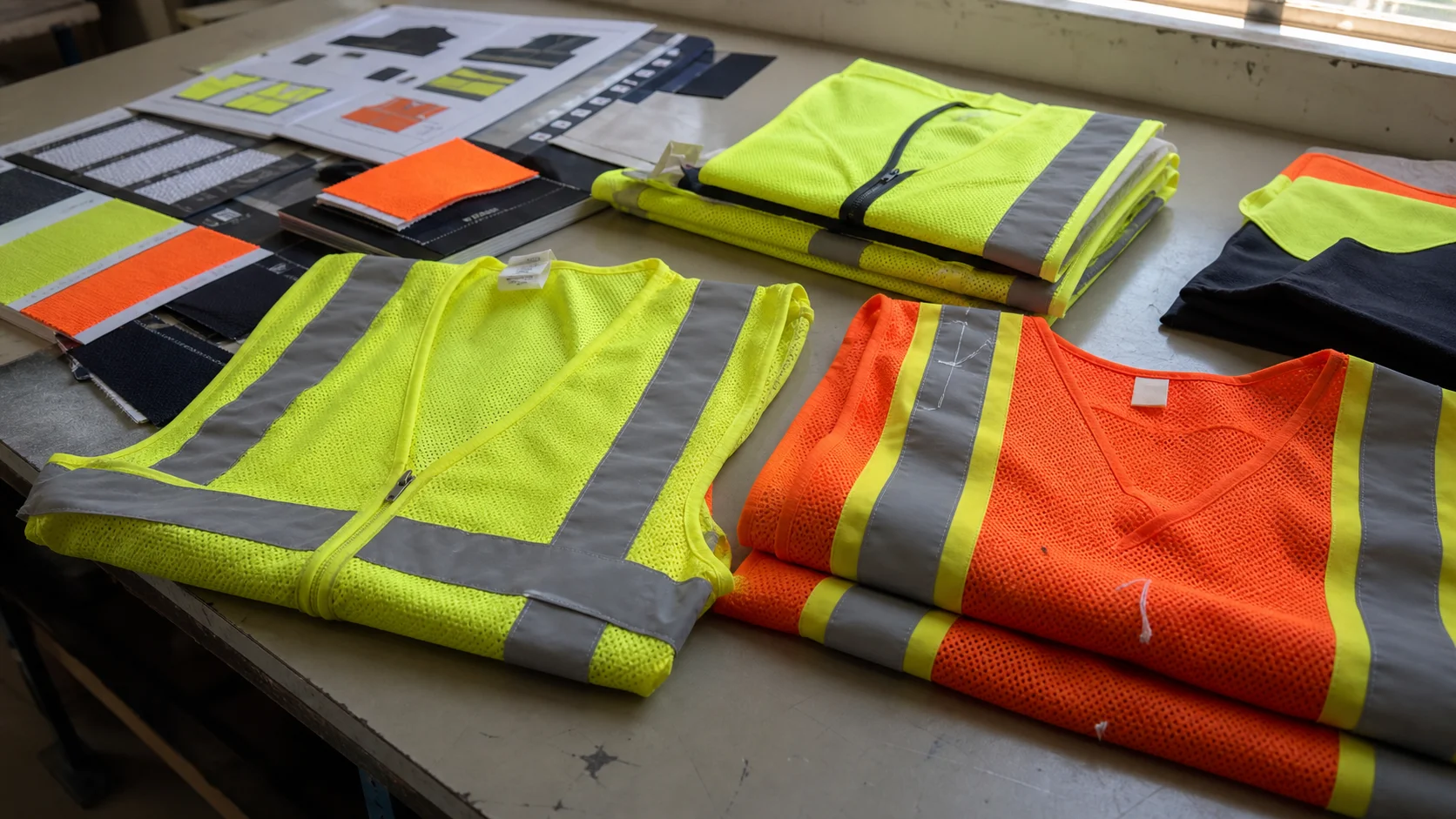
A buyer-focused audit brief for sourcing safety vest orders for cleaning crews, covering ANSI visibility specs, decoration quality, sizing runs, MOQ math,...
Safety Vest Vendor Audit for Cleaning Crew Orders - MOQ, Cost & Sourcing manufacturing guide
Ordering safety vests for cleaning crews looks simple until the buyer has to approve color, reflectivity, sizing, packing, logos, replacement stock, and delivery dates across multiple job sites. A safety vest order vendor audit brief for cleaning crews helps procurement teams compare suppliers before money is committed, not after the shipment arrives with weak stitching, wrong logo placement, or non-compliant reflective tape.
This guide is written for sourcing managers, facility service companies, janitorial contractors, property maintenance buyers, and operations teams placing repeat vest orders. The focus is practical: MOQ, cost, supplier capability, sample approval, fabric and trim specifications, inspection risks, and purchasing tradeoffs. Safety vests are low-cost items, but poor buying control can still create operational waste, safety exposure, and unnecessary reorders.
Cleaning crews often work in mixed environments: commercial buildings, hotels, airports, warehouses, schools, parking areas, hospitals, transit stations, and outdoor facility zones. The vest is not only a uniform layer. It signals role, department, access permission, and visibility. A weak supplier may still deliver something that looks acceptable in a product photo, but the failure points usually appear during wear: curling reflective tape, loose binding, inconsistent sizing, poor zipper quality, fading print, or cartons that arrive without size breakdown labels.
A vendor audit brief gives the buyer a structured way to test whether the supplier understands the order beyond unit price. This is especially important when vests are ordered for multiple cleaning sites or when the buyer needs replenishment over several months. A supplier that can handle one small order may not be the best choice for a 2,000-piece rollout with logo printing, segmented sizing, and split deliveries.
For buyers comparing sourcing partners, it is useful to start with the service scope and production support available through partners such as Fabrikn services. The right partner should be able to help define the specification, quote realistically, manage sampling, and identify inspection risks before dispatch.
Do not audit a safety vest vendor only on quoted price. Audit the supplier on specification control, repeatability, packaging discipline, compliance evidence, and response speed when corrections are needed.
A safety vest order vendor audit brief for cleaning crews should be short enough for vendors to answer quickly, but detailed enough to expose weak capability. The brief should not ask vague questions such as “Can you make safety vests?” Most vendors will answer yes. Better questions ask for measurable evidence, production limits, and quality controls.
Buyers should be cautious with suppliers who cannot explain where cutting, sewing, taping, printing, and packing happen. Outsourcing is not automatically a problem, but it does increase the need for clear control points. If the vendor cannot identify who controls logo approval or reflective tape application, the buyer may face delays when a sample needs correction.
The brief should define the actual use case. Cleaning crews may need lightweight vests for indoor visibility, higher-visibility vests for parking-lot cleaning, or role-coded vests for supervisors, sanitation staff, waste handling teams, and night-shift workers. A buyer should clarify whether the vest is mainly for identification, high visibility, access control, or regulatory compliance.
MOQ is one of the first issues buyers face. Safety vest MOQ depends on whether the order uses stock fabric and standard trims or requires custom color, custom reflective layout, custom labels, or branded packaging. Vendors may advertise very low MOQs, but the real minimum often changes once logo printing, size ratios, or carton labeling are added.
Order Type Typical MOQ Range Purchasing Notes Plain stock safety vest 50–200 pieces Best for urgent orders or temporary cleaning crews. Limited control over fabric weight, color shade, and fit. Stock vest with logo print 100–300 pieces Good balance for cleaning contractors. Confirm print durability and logo placement before bulk production. Custom color or department color vest 300–1,000 pieces MOQ rises because fabric dyeing or special fabric sourcing may be required. Custom pattern with pockets, zipper, ID window, or special tape layout 500–1,500 pieces Better for long-term uniform programs. Requires more careful sampling and measurement approval. Private label packaging or retail-ready packs 500–2,000 pieces Packaging MOQ may be higher than garment MOQ. Check barcode, polybag warning, and carton mark requirements.For cleaning crew orders, a practical starting MOQ is often 100–300 pieces when using a standard vest with a company logo. This range usually gives enough room for size allocation and spare stock without pushing the buyer into a fully custom production run. For national cleaning contractors, a larger MOQ can reduce unit cost, but only if size ratios and site allocation are accurate.
Low MOQ is not always the cheapest route. A 100-piece order may have a higher unit price, separate setup fees, and limited quality leverage. A 1,000-piece order can reduce unit cost, but the buyer takes more inventory risk if the fit, logo, or color is wrong. The better purchasing decision depends on reorder predictability, staff turnover, storage capacity, and whether the vest design will remain stable.
Safety vest cost is shaped by material, construction, reflectivity requirements, decoration, packing, freight, and supplier margin. Buyers should ask vendors to break out costs when possible. A lump-sum price hides important differences. Two vests quoted at the same price may not be comparable if one uses lighter mesh, narrower reflective tape, weaker binding, or cheaper printing.
Cleaning crew buyers should avoid over-specifying when the work environment does not require it. A heavy multi-pocket vest may look more valuable, but it can be uncomfortable for indoor cleaning staff who bend, lift, and move continuously. A lightweight mesh vest with durable binding and clear branding may be the better choice for janitorial teams in controlled indoor facilities.
Cost should also be reviewed against replacement rate. A cheaper vest that fails after a few washes may cost more over a six-month contract than a mid-priced vest with better tape bonding and stronger seams. Ask the vendor to state the recommended washing conditions and whether the logo method can tolerate repeated laundering.
The audit brief should force the vendor to quote against a defined specification. Without this, suppliers may choose their own fabric, tape, closure, and print method to hit a target price. That creates confusion when samples arrive from multiple vendors and none of them match.
For cleaning crews, color selection is not only a branding issue. Lime yellow and orange are common for visibility, but some facilities use blue, green, black, or grey vests for role identification. If visibility compliance is required, the buyer should confirm the relevant standard with the safety manager before approving non-standard colors. A dark branded vest may look tidy indoors but may not be suitable for outdoor night work or parking-lot cleaning.
Logo decoration should be treated as a quality-critical detail. Cleaning service brands often use the vest in public-facing environments, so misaligned or low-resolution artwork can look unprofessional. Screen printing is common for simple logos and larger runs. Heat transfer can work for smaller runs and multi-color graphics, but adhesion must be checked, especially if the vest will be washed often. Embroidery is less common on lightweight mesh because it can distort fabric and add weight.
The audit brief should ask the vendor to confirm acceptable artwork formats, print size limits, pantone or color matching method, and whether the logo is tested for wash durability. If multiple departments need different text, ask whether the supplier charges separate setup fees for each variation.
Buyers who need help turning an operational requirement into a clear production-ready spec can review sourcing and apparel development support through Fabrikn’s company background and decide whether a managed sourcing approach is more suitable than direct factory quoting.
Sampling is the buyer’s main defense against bulk mistakes. For safety vests, the sample process does not need to be slow, but it should be disciplined. A photo-only approval is risky for custom orders because it cannot confirm fabric hand feel, tape reflectivity, stitching quality, fit, or logo adhesion.
For low MOQ stock vest orders, a vendor may only provide a blank vest sample and a logo mock-up. That may be acceptable for a fast order, but the buyer should understand the tradeoff. Approval is faster, while control is weaker. For repeat cleaning crew programs, a physical sample with actual logo decoration is worth the time and small expense.
Sample timing varies. A blank stock sample may be available within a few days. A logo sample often takes 5–10 business days after artwork approval. A custom pattern or custom color sample can take 10–20 business days or more, depending on material availability and vendor workload. These are typical ranges, not guarantees. Public holidays, incomplete artwork, late payment, and unclear specifications can extend the schedule.
Lead time should be negotiated with the full production process in mind. Buyers often ask, “How fast can you ship?” A better question is, “What must be approved before the lead time starts?” Vendors may count lead time from deposit, sample approval, fabric arrival, artwork approval, or final purchase order confirmation. If this is not clear, delivery expectations can drift quickly.
Freight should be planned separately. Air shipment is faster but can make a low-cost vest expensive. Sea freight may be economical for large orders, but it requires better forecasting. Domestic stock suppliers can be useful for urgent top-up orders, while overseas custom production can be better for planned programs with stable specifications.
A good purchasing strategy may use both. Order a controlled custom run for the main workforce and keep a small domestic backup source for urgent new hires or contract starts. The unit price may be higher on the backup order, but it protects operations when staffing changes quickly.
Inspection is where many safety vest orders succeed or fail. The garment is simple, so buyers sometimes skip formal quality checks. That is a mistake when the order includes logo work, reflective tape, multiple sizes, or site-specific packing. The cost of reworking hundreds of low-value vests can exceed the value of the original quality control step.
For most cleaning crew orders, inspection should check appearance, measurements, workmanship, branding, packing, and quantity. If the vest is intended to meet a specific safety standard, the buyer should ask for valid documentation and confirm whether the finished garment or only the component material is covered. Reflective tape documentation alone may not prove that the final vest design meets the required standard.
Inspection sampling should be appropriate for order size. A small 100-piece order can be checked more heavily because the handling time is manageable. A larger 5,000-piece order may use an AQL-style inspection plan, but the buyer should define critical defects clearly. For a safety vest, missing reflective tape, wrong logo, wrong size marking, and unsafe sharp components should be treated more seriously than a loose thread.
A scorecard helps buyers compare vendors without relying on memory or sales claims. The best scorecard is simple enough to use during quotation review and sample approval. It should include commercial, technical, quality, and communication factors.
Audit Area Questions to Ask Preferred Evidence MOQ flexibility Can the vendor support trial orders and repeat replenishment? MOQ table by plain, logo, custom, and packaging order type. Specification control Can the vendor quote to exact fabric, tape, closure, and logo requirements? Technical sheet, material swatches, measurement chart, and trim details. Sampling process Will the vendor provide physical samples before bulk production? Sample timeline, sample fee, correction policy, and approval record. Production capacity Can the vendor meet the required delivery date without subcontracting blindly? Capacity statement, production schedule, and order cut-off dates. Quality control Does the vendor inspect measurements, stitching, logo, tape, and packing? QC checklist, inspection photos, defect classification, and final report. Compliance support Can the vendor provide relevant declarations or test documents when required? Current documents linked to material or finished garment, not vague certificates. Communication Does the vendor answer clearly and flag risks early? Complete quotation, written assumptions, and fast correction response.Scoring does not need to be complicated. Buyers can rate each area from 1 to 5 and set minimum pass criteria. A vendor with the lowest price but weak sampling discipline should not automatically win. A vendor with a slightly higher price and stronger packing control may be the better choice for multi-site cleaning crew deployment.
The right vendor depends on the buying situation. There is no single ideal supplier for every safety vest order. The sourcing decision should match urgency, customization, compliance need, and inventory risk.
A stock vendor is usually suitable when the cleaning crew needs vests quickly, the design is standard, and the order quantity is modest. This is common for short-term contracts, emergency staffing, events, or temporary site access. The tradeoff is limited customization. Buyers may have to accept standard colors, standard tape layout, and available sizes.
A custom manufacturer is better when the vest is part of a planned uniform program. This route supports custom color, better fit control, department-specific design, pocket configuration, private labels, and consistent repeat orders. The tradeoff is longer lead time and higher MOQ. Buyers must also manage sampling more carefully.
A managed sourcing partner can help when the buyer does not want to coordinate specifications, vendor comparison, sampling, inspection, and logistics directly. This can be useful for cleaning service companies ordering multiple apparel items, not only safety vests. If the order includes polos, trousers, aprons, jackets, or PPE accessories, consolidated sourcing can reduce supplier fragmentation. Buyers can start a discussion through Fabrikn’s contact page when they need support turning a vendor audit brief into a sourcing workflow.
The lowest unit price is attractive only when the supplier can repeat the same vest correctly. For cleaning crews, consistency matters because staff turnover and site expansion make reorder control important.
The following structure can be adapted for RFQs and supplier pre-screening. It is intentionally direct. The goal is to make vendors confirm what they can actually support.
This template works best when the buyer attaches artwork, a measurement chart, and photos of any existing vest that needs to be matched. If the existing vest is poor quality, do not ask vendors to copy it blindly. Use it only as a reference for size, logo position, or operational function.
Safety vest compliance depends on market, work environment, and applicable safety policy. Some cleaning crews only need role-identification vests inside buildings. Others work near vehicles, loading docks, public roads, airport service areas, or low-light exterior zones. The buyer should confirm the required standard with the safety officer, client contract, or local regulation before issuing the RFQ.
Vendors may mention ANSI, EN ISO, or other visibility standards. Treat these claims carefully. Ask whether the full garment is certified, whether the design class applies to the ordered vest, and whether the certificate is current. A vest made with certified reflective tape is not necessarily a certified finished garment. Logo placement, background fabric area, tape layout, and garment size can affect compliance.
For cleaning crews, comfort also affects safety. If the vest is too hot, too stiff, or too tight, workers may avoid wearing it correctly. Breathable mesh, correct sizing, and suitable closure choice can improve compliance in daily use. A vest that stays in a locker has no safety value, no matter how good it looked in the quotation.
Packaging is often treated as an afterthought, but it matters for cleaning crew orders. Facility service companies may need to distribute vests across many locations. If cartons are not clearly marked by size and site, the receiving team may waste hours sorting. Wrong packing can also delay new contract mobilization.
Private packaging may not be necessary for internal cleaning crews. Plain polybags and clear carton marks are usually enough. Branded packaging adds cost and MOQ pressure, and it rarely improves operational performance unless the vest is being issued as part of a formal employee kit or sold through a retail channel.
Some warning signs appear before sampling. Buyers should take them seriously because small communication problems at quotation stage often become larger production problems later.
A red flag does not always mean the supplier is unusable. It means the buyer needs more control or should limit the first order. A trial order can be a sensible way to test a vendor, provided the buyer does not treat the trial as proof of large-order capacity. A supplier that handles 150 pieces well may still struggle with 5,000 pieces if trims, sewing lines, or packing are not controlled.
For most cleaning crew safety vest orders, the safest buying route is a standard vest base with controlled logo decoration, clear size ratio, and documented packing. This keeps MOQ and lead time manageable while giving the buyer enough control over appearance and function. Fully custom vests make sense when the buyer has a stable workforce, recurring orders, and clear brand or compliance needs.
Do not compress sampling and inspection just to save a few days unless the order is genuinely urgent and low risk. The cost of a wrong logo, wrong size allocation, or peeling tape can exceed the savings from a cheap supplier. A clean vendor audit brief protects the buyer by making assumptions visible before production starts.
The best vendor is not always the cheapest or the largest. It is the vendor that can understand the cleaning crew use case, quote against a real specification, approve samples properly, deliver consistent bulk quality, and pack the order so it can be issued without confusion. That is the practical standard procurement teams should use when auditing safety vest suppliers.
Get a free quote from Fabrikn — your trusted B2B clothing manufacturer with 10+ years of experience. MOQ as low as 200 pieces.
Get a Free Quote →It is a structured document used to evaluate suppliers before placing a safety vest order. It usually covers MOQ, pricing, fabric, reflective tape, logo method, sample approval, lead time, inspection, packing, and compliance support.
Typical MOQ ranges from 50–200 pieces for plain stock vests, 100–300 pieces for stock vests with logo printing, and 500 pieces or more for custom sewn designs. Custom colors, private labels, and special packaging can increase MOQ.
Stock vests are better for urgent or smaller orders. Custom-made vests are better for planned uniform programs, department color coding, consistent fit, and repeat orders. The tradeoff is longer lead time and higher MOQ.
Check fabric weight, fit, measurements, reflective tape position, stitching, binding, closure strength, logo placement, print quality, size label, and comfort over normal workwear. For custom orders, approve a physical pre-production sample before bulk production.
Stock blank vests may take 3–10 business days. Stock vests with logo decoration often take 7–20 business days. Custom sewn vests commonly require 25–45 days, while custom color or certified requirements can take longer.
The most common risks are misaligned reflective tape, weak stitching, wrong logo placement, incorrect size labels, shade variation, poor packing, and missing carton marks. Orders with multiple sizes and site allocations need stronger packing checks.
No. A vest may use reflective material but still not meet a specific finished-garment standard. Buyers should confirm the applicable requirement and ask whether the full garment design is covered by current documentation.
Use standard fabric colors, avoid unnecessary pockets, keep logo decoration simple, consolidate size ratios, and plan orders early to avoid air freight. Do not reduce cost by removing sampling, clear specifications, or inspection controls.