
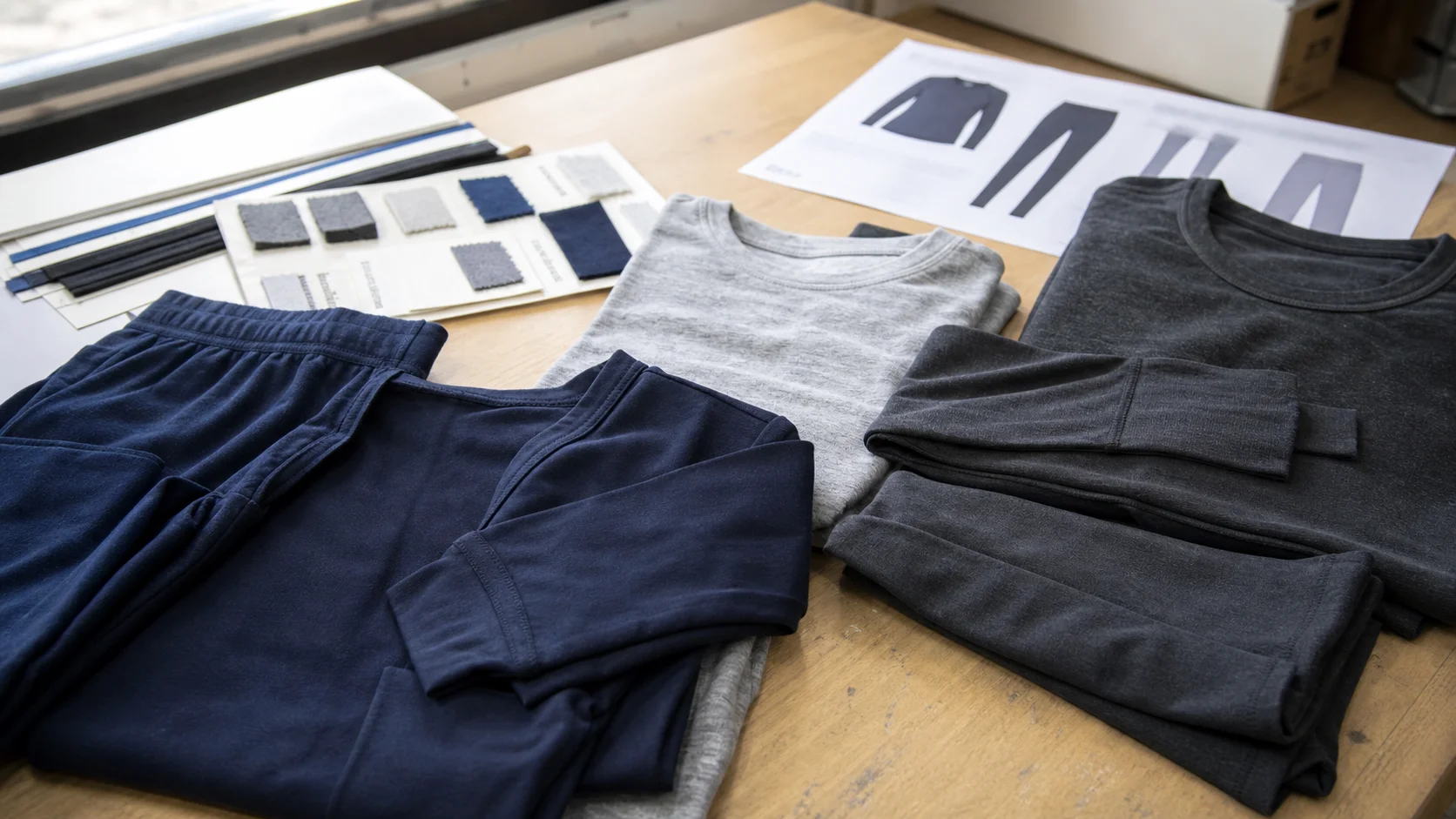
A 2500-word SEO outline for school operations teams buying base layer sets, focused on fit, fabric, seams, decoration, labeling, packaging, and...
Base Layer Set QC Checklist for School Ops Buyers - Activewear & Teamwear manufacturing guide
Base layer sets sit in a difficult category for school operations buyers. They are not just uniform items, and they are not casual merchandise either. They are worn close to the skin, often during sport, outdoor activity, winter training, travel, or PE sessions. A poor-quality base layer set can create complaints quickly: itchy seams, transparent fabric, poor stretch recovery, shrinking sleeves, inconsistent sizing, or logos that crack after a few washes.
For school operations teams, the purchasing risk is larger than the garment cost. A failed order can disrupt kit distribution, parent payment collections, sports department schedules, and replacement stock planning. If the product is part of a teamwear program, sizing errors can also create fairness issues between teams and year groups.
A strong quality control checklist gives buyers a practical way to manage those risks before they become expensive. It also helps compare suppliers more fairly. The lowest unit price may look attractive, but if the fabric pills, seams twist, or the size curve is wrong, the real cost lands with the school office and operations staff.
Purchasing judgment: base layer sets should be treated as performance uniform products, not basic T-shirts. The QC process needs to cover fabric behavior, stretch recovery, comfort, washing performance, and size consistency.
This checklist is written for school operations teams, procurement coordinators, sports administrators, uniform managers, and activewear buyers who need a clear inspection framework before placing or accepting a bulk order.
Quality control starts before the supplier cuts fabric. A vague brief such as “black compression top and leggings with school logo” leaves too much room for interpretation. A buyer-ready specification should describe the product clearly enough that two suppliers would quote against the same standard.
For a school base layer set, the product specification should include fabric composition, GSM, stretch direction, garment measurements, color standard, logo method, label placement, packaging, size range, and acceptable tolerance. If the school needs winter warmth, the specification should not be the same as a lightweight training base layer. If the garment is for multiple sports, comfort and stretch recovery may matter more than a tight compression feel.
Buyers should avoid approving a quote based only on product images. Images rarely reveal fabric recovery, seam quality, opacity, or how the garment behaves after washing. A written specification creates a shared standard for sampling, inspection, and dispute handling.
If your team needs help turning a school sportswear idea into a production-ready specification, it is sensible to review manufacturing support options through a partner’s service pages, such as Fabrikn’s services.
Fabric is the largest quality risk in base layer sets. The garment can be sewn neatly and still fail if the material is too thin, too stiff, too shiny, or unstable in washing. School buyers should request fabric details before sampling and confirm them again before bulk production.
Most school base layer sets use synthetic stretch fabrics because they dry faster and retain shape better than cotton-rich blends. Common compositions include 85–92% polyester with 8–15% elastane, or nylon elastane blends for a smoother hand feel. Polyester is usually more cost-efficient, while nylon can feel softer but may increase cost.
GSM should match the intended use. A lightweight 150–170 GSM fabric may suit indoor training, but it can become see-through under stretch. A 180–220 GSM fabric generally provides better coverage and durability, though it may feel warmer and cost more. For school use, opacity and durability often matter more than chasing the lightest possible fabric.
Base layers need stretch, but uncontrolled stretch creates fit problems. The key question is not only how far the fabric stretches. It is whether it returns to shape after movement and washing.
Opacity is a major schoolwear concern. Leggings and close-fit tops can become transparent when stretched, especially in darker colors under bright light. Buyers should inspect fabric over a contrast background and test it at realistic stretch levels. This is especially important for youth sizing, where modesty and parent expectations must be managed carefully.
A practical inspection method is to stretch the fabric over the hand or a curved form and check whether skin tone or underlayers show through. For leggings, inspect the seat, thigh, and knee zones. For tops, check chest, shoulder, and underarm areas.
Not every school order needs laboratory moisture-wicking claims. Still, the fabric should feel suitable against the skin. Scratchy, plastic-feeling, or overly rubbery fabrics create complaints quickly. If the supplier claims moisture-wicking, anti-odor, antibacterial, thermal, or UV performance, buyers should request test reports or treat the claim as marketing language rather than a confirmed performance feature.
Purchasing judgment: do not pay a premium for performance claims unless the supplier can document them. For many school programs, proven comfort, opacity, wash stability, and size consistency are more valuable than unverified technical language.
Base layers are washed frequently, often with mixed school kit. Poor dye stability can cause fading, staining, and parent complaints. Buyers should request colorfastness to washing and rubbing results when the order value justifies testing. At minimum, wash the pre-production sample several times before bulk approval.
Fit issues are among the hardest problems for school operations teams because they create exchanges, stock imbalance, and frustrated parents. Base layer sets are especially sensitive because the garments are close-fitting. A 2 cm difference at chest, waist, or inseam can change the wearing experience.
A school base layer size chart should not rely only on age labels. Children vary widely in height and body shape. Age-based sizing can be useful for buying, but garment measurements and body measurement guidance are more reliable for distribution.
Buyers should ask suppliers for garment measurements for each size, including chest, waist, hip, sleeve length, top body length, legging waist, front rise, back rise, inseam, and leg opening. Tolerances should be realistic. For stretch activewear, a common garment measurement tolerance may be around plus or minus 1 cm for small points and plus or minus 1.5–2 cm for larger length or circumference points. The exact tolerance should be agreed before production.
Schools often need mixed size runs that include younger pupils, older pupils, staff, and coaches. A single unisex block may simplify ordering, but it can create fit compromises. Youth sizes need appropriate rise, sleeve length, and shoulder proportion. Adult sizes need enough length and coverage.
If the base layer set is for competitive teams, buyers may need a broader size curve and possibly separate women’s or girls’ fit options. This increases complexity and MOQ pressure, but it can reduce returns and improve wearability.
Fit approval should include more than laying the sample flat. The garment should be assessed on a suitable wearer or fit form where possible. Ask the wearer to squat, bend, raise arms, twist, and sit. These movements reveal tight seams, waistband rolling, sleeve riding, and transparency under stretch.
Base layer sets are stretch garments, so seam construction matters. Standard lockstitch seams may pop if used in high-stretch zones. Buyers should confirm stitch types, seam strength, and comfort standards before bulk production.
Common construction options include flatlock seams, overlock seams, coverstitch hems, and elasticated waistband finishes. Flatlock seams can reduce bulk and improve comfort against the skin, but they may cost more and require better machinery control. Overlock seams are cost-effective, but they must have enough stretch and should not feel rough.
Coverstitch is commonly used at sleeve hems, bottom hems, and leg openings. The stitching should stretch without cracking and recover cleanly. Loose loops, skipped stitches, or uneven tension are early warning signs of poor sewing control.
Inspectors should check for skipped stitches, broken threads, uneven seam allowance, puckering, open seams, twisted seams, needle holes, seam grin, and poor thread trimming. Stretch garments should be gently pulled at seams during inspection to identify popping or cracking.
Thread should be suitable for stretchwear. Polyester thread is common. Woolly nylon or textured thread may be used in specific seam types for softness and stretch. The thread color should match the garment unless contrast stitching is part of the approved design.
Trims are easy to overlook, but they affect comfort and compliance. Base layers touch the skin, so bulky labels, scratchy care tags, sharp transfer edges, and rough waist elastic can cause problems.
Every base layer set should include clear care labeling. Buyers should confirm fiber content, size, country of origin where required, washing temperature, drying instructions, ironing restrictions, and warnings related to prints or transfers. Heat transfers often require lower wash temperatures and avoidance of high-heat tumble drying.
For school operations, size labels should be easy to read. If items are distributed by team, house, year group, or parent order, external bag labels can reduce sorting errors. This is a small cost that often saves time during delivery week.
School logos and team marks are commonly applied by heat transfer, screen print, sublimation, or embroidery. Heat transfer is popular for base layers because it avoids heavy stitching and can sit smoothly on stretch fabric. The risk is cracking, peeling, dye migration, or poor adhesion if the wrong transfer is used.
Embroidery is usually not ideal for high-stretch base layers because it can reduce stretch and create irritation. It may work for looser thermal layers or outerwear, but buyers should test comfort before approving it.
Packaging should match the distribution model. For direct-to-school bulk delivery, set packing is usually better than separate tops and bottoms because it reduces pairing errors. If parents order individual sizes for tops and bottoms, separate packing may be necessary.
Packaging Option Best Use Buyer Risk Set-packed polybag Standard team or PE kit distribution Less flexibility if pupils need different top and bottom sizes Separate top and bottom bags Mixed-size orders and parent-selected sizing More sorting work and higher risk of mismatched delivery Bulk carton packing Lowest-cost internal stock replenishment Higher handling time and more risk of size confusion Barcode or order-number packing Large schools or online order distribution Requires accurate data and supplier packing disciplineA disciplined sample process is one of the best ways to prevent bulk production problems. For school base layer sets, sampling should confirm fabric, fit, construction, branding, and washing performance before the order is released.
Not every school order needs every stage in full form. A small reorder in an existing approved style may only need a fabric and color confirmation plus a shipment sample. A new custom base layer set for a large school program should go through a fuller process.
For new custom activewear programs, buyers can use the supplier discussion stage to clarify development routes, sample timing, and bulk production feasibility. If you are planning a new school teamwear range, the Fabrikn contact page is a practical place to start that conversation.
Do not approve bulk production from an unworn, unwashed sample. A base layer can look excellent out of the bag and still shrink, twist, pill, fade, or lose logo adhesion after laundering. School garments are washed repeatedly and sometimes aggressively, so the approval sample should be tested under realistic care conditions.
Bulk inspection should compare finished goods against the approved pre-production sample and specification sheet. The inspection should not rely on general appearance only. For school operations teams, the goal is to catch defects before goods are issued to pupils or parents.
Start with cartons before opening individual garments. Check carton quantity, size breakdown, carton markings, purchase order number, destination labels, and any school-specific sorting requirements. Incorrect carton labeling can create major distribution delays even when the garments themselves are acceptable.
Measure a sample across sizes, not only the middle size. Size problems often appear at the smallest and largest ends of the range. Use the approved measurement method, lay the garment flat without overstretching, and record results against tolerance.
For a larger school order, buyers may use an AQL-style inspection approach through a third party or supplier QC team. For smaller orders, a practical internal spot check can still catch major issues. The main point is to inspect consistently and document findings before accepting the delivery.
School operations buyers often face a difficult balance: low quantity, custom branding, multiple sizes, and fixed delivery dates. Suppliers need minimums to manage fabric purchasing, dyeing, cutting, printing, and sewing. Schools need flexibility because participation numbers change.
MOQ depends on fabric availability, customization level, supplier setup, and whether the garment is stock-supported or fully custom. Typical ranges may look like this:
Order Type Typical MOQ Range Notes for School Buyers Stock base layer with school logo 25–100 sets Fastest and lowest risk, but fewer fabric and color options Custom color using available fabric 100–300 sets Good balance if the supplier has suitable fabric in stock Fully custom fabric or dyed color 300–800 sets or more Better control, higher commitment, longer lead time Sublimated custom design 50–200 sets Flexible artwork, but fabric feel and opacity still need checkingThese are only typical planning ranges. Actual minimums vary by factory, fabric mill, trim supplier, and production season. Buyers should ask whether MOQ applies per style, per color, per size, or per total order. This distinction matters. A supplier may accept 300 sets total but still require minimums per color or per size.
Lead time is not just sewing time. It includes specification confirmation, sample production, sample shipping, fit review, revisions, fabric purchasing, trims, logo approval, bulk cutting, sewing, finishing, inspection, packing, shipping, and customs where relevant.
Buyers should build a buffer into school calendars. Delivery should not be planned for the day before a tour, tournament, or kit issue event. A sensible buffer allows time for inspection, sorting, replacement requests, and internal distribution.
Purchasing judgment: stock-supported products are usually safer for small school orders and tight deadlines. Fully custom production makes sense when the program has stable repeat demand, clear branding needs, and enough time for proper sampling.
The following checklist can be used during sample review and bulk inspection. It is designed for practical school operations use, not as a substitute for formal lab testing or a full third-party inspection protocol.
Inspection Area Common Defect Risk Level Recommended Buyer Action Fabric opacity See-through leggings or chest panels under stretch High Reject or require heavier fabric before approval Stretch recovery Bagging at knees, elbows, waistband, or seat High Request fabric change or recovery test confirmation Seams Skipped stitches, popping, open seams, rough seam feel High Reject affected units and review sewing setup Logo Cracking, peeling, dye migration, crooked placement Medium to High Wash test and require corrected application method Sizing Measurements outside tolerance across key sizes High Hold shipment until size issue is resolved Color Shade variation between top and bottom Medium Assess visibility and approve only if acceptable Labels Wrong size, missing care label, incorrect fiber content Medium Correct before distribution Packing Wrong size pairing, missing pieces, incorrect carton marks Medium Re-sort and verify quantities before issue Fabric surface Pilling, snags, needle damage, oil stains Medium Segregate defective units and request replacementsA clear workflow keeps the process manageable. School teams do not always have apparel specialists on staff, so the checklist should be simple enough to repeat each season.
Supplier selection also matters. Buyers should look for clear communication, realistic timelines, written specifications, willingness to sample properly, and an understanding of school distribution requirements. A supplier that avoids measurement charts, wash testing, or pre-production approval may create more work later.
If your team is assessing apparel manufacturing partners, background information about a supplier’s approach can help. Pages such as Fabrikn’s about page can give useful context before starting a specification or quotation discussion.
The safest buying route depends on order size, timing, and customization needs. For a small school team with a fixed tournament date, a stock-supported base layer with logo application is usually the better option. It limits fabric risk and shortens the development cycle. For a larger school, academy trust, or recurring sports program, a custom base layer set may be worth the extra sampling work because it can improve brand consistency, fit control, and reorder planning.
Buyers should be cautious with very low prices. Stretch activewear can be made cheaper by reducing fabric weight, using lower-grade elastane, simplifying seams, or applying low-cost transfers. Those savings often show up later as transparency, poor recovery, seam failure, or logo cracking. A slightly higher unit price may be justified if it delivers better fabric, stable sizing, and fewer complaints.
The strongest QC checklist is not complicated. It is consistent. Confirm the specification, test the sample, approve the fit, wash before bulk approval, inspect the delivery, and document defects before distribution. That routine gives school operations teams a practical control system for one of the more sensitive products in the activewear and teamwear category.
Get a free quote from Fabrikn — your trusted B2B clothing manufacturer with 10+ years of experience. MOQ as low as 200 pieces.
Get a Free Quote →Start with fabric opacity, stretch recovery, fit, and seam strength. These areas create the most common complaints because base layers are worn close to the skin and under movement stress.
Typical MOQs can range from 25–100 sets for stock garments with logos, 100–300 sets for custom colors using available fabric, and 300–800 sets or more for fully custom fabric or dyed production. The exact MOQ depends on supplier setup, fabric availability, and customization level.
Stock logo orders may take around 2–5 weeks after artwork approval. Custom cut-and-sew base layer sets often take around 6–12 weeks after sample approval. Custom fabric dyeing, lab dips, peak season capacity, and shipping method can extend the timeline.
Polyester elastane is common because it is cost-effective, durable, and quick drying. Nylon elastane can offer a softer feel but may cost more. For most school programs, buyers should prioritize opacity, comfort, wash stability, and stretch recovery over technical claims that are not backed by testing.
Flatlock seams are useful because they reduce bulk and can improve comfort, especially for close-to-skin garments. They may increase cost. Overlock seams can also work if they are soft, secure, and have enough stretch for movement.
Check logo size, color, placement, and adhesion against the approved artwork. Stretch the logo area gently, wash the sample several times, and inspect for cracking, peeling, dye migration, scorching, or glue residue.
A unisex size chart can simplify ordering, but it may not fit every age group or body shape well. Schools with broad age ranges, competitive teams, or staff orders should review youth and adult blocks carefully and consider additional fit options where volume allows.
High-risk defects include see-through fabric, poor stretch recovery, seam popping, incorrect sizing, open crotch or underarm seams, and logo failure after washing. These issues can affect comfort, modesty, durability, and parent satisfaction.
For small orders, checking every garment may be practical. For larger orders, inspect samples across multiple cartons, sizes, and colors. Always verify carton counts, size pairing, key measurements, seams, logos, labels, and packaging before distribution.
The most common mistake is approving bulk production from a visual sample without wash testing, movement testing, and measurement checks. Base layer sets need performance review, not just appearance approval.