
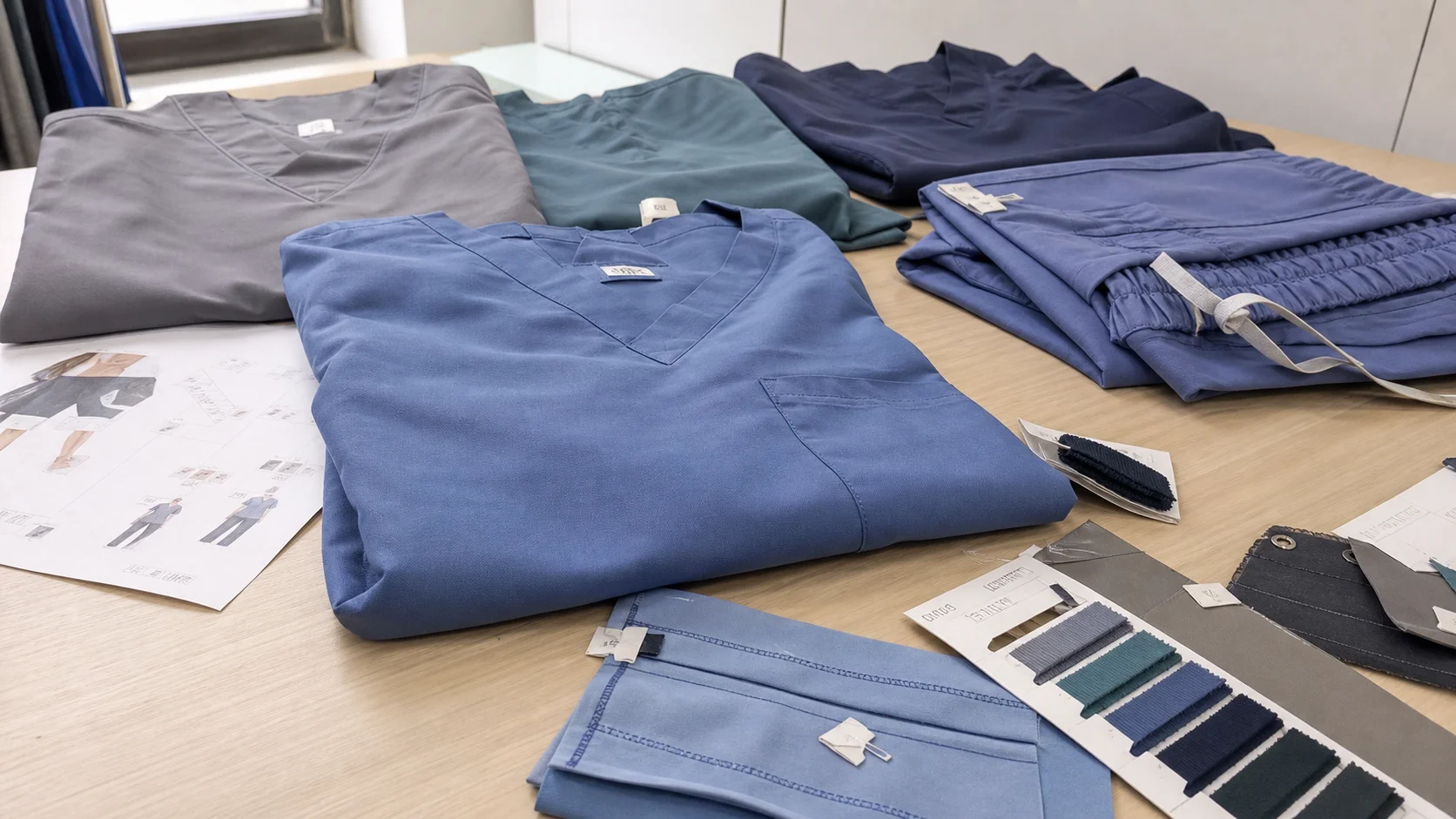
A practical SEO outline for pharmacy operations teams to assess scrub fabric quality, durability, comfort, and compliance before placing uniform orders.
Pharmacy operations teams do not buy scrubs on style alone. In a medication-dispensing environment, fabric performance affects comfort, durability, infection-control routines, laundering cost, and how consistently staff present the brand. A weak fabric spec can lead to premature wear, fading, seam failure, and complaints about heat, mobility, or skin feel. A careful fabric testing program is one of the lowest-cost ways to reduce those problems before a bulk order lands.
This guide is written for pharmacy sourcing, operations, and quality teams that need a practical approach to scrubs order fabric testing. It covers what to test, how to review lab results, where risks tend to hide, and how to use sampling and inspection steps to make better buying decisions. The focus is on usable judgment, not theory.
Scrubs Fabric Testing Guide for Pharmacy Teams - Fabrikn production reference
Pharmacy teams work in a setting that demands clean appearance, repeat laundering, and long wear hours. Scrubs may need to survive frequent wash cycles, disinfectant exposure, and constant movement without losing shape or becoming transparent. A fabric that looks fine on a hanger may still perform poorly in daily use.
Testing is not about chasing perfection. It is about making sure the fabric meets a realistic service life. For pharmacy operations, that usually means balancing comfort, opacity, stretch recovery, breathability, and shrinkage control. If the fabric fails on one of those points, staff will notice quickly, and the procurement team will be left managing avoidable complaints.
Fabric testing also helps compare suppliers on a fair basis. Many sellers can describe a “premium” scrub fabric. Fewer can prove how that fabric behaves after wash cycles, pilling, color exposure, and seam stress. Testing narrows the gap between marketing claims and the fabric that actually arrives.
The first mistake is asking for “good quality fabric” and stopping there. A real spec should state the fiber blend, fabric construction, weight, performance targets, and color requirements. Without that, suppliers will quote very different materials under the same product name.
For pharmacy scrubs, common fabric constructions include polyester-rayon-spandex blends, polyester-cotton-spandex blends, and mechanical-stretch woven fabrics. Typical fabric weights often fall somewhere around 150 to 220 gsm, depending on climate, coverage requirements, and the level of structure the buyer wants. Lightweight cloth can improve comfort, but it may raise opacity and durability concerns. Heavier cloth can feel more robust, but heat management becomes a concern for staff working long shifts.
A practical spec package usually includes:
It is worth stating what you do not want as well. For example, some teams reject fabrics that feel too slick, clingy, or synthetic. Others need a matte appearance because the uniforms sit under bright pharmacy lighting. These are not cosmetic details; they affect wearability and staff acceptance.
The right test list depends on your fabric blend and laundry expectations. A pharmacy team does not need every possible lab test, but it does need the tests that reflect real use. The goal is to catch fabric weaknesses before production begins.
Confirm the fiber content matches the quoted blend. This matters because a change in polyester, rayon, cotton, or spandex content can alter shrinkage, stretch, recovery, and color behavior. Composition verification is especially important when the supplier offers a similar fabric under multiple names.
Fabric weight should sit within the agreed tolerance across the roll. Large variation can lead to inconsistent drape and fit from one production batch to the next. If the fabric is too light, garments may become sheer or wear out faster. If it is too heavy, staff may complain about heat retention.
Shrinkage is one of the most common failure points in workwear. Pharmacies often rely on frequent laundering, so even modest shrinkage can affect fit and appearance. Ask for test results after the intended wash temperature, dry method, and cycle count. A fabric that shrinks acceptably in a controlled lab wash may behave differently in real commercial laundering, so the wash method must match the end use.
Color loss, bleeding, and shade shift create fast visible defects. If the pharmacy uses a defined brand palette, this test matters even more. Dark colors are not automatically safer; they can fade quickly if the dye system is weak. White or light colors may yellow or pick up discoloration if the fabric finishes are unstable.
Pilling can make a new scrub set look old before it should. This is especially visible at the seat, thighs, and sleeves, where friction is constant. Some blends resist pilling better than others, but finish quality also plays a role. Ask for results that reflect repeated wear, not just a short laboratory cycle.
Pharmacy staff move constantly, lean on counters, handle carts, and work around equipment edges. Abrasion testing shows whether the fabric can survive that routine. A fabric that looks acceptable after a few wear cycles may still fail under repetitive friction.
Fabric strength alone is not enough. If the weave or knit structure is unstable, seams may distort or tear out during stress. This is a major risk in areas such as pocket openings, side seams, and crotch seams on pants. Include seam construction in the review, not just fabric test results.
If the fabric contains elastane or another stretch component, test both stretch and recovery. A fabric that stretches easily but does not bounce back will bag out at knees, elbows, and seat areas. That leads to a worn look and poor fit across a staff group with different body types.
Opacity matters in bright work environments and during movement. Pharmacy teams often want coverage that holds up under bending, reaching, and sitting. Appearance retention should also include wrinkle behavior, because some fabrics look tidy at the start of a shift but turn tired quickly.
Fabric approval should not be a single yes-or-no decision based on one swatch. A disciplined sample process usually has three stages: lab dip or shade approval, fabric hand-feel and performance review, and garment sample approval after cutting and sewing.
Start with the fabric sample. Review color, texture, weight, stretch, and surface consistency. Then move to a wash test on the sample if possible. This is where many hidden issues appear. A fabric that feels excellent before washing may become rougher, tighter, or more transparent after the first few launderings.
The next step is a sewn sample. This is where the fabric meets the pattern, stitch construction, and trim package. Look at pocket shape, seam smoothness, drape, and how the fabric behaves under movement. If the fabric is too slippery, too stiff, or too thick for the chosen pattern, the final garment may feel awkward even if the fabric tests are technically acceptable.
Sample approval should always connect fabric performance to the final use case. A fabric can pass a lab test and still fail in a scrub top if it is uncomfortable, overly warm, or difficult to sew cleanly.
For many buyers, the approval sequence is:
That sequence takes time, but it reduces costly rework later. It also gives operations and procurement a clearer basis for rejecting fabric that is technically “close” but not suitable.
Fabric issues often appear after the order is underway, not at the quote stage. That is why inspection needs to look beyond the finished garment. A clean-looking bulk roll can still hide uneven dyeing, width variation, tension marks, or finish inconsistency.
One common risk is roll-to-roll variation. If the supplier buys greige fabric from multiple mills or finishes different batches separately, the shade or hand feel can vary. On a small swatch, this may not be obvious. In production, it becomes a visible problem across shirt fronts, sleeves, and pant legs.
Another risk is shrinkage inconsistency across colors. Darker shades sometimes behave differently from lighter shades because of dye load and chemical finishing differences. If the buyer approves one color and assumes the rest will behave the same, the order may create uneven fit outcomes across the range.
Spandex content also needs careful control. A small variance can change recovery and comfort in a noticeable way. If the garment is intended for repeated bending and reaching, even a modest drop in recovery can lead to bagging, pulling, and reduced staff satisfaction.
Inspectors should also watch for fabric defects that can create garment faults later:
These issues matter because they can drive cutting loss and rework. If the fabric width is inconsistent, pattern placement becomes less efficient. If the shade is unstable, the team may need to sort panels by batch, which slows production and complicates inventory control.
Fabric testing affects lead time more than many teams expect. If a supplier already stocks the required fabric, sampling can move quickly. If the fabric needs to be developed, dyed, or finished to spec, the timeline lengthens. The lead time then depends on lab dip approval, bulk dye approval, fabric knitting or weaving, finishing, and final inspection.
Typical MOQ ranges vary by supplier, fabric type, and color. For custom scrub fabrics, buyers often see fabric MOQs in the range of 300 to 1,000 meters per color, while garment MOQs may start around 100 to 500 sets per style and color depending on complexity. These figures are not universal. High-performance or specialty fabrics may require larger minimums, especially if a custom finish is involved.
Pharmacy operations teams should plan for the fact that sample approvals can create delays if they are treated casually. The cleanest procurement programs set deadlines for each approval stage and assign one owner to sign off. A missing response on shade, trim, or hand feel can stall the order more than a technical issue would.
If your team has seasonal demand or opening-date pressure, build buffer time into the schedule. Fabric development, testing, and bulk approval often take longer than the garment sewing itself. A rushed order can force a tradeoff between speed and control, and the fabric is usually where that tradeoff becomes expensive.
Good suppliers do more than send a swatch and a price. They can explain how the fabric is made, what the acceptable tolerances are, and how they control batch consistency. They should also be able to provide test reports from a credible lab or an internal quality system that is aligned to the buyer’s requirements.
Ask whether the supplier controls incoming yarn, dye lot matching, finishing parameters, and final roll inspection. These controls do not guarantee success, but they show whether the supplier treats fabric as a managed input or as a commodity. For pharmacy uniforms, that difference matters.
It also helps to ask how defects are handled. If a fabric lot is slightly off-shade or fails a test point, what happens next? A supplier with a clear containment process is easier to work with than one that treats each issue as a one-off exception.
For teams that need structured sourcing support, fabrikn.com outlines service capabilities at /services/. If you need to raise a product or sampling question directly, use /contact-us/. Company background is available on /about-us/.
Not every pharmacy needs the same scrub fabric. A small private pharmacy with a warm indoor environment may value breathability and softness more than heavy-duty abrasion resistance. A larger operations team with a strict uniform standard may prioritize color stability, shape retention, and consistent sizing across repeated laundering.
The strongest purchasing decisions usually come from making a few tradeoffs explicit:
It usually makes sense to invest more time in the first order than to fix repeated issues later. One approval cycle can save several rounds of replacement or staff complaints. That is especially true for pharmacy teams, where professionalism and cleanliness are visible every day.
Buyers should also avoid over-specifying features that do not improve actual use. For example, adding a long list of premium finishes may raise cost and complexity without improving staff satisfaction. The better approach is to identify the top three performance needs and test those thoroughly.
Another practical judgment is to lock down trims with the same discipline as the fabric. Zippers, drawcords, snaps, elastic, thread, and labels can all affect comfort and durability. A strong fabric paired with weak trim still produces a weak garment. If your operations team wants consistency, the whole bill of materials should be reviewed together.
A good fabric testing guide does not just protect quality; it improves the entire scrubs buying process. For pharmacy operations teams, the right tests reduce fit problems, appearance issues, and replacement costs while making supplier comparisons more objective. The best result is not the most expensive fabric. It is the fabric that holds up to wash cycles, stays comfortable through long shifts, and remains consistent across production lots.
If your team is building a new scrubs program or reworking an existing one, start with a clear fabric spec, require test evidence, and make sample approval a formal step rather than a casual check. That approach creates better orders, fewer surprises, and cleaner results in daily use.
Get a free quote from Fabrikn — your trusted B2B clothing manufacturer with 10+ years of experience. MOQ as low as 200 pieces.
Get a Free Quote →There is no single best fabric. Many pharmacy teams prefer polyester-rayon-spandex or polyester-cotton-spandex blends because they balance comfort, appearance, and durability. The right answer depends on climate, laundering method, and how much stretch or softness staff expect.
Shrinkage, colorfastness, pilling, abrasion, stretch recovery, and seam performance are the most practical tests for most scrub programs. If the fabric includes stretch, recovery becomes especially important. If the pharmacy uses strong wash routines, laundering durability should be reviewed closely.
At minimum, review the fabric sample, the color or shade approval, and a sewn garment sample. Many buyers also request a pre-production sample before bulk cutting. That extra step is worthwhile when the fabric is custom or the order is large.
MOQ varies by supplier and fabric type, but many custom fabric orders start around 300 to 1,000 meters per color. Garment MOQ is often separate and may range from 100 to 500 sets per style and color. Specialty fabrics can require higher quantities.
Pre-wash fabric often hides shrinkage, color loss, pilling, and recovery problems. These issues usually appear after laundering and wear. That is why testing should reflect the actual wash cycle and use conditions, not only the unwashed sample.
Yes. Zippers, elastic, thread, buttons, labels, and drawcords all affect durability and comfort. A strong fabric can still produce a poor garment if the trims fail or react badly to wash cycles.