
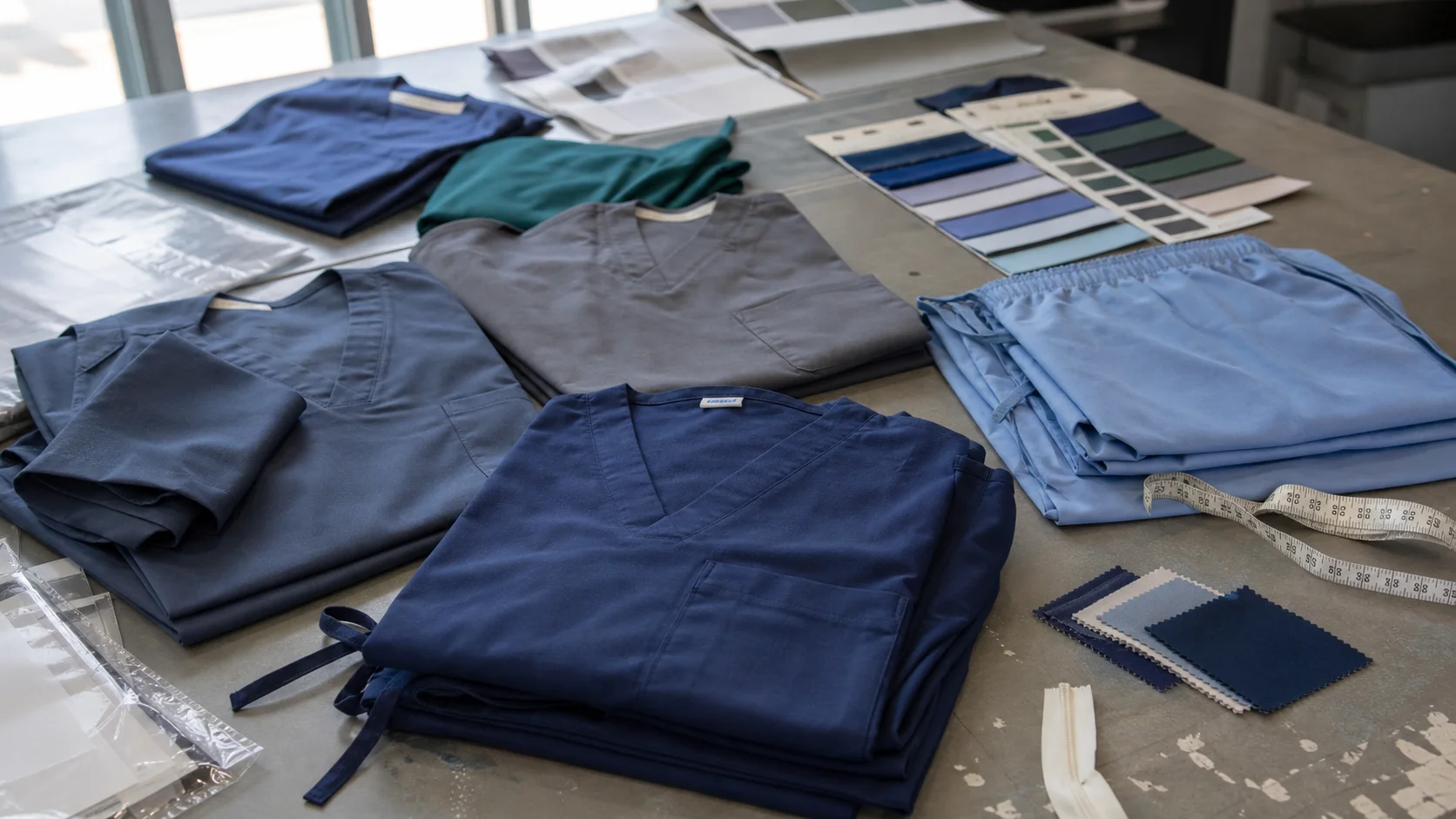
A quality and inspection focused outline for hotel procurement teams reviewing scrubs manufacturer MOQ pricing, garment specs, production artifacts, and...
Scrubs MOQ Pricing Review for Hotel Buyers - Quality & Inspection manufacturing guide
Hotel procurement teams buying scrubs for housekeeping, spa, wellness, laundry, engineering, medical support, or back-of-house hygiene programs face a different sourcing problem than hospitals. The garment may look simple, but the buying logic is not. A hotel group usually needs size consistency, repeat replenishment, controlled color, durable laundering performance, and a price structure that does not collapse when quantities are split across properties.
This scrubs manufacturer MOQ pricing review is written for hotel buyers who need to compare offers from suppliers, trading companies, and direct factories without getting trapped by a headline unit price. MOQ is not just a number on a quotation sheet. It is a signal of fabric availability, dyeing constraints, cutting efficiency, trim commitments, labor planning, and the supplier’s willingness to support repeat business.
The best purchase is rarely the lowest first quote. For hotel procurement, the stronger option is usually the supplier that can hold fit, shade, packaging, and replenishment discipline over multiple deliveries. Scrubs are worn hard, washed often, and judged by staff comfort as much as by management cost control. A weak fabric or unstable color will show quickly in hotel operations.
Minimum order quantity affects more than the first order value. It shapes fabric sourcing, production scheduling, sampling priority, price negotiation, and after-sales support. A factory quoting 100 pieces per color is not operating under the same cost structure as one requiring 1,000 pieces per color. Both may be valid, but the buyer needs to understand what is included and what is being compromised.
Hotel scrub programs often include multiple departments. Spa therapists may need a softer, more polished scrub set. Housekeeping may need stronger fabric and larger pockets. Engineering or maintenance support teams may need darker colors. A wellness clinic inside a resort may require a more medical appearance. When each department wants its own shade and style, the MOQ can multiply fast.
The procurement risk is fragmentation. A hotel may think it is ordering 2,000 scrub sets, but the order becomes five colors, two fabrics, men’s and women’s fits, and ten sizes. From the manufacturer’s view, this is not one efficient program. It may be twenty small production lots. That is where pricing changes.
For hotel buyers, MOQ should be reviewed by fabric, color, style, size range, and delivery schedule. A total-unit MOQ is less useful if production is split into many small variables.
A practical approach is to standardize where guests do not see meaningful difference. One base fabric, one pocket layout, one neck finish, and a controlled color palette will usually deliver better pricing and fewer inspection problems than over-customizing every department uniform.
MOQ varies by country, factory size, fabric type, stock availability, and whether the buyer is using ready fabric or custom-dyed fabric. The ranges below are common planning references, not fixed rules. A supplier may quote outside these ranges for good reasons, especially if fabric is in stock or if the garment is part of a running production line.
Buying Scenario Typical MOQ Range Pricing Impact Best Use Case Stock scrub style, stock fabric, stock color 50-300 pieces per color Higher unit price, faster delivery Pilot orders, urgent replacements, small boutique hotels Custom logo on stock scrub 100-500 pieces per color Moderate price, logo setup costs apply Department uniforms with limited customization Custom style using available fabric 300-800 pieces per color Better garment price, sampling cost likely Hotel groups needing fit and pocket changes Custom-dyed fabric or special shade 800-2,000 pieces per color Lower cut-and-sew cost, higher fabric commitment Brand-standard colors across multiple properties Performance fabric or proprietary blend 1,000-3,000 pieces per fabric/color Best long-run cost, highest development risk Large hotel chains with repeat programsFor scrubs sold as sets, confirm whether MOQ is counted by piece or by set. A 500-piece MOQ could mean 250 tops and 250 trousers, or it could mean 500 complete sets. This detail changes the real order size immediately.
Size distribution also matters. Manufacturers prefer balanced cutting ratios. A hotel order with very high demand in one or two sizes may be easier to cut, while an order spread across XS to 5XL with low quantities in fringe sizes can increase handling cost. Larger sizes also consume more fabric, so some suppliers apply surcharges for 2XL and above.
For first-time hotel programs, a sensible launch MOQ often sits between 300 and 800 sets if the design is not highly customized. Below that level, the buyer should expect a higher unit cost or limited choice in fabric and color. Above 1,000 sets, negotiation improves, but only if the order is not broken into too many small color and style lots.
Scrubs pricing is built from fabric, trims, labor, wastage, testing, packaging, freight terms, and supplier margin. A low quote can be real if the supplier has fabric on hand, uses a simple pattern, and runs efficient sewing lines. It can also hide weak fabric, poor shrinkage control, unstable dyeing, or thin stitching specifications.
Hotel buyers should request a costed specification rather than accepting a vague description such as “poly cotton scrub set.” That phrase can cover a wide range of fabric weights, yarn qualities, finishes, and performance levels.
Common scrub fabrics include polyester-cotton blends, cotton-rich blends, polyester-rayon-spandex blends, and stretch performance fabrics. Polyester-cotton is usually the most cost-stable option. Cotton-rich fabrics may feel better but can shrink more and wrinkle faster. Stretch blends improve comfort, especially for spa and wellness staff, but they increase fabric cost and can introduce recovery and pilling issues if quality is weak.
Many scrub fabrics fall around 145-220 gsm. Lightweight fabric may feel cool but can become transparent, weak at seams, or less durable after industrial washing. Heavier fabric improves coverage and durability but may be too warm for tropical resorts or high-movement housekeeping work. A balanced hotel spec often sits in the mid-range, with final selection based on climate and laundry process.
Custom color increases MOQ because dye lots have minimums. Dark colors may show lint and detergent residue. Light colors can become transparent or stain visibly. Bright brand colors may be difficult to repeat across batches. If hotels need exact brand shades, procurement should request lab dips and define approval under standard light conditions.
Small changes affect price. Extra pockets, contrast binding, side slits, elastic plus drawcord waistbands, bar tacks, double-needle seams, badge loops, and embroidery all add labor. Some features are worth the cost. Reinforced pockets and secure waistbands usually pay for themselves in hotel operations. Decorative trims that complicate laundering are less convincing unless they support a visible guest-facing role.
Individual polybags, size stickers, carton labels, department packing, and property-level assortment packing all cost money. They also reduce receiving errors. For hotel chains shipping to multiple sites, better packing instructions can save more labor than they cost.
A scrub purchase should not rely only on a photo, size chart, and color name. The procurement file should include measurable specifications that can be used for sampling, production, and inspection. If the supplier cannot confirm these points, the buyer should treat the quote as incomplete.
Specification Area What to Confirm Why It Matters Fabric composition Fiber blend by percentage Controls handfeel, durability, shrinkage, and price Fabric weight GSM with tolerance Prevents substitution with lighter fabric Weave or knit type Plain weave, twill, poplin, stretch woven, or knit Affects drape, strength, and laundering behavior Shrinkage Acceptable shrinkage after wash Protects fit after repeated hotel laundry cycles Color fastness Washing, rubbing, perspiration, and light performance Reduces fading, staining, and shade complaints Thread Polyester thread quality and color match Prevents seam failure and visible mismatch Waistband Elastic width, drawcord material, stitching Important for comfort and repeated use Labels Brand, size, care, fiber, country of origin if required Supports compliance and hotel inventory controlHotel buyers should pay close attention to laundering. A scrub that looks acceptable after one domestic wash may not survive repeated commercial laundry. If the hotel uses outsourced laundry, the buyer should understand wash temperature, drying method, detergent strength, and pressing process before confirming fabric.
Trims should be specified in plain terms. Drawcords should not bleed color. Elastic should recover after washing and drying. Metal trims should be avoided unless necessary. Zippers, snaps, or decorative hardware may create maintenance issues and can be uncomfortable for staff in active roles.
For sourcing support, hotel procurement teams can review broader manufacturing and development options through Fabrikn services, especially when the program involves custom fabric, multi-property rollouts, or structured quality control.
Sampling is where many scrub programs either become controlled or become expensive. A supplier may push for fast approval, especially on small orders, but hotel buyers should not skip a basic sample sequence. The cost of one poor bulk run is much higher than the cost of checking fit, fabric, and finishing before production.
The buyer should provide a reference garment, clear photos, a size chart, construction notes, fabric expectations, and logo requirements. If the hotel has an existing scrub uniform, send a clean reference sample if possible. The supplier should confirm whether the requested style can be produced within the target MOQ and budget.
Fabric approval should come before garment approval whenever possible. Review handfeel, thickness, stretch, recovery, opacity, and color. For brand colors, request lab dips. For stock colors, ask for a cutting from the actual available fabric lot if the order is urgent.
The first garment sample checks pattern, size, comfort, and construction. Hotel staff move differently from clinical staff. Housekeepers bend, reach, push carts, and carry supplies. Spa staff need clean presentation and comfort. Fit should be tested in real movement, not only on a hanger.
The pre-production sample should use bulk fabric, approved trims, final labels, final logo method, and final construction. This is the sample that should guide inspection. If a supplier cannot provide a pre-production sample for a custom order, the buyer accepts more risk.
For larger orders, request a size set covering core sizes. This helps catch grading problems. A medium sample may fit well while XS or 3XL is poorly graded. Hotel uniform programs often fail at the size extremes, which leads to staff dissatisfaction and urgent reorder pressure.
Sample approval should be written. Comments such as “approved except pocket depth to be increased by 2 cm” are better than informal chat approvals. Keep dated photos, measurement sheets, and approved fabric references. These records help if bulk goods arrive with disputed quality.
Scrubs lead time depends on fabric availability, dyeing, sample approval speed, production capacity, logo process, inspection scheduling, and freight method. Buyers should avoid treating every supplier’s lead time as directly comparable unless the same assumptions are used.
Production Stage Typical Time Range Key Dependency Initial quote and spec confirmation 2-7 days Completeness of buyer requirements Fabric swatches or lab dips 5-15 days Stock fabric versus custom dyeing Fit sample 7-20 days Pattern complexity and sample room capacity Pre-production sample 7-15 days Bulk fabric and trim readiness Bulk production 25-60 days Order size, factory loading, and fabric lead time Inspection and packing 2-7 days Defect rate and carton packing complexityFor a standard stock-fabric scrub order, a realistic total timeline may be 30-60 days after approvals. Custom-dyed fabric can push the timeline to 60-90 days or longer. Peak production periods, holidays, fabric mill delays, and late artwork approvals can extend this further.
Hotel buyers should separate launch lead time from reorder lead time. The first order takes longer because fit, fabric, labels, and packing must be established. Reorders can move faster if the supplier holds the pattern, uses running fabric, and receives a clear purchase order. That said, a reorder is not guaranteed to match the first order unless shade, fabric lot, and construction standards are controlled.
A practical replenishment model is to place the first order with a buffer for new hires, size exchanges, and damage replacement. For hotel groups, a small central stock of core sizes can prevent emergency orders at high prices. Emergency air freight can wipe out savings from a low-cost supplier.
Scrubs appear straightforward, but bulk inspection often finds predictable issues. The risk increases when the buyer accepts loose specifications or approves samples too quickly. The most common problems are not dramatic; they are small defects repeated across many pieces.
Inspection should include measurement checks, workmanship review, shade matching, logo verification, label review, packing audit, and basic functional checks. For hotels using heavy laundry cycles, pre-shipment inspection alone is not enough. Wash testing before bulk approval is strongly recommended.
Acceptable Quality Limit inspection can be useful, but buyers should define critical, major, and minor defects clearly. A missing care label may be major for compliance. A sharp object in a pocket or broken needle risk is critical. Slight thread ends may be minor if they are not excessive. The inspection standard should reflect real hotel operating risk, not only cosmetic appearance.
Procurement teams should also check carton markings. A shipment can pass garment inspection and still create chaos at receiving if size ratios are mixed incorrectly. For multi-property hotel groups, carton-level packing lists should match purchase order allocations.
A clean production sample does not guarantee clean bulk production. Inspection must check repeated execution, not just whether the factory understood the design once.
A scrub quote should be compared on landed value, not just FOB or ex-factory unit price. Two suppliers may quote the same scrub set at different prices because one includes better fabric, stronger packaging, washing tests, or size-set samples. The cheaper quote may still be acceptable, but the buyer should know what has been removed.
Quotation Point Question to Ask Buyer Judgment MOQ Is it per style, color, size, or total order? Reject vague MOQ language before negotiation. Fabric What is the exact composition, weight, and finish? Do not compare prices without matching fabric specs. Color Is the color stock, custom dyed, or matched to Pantone? Custom color needs stronger approval control. Sampling How many samples are included, and are fees refundable? Low sample support can become bulk risk. Logo Is embroidery, heat transfer, woven patch, or print included? Logo method should match laundry demands. Packaging Is individual packing, size labeling, or property sorting included? Better packing reduces hotel receiving labor. Testing Are shrinkage and color fastness tests included? Testing is worth paying for on repeat programs. Payment What deposit and balance terms apply? Terms should reflect supplier reliability and order risk.A supplier offering a very low MOQ with broad customization may be using stock garments or a workshop model rather than a structured production line. That may suit a small pilot. It may not suit a hotel chain that needs repeatable quality. A supplier requiring a higher MOQ may be more cost-effective for a standardized program if it delivers stable fabric, better cutting, and consistent shade.
Hotel procurement teams should ask suppliers to quote at several quantity breaks, such as 300, 500, 1,000, and 2,000 sets. The price curve often reveals where real production efficiency begins. If the price barely changes between 500 and 2,000 sets, fabric or labor may not be the main cost constraint. If the price drops sharply at 1,000 sets, the MOQ may be tied to fabric purchasing or production line efficiency.
Buyers can also use staged purchasing. A first order of 500 sets may validate fit and performance. A second order of 1,500 sets can follow after laundry results and staff feedback. This approach costs more at launch but reduces the chance of locking into a bad garment across multiple properties.
Not every scrub detail deserves premium spending. Hotel procurement should invest in the features that protect wear life, staff comfort, and operational control. Decorative features should be treated carefully unless they support brand positioning in guest-facing areas.
Fabric is the wrong place to chase the last few cents. A scrub that fades, pills, shrinks, or becomes transparent will create complaints and reorders. For high-use hotel roles, choose fabric with documented shrinkage and color fastness performance. Mid-weight polyester-cotton or performance blends can be a practical balance, depending on climate and staff movement.
Staff uniforms fail when fit is uncomfortable. Poor fit also causes informal alteration, inconsistent appearance, and unused inventory. Size-set approval is especially important for hotel groups with broad employee size ranges. The cost is minor compared with replacing an order that nobody wants to wear.
Pockets, side seams, crotch seams, and waistbands deserve attention. Housekeeping and support staff use pockets heavily. Reinforced stress points, proper bar tacks, and secure seams are not luxury details. They reduce failure rates.
Contrast panels, unusual necklines, decorative piping, and multiple pocket shapes can add cost and inspection risk. For back-of-house roles, clean and durable usually beats distinctive. Guest-facing spa or wellness teams may justify a more refined design, but the garment still needs to launder well.
Every custom color can create MOQ, shade, and replenishment challenges. If departments can share a base shade with different name badges, trims, or embroidery, the hotel gains buying leverage. Brand teams may prefer variety, but procurement should show the cost of fragmentation.
Emergency production is expensive. Hotels with seasonal staffing should forecast before hiring peaks. Size data from previous uniform programs is valuable. If the hotel has no data, the first order should include a controlled buffer and a plan to record actual size demand.
For broader company background and sourcing approach, buyers can review Fabrikn’s about page. For specific project discussions, including MOQ review and quality checkpoints, procurement teams can use the contact page.
Branding on scrubs should be durable, comfortable, and appropriate to the department. Embroidery is common and professional, but dense embroidery can feel stiff and may pucker lightweight fabric. Heat transfers can look clean, yet they must be tested against commercial washing and drying. Woven patches may last well but can add bulk.
Logo placement should be standardized across sizes. A chest logo that looks correct on medium may sit too high or too low on extra-small or larger sizes if grading is ignored. Buyers should define distance from shoulder seam, center front, or pocket edge, depending on garment construction.
Color contrast should also be reviewed. A subtle logo may suit spa teams. High contrast may be needed for operational staff identification. The decision should be functional, not only aesthetic.
MOQ negotiation improves when the buyer offers production efficiency. Asking a manufacturer to reduce MOQ while increasing complexity rarely works. A better approach is to simplify variables.
Buyers can also negotiate value instead of only price. Better packing, an added size-set sample, improved elastic, stronger pocket stitching, or included wash testing may be more valuable than a small unit price reduction. A supplier that refuses every quality-related request but agrees to a lower price may not be the right match for hotel operations.
Payment terms are another lever. A supplier may accept a lower MOQ with a higher deposit, especially if custom fabric is involved. Procurement should balance cash flow against risk. New suppliers should not receive aggressive upfront payments without clear documentation, approved samples, and reasonable production controls.
Hotel uniform programs often run for several seasons. The first order is only the start. Reorder risk becomes visible when a second shipment does not match the first. Shade variation, fabric handfeel changes, and fit drift can make staff look inconsistent across departments or properties.
To reduce this risk, keep an approved standard. Store a sealed production sample, fabric swatch, label sample, and measurement spec. Ask the supplier to reference the original production file on every reorder. If custom fabric is used, confirm whether the mill can repeat the shade and whether minimum dye quantities still apply.
For hotels opening new properties, timing is critical. Uniform orders should not be left until the final procurement rush. Scrubs need staff fitting, exchange handling, laundry testing, and property-level allocation. A late order invites expensive shortcuts.
A practical inspection checklist should be short enough to use and detailed enough to catch real problems. The buyer, supplier, and inspector should work from the same document.
Inspection should not be treated as a formality. If defects are found, the supplier should sort and repair before shipment where possible. Buyers should define what happens if inspection fails, including reinspection costs and delivery impact. This should be discussed before production, not after a failed inspection.
For hotel procurement teams, scrubs are a quality and inspection purchase as much as a uniform purchase. MOQ and price cannot be reviewed separately from fabric, fit, color, trim, and laundering. A low MOQ may be useful for pilots and urgent orders. A higher MOQ may deliver better long-term value when the hotel has standardized specs and repeat demand.
The strongest sourcing strategy is to standardize the base garment, validate fabric through samples and wash checks, approve a clear pre-production sample, and inspect bulk production against measurable standards. Buyers should push suppliers for transparent MOQ logic and quantity-break pricing. They should also avoid over-customization that breaks production efficiency without improving staff performance or brand value.
A good scrub program should be comfortable for staff, consistent across properties, easy to replenish, and durable under hotel laundry conditions. The manufacturer’s MOQ is only one part of that decision. The better question is whether the supplier can support the hotel’s operating reality after the first shipment has been worn, washed, and reordered.
Get a free quote from Fabrikn — your trusted B2B clothing manufacturer with 10+ years of experience. MOQ as low as 200 pieces.
Get a Free Quote →A reasonable MOQ for custom hotel scrubs is often 300-800 sets per color when using available fabric. Custom-dyed colors or special performance fabrics may require 800-2,000 sets or more per fabric color. Smaller orders are possible, but buyers should expect higher unit prices and fewer customization options.
Stock scrubs are suitable for small teams, urgent replacement needs, and pilot programs. Fully custom scrubs make sense when a hotel group needs brand colors, specific fit, stronger fabric, or multi-property consistency. The tradeoff is higher MOQ, longer sampling time, and more quality control responsibility.
Standardize fabric, reduce the number of colors, simplify styling, use efficient size ratios, and negotiate quantity breaks. Buyers can often save more by reducing complexity than by pressuring the supplier to cut fabric or workmanship quality.
There is no single best fabric for every hotel. Polyester-cotton blends are cost-stable and durable. Cotton-rich blends can feel comfortable but may wrinkle and shrink more. Stretch blends improve mobility but need careful testing for pilling, recovery, and laundering performance.
Buyers should approve fabric, trims, fit sample, pre-production sample, logo method, measurement specs, labels, and packing instructions. A wash test is strongly recommended, especially for hotels using commercial laundry.
Low MOQ orders reduce cutting efficiency, increase setup time per garment, limit fabric purchasing leverage, and create more handling work. If the order includes custom color, special trims, or many sizes, the cost pressure increases further.
A stock-fabric scrub order may take around 30-60 days after approvals. Custom fabric, lab dips, size-set sampling, and busy production seasons can push the timeline to 60-90 days or longer. Reorders can be faster if the supplier maintains the same fabric and pattern.
Common defects include shade variation, poor measurements, weak pocket stitching, seam puckering, logo placement errors, color fading, shrinkage, loose threads, and incorrect size packing. These risks can be reduced with clear specifications, sample approval, and pre-shipment inspection.