
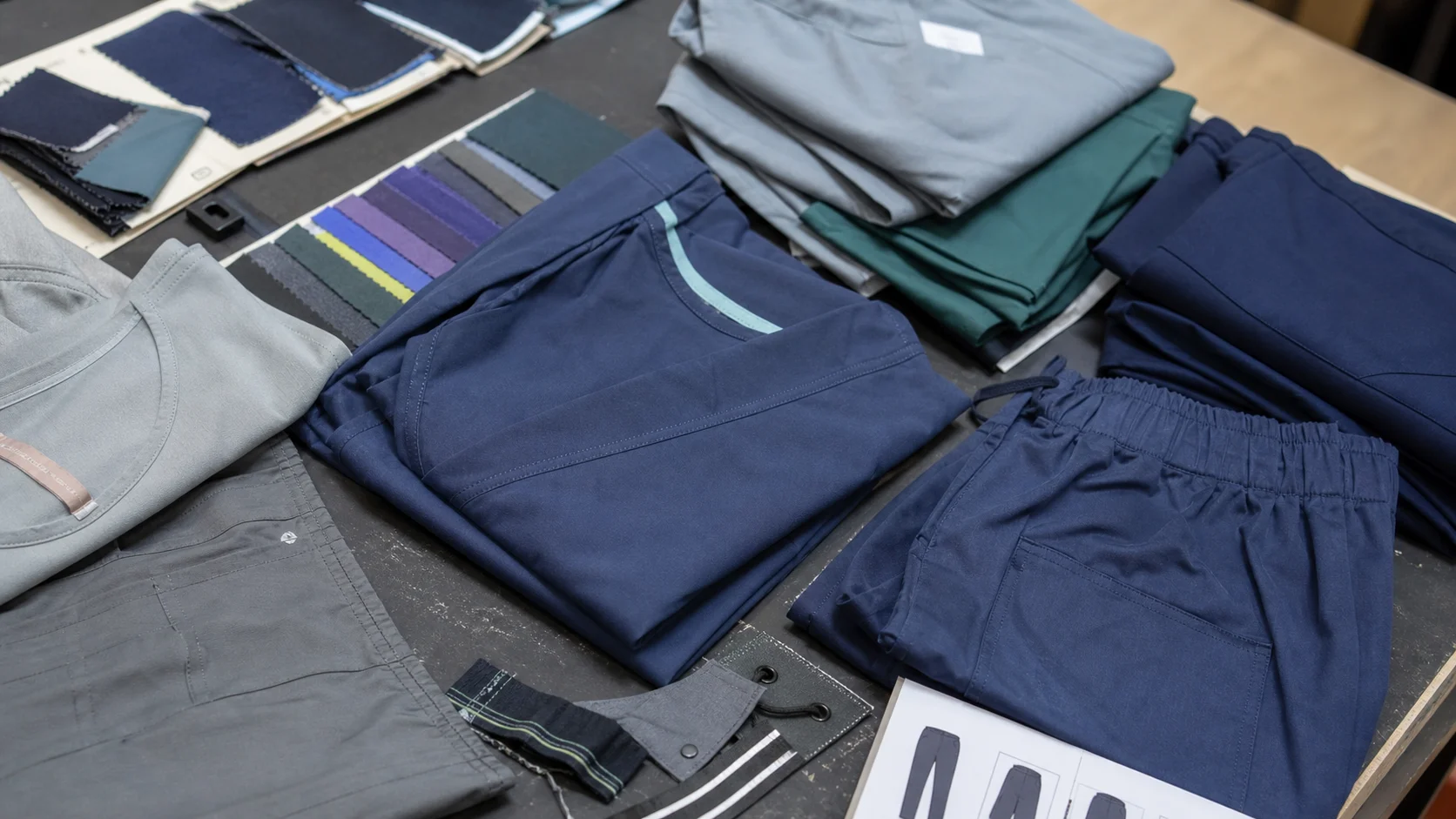
A practical SEO outline for gym program buyers ordering scrubs, focused on shrinkage control, MOQ planning, fabric specs, wash testing, sizing risk, and...
Scrubs Shrinkage Plan for Gym Program Buyers - MOQ, Cost & Sourcing manufacturing guide
Scrubs are no longer limited to hospitals, clinics, and care facilities. Many gym programs now buy scrub-style uniforms for wellness staff, recovery teams, spa personnel, training academies, health clubs with medical partnerships, and branded fitness education programs. The problem is simple: scrubs are expected to look clean, fit consistently, wash frequently, and survive active movement. If the garment shrinks after the first few washes, the buyer pays for the mistake twice: once through fit complaints and again through replacement orders.
A scrubs order shrinkage control plan is not just a technical note for the factory. It is a sourcing tool. It tells the supplier what fabric performance is acceptable, how measurements should be checked, what washing method should be used for testing, and when a production lot should be rejected or corrected. For gym program buyers, this matters because staff uniforms often sit between medical apparel and activewear. The garments need the easy-care discipline of healthcare uniforms and the mobility expectations of fitness apparel.
The purchasing judgment is straightforward: if a supplier cannot discuss shrinkage before quoting, the quote is incomplete. A low unit price without shrinkage control can become expensive once tops twist, inseams shorten, waistbands tighten, or the brand logo sits in the wrong position after laundering.
For program buyers, shrinkage control should be treated as part of the product specification, not as a quality complaint after delivery.
Buyers sourcing through a manufacturing partner should ask for fabric-level and garment-level shrinkage data before approving bulk. If the program includes multiple body types, repeated washing, and replenishment orders, the shrinkage plan becomes even more important. A uniform program only works when the second order fits like the first order.
Before choosing fabric or negotiating MOQ, buyers should define how the scrubs will be worn. A gym recovery team may wear scrubs during stretching sessions, cryotherapy appointments, physical therapy support, or front-desk medical screening. A training academy may issue scrubs to students who need durable, affordable uniforms. A premium wellness club may want a cleaner, fitted silhouette with branded embroidery.
Each use case changes the shrinkage tolerance. A loose, utility-focused scrub set can tolerate slightly more dimensional change than a slim-fit jogger scrub pant. A scrub top with large heat-transfer branding can show distortion sooner than a plain top. A waistband with elastic and drawcord may hide some shrinkage at the waist, but inseam loss cannot be hidden.
Buyers should document these answers before sampling. The more active the use case, the more important it is to avoid fabric that shrinks unevenly or loses recovery. A gym setting exposes scrubs to bending, squatting, stretching, sweat, deodorant, disinfectant, and frequent laundering. This is not the same wear profile as a low-movement reception uniform.
For buyers still defining the product scope, a manufacturing consultation can help align fabric, fit, and MOQ expectations. Fabrikn’s apparel manufacturing support can be reviewed through the services page.
Most shrinkage issues start with fabric selection. Scrubs are commonly made from polyester-cotton blends, cotton-rich twills, polyester-rayon-spandex blends, mechanical stretch fabrics, or performance woven fabrics with elastane. Each option has different risks.
Cotton brings comfort and breathability, but it usually carries higher shrinkage risk if not properly pre-shrunk or sanforized. Polyester improves dimensional stability and drying speed, but too much polyester can feel less premium if the fabric hand is not developed well. Rayon improves drape, yet it can be more sensitive to laundering and dimensional change. Spandex improves movement, which gym buyers often want, but it creates recovery and heat-sensitivity concerns.
Fabric weight also matters. Many scrub fabrics sit around 120 to 200 gsm, depending on construction and market positioning. Lightweight fabrics may dry quickly but can feel flimsy and show seam puckering. Heavier fabrics may look more durable but can shrink more noticeably if the fiber content and finishing are not controlled. Gym buyers usually need a middle ground: durable enough for daily wear, breathable enough for movement, and stable enough after washing.
The most common sourcing mistake is approving a fabric by hand feel only. Hand feel matters, but it does not prove shrinkage performance. Buyers should request lab dips, strike-offs if prints are used, fabric test data, and washed garment samples before confirming a large order.
A shrinkage control plan should be written into the tech pack or purchase specification. The plan does not need to be complicated, but it must be specific. Vague language such as “must not shrink” is not useful. Every fabric shrinks to some degree. The buyer needs to define how much change is acceptable after a specified wash method.
Many apparel buyers set dimensional change targets in the range of 1% to 3% for stable synthetic blends and 3% to 5% for some cotton-rich garments, depending on price point, construction, and end use. For gym program scrubs, a tighter target is usually better because active movement makes small fit changes more noticeable. A scrub pant inseam that shortens too much can look off-brand and feel uncomfortable.
A practical target for many gym scrub programs may be:
These ranges are not universal. A budget cotton-rich scrub may need a wider tolerance, while a premium stretch scrub should be held to a stricter standard. The buyer’s decision should connect tolerance to price, fabric type, and the real use case.
The wash method must be clearly stated. If the buyer does not define it, the supplier may test under gentle conditions that do not reflect actual use. Gym programs often wash uniforms frequently, and some staff may use warm water, tumble dry, or disinfecting wash routines. Industrial laundry can be more aggressive than home laundering.
A useful specification should state:
For most buyers, garment-level testing is more meaningful than fabric-only testing. Fabric may pass shrinkage requirements, while the finished garment fails due to cutting direction, seam tension, rib trim, elastic behavior, or finishing temperature. Both tests have value, but garment testing catches more real-world problems.
MOQ is where many shrinkage plans break down. Buyers want low minimums, better fabric, custom color, branded trims, consistent sizing, and low price. Suppliers can provide some of these, but rarely all at once. Shrinkage control is easier when the buyer has enough volume to secure consistent fabric lots and proper pre-production testing.
These ranges vary by factory, country, fabric availability, and trim customization. Buyers should treat them as planning ranges, not guarantees. A supplier may accept lower MOQ by using stock fabric and standard trims, but the buyer may lose control over exact shade, fabric repeatability, or replenishment consistency.
From a purchasing standpoint, the best value is often not the lowest MOQ. A slightly higher MOQ can allow the supplier to source one fabric lot, run better pre-production checks, and reduce variation between sizes. If the program is expected to reorder, choosing a fabric that can be replenished consistently is more important than shaving a small amount from the first order.
Buyers should ask suppliers to separate the quote into garment cost, sample cost, branding cost, and testing cost where possible. This makes tradeoffs clearer. If the buyer removes testing to save money, the risk is not removed; it is simply moved into the bulk order.
For programs comparing manufacturing options, it is sensible to review service scope and communication process before requesting final pricing. Relevant sourcing support can be found at Fabrikn’s about us page and through the company’s production services.
A controlled sampling process is the buyer’s best defense against shrinkage problems. One fit sample is not enough for a scrubs program that must survive frequent washing. The approval path should move from concept to fit to washed confirmation to pre-production approval.
The washed sample is where many buyers should slow down. It may look like an extra step, but it prevents a common failure: approving a garment that fits before laundering but becomes too tight, too short, or misshapen after washing. For gym programs, staff will judge the uniform after use, not on the day it arrives in the carton.
Scrub tops should be measured at center front length, center back length, chest, shoulder, sleeve length, sweep, armhole, pocket placement, and neckline. Scrub pants should be measured at waist relaxed, waist extended, front rise, back rise, hip, thigh, inseam, outseam, knee, leg opening, waistband width, and pocket placement.
Measurements should be recorded before wash and after wash. The buyer should compare actual dimensional change against agreed tolerances. If the garment shrinks more in length than width, the pattern may need adjustment or the fabric may require better pre-shrinking. If twisting appears after washing, the issue may come from fabric skew, cutting alignment, or fabric finishing.
Sampling should also include a movement check. Gym staff may bend, squat, reach overhead, sit, and walk for long periods. A scrub top that passes static measurement may still fail in movement if shoulder mobility is poor or the back length rides up. Stretch fabric helps, but it does not replace proper pattern work.
Shrinkage control does not stop after sample approval. Bulk production introduces new risks: fabric lots may vary, cutting may be rushed, sewing tension may change, and finishing temperatures may affect elastane or trims. Buyers should require the supplier to control these steps and keep records.
Fabric should be inspected before cutting. The supplier should check shade, defects, width, weight, and shrinkage where required. Stretch woven fabrics may need relaxation before cutting. If fabric is cut before it relaxes, finished garments may shrink or distort unexpectedly. Relaxation time varies by fabric, but the buyer should at least ask whether the supplier has a defined process.
Cutting direction matters. If pieces are cut off-grain or mixed across inconsistent fabric directions, twisting and uneven shrinkage can appear after laundering. This is especially visible in pant legs and side seams. For scrub pants, inseam and outseam alignment should be watched carefully. For tops, center front and center back alignment affect the way the garment hangs.
Sewing tension can create puckering or uneven seam behavior after wash. Stretch fabrics require suitable needles, thread, seam type, and machine settings. Bartacks should reinforce stress points at pockets, side vents, waistband openings, and drawcord exits. Gym programs should not ignore seam strength, because the garment is likely to face more movement than a basic desk uniform.
Pressing and heat application can influence shrinkage, especially with spandex blends and heat-transfer logos. Excessive heat may damage elastane recovery or cause logo edges to lift after washing. Embroidery can also affect fabric drape and shrinkage around the stitched area if backing, density, or placement is poorly managed.
Buyers should approve final branding on washed samples. A logo that looks sharp on an unwashed sample may wrinkle, pull, crack, or shift after laundering. For a gym program, branding is part of the uniform value. Poor logo performance makes the whole order look cheap even if the garment construction is acceptable.
Inspection should be planned before production starts. Waiting until cartons are packed leaves fewer correction options. Buyers should request in-line checks for higher-risk orders and final inspection before shipment. The inspection should include measurements, visual appearance, workmanship, packing, labeling, and wash-related risks where possible.
Measurement tolerances should be practical. Many woven apparel programs use tolerances around plus or minus 0.5 inch for key measurements, with tighter tolerance for smaller details and wider tolerance for larger sizes or less critical areas. The exact tolerance should be agreed before production. A supplier cannot fairly be judged against standards that were never stated.
Inspection sample size depends on order quantity, risk level, and buyer requirements. Some buyers use AQL inspection methods for final random inspection. Others use more targeted checks for small custom orders. For a gym scrub program with new fabric, custom branding, or first-time supplier relationship, a stricter inspection approach is sensible.
Do not rely only on carton count and visual review. Shrinkage-related failures may not be obvious until garments are measured or washed. If bulk wash testing is not possible for every lot, the buyer can require retained samples from production for wash verification. This adds accountability and helps future claims if the order fails in real use.
Lead time depends on fabric availability, sample rounds, lab dip approval, trim sourcing, production capacity, testing, inspection, and shipping method. Shrinkage control adds time, but it usually saves time compared with dealing with a failed bulk order.
These timelines can shorten when using stock fabric and standard trims. They can expand when the buyer needs custom color, custom fabric, extended sizes, multiple logo applications, or strict testing. Gym program buyers should avoid launching a new scrub uniform too close to staff onboarding, event dates, or academy intake periods.
The practical sourcing rule is to approve slowly and produce quickly, not the reverse. Rushing approvals creates uncertainty. Once the approved standard is clear, production has a better chance of staying on schedule.
A scrubs order shrinkage control plan should be easy for the buyer, supplier, and inspector to follow. The checklist below can be adapted into a sourcing brief or purchase order attachment.
Buyers who want help turning these points into a production-ready sourcing brief can contact Fabrikn through the contact page. A clear brief usually leads to cleaner pricing, fewer assumptions, and better quality control.
Not every scrubs program needs premium fabric or expensive testing, but every program needs a basic shrinkage plan. The right decision depends on volume, staff expectations, brand positioning, and reorder needs.
For a low-budget training program, stock polyester-cotton fabric with a washed sample approval may be enough. The buyer should accept that hand feel and fit refinement may be limited. For a premium gym recovery or wellness program, performance stretch fabric, tighter measurement tolerance, and stronger wash testing are worth the added cost. For a national or multi-location rollout, consistency and replenishment should outweigh the lowest first-order price.
The highest-risk choice is a custom-looking scrub order sourced like a commodity item. Custom logos, modern fits, stretch fabric, and gym-specific wear expectations require more control than a basic uniform order. If the price is too low to include proper sampling, shrinkage testing, and inspection, the buyer should assume quality risk has been pushed downstream.
A good scrubs shrinkage plan does not make the order complicated. It makes the order measurable. That is the difference between hoping the scrubs fit after washing and knowing the supplier has a standard to meet.
Get a free quote from Fabrikn — your trusted B2B clothing manufacturer with 10+ years of experience. MOQ as low as 200 pieces.
Get a Free Quote →A scrubs order shrinkage control plan is a written specification that defines acceptable dimensional change after washing. It usually includes fabric requirements, wash test method, measurement points, shrinkage tolerance, sample approval steps, and inspection criteria.
Many buyers aim for around 2% to 3% shrinkage in length and width for stable scrub fabrics, especially for active-use programs. Cotton-rich fabrics may need wider tolerance unless they are properly pre-shrunk. The acceptable range should be agreed before sampling and confirmed through garment wash testing.
Both are useful, but finished garment testing is more practical for buyers. Garment testing shows how fabric, seams, elastic, trims, and branding behave together after washing. Fabric-only testing may miss issues caused by cutting, sewing, or heat application.
Stock fabric scrub programs may start around 100 to 300 sets. Custom colors often require around 300 to 800 sets, while custom fabric blends or larger multi-style programs may require 800 to 2,000 or more sets. Exact MOQ depends on supplier, fabric, trims, color, and size range.
Stretch scrubs made with polyester and spandex may have better dimensional stability than cotton-rich scrubs, but they still need testing. Spandex can be sensitive to heat, and poor fabric finishing can lead to recovery problems, twisting, or shape change after laundering.
Three wash cycles are commonly used for initial shrinkage review, although some buyers require more for durability testing. The wash method should reflect real use, including water temperature and drying method. Gym programs with frequent laundering should not rely on a single gentle wash test.
Pattern adjustment can compensate for predictable shrinkage, but it does not solve unstable fabric. If the fabric shrinks unevenly, twists, or changes from lot to lot, pattern compensation will not reliably protect the order. Fabric stability should be controlled first.
Inseam shrinkage, waistband distortion, and twisted legs are common risks. These issues are especially visible in jogger-style scrub pants or modern tapered fits. Buyers should measure pants before and after washing and check side seam alignment carefully.
Stock fabric is usually better for lower MOQ, faster delivery, and simpler replenishment. Custom fabric is better when the buyer needs a specific performance level, hand feel, color, or brand position. Custom fabric requires more development time, higher MOQ, and stronger testing.
The purchase order or attached specification should include fabric composition, gsm, color reference, size breakdown, measurement tolerances, shrinkage tolerance, wash test method, trim details, branding placement, sample approval requirements, inspection standard, packing instructions, and delivery terms.