
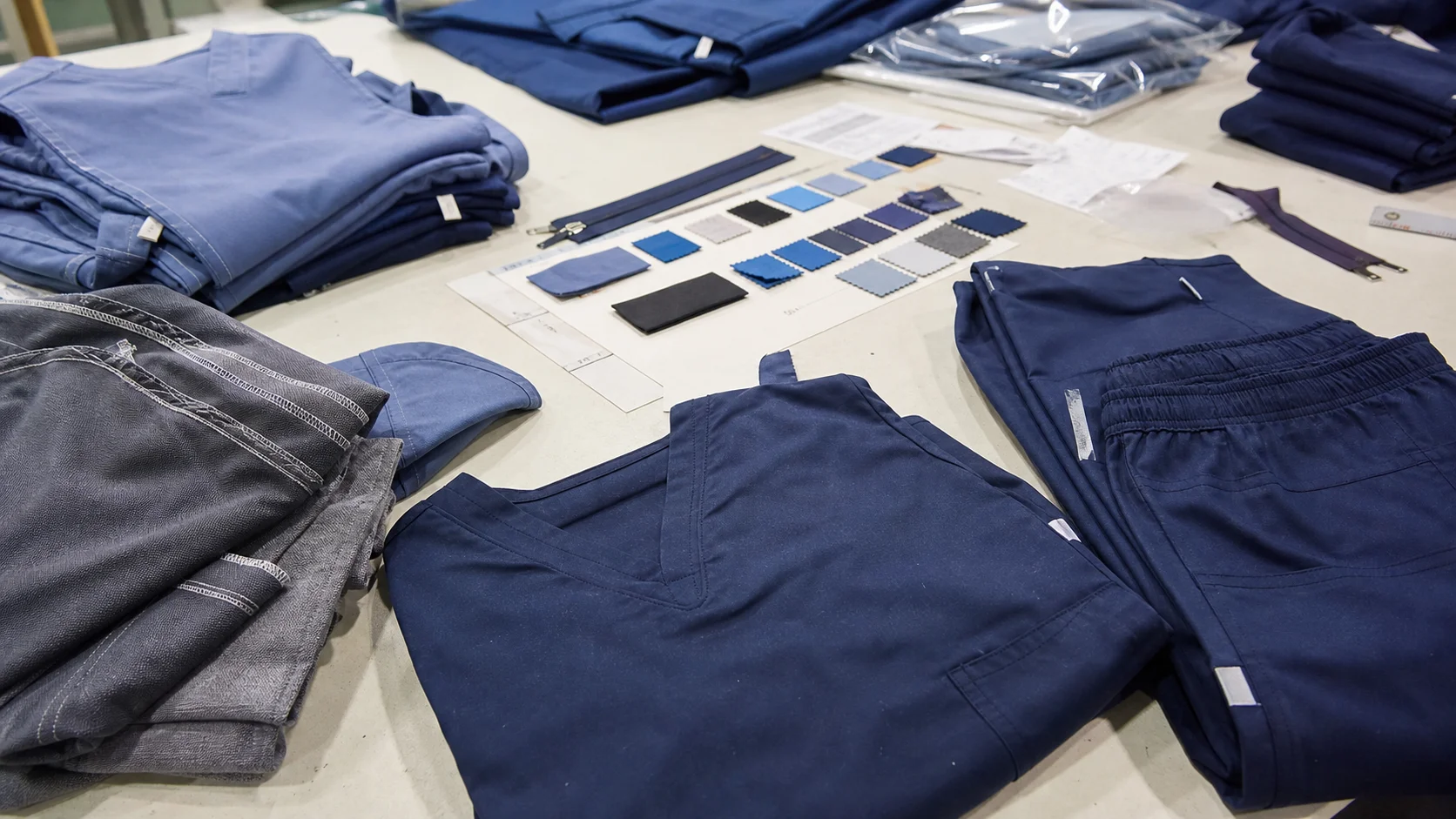
A practical outline for retail operations teams sourcing scrubs, focused on shrinkage controls, fabric testing, spec tolerances, wash validation, supplier...
Scrubs Shrinkage Control Plan for Retail Buyers - Fabrikn production reference
Scrubs shrinkage is not a minor technical issue for retail operations teams. It affects size consistency, customer returns, online reviews, replenishment planning, and vendor scorecards. A scrub top that fits correctly during a fitting session but loses length after the first wash can create a direct margin problem for retailers, especially when the style is sold in multiple colors, sizes, and inseam options.
For buyers sourcing from a scrubs manufacturer, shrinkage control should be treated as a commercial requirement, not only a lab test. The plan must connect fabric selection, pre-production sampling, garment construction, bulk cutting, washing, finishing, inspection, labeling, and post-shipment claims handling. If these steps are not aligned before purchase order placement, shrinkage problems usually appear late, when the fabric has already been cut or goods are already packed.
This guide is written for retail buyers, sourcing managers, QA teams, and operations teams managing medical uniform programs. It explains how to build a practical scrubs manufacturer shrinkage control plan for retail operations, including typical MOQ considerations, cost tradeoffs, testing methods, approval checkpoints, and inspection risks.
Scrubs are workwear, but customers judge them like everyday apparel. Healthcare workers expect comfort, mobility, durability, and predictable fit after repeated laundering. Retail buyers need the product to perform consistently across sizes and across repeat orders. Shrinkage breaks that consistency.
The risk is higher in scrub programs because tops and pants are often purchased as coordinated sets. If the top body length shrinks more than the pant inseam, the set feels unbalanced. If one colorway shrinks differently from another, customer service teams will receive complaints even when the style name and size are the same.
Retail operations teams also deal with the financial side. Shrinkage-related problems can lead to:
A strong shrinkage control plan protects margin by reducing avoidable disputes. It also gives the buyer a clearer basis for comparing suppliers. One manufacturer may offer a lower FOB price, but if their fabric shrinkage control is weak, the landed commercial risk may be higher than the apparent savings.
Direct purchasing judgment: for retail scrubs, a slightly higher fabric or processing cost can be justified if it reduces post-wash size claims. The cheapest construction is rarely the lowest-risk option when the product is size-sensitive and replenished seasonally.
Shrinkage means dimensional change after washing, drying, steaming, or general use. In scrubs, the most important measurements are usually body length, chest width, shoulder width, sleeve length, waist, hip, rise, thigh, and inseam. Retailers should track both lengthwise shrinkage and widthwise shrinkage because they affect fit differently.
Length shrinkage is especially visible in scrub pants. A pant that loses too much inseam after laundering can appear incorrectly graded, even if the pre-wash garment matched the spec. Width shrinkage can make tops tight across the chest or hips, reducing comfort during movement.
Shrinkage can come from several sources:
For retail buying purposes, shrinkage must be defined by a test method. A vague statement such as “pre-shrunk fabric” is not enough. The purchase order, technical pack, or quality manual should state the laundering method, number of wash cycles, drying method, acceptable dimensional change, and measurement points.
The shrinkage plan starts before sampling. Fabric composition, weight, weave, stretch content, and finishing method determine the baseline risk. A scrubs manufacturer can help develop the garment, but the buyer should understand how fabric decisions affect shrinkage, MOQ, and cost.
Fabric weight also matters. Lightweight scrub fabrics may be comfortable, but they can show more distortion if finishing is inconsistent. Heavier fabrics may feel stable, but they can still shrink if the fiber blend and processing are not controlled. Buyers should avoid assuming that heavier equals safer.
Shrinkage control is not limited to the shell fabric. Scrubs often include elastic waistbands, drawcords, pocket bags, neck binding, contrast panels, zippers, labels, and fusible interlinings. If these components shrink, twist, curl, or pull against the shell fabric, the garment can fail visually even when the shell fabric test looks acceptable.
A practical trim specification should include:
Buyers comparing fabric options can work with a sourcing partner to build the right balance between cost and performance. For broader manufacturing support, see Fabrikn services.
A manufacturer shrinkage control plan should be documented before bulk fabric is ordered. It should not depend on verbal assurances. Retail buyers should request a written plan that covers responsibilities, test timing, approval gates, and corrective action rules.
The best plans are practical. They do not require a lab report for every single piece, but they do define enough control points to detect risk before the entire order is finished. For repeat retail programs, the plan should also cover how prior approved data is used and when retesting is required.
Targets vary by fabric and buyer standard. Many retail scrub programs aim for dimensional change within a narrow range after home laundering. A common commercial expectation for stable woven scrubs may be around 3% or less in key measurements after the agreed wash method. Some buyers may allow slightly more in less critical width measurements, while inseam and body length often require tighter control.
The tolerance should be realistic for the fabric. A high-rayon stretch fabric may need more careful finishing and testing than a stable polyester-rich woven. If a supplier promises very low shrinkage without explaining the finishing method and testing basis, buyers should ask for proof before confirming the PO.
Direct purchasing judgment: do not approve a fabric only because the handfeel is strong in development. For scrubs, stability after wash is part of the product value. A soft fabric that shrinks unpredictably will cost more in returns than it saves in initial appeal.
Sampling is where shrinkage risk should be exposed. Retail buyers should avoid moving directly from fit sample approval to bulk production without garment wash testing. A fit sample can look correct because it is measured before laundering. That does not prove the customer will receive a stable product.
The pre-production sample is the most important approval stage for shrinkage. It should use actual bulk fabric and trims, not substitute materials. If the supplier submits a PP sample in development fabric and asks for approval, the buyer should treat that approval as conditional only.
One wash cycle may identify severe problems, but it may not show the full dimensional change. Many retail buyers use three wash cycles for development validation, especially for fabrics with cotton, rayon, viscose, or stretch content. Some programs may require five cycles for durability positioning or institutional wash claims.
The test method should match the care label. If the garment is labeled for cold wash and low tumble dry, testing under hot wash and high dry may be too aggressive unless the buyer wants a stress test. At the same time, retail customers do not always follow care instructions. A buyer may choose to run both standard care testing and harsher internal risk testing before final approval.
Shrinkage control has a direct relationship with MOQ and cost. Stable fabric development, lab dips, finishing trials, and garment testing take time and money. Low-MOQ orders can still be managed, but buyers should understand where the constraints appear.
MOQ varies by fabric, dyeing method, trim availability, manufacturer capacity, and color count. Retail buyers should treat the following ranges as planning references, not fixed promises:
Sourcing Scenario Typical MOQ Range Shrinkage Control Consideration Stock fabric, simple scrub style Approximately 100 to 300 pieces per style/color Faster start, but fabric history and lot testing still need review. Custom color in existing fabric Approximately 300 to 800 pieces per color Bulk dye lot shrinkage can vary from sample yardage. Custom fabric blend or finish Approximately 800 to 2,000 pieces or more per fabric/color More control is possible, but development testing becomes essential. Multi-style scrub collection using shared fabric MOQ may be spread across tops, pants, and jackets depending on supplier policy Shared fabric can reduce risk if the same tested lot is used across styles.For new retail programs, using a stable stock fabric can reduce development risk and shorten lead time. The tradeoff is reduced exclusivity and limited control over handfeel, color range, or finishing. Custom fabric gives more brand differentiation, but it increases MOQ and requires stronger testing discipline.
Cutting these costs may look attractive at PO negotiation stage, but the buyer carries the downstream risk. Retail operations teams should budget for shrinkage testing as part of responsible sourcing, especially for launch programs and private-label scrubs.
Teams planning a scrub sourcing project can contact Fabrikn to discuss development requirements, MOQ planning, and production feasibility.
A shrinkage control plan cannot work without a disciplined size specification. The garment must be measured consistently before and after washing. If the measuring method changes between factory QA, third-party inspection, and buyer review, disputes become difficult to resolve.
The buyer should define whether measurements are taken flat, relaxed, stretched, buttoned, zipped, or laid naturally. Elastic waist pants need special attention because relaxed waist measurements can vary depending on how the elastic settles after wash.
Manufacturers sometimes compensate for expected shrinkage by enlarging patterns before cutting. This can work when shrinkage is predictable. It is risky when fabric lots vary or when width and length shrink at different rates.
For example, if a fabric shrinks 3% in length but only 1% in width, the pattern correction must be directional. A general size increase may distort the fit. Buyers should require documented shrinkage data before approving pattern compensation. It is better to stabilize the fabric than to rely entirely on oversized cutting.
Bulk production is where approved intentions meet factory reality. Even a good PP sample does not guarantee that all units will perform the same if lot control is weak. Retail buyers should ask the manufacturer to define how fabric rolls, dye lots, cutting batches, and sewing lines will be controlled.
Before cutting, the manufacturer should check fabric width, weight, shade, defects, and shrinkage performance. Fabric rolls from different lots should not be mixed casually within the same size or color shipment. If multiple dye lots are unavoidable, the buyer should be informed and shade/shrinkage tests should be reviewed.
Fabric should also be relaxed before cutting, especially stretch woven and knit components. Insufficient relaxation can cause panels to shrink or twist after cutting. The required relaxation time varies by fabric, but overnight relaxation is often used for risk control. Some fabrics need longer depending on tension from rolling and transport.
Cutting accuracy matters because shrinkage tolerance sits on top of production tolerance. If the garment is already close to the low end of measurement tolerance before wash, a normal amount of shrinkage can push it out of spec.
Sewing can also create distortion. Tight thread tension, uneven feeding, poor handling of stretch panels, and incompatible seam construction can cause puckering or twisting after laundering. Scrub pants with elastic waistbands require special care because elastic, shell fabric, and stitching must recover together.
Steam pressing can temporarily change garment dimensions. A garment may measure correctly right after pressing but relax later. Retail buyers should clarify whether final measurements are taken after pressing, after cooling, or after a defined relaxation period. For shrinkage-sensitive products, post-press relaxation before final measurement is a sensible control.
Final inspection often catches visible defects, but shrinkage risks can slip through if the inspection plan only checks unwashed measurements. Retail scrubs need both appearance inspection and dimensional performance checks.
A strong inspection protocol should include random measurement checks across sizes and colors, visual review after wash where feasible, and comparison against the approved PP sample. For larger programs, buyers may require production lot wash testing before shipment release.
AQL inspection is useful for workmanship and measurement sampling, but it is not a complete replacement for shrinkage testing. AQL can tell the buyer whether sampled units meet the current finished spec. It does not automatically prove dimensional stability after customer laundering unless wash testing is included in the inspection scope.
Retail teams should separate two questions: “Does the garment meet spec today?” and “Will the garment remain within acceptable size after washing?” Both questions matter.
Shrinkage control affects the production calendar. Buyers often underestimate how long testing, correction, and re-approval can take. If the launch date is fixed, the shrinkage plan must be built into the timeline from the start.
Lead time depends heavily on fabric availability. Stock fabrics can shorten development, but buyers still need to test the specific lot used for production. Custom fabrics require more time because finishing trials, lab dips, and bulk testing must be completed before cutting.
Seasonal retail calendars should include a decision deadline for shrinkage approval. If the PP sample fails wash testing, the buyer needs time to choose between correcting the fabric finish, adjusting the pattern, changing care instructions, or switching fabric. Each option has cost and schedule consequences.
Retail operations teams need a repeatable process. A good shrinkage control plan should be easy to audit across vendors and purchase orders. The checklist below can be adapted for private-label scrubs, branded programs, or institutional uniform assortments sold through retail channels.
Retail buyers evaluating manufacturing partners may also review the company background and sourcing approach through Fabrikn about us.
Scrubs shrinkage control is a balance of cost, speed, and reliability. The right decision depends on brand positioning and retail risk tolerance. A budget scrub line may not need the most expensive performance fabric, but it still needs reliable post-wash fit. A premium scrub line may justify higher fabric cost, more testing, and tighter tolerances because customers expect better comfort and durability.
Stock fabric is suitable when speed, lower MOQ, and cost control are priorities. It is often a good choice for testing a new retail assortment, launching limited colors, or validating market demand. The limitation is that the buyer has less control over uniqueness and may depend on the supplier’s available fabric lots.
Stock fabric is not automatically low risk. The buyer should still request fabric history, shrinkage data, and confirmation that the same fabric quality will be used for the full order.
Custom fabric is more appropriate for long-term retail programs, premium positioning, exclusive colors, or performance claims. It allows stronger control over composition, stretch, handfeel, finish, and color palette. The tradeoff is higher MOQ, longer development time, and more testing responsibility.
If the retail buyer plans repeat replenishment, custom fabric may provide better consistency once the development is stabilized. The first order needs stricter management because the fabric has not yet proven itself in commercial production.
Buyers should be willing to delay approval when shrinkage evidence is weak. Warning signs include missing test reports, PP samples made in substitute fabric, inconsistent measurement records, unexplained lot changes, and pressure to cut before testing is complete.
A delayed shipment is painful. A full retail launch with unstable sizing is usually worse. Once product reaches customers, shrinkage becomes a public-facing problem through reviews, returns, and support tickets.
The following template can be used as a starting point when briefing a scrubs manufacturer. It should be adjusted based on fabric type, buyer standards, and target market.
Control Area Requirement Evidence Needed Fabric specification Composition, weight, construction, finish, stretch, and width confirmed Fabric data sheet and approved swatch Trim specification Elastic, drawcord, labels, binding, interlining, and thread confirmed Trim card and wash compatibility notes Test method Wash temperature, detergent, drying method, and cycle count defined Buyer QA manual or agreed test protocol PP sample Made in actual bulk fabric and trims Approved sample, measurement sheet, wash test results Bulk fabric Each relevant lot tested before cutting Lot test report and roll records Production control Relaxation, cutting, sewing, and finishing monitored In-line QC records Final inspection Measurements checked across size and color range AQL report and any wash check records Post-shipment review Returns and complaints tracked by lot Retail operations data and vendor review notesA scrubs manufacturer shrinkage control plan for retail operations teams should be specific, measurable, and connected to commercial decisions. The buyer needs to know what fabric is being used, how it has been stabilized, how garments are tested, when approval happens, and what actions are taken if results fail.
The most reliable sourcing approach is not always the lowest quoted unit price. For scrubs, post-wash fit stability is part of the product promise. Retail buyers should build shrinkage testing into the development calendar, protect PP approval gates, and require lot-level discipline before bulk cutting.
Good shrinkage control reduces returns, protects customer trust, and makes replenishment easier. It also gives sourcing teams a stronger basis for supplier comparison. In a category where fit consistency affects repeat purchase, that control is worth negotiating early.
Get a free quote from Fabrikn — your trusted B2B clothing manufacturer with 10+ years of experience. MOQ as low as 200 pieces.
Get a Free Quote →Many retail scrub programs target around 3% or less dimensional change in key measurements after the agreed wash method, especially for body length and inseam. The exact tolerance depends on fabric type, care label, buyer standard, and garment design.
Both stages matter. Fabric should be tested before cutting, and finished garments should be tested at PP sample stage. For higher-risk programs, bulk production lot testing or final inspection wash checks may also be needed.
Pattern compensation can help only when shrinkage is predictable and supported by reliable test data. It is risky if fabric lots vary or if length and width shrink differently. Stabilizing the fabric is usually safer than relying only on oversized patterns.
Not always. Different dye lots, dye processes, and finishing conditions can affect shrinkage. Retail buyers should test relevant colorways or dye lots, especially for large programs and repeat orders.
Typical MOQ can range from about 100 to 300 pieces per style/color for stock fabric, 300 to 800 pieces for custom colors, and 800 to 2,000 pieces or more for custom fabric development. Actual MOQ depends on fabric availability, trims, color count, and manufacturer policy.
Spandex can improve comfort and stretch recovery, but it does not automatically solve shrinkage. Heat setting, fabric construction, sewing tension, and laundering conditions still need to be controlled.
Inseam shrinkage is usually the most visible risk because customers quickly notice pants that become too short. Elastic waistband behavior, rise, and hip width should also be monitored after wash.
Third-party testing is useful for higher-value programs, custom fabrics, large orders, or suppliers without strong internal testing controls. For smaller programs, in-house testing may be acceptable if the method is documented and results are reliable.
Clear care labels help, but they do not replace product stability. The care instruction should match the tested condition. If customers are likely to tumble dry scrubs, the product should be evaluated under realistic drying conditions.
Production should be paused if PP sample wash testing fails, bulk fabric lot results differ from approved data, trims are substituted without testing, or measurements after wash fall outside agreed tolerance. It is better to correct before full cutting than manage claims after retail release.