
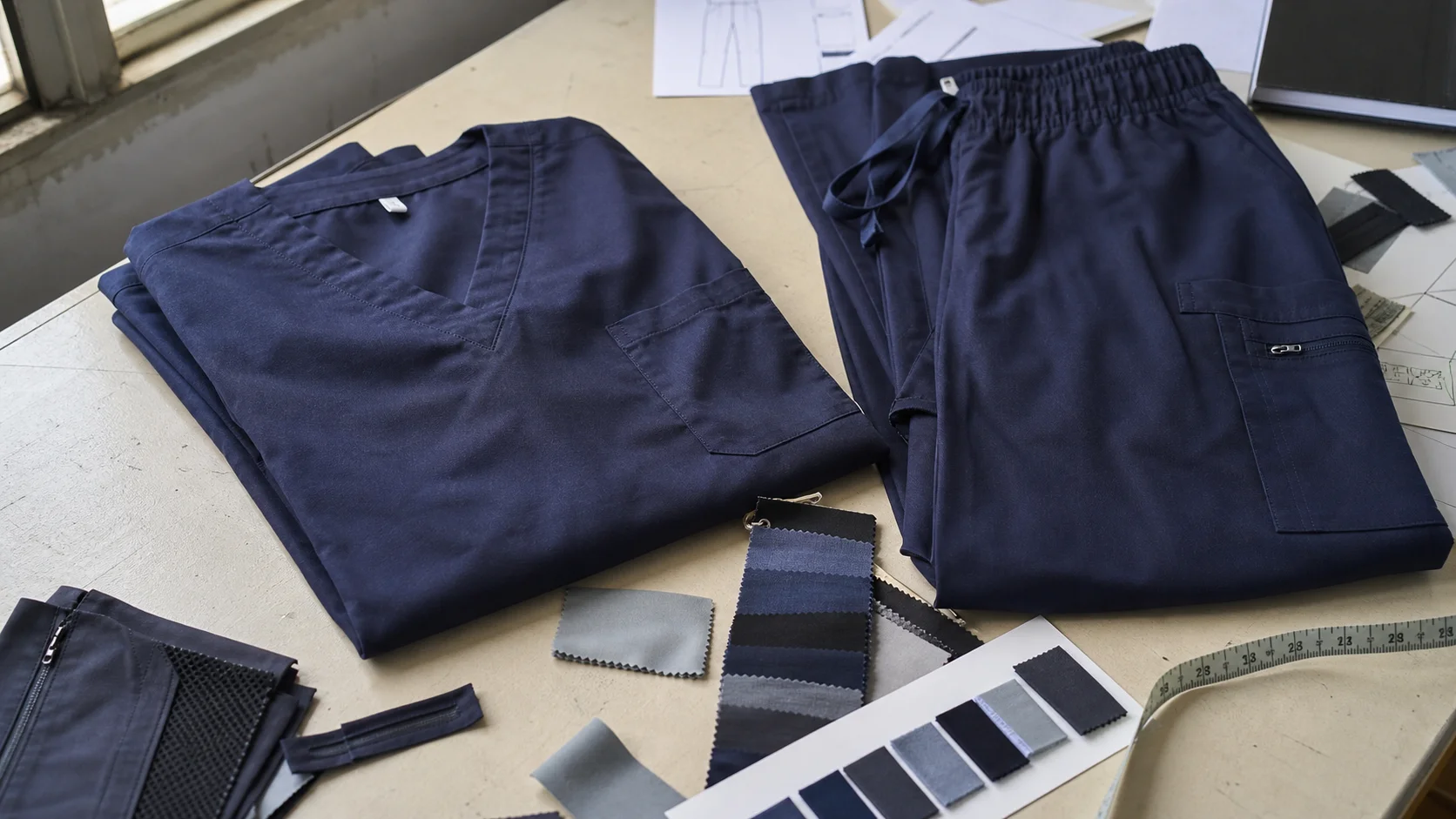
A sourcing-focused outline for gym program buyers evaluating scrub size grading, fit consistency, MOQ tradeoffs, and cost risks before placing production...
Scrubs Size Grading Review for Gym Program Buyers - MOQ, Cost & Sourcing manufacturing guide
Category: MOQ, Cost & Sourcing
Scrubs are no longer limited to clinical teams. Gym programs, wellness centers, sports therapy clinics, rehabilitation studios, student training programs, and hybrid health-fitness operators increasingly buy scrub-style uniforms for staff, trainees, recovery specialists, and customer-facing service teams. For these buyers, size grading is not a technical side note. It directly affects wearer comfort, reorder stability, program presentation, and total landed cost.
The keyword issue is simple: gym program buyers scrubs size grading review should focus less on generic size charts and more on whether the garment range works across real athletic body types. Gym staff and students often have broader shoulders, developed thighs, smaller waist-to-hip ratios, or muscular calves. A standard medical scrub size chart may fit some users, but it can fail quickly when applied to athletic populations.
Bad grading creates practical problems. Tops pull across the chest. Pants fit the waist but restrict the thigh. Jogger cuffs sit too tight over the calf. Sleeve openings look oversized when the buyer sizes up to solve shoulder tension. These issues are not just wearer complaints; they can trigger exchanges, excess inventory, delayed program launches, and brand inconsistency across locations.
A good sourcing review should ask whether the size run, grade rules, fabric stretch, waistband construction, and sample approval process support the actual program population. The lowest FOB price is not useful if half the staff needs a different size after delivery.
For gym program buyers, the best scrub size grading decision is rarely the cheapest size chart. It is the size chart that reduces exchanges, supports movement, and keeps repeat orders predictable.
Gym program buyers are not all buying for the same use case. Some need uniforms for personal trainers who move constantly. Some need clean, professional sets for wellness reception teams. Others are buying for sports recovery staff, massage therapists, physiotherapy assistants, or student cohorts in fitness and health education programs.
Each use case changes the grading decision. A front-desk wellness uniform can use a cleaner slim fit, provided the fabric has some stretch and the wearer is not performing deep movement. A trainer or recovery specialist needs more functional ease at the shoulder, upper back, hip, thigh, knee, and seat. A student program may need a wider and more forgiving size range because the buyer cannot easily predict body types before enrollment.
Gym buyers also tend to order in batches. A program may launch with 80 sets, then reorder 25 sets for new staff, then add another 120 sets when a new class begins. This makes size consistency important. If the first production lot and second production lot use different grading rules, the buyer will face avoidable complaints.
For support with uniform sourcing structure, buyers can review supplier capabilities and production categories through Fabrikn services. A clear service brief helps separate simple blank scrub purchasing from custom graded program apparel.
Size grading is the process of increasing or decreasing a garment pattern from a base size into a full size range. For scrubs, grading must balance comfort, professional appearance, mobility, and production efficiency.
A common mistake is assuming every measurement grows by the same amount between sizes. Good grading does not work that way. Chest, waist, hip, shoulder, sleeve length, inseam, rise, thigh, knee, and hem opening all need separate grade rules. For example, chest width may increase more aggressively than shoulder width. Pant hip may increase more than inseam. Jogger cuff opening may only grow slightly to preserve the intended silhouette.
The base size is usually medium for unisex programs or small/medium for gendered fits. The base size must be approved first because the rest of the size set is graded from it. If the base sample is not correct, the full run will multiply that error.
Direct purchasing judgment: if the program has a mixed and unknown wearer population, avoid overly slim grading on the first order. A slightly modern but forgiving fit usually performs better than a fashion-forward scrub that creates exchange pressure.
The fit model should match the job. A gym recovery therapist bends, kneels, reaches, and moves around treatment tables. A program instructor may demonstrate movement. A reception team may stand for long periods but does not need the same dynamic range. Buying one scrub fit for every department can simplify MOQ, but it may not produce the best wearer result.
Unisex sizing is attractive because it reduces SKUs. One top pattern and one pant pattern can cover the entire team. This can lower development cost and simplify packing. The tradeoff is fit compromise. Unisex tops can be too long or too wide for some wearers. Unisex pants may not fit hip and waist proportions well across a mixed team.
Separate men’s and women’s fits give better fit accuracy but usually raise MOQ pressure. A buyer ordering 300 sets may manage this well. A buyer ordering 80 sets may struggle because each style, color, and size combination spreads the order thin.
A practical middle path is to use a unisex top with gendered pants, or a shared fabric and color system with two fit blocks. This keeps brand consistency while improving lower-body fit. Pants drive many scrub complaints, especially in active environments, so solving pant fit can reduce return risk.
Fit Option Best For Main Advantage Main Risk Unisex classic Low to mid-volume programs Lower SKU complexity Boxy fit and more wearer compromise Men’s and women’s fit Established programs with stable demand Better fit satisfaction Higher MOQ and inventory planning burden Modern athletic fit Trainer, wellness, and recovery teams Cleaner look and better brand alignment Needs accurate stretch and movement testing Relaxed student fit Education cohorts and mixed body types Lower exchange risk Less tailored appearanceA scrub size chart should not be limited to chest, waist, and hip. Those measurements are useful, but they do not fully describe movement fit. Gym program buyers should request garment measurements, not only body measurements. Garment measurements show the actual finished dimensions of the product.
For gym buyers, thigh and cross-back measurements deserve more attention than they often receive. A scrub can look acceptable on a standing model and still fail when the wearer demonstrates a stretch, kneels, or lifts equipment.
Most scrub programs use sizes from XS to 3XL. Some programs extend to 4XL or 5XL. A broader range is more inclusive, but each extra size adds SKU count, pattern grading checks, inventory decisions, and inspection points.
Typical size ranges for gym program scrub orders may look like this:
The buying decision should be based on wearer data where possible. If the buyer has previous uniform size data, use it. If not, collect size preferences before production. Guessing size ratios is one of the most common inventory risks in uniform sourcing.
A cautious starting ratio for mixed adult programs often places most units between S and XL, with lower quantities in XXS, XS, 2XL, 3XL, and above. This is not a universal rule. Athletic populations may skew differently from office or clinical populations. Men’s programs may need more L to 2XL. Women’s wellness teams may need more XS to M. Student programs can be unpredictable.
Order Type Suggested Size Range Planning Note Small gym staff team XS to 2XL Confirm actual wearer sizes before cutting bulk fabric Multi-location wellness program XS to 3XL Reserve extra units in core sizes for replacements Fitness education cohort XXS to 4XL Collect enrollment size data early Inclusive branded uniform rollout XXS to 5XL Test edge sizes before approving full productionMOQ is where size grading becomes a commercial decision. A supplier may quote a minimum order of 300 sets, but that number does not tell the full story. The real issue is how those 300 sets are split by style, color, fabric, fit block, and size.
Typical MOQ ranges for custom scrub manufacturing can vary widely:
These are typical planning ranges, not guaranteed supplier terms. Actual MOQ depends on fabric availability, dyeing requirements, trim sourcing, factory line setup, decoration method, and supplier policy.
Size grading adds cost when the buyer spreads units too thin. For example, a 300-set order across two colors, two fit blocks, and ten sizes creates forty SKU combinations. That may leave only a handful of units per SKU. Production becomes inefficient, cutting markers are less economical, trims are harder to allocate, and packing mistakes become more likely.
Direct purchasing judgment: if the budget is tight and the order is under 300 sets, reduce complexity first. One color, one fabric, one top style, one pant style, and a controlled size range will usually outperform a more fragmented assortment.
Scrub cost is affected by fabric consumption, construction time, trims, packaging, labeling, decoration, testing, and order complexity. Size grading influences several of these areas.
Larger sizes consume more fabric. Some suppliers average the cost across all sizes. Others may apply surcharges for 2XL and above. Buyers should clarify this early, especially when the program needs inclusive sizing. A transparent quote should show whether oversized units carry added cost.
Complex grading can also increase sampling expense. A buyer may approve a medium base sample, then request size-set samples for XS, XL, and 3XL. This is a smart step for risk control, but it costs time and money. Skipping it saves sample cost but increases the chance of bulk fit issues.
Decoration placement can add hidden cost. A chest logo may look correct on medium but appear too close to the armhole on XS or too high on 3XL. Embroidery, heat transfer, woven labels, reflective marks, and pocket branding should be checked across sizes. If placement must be manually adjusted by size, production handling becomes more complex.
Decision Cost Effect Buying Judgment Wide size range Higher pattern, sampling, and inventory control cost Worth it when inclusivity and wearer coverage are priorities Separate fit blocks Higher development and MOQ pressure Useful for stable programs with repeat volume Custom fabric color Higher MOQ and lab dip approval time Best for branded programs with clear volume Stock fabric color Lower development risk Better for first-time or smaller programs Size-set sampling Higher upfront sample cost Recommended before large or repeated ordersFabric selection affects how forgiving the grading can be. A rigid woven scrub requires more ease because the garment does not stretch with the body. A stretch woven can use a cleaner silhouette, but only if recovery is reliable. Poor recovery leads to bagging at the knee, seat, and elbow.
Gym program buyers should specify fabric with enough detail to avoid vague substitution. “Polyester spandex” is not enough. A proper specification should include fiber content, fabric structure, weight, stretch direction, color, finish, and performance expectations.
Typical scrub fabric weights often sit around 150 to 220 gsm, depending on hand feel, opacity, climate, and durability requirements. Lightweight fabric may feel comfortable but can become transparent in lighter colors. Heavier fabric may look more structured but can feel warm during active work.
Trim specifications also matter. Waistbands, drawcords, toggles, zippers, snaps, pocket bags, labels, and cuffs should be defined before costing. If trim quality is left open, the supplier may quote with cheaper components that do not support the intended use.
For buyers building a new program, supplier discussions should start with a clear product brief. General company background and sourcing approach can be reviewed through Fabrikn about us, while project-specific questions are better handled through a direct inquiry.
Sample approval is the safest place to catch grading problems before they become bulk production problems. A practical scrub program should move through clear steps rather than relying on one attractive photo sample.
Buyers do not always need every step for a small stock-based order. For a custom scrub program with athletic grading, skipping size-set review is risky. At minimum, the buyer should check one small size, one base size, and one large or extended size.
Fit testing should include movement. Ask wearers to reach forward, raise arms, sit, squat, bend, walk quickly, and place items in pockets. Check whether the waistband rolls, the back rise drops, the thigh pulls, the top hem rides up, or the shoulder seam restricts motion.
A scrub sample approved only while standing still is not fully approved for a gym or recovery environment.
Lead time depends on more than sewing capacity. Size grading can affect development, sampling, fabric booking, cutting, inspection, and packing. A buyer planning a staff launch or student intake date should build a timeline backwards from the required delivery date.
Typical planning timelines may include:
These ranges are planning estimates. Fabric dyeing, custom lab dips, trim delays, public holidays, factory capacity, testing requirements, and packaging complexity can all extend the schedule.
A gym program buyer should avoid approving bulk production before size issues are settled. Speeding into production may protect the calendar but creates a higher risk of unusable stock. If the launch date is fixed and close, the safer commercial move may be to use stock scrubs with decoration for the first phase, then develop a custom graded program for the next intake.
Scrubs look simple, but inspection can reveal many issues. Size grading increases the number of points that must be checked. A bulk order should be inspected against an approved measurement chart, not against a vague sample impression.
Inspection tolerance should be defined before production. A common garment measurement tolerance may be around plus or minus 0.5 inch for many points, with tighter or looser tolerances depending on the measurement and product type. Buyers should not assume tolerances unless they are written into the purchase order or technical file.
For gym programs, seam strength and movement stress points deserve special attention. The crotch seam, inner thigh seam, pocket bartacks, shoulder seam, and side vents are more likely to show weakness during active wear. Reinforcement may add minor cost but can reduce complaints.
The best sourcing decision depends on order size, timeline, budget, brand expectations, and how much wearer data the buyer has. A polished custom scrub program can support a premium wellness brand, but it should not be rushed without grading review.
For a first order, gym program buyers should usually prioritize fit reliability over design novelty. Use a proven fabric, limit color count, avoid too many trims, and test the size range before committing to large bulk quantities. A sharp custom color and complex jogger silhouette may look good in presentation, but the order can become expensive and risky if the size ratios are not validated.
For repeat programs, investing in a custom graded pattern makes more sense. Once the buyer knows size demand, wearer feedback, fabric performance, and reorder cadence, the program can move from basic sourcing to optimized uniform production. At that stage, separate fit blocks, inclusive extended sizing, private labels, custom packaging, and department-specific details become easier to justify.
A serious buyer should ask the supplier for a measurement chart, size grading rules, sample timeline, MOQ by color and fit block, fabric test options, trim details, packaging plan, and inspection process. If these answers are unclear, the quote may be incomplete even if the price looks attractive.
For project-specific sourcing questions, buyers can contact the team through Fabrikn contact us. A useful inquiry should include target quantity, size range, fabric preference, required delivery date, branding method, and whether the order is for staff, students, therapists, or multi-location rollout.
Scrubs size grading for gym program buyers is a balance of fit, MOQ, cost, and operational control. The buyer needs enough size coverage to support the team, but not so much SKU complexity that the order becomes inefficient. The right answer is usually a controlled size range, a suitable stretch fabric, movement-based fit testing, and a clear approval path before bulk production.
For small or urgent programs, use existing patterns and reduce customization. For larger or repeated programs, invest in proper grading and size-set approval. The tradeoff is upfront work versus downstream stability. In uniform sourcing, stable fit usually pays back through fewer exchanges, cleaner reorders, and better staff acceptance.
Get a free quote from Fabrikn — your trusted B2B clothing manufacturer with 10+ years of experience. MOQ as low as 200 pieces.
Get a Free Quote →Scrubs size grading is the process of scaling a base garment pattern into multiple sizes. It controls how chest, waist, hip, shoulder, thigh, rise, length, and other measurements change from one size to the next.
Gym teams often include athletic body types and active job roles. Standard scrub grading may restrict shoulders, thighs, calves, or seat movement. Proper grading helps reduce fit complaints and exchange costs.
Many programs start with XS to 3XL. Student cohorts or inclusive staff programs may need XXS to 4XL or 5XL. The best range depends on actual wearer data, not a generic assumption.
Stock scrub customization may start around 50 to 200 pieces. Custom color or existing-pattern production may require 300 to 800 pieces. Fully custom scrub programs often need 500 to 1,500 pieces or more, depending on fabric, color, trims, and supplier terms.
Unisex fits reduce SKU complexity and can work for smaller orders. Gendered fits usually improve wearer satisfaction but increase MOQ and inventory planning. A hybrid approach, such as unisex tops with separate pant fits, can be a practical compromise.
Chest, shoulder, cross-back, armhole, hip, rise, thigh, knee, inseam, and waistband extension are key. Thigh and cross-back measurements are especially important for active movement.
For a custom program, approve a base fit sample and selected size-set samples before bulk production. At minimum, check one small size, the base size, and one large or extended size.
Stretch woven fabrics with good recovery are usually more suitable than rigid fabrics for active teams. Polyester spandex, nylon spandex, and polyester rayon spandex blends can work, provided opacity, shrinkage, pilling, and recovery are checked.
Wider size ranges increase pattern review, sampling, fabric consumption, inspection, and inventory complexity. Larger sizes may also carry fabric surcharges, depending on supplier pricing.
Common risks include measurement variance, inconsistent grading, shade mismatch between tops and pants, weak seams, waistband failure, shrinkage, pilling, poor logo placement, and packing errors.
Start with a proven fabric, limit colors and styles, collect size data, approve movement-tested samples, and define measurement tolerances before bulk production. Avoid overly complex custom features until reorder demand is clear.