
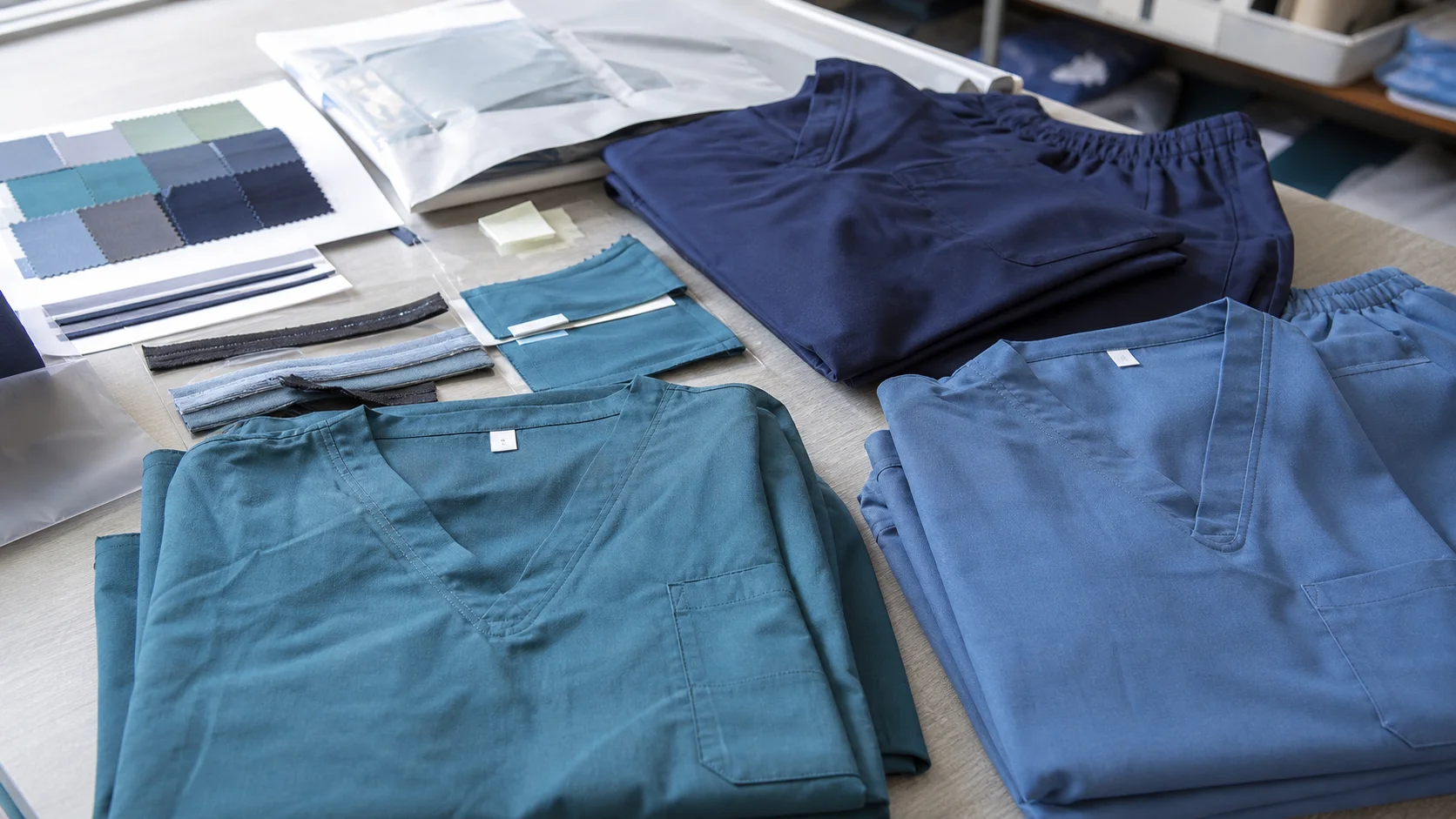
A practical wash test review for pharmacy operations teams evaluating scrub durability, color retention, and performance after repeated laundering.
For pharmacy operations teams, scrubs are not just uniforms. They are daily workwear that must hold up to repeated laundering, disinfectant exposure, long shifts, and constant movement. A proper wash test review is one of the most practical ways to check whether a scrubs order will survive real use before a large rollout. It helps teams compare fabric recovery, color stability, seam strength, shrinkage, pilling, and trim performance under conditions that resemble actual laundering.
This article covers how to review a scrubs wash test for pharmacy operations, what to look for in sample approval, what can fail after laundering, and how sourcing teams can use the results to make a safer buying decision. If you are setting up a uniform program or replacing an existing one, a structured wash test review can prevent costly reorders and avoid the usual complaints that come after delivery.
Scrubs Wash Test Review for Pharmacy Teams - Fabrikn production reference
Pharmacy teams usually need scrubs that look neat, last through repeated laundering, and remain comfortable during long hours on the move. That sounds simple until a garment is washed several times and the problems start to show. Shrinkage changes fit, fading affects presentation, and stitching failures create extra replacement costs.
A wash test review is useful because it confirms how the garment behaves after laundering, not just how it looks in a sample room. A good pre-production sample can still fail after three or five wash cycles if the fabric finish, dye quality, or seam construction is weak. For pharmacy operations, that matters more than in some other uniform categories because staff often need a consistent, professional appearance across multiple shifts and locations.
Wash tests also help with standardization. If the program includes different roles, such as pharmacists, technicians, and support staff, the team may choose different fabric weights or fits. The wash test review shows whether those variations still perform within acceptable limits after laundering.
A scrubs order should be judged on post-wash performance, not just on first impression. In uniform programs, the cost of a weak fabric or unstable dye usually appears later as returns, complaints, and replacement buying.
A meaningful wash test review should compare the sample before and after washing under a set procedure. The procedure does not need to be overly complex, but it should be consistent. If the team tests one sample in a home washer and another in a commercial laundry setup, the results will not be easy to compare.
Shrinkage is one of the first things to check. Measure key points before washing and after each cycle: body length, sleeve length, inseam, chest width, and waistband or hip width if applicable. Small differences can matter when staff depend on fit for comfort and movement. A modest shrinkage rate may be acceptable if it stays within your sizing tolerance, but anything that shifts the garment out of spec needs review.
Scrubs should maintain color across repeated laundering. Pharmacy teams often prefer calm, professional shades that do not fade quickly. Look for visible color loss, uneven fading, and dye transfer onto lighter garments or undershirts. Colorfastness becomes even more important if the scrubs are washed with other institutional textiles.
Wash cycles can expose weak seams. Inspect underarm seams, side seams, pocket openings, hems, and any reinforced areas after each test cycle. Thread breakage, skipped stitches, seam twisting, and popping at stress points are warning signs. If a garment looks clean but starts failing at the seams after laundering, the construction is not durable enough for routine use.
Repeated washing can cause pills, fuzz, or surface roughness, especially in blends that do not handle abrasion well. This does not always affect function immediately, but it affects appearance. For pharmacy teams that want a neat front-of-house look, visible pilling can make a new uniform program seem tired very quickly.
Wash testing should also check how the fabric feels after laundering. Some fabrics start soft but become stiff, scratchy, or limp after a few cycles. Stretch fabrics should recover properly after washing and drying. If the garment bagged out or lost its shape, that suggests weak elastic memory or poor fiber selection.
Zippers, drawcords, snaps, elastic, labels, and heat transfers should all be checked after washing. Pharmacy scrubs often include pockets, utility loops, or badge-friendly details, and those parts can fail before the fabric does. A zipper that warps or a label that scratches after laundering creates a practical problem for the wearer.
Wash test review is most effective when it is built into the sample approval process. The goal is not just to approve a pattern. The goal is to approve a garment that can be produced consistently at scale.
Start with the first sample and verify pattern shape, sizing balance, pocket placement, and overall comfort. If the style is wrong at this stage, a wash test will not fix it. The team should check whether the garment suits pharmacy movement patterns, such as bending, reaching, and repeated arm lift.
Ask for units that can be washed under your chosen care method. The sample set should include the final fabric, trim, thread, and label components, because substitutions can alter the result. A fabric-only test is useful, but a full garment test is the better indicator.
Use the care method closest to expected use. Many pharmacy teams rely on frequent machine washing, so the test should reflect that. Keep the detergent, water temperature, drying method, and cycle count consistent across samples. Record these details so the review can be repeated if needed.
Measure the garment before washing, after the first wash, and after several cycles. The first wash often shows the most shrinkage, but later cycles reveal longer-term stability. If possible, compare the results against your size tolerance chart or buyer spec.
A sample should not be approved on appearance alone. If the garment passes visually but fails on shrinkage or seam recovery, the bulk order should be paused until corrections are made. This is the point where disciplined sourcing saves money.
The wash test results usually depend on the material mix and construction choices. Pharmacy teams do not need a textile lab report to make a better decision, but they should understand which specification details matter most.
Common scrubs fabrics include polyester-cotton blends, polyester-rich stretch blends, and some performance knits or woven stretch options. Each has tradeoffs. Polyester-rich fabrics generally offer better color retention and faster drying, while cotton-rich blends can feel more natural but may shrink more and wrinkle more. Stretch fibers improve mobility but can lose recovery if the blend or finishing is weak.
If the order is intended for daily wash-and-wear use, the fabric should be specified clearly by composition and weight. A vague “premium blend” description is not enough. Ask for the exact fiber percentages, fabric construction, and GSM or ounce weight if available.
Finishes can improve performance, but they can also mask weak base fabric in the first sample. Anti-wrinkle, moisture-wicking, and stain-release finishes may help with appearance and wear comfort, yet they should be tested after laundering because some finishes fade or reduce over time. A garment that looks crisp on day one may become dull after repeated washing if the finish is unstable.
Thread is easy to overlook. It should match the fabric and survive repeated washing without puckering or seam opening. Low-grade thread can weaken faster than the fabric itself. If the stitch line fails, the garment will be rejected even if the textile still looks sound.
Pharmacy scrubs usually need practical pocketing. That adds stress during washing because pocket bags, facings, and topstitching create extra layers. Poorly balanced pocket construction can cause twisting, wrinkling, or seam pull. If the team expects to carry pens, notepads, small tools, or devices, the pocket reinforcement should be part of the review.
Some labels become scratchy after washing, curl at the edges, or detach. Heat-seal decoration may crack or peel. If branding or size tags are part of the garment, test them with the same laundering cycle as the garment body. These details can create complaints even when the base fabric performs well.
Wash testing adds time to the buying cycle, but that delay is usually cheaper than fixing a bad bulk order. The challenge is balancing speed, order quantity, and product development effort.
Program factor Typical sourcing reality Buying tradeoff MOQ Often 300 to 1,000 units per style/color, sometimes higher for custom fabrics or private label work Lower MOQs reduce risk but can raise unit cost Sample approval Usually requires one or more rounds of fit and wash testing Faster approval shortens lead time but increases the risk of missing defects Production lead time Commonly 30 to 90 days after sample approval, depending on fabric availability and complexity Stock fabrics speed things up; custom dyeing or special trims add time Wash testing Needs several cycles and review time Testing upfront protects the program from downstream replacementsFor pharmacy teams with a near-term rollout, stock-supported fabrics and standard trims are easier to manage. For branded programs or role-specific colorways, custom elements can be worthwhile, but the sourcing team should accept that the approval process will take longer. A rushed order with no wash verification is usually a false economy.
Wash-related defects are often missed during visual inspection at the factory because they show up after laundering. That is why a pre-shipment review should not rely only on surface appearance.
Sometimes smaller sizes and larger sizes do not behave the same after washing. A style can pass in one size and fail in another due to pattern grading issues or fabric handling. If the order includes a wide size range, test multiple sizes, not only the sample size.
Garments can twist after wash if the fabric is unstable or if the pattern was not balanced correctly. This is particularly visible at side seams, leg seams, or pocket lines. Twisting affects appearance and comfort, and it can make a uniform look inconsistent across a team.
If the dye is not stable, one garment can stain another during washing. That matters in mixed loads. A color bleed defect can destroy a whole batch of uniforms and create avoidable replacement costs.
Decorative or functional topstitching may pull, break, or pucker after laundering. This is often caused by wrong thread choice, weak tension control, or inadequate seam allowance. It is a small defect on paper, but it is obvious to the wearer.
Buttons, snaps, elastic waistbands, and drawcord tips should all retain shape. If the accessory is not wash-safe, the garment may still be technically wearable, but it will no longer meet a professional standard.
A wash test review becomes useful when the findings are documented in a simple and repeatable way. Teams should avoid vague notes like “looks okay” or “felt fine.” Those comments do not help when comparing suppliers or reordering six months later.
Use a checklist that records:
Photographs are useful, especially if the team wants to compare samples from different suppliers. Keep the photos consistent in lighting and framing. A good review file should let procurement and operations teams make the same judgment later, even if the original sample is no longer available.
When deciding whether to approve the order, separate minor cosmetic issues from functional failures. A slightly soft hand feel may be acceptable. A zipper failure, severe shrinkage, or dye bleed is not.
From a sourcing perspective, the best scrub is not always the softest or the least expensive. It is the one that stays within size tolerance, holds color, resists wear, and keeps its shape through repeated laundering. That is what protects the uniform program over time.
For a pharmacy operation, a solid purchasing decision often means accepting a mid-range fabric with reliable construction rather than chasing a premium claim that has not been wash tested. If the supplier cannot support a clear specification sheet, provides inconsistent sample behavior, or avoids test details, the program carries more risk than it should.
Buyers should also think about replacement timing. A scrubs order that looks cheaper at the start can become expensive if the garments fade or shrink quickly. The real comparison is total lifecycle cost, not initial unit price alone.
If your team is developing a stronger sourcing process, review the supplier’s capability, sampling method, and inspection approach before placing the order. Fabrikn’s service overview is a useful place to start: /services/. For project questions or a specific uniform program, use /contact-us/. If you want to understand the company background before requesting samples, see /about-us/.
A supplier that understands wash testing should be able to answer practical questions without hesitation. The answers do not need to be perfect, but they should be specific.
If the supplier cannot answer these questions clearly, the team should slow down. A weak response usually means the production controls are not strong enough for a dependable uniform program.
Before approving a scrubs order, use this short checklist to keep the review disciplined:
This process may feel slow at first, but it reduces the risk of avoidable rework. In uniform buying, speed is useful only when it does not compromise durability.
Get a free quote from Fabrikn — your trusted B2B clothing manufacturer with 10+ years of experience. MOQ as low as 200 pieces.
Get a Free Quote →A wash test review checks how scrubs perform after laundering. It looks at shrinkage, colorfastness, seam stability, pilling, recovery, and trim performance so buyers can judge whether the garment is suitable for daily use.
That depends on the program, but a few controlled cycles are usually enough to reveal early shrinkage, color loss, and seam issues. For higher-risk orders, buyers may want a longer trial that reflects real use.
There is no single universal number because the acceptable range depends on the fit block and size tolerance. The key point is whether the garment still fits correctly after laundering and stays within the buyer’s specification.
Yes. A style can behave differently across sizes. Testing only one sample size may hide grading problems, especially if the order includes a wide size range.
Polyester-rich blends often perform well for color retention and quick drying, while cotton-rich fabrics may feel softer but can shrink or wrinkle more. The best choice depends on your care process, comfort target, and appearance standard.
Pockets, labels, elastic, buttons, snaps, and zippers can fail even when the fabric remains intact. These details are part of daily wear and should be tested with the garment.
No. Wash testing is part of quality control, not a substitute for final inspection. A good program should include both sample approval and shipment inspection.
For pharmacy teams, a scrubs wash test review is one of the simplest ways to reduce uniform risk before bulk buying. It turns the decision from guesswork into a practical comparison of fabric, construction, and long-term performance. That is the kind of sourcing discipline that keeps a uniform program usable, professional, and cost-controlled.