
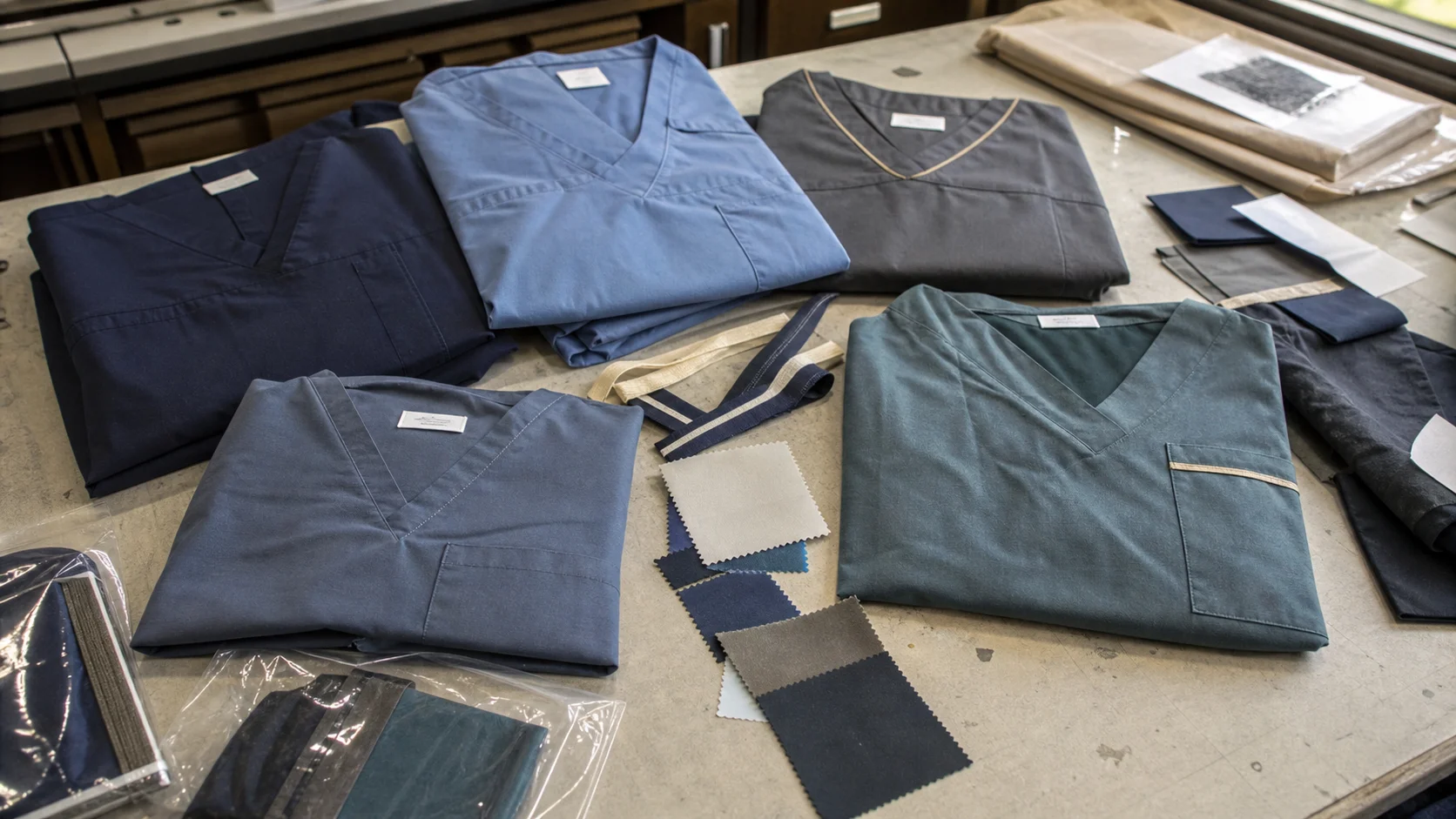
A procurement-focused outline for evaluating scrub sets through wash testing, shrinkage checks, colorfastness review, seam durability, and post-laundry...
Scrubs Wash Test Review for Hotel Buyers - Fabrikn production reference
Hotel procurement teams buy scrubs for a different operating environment than clinics, spas, or retail uniforms. The garments may look simple on a quotation sheet, but the real test starts after repeated laundering, tumble drying, chemical exposure, and daily movement across housekeeping, spa, wellness, laundry, and back-of-house teams. A scrubs wash test review gives buyers a controlled way to judge whether a supplier’s fabric, trims, color, construction, and labeling can survive hotel use before a purchase order becomes expensive to correct.
This guide is written for hotel procurement managers, uniform buyers, quality teams, and sourcing teams comparing scrub sets for property groups, resorts, serviced apartments, wellness hotels, and outsourced uniform programs. It focuses on practical inspection points, not laboratory theory alone. A good wash review should connect test results to purchasing decisions: whether to approve a supplier, revise the specification, increase the budget, negotiate a replacement clause, or reject the fabric before bulk production.
Scrubs in hotels are often used as practical uniforms for spa therapists, wellness teams, housekeeping supervisors, laundry staff, medical concierge teams, and operational roles where movement, cleanliness, and quick replacement matter. Buyers usually need a garment that is affordable, easy to size, color consistent, and comfortable across long shifts. Those goals can conflict. Softer fabrics may pill faster. Stretch fabrics may recover poorly after industrial drying. Dark colors may look premium at delivery but fade unevenly after twenty washes.
A wash test review protects the buyer from approving a garment based only on a fit sample or sales sample. Sales samples are often made under better conditions than bulk production. The fabric may come from available stock, the trims may not match the final order, and the sewing line may not be the same one used for production. Bulk scrubs should be evaluated against a written technical specification and a defined wash test, not judged by hand feel alone.
For hotel buyers, the risk is operational as much as cosmetic. A scrub top that shrinks two sizes can break the size curve and create staff complaints. A waistband that twists can slow distribution and returns. A pocket seam that opens after repeated washing creates replacement cost. A color that bleeds can damage mixed laundry loads. These are not minor quality issues when a group order covers hundreds or thousands of employees.
Purchasing judgment: do not approve hotel scrubs without a repeat-wash review if the order is for a new fabric, new color, new supplier, or new laundry process. The cost of testing is small compared with replacing a failed uniform rollout.
The first step is to define how the scrubs will be worn and washed. A scrub set used by spa therapists in a luxury resort does not face the same conditions as scrubs used by a laundry team handling chemicals and high heat. Procurement teams should write the expected use case into the request for quotation and the garment specification.
Many scrub fabrics can pass a standard domestic wash but fail under hotel laundry conditions. Procurement should avoid accepting vague statements such as “washable” or “commercial grade” without a test method. The supplier should confirm whether the fabric is designed for domestic care, commercial laundering, or industrial laundering. If the hotel uses an external laundry partner, ask for the laundry formula and include it in the review.
For properties with sustainability policies, the use case should also consider energy and garment life. A fabric that needs low-temperature washing and low tumble drying may save energy, but it must still meet hygiene and durability needs. A cheaper garment that lasts six months may create more waste and higher total cost than a better garment that lasts eighteen months.
Scrubs are commonly made from polyester-cotton blends, polyester-viscose blends, stretch woven fabrics, or performance polyester with spandex. Each has strengths and weaknesses for hotel procurement. The wash test should confirm whether the selected material fits the hotel’s use case and brand standard.
Fabric Type Typical Benefit Main Wash Test Risk Buying View 65/35 polyester-cotton twill or poplin Durable, widely available, cost controlled Cotton shrinkage, fading, hard hand after repeated washing Good for value programs if shrinkage is controlled Polyester-rayon or polyester-viscose blend Softer drape, more premium appearance Dimensional instability, seam distortion, longer drying time Suitable for spa use if laundering is gentle Polyester-spandex stretch woven Comfort, movement, modern fit Elastic recovery loss, heat damage, puckering Useful for guest-facing teams if drying heat is controlled 100% performance polyester Fast drying, color retention, lower shrinkage Pilling, static, shine, odor retention Strong for high-volume laundering if comfort is acceptableA proper specification should include fabric composition, fabric weight, weave or knit type, yarn count where relevant, color standard, shrinkage tolerance, colorfastness requirements, pilling grade, seam strength, and care instructions. Buyers should also define trims. Drawcords, elastic waistbands, buttons, snaps, zippers, labels, thread, and heat transfers can all fail before the main fabric does.
Typical scrub fabric weights for hotel uniforms often sit around 140–220 gsm for woven fabrics, depending on opacity, hand feel, and climate. Lightweight fabrics improve comfort in warm resorts, but they may become transparent, wrinkle easily, or wear through at stress points. Heavier fabrics can look structured and last longer, yet may feel hot and slow to dry. The wash test should evaluate the weight choice after repeated laundering, not only at the first fitting.
A controlled sample process reduces disputes with suppliers. Procurement teams should separate design approval from wash approval. A fit sample can show silhouette, pocket placement, and size balance, but it does not prove laundering performance. A pre-production sample should use the nominated bulk fabric, bulk trims, bulk thread, bulk labels, and final care instructions.
A practical sample approval route usually includes the following steps:
The wash test should be performed on a full size run where possible, not just one medium set. Smaller sizes can react differently because seam ratios and pattern balance vary. Larger sizes may show more stress at side seams, crotch seams, seat seams, pocket corners, and waistbands. If budget limits testing, choose at least one middle size and one large size from the proposed size range.
Buyers working with manufacturers or sourcing partners can request support through structured quality services. For example, procurement teams comparing supplier capability may review quality and production support options on Fabrikn’s services page to understand how product development, sampling, and inspection can be organized before bulk orders are placed.
The wash method should match the hotel’s reality. A laboratory standard is useful, but it can be misleading if the hotel laundry process is harsher. Procurement teams should ask the supplier to test against both a recognized standard and the buyer’s actual care process when the order value justifies it.
For many hotel scrub programs, a basic review can include 5, 10, and 25 wash cycles. Five cycles reveal early shrinkage, color bleeding, and obvious sewing faults. Ten cycles show early durability. Twenty-five cycles provide a better view of fading, pilling, seam stress, print or label damage, and waistband behavior. High-volume hotel programs may require 50 wash cycles before final approval, especially for industrial laundry use.
Wash Cycle Stage Purpose Procurement Decision Initial wash Detect color bleeding, immediate shrinkage, fabric finish loss Reject if severe bleeding or major shrinkage appears 5 cycles Check early fit change, seam puckering, trim durability Request correction if performance is borderline 10 cycles Review short-term operational performance Approve only if appearance remains acceptable 25 cycles Assess realistic repeated-use durability Use for final fabric and supplier comparison 50 cycles Stress test for high-volume or industrial laundry Recommended for large rollouts and long contractsThe test should record wash temperature, detergent type, load size, machine type, drying temperature, drying time, and whether bleach or sanitizer is used. Photographs should be taken before washing and after each review point under consistent lighting. Measurements should be taken on a flat surface after the garment has rested after drying. If garments are measured while warm, stretched, or damp, the results may be inconsistent.
Acceptable shrinkage depends on the fabric, fit, and tolerance. Many buyers use a shrinkage tolerance of around 3% for woven polyester-rich fabrics and up to 5% for cotton-rich fabrics, but the garment must still fit after washing. For fitted spa scrubs or tailored scrub tops, even 3% shrinkage can be noticeable. For relaxed back-of-house scrubs, slightly higher shrinkage may be manageable if the size chart is adjusted before production.
A scrub wash test review should not stop at “looks fine.” The review should be measurable, repeatable, and tied to pass/fail criteria. Procurement teams should build a checklist that includes dimensional stability, color, appearance, construction, trims, comfort, and labeling.
Measure chest, waist, hip, length, shoulder width, sleeve opening, inseam, outseam, thigh, knee, leg opening, and waistband relaxed and extended. Compare the pre-wash and post-wash measurements against the tolerance table. Twisting matters as much as shrinkage. A pant leg that rotates after washing may still measure correctly but look poor on staff.
Review colorfastness to washing, rubbing, perspiration, and chlorine or oxygen bleach if used. Dark navy, charcoal, black, burgundy, forest green, and deep teal are common hotel uniform colors, but they can show shade change quickly. A uniform program looks unprofessional when replacement stock is visibly different from the first issue. Buyers should approve color against a physical standard, not a screen image.
Pilling is a common complaint with scrub fabrics, especially polyester blends and brushed finishes. Pilling around underarms, side seams, inner thighs, and pocket areas can make a garment look old before it fails structurally. Specify an acceptable pilling grade where possible. If the garment is for a luxury spa or wellness setting, buyers should set a stricter appearance standard than for hidden back-of-house use.
Review side seams, shoulder seams, crotch seams, inseams, armholes, pocket corners, and waistband attachment. Watch for skipped stitches, popped seams, loose threads, puckering, seam slippage, and needle damage. Reinforcement at pocket corners and stress points is important because hotel staff often carry radios, keys, pens, room cards, and small tools.
Elastic waistbands should recover after washing and drying. Drawcords should not fray, twist, shrink excessively, or disappear into the waistband. Snaps and buttons should resist corrosion and detachment. Heat transfer labels should not crack or peel. Woven labels should remain legible and should not irritate the wearer.
A fabric can pass measurements and still fail in use if it becomes stiff, scratchy, clingy, or hot after washing. Staff comfort affects compliance. If employees avoid wearing the issued uniform because it feels poor after laundering, procurement will face complaints and unofficial substitutions. Include wearer feedback after washed samples are tried on for movement and comfort.
Bulk inspection should confirm that the approved wash-tested sample matches production. One risk is supplier substitution. A mill may change fabric lot, finishing process, dyehouse, elastic quality, or thread without clear notice. A small change can alter shrinkage, colorfastness, and hand feel. Procurement should require that bulk materials match the approved pre-production sample and that any substitution needs written approval.
Another risk is inconsistent sizing across production lots. Scrubs are often ordered in broad size ranges, and poor grading can create fit problems. Inspectors should measure samples from multiple sizes and cartons, not only the size medium. If the supplier uses manual cutting or poor marker control, size variation can increase across the bulk order.
Shade variation is also common. Hotels often reorder scrubs over time, so color continuity matters. Ask whether the supplier can reserve greige fabric, maintain a lab dip standard, or manage dye lots for replenishment. For large programs, carton labeling should identify color, size, purchase order, lot number, and production batch. This helps trace problems if one batch fades or shrinks differently.
Packing can create quality issues after a garment has passed production. Over-compressed cartons, damp packing conditions, poor polybags, and mixed-size packing can create distribution delays. Scrubs used for hotel staff should be packed in a way that supports easy issuing by department and size. If the hotel group has multiple properties, carton allocation and barcode labeling may be as important as garment construction.
Purchasing judgment: a passed lab report is not a substitute for bulk inspection. The lab confirms tested samples. Inspection confirms whether the shipped goods match what was approved.
MOQ for custom hotel scrubs depends on fabric availability, color, trim customization, printing, embroidery, and supplier type. Stock fabric with standard colors may allow lower minimums, often around 100–300 sets per color. Custom-dyed fabric may push minimums to 500–1,000 sets per color or more. Fully custom development with special performance fabric, branded trims, and multiple colors can require higher commitments, especially if the mill has a fabric MOQ.
Small hotels often prefer lower MOQ using stock colors. The tradeoff is less control over exact brand shade, fabric continuity, and long-term replenishment. Hotel groups with multiple properties may benefit from custom dyeing and reserved fabric, but they must manage inventory and forecast demand. The cheapest MOQ is not always the lowest-cost route if replacements become difficult later.
Program Type Typical MOQ Range Benefit Tradeoff Stock scrub program 50–300 sets per style/color Fast, lower commitment, easier trial order Limited colors, weaker exclusivity, possible shade changes Custom color in standard fabric 300–1,000 sets per color Better brand matching and consistency Longer lead time and higher fabric commitment Custom fabric and design 800–2,000+ sets per style/color Best control over performance and branding Higher development cost and slower replenishmentLead time depends on sample rounds, fabric sourcing, dyeing, trim procurement, production capacity, inspection booking, and shipping method. A realistic timeline for a new custom scrub program may include 1–2 weeks for technical review, 1–3 weeks for first samples, 1–2 weeks for comments and revision, 2–4 weeks for fabric or lab dip approval, 3–6 weeks for bulk production, and additional time for inspection and shipping. Stock programs can be faster, but only if sizing, color, and trim requirements are simple.
Wash testing adds time, particularly if the buyer requires 25 or 50 cycles before approval. Procurement teams should plan this into the calendar instead of treating testing as a delay. For a hotel opening, renovation, or rebrand, the uniform timeline should start early enough to allow one failed sample round. If there is no time for correction, the buyer may be forced to accept a weak garment or pay for rushed alternatives.
Teams that need sourcing guidance, supplier comparison, or inspection planning can also use Fabrikn’s contact page to discuss how a scrub wash test review fits within a broader hotel uniform procurement timeline.
A supplier scorecard helps procurement compare offers beyond unit price. Scrubs are often quoted by several suppliers with similar photos and very different quality levels. The scorecard should give weight to wash performance, technical capability, communication, replenishment support, and inspection readiness.
Score Area What to Review Buyer Weight Wash performance Shrinkage, colorfastness, pilling, seam condition, trim durability High Fabric control Composition proof, weight consistency, dye lot management High Fit and grading Size set accuracy, movement, staff comfort, size range High Production capability Capacity, QC system, sample accuracy, line consistency Medium to high Commercial terms MOQ, lead time, payment terms, replenishment, warranty terms Medium Documentation Test reports, material records, packing list, inspection report MediumA low quote should be questioned if the supplier cannot provide fabric details, wash instructions, trim specifications, or sample consistency. A high quote should also be challenged if the performance is not better. The best supplier is not simply the cheapest or most polished in presentation. The best supplier is the one that can repeatedly deliver the approved product within the agreed tolerance and timeline.
For hotel procurement, replenishment is a major part of the supplier review. Staff turnover, new hires, property expansion, and size exchanges create ongoing demand. Ask whether the supplier can support small repeat orders, how long the approved fabric remains available, and what happens if the mill discontinues the fabric. If the supplier cannot support replenishment, the buyer may need to hold extra inventory or choose a more stable fabric.
The wash test review should end with a clear decision: approve, approve with correction, retest, or reject. Avoid vague approvals that leave room for interpretation. If the garment passes but needs minor corrections, document those corrections in the technical file and require a revised pre-production sample if the change affects fit, wash, or appearance.
Approve the scrub program when the fabric meets shrinkage and colorfastness requirements, the garment still fits after washing, seams and trims remain secure, pilling is within the hotel’s appearance standard, and the supplier can confirm bulk material control. Approve with correction when issues are limited and fixable, such as pocket reinforcement, label placement, drawcord length, or small measurement adjustments. Retest when a correction may change laundering behavior. Reject when shrinkage, fading, seam failure, pilling, or trim failure is severe enough to create operational risk.
The procurement team should also connect the wash result to contract terms. For larger programs, include approved sample references, measurement tolerances, color standards, packing requirements, inspection level, replacement terms for defective goods, and required documentation. If the order will be shipped to multiple hotel properties, include carton marking and allocation rules. A good purchase order reduces later arguments.
The final buying decision should consider total cost per wear, not only unit cost. A scrub set costing less at purchase can become expensive if it shrinks, fades, or needs early replacement. A slightly higher-priced garment may be better value if it holds color, fits consistently, dries faster, and reduces staff complaints. The right answer depends on the department, laundry process, brand standard, and replacement cycle.
Procurement teams reviewing broader supplier and sourcing credentials may also consult Fabrikn’s about page for context on manufacturing support and sourcing approach before building a more formal quality and inspection plan.
A simple checklist can keep buyers, suppliers, and inspectors aligned. The exact criteria should be adjusted for the hotel’s laundry method and brand standard, but the following structure works well for most scrub programs.
This checklist should be attached to the purchase file. If the hotel operates multiple properties, central procurement should keep the approved sample, test records, and photos in a shared quality folder. Local teams should not be left to judge future deliveries from memory.
A scrubs wash test review is not a formality. It is one of the most useful controls hotel buyers have before committing to bulk uniform production. The review exposes problems that are difficult to see at quotation stage: shrinkage, fading, pilling, trim failure, seam weakness, poor recovery, and inconsistent fit. It also gives procurement a stronger basis for negotiation because the discussion moves from opinion to evidence.
For hotel procurement teams, the strongest approach is to define the laundry environment first, approve fabric and trims carefully, test washed samples before bulk production, inspect goods against the sealed sample, and secure replenishment terms. That process may add time upfront, but it reduces replacement cost, staff complaints, and brand inconsistency across departments.
The practical buying rule is clear: if the scrubs cannot survive the hotel’s wash process during sampling, they will not improve in bulk production. Test early, document the result, and make approval conditional on measurable performance.
Get a free quote from Fabrikn — your trusted B2B clothing manufacturer with 10+ years of experience. MOQ as low as 200 pieces.
Get a Free Quote →For basic programs, test at least 5–10 cycles before approval. For larger hotel rollouts, premium spa uniforms, or commercial laundry use, 25 cycles gives a better view of performance. For industrial laundering or long-term contracts, 50 cycles is worth considering.
Many buyers target around 3% shrinkage for polyester-rich woven fabrics and up to 5% for cotton-rich fabrics, but fit matters more than the number alone. If the garment becomes tight, short, twisted, or uncomfortable, the fabric or pattern should be revised.
Stretch scrubs can improve comfort and movement, especially for spa and wellness teams. The tradeoff is heat sensitivity, possible recovery loss, and higher fabric cost. If the hotel uses high tumble drying, test stretch fabrics carefully before approval.
Stock fabric programs may start around 50–300 sets per style and color. Custom colors often require 300–1,000 sets per color. Fully custom fabric or design programs can require 800–2,000 sets or more, depending on the mill and trim requirements.
No. A lab report is useful, but the hotel should still test samples against its actual laundering process when possible. Commercial laundry conditions, chemicals, drying heat, and handling can produce different results from standard domestic testing.
The main risks are fabric substitution, shade variation, inconsistent sizing, poor seam strength, weak pocket reinforcement, waistband twisting, trim failure, and packing errors. Bulk inspection should compare production against the approved sealed sample.
Reject the supplier if washed samples show severe shrinkage, unacceptable fading, bleeding, seam failure, heavy pilling, or trim breakdown, especially if the supplier cannot explain the cause or provide a credible correction plan. A failed sample is a warning, not a minor inconvenience.