
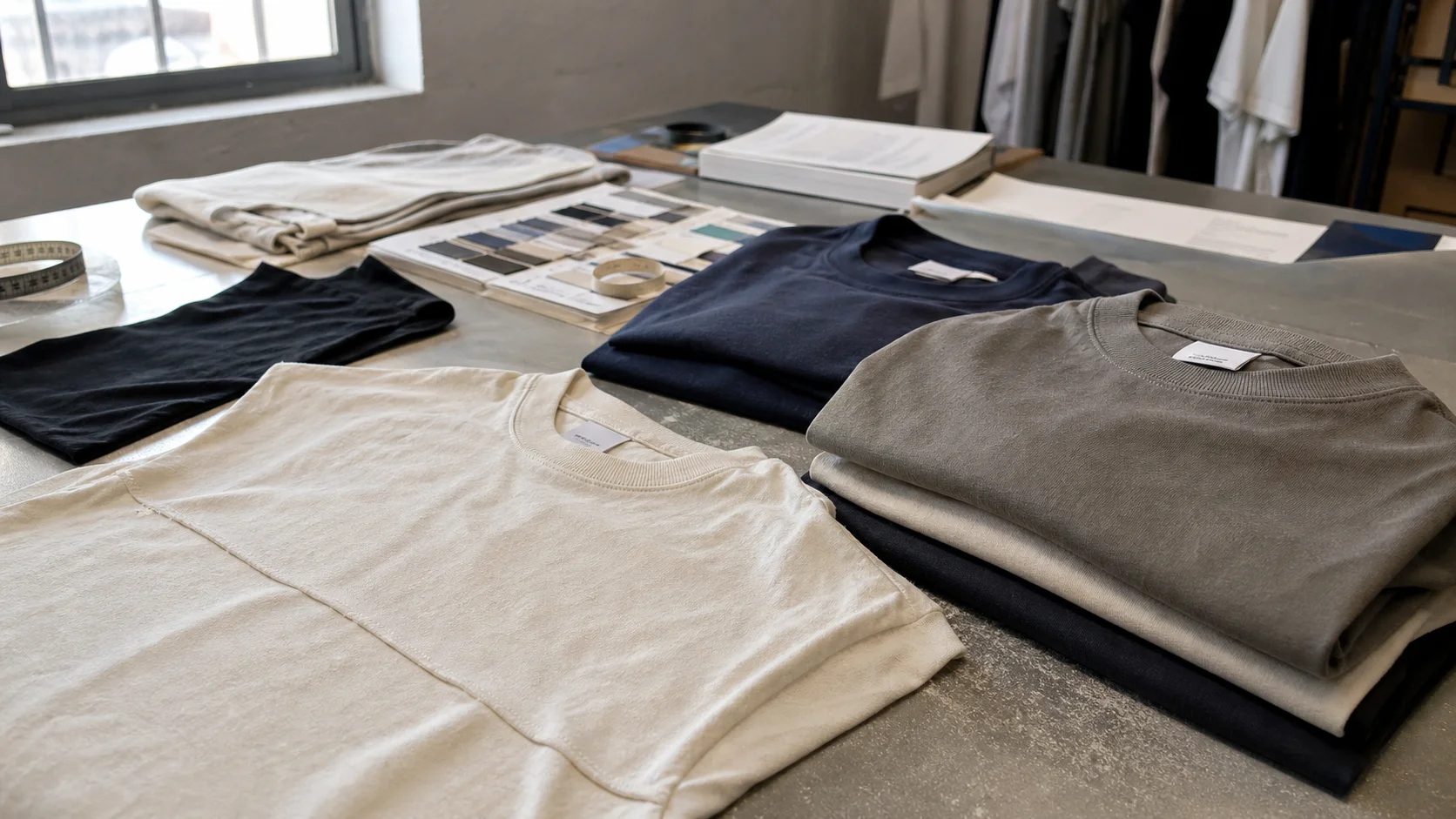
A focused outline on how foodservice distributors can evaluate seam strength in recycled chef coats, with test methods, failure modes, and sourcing...
Seam Strength Testing for Recycled Chef Coats - Fabrikn production reference
Seam strength testing matters on recycled chef coats because the garment has to survive repeated wear, hot kitchen movement, commercial laundry, and steady distributor replenishment. A chef coat is not a fashion-only item. It is a working uniform that gets pulled, twisted, buttoned, unbuttoned, washed, pressed, and worn in environments where failure shows up quickly. In many foodservice programs, buyers expect the coat to hold up through at least 30 to 50 industrial wash cycles at 60 to 75 degrees C, followed by tumble drying or tunnel finishing, so seam performance is part of the product’s real cost, not a technical footnote.
Recycled fabrics can perform well in chef coats, but they need to be evaluated with more care than a simple fabric hand-feel check. Yarn consistency, finishing chemistry, fabric construction, and sewing method all affect seam behavior. A strong cloth can still fail at the seam if the needle choice, stitch density, seam allowance, or thread specification is wrong. Typical chef coat builds use a 200 to 245 gsm 65/35 recycled polyester and cotton twill or a 180 to 220 gsm recycled poly-cotton plain weave, sewn with core-spun polyester thread in ticket 40 or ticket 60, and those construction details should be tested together rather than in isolation.
If you are sourcing for distribution, the practical question is straightforward: will the coat keep its shape and hold together after real use, or will returns, complaints, and replacement costs erase the sustainability value? The answer depends on testing, sample approval discipline, and realistic production standards. Typical custom development lead time for recycled chef coats is around 18 to 22 business days for lab dips, fabric confirmation, and prototype review before bulk production starts, with bulk sewing often requiring another 30 to 45 days depending on fabric availability and trim booking. Fabrikn’s services page is a useful starting point if you are comparing development and manufacturing support across garment programs.
Seam strength is the force required to break or distort a sewn seam under defined test conditions. In chef coats, this usually matters most at high-stress locations such as side seams, sleeve seams, armholes, shoulder joins, pocket attachments, plackets, and vents. Recycled materials do not automatically weaken seams, but they can change how fabric and thread interact during sewing and after laundering. For distribution programs, a common starting point is to test lockstitched seams to a minimum buyer requirement in newtons or pounds-force at the armhole and side seam, then compare that result again after wash cycling.
A seam can fail in several ways. The stitches may break. The fabric may tear adjacent to the seam. The seam may slip if the structure is loose enough. In uniform programs, seam slippage and seam puckering are especially important because they can signal early breakdown before a full tear occurs. That is a commercial problem for distributors because the customer sees poor appearance before the garment is fully unusable. On recycled woven chef coats, buyers commonly watch for seam slippage on looser plain weaves and for needle cutting on tighter twills sewn with overly fine ballpoint or damaged needles.
For chef coats, seam strength is not only about raw force. It is about how the garment behaves in motion. A coat that passes a lab number may still be unsatisfactory if the seam twists, shrinks unevenly, or opens after repeated wash cycles. That is why a useful specification should combine test values with construction requirements and wash durability expectations. Typical construction details include a 1 cm seam allowance on body joins, 10 to 12 stitches per inch on main seams, and bartack reinforcement at pocket corners and vent openings.
Foodservice distributors need products that are consistent, easy to replenish, and low-risk across multiple customer accounts. Recycled chef coats often sit in the middle of a broad assortment strategy where sustainability claims, pricing, and durability all have to coexist. If seam strength is under-specified, the distributor absorbs a hidden penalty through claims, reorders, and reputational damage. In practical sourcing terms, a $2.50 to $4.00 per unit FOB difference at a 500-piece MOQ can disappear quickly if even 3 to 5 percent of garments generate replacements or credits.
Chef coats are high-contact garments. They face repeated stress at the underarm, shoulder, and closure areas, especially when the wearer reaches, lifts, or works in heat. In busy kitchens, garments are often laundered frequently and sometimes commercially processed at aggressive temperatures. That combination can degrade thread, reduce seam elasticity, and expose weak needle holes faster than in casual apparel. Many buyers therefore request wash testing after 5, 10, and 20 cycles, with inspection checkpoints for seam grin, thread fraying, button security, and differential shrinkage between shell fabric and fusible parts.
Distributors also have to think in terms of breadth of use. A coat sold into independent restaurants may have different durability expectations than one sold to multi-unit operations, institutions, or catering groups. Still, the same buying principle applies: the garment should meet a clear performance threshold with manageable variability. A recycled chef coat that is sustainable on paper but fragile in the field is not a stable SKU. For larger contract accounts, buyers often ask suppliers to hold a sealed pre-production sample and a measured spec sheet with tolerance points such as chest, body length, sleeve length, and neck opening before bulk release.
For broader company background and sourcing approach, the about-us page can help frame how a supplier positions development, quality control, and product support. That matters when you are deciding whether the vendor can handle more than a simple cut-and-sew order.
Recycled polyester, recycled cotton blends, and other recovered fiber systems can deliver good uniform performance, but they also introduce variability. Recycled fibers may have shorter staple length, more inconsistent yarn characteristics, or different surface friction than virgin materials. That changes how the seam behaves during sewing and under stress. In chef coat sourcing, common fabrics include recycled polyester/cotton twill, recycled polyester mechanical stretch twill, and recycled cotton/polyester plain weave, each with different seam slippage and puckering behavior.
Recycled blends can also react differently to heat and laundering. A chef coat might look acceptable at delivery and still fail after repeated wash and dry cycles because the fabric shrinks slightly, the thread loses integrity, or the seam balance shifts. In practical sourcing terms, the initial sample is only one part of the story. The better question is whether the coat still passes after wash testing that reflects real distribution customers’ handling patterns. Typical buyer checks include dimensional stability after washing, often with tolerance limits around 3 percent in length and width for woven uniforms, plus visual checks after pressing or tunnel finishing.
Trim choices matter too. Buttons, snaps, bartacks, fusible interfacings, thread ticket size, and tape reinforcement all affect seam outcomes. A recycled face fabric can still produce a weak garment if the supporting materials are mismatched. Some distributors focus too heavily on the eco label and not enough on the construction stack. That creates avoidable risk. A common build might use melamine or resin buttons, a lightweight woven fusible in collar and placket areas, and 100 percent polyester core-spun sewing thread; each component should be checked for wash compatibility before bulk booking.
Recycled content is not a durability guarantee. The commercial value shows up only when fabric, thread, pattern, and sewing method are aligned with the end use.
Seam strength testing can be done through several recognized methods, and the right one depends on the buyer’s specification framework and the mill or garment factory’s lab capability. The most common approach is to measure how much force a sewn sample can withstand before failure, often using standardized tensile or seam efficiency methods. Buyers commonly reference ASTM D1683 for failure in woven apparel seams, ASTM D434 for seam slippage, or ISO 13935 methods for seam tensile properties, and the exact test standard should be agreed in advance and written into the tech pack or purchase spec. If a buyer requires documentation, requests may also include recycled content paperwork such as GRS transaction documents or OEKO-TEX related chemical compliance declarations from the supply chain, but those should be treated as document requirements rather than assumed certifications.
One common mistake is asking for a seam strength number without defining the sample direction, seam type, stitch class, thread type, or after-wash condition. That produces numbers that look precise but do not compare cleanly across vendors. A meaningful test plan should specify whether the sample is tested as sewn, after laundering, or after repeated wash cycles. For chef coats, post-wash testing is usually the more useful commercial benchmark. Labs also need to record whether the seam is a superimposed lockstitch seam, an overlocked and topstitched seam, or a flat-felled construction, because results can differ materially between seam classes.
In many programs, the lab also checks seam slippage, seam grin, stitch density, and seam appearance after laundering. That is especially relevant when the coat includes lightweight recycled fabric, soft finishes, or decorative topstitching. These features can improve comfort and presentation, but they also increase the need to verify stability. Typical inspection checkpoints include stitches per inch, skipped stitches, broken yarns near the seam line, puckering after pressing, and shade or surface change after wash testing.
A sensible testing plan for distributors usually includes:
If the supplier cannot explain the test basis clearly, treat that as a sourcing risk. Good factories know that a seam result without context is of limited value.
A usable specification has to be detailed enough to control quality, but not so rigid that it becomes impossible to source at a commercial cost. For recycled chef coats, the core specification should cover fabric composition, weight, weave or knit construction, seam type, thread type, closure type, and wash performance expectations. A simple “recycled chef coat” description is too vague for production control. A typical commercial spec might read 65/35 recycled polyester/cotton twill, 220 gsm plus or minus 5 percent, reactive or disperse dyed depending on fiber content, with a single-breasted or double-breasted front, left chest pocket, thermometer sleeve pocket, and lockstitched main seams with overlock edge finishing.
Typical MOQ ranges can vary widely by factory and fabric program. For custom recycled chef coats, a practical starting range is often 300 to 1,000 pieces per color or style, with higher volumes needed when custom fabric, special trims, or extended size runs are required. Smaller MOQs are possible, but they often come with higher unit pricing, limited fabric options, and reduced flexibility on custom labels or packaging. On many programs, 500 pieces per color is where buyers start seeing more stable FOB pricing and better trim sourcing options.
Lead time should also be specified in component terms, not as one broad promise. Fabric sourcing for recycled blends may add 7 to 14 days if the mill needs to confirm yarn availability, and custom buttons, care labels, woven labels, or recycled-content hangtags can add another 5 to 10 business days. Bulk production timing often depends on whether the shell fabric is stock-supported, made to order, or waiting on lab approval after color matching.
Construction specs should identify seam allowance, SPI, reinforcement points, and the exact make-up method for key joins. For example, armholes may use an overlock plus lockstitch top finish, side seams may use 4-thread overlock with safety stitch, and pocket openings may require bartacks of a defined length. If appearance matters for front-of-house use, buyers also commonly specify collar roll, placket alignment, and topstitch spacing so the garment holds presentation as well as strength.
Sample approval should do more than confirm silhouette and branding. For recycled chef coats, the sample stage is where buyers should verify seam construction, thread choice, shrinkage behavior, and operator workmanship before bulk fabric is cut. A first prototype is commonly followed by a fit sample and then a pre-production sample, and each stage should record actual fabric weight, measured spec tolerances, and seam construction notes.
Before bulk sewing starts, a pre-production meeting usually reviews the approved sample, pattern revision points, machine setup, and in-line inspection method. Relevant machines often include a single-needle lockstitch machine for assembly, a 4-thread or 5-thread overlock for seam finishing, a bartack machine for reinforcement, and a button attach machine for front closure security. If the chef coat uses concealed snaps or heavy plackets, the supplier may also need a fusing press setup with controlled temperature and dwell time.
Common inspection checkpoints during production include seam allowance consistency, stitches per inch, armhole symmetry, collar matching, placket straightness, button or snap attachment security, loose thread ends, and measurement tolerance by size. For medium-risk uniform orders, many buyers use an in-line check at 10 to 20 percent of sewing completion and a final random inspection based on AQL 2.5 or AQL 4.0, depending on account requirements.
Wash test approval should not be delayed until after shipment. A practical approach is to wash approved pre-production garments before bulk release, then repeat a limited wash test from early bulk output if the order uses a new fabric lot, a substituted thread, or a revised seam construction. That catches issues such as seam torque, placket bubbling, and thread shrinkage before the full order is packed.
Several recurring problems drive seam failures in recycled chef coats. One is mismatch between fabric weight and thread or needle selection. A lighter recycled plain weave sewn with too large a needle can show enlarged needle holes, while a heavier twill sewn with underspecified thread may fail at the stitch line under arm movement. Typical combinations on woven chef coats include needle sizes around NM 75 to 90 and polyester core-spun thread selected to match fabric weight and seam load.
Another risk is poor seam engineering. If the seam allowance is too narrow, the stitch density is too low, or the seam type is chosen for speed rather than stress resistance, the garment may pass visual inspection but fail in use. This is especially common at underarm curves, sleeve vents, and pocket corners where stress concentrates. A common checkpoint is to compare operator output against the approved sample for seam margin, SPI, and reinforcement placement at the start of each sewing line.
Finishing and laundering conditions also create failures. Excessive heat in pressing, incorrect fusing settings, or aggressive washing can distort the fabric and put extra load on the seam. For recycled blends, the interaction between shell fabric shrinkage and sewing thread shrinkage deserves attention because even small differences can create puckering or grin after wash. Buyers often request the care label basis and laundry test method up front so the supplier is not testing against unrealistic home-wash conditions when the end use is commercial laundering.
Substitution risk is another practical issue. A factory may sample with one thread brand, one fusible, or one button type and then change components in bulk due to availability. Even when the substitute looks similar, seam behavior can change. That is why larger buyers usually require written approval for any change to shell fabric lot, thread specification, interlining, button material, or construction sequence after sample signoff.
Not every part of the spec needs the same level of control. Distributors should tighten requirements around high-stress seams, post-wash appearance, shrinkage, and replenishment consistency, because those directly affect returns and customer satisfaction. Areas such as internal seam neatness, packaging fold style, or minor non-visual stitch differences can often be managed with broader tolerance if the supplier still meets the functional standard.
Price negotiation should also be grounded in the real build. If a supplier quotes unusually low on a recycled chef coat, check whether the price assumes lower fabric weight, simpler seam finishing, fewer bartacks, or fewer wash tests. In the current market, a basic recycled poly-cotton chef coat at 500 pieces often lands in a materially different cost band than a heavier twill style with reinforced pockets, branded trims, and full wash-test documentation. The lower quote is not automatically wrong, but it usually reflects a different construction package.
The practical goal is to create a spec that holds up across repeat orders. That means naming the fabric, construction, and test basis precisely enough that two factories would build roughly the same garment. If the buyer expects compliance paperwork, social audit records, or recycled-content documentation, those requests should be listed at quotation stage so the supplier can price and schedule accordingly rather than absorbing them late in development.
Get a free quote from Fabrikn — your trusted B2B clothing manufacturer with 10+ years of experience. MOQ as low as 200 pieces.
Get a Free Quote →What seam areas should be tested first on recycled chef coats? Start with the side seams, armholes, sleeve joins, pocket attachments, plackets, and vents. Those are the areas most likely to fail first in working use and during commercial laundry.
Is fabric testing alone enough to judge seam durability? No. Fabric tensile and tear results help, but seam performance also depends on thread type, stitch density, seam allowance, operator setup, and after-wash behavior. Buyers usually need both fabric and finished-garment testing.
What is a typical MOQ for custom recycled chef coats? A common starting range is 300 to 1,000 pieces per style or color, with 500 pieces often being a workable midpoint for more stable pricing, trim sourcing, and production planning.
How long does development usually take before bulk production? For many custom programs, sample development, material confirmation, and approvals take about 18 to 22 business days, then bulk production commonly needs another 30 to 45 days depending on fabric availability, trim lead times, and test approvals.
Which test standards are commonly requested? Buyers often ask for ASTM D1683, ASTM D434, or ISO 13935 seam-related testing, plus wash durability and dimensional stability checks. The key point is to define the exact method, seam construction, and wash condition before testing starts.