
A production-focused review of woven origin tabs for security contractor uniforms, covering MOQ pricing, label specs, compliance details, durability,...
Woven Origin Tabs: Security Contractor MOQ Review - Fabrikn production reference
Category: Decoration & Printing
Woven origin tabs look simple: a small folded label, usually sewn into a seam, showing country of origin, brand mark, batch code, or compliance wording. For security contractors, that small component can carry more weight than it appears to. It may support uniform traceability, contract compliance, anti-counterfeit controls, and end-user confidence when garments are issued across multiple sites or teams.
This security contractors woven origin tab MOQ pricing review looks at the practical buying questions that matter before placing an order: minimum order quantities, price drivers, woven label specifications, sampling steps, lead-time risks, inspection points, and how to avoid paying for the wrong label too early. The goal is not to make the cheapest tab. The goal is to buy a durable, readable, contract-appropriate tab at a cost that makes sense for the uniform program.
Security contractors often buy uniforms for high-turnover, multi-location, and contract-driven environments. Shirts, jackets, tactical vests, polos, trousers, caps, and outerwear may be issued to guards, patrol teams, event staff, access-control personnel, or facility security units. Origin tabs and related woven identification labels help keep those garments consistent and traceable.
In many uniform programs, the origin tab is not decorative in the usual retail sense. It can support country-of-origin disclosure, internal stock control, subcontractor verification, and replacement garment matching. When a contractor has to prove where a garment was made or match a new production run to an older issue, the label becomes a small but useful reference point.
For security contractors, the bigger risk is usually not that the woven tab fails visually on day one. The bigger risk is that it becomes unreadable after laundering, is sewn into the wrong position, displays incorrect origin wording, or differs across batches. Those issues can create unnecessary rework, shipment delays, or contract questions.
Origin tabs are especially relevant when uniforms are part of a controlled supply chain. A contractor supplying government sites, transport hubs, data centers, industrial facilities, commercial buildings, or events may need uniform consistency across several purchase orders. The woven tab may be one of several identifiers used alongside neck labels, care labels, heat transfers, barcode labels, packaging stickers, and embroidery.
A woven origin tab is a small textile label made by weaving threads into a design or wording. It is not printed on the surface like a screen print or heat transfer. The design is created through thread construction, which usually gives better durability through wash and wear, especially for small permanent identification components.
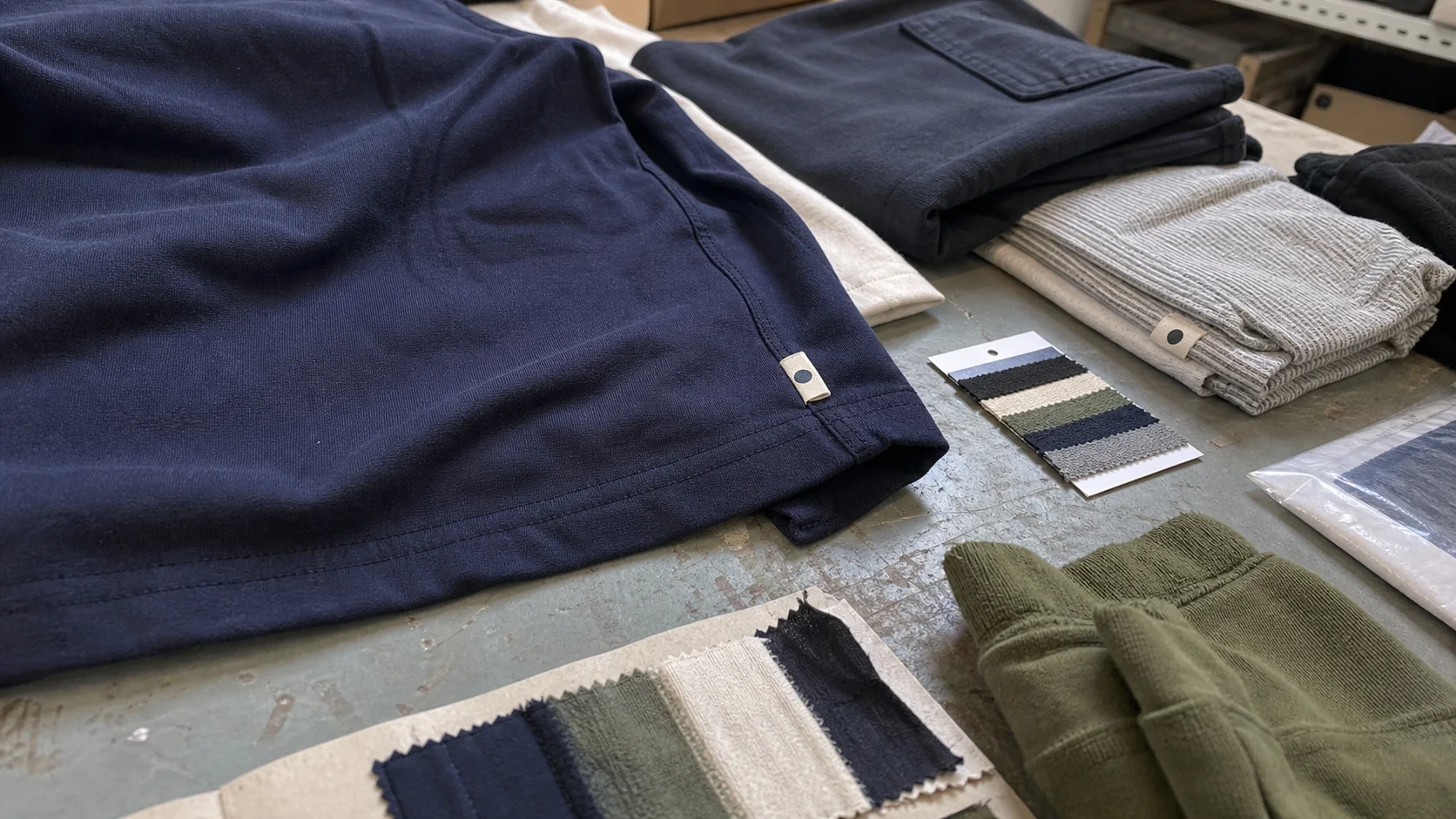
Common placements include side seams, bottom hems, sleeve seams, collar areas, pocket edges, waistband seams, or internal garment locations. The tab can be flat, center-folded, end-folded, book-folded, mitre-folded, or loop-folded depending on how it will be sewn into the garment.
For origin tabs, the content may include:
Very small woven tabs have limits. Fine text, micro logos, thin borders, gradients, and dense QR codes may not weave clearly. A practical sourcing decision is to keep the artwork simple and readable rather than forcing retail-style branding into a tiny label.
MOQ is one of the first buying concerns in any security contractors woven origin tab MOQ pricing review. Woven tabs are produced on label looms, and the setup work is often the same whether the order is small or large. That makes very small orders expensive per piece.
Typical MOQ ranges vary by supplier, yarn type, label size, fold type, artwork complexity, and whether the tab is ordered as a standalone component or bundled with garment production. The ranges below are general industry references, not fixed promises.
Order Type Typical MOQ Range Best Use Case Pricing Note Prototype or salesman sample labels 50 to 200 pieces Artwork testing, fit sample review, presentation samples High unit cost; often charged as a sample or setup fee Small production run 500 to 1,000 pieces Pilot uniform rollout or low-volume contractor program Acceptable for testing but not the best cost per unit Standard production order 1,000 to 5,000 pieces Regular uniform purchasing across several styles Usually a more balanced MOQ for cost and flexibility Large uniform program 5,000 to 20,000+ pieces Multi-site contractor issue or recurring garment orders Better unit pricing, but higher inventory commitmentSome factories will accept lower MOQs if the label uses standard yarns, a simple two-color design, and a common size. Others may require a higher MOQ if the buyer needs special recycled yarn, metallic thread, high-density weaving, unusual folding, ultrasonic cutting, or individual packaging.
Security contractors should also compare label MOQ against garment MOQ. If the uniform order is 300 shirts, but the woven origin tab MOQ is 1,000 pieces, the excess labels may be usable for future replenishment. That only works if the design is generic enough to remain valid across future garment orders. A tab with a date, contract number, or specific site code can become obsolete quickly.
A generic origin tab can reduce waste because it can be used across several garment styles and purchase orders. It may show only the approved country-of-origin statement and contractor mark. This is usually better for ongoing uniform programs.
A contract-specific tab gives tighter traceability, but it increases leftover risk. If a contractor loses a site contract, changes a code, or updates compliance wording, unused labels may not be transferable. For small programs, printed packaging labels or internal batch documents may be a better place for highly specific information.
Woven origin tab pricing is usually driven by setup, material, machine time, finishing, and quality requirements. The tab is small, but the process still needs artwork conversion, loom setup, yarn selection, weaving, cutting, folding, inspection, packing, and shipment.
Larger tabs use more yarn and loom time. A small side-seam tab may be around 10 mm to 20 mm wide when folded, while a larger origin or brand tab may be 25 mm to 40 mm. Buyers should avoid increasing the size unless readability or sewing requirements justify it.
Two-color woven tabs are usually more economical and more stable. Three to four colors can be reasonable if the design needs it. More colors may raise cost, increase sampling complexity, and make small details harder to control.
Damask woven labels are common for finer detail and a smoother hand feel. Taffeta-style labels can be more economical but may not show fine detail as sharply. Satin-effect labels can look premium but may be less suitable for rugged workwear if snagging or shine is a concern.
Center-fold, end-fold, and loop-fold options affect sewing. Hot cutting can seal edges on synthetic yarns, while ultrasonic cutting may give cleaner edges for certain constructions. Poor edge finishing can cause fraying, rough hand feel, or inconsistent seam insertion.
Standard polyester yarn is common for durability and wash resistance. Recycled polyester, OEKO-TEX-related material claims, flame-resistant yarns, or special low-irritation requirements can increase cost and MOQ. Any compliance claim should be supported by supplier documentation, not assumed from a sales description.
Labels shipped loose in bundles are cheaper than labels sorted by size, style, purchase order, or factory destination. If the woven tabs must be shipped to multiple garment sewing locations, packing accuracy becomes more important and can add handling cost.
For buyers coordinating multiple components, a full-service sourcing conversation through Fabrikn services can help align decoration, trims, labeling, and garment production timing before labels are ordered in bulk.
A woven origin tab order should not be approved from a logo file alone. The purchase specification needs enough detail for production and inspection. Security contractor programs should be especially careful because uniform labels often repeat across several garment styles and replenishment cycles.
Specification What to Confirm Why It Matters Finished size Width, height, and size after folding Prevents tabs from looking too large, too small, or difficult to sew Fold type Center-fold, end-fold, loop-fold, book-fold, or flat Controls seam insertion and final appearance Artwork Vector file, approved colors, text size, logo simplification Improves woven clarity and reduces sampling revisions Yarn Polyester, recycled polyester, specialty yarn, colorfastness requirement Affects durability, cost, and compliance documentation Cutting method Hot cut, ultrasonic cut, woven edge, or other finish Reduces fraying and rough edges Placement Exact garment location and seam allowance Prevents labels from being hidden, crooked, or uncomfortable Wash standard Expected laundering method and temperature range Important for uniforms washed frequently or industrially Compliance wording Country-of-origin text and any contract-required wording Avoids legal or contract disputes from incorrect labelsCountry-of-origin wording should be treated carefully. The label should match the actual manufacturing origin rules that apply to the garment and the selling market. A woven tab should not be ordered before the garment supply chain is confirmed, especially if fabric, cut-and-sew, finishing, and decoration happen in different countries.
Sampling should be structured. A rushed label approval can create thousands of incorrect tabs that are technically usable but commercially wrong. For security contractors, the sample process should check both label construction and garment placement.
The supplier should review the logo, text, colors, and finished size before making the loom sample. Thin lines, small icons, and condensed type may need adjustment. If a QR code or serial-style information is requested, the supplier should confirm whether it can be woven clearly at the chosen size. Many small woven QR codes are not reliable enough for scanning.
A woven strike-off shows how the design looks in thread. Buyers should review readability, color contrast, edge quality, fold accuracy, and hand feel. Digital mockups are useful, but they cannot replace a physical woven sample for small text and thread behavior.
The tab should be sewn into an actual garment sample or a seam mockup. This confirms whether the tab is visible, straight, comfortable, and compatible with the seam allowance. A label that looks good on a table may twist or disappear when inserted into a thick side seam.
For security uniforms, at least a basic wash check is sensible. If garments will be industrially laundered, the buyer should specify the expected wash environment. The tab should remain readable, attached, and stable after laundering. Dark yarns on light garments should be reviewed for color transfer risk.
Once approved, the production file should be locked. Any change to wording, size, yarn color, or fold type should trigger a new approval. This may feel strict, but it prevents batch variation and avoids arguments during final inspection.
Buyers preparing a new uniform labeling package can use the Fabrikn contact page to discuss garment decoration and trim requirements before committing to bulk labels.
Woven origin tab lead times depend on artwork readiness, sample approvals, loom capacity, raw yarn availability, finishing requirements, shipping method, and whether the labels are going directly to the garment factory or to a buyer’s warehouse.
Typical timelines may look like this:
Stage Typical Time Range Risk Point Artwork review and quotation 1 to 3 working days Incomplete specs, unclear origin wording, missing vector files Woven sample or strike-off 5 to 10 working days Small text, color mismatch, fold correction Buyer approval 1 to 7 working days Slow internal sign-off or legal review of wording Bulk label production 7 to 20 working days Loom capacity, yarn shortages, finishing backlog Shipping to garment factory 2 to 14+ days Customs, courier delays, split shipmentsA practical planning window is often three to six weeks from artwork to labels arriving at the sewing location. Shorter timelines may be possible for standard labels, but buyers should not build a critical uniform launch around best-case timing.
The label schedule should sit inside the garment production calendar. If the woven tabs arrive late, sewing may stop or garments may be finished without the correct label. Retrofitting tabs after garment completion is slow, expensive, and often less clean than sewing them during normal assembly.
Security contractors do not all need the same type of woven origin tab. The right specification depends on the uniform environment, contract requirements, and replacement cycle.
Corporate security uniforms often prioritize a clean, professional appearance. The origin tab may be discreet, using a small logo and compliant origin wording. A low-contrast design can look refined, but readability must not be sacrificed if the label carries required information.
Event security garments may be ordered in larger seasonal batches. Cost control matters because garments may see intense but short-term use. A simple two-color woven tab with generic origin wording is usually more practical than a complex contract-specific label.
Uniforms used at factories, warehouses, logistics centers, and industrial facilities may face frequent laundering, abrasion, and outdoor exposure. Polyester woven tabs with strong edge sealing and secure seam placement are usually preferable. Glossy or delicate finishes may not be worth the added cost.
Some security contractors need tighter traceability because uniforms are issued to controlled environments. In those cases, the woven tab can be part of a broader identification system. It should not be the only control mechanism. Pairing it with internal records, packaging labels, care labels, or serialized hangtags can provide stronger traceability than relying on a small woven tab alone.
Purchasing judgment: use woven tabs for durable, repeated identification. Use packaging, barcodes, or digital records for information that changes often. Trying to weave too much variable data into a small tab usually increases cost and reduces clarity.
Inspection should cover both the loose label and the sewn garment. A perfect label can still fail if it is inserted incorrectly, placed inconsistently, or damaged during sewing.
One common risk is mismatched origin labeling. If garments are produced in more than one country, the label inventory must be controlled by production origin. Mixing labels across factories or production lots can create compliance problems. Buyers should make label allocation part of the production plan, not a last-minute packing task.
Another risk is approving a label for one fabric weight and using it on another. A tab that works on a lightweight polo may not sit well on a heavy jacket seam. Thick outerwear may require a larger fold allowance or different placement. Thin performance shirts may need a softer, smaller label to avoid wearer complaints.
Woven origin tabs are not usually the largest cost in a uniform program, but poor decisions can still create waste. The best value is not always the lowest unit price. It is the label that arrives on time, reads correctly, survives laundering, and fits the garment construction.
Low-cost tabs become expensive when they cause rejected garments, relabeling, or late shipment. Premium tabs become wasteful when the garment does not need them or the information will change before the next order. The sensible middle ground is a durable polyester woven tab, simple artwork, controlled color contrast, clear origin wording, and a MOQ that matches the expected replenishment plan.
Before placing a woven origin tab order, buyers should ask direct questions. Vague answers are a warning sign, especially when the labels are tied to contract compliance.
Contractors should also decide who approves the origin text. Procurement, legal, compliance, and merchandising teams may all have opinions, but the production supplier needs one final approved wording. Delayed sign-off can push the entire garment schedule back.
For buyers evaluating uniform decoration and labeling options, the company background at Fabrikn about us can provide context before moving into specification and sourcing discussions.
A clear woven origin tab brief can reduce quotation errors and sample revisions. Buyers can adapt the structure below when preparing an RFQ.
Field Example Detail to Provide Product Woven origin tab for security contractor uniform shirts Finished size 20 mm wide x 25 mm high before folding, or approved final folded size Fold type Center-fold or side-seam loop fold Material Polyester woven yarn, soft hand feel, colorfast for repeated washing Colors Two colors, matched to approved reference Artwork Vector logo plus exact origin wording Placement Left side seam, 80 mm above bottom hem, visible externally MOQ target 1,000 to 5,000 pieces depending on price break Approval Physical woven sample required before bulk Packing Bundled by 500 pieces, labeled by PO and artwork versionThis kind of specification also makes pricing comparisons more reliable. If one supplier quotes a hot-cut taffeta label and another quotes a damask woven label with cleaner finishing, the lower price may not be an equal offer. Buyers should compare like with like.
For most security contractor uniform programs, a woven origin tab MOQ of 1,000 to 5,000 pieces is the practical range to review first. It usually gives better pricing than prototype quantities without forcing an excessive inventory commitment. For ongoing programs with stable artwork and predictable replenishment, 5,000 pieces or more may make sense if the price break is meaningful.
Small pilot orders should avoid overly specific labels unless required. A 500-piece tab order can be useful for testing, but the unit price will be higher and repeat consistency should still be confirmed. If the uniform program is not finalized, it may be better to approve the garment first and order only enough labels for the pilot run.
Price should be judged against risk. A woven origin tab that costs slightly more but has clear text, stable color, good edge finishing, and reliable lead time is usually the better buy for security uniforms. A cheap label with weak readability or inconsistent folding can slow sewing and create inspection failures.
The safest sourcing path is straightforward: confirm garment origin, simplify the artwork, approve a physical woven sample, test placement on the garment, lock the production file, and buy a MOQ that matches realistic uniform replenishment. That approach keeps the woven origin tab small in cost but useful in control.
Get a free quote from Fabrikn — your trusted B2B clothing manufacturer with 10+ years of experience. MOQ as low as 200 pieces.
Get a Free Quote →Typical MOQs range from 500 to 1,000 pieces for small production orders and 1,000 to 5,000 pieces for standard bulk orders. Larger programs may order 5,000 to 20,000+ pieces for better unit pricing. Exact MOQ depends on size, yarn, color count, fold type, and supplier setup requirements.
Woven tabs are usually more durable for repeated washing and long-term garment use. Printed labels can be cheaper and better for variable data, but they may fade depending on print method and laundering. For security uniforms, woven tabs are often better for permanent origin or brand identification, while printed labels are useful for changing codes or packaging information.
Pricing varies widely by MOQ, size, construction, colors, yarn, finishing, and shipping. Small sample runs have high unit costs because setup is spread over fewer pieces. Standard bulk orders usually reduce the unit price significantly. Buyers should request price breaks at several quantities, such as 1,000, 3,000, 5,000, and 10,000 pieces.
Some larger woven labels can include simplified QR-style artwork, but small origin tabs are often too limited for reliable scanning. True serial numbers are usually not practical in woven form unless each variation is produced separately, which increases cost and complexity. Barcoded packaging labels, printed care labels, or digital issue records are usually better for variable traceability.
Bulk woven tab production often takes 7 to 20 working days after sample approval, with extra time for artwork review, sampling, buyer approval, and shipping. A practical total planning window is three to six weeks from artwork to arrival at the garment factory.
The main risks are unclear text, incorrect origin wording, inconsistent size, poor edge sealing, color variation, wrong fold type, crooked sewing, and incorrect placement. For security contractor uniforms, mismatched country-of-origin labels across production lots can be a serious compliance issue.
Ordering extra tabs can make sense when the artwork and origin wording will remain stable across future garment orders. It is risky when the tab includes a contract number, site code, date, or any detail likely to change. A modest overage is useful; excessive inventory can become obsolete.
An RFQ should include finished size, fold type, artwork file, colors, yarn requirement, origin wording, placement, wash expectations, MOQ target, sample requirement, packing instructions, and delivery destination. Clear specifications produce more accurate pricing and reduce sample revisions.