
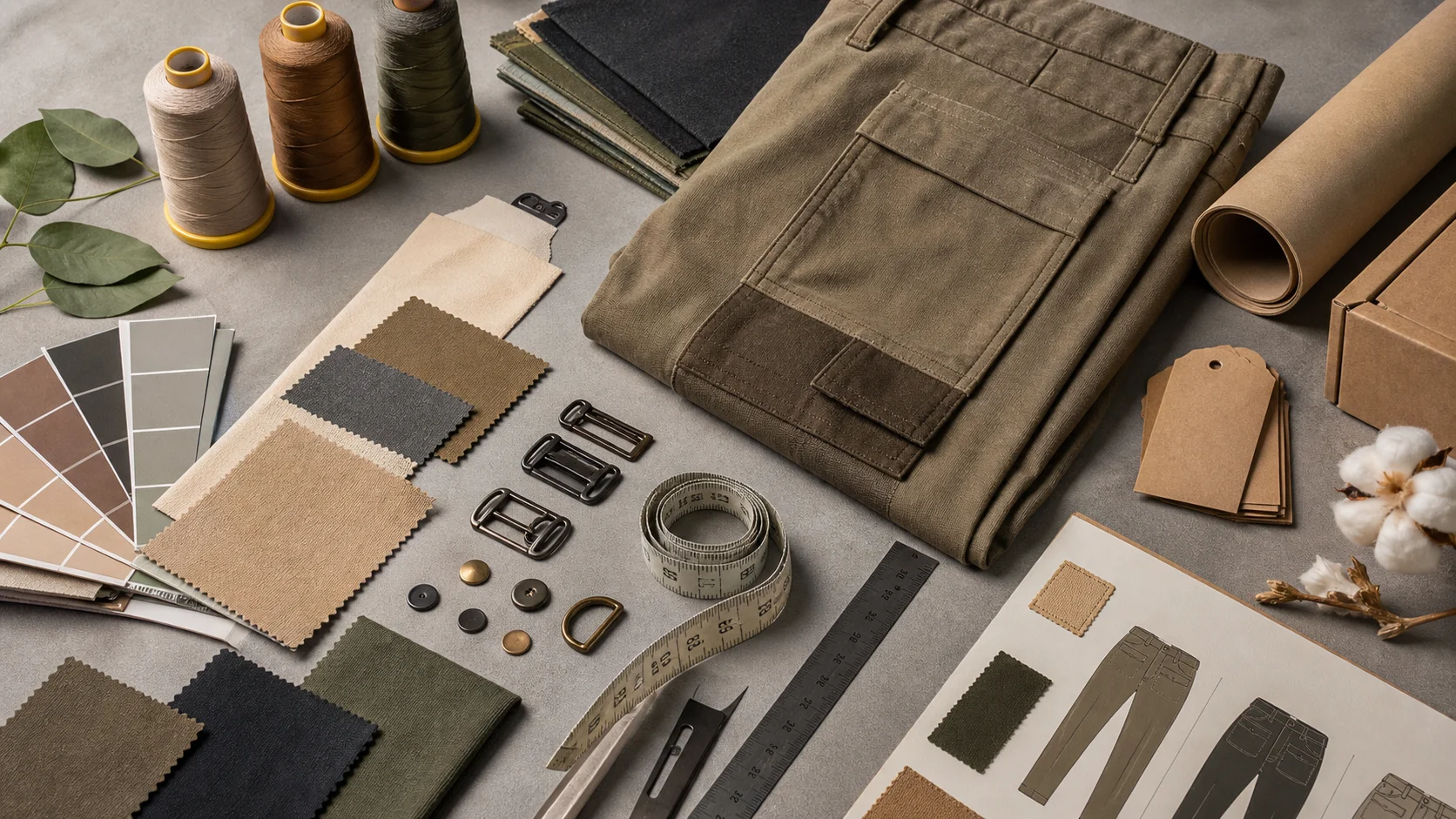
A focused SEO outline on how security contractors can reduce reorder risk when sourcing workwear uniforms, with attention to sizing consistency, fabric...
Security Workwear Reorder Risk Review - Fabrikn production reference
Security contractors rarely buy uniforms as a one-time project. Guards leave, contracts expand, sites change branding rules, and replacement garments are needed throughout the year. That makes reorder risk a serious sourcing issue, not just an administrative inconvenience.
A workwear uniform manufacturer reorder risk review for security contractors looks at what can go wrong after the first bulk order has been approved and delivered. The aim is to protect continuity: consistent color, fit, fabric, trims, branding, packaging, and delivery timing across repeat orders.
For security companies, reorder failure is visible immediately. A mismatched shirt color, missing epaulette, poor badge placement, or delayed trouser replenishment can affect site professionalism and contract compliance. The cost is not only the garment price. It can include urgent air freight, emergency local purchases, contract penalties, and staff dissatisfaction.
Security uniforms sit between corporate apparel and functional workwear. They must look disciplined, carry brand identity, and withstand long shifts, frequent washing, outdoor exposure, and physical movement. A reorder program has to support all of that while also dealing with staff turnover and contract changes.
The first order usually receives the most attention. Buyers compare quotations, approve samples, check logos, and negotiate delivery. The risk often appears later, when a smaller refill order is placed under time pressure. The original fabric may be out of stock. The supplier may request a higher MOQ. The color may come from a different dye lot. A trim supplier may have changed buttons, zippers, reflective tape, or hook-and-loop fastening.
Security contractors should treat every repeat order as a controlled production cycle. Reorders are not automatically safe because a previous order was successful. The safer approach is to maintain a garment specification file, confirm current material availability, approve updated samples when needed, and inspect production against the original standard.
This is especially important for companies serving multiple sites. A hotel security team, event security team, warehouse gate team, and mobile patrol team may all use related but different uniform packages. Shirts, trousers, softshell jackets, high-visibility vests, ties, caps, and knitwear may need to be replenished at different speeds. Without reorder control, the uniform system gradually becomes inconsistent.
Reorder risk usually comes from small changes that were not documented or controlled. A supplier may not intend to change the product, but substitutions happen when fabric mills, trim vendors, pattern rooms, or production lines shift.
These risks should be reviewed before the purchase order is released. Once production is cut, many corrections become expensive or impossible.
MOQ is one of the most common reorder problems for security contractors. The initial bulk order may meet factory requirements easily because it covers a full workforce rollout. Later replenishment orders are usually smaller and size-specific. That is where the conflict begins.
Typical MOQ ranges vary by garment type, fabric availability, customization level, and supplier structure. For basic woven security shirts, many manufacturers may expect around 300 to 500 pieces per style and color. For trousers, the range may be similar, especially if fabric must be dyed or purchased in full rolls. Knit polos may sometimes be available from 200 to 300 pieces per color if standard fabric is used. Jackets and softshells can require 300 pieces or more because fabric, lining, zippers, and trims are more complex.
Customized high-visibility garments may create another MOQ layer. Reflective tape, contrast panels, and certified fabric can require minimum purchases from material suppliers. A manufacturer may accept a lower garment quantity if the buyer agrees to use stock materials, but fully custom color and trim combinations usually increase MOQ.
Garment Type Typical Reorder MOQ Range Main MOQ Driver Buyer Risk Security shirts 300-500 pcs per style/color Fabric roll quantity, cutting efficiency, embroidery setup Small size refills may be rejected or repriced Security trousers 300-500 pcs per style/color Twill fabric, pattern grading, waistband trims Uneven demand for waist sizes creates excess inventory Polo shirts 200-500 pcs per color Knit fabric availability, logo process Color shade variation between batches Softshell jackets 300-600 pcs per style/color Fabric lamination, zippers, lining, cutting time High unit cost and slow replacement cycle Hi-vis vests 200-500 pcs per color/spec Reflective tape, certification requirements, fabric stock Compliance risk if materials are substitutedThe practical solution is not always to chase the lowest MOQ. A very low MOQ can be useful for urgent gaps, but it may come with higher unit prices, weaker material consistency, and limited customization. For security contractors with predictable staff turnover, a better approach is often to calculate a replenishment buffer by size and site.
Security uniform demand is rarely evenly spread across sizes. Shirts may run heavily in L, XL, and 2XL. Trouser waist sizes may cluster around certain ranges, with short and long inseams needed in smaller quantities. Women’s fit requirements can also create separate SKU pressure if the uniform range includes female-specific shirts, trousers, or jackets.
A reorder plan should avoid buying only the most popular sizes at the last minute. If the supplier requires a balanced size breakdown for cutting efficiency, a narrow size refill can become expensive. Buyers should ask whether the factory can support open-size purchasing or whether each reorder must follow a minimum ratio.
Reorder pricing is often less stable than buyers expect. A previous unit price does not guarantee the same cost on the next order. Fabric prices, labor costs, trim availability, exchange rates, and order quantity all affect the final quotation.
Small reorders usually carry a higher unit price because setup costs are spread across fewer garments. Cutting, embroidery digitizing, screen setup, label printing, packaging, quality control, and export documentation do not disappear because the order is smaller. They become more concentrated.
Security contractors should request a reorder price ladder before committing to a supplier. This gives visibility across different quantities, such as 100, 300, 500, and 1,000 pieces. It also helps procurement teams decide whether to consolidate demand across sites.
The purchasing judgment is straightforward: a slightly higher garment cost may be acceptable if it protects material continuity and delivery reliability. A cheap reorder that arrives late or visibly different can be more expensive in practice.
Fabric continuity is central to reorder control. Security uniforms often use dark colors, especially black, navy, charcoal, and dark grey. These colors can show variation under office lighting, daylight, and site lighting. Two navy shirts from different dye lots may look acceptable separately but mismatched when worn in the same team.
Fabric specifications should be documented beyond a general name. “Poly-cotton shirt fabric” is not enough. A stronger specification includes fiber content, weight, weave, yarn count if available, finish, shrinkage target, color reference, and performance requirements.
Specification Area What to Record Why It Matters for Reorders Fiber content Example: 65% polyester / 35% cotton Affects handfeel, durability, shrinkage, and wash performance Fabric weight Example: 150-180 gsm for shirts, 220-280 gsm for trousers Prevents lighter or heavier substitutions Weave or construction Twill, plain weave, ripstop, pique, softshell laminate Controls appearance and function Color reference Pantone, lab dip, physical approved swatch Reduces shade variation risk Performance target Shrinkage, pilling, colorfastness, tear strength Supports consistent wear lifeTrim continuity deserves the same attention. Security shirts may use epaulettes, pen pockets, shoulder loops, metal snaps, plastic buttons, collar stays, badge tabs, and nameplate supports. Trousers may include reinforced belt loops, cargo pockets, knee areas, D-rings, stretch panels, or specific waistband construction.
A trim card should be kept for each approved uniform style. This should include buttons, zippers, thread, interlining, hook-and-loop tape, reflective tape, labels, patches, and packaging materials. Photos help, but physical references are better when color or texture matters.
Security workwear branding can be sensitive. Some contractors want a strong visible brand. Others need a more restrained look because uniforms are used at client sites where the host brand is dominant. Reorder production must match the approved balance.
Common branding methods include embroidery, woven patches, heat transfer prints, screen prints, rubber patches, and detachable badge systems. Each method has reorder risk.
Placement should be measured, not estimated. A tech pack should define logo position from fixed garment points such as shoulder seam, center front, pocket edge, or hem. “Left chest logo” is too vague for reorder control.
For security uniforms, the safest branding standard is a combination of approved artwork, physical sample, measured placement guide, and production-line check before bulk application begins.
Buyers should also confirm whether badges, rank markings, and role identifiers are included in the garment order or supplied separately. Missing badge components can delay deployment even if the garments themselves arrive on time.
Fit inconsistency is a frequent complaint in uniform reorders. Staff may report that the new shirts feel tighter, trouser rise has changed, sleeves are longer, or jackets do not layer properly over shirts and knitwear. These issues often come from pattern changes, fabric shrinkage differences, or tolerance drift in sewing.
Security uniforms need functional fit. Guards may stand for long periods, patrol stairs, sit in vehicles, manage access points, or respond quickly. Tight shoulders, low arm mobility, weak crotch seams, or restrictive waistbands can create practical problems.
The size specification should include measurement points and tolerances. Typical points include chest, waist, hip, shoulder, sleeve length, body length, inseam, outseam, thigh, knee, and hem opening. Tolerances should be realistic. For many workwear garments, a tolerance of around 1 cm to 2 cm may be common depending on the measurement point and fabric type, but this should be agreed with the manufacturer.
A reorder should not be approved only from photos. Photos can confirm general appearance, but they cannot verify fit, fabric handfeel, shrinkage, or movement comfort.
Lead time depends on more than sewing capacity. Fabric booking, dyeing, trim purchasing, logo application, sampling, cutting, inspection, packing, and shipping all affect delivery. A reorder may be faster than the first order if materials are in stock and the pattern is unchanged. It may be slower if the supplier has to remake fabric, source new trims, or wait for buyer approval.
As a practical guideline, simple repeat orders using stock fabric may take around 4 to 8 weeks for production after approval. Custom fabric, dyed-to-match colors, jackets, certified hi-vis components, or complex branding can push the timeline to 8 to 12 weeks or more. Shipping mode then adds time. Sea freight is cheaper but slower. Air freight is faster but can damage the cost structure of a low-margin uniform program.
Security contractors should review reordering against operational triggers. Good triggers include upcoming contract start dates, seasonal jacket demand, staff onboarding cycles, and minimum stock levels by size. Waiting until the warehouse is nearly empty usually produces poor buying decisions.
For buyers building a more structured uniform supply program, supplier capability should be reviewed early. Fabrikn’s manufacturing services page gives a useful starting point for understanding how apparel development, sourcing, and production support can be organized.
Sampling can feel unnecessary for a reorder, but skipping it is risky when there has been a long gap, a material change, a new production line, or a revised logo. The sampling level should match the risk level.
A buyer may choose a lighter sample process for a small emergency reorder using confirmed stock materials. That is a commercial tradeoff. The risk should still be visible and documented, especially if the garments will be mixed with previous batches on the same site.
Inspection should not be limited to counting cartons. Security uniform reorders need checks for appearance, measurement, branding, function, and packing accuracy. A uniform may pass a basic quantity check while still failing operational requirements.
Common inspection risks include wrong size labels, inconsistent logo placement, weak seams, missing bar tacks, incorrect pocket shape, uneven epaulettes, shade variation, poor pressing, and mixed packing. Trousers should be checked for waistband construction, zipper function, pocket reinforcement, inseam accuracy, and crotch seam strength. Shirts need collar shape, button alignment, sleeve length, chest measurement, pocket placement, and shoulder loop consistency checked.
AQL inspection can be used for larger reorders, but security contractors should define critical defects carefully. A missing logo, incorrect badge position, non-compliant reflective tape, or wrong color may be more serious than a minor loose thread. The inspection checklist should reflect how the uniform will be used.
Supplier structure has a major impact on reorder reliability. Some buyers work directly with a manufacturer. Others work through a sourcing partner, distributor, or uniform management provider. Each structure has tradeoffs.
Supplier Model Advantages Reorder Risk Direct manufacturer Better technical control, clearer production communication, possible cost advantage May require higher MOQ and stronger buyer-side management Distributor or reseller Lower complexity, possible access to stock garments, easier small replenishment Less control over fabric continuity and manufacturing details Sourcing partner Can coordinate development, factory selection, QC, and logistics Service fees may apply; quality depends on process discipline Local decorator using blanks Fast small orders, easy logo application, low development burden Blank garment styles may discontinue or vary between suppliersThere is no single best model for every security contractor. A national contractor with stable uniform specifications may benefit from a manufacturer-led program with planned replenishment. A smaller contractor with fluctuating demand may prefer stock garments decorated locally, accepting less uniqueness in exchange for flexibility.
The key is to align the supplier model with reorder reality. If a company needs 50 mixed-size garments every month, a factory requiring 500 pieces per style may not be the best primary replenishment source unless buffer stock is planned. If the company needs consistent branded uniforms for thousands of guards, relying only on off-the-shelf blanks may create discontinuation risk.
For companies reviewing long-term supply partners, the background and operating model of a vendor should be checked before committing. The Fabrikn about us page outlines how sourcing support can be positioned for apparel buyers assessing supplier fit.
A reorder risk review should be short enough to use but detailed enough to catch the problems that matter. The checklist below is suitable for security shirts, trousers, polos, jackets, vests, and related workwear items.
The best reorder decision is not always the cheapest or the fastest. Security contractors should rank priorities based on operational impact.
If the uniform is client-facing and brand-sensitive, prioritize color, logo placement, and finish consistency. A visible mismatch can undermine professionalism even if the garment is technically wearable.
If the uniform is used in demanding outdoor or patrol conditions, prioritize fabric durability, seam strength, weather resistance, and functional fit. Lower-cost substitutions can increase replacement frequency.
If the contractor has high staff turnover, prioritize flexible replenishment and size availability. A perfect custom garment with an impractical MOQ may become a supply problem.
If the contractor is launching a new site, prioritize delivery certainty and packing accuracy. Garments must arrive on time and be easy to issue by role, size, and location.
If the contractor operates under compliance requirements, prioritize certified materials, reflective tape standards, care labels, and documentation. Substituting materials without approval can create risk beyond apparel quality.
A disciplined reorder program usually combines planned bulk production with controlled buffer stock. The buyer can hold critical sizes, use agreed fabric and trim standards, and avoid emergency purchasing. This requires more planning, but it lowers the hidden costs of fragmented uniform buying.
Security contractors should treat uniforms as an operational supply chain, not as occasional merchandise. The strongest programs have defined specifications, controlled samples, realistic MOQ planning, and a reorder calendar tied to workforce demand.
A practical reorder file should include:
This documentation reduces dependency on memory and individual staff members. It also makes supplier comparison more accurate. When each manufacturer quotes against the same specifications, pricing and lead-time differences become easier to evaluate.
Security contractors that are planning a new uniform range, changing supplier, or reviewing reorder risk can start by discussing specifications and production requirements with a manufacturing partner. Fabrikn can be contacted through the contact page for sourcing and manufacturing enquiries.
A workwear uniform manufacturer reorder risk review for security contractors should focus on continuity, not just replenishment. The core question is simple: can the supplier repeat the approved garment at the required quality, quantity, cost, and delivery date?
MOQ, cost, and sourcing choices are connected. Lower MOQ improves flexibility but may increase unit cost and variation risk. Larger planned orders improve consistency and pricing but require inventory discipline. Stock garments are convenient but less unique. Custom manufacturing gives control but needs stronger forecasting and documentation.
The safest purchasing route is to identify which garments are mission-critical, document their specifications thoroughly, and plan reorders before stock pressure becomes urgent. Security uniforms are judged in daily use. Reorder control is what keeps that judgment from turning into a complaint.
Get a free quote from Fabrikn — your trusted B2B clothing manufacturer with 10+ years of experience. MOQ as low as 200 pieces.
Get a Free Quote →Reorder risk is the chance that repeat uniform orders will differ from the approved original order or fail to arrive on time. It includes fabric changes, color variation, trim substitutions, fit drift, MOQ problems, cost increases, branding errors, and delivery delays.
Typical reorder MOQs often range from 200 to 600 pieces per style or color, depending on garment type and customization. Shirts and trousers commonly sit around 300 to 500 pieces. Polos and hi-vis vests may sometimes be lower if standard materials are used. Jackets often require higher quantities because of fabric and trim complexity.
Keep approved physical fabric swatches, use lab dips for dyed fabric, document Pantone or color references, and compare new production against the previous approved batch. Buyers should also ask whether the fabric comes from the same mill and whether shade bands are acceptable before production starts.
A sample is recommended when fabric, trims, branding, supplier, pattern, or production line has changed. For low-risk repeat orders using confirmed materials, a full sampling process may be reduced, but a pre-production sample is still safer than approving from photos alone.
Reorders are often smaller, so setup costs are spread across fewer garments. Fabric, labor, trims, exchange rates, logo application, inspection, and freight can also change. Buyers should request price breaks at multiple quantities before selecting a reorder volume.
Inspection should cover quantity, size labels, measurements, fabric shade, stitching, logo placement, trim function, pocket construction, reflective materials where applicable, packaging, carton labels, and site allocation. Critical defects should be defined based on operational use, not only general garment appearance.
Custom manufacturing gives better control over branding, fabric, fit, and long-term consistency, but it usually requires higher MOQ and better forecasting. Stock uniforms offer flexibility and faster small reorders, but style discontinuation and batch variation are bigger risks. The best choice depends on contract size, brand requirements, staff turnover, and replenishment frequency.