
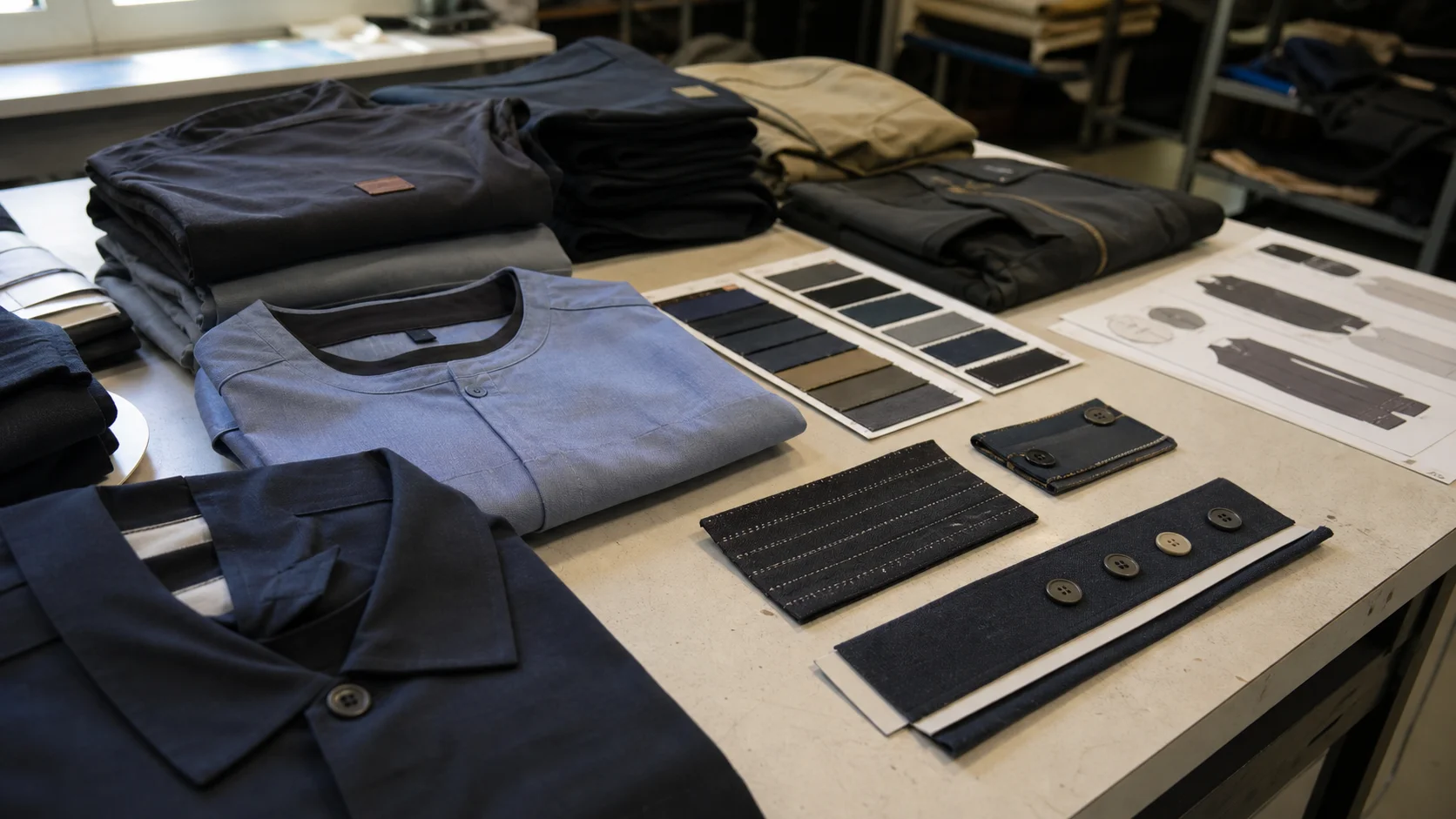
A quality and inspection outline for distributor buyers reviewing bulk service uniform reorders, covering shade consistency, size drift, fabric...
Service Uniform Reorder Risk Review for Buyers - Quality & Inspection manufacturing guide
Bulk service uniform reorder risk review is not just a quality control task. For distributor buyers, it is a margin protection process. Reorders look simple because the style has already been developed, approved, shipped, and sold. In practice, repeat production often carries a different risk profile from the first order.
The first bulk run usually receives the most attention. The factory studies the tech pack, sample comments are tracked closely, trims are sourced carefully, and the buyer may inspect more aggressively. By the second or third reorder, teams can become too comfortable. That is when fabric shade changes, missing trims, substituted thread, incorrect logo placement, poor size balance, packaging errors, and late deliveries start to appear.
For distributor buyers supplying hotels, restaurants, healthcare providers, cleaning companies, security firms, transport teams, and facility service operators, uniform consistency matters. A reorder that does not match the original program can create account complaints, return costs, and brand damage. The buyer may not own the end user relationship in every case, but the distributor usually absorbs the pressure when the uniform program fails.
This article reviews the main risks in bulk service uniform reorders and provides practical purchasing judgment for distributor buyers managing quality and inspection decisions.
Many buyers assume a reorder should be lower risk than a new style. In some cases, it is. The garment pattern is known, the wearer group has tested the product, and the distributor has real sales data. Yet the supply chain conditions may have changed since the original order.
Fabric mills may no longer hold the same lot. The original buttons, snaps, zippers, reflective tape, elastic, labels, or packaging materials may be out of stock. The sewing line may be handled by different operators. The factory may have shifted the style to a subcontracted unit during peak season. Even when the supplier remains the same, the practical production setup can change.
Service uniforms are especially sensitive because they are often used as part of a managed uniform program. A hotel may expect the same black trouser shade across front desk staff. A restaurant group may require consistent apron pocket placement. A cleaning company may need the same polo shirt color across multiple branches. A security company may reject garments if badges, epaulettes, or reflective elements are misplaced.
Reorder risk is not limited to visible defects. It also includes inconsistency against the previous shipment. A garment can pass a basic inspection and still fail commercially if it does not match the earlier approved uniform.
For distributor buyers, the key question is not only “Is this reorder acceptable?” The better question is “Will this reorder match what the end customer already has in service?”
Distributor buyers sit between the manufacturer and the end customer. That position creates specific risk. The factory may focus on production feasibility, while the end customer focuses on appearance, comfort, durability, and consistency. The distributor must translate both sides into a controlled purchase order.
Bulk service uniform reorders usually involve several commercial pressures:
The buyer’s job is to decide where control is worth paying for. A low-value apron reorder may not justify the same inspection depth as a full hotel suiting program. A healthcare tunic reorder with strict color matching and embroidery may require more rigorous review than a plain maintenance T-shirt. Good sourcing judgment is about matching control level to commercial exposure.
Buyers working with a production partner can review development, sourcing, and quality support through pages such as Fabrikn services when assessing what type of order management support is suitable for repeat uniform programs.
The safest reorder starts before the purchase order is placed. A distributor should not simply copy the previous PO and update the quantity. A short pre-reorder review can prevent costly disputes later.
Start with the approved standard. This may include the original sealed sample, pre-production sample, size set, lab dip approval, strike-off, embroidery swatch, print approval, trim card, packing method, carton marking, and final inspection report from the last bulk order. If these records are incomplete, the reorder carries more interpretation risk.
The buyer should confirm the following before issuing the PO:
This review should be documented in writing. Verbal confirmation is weak protection when a reorder dispute arises. A clean reorder file should show what is unchanged, what is revised, and what must be reapproved.
Review Area Buyer Question Risk if Skipped Fabric Is the same construction and color available? Shade variation, handfeel change, shrinkage difference Trims Are buttons, zippers, labels, tape, and packaging unchanged? Mismatch with previous stock or functional failure Logo Is the branding file and placement still approved? Unusable branded stock Fit Were there wearer complaints from the last shipment? Repeat of known fit issues Packing Does the customer need location-based or size-based packing? Distribution delays and warehouse reworkFabric is one of the highest-risk areas in service uniform reorders. The buyer may request the same item code, but the mill may produce a new dye lot or use a slightly different greige base. Even small differences can be visible when new garments are worn alongside older stock.
Common service uniform fabrics include cotton twill, polyester-cotton poplin, polyester twill, stretch woven fabric, pique knit, interlock knit, softshell fabric, fleece, Oxford shirting, and functional fabrics with water resistance or stain-release finishes. Each has different reorder risks.
For woven uniforms, color and shrinkage are frequent concerns. For knit polos and T-shirts, GSM, spirality, pilling, shrinkage, collar rib quality, and color fastness matter. For hospitality suiting, fabric drape, shade, seam puckering, and lining compatibility can affect perceived quality. For industrial workwear, abrasion resistance, tear strength, reflective tape bonding, and seam strength may be more important.
Before reorder production, buyers should request updated fabric confirmation when the previous bulk fabric is no longer available from stock. This may include:
The practical judgment is simple: if the reorder garments will be mixed with previous stock on the same team, shade tolerance must be tighter. If the garments are going to a new branch or a full replacement program, minor shade difference may be acceptable if the customer approves it.
Buyers should not rely only on digital photos for color approval. Photos are useful for quick communication, but lighting, camera settings, and screens distort shade. Physical swatches remain important for color-sensitive service uniform programs.
Trims often create reorder problems because they are treated as minor components. In uniform programs, trims are rarely minor. A different button finish, zipper pull, snap color, label wording, drawcord tip, or reflective tape width can make the reorder look inconsistent.
For distributor buyers, the trim card should be part of the reorder file. It should show the approved button, zipper, thread, interlining, elastic, Velcro, snaps, labels, badges, tapes, packaging bag, hangtag, and carton label where relevant. If the factory proposes substitution, the buyer should approve it before production.
Logo execution deserves separate attention. Service uniforms often include embroidery, screen printing, heat transfer, woven patches, PVC badges, name labels, or department identifiers. Reorder mistakes in branding are expensive because garments may be fully sewn and otherwise acceptable, but not usable for the customer.
Key branding controls include:
One common reorder risk is logo drift. The logo is technically correct, but the placement changes by enough to be visible across staff members. Placement tolerances should be specified. For example, chest embroidery may be controlled by distance from center front, shoulder seam, armhole, or pocket edge. Apron logos may need clear measurement from top edge and center line.
When branding is customer-specific, distributor buyers should separate blank garment approval from logo approval. A plain garment can pass inspection while the branded version fails the end customer’s standard.
Fit problems in reorders usually come from two sources: uncontrolled pattern changes or repeated issues from the previous shipment. Factories may adjust patterns to improve sewing efficiency, manage fabric consumption, or correct internal production issues. These changes can create buyer-facing problems if they are not approved.
Service uniforms need practical fit. Wearers bend, lift, clean, serve, drive, carry equipment, and work long shifts. A uniform that looks acceptable on a hanger may fail during use if sleeve mobility, trouser rise, waistband stretch, pocket access, or shoulder comfort is poor.
Before a reorder, buyers should review any feedback from the previous delivery. If customers reported tight shoulders, short body length, weak crotch seams, shrinking polos, rolling waistbands, or uncomfortable collars, the reorder is the right time to correct the issue. Repeating the same defect because “the style is already approved” is poor purchasing discipline.
For bulk inspection, measurement checks should be done across sizes, not only the sample size. Reorders often include skewed size ratios. Common sizes such as M, L, XL, or waist sizes in the middle range may dominate. Some programs require extended sizes, and those sizes can be more vulnerable to grading errors.
Typical measurement review should include:
For distributor buyers, a size set approval is recommended when the reorder has a long gap from previous production, a new fabric lot, a new factory line, or any pattern adjustment. A full fit re-approval may not be necessary for every reorder, but skipping all measurement checks is risky.
Lead time for bulk service uniform reorders depends on more than sewing capacity. Buyers often underestimate fabric booking, trim availability, logo work, sample approval, testing, packing complexity, and shipment booking.
Typical reorder timelines vary widely, but the following ranges are common in apparel sourcing:
These are not guarantees. Lead time can extend if the mill has no greige fabric, trims need custom production, lab dips are rejected, embroidery capacity is full, or the buyer delays approvals.
A reorder calendar should include clear approval gates:
Distributor buyers should be cautious with urgent reorders. Speed often means accepting higher risk. If the customer needs stock urgently, the buyer may choose partial shipment, available fabric substitution, or reduced inspection depth. Those decisions should be documented and communicated clearly.
A reorder inspection plan should reflect the product risk, order value, customer sensitivity, and supplier history. Not every service uniform reorder needs the same level of inspection. Still, a repeat order should not automatically be treated as low risk.
Inspection can be structured in stages:
For service uniforms, inline inspection is useful when the order has complex sewing, new operators, difficult fabric, strict logo placement, or previous quality complaints. Final inspection alone may identify defects too late, especially when goods are branded and packed for multiple locations.
Final inspection should cover at least the following:
Buyers sourcing repeat uniform programs can review supplier capability, quality control support, and project handling through Fabrikn’s company background when deciding whether external production coordination is needed.
AQL inspection is commonly used for apparel final random inspection. Distributor buyers should understand that AQL is a sampling method, not a guarantee that every defective garment has been removed. It helps decide whether a lot is statistically acceptable based on defined limits.
Typical apparel inspections may use AQL 2.5 for major defects and AQL 4.0 for minor defects, though standards vary by buyer, product, and customer expectation. Critical defects are usually not acceptable. For uniforms used in safety-sensitive environments, the tolerance for certain defects should be stricter.
Defect classification should be clear before inspection:
Defect Type Examples Buyer Judgment Critical Sharp objects, unsafe fasteners, missing safety reflective elements, illegal labeling Usually reject or hold shipment pending full review Major Wrong logo, incorrect size label, open seam, visible stain, wrong fabric, serious shade difference May cause rejection, rework, or sorting Minor Loose thread, slight pressing mark, minor measurement deviation within tolerance Acceptable only within agreed limitUniform reorders need one extra layer of judgment: consistency against previous approved production. A garment with acceptable sewing may still be commercially defective if it differs too much from the established program standard.
Buyers should be especially strict on:
If inspection fails, the buyer must decide whether to reject, rework, sort, reinspect, accept with concession, or ship partially. The right decision depends on defect severity, customer urgency, rework feasibility, and financial exposure. Accepting defective branded stock to meet a delivery date can be more expensive than delaying shipment if the customer later refuses it.
Packaging is often treated as a warehouse detail, but it is a major reorder risk for distributor buyers. Service uniforms may need to be distributed by customer branch, department, employee name, size, or style. A garment that is correctly made but incorrectly packed can delay rollouts and increase handling cost.
Buyers should specify packing instructions clearly in the PO and inspection checklist. Common requirements include individual polybags, size stickers, barcode labels, carton assortment, solid-size cartons, mixed-size cartons, location-based packing, master carton labels, and packing lists by destination.
Risks include:
For distributors, the commercial impact can be immediate. If a national customer expects uniforms sorted by branch and the shipment arrives mixed, the distributor may need to repack domestically. That labor cost can erase margin from the order.
Inspection should include carton selection and assortment checks, not only garment workmanship. Barcode scanning checks are useful when the uniform program has many SKUs.
MOQ is one of the most important commercial constraints in bulk service uniform reorders. Buyers may want small replenishment quantities, while factories and mills prefer efficient production runs.
Typical MOQ ranges depend on garment type, fabric source, trim complexity, and branding:
These ranges are only general sourcing references. Some suppliers support lower quantities at higher unit cost, especially if fabric and trims are in stock. Others require higher quantities to protect production efficiency.
The reorder quantity decision is a tradeoff between inventory risk and production risk. Ordering too little may increase unit cost, create shade variation across frequent small batches, and raise the chance of stockouts. Ordering too much can tie up cash in slow-moving sizes and customer-specific branded inventory.
Distributor buyers should consider a tiered reorder plan:
Blank stock plus later decoration can reduce branded inventory risk, but it may increase handling time and create logo placement variability if decoration is not controlled. Fully branded factory production may be cheaper per unit, but it locks the distributor into customer-specific inventory.
Clear supplier communication is the strongest low-cost control for uniform reorders. The buyer should issue a reorder package, not just a PO. This package should remove ambiguity and identify what must match the previous order.
A practical reorder package should include:
The buyer should ask the supplier to confirm exceptions before production. Silence should not be treated as approval. If the supplier cannot source the same fabric or trims, that must be declared early.
For higher-risk programs, buyers may ask for production photos at key stages. Photos cannot replace inspection, but they can reveal obvious issues early: wrong fabric shade, incorrect logo position, missing trims, poor packing, or unexpected style changes.
When the reorder has commercial urgency or technical complexity, buyers can use the Fabrikn contact page to discuss sourcing support, inspection coordination, or production review requirements.
Bulk service uniform reorder risk review is about deciding where failure is most likely and where failure is most expensive. The best buyers do not inspect everything with the same intensity. They classify risk and apply control where it matters.
A low-risk reorder may involve a simple style, stable supplier, available fabric, no logo change, no previous complaint, and straightforward packing. A higher-risk reorder may include custom dyeing, customer-specific branding, strict shade matching, safety-related elements, new trims, skewed size ratios, tight delivery timing, or complex distribution packing.
Before approving a service uniform reorder, distributor buyers should make five decisions:
The main purchasing mistake is treating a reorder as a routine transaction. Reorders deserve discipline because the customer already has an expectation. The uniform is not being judged in isolation; it is being compared to earlier stock, wearer feedback, and the customer’s brand standard.
A controlled reorder protects more than the shipment. It protects the distributor’s account relationship, inventory position, and credibility as a reliable uniform supplier.
Get a free quote from Fabrikn — your trusted B2B clothing manufacturer with 10+ years of experience. MOQ as low as 200 pieces.
Get a Free Quote →A bulk service uniform reorder risk review is a purchasing and quality control check before repeat production. It reviews fabric, trims, fit, logo, packaging, lead time, MOQ, and inspection risks to make sure the new shipment matches the approved uniform program.
Reorders can use a new fabric lot, different trims, different production operators, or changed packaging instructions. The style may be the same on paper, but production conditions can change. That creates risk for shade, fit, branding, workmanship, and delivery.
Typical MOQs may range from about 300 to 1,000 pieces per color or style, depending on fabric availability, garment complexity, trim sourcing, and branding. Custom dyed fabrics or custom trims can push MOQ higher. Lower quantities may be possible at a higher unit cost if materials are in stock.
Not always. A new sample is strongly recommended when the fabric lot changes, trims are substituted, branding changes, the production gap is long, the factory line changes, or the previous shipment had complaints. For stable low-risk reorders, a fabric swatch, trim confirmation, and production reference may be enough.
Common defects include shade variation, wrong logo placement, incorrect size labels, measurement deviations, weak seams, stains, missing trims, poor pressing, wrong carton assortment, barcode errors, and packaging mistakes.
Final inspection may be enough for simple, low-risk reorders from a reliable supplier. Inline inspection is better when the garment has complex construction, strict branding, safety elements, previous quality complaints, or a tight delivery deadline. Packing inspection is important when goods are sorted by location, department, or SKU.
Buyers should request lab dips, bulk fabric swatches, or shade bands when fabric is newly dyed. If new garments will be worn alongside older stock, shade tolerance should be strict. If the reorder supplies a separate branch or full replacement, minor shade difference may be acceptable with customer approval.
A reorder package should include the PO, tech pack, measurement specs, fabric and trim details, logo artwork, placement instructions, size breakdown, packing method, carton marks, barcode requirements, inspection standard, approval deadlines, and notes from previous shipment issues.
Buyers can hold some blank stock and decorate closer to demand, especially for customer-specific logos. This reduces dead inventory risk but may increase handling time and requires strong decoration controls. Factory-branded production can lower unit cost but creates more exposure if the customer changes branding or demand drops.
Do not treat the reorder as automatic. Confirm what must match, reapprove what has changed, inspect according to risk, and document every exception before production. That discipline protects both product quality and the distributor’s customer relationship.