
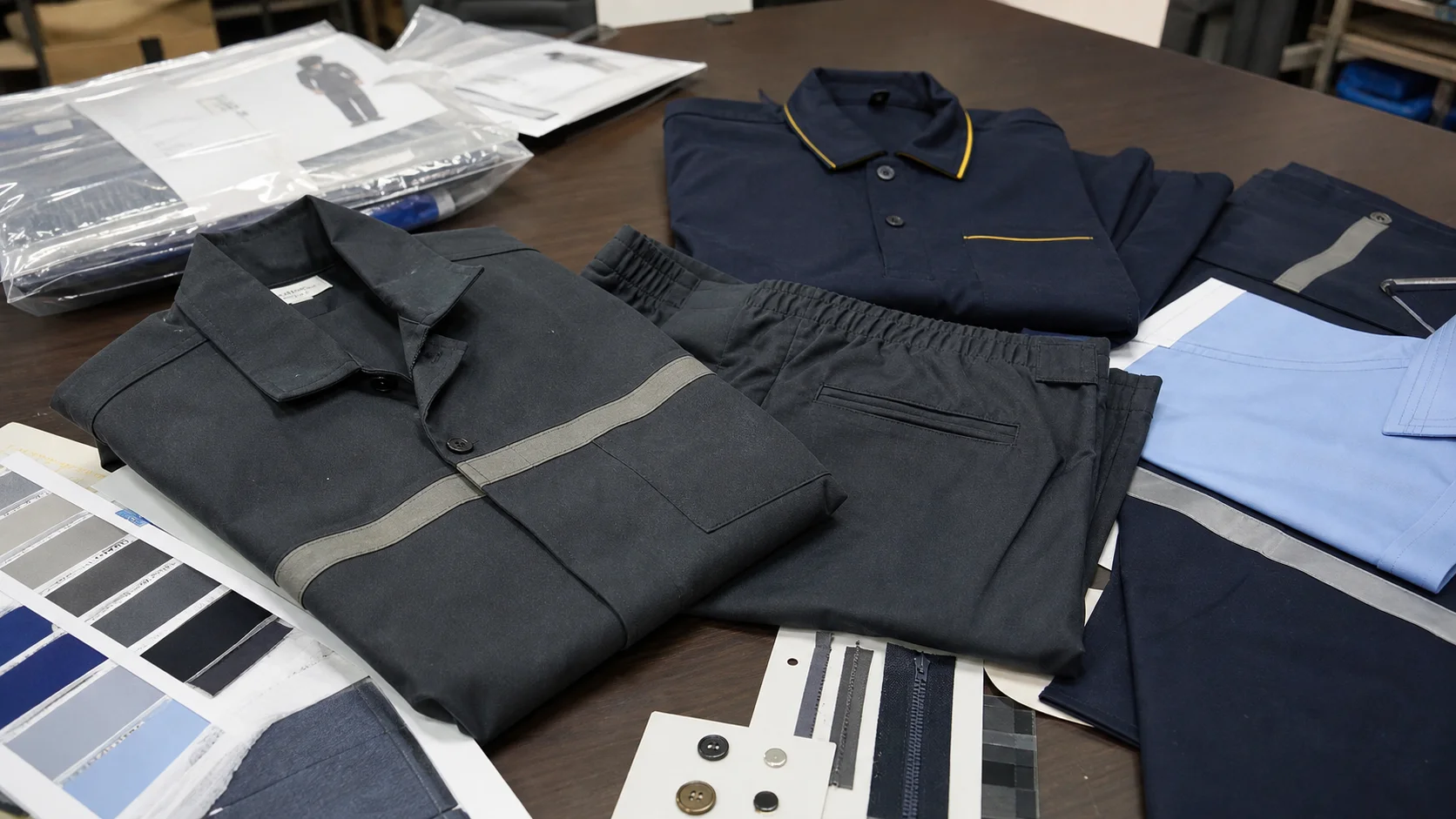
A quality inspection outline for distributor buyers reviewing seam strength in service uniform factory production, from stitch type and stress points to...
Service Uniform Seams: Buyer Factory Review - Quality & Inspection manufacturing guide
Service uniforms are not fashion garments with light usage expectations. They are workwear used by cleaning teams, facilities staff, hospitality crews, maintenance workers, delivery teams, healthcare support staff, security personnel, and food service employees. For distributor buyers, seam strength is one of the clearest indicators of whether a uniform program will survive daily wear, repeated laundering, and physical job movement.
A weak seam creates complaints faster than almost any other garment issue. Color shade differences may be noticed during receiving. Fit problems may appear during rollout. Seam failure appears during use, usually when the garment is already branded, distributed, and difficult to replace quietly. Split side seams, blown crotch seams, loose pocket stitching, and open sleeve seams can turn a low-cost uniform into a high-cost service problem.
For distributor buyers, the practical question is not simply “Is the seam strong?” The better question is: “Is the factory controlling seam strength consistently across sizes, fabric lots, sewing lines, operators, and repeat orders?” A buyer factory review should look at the sewing method, thread, stitch density, fabric behavior, reinforcement points, and inspection discipline together. One good sample does not prove bulk consistency.
If a distributor is building a private-label service uniform program, seam strength should be treated as a commercial risk control. It affects replacement rates, account retention, laundering durability, brand perception, and margin protection. Buyers can review related sourcing capabilities through Fabrikn services when building a quality-focused uniform supply plan.
A factory seam strength review should combine document review, sample evaluation, line observation, and finished-goods inspection. It should not rely only on a supplier’s general statement that the garment is “durable” or “workwear quality.” Those phrases are too broad. Distributor buyers need measurable construction details and clear approval checkpoints.
The review should start with the technical package. A useful tech pack defines seam type, stitch type, stitch density, thread ticket size, seam allowance, bartack positions, reinforcement method, pocket placement tolerance, and expected test standard if formal lab testing is required. Many seam failures begin with incomplete specifications. If the factory is left to choose construction based only on a reference garment, results can vary between sample room and bulk sewing lines.
The second layer is material compatibility. A seam that works well on a 220 gsm twill may not perform the same way on a lighter poplin, stretch blend, brushed polyester-cotton, or ripstop fabric. Stretch fabrics need compatible thread and stitch elasticity. Dense fabrics need needle selection that does not cut yarns. Lightweight fabrics need seam engineering that avoids puckering and tearing.
The third layer is production control. Buyers should ask how the factory checks seam strength during sewing, not only at final inspection. End-line inspectors may catch open seams, skipped stitches, and visible defects, but they may not detect weak thread tension or fabric slippage until the garment is stressed. Inline checks are especially important for high-stress areas such as armholes, seat seams, pocket openings, waistbands, and side vents.
Purchasing judgment: if a supplier cannot explain the seam construction by garment zone, expect inconsistent durability in bulk production. A low unit price is not meaningful if the uniform fails after limited wear or laundering.
Not all seams carry the same workload. A buyer review should focus first on the areas most likely to fail in service conditions. These zones differ slightly by garment type, but the inspection logic is similar: check where the wearer bends, reaches, kneels, carries tools, or places repeated strain on the fabric.
A distributor should not inspect only the most visible seams. The most damaging failures often occur in functional zones that are not obvious during flat-table review. Fit samples should be worn and moved in, not only measured.
Seam strength depends on a group of choices made before production starts. The factory’s sewing team may have standard methods, but distributor buyers should confirm whether those standards match the end use. A housekeeping tunic, quick-service restaurant shirt, warehouse pant, and medical support scrub top do not need identical construction.
Spec Area Buyer Review Point Typical Risk if Uncontrolled Seam Type Plain seam, overlocked seam, flat-felled seam, lapped seam, safety stitch, or coverstitch depending on garment zone. Bulk seams may split, fray, or feel uncomfortable during movement. Stitch Type Lockstitch, chainstitch, overlock, safety stitch, bartack, or coverstitch should match fabric and stress level. Skipped stitches, seam unraveling, poor elasticity, or weak recovery. Stitch Density Often expressed as stitches per inch or stitches per centimeter. Confirm by seam area. Too few stitches weaken the seam; too many may perforate fabric. Thread Confirm fiber content, ticket size, colorfastness, shrinkage resistance, and compatibility with laundering. Thread breakage, seam puckering, shade mismatch, or premature wear. Needle Needle size and point should suit woven, knit, stretch, or coated fabric. Yarn damage, holes, seam weakness, or fabric runs. Seam Allowance Confirm minimum allowance in high-stress areas and consistency after trimming. Seam slippage, edge fraying, or open seams after washing. Reinforcement Bartacks, backstitching, double rows, pocket corner reinforcement, and gussets where needed. Pockets tear out, belt loops detach, vents split, or crotch seams fail.Buyers should be cautious with generic “double stitching” claims. Double stitching can improve durability when properly executed, but it can also be decorative or poorly balanced. Ask where the double row is applied, what stitch type is used, what thread is specified, and whether it is required on all sizes.
Flat-felled seams are often associated with strength and clean finishing, but they add sewing time and may increase cost. Safety stitch construction can be practical for many woven service garments, especially where speed and durability need balance. Overlock alone may be acceptable in low-stress areas, but it is not always enough for heavy-use trousers or reinforced work shirts.
Seam strength cannot be reviewed separately from fabric and trims. The strongest thread will not solve a fabric that tears along the seam line. A well-chosen fabric may still fail if needle damage weakens yarns during sewing. Distributor buyers should review fabric behavior before approving bulk production.
Common service uniform fabrics include polyester-cotton twill, polyester-cotton poplin, mechanical stretch blends, cotton-rich twill, polyester gabardine, ripstop blends, knit polo fabrics, and scrub-style woven blends. Each has a different seam response. Twill is usually stronger but can feel heavier. Poplin is lighter and cheaper but may need careful seam allowance and reinforcement. Stretch fabrics improve wearer comfort but require construction that can move without popping stitches.
Thread selection should match the garment’s laundering expectations. Service uniforms may be home laundered, industrially laundered, or processed by commercial laundry providers. Higher wash temperatures, tumble drying, chemicals, and pressing can expose weak thread choices. Buyers should ask whether the thread is polyester spun, polyester core-spun, textured polyester, nylon, or another type. Polyester thread is common because of strength and wash resistance, but the correct ticket size still matters.
Trims also affect seam durability. Zippers, snaps, buttons, elastic waistbands, reflective tape, hook-and-loop closures, and badge loops introduce stress points. Reflective tape seams can stiffen garment panels and create pull lines. Elastic waistbands may fail if stitching is not elastic enough. Pocket bags can tear if the fabric is too light for job use.
A practical buyer review should include fabric weight, composition, weave or knit type, shrinkage tolerance, colorfastness requirements, and seam compatibility. If the uniform is sold into food service, hospitality, janitorial, facilities, or healthcare support channels, the buyer should also confirm whether the fabric finish affects sewing. Soil-release, water-repellent, antimicrobial, anti-static, or easy-care finishes may influence hand feel, needle penetration, or seam puckering.
Sample approval is where many seam strength problems can be prevented. A distributor should not approve a uniform sample based only on appearance, logo placement, or general fit. The sample stage should test whether the factory can build the garment according to the intended construction standard.
The pre-production sample is especially important. A development sample made by a skilled sample room may look better than bulk output. Distributor buyers should confirm that the factory’s production line can duplicate the approved seam construction. If the sample uses a stronger thread, better seam allowance, or more careful reinforcement than bulk production, the approval is misleading.
Wash testing should be realistic. A single gentle wash may not reveal much. For workwear programs, buyers often request multiple wash cycles to observe seam puckering, thread shrinkage, twisting, color change, and reinforcement stability. If industrial laundering is expected, the buyer should define the conditions early because fabric, trims, and sewing thread must be selected accordingly.
Wear trials can be useful for larger programs, but they require time and controlled feedback. A short wearer test across different body types can reveal tight armholes, seat strain, pocket tearing, waistband discomfort, or sleeve restriction. Buyers should treat wear trial feedback as a commercial input, not just a design opinion.
MOQ and lead time depend on fabric availability, customization level, trim sourcing, size range, color count, logo application, factory workload, and testing requirements. For distributor buyers, seam strength requirements can also affect MOQ and cost because stronger construction may require different thread, extra operations, more skilled sewing, or slower line speed.
Typical MOQ ranges vary widely. For stock fabric service uniforms with simple branding, some suppliers may accept approximately 300 to 500 pieces per style or color, especially if fabric is available. For custom-dyed fabric, specialized trims, extended size ranges, or private-label construction, MOQ may move closer to 800 to 1,500 pieces per style or color. Heavier workwear, engineered uniforms, or programs requiring fabric mill commitments can require higher quantities. These ranges are only planning references; actual MOQ should be confirmed by style, fabric, color, and supplier capacity.
Lead times also vary. Sampling may take two to four weeks when fabrics and trims are available. Custom development, fabric testing, lab dips, strike-offs, or revised samples can extend the timeline. Bulk production may take 45 to 90 days after approvals, depending on order size, raw material readiness, factory loading, and inspection requirements. Peak season, holiday closures, and delayed approvals can add more time than buyers expect.
Buying Choice Benefit Tradeoff Lower-cost seam construction Lower unit price and faster sewing speed. Higher risk in high-stress areas and more after-sale claims. Reinforced seams and bartacks Better durability for work conditions. Higher labor cost and slightly longer production time. Stronger thread specification Improved seam performance and wash durability. May increase cost and require better machine setup. Custom fabric Better control over hand feel, weight, color, and performance. Higher MOQ, longer lead time, and more approval steps. Wear trial before bulk Reduces rollout risk for large programs. Adds calendar time before production release.Purchasing judgment should be firm here: do not remove reinforcement from stress points just to meet a target price unless the uniform is genuinely low-duty. It is usually better to simplify a non-critical trim, reduce packaging complexity, or consolidate colorways than to weaken crotch seams, pocket corners, armholes, or waistbands.
For buyers comparing sourcing options, a supplier discussion through Fabrikn contact can help clarify production requirements before quoting. Clear specifications usually create better price comparisons than broad RFQs with incomplete construction details.
A good inspection plan checks seam quality before the order is packed. Final inspection is necessary, but it should not be the only control point. Distributor buyers should request a production plan that includes inline checks, mid-production review if the order is large, and final random inspection based on an agreed sampling method.
Inspection risk increases when orders include many sizes, multiple colors, different fabric lots, or mixed customization methods. Larger sizes deserve special attention because stress loads are higher and grading errors can create tight zones. Smaller sizes can also fail if seam allowances are reduced during production or operators trim too aggressively.
Buyers should define acceptable and unacceptable defects in advance. An open seam at a crotch, armhole, waistband, or pocket corner should normally be treated as a major defect. Loose threads may be minor in some cases, but loose threads combined with weak backstitching or unraveling are more serious. Skipped stitches in a decorative area may be acceptable within tolerance; skipped stitches in a stress seam should not be accepted casually.
Factory inspection records should be reviewed with caution. A clean internal report is useful, but it is not a substitute for buyer-side inspection when the order is critical. Distributor buyers handling key accounts should consider third-party or buyer-appointed inspection for first orders, new factories, new fabrics, or high-volume rollouts.
Seam failure is not always dramatic at first. Many problems start as small warning signs that become bigger after washing or wear. Buyers and inspectors should learn to identify early indicators.
Seam grin deserves close attention on service uniforms. It may appear when a wearer reaches, bends, sits, or squats. If the garment already shows seam grin on a fit model or during sample movement checks, the problem is likely to worsen in bulk use. The solution may require more room in the pattern, stronger construction, different fabric, or revised stitch settings.
Seam puckering can be both an appearance and durability issue. In hospitality, reception, healthcare support, and customer-facing service roles, puckered seams make uniforms look cheap after laundering. In some cases, puckering also signals thread shrinkage or tension problems that may affect long-term wear.
Distributor buyers should ask direct, production-level questions. Vague answers are a warning sign. The goal is not to make the supplier uncomfortable; it is to confirm that the factory understands the performance requirement and can control it in bulk.
The factory should be able to answer these questions without relying only on the merchandiser. The production team, sample room, quality team, and line supervisors may need to contribute. If the buyer receives only a sales answer, request technical confirmation before approval.
A useful supplier also explains tradeoffs. For example, a factory may recommend a stronger seam for trousers than shirts, or a different stitch density for stretch fabric than rigid woven fabric. That kind of practical feedback is valuable. A supplier that agrees to every request without technical review may not be protecting the buyer from production risk.
For distributor buyers, seam strength review is not a small QC detail. It is a decision point that affects returns, repeat orders, account satisfaction, and brand credibility. Service uniforms must perform through movement, washing, and daily job stress. A garment that looks correct in a showroom but fails in the field is not a successful purchase.
The best factory choice is not always the lowest quote. A reliable supplier should provide clear construction specs, realistic MOQ and lead-time expectations, material compatibility advice, pre-production sample discipline, and inspection transparency. Buyers should give extra weight to factories that can explain seam construction by garment zone and show how they control sewing consistency during production.
Cost pressure is real in uniform distribution, especially when buyers compete on contract pricing. The right response is not to overbuild every garment. The right response is to reinforce the correct zones, specify suitable materials, approve samples carefully, and inspect the order before shipment. That balance protects margin without creating unnecessary cost.
For distributors reviewing manufacturing partners, it is also useful to understand the supplier’s broader operating model, communication process, and product development support. Background information such as Fabrikn about us can help buyers evaluate whether a sourcing partner’s approach fits their uniform program needs.
Final purchasing judgment: approve the factory only when seam specifications, sample performance, and inspection controls are aligned. If one of those three is weak, the buyer is accepting field failure risk.
Get a free quote from Fabrikn — your trusted B2B clothing manufacturer with 10+ years of experience. MOQ as low as 200 pieces.
Get a Free Quote →Seam strength is the ability of stitched garment joints to resist stress during wear, movement, washing, and handling. For service uniforms, it is especially important at armholes, side seams, crotch seams, seat seams, waistbands, pocket corners, and belt loops.
Common failures include open seams, skipped stitches, broken thread, seam grin, seam puckering, seam slippage, weak bartacks, fraying seam allowances, and pocket corner tearing. Trouser crotch seams and pocket openings are frequent high-risk areas.
Typical planning ranges may start around 300 to 500 pieces per style or color for simple stock-fabric programs. Custom fabric, private-label construction, special trims, or extended size ranges may require 800 to 1,500 pieces or more. Final MOQ depends on fabric, color, trim, and factory capacity.
Sampling may take two to four weeks when materials are available. Bulk production often takes 45 to 90 days after approvals, depending on order volume, fabric readiness, testing, factory schedule, and inspection requirements. Custom dyeing, lab testing, and sample revisions can extend the timeline.
Yes, especially for uniforms expected to go through frequent home or commercial laundering. Wash testing can reveal seam puckering, shrinkage, twisting, thread problems, color change, and reinforcement weakness before the full order is produced.
No. Double stitching can improve durability when placed correctly with suitable thread and tension. It can also be mostly decorative or poorly executed. Buyers should confirm stitch type, thread specification, stitch density, and exact placement.
Reinforcement is usually important at pocket corners, belt loops, vents, crotch seams, fly areas, waistband points, and other stress zones. The exact reinforcement plan should match garment type, fabric strength, fit, and end-use conditions.
Use a clear tech pack, approve a true pre-production sample, test washing performance, define seam specs by zone, inspect high-risk areas during production, and avoid removing reinforcement from stress points only to reduce cost.