
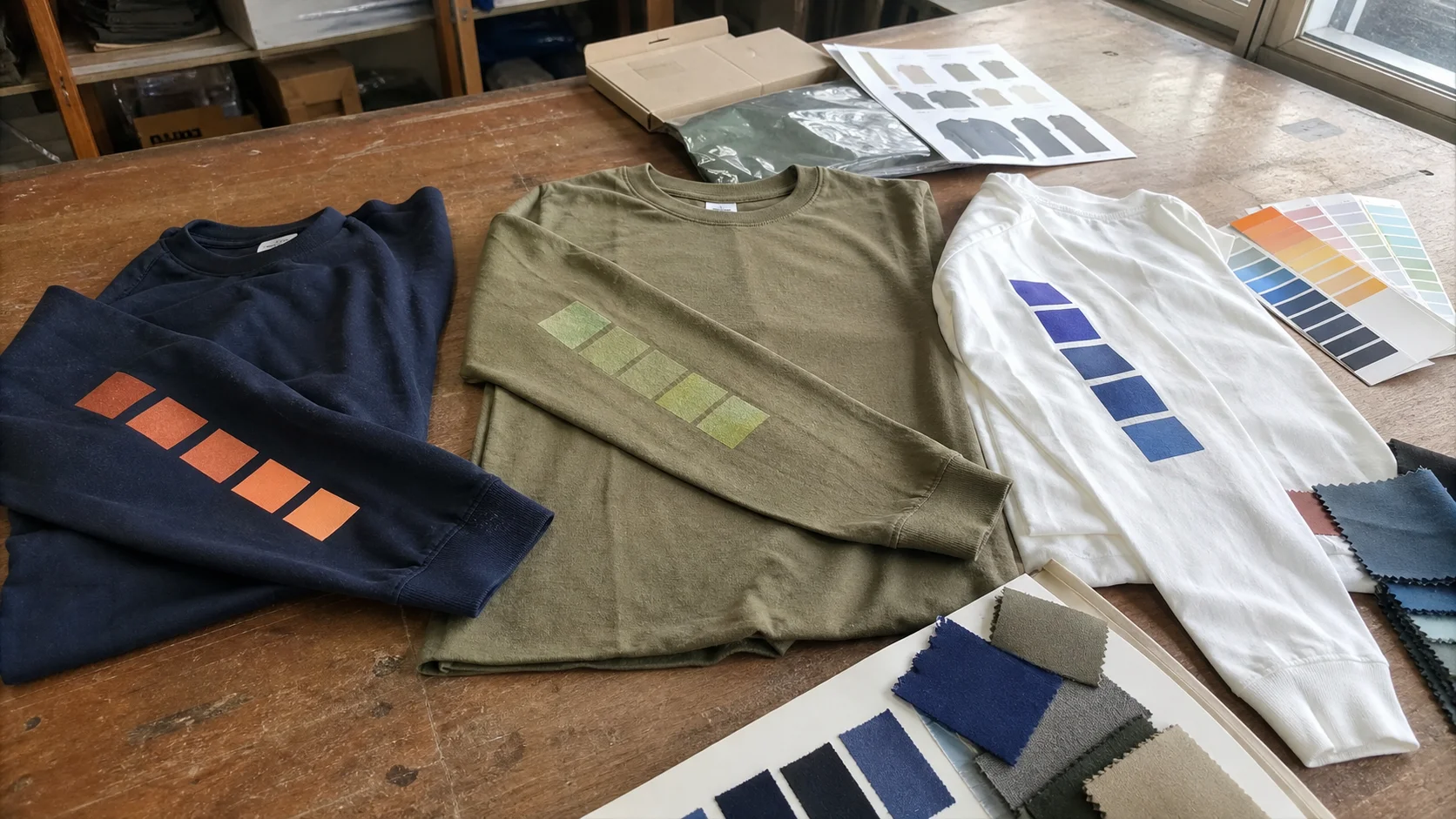
A practical 2500-word SEO outline for distributor buyers auditing sleeve print maps, factory colorfastness controls, and decoration-ready production...
Sleeve Print Map Audit for Distributor Buyers - Decoration & Printing manufacturing guide
Distributor buyers often approve a sleeve print from a clean digital mockup, then discover the real production risk much later: the print is rotated, the placement shifts between sizes, the cuff blocks part of the artwork, or the color loses strength after laundering. A sleeve print map factory colorfastness audit is designed to prevent those problems before bulk decoration starts.
This audit is especially relevant for promotional apparel, uniforms, teamwear, licensed merchandise, corporate gifting, and retail programs where sleeve branding is visible but easy to mishandle. Sleeve printing looks simple on a flat spec sheet. In production, it depends on pattern shape, sleeve taper, seam position, fabric stretch, ink chemistry, curing discipline, operator handling, and inspection criteria.
For distributor buyers, the purpose is not to create paperwork for its own sake. The goal is to make a repeatable buying decision: which factory can place the sleeve print accurately, keep color consistent, pass reasonable wash and rub tests, and scale the result across sizes without surprise rework.
A sleeve print map audit is a structured review of how a factory translates approved artwork into actual sleeve decoration. It checks the placement map, print method, scale rules, color standards, testing process, and final inspection criteria. When colorfastness is included, the audit also checks whether the printed sleeve can withstand washing, rubbing, perspiration, heat, and reasonable end-use conditions.
The word “map” matters. A sleeve is not a flat rectangle in the real garment. It is a shaped panel or tube with taper, seams, grain direction, and construction variation. A map defines where the print sits in relation to fixed garment points, such as shoulder seam, armhole, cuff edge, sleeve centerline, placket, side seam, or top sleeve fold.
Distributor buyers should treat the print map as a production control document, not just a design reference. A good sleeve print map tells the factory where to place the artwork, how to align it, how the position changes by size, and what tolerance is acceptable. Without that document, the factory may use judgment on the production floor. That is rarely good enough for repeat orders or large mixed-size shipments.
A sleeve print map audit is not only about whether the first sample looks attractive. It is about whether the factory can repeat the placement and color standard across bulk production.
Distributor buyers sit between the end customer and the manufacturer. That position carries risk. The end customer expects the decoration to match the approved visual. The factory may interpret that visual through the limits of its equipment, operators, inks, and garment construction. A formal audit narrows that gap.
Sleeve print issues are expensive because they are often discovered late. A front chest print may be inspected quickly on a flat table. A sleeve print needs rotation checks, side-to-side comparison, and size-by-size review. Errors can hide inside packed cartons until the buyer or customer opens the goods.
Typical distributor risks include:
The direct purchasing judgment is clear: if sleeve branding is central to the order, do not treat the sleeve print as a minor decoration detail. It deserves its own map, sample approval, colorfastness check, and inspection checklist. Buyers who skip this step may save a few days during development but risk losing weeks in claims, remake negotiations, and customer service follow-up.
For buyers building a new supplier base, it can also help to compare capabilities across decoration partners. A factory that can show disciplined placement mapping, color records, wash test reports, and bulk inspection data is usually a safer partner for distributor programs. If supplier qualification is still open, buyers can review service capabilities through resources such as Fabrikn services or speak with a sourcing contact through Fabrikn contact us.
A print map should convert design intent into measurable factory instructions. It should remove vague phrases such as “print on sleeve” or “place near cuff.” Those instructions are not strong enough for production.
A practical sleeve print map normally includes these measurement references:
The best reference point depends on garment type. For a short-sleeve T-shirt, the cuff edge and sleeve centerline may be enough. For a long-sleeve performance top, the shoulder seam, cuff, and outer sleeve line may all matter. For hoodies, the buyer should consider armhole bulk, rib cuff tension, and whether the sleeve is set-in or raglan.
A print may look straight when the garment is laid flat but appear rotated when worn. This is common with tapered sleeves, raglan construction, and prints placed on the outer arm. The audit should require the factory to check both flat measurement and worn orientation, at least during sample approval.
The buyer should decide what matters more: table inspection appearance or on-body visibility. For distributor orders, on-body readability often matters more, especially for vertical text, sponsor marks, event branding, and safety-related identification. The tradeoff is that an on-body optimized print may not look perfectly centered when the sleeve is flattened for inspection. That should be documented before bulk production.
Sleeve artwork can be horizontal, vertical, angled, wrap-style, or stacked. Direction must be defined. For vertical text, confirm whether it should read from shoulder to cuff or cuff to shoulder. There is no universal rule across markets. Promotional buyers often prefer readability when the arm hangs naturally. Sports and streetwear programs may choose the opposite for design reasons.
The audit should check whether the factory has a marked sleeve jig, laser guide, template, or transfer placement board that matches the approved direction. If operators rely only on eye judgment, placement variation normally increases as production speed rises.
Factory readiness is not only about whether the supplier owns a screen print table, heat press, DTG machine, sublimation setup, or transfer equipment. The key question is whether the factory can control sleeve decoration consistently.
Different print methods create different audit points. Screen printing needs control over mesh count, squeegee pressure, registration, ink deposit, flash time, and curing. Heat transfer needs control over pressure, time, temperature, peel method, and film compatibility. Sublimation needs fabric suitability, print density, paper stability, and heat profile. Direct-to-garment or direct-to-film production needs pretreatment, curing, adhesive powder control, white ink opacity, and stretch behavior.
For distributor buyers, the safest path is to ask the factory to document the exact method used for the approved sample and bulk production. Any change in method should trigger reapproval. A sample printed by one process and bulk printed by another is a common source of shade, hand-feel, durability, and placement differences.
Print Method Common Sleeve Risk Audit Focus Screen print Registration shift, heavy hand feel, under-cure Mesh, ink type, curing temperature, placement jig Heat transfer Peeling, pressure marks, film cracking Time, temperature, pressure, peel instruction, stretch test Sublimation Dye shift, ghosting, poor color match Fabric content, paper fixation, heat profile, color target DTF Adhesive edge, cracking, inconsistent opacity Powder cure, white ink density, wash test, transfer pressure DTG Pretreatment stain, weak color, wash fade Pretreatment control, curing, fabric absorbency, colorfastnessSleeve printing is often more operator-sensitive than front-panel printing. The sleeve area is smaller, harder to load, and more prone to twisting. The audit should check whether operators have written placement instructions, approved samples at the workstation, measurement tools, and clear defect limits.
Buyers should be cautious when a supplier says that the operator “knows the position.” That may be true for a small run, but it is weak control for a distributor order with mixed sizes, replenishment potential, or multiple production lines.
Before bulk starts, the factory should run a pilot set. This can be 5 to 20 garments depending on order size and complexity. The pilot should include at least the smallest, middle, and largest sizes. It should be checked against the sleeve print map, color standard, and curing or bonding specification.
A practical buyer requirement is simple: no bulk printing until the pilot set is approved. This slows the start slightly but reduces the risk of decorating hundreds or thousands of units incorrectly.
Colorfastness is the ability of the printed area and garment dye to resist fading, bleeding, rubbing, migration, and staining. For sleeve prints, the main concern is not only the print color itself. It is also how the fabric dye, ink, transfer, and finishing chemistry interact.
Distributor buyers do not always need a full laboratory package for every order. The right level depends on brand requirements, claim exposure, garment value, destination market, and end-use. A practical sleeve print colorfastness audit may include:
For many distributor programs, a basic internal wash and rub check can screen obvious problems, while formal third-party testing may be reserved for higher-risk orders. The buyer should not confuse internal factory tests with independent lab reports. Both can be useful, but they do not carry the same weight in a dispute.
Color approval should be based on a physical standard where possible. Pantone references are helpful for communication, but print results vary by fabric base, ink system, curing, and surface texture. A Pantone callout on a tech pack does not guarantee that the printed sleeve will match a coated paper chip.
The audit should identify the approval hierarchy. For example: approved physical sample first, Pantone reference second, digital mockup last. If the digital mockup is treated as the main approval source, disagreement is likely because screens display color differently.
Colorfastness results are often graded using grey scale ratings in formal testing. Distributor buyers who are not specifying a formal lab standard should still set practical acceptance criteria. For example, after a defined wash test, the print should show no obvious cracking, peeling, staining, or unacceptable shade change when compared with the approved control sample.
That wording is not a substitute for a formal test method, but it is better than no rule. For larger or regulated programs, buyers should specify the required test method, rating level, and lab before production.
The fabric base can make or break the sleeve print. A factory may be competent, but the selected fabric may be unsuitable for the requested decoration. The audit should connect print approval to fabric approval, not treat them as separate decisions.
Common garment bases include 100% cotton jersey, cotton-poly blends, polyester interlock, fleece, French terry, pique, nylon blends, and stretch fabrics with elastane. Each behaves differently under print and heat.
A buyer should ask for fabric GSM, composition, construction, dye method, finish, and shrinkage data before final decoration approval. If the factory changes fabric mill, shade lot, or finishing treatment, the decoration may need revalidation.
Sleeve trims can disrupt print placement. Rib cuffs, thumbholes, reflective tape, sleeve plackets, elbow panels, and seam taping all affect available print area. The print map should show the clear decoration zone.
For long sleeves with cuffs, leave enough distance from the cuff seam to avoid distortion during sewing, wearing, and laundering. For rib cuffs, printing too close to the seam can create uneven pressure or puckering. For performance tops, reflective or silicone trims may limit heat press options.
Dark polyester and red, navy, black, or fluorescent shades deserve extra caution. These colors may migrate into white or light-colored prints, especially under heat. A print may pass initial approval and turn pink, grey, or dull after storage or pressing.
The audit should require a migration check when printing light artwork on dark synthetic fabrics. Buyers should also ask whether the factory uses low-bleed inks, blocker layers, migration-resistant transfers, or lower-temperature application settings. Each option has tradeoffs in cost, hand feel, opacity, and lead time.
A disciplined sample workflow is the strongest protection against sleeve print disputes. The process should move from artwork confirmation to placement sample, colorfastness check, pre-production approval, and controlled bulk release.
The buyer should keep one approved physical sample and require the factory to keep one matching sample at the production line. Photos are useful, but they are not enough for color and hand-feel control.
Reasonable tolerances depend on artwork size, garment type, and print method. For many sleeve prints, a tolerance of plus or minus 0.5 cm to 1.0 cm may be practical. Very small logos may need tighter visual control. Large vertical prints on stretch sleeves may need a more realistic tolerance because fabric handling changes the outcome.
Distributor buyers should avoid demanding impossible tolerances unless the factory has the equipment and process to meet them. Unrealistic tolerances create conflict during inspection. Practical tolerances create enforceable standards.
Every approval should say who approved it, what was approved, and whether any conditions remain open. A common mistake is approving a photo while leaving color, placement, fabric, or wash performance unresolved. The factory may treat that as full approval.
A clear approval note might state: “Placement approved on size M only; color and wash test pending; size grading must be submitted before bulk.” That kind of detail prevents assumptions.
MOQ and lead time vary by garment type, print method, fabric availability, and supplier setup. Distributor buyers should request ranges early, especially when sleeve decoration requires special jigs, color matching, or testing.
The following ranges are typical planning references, not fixed rules. Actual numbers depend on supplier capacity, blank availability, artwork complexity, and whether the order uses stock garments or cut-and-sew production.
Order Type Typical MOQ Range Buyer Note Stock blanks with simple sleeve print 50 to 300 pieces Lower MOQ is possible, but unit decoration cost may be higher. Custom cut-and-sew T-shirts 300 to 1,000 pieces Fabric dyeing and size grading increase setup requirements. Hoodies or fleece with sleeve print 300 to 800 pieces Bulkier sleeves need stronger placement control. Performance polyester tops 500 to 1,500 pieces Migration and stretch testing should be planned early. Multi-color screen print program 500 to 2,000 pieces Screen setup and color matching affect cost and lead time.A low MOQ offer is not automatically better. If the order needs colorfastness testing, multiple size samples, and exact sleeve placement, very small runs can carry high setup costs. Buyers should compare total landed value, not only unit price.
Sleeve print audit lead time depends on several moving parts:
For stock blanks, a simple sleeve print may move quickly once artwork is approved. For custom production, buyers should expect development time before bulk. A realistic sample and approval window may run from 7 to 21 days for moderate complexity, with longer timelines when fabric dyeing, lab testing, or multiple correction rounds are required. Bulk production can range from 2 to 8 weeks depending on order size, fabric sourcing, and factory load.
The purchasing tradeoff is straightforward. Fast timelines usually require using available blanks, standard print methods, limited testing, and simple artwork. More controlled timelines require actual-fabric trials, physical approvals, and test results before release. Buyers should choose based on claim risk, not only event date pressure.
Inspection should not be limited to counting units and checking carton marks. Sleeve print orders need specific inspection points because defects may be directional, size-specific, or visible only after handling.
Common placement defects include print too high, too low, off-center, rotated, mirrored incorrectly, or inconsistent between left and right sleeves. The inspector should measure from the approved reference points, not from whichever seam is easiest to reach.
Size variation is a frequent issue. The factory may place every print the same distance from the cuff, which can work for some designs but fail for others. A long vertical logo may look balanced on size M and crowded on size XS. The print map should state whether placement is fixed, proportional, or adjusted by size.
Inspection should check shade, opacity, registration, pinholes, smudging, ghosting, scorch marks, pressure marks, ink build-up, cracking, peeling, and staining. Some defects are more visible under natural light than warehouse lighting, so lighting conditions should be controlled where possible.
For transfers, inspectors should check edges carefully. Early lifting at corners is a warning sign. For screen print, under-cured ink may feel tacky or fail a rub test. For sublimation, ghosting can appear as a shadow around the artwork.
A garment can pass visual inspection and still fail after washing. If the order carries durability expectations, retain random bulk samples for wash checks. This is especially important for uniforms, sportswear, children’s apparel, and repeat corporate programs.
Handling during packing also matters. Fresh prints that are packed too soon may block, mark, or transfer onto adjacent panels. The audit should ask how long printed garments rest before folding and packing. This is a simple question that often reveals whether the factory understands curing and post-print handling.
Many buyers use AQL sampling for final inspection. That can work, but the defect classification must be clear. A sleeve print that is visibly misplaced on a branded uniform may be a major defect, not a minor cosmetic issue. A logo printed on the wrong sleeve may be critical for some programs.
The buyer should define major and minor defects before inspection. If the inspector has to decide on site, the result may not match the distributor’s customer expectations.
A scorecard helps buyers compare factories consistently. It does not need to be complex. It should focus on the controls that reduce actual order risk.
Audit Area Pass Indicator Buyer Judgment Print map control Factory can follow measured placement with documented tolerance. Strong indicator of repeatability. Sample discipline Pre-production sample matches intended bulk method and fabric. Essential for distributor programs. Color standard Physical approved sample or defined Pantone target is available. Reduces color disputes. Colorfastness checks Wash, rub, stretch, or migration tests match garment risk. Higher priority for polyester and performance wear. Line setup Operators use templates, jigs, guides, or approved samples. Important for sleeve consistency. Inspection process Defects are defined and measured before shipment. Protects buyer before carton release.A factory is a reasonable choice when it can provide a clear print map, produce an acceptable sample on actual or equivalent fabric, explain colorfastness controls, and show that bulk operators have a repeatable placement method. The factory does not need to be the lowest price. It needs to be able to protect the buyer from decoration claims.
A low-cost supplier may be acceptable for simple stock blank programs with flexible tolerance. A more controlled supplier is usually worth the premium for polyester sleeves, large vertical logos, multi-color artwork, stretch garments, licensed branding, and repeat distributor programs.
Buyers should pause approval if the factory cannot define placement points, cannot explain curing or transfer settings, refuses pilot approval, changes materials after sampling, or treats wash testing as unnecessary for a high-risk fabric. These are warning signs.
Rejection is not always required. Some suppliers can improve if the buyer provides a stronger tech pack and approval process. Still, if the factory resists basic controls, it may not be suitable for distributor orders where customer claims flow back quickly.
The following checklist can be used before purchase order release or before bulk decoration starts:
A sleeve print map audit should connect to commercial terms. If the factory agrees to a print map and colorfastness standard, the purchase order should reflect that. Otherwise, the buyer may have weak leverage if goods fail inspection.
Clarify who pays for resampling, lab testing, replacement blanks, reprinting, air freight, or sorting if the factory deviates from the approved standard. Also clarify whether tolerance applies to every unit or inspection sample. This sounds administrative, but it affects real claim recovery.
Buyers should also confirm whether samples are chargeable. Many factories charge for custom print samples, especially when screens, transfers, sublimation panels, or low-quantity blank garments are involved. That cost may be justified if it prevents a larger decoration failure.
Sleeve print audits are most valuable when they are part of a broader sourcing system. Buyers should align design approval, factory selection, material control, decoration testing, inspection, and shipment release. A strong supplier can still fail if the buyer gives incomplete artwork or changes approval direction late.
For teams building vendor standards, supplier profiles, or custom apparel workflows, it helps to document repeatable requirements across product categories. Company background and operating approach can be reviewed through pages such as Fabrikn about us, while sourcing support can be discussed through Fabrikn contact us.
The best audit result is not a thick report. It is a production-ready decision: approve, approve with conditions, resample, or reject. Distributor buyers should push every sleeve print review toward one of those outcomes.
A sleeve print map factory colorfastness audit is worth using whenever sleeve decoration affects customer acceptance. It gives the buyer measurable control over placement, color, durability, and inspection. It also forces the factory to prove that the approved sample can be repeated in bulk.
The strongest buying approach is balanced. Do not over-specify a low-risk small order until it becomes uneconomical. Do not under-control a high-visibility sleeve print that could trigger customer claims. Match the audit depth to the risk profile: fabric, artwork size, print method, order value, customer sensitivity, and delivery deadline.
For distributor buyers, sleeve print quality is not just a decoration issue. It is a margin protection issue. A clear map, controlled sample process, realistic MOQ and lead-time plan, and targeted colorfastness audit will usually cost less than sorting, discounting, or remaking rejected goods.
Get a free quote from Fabrikn — your trusted B2B clothing manufacturer with 10+ years of experience. MOQ as low as 200 pieces.
Get a Free Quote →A sleeve print map is a measured placement guide showing where artwork should be printed on the sleeve. It normally includes distance from cuff, shoulder seam, sleeve seam, centerline, print angle, artwork size, and placement tolerance.
Sleeve prints face washing, rubbing, stretching, and repeated arm movement. Poor colorfastness can lead to fading, cracking, peeling, dye migration, or staining. This is especially risky on polyester, dark fabrics, stretch materials, and performance apparel.
Stock blank sleeve print orders may start around 50 to 300 pieces, while custom cut-and-sew programs often start around 300 to 1,000 pieces or more. Multi-color screen prints, custom fabrics, and performance garments may require higher MOQs due to setup and testing needs.
A simple stock blank print may be approved quickly if artwork and blanks are ready. More controlled programs often need 7 to 21 days for artwork confirmation, strike-off, sample production, wash checks, placement review, and revision rounds.
Not every order needs formal third-party lab testing. Low-risk orders may use internal wash and rub checks. Higher-risk orders, such as polyester uniforms, children’s apparel, licensed products, and performance wear, should consider formal testing with defined methods and acceptance ratings.
Common defects include wrong sleeve placement, print rotation, off-center artwork, inconsistent size grading, poor opacity, cracking, peeling, ghosting, dye migration, smudging, scorch marks, and shade mismatch against the approved sample.
Sometimes it can, especially for small logos. Larger vertical prints or long sleeve artwork may need size grading rules. Buyers should approve placement on small, middle, and large sizes before bulk production.
Buyers should approve the print map, physical sample, color standard, fabric base, print method, tolerance, and any required colorfastness checks. A small pilot run should be reviewed before the factory prints the full order.