
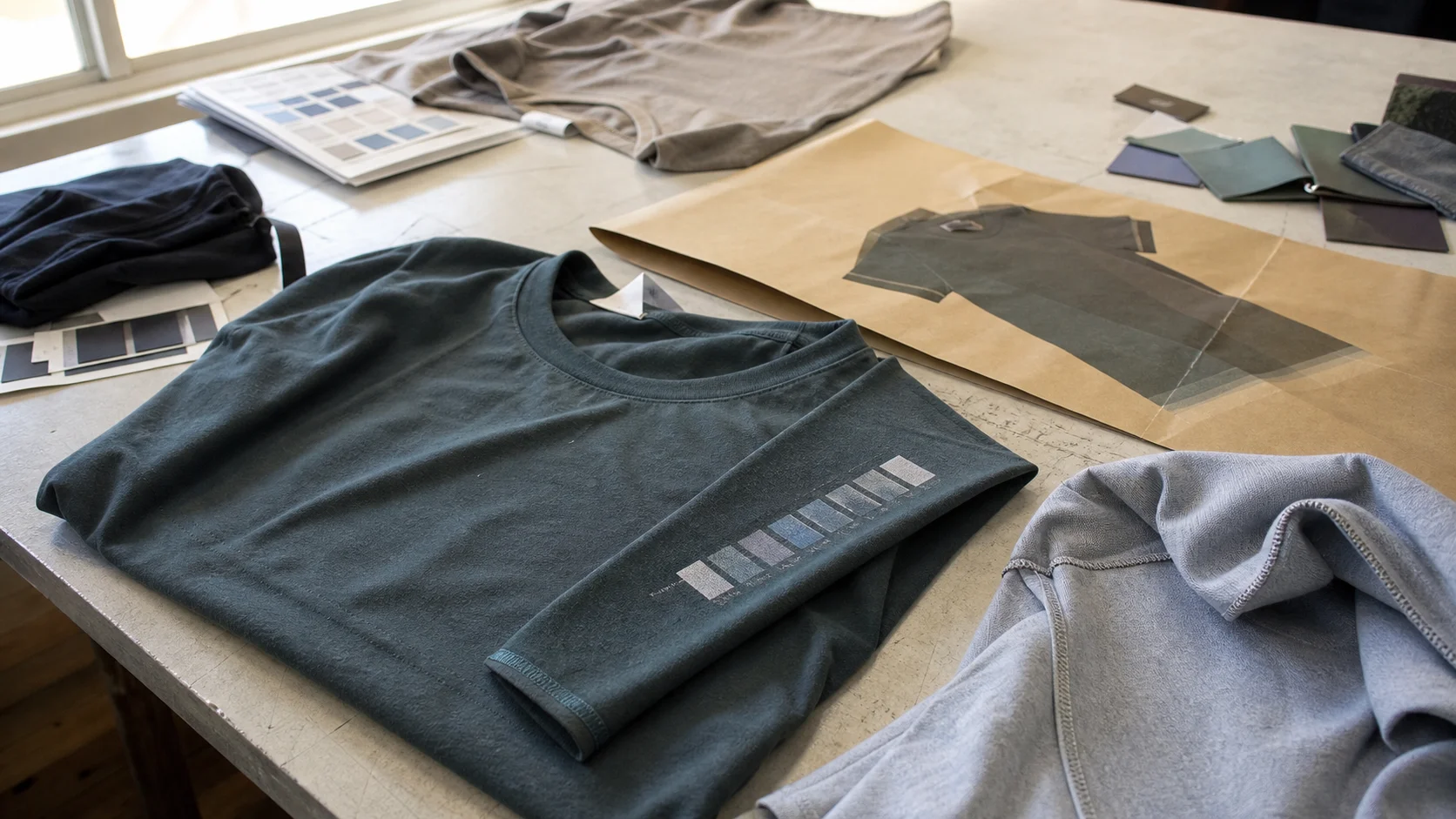
A practical SEO outline for retail operations teams auditing sleeve print maps, supplier colorfastness controls, placement accuracy, wash durability, and...
Sleeve Print Map Audit for Retail Colorfastness - Decoration & Printing manufacturing guide
Retail operations teams do not buy sleeve prints as artwork only. They buy repeatable decoration performance across stores, replenishment drops, returns desks, and customer wash cycles. A sleeve print map supplier colorfastness audit is the control point that connects a design file, a physical garment, a supplier’s production method, and the retailer’s risk tolerance.
For brands selling hoodies, long-sleeve tees, fleece crews, workwear tops, teamwear, or promotional apparel, sleeve decoration can be a high-visibility failure area. The print is exposed to abrasion from desks, backpacks, seat belts, jacket linings, and repeated folding. It also sits on a narrow garment panel where artwork placement can drift quickly if the factory lacks a controlled print map. Colorfastness risk is not only about whether ink bleeds in a lab test. It includes shade change, crocking, cracking, migration, staining onto adjacent panels, and inconsistent results between sizes.
This article is written for retail operations, sourcing, QA, and product teams that need a practical audit framework before approving a sleeve print supplier. The focus is decoration and printing, not generic factory compliance. The aim is to help teams decide what to check, what to request, what to reject, and what tradeoffs are realistic when production timelines are tight.
A sleeve print map audit is a structured review of how a supplier translates sleeve artwork into repeatable production. It checks placement rules, size grading, print method, ink or transfer behavior, curing conditions, colorfastness controls, inspection checkpoints, and documentation. The audit should be specific enough that a retail operations team can compare two suppliers using the same evidence.
The “map” is the technical placement guide. It should define where the artwork sits on the sleeve, how it changes by size, how it aligns to seams or cuffs, and how production workers position each garment during printing. A weak map usually creates inconsistent retail outcomes. One sleeve may look balanced on size M, while size XS looks crowded and size XXL looks too far from the cuff. That inconsistency becomes visible on fixtures, in e-commerce photos, and in customer complaints.
Colorfastness is the second half of the audit. A sleeve print can pass visual approval but fail after rubbing, washing, perspiration, or contact with other fabrics. Retail teams should not treat colorfastness as a lab formality. It is a commercial risk. Poor colorfastness can lead to returns, markdowns, damaged brand perception, and blocked replenishment.
A good sleeve print supplier does not only ask for artwork. The supplier asks for the garment spec, fabric composition, target retail channel, wash standard, packaging method, placement tolerance, and approved color reference.
Retail operations teams sit between merchandising promises and store reality. They need decoration that survives receiving, handling, display, customer trial, and normal use. Sleeve prints are especially sensitive because they combine narrow placement, movement during wear, and frequent abrasion.
Common retail problems include shade mismatch between the body print and sleeve print, print cracking at elbow flex points, dye migration on polyester blends, white ink yellowing after curing, and uneven print location across size runs. These issues are not always visible in the first photo sample. They often appear during pilot production or after goods reach the warehouse.
A sleeve print map supplier colorfastness audit helps reduce these problems before the purchase order becomes expensive to change. It gives operations teams a shared language with sourcing, QA, factories, and decoration vendors. It also creates evidence for approval decisions. If a supplier cannot explain curing temperature, ink system, placement tolerance, and wash test requirements, that is a purchasing risk rather than a technical detail.
Retail teams that manage seasonal launches should treat this audit as part of the critical path. The decoration method can affect sample timing, bulk approval, packing method, care label language, and final inspection plan. Waiting until the final inspection to check sleeve print durability is usually too late.
Before asking for a quotation, retail operations teams should prequalify the supplier’s decoration capability. Sleeve printing can be handled by cut-panel screen printing, finished-garment screen printing, heat transfer, digital transfer, sublimation, embroidery combined with print, or hybrid methods. Each method has different colorfastness and placement risks.
The supplier should be able to provide a clear capability profile. This does not need to be glossy. It needs to be specific.
Typical minimum order quantities vary by method and supplier setup. For screen printing, many suppliers prefer 300 to 500 pieces per artwork-colorway, with better pricing from 1,000 pieces upward. Heat transfers may support lower runs, often 100 to 300 pieces, but unit cost can rise sharply with specialty films or low-volume custom transfers. Cut-panel printing can require higher planning discipline and may be tied to garment cutting minimums. Sublimation is efficient for polyester panels but is not suitable for every fabric or design objective.
Low MOQ is useful for testing, but it should not override performance. A supplier that accepts 50 pieces may be right for sampling or limited drops. It may not be right for replenishment if color consistency and documentation are weak. Retail operations teams should separate prototype convenience from production reliability.
For broader production support, teams can review apparel manufacturing and decoration service capabilities through Fabrik services and use that as a basis for supplier comparison questions.
The print map should be treated as a technical document, not a loose visual. It should show the sleeve artwork position across all sizes and include clear tolerances. Sleeve decoration is difficult because sleeve shape changes by size, garment category, and construction method. A long-sleeve tee, fleece hoodie, raglan top, and workwear jacket do not share the same placement logic.
The map should also define whether the print is applied before or after sewing. Cut-panel sleeve printing often gives cleaner placement and easier flatbed handling, but it requires stronger coordination before assembly. Finished-garment printing allows later decoration decisions and can support smaller orders, but sleeves can twist, seams can interfere with screens or presses, and placement can vary if loading is manual.
Retail teams should ask suppliers to show how operators position sleeves in bulk production. A paper map is not enough. The supplier should use jigs, pallets, sleeve boards, templates, registration marks, or documented loading instructions. If the method depends entirely on operator judgment, the inspection plan needs tighter sampling.
Scaling artwork by size is a frequent point of disagreement. Some brands want one print size across all garments to control screen or transfer cost. Others want graded artwork so that the sleeve print looks proportionate across the size range.
Using one print size is cheaper and simpler. It reduces setup complexity and helps keep color more consistent. The tradeoff is visual imbalance on very small or very large sizes. Graded artwork improves appearance but may require multiple screens, transfer sizes, or digital print files. That raises cost and increases the risk of mixed components during production.
A practical compromise is to group sizes. For example, XS to S may use one sleeve print size, M to L another, and XL to XXL another. This can protect the retail presentation without creating excessive production complexity. The decision should be recorded in the print map before sample approval.
Colorfastness testing should be selected according to fabric, print method, market expectations, and care instructions. Retail operations teams do not need to become lab technicians, but they do need to know which risks apply to the product.
Test Area What It Checks Common Risk for Sleeve Prints Purchasing Judgment Colorfastness to washing Shade change and staining after laundering Ink fading, transfer edge lift, staining onto light panels Required for most retail programs Colorfastness to rubbing or crocking Color transfer under dry and wet rubbing Dark print rubbing onto skin, bags, or adjacent garments Critical for dark inks and pigment-heavy prints Perspiration fastness Reaction to acidic or alkaline perspiration Color shift or staining during wear Important for sportswear, youthwear, and warm-weather ranges Light fastness Fading under light exposure Window display fading or uneven shade loss Useful for bright colors and outdoor products Print adhesion Bond strength between decoration and fabric Cracking, peeling, edge lift, delamination Essential for heat transfers and stretch fabrics Dimensional and appearance after wash Garment shrinkage and print distortion Sleeve twisting, print warping, puckering Needed when fabric shrinkage may affect print placementThe audit should confirm test standards, sample conditioning, number of wash cycles, grading scale, and pass criteria. Many retail programs use a minimum grade of 4 for staining and shade change, though requirements vary by market, product category, and retailer. More demanding categories may require stronger performance after multiple washes.
Suppliers sometimes provide internal wash results that look acceptable but are not enough for a retail launch. Internal tests are useful for screening. Third-party lab tests may still be needed for larger programs, regulated markets, kidswear, uniforms, or products sold through major retail channels. The buyer should define when internal testing is acceptable and when independent testing is mandatory.
Dye migration is a major concern when printing on polyester, poly-cotton fleece, sublimated fabric, garment-dyed goods, and dark synthetic blends. Heat from curing or transfer application can pull fabric dye into the print layer. White prints can turn pink, grey, blue, or yellow. Bright prints can become dull or contaminated.
A supplier should be asked whether the ink or transfer system has a low-bleed barrier, blocker layer, or migration-resistant chemistry. This is not a guarantee. It is a risk control. Bulk fabric should be tested because lab dips and salesman samples may not behave like actual production fabric.
Sleeves bend at the elbow and stretch during wear. A thick plastisol print may look strong on a flat sample but crack after repeated flexing. Heat transfers may lift at the edge if the adhesive is not matched to the fabric. Water-based prints may feel soft but may need careful curing to achieve wash durability.
Retail teams should request stretch recovery checks for athletic sleeves, fitted tops, compression items, ribbed fabrics, and spandex blends. The test does not need to be complicated at the first screening stage. The supplier can stretch the printed area, release it, inspect cracking, and then run wash tests. For production approval, the method should be formalized.
Colorfastness cannot be separated from the base material. The same sleeve artwork may perform well on one fabric and poorly on another. A proper supplier audit must include fabric and trim specifications, especially where the decoration supplier is not the garment factory.
Trims can also create risk. Rib cuffs may shrink differently from the sleeve body. Zippers, snaps, drawcord tips, reflective tape, and labels can affect heat press layout or create pressure marks. If garments are packed before full cure or cooling, trims and printed sleeves may contact each other in cartons and cause blocking or transfer marks.
A strong supplier will ask for production fabric early. A weak supplier may approve a print on substitute fabric and then blame the final fabric when bulk results fail. Retail operations teams should avoid approving colorfastness on non-production fabric unless the approval is clearly marked as preliminary.
Sample approval should follow a disciplined sequence. Skipping steps may save a week at the start and lose a month during production recovery. The workflow should be scaled to order value and retail risk, but the basic controls remain similar.
The supplier reviews artwork files, color references, fabric details, garment construction, and intended care label. This step should identify print method limits. Fine lines, gradients, metallic effects, oversized sleeve graphics, and wraparound designs may not be practical with every method.
A strike-off is a decoration sample on actual or representative fabric. It checks color, handfeel, coverage, edge sharpness, opacity, and initial adhesion. For sleeve prints, a flat strike-off is useful but incomplete. It does not prove placement on a finished garment.
The supplier prints on a garment or sleeve panel using the proposed map. The buyer checks alignment, distance from cuff, orientation, scale, and relationship to seams. If the range includes many sizes, at least one small size, one middle size, and one large size should be checked.
The sample should go through wash, dry, rub, stretch, and visual checks before approval. Even a simple five-wash internal screening can reveal cracking, color loss, or print distortion. Retail teams should decide whether the screening is enough or whether lab testing is required before bulk.
The pre-production sample should use bulk fabric, bulk trims, approved artwork, final print method, and production equipment where possible. It is the key approval before mass production. Any deviation should be documented. A beautiful sample from a different print line or substitute fabric is not a reliable approval standard.
Once approved, the buyer and supplier should keep sealed reference samples. These samples support inline inspection, final inspection, warehouse dispute review, and replenishment matching. The sealed sample should include date, style, colorway, size, artwork version, print method, fabric lot, and approval signature or digital approval record.
Teams that need support structuring supplier communication can reach Fabrik through the contact page to discuss manufacturing and decoration requirements.
MOQ and lead time depend on garment type, artwork complexity, supplier workload, fabric availability, test requirements, and approval discipline. Retail teams should be cautious when a supplier quotes aggressive timing without asking technical questions.
Production Scenario Typical MOQ Range Typical Lead-Time Dependency Main Risk Simple one-color sleeve screen print 300 to 500 pieces per design-color Screen setup, fabric availability, approval speed Placement drift and curing inconsistency Multi-color sleeve screen print 500 to 1,000 pieces per design-color Color separations, registration, strike-off approval Color mismatch and registration movement Heat transfer sleeve logo or text 100 to 300 pieces per design-color Transfer production, press setup, film availability Edge lift, shine marks, poor stretch recovery Digital transfer or DTF-style decoration 100 to 300 pieces per design-color Print queue, powder or adhesive control, curing Handfeel, cracking, inconsistent adhesion Cut-panel sleeve printing 500 to 1,000 pieces per style-color Cutting schedule, panel control, sewing coordination Panel mix-up and artwork misalignment after sewing Sublimated sleeve panel 300 to 500 pieces per artwork Polyester fabric, paper printing, heat transfer capacity Shade variation, ghosting, white crease marksThese ranges are not universal. They are practical reference points for sourcing conversations. A supplier may accept lower quantities if the design is simple, the buyer pays setup charges, or the supplier already has compatible materials. Higher quantities may be required for custom inks, special transfers, branded trims, or complex testing.
Sample lead time often runs 7 to 14 days after artwork and fabric are available. More complex prints, custom transfers, lab tests, or multiple size samples can push approval timing to 3 to 5 weeks. Bulk production may take 3 to 8 weeks after pre-production approval, depending on garment manufacturing, decoration capacity, and logistics. Lab testing can add 5 to 10 working days or more if retesting is needed.
Fast launches should reduce design complexity rather than remove audit steps. A one-color print with a conservative placement tolerance is easier to control than a long multicolor sleeve graphic on a brushed polyester fleece. The commercial decision should match the calendar.
Inspection for sleeve prints should happen before the order is fully packed. Final inspection alone may catch defects, but it will not fix a production line that has already printed thousands of sleeves incorrectly.
Placement inspection should use the agreed map. Inspectors should not rely only on visual judgment. A print that “looks fine” may still be outside tolerance and create uneven presentation across a size run.
Final inspection should include appearance, measurement, print durability screening, packaging checks, and carton shade grouping where relevant. For sleeve prints, inspectors should unfold garments fully and check both the visible front and sleeve areas. Folded inspection can miss smudging, offset marks, or print contact stains.
Retail teams should define which defects are critical, major, and minor before inspection. A wrong-sleeve print is usually a major or critical issue because the garment cannot be repaired easily. A tiny pinhole may be minor if it does not affect retail appearance, but repeated pinholes across a lot indicate process instability.
A supplier scorecard turns audit findings into purchasing decisions. It also helps operations teams avoid choosing suppliers based only on unit price. Sleeve print performance depends on process control, not just decoration capability.
Score Area What to Review Strong Supplier Evidence Warning Sign Technical understanding Fabric, artwork, method, sleeve construction Asks detailed questions before quoting Quotes immediately without checking fabric Print map control Placement rules and size grading Provides templates, tolerances, and size logic Uses only photos or verbal instructions Colorfastness control Wash, rub, migration, adhesion Shares test method and pass criteria Claims “no problem” without testing Bulk repeatability Equipment, operator training, first-piece approval Records production parameters No curing or press records Documentation Artwork version, samples, approvals Maintains sealed standards and revision control Mixes old and new artwork files Corrective action Response to failed tests or defects Identifies root cause and containment steps Offers discount without process correctionRetail operations teams can assign weighted scores. For example, colorfastness and print map control may each carry 25 percent, bulk repeatability 20 percent, documentation 15 percent, and commercial responsiveness 15 percent. A low price should not compensate for failing colorfastness or uncontrolled placement. It can compensate for slower communication only if the technical controls are strong and the calendar allows it.
Supplier background also matters. A team can learn more about manufacturing approach and company positioning through Fabrik’s about page when building a shortlist or comparing support models.
There is no perfect supplier for every sleeve print project. Retail operations teams need to make clear tradeoffs based on risk, volume, channel, and launch timing.
For a premium retail hoodie with a long sleeve graphic, the best choice may be a supplier with stronger print map discipline and higher MOQ. The cost may be higher, but the risk of store-level inconsistency is lower. For a short promotional drop, a heat transfer supplier with lower MOQ may be suitable if the artwork is simple and wash expectations are modest. For performance apparel, colorfastness, stretch, and perspiration testing should carry more weight than setup cost.
Buyers should be cautious with suppliers that promise every technique at the lowest price. Sleeve decoration is not just a capacity question. It is a compatibility question. Ink, fabric, curing, pressure, temperature, and garment handling must work together. When a supplier cannot explain these relationships, the buyer is taking on hidden QA work.
The right audit does not slow sourcing down unnecessarily. It removes vague assumptions before they become production disputes. It also helps suppliers quote more accurately. Clear artwork, fabric specs, print maps, test requirements, and inspection criteria reduce back-and-forth and make the purchase order easier to execute.
The following checklist can be used before purchase order approval. It is intentionally direct because retail teams need decisions, not theory.
A sleeve print map supplier colorfastness audit is most effective when it is built into the sourcing calendar. If it is treated as an afterthought, the team will often face rushed approvals, unclear responsibility, and avoidable quality claims. Retail operations teams should require the supplier to prove control at sample stage, not explain failure at carton stage.
Get a free quote from Fabrikn — your trusted B2B clothing manufacturer with 10+ years of experience. MOQ as low as 200 pieces.
Get a Free Quote →A sleeve print map is a technical placement guide for sleeve artwork. It defines artwork size, orientation, reference points, size grading, seam avoidance, and allowed tolerance. It helps the supplier print consistently across all garment sizes.
Sleeve prints face frequent rubbing, bending, washing, and contact with other garments. Poor colorfastness can cause fading, staining, cracking, peeling, or dye migration. These issues can lead to returns and retail presentation problems.
Typical MOQs range from 100 to 300 pieces for some heat transfer or digital transfer programs, 300 to 500 pieces for simple screen prints, and 500 to 1,000 pieces or more for complex screen prints or cut-panel production. Actual MOQ depends on artwork, fabric, setup, and supplier capacity.
Most retail programs should consider washing, rubbing or crocking, shade change, staining, adhesion, and appearance after laundering. Perspiration, light fastness, stretch, and dye migration tests may be needed depending on fabric and end use.
Cut-panel printing can improve flatness and placement control, but it requires strong coordination before sewing. Finished-garment printing supports flexibility and smaller runs, but sleeve loading and seam interference can create placement variation. The better option depends on order size, design complexity, and supplier control.
A practical workflow includes artwork review, strike-off, placement sample, wash screening, pre-production sample, and sealed approval standard. For multi-size retail programs, teams should check at least one small, one medium, and one large size before bulk approval.
The biggest risks are wrong placement, wrong sleeve orientation, color mismatch, ink migration, cracking, peeling, incomplete curing, pressure marks, and staining during packing. These should be checked during inline inspection, not only at final inspection.
Third-party testing is recommended for larger orders, strict retail channels, kidswear, uniforms, performance apparel, regulated markets, and fabrics with known migration or adhesion risk. Internal supplier tests can support screening, but they may not be enough for high-risk launches.