
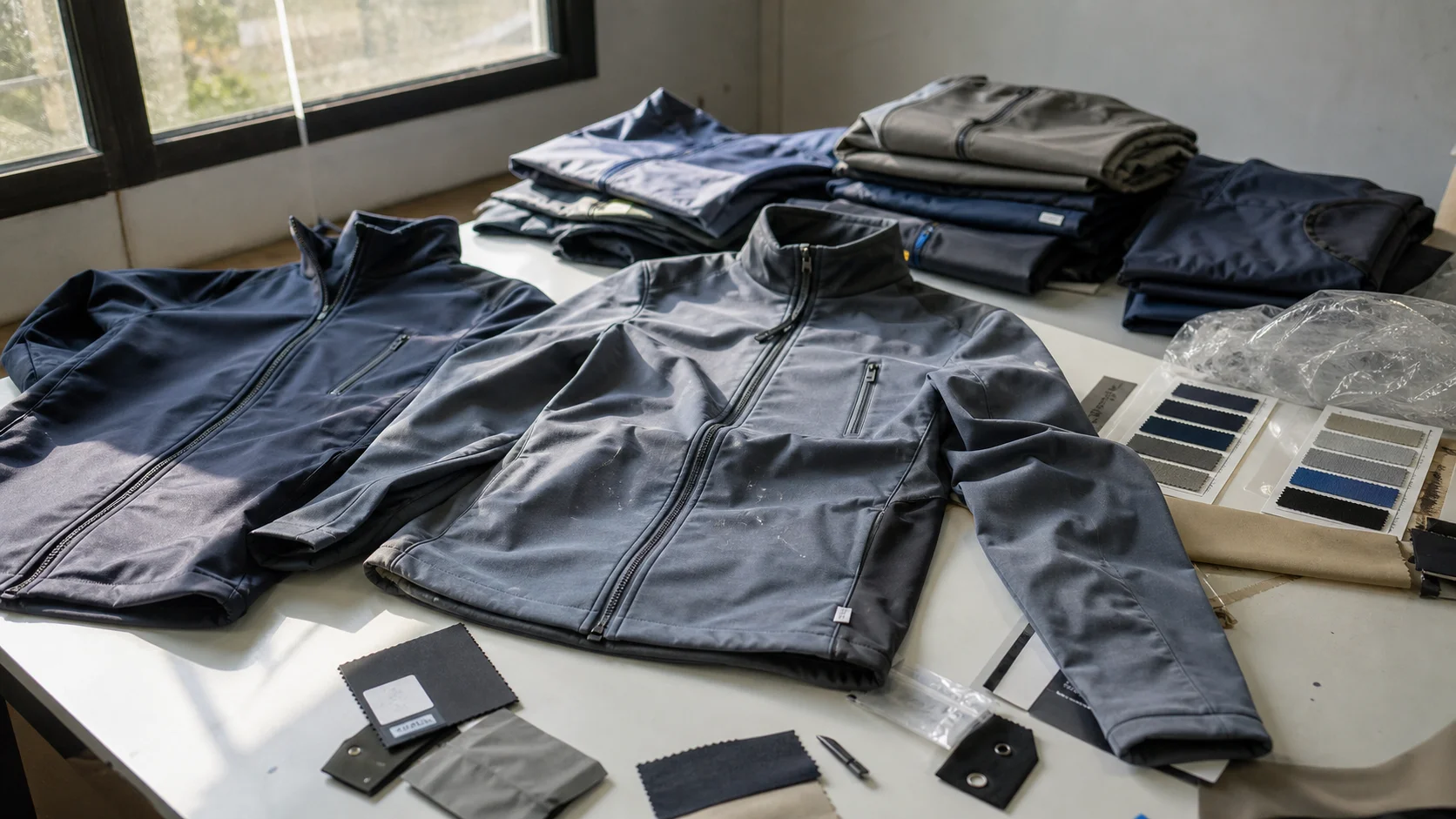
A practical quality and inspection guide for restaurant groups buying softshell jackets, covering defect classes, sorting thresholds, inspection...
Category: Quality & Inspection
For restaurant groups, a softshell jacket is not just outerwear. It is a branded layer that has to survive repeated laundering, kitchen heat, delivery use, moisture, and front-of-house presentation. When a production lot arrives with mixed quality, defect sorting becomes a buying decision, not a back-end housekeeping task. The wrong approach can turn a manageable shipment into a wide-scale replacement problem, especially when size runs, logo placement, waterproof claims, and color consistency matter across multiple locations.
This guide is written for restaurant buyers, sourcing teams, and procurement managers who need a practical way to evaluate softshell jacket defects before goods are accepted. It focuses on the inspection issues that matter most in bulk programs, how sorting should be handled at the manufacturer or warehouse, and where buyers need to draw a clear line between rework, downgrade, and rejection.
Softshell Jacket Defect Sorting for Restaurant Buyers - Fabrikn production reference
Defect sorting is the process of separating compliant units from defective ones before shipment acceptance. In softshell jacket production, sorting is usually performed after inline checks, final inspection, or at a third-party inspection point. The purpose is simple: keep acceptable goods moving, isolate defective goods, and document what should be repaired, reworked, downgraded, or rejected.
For restaurant buyers, the value of sorting is practical. A chain opening ten stores may need every jacket to match in color, logo placement, zipper style, and fit. A single defective carton can create uneven distribution across locations. If one store receives a different shade or a jacket with loose seam tape, the issue becomes visible immediately. Sorting reduces that risk, but only if the buyer has a clear rulebook before production starts.
Softshell jackets are not a basic woven shirt or a simple fleece. They combine multiple performance and appearance requirements: water resistance, stretch, thermal comfort, clean finishing, and brand presentation. That makes defect judgment more nuanced. Some defects are obvious, such as torn fabric or missing trims. Others are borderline, such as minor shading differences, slight puckering at topstitch lines, or a zipper pull that is functional but inconsistent with the approved sample. Those borderline calls need to be defined in advance.
Restaurant groups buy at scale, often across seasonal campaigns, franchise networks, or uniform replacement cycles. That means the cost of inconsistency multiplies fast. A minor defect rate that might be tolerable in a small retail run can become a serious operational issue when the same jacket is distributed across many sites.
Uniform programs also face a different usage pattern from outdoor retail. Staff members may wear the jacket in transit, in storage areas, near grills, during deliveries, and in front-of-house roles. The garment has to look clean, hold shape, and stand up to handling. If a defect sorting program is weak, the buyer ends up funding replacement inventory instead of running an orderly uniform rollout.
There is also a brand issue. Restaurant groups usually want a consistent look across locations. A jacket that is slightly misprinted, poorly pressed, or stitched with visible thread variation can weaken that standard. Buyers should treat inspection and sorting as part of brand control. It is cheaper to define the acceptable defect range at the factory stage than to argue about returns after goods arrive at distribution.
A useful buying rule: if a defect is visible from normal wearing distance, affects function, or creates shade inconsistency across the lot, it should be treated as a controlled nonconformance rather than a cosmetic detail.
Softshell jacket defects usually fall into four categories: fabric defects, construction defects, trim defects, and branding defects. Buyers should ask the manufacturer to sort by these categories rather than using a generic pass/fail label. That creates better traceability and makes rework decisions easier.
For restaurant buyers, shade consistency matters more than many teams expect. If jackets are issued in batches over several months, a small dye difference can look like two different products when worn side by side. Softshell fabric may also vary with lot-to-lot dyeing, so buyers should insist on a sealed lab dip or approved bulk shade standard before cutting.
Some construction defects affect appearance only. Others affect durability and fit. A crooked logo panel may be acceptable for a promotional garment, but it is usually not acceptable for restaurant uniforms that need a controlled corporate image. Buyers should be strict on visible symmetry and zipper alignment because those defects are easy to spot in use.
Trim issues can be especially disruptive when the order is intended for brand rollout. A zipper mismatch may not stop the jacket from functioning, but it can break color harmony across the program. If a buyer is ordering black jackets with grey zipper tape, a supplier swapping to a standard black zipper can create an obvious deviation from the approved sample.
Branding defects deserve tighter control than many buyers give them. Once logos are applied, rework can be costly or impossible. Some defects can be repaired by removing and reapplying decoration, but many cannot be corrected without visible damage. Buyers should require a visual approval sample for branding before any bulk logo application starts.
A proper sorting process starts with a defect classification matrix. The matrix should separate critical, major, and minor issues. Critical issues are those that make the garment unusable, unsafe, or impossible to accept. Major issues affect appearance, fit, or durability enough to justify rejection or rework. Minor issues may be accepted only if they are below an agreed threshold and do not affect the overall uniform standard.
The sorting line should be organized so that each jacket is checked under consistent light, on a flat surface or hanging station, with size and color references nearby. Defect sorting is not just counting bad units. It is a controlled review of each garment against approved criteria.
Sorting should not happen after garments have already been mixed into warehouse stock. Once product is distributed across shelves or multiple delivery points, traceability drops and correction becomes harder. Good buyers ask the factory or fulfillment partner to keep sorted goods clearly labeled and isolated until final disposition is confirmed.
Where a factory offers defect sorting as part of its quality support, the buyer should ask how the line is staffed, what lighting is used, and how rejected units are segregated. If the supplier cannot show a simple and repeatable sorting workflow, that is a warning sign. More useful than a polished sales explanation is evidence that the team can identify issues consistently.
Acceptance criteria should be written before the purchase order is finalized. Softshell jackets require more than a generic AQL reference. Buyers need garment-specific tolerances that reflect the end use and the brand standard of the restaurant group.
Set criteria around appearance, fit, performance, and packaging. If the jacket is intended for cold-weather delivery staff, thermal comfort may matter more than decorative details. If it is for front-of-house managers, shape retention and clean finishing may matter more than heavy insulation. The acceptance standard should match the job function.
Buyers should also define what can be repaired and what cannot. A loose thread can be trimmed. A mislabeled size cannot usually be fixed without a full audit. A minor stitch irregularity may be tolerable. A wrong logo color should usually trigger rejection or rework, depending on the scale and the urgency of the order.
For multi-site restaurant programs, buyers often benefit from a slightly stricter standard on visible defects and a moderate standard on hidden defects that do not affect wear. That is a commercial judgment, not an engineering one. The right choice depends on whether the jackets are for customer-facing staff, warehouse teams, or delivery crews. Visibility should drive tolerance.
Before bulk production, buyers should approve a development sample, a size set, and, when branding is involved, a decorated sample. This stage is where many defect problems can be prevented. A supplier may present a neat sales sample that looks correct but differs from production in fabric handfeel, zipper quality, or logo position. That is why the pre-production check has to cover more than appearance.
Measure the sample against the spec sheet. Check the collar shape, shoulder balance, sleeve length, and hem. Open and close the zipper repeatedly. Pull on seams gently to check construction integrity. Review the placement of interior and exterior labels. For printed or embroidered branding, confirm the artwork file, thread palette, and exact position on each size.
Where possible, ask for a pre-production sample made with the actual bulk fabric and the actual trims. That is more reliable than a showroom sample assembled from substitute materials. If the order is large, request a golden sample for seal and reference. It should be retained by both buyer and supplier so future disputes can be compared against the same standard.
For restaurant buyers working through a manufacturer like Fabrikn services, the useful question is not whether a sample looks good once. The useful question is whether the supplier can repeat that result at scale with the same fabric lots, trims, and decoration method.
Softshell jackets are built from layered materials, and that complexity creates risk points that simpler garments do not have. Buyers should understand where the factory can drift from the approved standard.
Softshell fabric may be laminated, bonded, or brushed on one side. Each version reacts differently to cutting, heat, and washing. If the fabric supplier changes, even within the same nominal composition, the handfeel and drape can shift. Buyers should insist on lot control and should avoid accepting substitution without written approval. Weight variation can also change performance. A softshell that is too light may not block wind as expected. One that is too heavy may feel stiff and reduce comfort for staff who move between indoor and outdoor work.
Zippers are one of the most frequent issue areas. A zipper may function in the factory and still fail in distribution if the puller is weak, the tape is mismatched, or the teeth are out of tolerance. Snaps, cords, and labels also need close control. If the buyer has chosen premium branding details, the trim standard should be locked before bulk starts. Swapping trims to save cost often shows up as a quality complaint later.
Softshell garments rely on even tension. If the sewing line runs too fast or the machine setup is not correct, the jacket can show puckering at seams, distortion around the zipper, or uneven panel alignment. These defects may not appear on one sample but can emerge in bulk if the production team changes. That is why inline inspection matters. It catches process drift before hundreds of jackets are completed.
There is a tradeoff between performance and cost. A more technical softshell, with better water resistance or bonded layers, can deliver a stronger product, but it may also narrow the pool of capable suppliers and raise the risk of longer lead times. Buyers should judge whether the restaurant use case needs full technical performance or simply a durable, presentable shell layer for staff. Over-specifying the jacket can create unnecessary cost and delays.
A restaurant group should not treat the final inspection as a single pass/fail event. The stronger approach is a layered inspection plan that starts before cutting and continues through packing. Each stage protects a different risk.
For larger orders, buyers may ask for a third-party final inspection using an agreed sampling plan. The inspection should focus on high-risk points such as logo placement, zipper quality, color consistency, measurement tolerance, and packaging integrity. If the jackets are intended for regional distribution, carton labeling and size assortments should be checked carefully to avoid costly redistribution after arrival.
Lead time depends on fabric availability, decoration complexity, order quantity, and any required rework. A simple repeat order may move quickly if the supplier already has approved fabric and trims. A new design with custom branding, special zipper color, and tailored sizing can take longer, especially if the buyer requests revised samples after the first approval round. Buyers should plan with buffer time for approvals. Compressing the schedule usually increases inspection risk.
For companies still evaluating sourcing partners, the Fabrikn about page and contact page can be useful starting points for understanding service scope and requesting the specific inspection support needed for a uniform program.
Defect sorting only matters if the buyer knows what to do with the results. That means each defect class should map to a commercial action.
Rework makes sense when the issue is visible but fixable without damaging the garment. Loose threads, small label placement errors, and some packaging defects often fall into this category. Repair can also work for simple seam issues if the supplier has a reliable rework team and the jackets can be restored to standard without visible evidence.
Replacement is the right response when the defect is not safely repairable, but the order timeline still allows re-manufacture. This is common with wrong size labels, incorrect brand color, or defective zippers on a limited number of units. The buyer should confirm whether the supplier has replacement stock or can rebuild the units within the delivery window.
Rejection is appropriate when the defect threatens brand image, fit, safety, or order integrity. A jacket with major shade variation, structural failure, or incorrect branding across a broad portion of the lot should not be accepted just because it can technically be worn. For restaurant groups, appearance and consistency are part of the product requirement.
Buyers should be cautious about accepting too many minor defects in exchange for a faster ship date. That may solve a short-term schedule issue, but it often creates downstream complaints from store managers. A clean, complete delivery is usually less expensive than repeated issue resolution after rollout.
A capable softshell jacket manufacturer should be able to explain how defect sorting is built into their process, not added as an afterthought. Buyers should ask direct questions about fabric inspection, trim sourcing, in-process checks, final inspection, and rework handling. The supplier should also be able to describe how they handle shade bands, measurement tolerance, and logo approval.
Useful questions include the following:
MOQ for custom softshell jackets commonly depends on fabric availability, logo complexity, and color count. Smaller programs may be possible, but pricing usually improves when the buyer can meet a standard production run. Buyers should be careful with very low quantities if they need multiple sizes, custom trims, and specialty branding. Those features can push the cost up quickly.
Good suppliers do not promise zero defects. That is not realistic in garment production. What they should promise is a controlled process, transparent reporting, and a workable response when nonconforming units appear. That is the standard restaurant buyers should use when comparing vendors.
For teams that need a broader sourcing discussion before placing an order, review services, request details through contact us, and verify company background on about us. Those pages are more useful when paired with a specific tech pack, target quantity, and inspection checklist.
Get a free quote from Fabrikn — your trusted B2B clothing manufacturer with 10+ years of experience. MOQ as low as 200 pieces.
Get a Free Quote →Shade variation, zipper issues, and logo placement errors are among the most common problems. The exact defect mix depends on the fabric, trim source, and whether the order includes custom branding.
Only if the defect is truly minor, does not affect brand image, and is within the written acceptance standard. A visible issue that customers or managers will notice should usually not be treated as acceptable.
That depends on the agreed sampling plan and defect class. Buyers should not rely on a vague tolerance. Set a written standard for critical, major, and minor defects before production begins.
At minimum, buyers should approve a development sample, size set, and decorated sample. If fabric or trims are custom, the bulk material should match the approved reference as closely as possible.
Lead time depends on fabric sourcing, decoration method, size range, order quantity, and how quickly samples are approved. Orders with custom trims or repeated revisions take longer than repeat orders using locked specifications.
Large restaurant groups distribute products across many locations. A small quality issue can become a widespread brand problem if the defect is not isolated before shipping. Sorting protects consistency across the network.
For larger orders or tight launch schedules, third-party inspection is often worth the cost. It adds an independent check on workmanship, measurement, branding, packaging, and carton accuracy before shipment release.
For restaurant buyers, the main lesson is straightforward: defect sorting should be planned before cutting starts, not argued after cartons are packed. The better the spec, the sample approval, and the inspection control, the less expensive the order becomes in practice.