
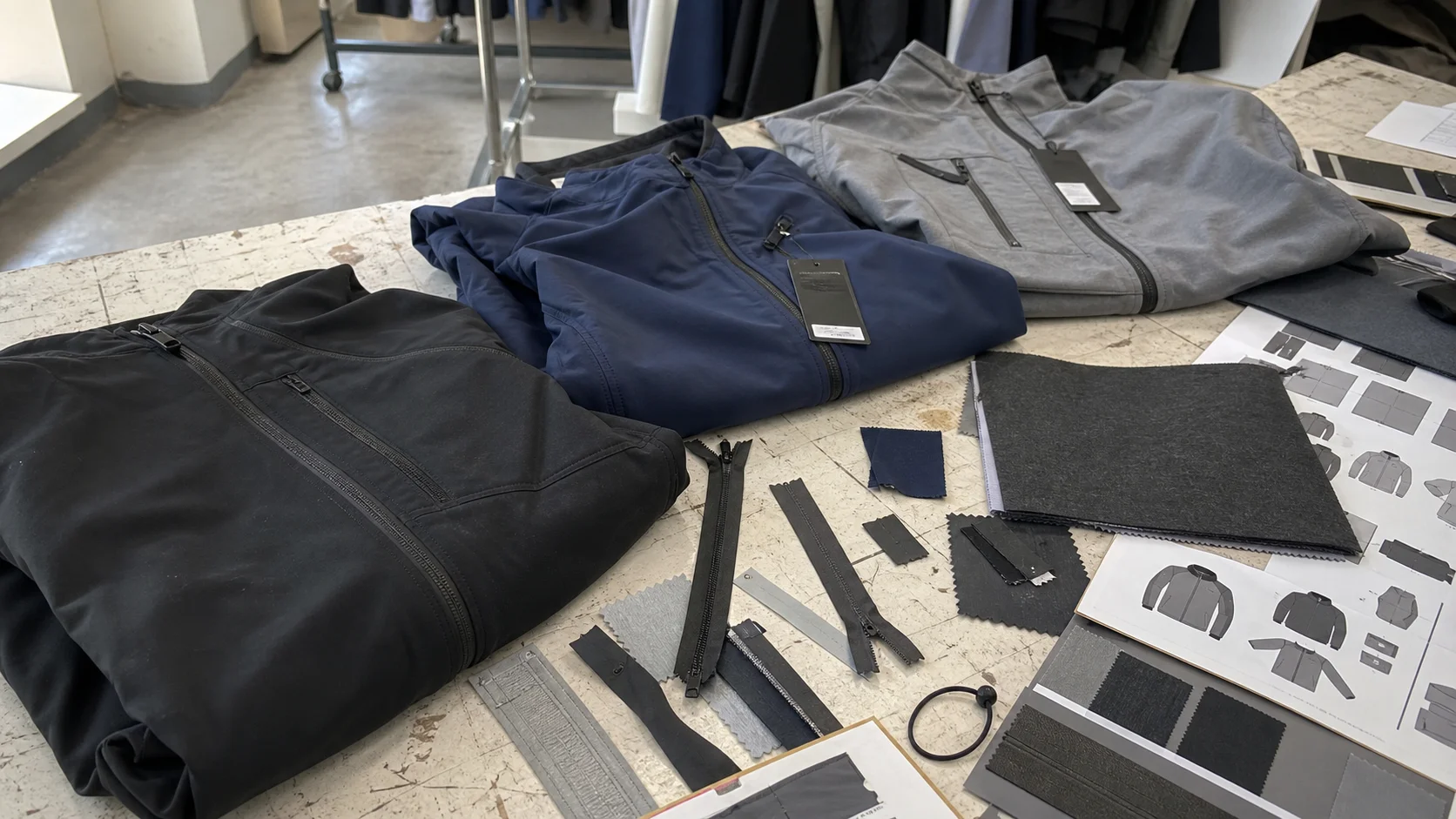
A buyer-focused outline for reviewing bulk softshell jacket MOQ pricing, decoration options, sizing, and durability needs for cleaning crew uniforms.
Softshell Jacket MOQ Pricing Review for Cleaning Crews - Fabrikn production reference
Bulk softshell jacket MOQ pricing for cleaning crews is not just a question of finding the lowest unit cost. Cleaning companies need outerwear that looks professional, moves well during physical work, handles repeated wear, and can be reordered without color or fit surprises. The right purchasing decision balances minimum order quantity, fabric durability, decoration method, size spread, lead time, and inspection controls.
Softshell jackets sit in a useful middle ground for cleaning crews. They are warmer and more structured than fleece, more flexible than many padded jackets, and more presentable than basic rainwear. For mobile janitorial teams, building service contractors, hotel housekeeping supervisors, facility maintenance cleaners, and exterior cleaning teams, a branded softshell jacket can function as both uniform and light protective outerwear.
The commercial challenge is MOQ. A cleaning company may need only 40 jackets for current staff, but a factory may quote better pricing at 100, 300, or 500 pieces. Buyers then face a practical decision: order only what is needed at a higher price, or commit to extra stock to unlock better pricing. There is no single correct answer. The right move depends on turnover, growth plans, storage space, branding consistency, and how stable the crew size is likely to remain.
This review looks at the sourcing side of softshell jackets for cleaning crews: typical MOQ ranges, what changes the price, where specifications matter, how sampling should be handled, and which inspection risks deserve attention before shipment. For buyers comparing custom outerwear programs, Fabrikn’s broader manufacturing support can be reviewed through its services page, and project-specific discussions can be started through the contact page.
Cleaning crews often work across different indoor and outdoor environments. A team may move from parking areas to lobbies, service corridors, loading docks, stairwells, and client-facing office floors in the same shift. A bulky winter coat can feel excessive indoors. A thin fleece may look casual or collect lint. A softshell jacket offers a cleaner uniform profile while giving moderate warmth and wind resistance.
Most softshell jackets are made with a woven face, a bonded inner layer, and some level of stretch. This makes them practical for tasks that involve reaching, bending, carrying supplies, setting up equipment, and moving through tight utility spaces. A good cleaning crew jacket should not restrict shoulder movement or ride up when the wearer lifts arms.
From a brand standpoint, softshell jackets also carry logos well. Chest embroidery, heat transfer logos, sleeve branding, and small back prints are common options. The jacket surface usually looks more premium than basic fleece, which helps cleaning businesses maintain a polished appearance when staff are visible to tenants, guests, or building managers.
The tradeoff is cost. Softshell jackets usually cost more than fleece jackets, basic windbreakers, or cotton-rich work jackets. The buyer should not treat them as disposable uniform items. They make the most sense when the company wants a professional outerwear layer that can stay in use for multiple seasons.
MOQ, or minimum order quantity, is the smallest quantity a supplier is willing to produce or decorate under a given set of specifications. For cleaning crew softshell jackets, MOQ depends heavily on whether the buyer is choosing ready-made stock jackets with logo decoration or producing a custom jacket from fabric onward.
Stock decoration programs usually have lower MOQs. A distributor or manufacturer may accept 24, 36, 50, or 100 pieces if the jacket body already exists in inventory. The buyer selects available colors and sizes, then adds embroidery, transfer printing, or woven patches. This route is faster and lower risk for small cleaning companies, but the buyer has less control over fabric weight, pocket layout, zipper quality, color matching, and future availability.
Cut-and-sew custom production normally requires higher MOQs. Typical starting points are often around 100 to 300 pieces per style and color for basic softshell jackets, though more competitive pricing may begin at 500 pieces or more. Some factories may quote lower trial quantities, but buyers should expect higher unit costs, limited color options, or surcharges if the order falls below standard fabric or trim purchasing minimums.
MOQ can also be split by color, size, and logo variation. A 300-piece MOQ may mean 300 pieces in one color, not 100 black, 100 navy, and 100 charcoal. Size distribution matters as well. A wide size range from XS to 5XL can create production inefficiencies, especially when larger sizes require additional fabric consumption and adjusted patterns.
Purchasing judgment: if the cleaning crew has fewer than 50 wearers and no firm expansion plan, stock softshell jackets with decoration are usually the safer route. If the company has multiple locations, recurring onboarding needs, or strict brand standards, custom production becomes easier to justify.
Softshell jacket pricing is built from several components. Fabric is usually the largest cost driver, followed by trims, labor, decoration, packaging, testing, and freight. A low quote may be legitimate if the specification is simple, but it may also hide compromises in fabric weight, zipper grade, seam quality, or color consistency.
Fabric weight has a direct effect on cost. A lightweight softshell around 220 to 260 gsm will generally cost less than a heavier 300 to 350 gsm jacket. Lighter jackets may work well for indoor-to-light-outdoor cleaning teams, while heavier fabrics are better for crews working in cold loading docks, exterior walkways, or early-morning routes.
Bonding quality also matters. Many softshell fabrics use a three-layer or two-layer bonded construction. A three-layer softshell may include an outer woven face, a membrane or film layer, and an inner microfleece. It can deliver better wind resistance and structure, but it usually increases cost. A two-layer softshell may be more affordable and flexible, but it may offer less weather protection.
Water resistance is another pricing point. Buyers should distinguish between water-repellent finishes and truly waterproof construction. Many softshell jackets are water-resistant, not waterproof. They can handle light rain or mist, but seams may not be sealed. For cleaning crews, this is often acceptable unless the staff regularly work outdoors in heavy rain.
Decoration method changes cost and MOQ. Embroidery is durable and professional, but dense logos can become expensive and may pucker on some softshell fabrics. Heat transfer can reproduce detailed logos and small text, but it must be tested for adhesion, stretch, and wash performance. Woven patches add a premium look, yet they involve their own MOQ and application cost.
A softshell jacket spec sheet should be clear enough that multiple suppliers can quote the same product. Vague descriptions such as “premium softshell” or “waterproof jacket” are not enough. Cleaning companies should ask for measurable details where possible.
For cleaning crews, the outer fabric should resist light abrasion from supply carts, cleaning tools, backpacks, and frequent movement against walls or counters. It does not need the same ruggedness as a heavy industrial work jacket, but weak face fabric will show wear quickly. Dark colors can hide soil, but they can also reveal lint, dust, and detergent residue.
Zippers deserve more attention than many buyers give them. Cleaning staff may open and close jackets repeatedly during shifts. Cheap zippers can jam, split, or feel rough. A low-cost jacket with poor zippers often becomes more expensive when replacements are needed mid-season.
Reflective piping or tape can be useful for crews working before dawn, after closing hours, or near parking lots. The buyer should decide whether reflective trim is for visibility enhancement or formal safety compliance. If compliance is required, the jacket needs to be reviewed against the relevant safety standard rather than treated as a general uniform item.
Actual pricing changes by supplier, country, fabric market, exchange rate, decoration method, and order complexity. The table below gives practical planning ranges rather than guaranteed quotes. Buyers should use these tiers to frame conversations and identify when a quote looks unusually high or suspiciously low.
Order Type Typical MOQ Range Common Use Case Pricing Notes Stock softshell with logo 24-100 pieces Small cleaning teams, pilot programs, urgent uniform needs Higher unit cost, faster delivery, limited customization Low-volume custom softshell 100-300 pieces Regional cleaning companies, controlled brand requirements Moderate customization, possible surcharges for fabric and trims Standard custom production 300-500 pieces Multi-site crews, annual uniform programs Better unit economics, more stable production planning Large bulk production 500-1,000+ pieces National accounts, franchise networks, recurring replenishment Best leverage on fabric, trims, packaging, and decoration setupAt 24 to 100 pieces, buyers are usually paying for convenience. Stock jackets reduce development time and avoid the risk of custom production errors. The downside is that the supplier may discontinue the style or run out of certain sizes. If the cleaning company hires new staff six months later, matching the original jacket can become difficult.
At 100 to 300 pieces, custom production may be possible, but buyers should expect fewer concessions. A supplier may limit the jacket to one fabric color, standard zipper options, and simple branding. This tier is useful when the company wants its own colorway or fit but cannot justify a much larger order.
At 300 to 500 pieces, the buyer usually has more room to refine the garment. Better pocket placement, custom lining color, contrast zipper pulls, branded labels, and improved size grading become more realistic. Unit cost may drop meaningfully, but the company must be confident it can use the inventory.
At 500 pieces and above, the strongest pricing usually appears. Fabric mills and trim suppliers are more cooperative at higher volumes. Decoration setup costs are spread across more units. Freight efficiency may improve as well. The risk is overbuying. If the company changes logo, brand colors, or uniform policy, leftover jackets can become dead stock.
Cleaning crew jackets need branding that is visible but not overdesigned. A left-chest logo is the standard choice because it looks professional and works across most sizes. Sleeve logos, back logos, name personalization, and department labels can be added, but each extra detail increases cost, handling time, and quality control requirements.
Embroidery is a strong choice for cleaning company jackets when the logo is simple. It holds up well and gives a professional finish. The buyer should review stitch count, thread color, backing, and placement. Dense embroidery on stretch softshell can distort the fabric, especially on lighter-weight materials. A sew-out sample should be approved before production.
Heat transfers are useful for detailed logos, gradients, small text, or high-contrast branding. They can look clean on softshell fabric, but the supplier must test adhesion. Some DWR finishes and textured surfaces make transfers harder to bond. Wash testing is recommended before committing to a large order.
Woven patches can help standardize branding across jackets, vests, polos, and bags. Rubber or silicone patches create a modern look, but they may be more expensive and may have their own MOQ. Patch attachment should be checked carefully because edge lifting, crooked placement, or inconsistent stitching can make uniforms look poorly controlled.
Black, navy, charcoal, and dark grey are common for cleaning crews because they hide marks better than light colors. Bright colors improve visibility but show soil faster. White or very light softshell jackets are rarely practical for cleaning work unless used by supervisors in controlled environments.
Custom-dyed fabric can improve brand consistency, but it raises MOQ and introduces lab dip approval steps. For many cleaning companies, selecting a standard fabric color is more practical. If brand color matching is essential, the buyer should request lab dips under multiple lighting conditions before approving bulk dyeing.
For a broader view of supplier capabilities and production support, buyers can review Fabrikn’s company background before engaging on a jacket program.
Sampling is where many softshell jacket problems can be caught before they become expensive. Buyers should not approve bulk production based only on catalog images or a previous garment that is “similar.” A cleaning crew jacket needs to be checked for fit, movement, logo placement, pocket usability, and fabric feel.
For small orders using stock jackets, the sampling process may be shorter. A blank jacket sample and logo sew-out or transfer test may be enough. For custom production, the pre-production sample is critical. It should represent the exact approved fabric, trims, labels, decoration, and construction details.
Fit should be tested over typical work layers. Cleaning crews may wear polos, T-shirts, sweatshirts, or light fleece underneath. If the jacket is too slim, it will restrict movement. If it is too loose, it may look untidy and catch on equipment. A practical fit is usually better than a fashion fit for this category.
Buyers should check arm mobility. The wearer should be able to reach forward, lift arms, bend, and zip the jacket comfortably. Tight armholes or narrow upper sleeves are common problems when a style is adapted from fashion outerwear rather than work uniforms.
Softshell jacket lead times depend on the order route. Stock jackets with decoration may ship in roughly 1 to 4 weeks after artwork approval, depending on inventory and decoration capacity. Custom softshell production often takes around 6 to 12 weeks after final sample approval. Larger or more complex programs may take longer, especially if fabric must be dyed or trims are custom-made.
Lead time should be measured from the right starting point. Many buyers count from the day they request a quote. Suppliers usually count from deposit, final artwork, approved sample, confirmed size breakdown, and approved materials. Delays in any of those items push the schedule.
Cleaning companies should plan outerwear purchases before cold or rainy seasons. Ordering jackets after weather changes usually forces rushed decisions, higher freight costs, or acceptance of stock items that may not fully match brand requirements.
Freight method also affects the landed cost. Air freight is faster but expensive, especially for bulky outerwear. Sea freight is more economical for large orders but adds weeks to the schedule. For urgent needs, a split shipment can work: ship a small portion by air for immediate staff use and the balance by sea. This should be negotiated early because it affects packing, documentation, and delivery planning.
Inspection should focus on the defects that actually matter in daily use. A softshell jacket may look acceptable at a distance but fail on zipper function, logo alignment, seam strength, or sizing consistency. Cleaning crews wear uniforms repeatedly, so small quality problems become visible quickly.
Shade variation is a real risk with bulk softshell jackets. If fabric rolls are not controlled, one batch of navy jackets may look slightly different from another. This becomes noticeable when crews stand together. Buyers should request shade band review for larger orders and avoid mixing noticeably different fabric lots within the same size group if possible.
Logo placement should be checked with a measurement guide, not by eye alone. A chest logo that shifts across sizes can make uniforms look inconsistent. Large-size garments may require adjusted placement to avoid looking too high or too close to the armhole.
Bonding defects can appear as bubbling, delamination, or uneven surface texture. These issues may not show in a quick photo review. If the jacket uses bonded softshell fabric, inspection should include a close look at the fabric surface and inner backing. Wash and wear testing before bulk approval is useful when the order is large enough to justify it.
Packaging is not just cosmetic. Cleaning companies often distribute uniforms by site, crew, or employee. Incorrect size labels, mixed cartons, or missing polybag markings create extra administrative work. Buyers should specify carton labeling and packing ratios before shipment.
The best softshell jacket purchase is not always the heaviest or most customized option. Cleaning crews need reliable, presentable, comfortable jackets at a cost that fits uniform budgets. Spend on the details that affect daily use and brand presentation. Save on features that add complexity without improving performance.
For cleaning companies, a clean silhouette usually beats a heavily designed jacket. A simple black or navy softshell with a durable left-chest logo can look more professional than a complicated jacket with mismatched trims or excessive branding. Buyers should remember that uniforms are judged as a set. Consistency across staff matters more than adding many individual features.
One useful approach is to separate the order into core staff and future replenishment. If the supplier can hold fabric or repeat the same stock style, the buyer may avoid overbuying. If repeat availability is uncertain, ordering extra units in common sizes can prevent mismatched uniforms later. The tradeoff is inventory risk.
Cleaning businesses with high staff turnover should be cautious about personalization. Individual names or employee-specific decoration can look polished, but it reduces reusability. For many crews, a company logo and optional removable name badge is more practical than permanently embroidered names.
Before placing a bulk softshell jacket order, buyers should ask focused questions. A good supplier should be able to explain MOQ, fabric options, decoration limits, sampling steps, and inspection support without vague promises. If answers are unclear before deposit, they are unlikely to become clearer during production.
The quote should show what is included and excluded. Decoration setup fees, sample fees, mold charges for patches, packaging upgrades, testing, inspection, and freight can change the final landed cost. Buyers should compare quotes on the same basis. A cheaper FOB price may not remain cheaper after decoration, freight, and rework risks are included.
Payment terms also affect risk. For custom production, deposits are common. The buyer should make sure approvals are documented before bulk production begins. Approved sample photos, measurement charts, artwork files, logo placement guides, fabric references, and packing instructions should all be kept in one production file.
For companies building a repeatable uniform program, it is worth working with a supplier that understands both apparel manufacturing and commercial uniform requirements. Fabrikn’s manufacturing services can be used as a starting point for reviewing production support, and buyers can use the contact-us page when they are ready to discuss MOQ, samples, and order planning.
A balanced specification for many cleaning crews would be a medium-weight polyester-spandex softshell in black, navy, or charcoal, with a bonded microfleece backing, zippered hand pockets, full front zipper, adjustable hem, and a left-chest logo. The jacket should fit over a polo or light sweatshirt without looking oversized.
For most general cleaning companies, a fabric weight around 260 to 320 gsm is a reasonable starting point. Lighter weights suit mild climates and indoor-heavy crews. Heavier weights suit exterior routes, cooler regions, and teams that move between buildings. A DWR finish is useful, but buyers should not pay for high waterproof claims unless the work environment truly requires it.
A typical initial custom order might target 100 to 300 pieces if the buyer needs brand-specific features but wants to control inventory. A larger organization with multiple sites may be better served by 300 to 500 pieces, especially if staff turnover and seasonal replenishment are predictable. Very small teams should usually start with stock jackets and logo decoration unless custom branding is essential.
Size planning should be based on actual workforce data, not assumptions. Cleaning crews often need a wider size range than fashion retail orders. Buyers should include enough common middle sizes while accounting for larger sizes. It is better to confirm employee sizing before production than to guess and end up with unusable inventory.
Bulk softshell jacket MOQ pricing for cleaning crews should be reviewed as a total uniform investment. Unit price matters, but it should not be separated from durability, fit, reorder consistency, and brand presentation. A jacket that costs slightly more but lasts longer and keeps staff looking consistent can be the better purchase.
For small crews, the practical choice is often stock softshell jackets with logo decoration. For growing or multi-site cleaning companies, custom softshell production becomes more attractive once order quantities reach the 100 to 300 piece range. Stronger pricing and more control usually appear around 300 to 500 pieces, provided the buyer can use the inventory.
The safest sourcing path is straightforward: define the work environment, choose a practical fabric weight, keep branding clean, approve samples carefully, confirm size data, and inspect before shipment. A softshell jacket is not the cheapest uniform layer, but when specified correctly, it can be one of the most useful outerwear pieces in a cleaning crew program.
Get a free quote from Fabrikn — your trusted B2B clothing manufacturer with 10+ years of experience. MOQ as low as 200 pieces.
Get a Free Quote →A typical custom softshell jacket MOQ is often around 100 to 300 pieces per style and color. Better pricing usually appears at 300 to 500 pieces or more. Stock jackets with logo decoration can sometimes start at 24 to 100 pieces, depending on supplier inventory and decoration method.
Softshell jackets usually look more structured and professional than fleece. They also offer better wind resistance and can handle light moisture. Fleece is cheaper and comfortable, but it may collect lint and look more casual. For client-facing crews, softshell is often the stronger outerwear choice.
A practical range is often 260 to 320 gsm for general use. Lighter jackets work better for mild climates and indoor-heavy crews. Heavier jackets are better for colder conditions or teams that spend more time outdoors.
Embroidery is durable and professional for simple logos. Heat transfer is better for detailed artwork, gradients, or small text. The final choice should be tested on the actual softshell fabric because stretch, coating, and texture can affect results.
Stock jackets with logo decoration may take around 1 to 4 weeks after artwork approval. Custom production commonly takes around 6 to 12 weeks after sample approval, depending on fabric, trims, order size, factory capacity, and freight method.
Black, navy, charcoal, and dark grey are usually the most practical because they hide marks better than light colors. Bright colors improve visibility but show soil faster. White or pale colors are usually difficult to maintain in cleaning work environments.
Buyers should review current staff count, expected hiring, turnover, and size data before placing the order. Smaller teams may be better served by stock jackets. Larger teams can order extra units in common sizes if repeat availability is uncertain.
Inspection should cover measurements, zipper function, logo placement, stitching, fabric defects, shade variation, labels, packaging, and carton counts. For bonded softshell fabric, buyers should also check for bubbling, delamination, or uneven surface texture.
Most softshell jackets are water-resistant, not fully waterproof. They can handle light rain or mist, especially with a DWR finish. Full waterproof performance usually requires waterproof fabric, seam sealing, and a different construction approach.
Custom production makes sense when the cleaning company needs consistent branding, specific fabric, custom fit, unique colors, or repeatable uniform control across multiple locations. For very small crews or urgent orders, decorated stock jackets are usually more practical.