
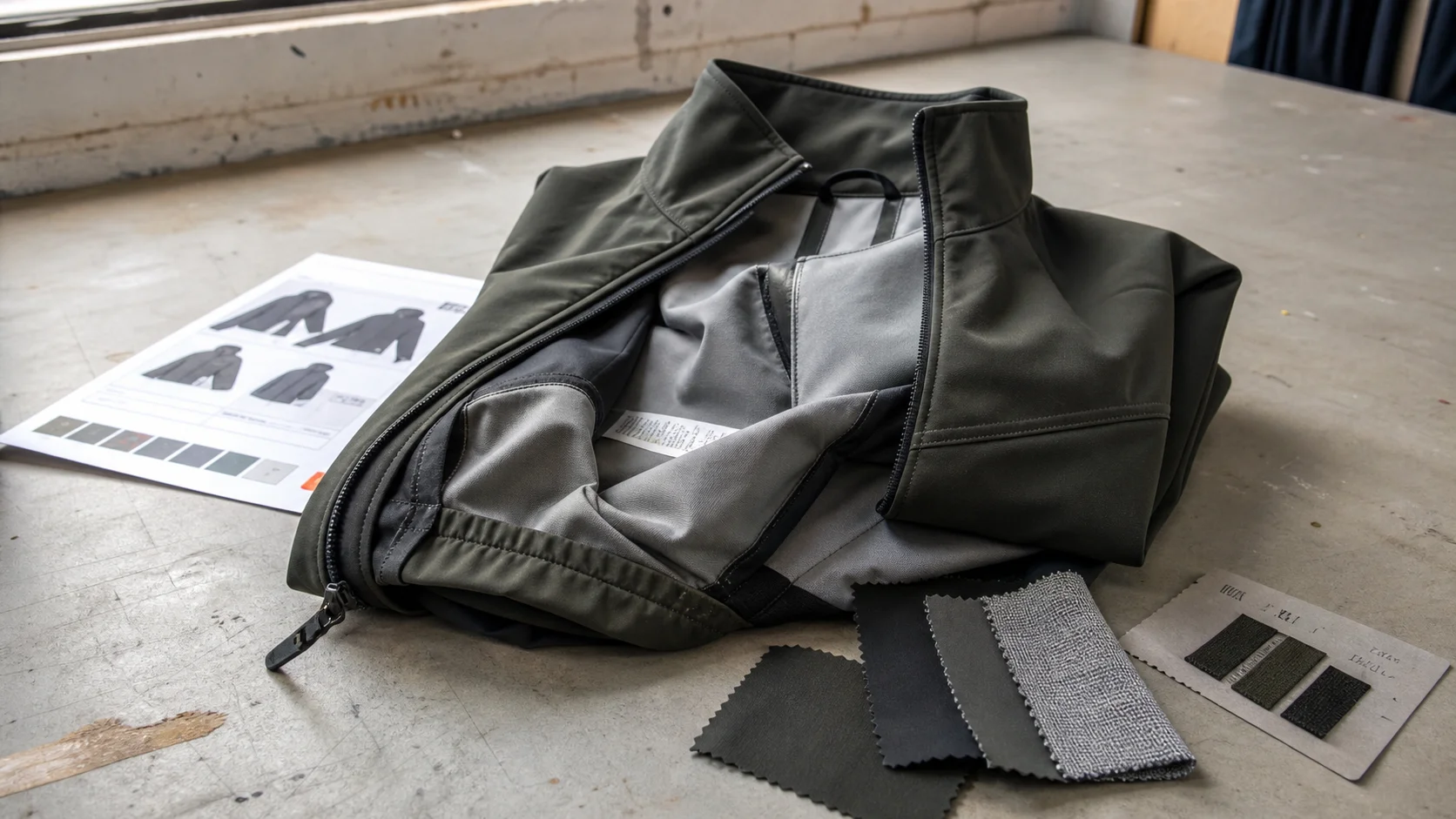
A practical pricing review of softshell jacket orders for outdoor school buyers, covering MOQ tiers, decoration choices, fabric specs, size runs, and...
School buyers looking at softshell jackets are usually balancing three things at once: unit price, minimum order quantity, and enough durability to survive repeat wear. The product looks simple on paper, but the buying decision changes quickly once fabric construction, logo method, color choices, size runs, and sample approval are put into the order. A lower MOQ can help a school move fast, yet it often pushes the per-unit price up. A larger commitment can improve pricing, though it increases risk if the fit, handfeel, or decoration is not approved on the first sample.
This review is written for outdoor school buyers, procurement teams, and uniform coordinators who need a practical view of softshell jacket order MOQ pricing. The aim is not to give a single price, because there is no reliable one. The real value is understanding the variables that move the quote, where suppliers typically add cost, and which compromises are acceptable for school use. For broader manufacturing support, it can help to review the factory scope on the services page and the company background on the about page.
Softshell Jacket MOQ Pricing for School Buyers - Outerwear & Jackets manufacturing guide
MOQ means minimum order quantity, but in softshell jacket sourcing it is not one number. A supplier may quote MOQ by style, color, fabric, or decoration method. A school might ask for 120 jackets, yet a factory may still require 200 pieces per color because the fabric mill or dyehouse sets the real threshold. Printing, embroidery, and private labels can each create their own minimums.
For school buyers, the practical question is not just whether the factory will accept the order. It is whether the order size supports the quality level needed for repeat wear. A very low MOQ can be useful for a pilot program, a new school house system, or a short-term event. That same low MOQ can become expensive if the supplier has to split fabric runs, cut from partially used rolls, or hand-finish details that are normally automated at higher volume.
Softshell jackets are usually bought as branded outerwear for outdoor learning, sports travel, staff teamwear, or student leadership programs. These orders often need a stable supply of consistent sizes, durable zippers, and decoration that still looks clean after washing. That is why MOQ and price should be reviewed together, not separately.
Softshell jacket MOQ varies by supplier type and level of customization. The ranges below are typical sourcing benchmarks, not guarantees.
Order Type Typical MOQ Pricing Implication Best Fit Stock shell, simple logo 50 to 100 pcs Lower setup cost, higher unit price Small schools, pilot orders, urgent programs Custom color trim, standard pattern 100 to 300 pcs per color Moderate price, better economy at 200+ Typical school uniform or club orders Fully custom fabric, labels, and trim package 300 to 500+ pcs Lower unit cost at scale, higher development cost Large district or multi-school programs Complex tech spec with waterproof membrane or bonded layers 500+ pcs Best pricing only at volume High-performance outdoor useSmall school buyers sometimes assume a low MOQ means a lower total spend. That is not always true. A 60-piece order with custom embroidery, individual polybags, woven labels, and a specialized size spread can have a unit price that looks far higher than a 250-piece order. The sample and setup burden gets spread across fewer units, so the cost per jacket rises quickly.
It is also common for a supplier to offer a headline MOQ for the jacket body, then add separate minimums for logo application, hang tags, or packaging. School buyers should confirm the full order structure before comparing quotes.
Softshell jacket pricing is shaped by a handful of predictable inputs. Once these are understood, quote comparisons become more reliable.
A basic softshell may use a polyester outer face with a brushed fleece back and a light water-repellent finish. A more technical build may add a membrane, higher stretch, or a heavier bonded layer. Each upgrade increases cost. Fabric weight also matters. A lighter jacket can reduce fabric cost, but it may not hold up well for regular school outdoor use or colder climates.
School buyers often ask for “waterproof” when the actual need is water-resistant. True waterproof softshell construction is more expensive and can reduce breathability if the spec is not well balanced. For many school programs, a durable water-repellent finish with moderate wind resistance is the better tradeoff. It performs well for commuting, sports travel, and field activities without overpaying for performance that may not be used.
Embroidery is durable and usually preferred for school branding, but it can add cost and stiffen lightweight panels. Heat transfer can be cheaper at small volume and allows sharper detail, though some transfers crack or lift under repeated washing if the film quality is poor. Screen print is less common on softshell shells because it can affect stretch and handfeel. Woven badges, silicone patches, and sewn labels each have their own cost structure.
A simple full-zip jacket with set-in sleeves and standard pockets is more economical than a shaped fit with contrast panels, storm cuffs, hidden pockets, and articulated sleeves. Every extra seam increases cutting, sewing, and inspection time. School buyers sometimes request design features that look premium but do not improve classroom or field performance enough to justify the added cost.
Each color can require separate fabric purchase or separate cutting allocation. When a school wants one jacket in multiple house colors, the quote often rises because the supplier has to split materials and manage smaller color runs. Reducing color variety can improve pricing more than minor changes in logo placement.
A broad size curve from youth to adult increases planning complexity. Very small or very large sizes may have lower production efficiency. A school order that includes both children’s and adult sizes should expect some cost premium, especially if the supplier must hold multiple grading tables or separate size specs.
Individual polybags, barcode stickers, size stickers, swing tags, custom cartons, and folded packing instructions all add cost. For school buyers, packaging is often a hidden expense. A clean branded pack may matter for parent-facing distribution, but if the jackets are going straight to student lockers, simpler packaging usually makes more sense.
Specification discipline is where school buyers protect themselves. The softer the brief, the more likely the supplier will fill gaps with cheaper assumptions.
A school jacket that looks acceptable in a showroom may still fail after a term of use if the zipper choice is weak, the thread is low grade, or the fleece backing pills quickly. Price should be assessed against wear cycles, not only against the first inspection.
A lower price is only useful if the jacket survives repeat school use, washing, and seasonal storage. In outerwear sourcing, the cheapest quote is often the one with the most hidden compromises.
Sample control matters more in school orders than in many other categories because the buyer may not have the budget to replace a full run after a fit or color issue. A disciplined sample process reduces the risk of an expensive mistake.
Some school buyers try to compress this process to save time. That can backfire if the supplier begins bulk production before the fit, shrinkage, or logo scale is approved. For softshell jackets, the pre-production sample should confirm sleeve mobility, hem length, collar shape, zipper movement, and logo placement on the chest or sleeve. If the school has a uniform committee, the approval chain should be fixed before development starts.
The sample cost itself is often not the real issue. The risk lies in the time lost if samples are revised two or three times. That delay can push bulk delivery beyond the school term start or an outdoor program launch.
Lead time depends on fabric readiness, trim sourcing, sample approvals, and the supplier’s production load. Softshell jackets are not a simple cut-and-sew item once custom fabric, special zippers, or branded labels are introduced.
For a straightforward order using in-stock fabric and standard decoration, production may move faster. Custom fabric development or color matching extends the schedule. If a school wants exact house colors, the dye process may require lab dips and approval, which adds time. If the jacket uses bonded fabric or a membrane, the supplier may need to schedule material production separately from sewing.
School buyers should ask for lead time in three parts:
This split is important because a supplier can sometimes quote a short bulk production time while ignoring the fabric development window. The full calendar matters. A fast sewing line does not help if the fabric is still in approval.
Inspection issues are predictable in softshell jacket production. Knowing them in advance helps school buyers avoid repeat corrections and claims.
Buyers should insist on clear inspection criteria before bulk production starts. A simple size chart is not enough. The order should define tolerance for measurement points, logo placement, thread color, zipper type, and packaging content. If the school expects line-level quality control, that expectation should be stated early. Late inspection demands can create tension if they were never priced into the order.
Outerwear inspection also needs to account for water repellency and wash performance when those claims are part of the spec. If the supplier states a performance claim, it should be tied to a test method or at least to a repeatable internal standard. Vague marketing language does not protect the buyer.
Good negotiation is not just asking for a lower quote. It is deciding which variables can move without harming the end use.
Schools often get the best result by combining orders across grades, clubs, or staff teams. A larger consolidated purchase can improve fabric efficiency and lower the setup burden. If different groups need different branding, the base jacket can stay identical while only the decoration changes. That is usually more cost-effective than ordering different jacket bodies.
Price negotiation should also address risk allocation. If the supplier offers a lower unit price in exchange for a weaker sample approval process, that is a poor trade for school buyers. It is better to pay slightly more for a controlled pre-production process than to accept a cheap bulk order with uncertain finishing quality.
For buyers who need a broader sourcing discussion, the factory’s contact page is the right place to request MOQ by style, decoration options, and sample timing in one message. That is more effective than asking for a price alone.
School outerwear should be practical first. A softshell jacket that looks premium but fails in the field is a poor buy. A jacket that is slightly simpler, but stable in fit and washable over time, is usually the better investment.
The biggest tradeoff is between technical performance and budget reality. Schools rarely need the highest-spec alpine jacket. They need a durable, presentable, weather-resistant softshell that can handle daily movement, occasional rain, and repeated laundering. That supports a more disciplined buying brief and usually delivers a better result than chasing the most technical sample available.
Before placing an order, school buyers should confirm the following points in writing:
If the order is part of a wider outerwear program, the buyer should also confirm whether future reorders will match the same fabric lot, color standard, and trim supplier. Reorder consistency matters in school environments where jackets may be added across terms or rolling enrollment.
When a supplier can support longer-term coordination, it is sensible to ask whether the development process, sourcing support, and order communication are structured enough for repeat school business. The overview on the services page can be used as a starting point for that review.
Softshell jacket MOQ pricing for school buyers is best approached as a specification exercise, not a commodity comparison. The right order size depends on the jacket build, the number of colors, the logo method, the size spread, and the level of control needed before bulk production. Small orders can work, but they usually cost more per unit. Larger orders can improve pricing, though only if the buyer can keep the specification tight and the approval process disciplined.
For outdoor school buyers, the best buying decision is usually the one that keeps the jacket simple, durable, and consistent across the full run. That is where the value is. A careful MOQ review can protect budget, reduce sampling errors, and give the school a jacket that still looks acceptable after real use, not just on the first delivery.
Get a free quote from Fabrikn — your trusted B2B clothing manufacturer with 10+ years of experience. MOQ as low as 200 pieces.
Get a Free Quote →Typical MOQ ranges from 50 to 100 pieces for stock-based orders, 100 to 300 pieces per color for more customized school jackets, and 300 to 500+ pieces for fully custom development. The exact MOQ depends on fabric sourcing, trim requirements, and decoration method.
Quotes change because softshell jackets are affected by fabric weight, membrane or backing type, zipper quality, decoration method, packaging, size range, and color count. Small changes in specification can move the unit price more than many buyers expect.
No. A lower MOQ can help with small programs or pilot orders, but it usually increases the per-unit cost. It can also reduce the supplier’s ability to optimize fabric usage and finishing, which may affect quality or price.
At minimum, the buyer should approve fit, fabric handfeel, logo placement, zipper performance, size grading, and color accuracy. Larger orders often need a pre-production sample or size set sample before bulk cutting begins.
Fabric durability, water resistance, breathability, zipper reliability, and wash performance matter most. Branding is important, but it should not come at the expense of wear life or comfort.
Use one main color, reduce decoration complexity, simplify the pattern, standardize trims, and avoid unnecessary packaging upgrades. Consolidating quantities across groups can also improve pricing.
For supplier capabilities, the about page and contact page are the right places to confirm development support, MOQ guidance, and sample timing before requesting a formal quote.