
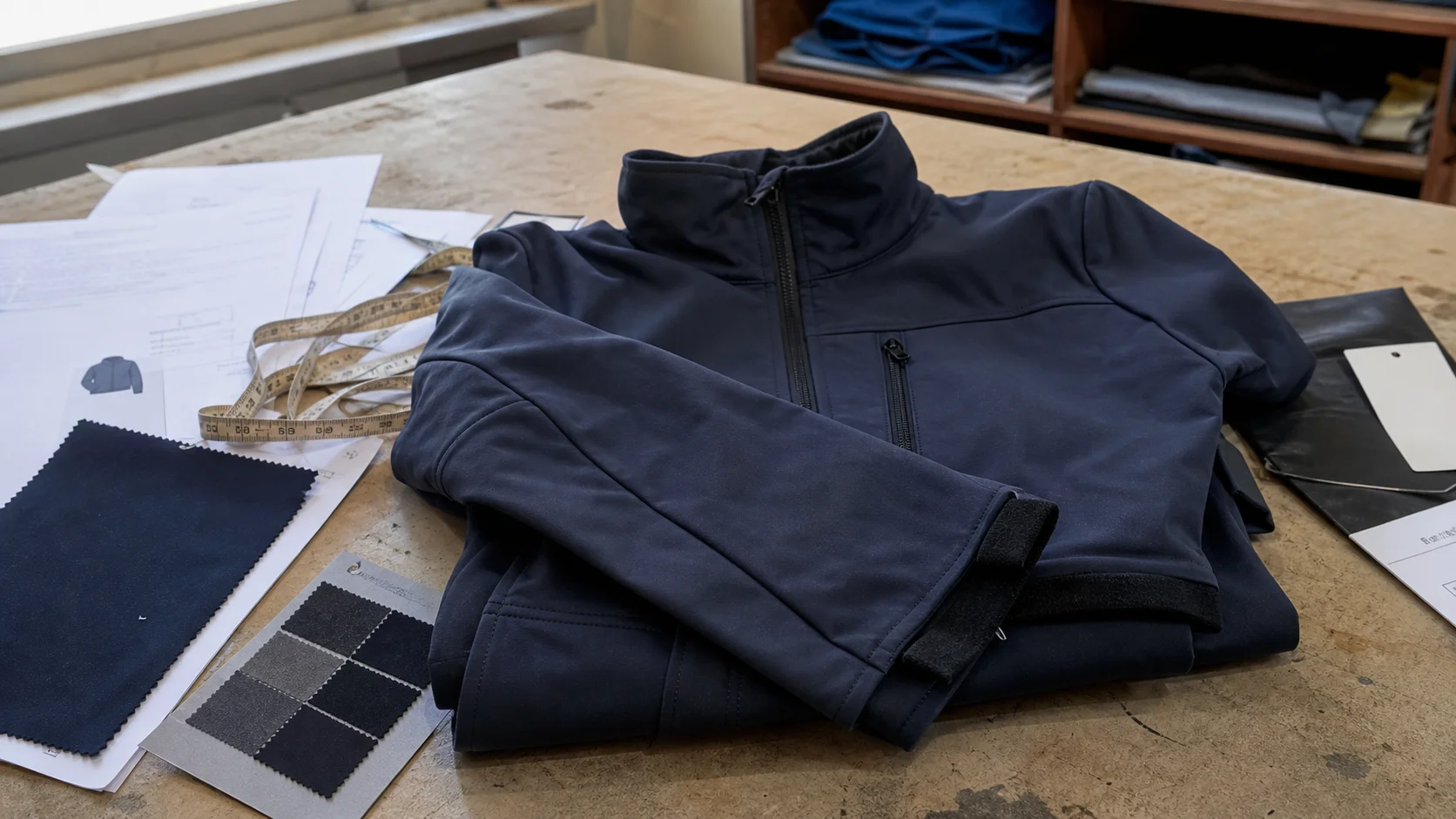
A practical SEO outline for evaluating softshell jacket reorder risks for cleaning crews, covering fabric continuity, decoration repeatability, sizing...
Cleaning crews need outerwear that stays presentable, holds up to repeated wear, and can be reordered without drift in color, fit, or branding. A softshell jacket can be a strong choice for that use case because it bridges the gap between fleece comfort and a more technical shell. The risk sits in repeat production. Small changes in fabric batch, laminate quality, trim sourcing, or decoration placement can turn a clean first order into a problematic reorder.
This review focuses on softshell jacket manufacturer reorder risk for cleaning crews. The goal is practical control: lock down the spec, understand where suppliers substitute, and set up a reorder process that protects consistency. For teams comparing vendors, it is worth reviewing the supplier’s manufacturing services, checking the company background on the about page, and using the contact form early to ask about reorder capacity, fabric continuity, and sampling workflow.
Softshell Jacket Reorder Risk Review for Crews - Outerwear & Jackets manufacturing guide
The first order often looks straightforward because everything is fresh. The spec is new, the factory is attentive, and the buyer is watching every detail. The second or third order is where problems appear. A supplier may source a different face fabric, switch zipper brands, move a logo half an inch, or use a substitute thread because the original item is out of stock. None of those changes sound dramatic on paper. In a uniform program, they are enough to create inconsistency across a cleaning crew.
Reorder risk is not only about quality failure. It also includes continuity failure. A jacket that fits slightly differently on the next replenishment can produce mixed employee feedback and uneven team presentation. For a cleaning crew, that matters more than it does for fashion outerwear. Uniformity affects how the team looks in client spaces, how easily managers can replace damaged pieces, and how long the program can run without resetting the spec.
The core sourcing mistake is assuming a jacket that passed once will repeat automatically. Repeat orders need tighter controls than the first production run. The more customized the jacket, the more fragile the reorder.
Cleaning crews usually need a jacket that handles movement, light rain, cold corridors, and frequent on-and-off wear. A softshell construction can work well because it offers a cleaner appearance than fleece and better weather resistance than a basic knit. It also gives more room for branding than many hard shells.
For this category, the ideal jacket is usually practical rather than premium. Buyers should prioritize durability, easy maintenance, and stable repeat production over decorative features. The most useful design choices are often the least flashy: a clean chest area for a logo, a shaped sleeve for reach and lift, secure pockets, and a fabric hand that does not look worn out after limited use.
The tradeoff is that softshell fabrics vary widely. Some versions are stretchy and comfortable but less resistant to abrasion. Others are more structured but less flexible. A cleaning crew program should choose the version that matches the job, not the sample room presentation. If staff need to bend, carry tools, and move through tight spaces, mobility and abrasion resistance matter more than a polished catalog look.
The best way to reduce reorder risk is to treat the initial tech pack as a future replenishment document, not a one-time production note. Every detail that might be substituted later should be named clearly. If the spec is vague, the supplier will fill in the gaps based on availability, and those choices may not repeat.
Softshell jackets are usually built from a woven face fabric bonded to a fleece or brushed backing, sometimes with a membrane in between. That combination affects stretch, warmth, water resistance, and cost. The sourcing file should identify the face composition, weight, weave, membrane type if any, and backing construction. A generic description like “3-layer softshell” is too loose for repeat buying.
Practical checkpoints include fabric weight in GSM, yarn content, stretch direction, water resistance target, and color standard. If the jacket is expected to handle daily wear by cleaning staff, the buyer should also ask about pilling resistance and abrasion performance. A lower-cost softshell may look acceptable on day one but show wear quickly at cuffs, elbows, and shoulders.
Uniform programs fail fast when color shifts across reorders. Cleaning crews often wear navy, black, charcoal, or other practical dark shades, and those colors can still vary noticeably from one dye lot to another. The buyer should approve a physical lab dip or production shade card and preserve the approved standard under the same lighting used during approval.
Color continuity is especially important when jackets are reissued over time. A crew with mixed shades looks disorganized even if the garments are technically the same style. A supplier should confirm whether the same mill can supply future runs, or whether a change in mill would require a fresh shade approval.
Zippers, cord locks, snaps, elastic, labels, and thread colors need the same discipline as fabric. A jacket can pass fit and appearance checks while still failing on small but visible details. Zippers deserve special attention because they are one of the most common replacement risks. If the factory uses a brand-name zipper on the first order and substitutes a lower-cost equivalent on the reorder, performance and appearance may diverge.
For crew uniforms, it is usually safer to specify zipper tape color, pull style, teeth type, and size rather than just saying “nylon zipper” or “reverse coil zipper.” The same applies to thread. Matching thread color on black or navy garments seems minor until a seam line becomes visible under indoor lighting.
Logo placement should be measured and fixed on the master sample. Softshell jackets are often decorated with embroidery, heat transfer, or woven patches. Each method carries its own risk. Embroidery can pucker lightweight fabrics. Heat transfer can crack or lift if the jacket is frequently cleaned or stored in heat. Patches can introduce edge curling if the adhesive or stitching is weak.
For a cleaning crew, a small, durable logo often makes more sense than a large decorative application. The buyer should confirm logo size, exact placement from center front or shoulder seam, stitch density if embroidery is used, and thread color. If decoration is moved even slightly between runs, the jacket set will no longer look matched.
A repeatable approval process matters more than a single “approved sample” stamp. Buyers should ask how the supplier handles each step and which sample is the production reference. A clear workflow usually includes proto sample, fit sample, size set sample, pre-production sample, and top-of-production review. Not every program needs all five, but the sequence should be defined.
The proto sample checks design intent and construction. The fit sample checks shape, ease, sleeve length, and movement. A size set sample confirms grading across the range. The pre-production sample should use actual bulk fabric and trims where possible. The top-of-production sample or shipment reference gives the buyer something to compare against before the balance ships.
When a supplier says a reorder will be “same as last time,” the buyer should still request confirmation of what exactly is being held constant. If fabric is from a new lot, if the trim vendor changed, or if a different sewing line is used, the production record is no longer truly the same. The approval trail should capture this.
A good reorder process does not rely on memory. It relies on written spec control, retained swatches, sealed trim references, and a signed approval record for the exact version shipped.
Cleaning crews do not need luxury-level garment development, but they do need predictability. That means retaining a physical approved sample in-house, with notes on measurement tolerances, approved branding artwork, and acceptable color range. If the garment is complex enough to require correction on the first order, it is complex enough to need a controlled reorder file.
Softshell jacket MOQs vary by factory, construction, and customization level. A common range for a customized style is roughly 300 to 1,000 pieces per color, with higher minimums for special fabric sourcing, bespoke zippers, or multiple logo locations. Some suppliers will quote lower entry quantities for sampling or stock fabric programs, but that often comes with less control over fabric continuity. The lower the MOQ, the more important it is to confirm whether the same materials can be replenished later.
Lead time also depends on what is being sourced. A simple reorder from stock fabric may move in 30 to 45 days after approval. A custom color, custom membrane, or special trim package can extend the cycle to 60 to 90 days or longer. The factory’s calendar matters too. Peak seasons, holiday closures, and fabric mill availability can all stretch the delivery window.
For cleaning crews, the buyer should judge whether it is better to hold a buffer stock or buy only what is needed today. A buffer lowers the risk of stockouts and reduces the chance of emergency substitutions. It does tie up cash and storage space. For uniforms with stable sizing and a long service life, a controlled buffer is often the better decision if the supplier can keep the same spec live for multiple seasons.
Reorder economics should include the hidden cost of inconsistency. A slightly cheaper second order is not a saving if it creates returns, staff complaints, or a separate replacement program. Buyers should compare landed cost against continuity risk, not price alone.
Inspection on repeat orders should focus on variation, not just defect count. The first question is whether the shipment matches the approved reference. The second is whether the garments are consistent with each other. A shipment can pass basic AQL checks and still be unsuitable for a uniform program if half the jackets look subtly different.
Risk Area What to Check Practical Mitigation Fabric shade variation Bulk shade against approved standard under consistent light Lock lab dip, retain sealed strike-off, confirm same mill or approved alternate Fit drift Chest, body length, sleeve length, and grading consistency Keep a measurement chart with tolerance bands and a retained golden sample Zipper substitution Brand, coil type, puller shape, tape color, and smooth operation Specify exact zipper reference and require approval before substitution Decoration issues Logo position, stitch density, cracking, puckering, or misalignment Approve placement with measurement points and use a washable decoration method Bonding or delamination Peeling at seams, cuffs, collar, and high-flex areas Ask for construction details and test against expected wear and laundering Pilling and abrasion Cuffs, elbows, side panels, and back waist after handling or wash cycles Specify abrasion target and request wear testing where practicalInspection plans should also include carton labeling, size assortment accuracy, and carton pack consistency. Uniform programs often fail in distribution, not just production. If one carton is short on a key size, the whole delivery can become a manual sorting exercise. That is avoidable with a clear packing spec and final audit.
For repeated buys, it is sensible to inspect one shipment from each reorder batch before release to the field, not only the first production. The factory may have changed operators, machines, or upstream materials. Each of those changes can affect the jacket in subtle ways.
A strong supplier relationship still needs written controls. The purchase order should name the approved sample, fabric composition, GSM, color standard, trim references, logo artwork file, and measurement chart. If possible, include a substitution clause that requires buyer approval before any material change. That simple step can prevent surprises when a mill or trim supplier is unavailable.
It is also worth asking the manufacturer how it handles long-term replenishment. Some vendors can hold a production file and repeat a style with limited re-engineering. Others rebuild the order each time from fresh sourcing. The second model is more vulnerable to drift unless the buyer actively manages the record.
Documentation should cover carton labels, inner labels, care instructions, and country-of-origin marking if applicable. These details are easy to overlook when the main focus is fabric and fit. They still matter because label changes can interrupt an otherwise ready reorder, especially if the buyer expects the same packaging or compliance language every time.
Factories that are organized for repeat business usually respond clearly when asked about service scope, reorder process, and development support. If the supplier cannot explain how it controls repeat production, that is a warning sign. In that case, it is sensible to slow the order and ask more questions before committing.
Softshell is a strong option when a cleaning crew needs a uniform layer that looks more professional than fleece and performs better than a basic woven shell in light weather. It is less ideal when the garment will be washed aggressively, exposed to heavy abrasion, or expected to last through harsh industrial use. The buyer should judge the jacket by operating conditions, not just appearance.
If the crew works indoors most of the day, a lighter softshell with moderate water resistance may be enough. If the team spends significant time moving between buildings or working early shifts in cold weather, a more structured fabric with better wind resistance may be worth the higher price. A highly technical softshell is not automatically better for this category. Over-specifying the jacket can raise cost without improving actual use.
The better question is whether the jacket can be reordered consistently over time. A moderate spec with good continuity is often more valuable than a premium spec that the supplier cannot repeat. For uniforms, predictability usually beats novelty.
When comparing vendors, the buyer should look for a realistic conversation about fabric continuity, minimums, and sampling discipline. A supplier that offers clear development support and transparent order handling is more useful than one that only promises the lowest unit price. For next-step evaluation, review the company’s service scope, read the supplier background, and use the contact page to ask for reorder timelines and material control details.
Get a free quote from Fabrikn — your trusted B2B clothing manufacturer with 10+ years of experience. MOQ as low as 200 pieces.
Get a Free Quote →The main risk is inconsistency. Fabric shade, fit, zipper quality, and logo placement can drift between runs if the supplier changes materials or production settings. In a uniform program, even small changes can make the crew look mismatched.
A common range is 300 to 1,000 pieces per color, though the exact figure depends on fabric sourcing, trim complexity, and decoration. Lower MOQs may be available from stock programs, but repeat continuity can be weaker unless the supplier commits to holding the same materials.
The pre-production sample matters most because it should reflect actual bulk fabric and trims. The approved master sample should also be retained in-house so the reorder can be checked against a physical reference.
At minimum, the buyer should lock face fabric composition, weight in GSM, stretch direction, backing construction, membrane if used, color standard, and performance expectations such as pilling or abrasion resistance.
They can work well if the fabric is stable enough and the stitch density is controlled. Lightweight or highly stretchy softshell can pucker under dense embroidery. For repeat orders, the logo size, placement, and thread color should be fixed clearly before production starts.
Use a written spec sheet, keep an approved sample, require approval before any substitution, and confirm that the supplier can repeat the same fabric and trims. Final inspection should compare the reorder against the original approved standard, not just against a generic size chart.