
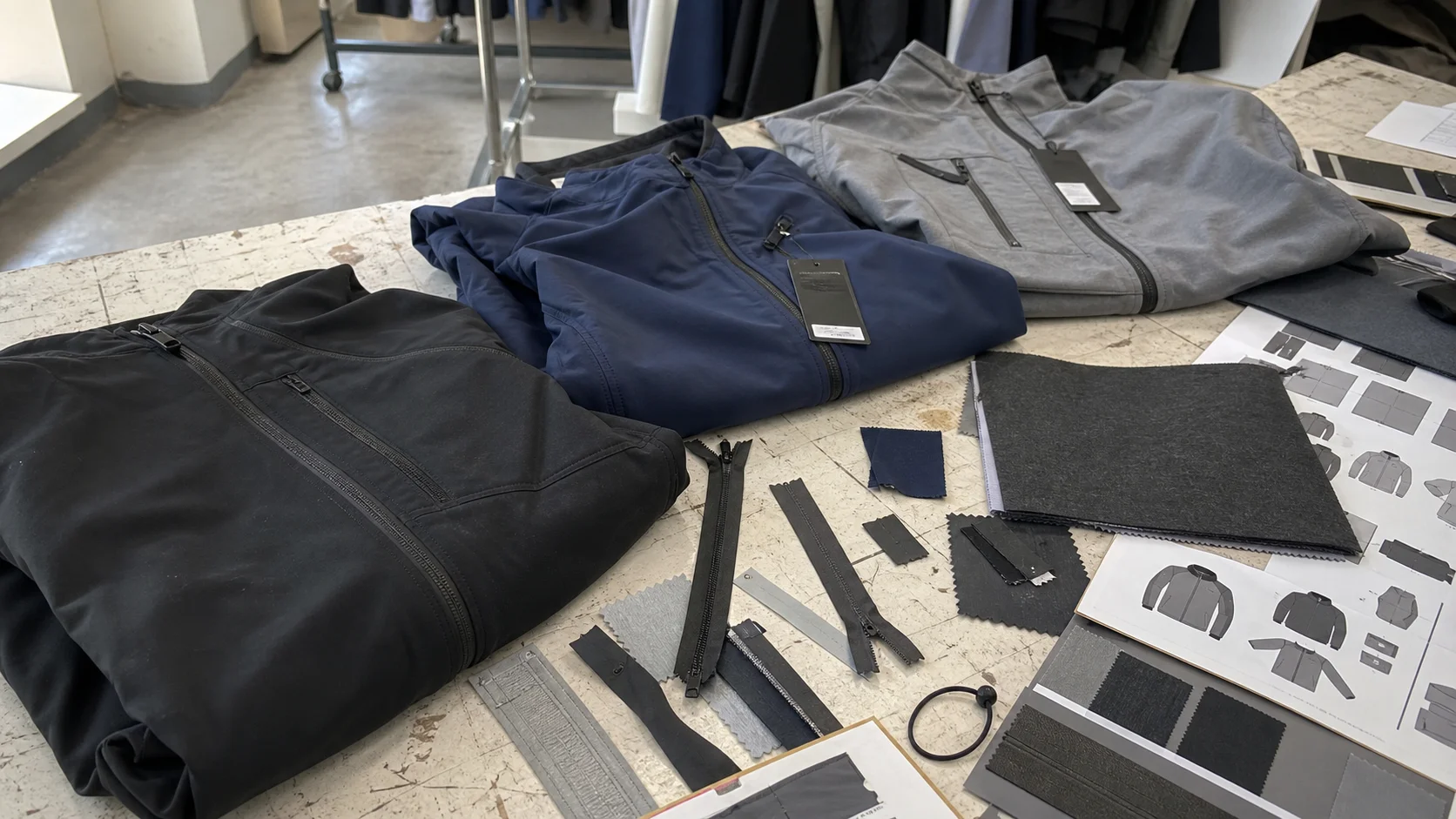
A product-specific outline for building a shrinkage control plan for softshell jackets used by cleaning crews, covering fabric behavior, laundering risks,...
Softshell Jacket Shrinkage Plan for Cleaning Crews - Fabrikn production reference
Softshell jackets used by cleaning crews face a harder wash-and-wear cycle than typical corporate outerwear. They are exposed to detergents, disinfectant overspray, moisture, abrasion from equipment, and frequent laundering. For a buyer sourcing uniforms, shrinkage control is not a small technical detail. It affects fit, mobility, wearer compliance, replacement cost, and the credibility of the uniform program.
A practical softshell jacket supplier shrinkage control plan for cleaning crews should define fabric selection, pre-production testing, size grading, wash-care labeling, bulk inspection, and post-delivery monitoring. The goal is not to promise “zero shrinkage.” That is unrealistic for most textile products. The better goal is controlled, measurable, and acceptable dimensional change after the wash conditions the garment will actually face.
This guide outlines how purchasing teams, uniform distributors, facility service companies, and apparel brands can structure a shrinkage control plan before placing bulk orders for cleaning crew softshell jackets.
Cleaning crews need outerwear that allows bending, reaching, lifting, and moving between indoor and outdoor areas. A softshell jacket that shrinks across the chest, sleeve length, or hem can quickly become uncomfortable. If the garment tightens after several washes, workers may stop wearing it or request replacements earlier than planned.
For B2B uniform buyers, shrinkage becomes a cost issue. A few percent of uncontrolled shrinkage across several hundred or several thousand jackets can create size complaints, uneven appearance across teams, and unnecessary replenishment orders. It can also complicate stock planning because workers who originally fit medium may need large after laundering, while the garment specification says otherwise.
Cleaning crews are also more likely to wash garments frequently. A jacket issued to a corporate office employee may be washed occasionally. A jacket used by a janitorial or facilities team may be washed weekly or even more often, depending on the work environment. That means shrinkage performance must be assessed over repeated cleaning cycles, not just one laboratory wash.
A reliable shrinkage plan starts with the real-use laundering conditions. If the buyer specifies only a fabric weight and logo placement, the supplier has too much room to make assumptions about washing temperature, drying method, and dimensional stability.
Softshell jackets are usually made with woven or knitted outer fabrics bonded to fleece, microfleece, jersey, or membrane layers. Common compositions include polyester-spandex, polyester mechanical stretch, polyester-cotton blends, and bonded polyester fleece. Each construction behaves differently during washing, drying, steaming, cutting, and sewing.
Most cleaning crew softshell jackets are selected for comfort, water resistance, wind resistance, and easier care. Polyester-rich fabrics generally have better dimensional stability than natural fiber blends, but they are not automatically shrink-proof. Bonding quality, heat setting, elastane content, fabric relaxation, and tumble drying conditions all influence final garment measurements.
The main sourcing tradeoff is simple: more comfort features often mean more testing responsibility. Stretch, bonded layers, membranes, brushed backs, and special finishes can all improve wearer satisfaction, but they also add variables that may affect shrinkage and appearance after laundering.
A softshell jacket supplier shrinkage control plan should be written into the product specification, not discussed loosely after production starts. The plan needs clear limits, test methods, checkpoints, and responsibility for corrective action.
For cleaning crews, a practical plan usually includes:
A reasonable shrinkage tolerance for polyester-rich softshell jackets is often around 1% to 3% in key dimensions after standard domestic wash testing. Some programs may accept up to 5% if the garment is casual and the size grading allows it, but that is risky for uniforms where appearance and fit consistency matter. For cotton blends, higher shrinkage may appear unless the fabric is controlled and preshrunk.
Buyers should avoid vague wording such as “must not shrink.” A better specification says: “Maximum dimensional change after three wash cycles at 30°C line dry: length 3%, chest width 2%, sleeve length 2%.” If tumble drying is expected, the test must include it. If crews use hot drying despite the care label, the buyer should decide whether to design for that reality or train the end user to avoid it.
Fabric is the starting point of shrinkage control. Once the wrong fabric is selected, later production controls can only reduce the damage. They cannot fully correct unstable material.
For cleaning crew jackets, buyers typically balance cost, durability, warmth, weather resistance, washability, and logo compatibility. A lower-priced fabric may look acceptable during sampling but perform poorly after repeated laundering. The risk is higher when the fabric has not been properly heat-set, relaxed, or tested after bonding.
Polyester mechanical stretch can be a sensible option when the buyer wants mobility but wants to avoid some of the risks linked to elastane. Spandex improves comfort, yet it can be sensitive to high heat and harsh laundering. If a cleaning company cannot control drying temperatures, a non-spandex fabric may be the safer choice.
Fabric also needs enough abrasion resistance for janitorial work. Jackets may rub against carts, vacuum straps, bins, keys, and tool belts. A fabric that controls shrinkage but pills heavily after two months is still a poor purchase. Shrinkage testing should be reviewed with pilling, seam strength, colorfastness, and appearance retention.
A shrinkage control plan needs a defined test method. Without it, the supplier and buyer may use different wash temperatures, drying methods, detergent types, or measurement procedures. That creates avoidable disputes.
Common textile test references include ISO, AATCC, and GB methods, depending on market and buyer requirements. The exact method should be selected based on the sales region, care label, and intended laundering conditions. For domestic-style washing, buyers often evaluate dimensional change after machine washing and line drying or tumble drying. For commercial laundry exposure, the test protocol may need to be stricter.
The buyer should specify the number of wash cycles. One wash cycle catches major problems, but it may miss progressive shrinkage or surface changes. Three cycles are more informative for uniform programs. Five cycles may be useful for high-frequency laundering programs, especially when the garment is expected to remain in service for a full season or longer.
Measurement points should be consistent. For jackets, key points usually include center front length, back length, chest width, bottom hem width, sleeve length, shoulder width, and cuff opening. If the jacket has stretch panels, raglan sleeves, side inserts, or elastic binding, those areas should be reviewed separately.
Sample approval is where many shrinkage problems should be caught. A jacket can look right before washing and still fail after laundering. Buyers should not approve fit from an unwashed sample unless the shrinkage test has already been passed and documented.
A sensible approval process includes several stages.
The supplier should submit fabric details before making the full sample set. At this stage, the buyer should check composition, weight, color, backing, stretch, finish, and available test reports. Test reports should be treated as useful screening documents, not final proof. Reports may apply to earlier lots or similar fabrics, so production-lot confirmation still matters.
The first sample checks overall style, construction, fit direction, pocket placement, collar shape, cuff design, and zipper selection. Shrinkage testing can begin here if the fabric is close to the intended bulk fabric. If the proto uses substitute fabric, it should not be relied on for shrinkage approval.
The fit sample should be measured before washing, washed according to the agreed protocol, dried, conditioned, and measured again. Any post-wash twisting, seam puckering, delamination, or uneven hem movement should be documented.
Size set approval is important for uniform programs because the buyer needs confidence that shrinkage does not distort the size range. A medium may pass, while an extra-large may show sleeve or hem issues due to pattern grading, cutting tension, or fabric relaxation.
The pre-production sample should use actual bulk fabric, trims, labels, zipper, pullers, reflective tape if used, and decoration method. This is the sample that should define the production standard. If embroidery, heat transfer, or patches are added, the supplier should verify that decoration processes do not affect local shrinkage, fabric distortion, or delamination.
Buyers sourcing custom uniform outerwear can review broader development support through Fabrikn’s services page. Technical clarity at the sampling stage usually reduces the cost of corrections later.
Pattern engineering can reduce the commercial impact of shrinkage. It cannot rescue a poor fabric, but it can help the final garment land within acceptable measurements after washing.
For cleaning crew jackets, fit should allow layering and movement. A jacket that is too tailored may look sharp on a model but fail in actual work conditions. Cleaning staff may wear polo shirts, sweatshirts, or base layers underneath, depending on season and facility temperature. Shrinkage allowance should be built into the pattern only after fabric shrinkage data is known.
If the fabric consistently shrinks 2% in length after three washes, the pattern may be adjusted to compensate. This must be done carefully. Oversizing the garment before wash can cause poor presentation at delivery, while underestimating shrinkage can cause fit failure after use. The buyer should decide whether the product must fit best out of the package, after the first wash, or after repeated laundering.
For uniform programs, the practical answer is usually: acceptable out of the package and still acceptable after repeated washing. That requires moderate fit tolerance, stable fabric, and realistic care instructions.
Bulk production controls are necessary because approved samples do not guarantee that every production piece will behave the same. Fabric lots, cutting conditions, sewing tension, pressing, and packing can all affect dimensions.
Softshell fabric should be relaxed before cutting, especially if it has stretch or has been tightly rolled. Cutting fabric immediately after unrolling can lead to size variation as panels relax later. Relaxation time depends on fabric type and mill handling, but buyers should ask suppliers to define their process. A typical expectation may range from several hours to 24 hours for stretch fabrics, depending on the material and production setup.
If multiple fabric lots are used, each lot should be tested or at least checked for weight, shade, stretch, and shrinkage risk. Mixing lots without control can create jackets that pass inspection visually but perform differently after washing. For large programs, lot traceability helps identify whether complaints relate to a specific fabric batch.
Softshell is thicker than many woven fabrics. Cutting too many plies at once can reduce accuracy, especially around curved panels, armholes, collars, and pocket openings. If panels are distorted during spreading or cutting, the finished jacket may show uneven measurements even before washing.
Stitch tension affects post-wash appearance. Tight seams can pucker after laundering. Loose seams may open under stress. For cleaning crew jackets, seam strength matters because workers move actively and may carry tools or supplies. Shrinkage control should be reviewed alongside seam quality, not separately.
Softshell fabrics, especially those with spandex or laminated layers, can be sensitive to heat. Excessive pressing may cause shine, shrinkage, delamination, or distortion. Heat-transfer logos can also create localized issues if temperature and dwell time are too high. Embroidery can be safer for some softshell fabrics, but it may affect water resistance and can create puckering if backing and stitch density are not managed.
Final inspection should include more than checking carton quantity and visible defects. For shrinkage control, the inspector should measure garments from different sizes, colors, and production lots. If possible, selected bulk pieces should be washed and remeasured before shipment, especially for new suppliers, new fabrics, or large programs.
Acceptance criteria should be clear. AQL inspection can cover general workmanship, but dimensional stability needs its own measurement and wash-test criteria. The buyer should define what happens if bulk shrinkage exceeds the approved limit. Options include reworking, rejecting affected lots, accepting with discount, or adjusting future production. For uniform programs, accepting unstable bulk goods can create bigger downstream costs than rejecting them early.
Inspection Item Suggested Control Commercial Risk if Ignored Pre-wash garment measurements Check against approved size specification and tolerance Incorrect size distribution and fit complaints Post-wash measurements Test selected pieces using agreed wash protocol Hidden shrinkage discovered only after delivery Panel twisting Review side seams, sleeves, front zipper alignment, and hem Garments look defective even if measurements are close Bonding stability Check bubbling, peeling, or layer separation after wash High replacement claims and poor wearer acceptance Decoration durability Wash-test embroidery, patches, or heat transfers Branding damage and inconsistent uniform appearanceMinimum order quantities for custom softshell jackets vary by fabric availability, color, trim selection, decoration, and factory setup. As a general sourcing reference, stock-fabric softshell jackets with custom branding may start around 100 to 300 pieces per style or color in some supply arrangements. Fully custom fabric, custom colors, special membranes, or private-label development may require 500 to 1,000 pieces or more per color. Some programs with complex trim packages or dye-to-match requirements may need higher quantities.
Buyers should treat MOQ ranges as planning guidance, not fixed rules. A supplier may accept a lower MOQ with a surcharge, simplified design, or stock material. The tradeoff is usually higher unit cost or fewer customization options. For cleaning crew uniforms, the best value often comes from using a stable stock softshell fabric and customizing fit, color accents, logo method, and functional details.
Lead time is not only production sewing time. Shrinkage control adds necessary steps before bulk cutting and shipment.
Stage Typical Time Range Notes Fabric sourcing and confirmation 1 to 3 weeks Longer if custom color, special finish, or membrane is required Proto and fit sampling 1 to 3 weeks Depends on pattern complexity and trim availability Wash testing and revisions 1 to 2 weeks per round Multiple wash cycles and conditioning time must be allowed Size set and pre-production sample 1 to 3 weeks Should use actual bulk materials where possible Bulk production 4 to 8 weeks Varies with quantity, season, and factory capacity Inspection and shipping 1 to 5 weeks Depends on inspection plan and transport modeA rushed timeline increases shrinkage risk because testing, fabric relaxation, or sample revision may be skipped. If the jackets are needed before a contract start date, buyers should lock the fabric and care protocol early. Late changes to color, lining, zipper, reflective tape, or logo method can trigger retesting.
For buyers planning a new cleaning crew uniform program, early supplier discussion is useful. General company background can be reviewed through Fabrikn’s about us page, and project requirements can be shared through Fabrikn’s contact page.
Care instructions must be realistic. A delicate care label may protect the supplier technically, but it may not fit cleaning crew operations. If workers or laundry teams are likely to use warm water and tumble drying, that risk should be considered during product development.
For many polyester softshell jackets, low-temperature washing and low-heat drying or line drying are safer. Bleach should usually be avoided unless the fabric and trims are specifically tested for it. Strong disinfectants, solvents, and industrial chemicals can damage color, finishes, bonding, and elastane. Cleaning staff may come into contact with such chemicals indirectly, so the uniform policy should include basic handling and washing guidance.
Care instructions should be translated into the languages needed for the workforce or laundry provider. A label alone may not be enough for large programs. A one-page uniform care sheet can reduce misuse and help protect service life.
A good supplier should be able to discuss shrinkage in practical terms. The buyer does not need a laboratory lecture, but the supplier should provide clear answers and documents. If the supplier cannot explain fabric behavior, wash testing, and bulk controls, the buyer should be cautious.
For a cleaning crew softshell jacket program, the buyer should prepare or request the following:
The strongest purchasing position is created before the purchase order is issued. Once bulk fabric is cut, shrinkage corrections become expensive and limited. Clear specifications, controlled samples, and realistic washing tests are cheaper than handling complaints after uniforms are distributed.
Every shrinkage control decision has a cost and usability tradeoff. A thicker bonded softshell may offer better warmth and structure, but it may require more careful cutting and washing. A spandex blend improves movement but raises heat sensitivity. A lower-cost fabric may meet the budget but fail repeated wash testing. A strict test protocol reduces risk but adds time to the development calendar.
For cleaning crews, the safest sourcing direction is usually a durable polyester-rich softshell with proven dimensional stability, moderate stretch, practical care instructions, and a fit that allows work movement. Fashion-led details should be secondary to service performance. A uniform jacket is successful when workers keep wearing it, supervisors see consistent appearance, and the buyer does not need to replace it too soon.
Buyers should also decide whether the jacket will be washed by individual workers or a centralized laundry provider. Individual washing creates variation. Central laundering gives more control, but may expose garments to stronger processes. The supplier’s shrinkage plan should reflect that decision.
A softshell jacket supplier shrinkage control plan for cleaning crews should be specific, measurable, and tied to real laundering conditions. The plan should start with fabric selection and continue through sample approval, pattern adjustment, bulk production, inspection, and care education.
The key purchasing judgment is to avoid approving appearance alone. A softshell jacket must be judged after washing. For cleaning crew uniforms, dimensional stability protects fit, worker comfort, and replacement budgets. Clear tolerances, multiple wash-cycle testing, fabric lot control, and final inspection are the practical safeguards that separate a stable uniform program from a costly complaint cycle.
Get a free quote from Fabrikn — your trusted B2B clothing manufacturer with 10+ years of experience. MOQ as low as 200 pieces.
Get a Free Quote →For polyester-rich softshell jackets, many buyers target around 1% to 3% dimensional change in key areas after defined wash testing. Some programs may accept higher limits, but uniform fit and appearance become riskier as shrinkage increases. The tolerance should be written by measurement point, such as chest, sleeve length, and body length.
Yes. At minimum, fit samples and pre-production samples should be measured before and after washing. For cleaning crew programs, testing after three wash cycles is more useful than a single wash because the jackets are likely to be laundered frequently.
Polyester softshell usually has better dimensional stability than cotton-rich fabrics, but it can still shrink or distort. Heat setting, bonding quality, elastane content, drying temperature, and garment construction all affect results.
Spandex softshell can be suitable when mobility is important. The tradeoff is higher sensitivity to heat and laundering conditions. If workers may use hot dryers or harsh wash cycles, polyester mechanical stretch may be a safer alternative.
MOQ depends on customization level. Stock-fabric programs with logo decoration may start around 100 to 300 pieces in some sourcing arrangements. Fully custom fabric, custom colors, or special trims may require 500 to 1,000 pieces or more per color.
A realistic development and production timeline may range from 8 to 16 weeks, depending on fabric availability, sampling rounds, wash testing, bulk quantity, inspection, and shipping. Rushed orders carry higher shrinkage and quality risks if testing is skipped.
Pattern adjustments can compensate for predictable and consistent shrinkage. They cannot fully solve unstable fabric, poor bonding, or uncontrolled laundering. Fabric testing must come first, then pattern allowance can be set based on actual data.
The biggest risk is approving finished measurements before shipment without checking post-wash behavior. Jackets may look correct in the carton but shrink, twist, pucker, or delaminate after laundering. Selected bulk wash testing reduces that risk.