
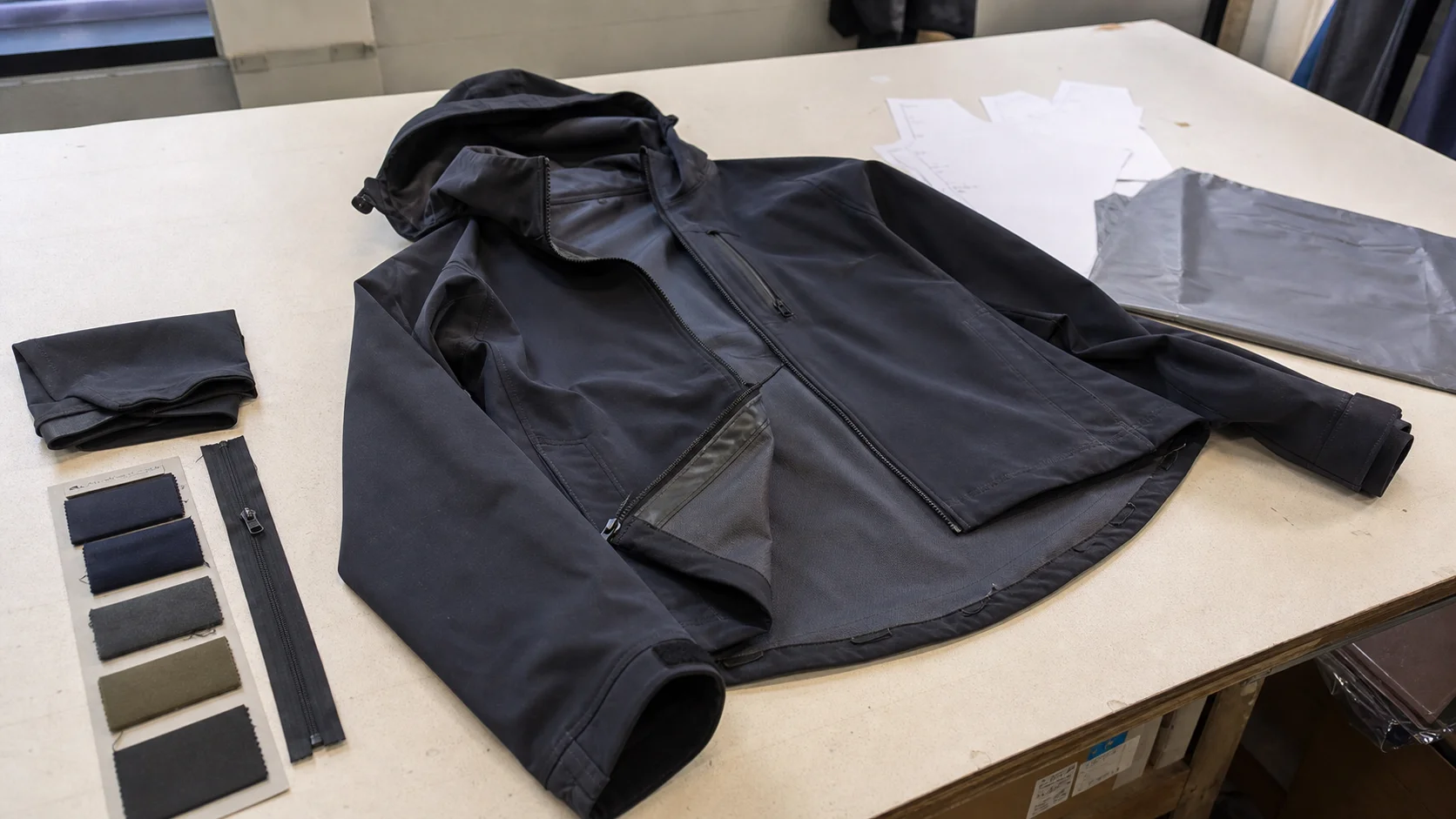
A product-specific outline for evaluating softshell jacket wash test results, durability, branding retention, and field-readiness for security contractor...
Softshell Jacket Wash Test Review for Buyers - Outerwear & Jackets manufacturing guide
A softshell jacket wash test review is not a cosmetic exercise for security contractors. It is a buying control. Security teams wear jackets for long shifts, frequent outdoor posts, vehicle patrols, event access points, warehouse gates, and mixed indoor-outdoor duty. The jacket has to look uniform, resist light weather, hold its shape, and survive repeated laundering without seam twisting, fabric delamination, zipper failure, or logo damage.
For buyers sourcing outerwear for security contractors, the wash test answers a practical question: will this jacket still look professional after real use? A jacket that performs well during a showroom fitting can fail after five washes if the fabric is poorly bonded, the zipper tape shrinks at a different rate from the shell fabric, or the reflective print starts cracking. Those failures create replacement cost, complaints from supervisors, and inconsistent branding across a team.
Security contractor jackets sit between corporate uniform outerwear and workwear. They are not usually specified like heavy-duty construction jackets, yet they face more stress than promotional softshells. That middle position is where buyers often get caught. A low-cost softshell may pass a basic visual check, but washing exposes weak lamination, poor dye fixation, unstable interlining, and cheap trims.
The best purchasing approach is to test early, test the exact construction, and review the jacket after multiple laundering cycles before confirming bulk production. A proper wash test should cover fabric stability, water repellency, colorfastness, dimensional change, seam appearance, zipper function, printed or embroidered branding, reflective details, pocket shape, and wearer comfort.
Buyers developing a security uniform program can use wash testing alongside fit approval, fabric approval, and pre-production sample review. If internal teams need sourcing support, technical specification development, or production coordination, Fabrikn outlines relevant manufacturing support on its services page.
A softshell jacket wash test should not only confirm that the garment can be washed. It should prove that the garment remains fit for service after washing. That distinction matters. A jacket may technically survive laundering while losing the qualities that made it suitable for security work.
For security contractors, the jacket also needs to protect brand presentation. Guards working at front desks, retail entrances, hospitals, office towers, industrial gates, and events are visible representatives of both the contractor and the client site. A washed-out black jacket or peeling logo can damage perceived professionalism even if the garment is still wearable.
The purchasing judgment is simple: a security softshell should not be approved for bulk order until the washed sample looks close enough to the unwashed approval sample to maintain uniform consistency across the team.
Buyers should define pass and fail criteria before testing begins. Vague wording such as “good after wash” leaves too much room for dispute. Better criteria include measurable shrinkage limits, visual rating expectations, trim function checks, and branding durability requirements.
Test Area Typical Buyer Expectation Common Fail Point Dimensional stability Within about 3% shrinkage or growth, depending on fabric and tolerance Body length shortens, sleeve length changes, zipper waves Colorfastness No obvious fading or staining after washing Black turns dull, contrast trims bleed, lining stains shell Lamination No bubbling, peeling, or separation Bonded fleece separates from shell near seams or elbows Branding Logo remains readable and securely attached Heat transfer cracks, embroidery puckers, reflective print lifts Trim function All zippers and closures operate after wash Zipper tape shrinks, puller coating chips, hook-and-loop curlsA useful wash test needs consistency. Buyers should avoid judging one sample washed casually at home unless the garment is only intended for consumer-style care. Security uniforms are often laundered by staff individually, by facility laundry, or through a managed uniform service. The test protocol should reflect the most likely real washing environment.
One jacket is rarely enough. A better review uses at least three samples from the same pre-production batch: one unwashed control, one washed according to the care label, and one washed under a slightly harsher condition. For larger uniform rollouts, five to ten samples across sizes can reveal grading and construction problems that a single medium sample will not show.
If the program includes men’s and women’s fits, test both. A women’s shaped softshell may react differently at princess seams, waist panels, or curved zipper areas. If the security contractor uses extended sizes, include a large size or plus size because seam stress and panel distortion can be more visible.
Three wash cycles are a minimum screening. Five cycles are more useful for buyer approval. Ten cycles give a stronger indication of uniform program durability, especially where jackets will be issued for one or more seasons. A jacket that fails at three cycles should not be treated as a small defect. It is a signal that fabric, lamination, trim, or construction needs correction before production.
A care label that is too delicate may protect the supplier but hurt the buyer. Security contractors cannot rely on every staff member to hand wash outerwear, reshape it, and dry it flat. If the jacket requires unusually careful handling, it may not be practical for field use.
Machine washable, low-maintenance instructions are usually preferable. Dry cleaning is rarely ideal for standard security softshell programs because it increases cost and lowers compliance. Buyers should insist that the care label matches the actual wash test method. If the garment only passes with gentle hand washing, that should be stated clearly before purchase decisions are made.
Most security contractor softshell jackets use polyester or polyester-spandex face fabric bonded to microfleece, sometimes with a TPU or PU membrane between layers. Common weights range from about 280 gsm to 360 gsm for general uniform use. Lighter fabrics can improve comfort and reduce cost, while heavier bonded fabrics feel more substantial and may offer better warmth. Weight alone does not guarantee durability. Bond quality and finishing are more important during laundering.
Lamination failure is one of the most important risks in softshell outerwear. Buyers should check the jacket under strong light after wash. Look for bubbling on chest panels, sleeve bends, elbow zones, pocket openings, and seam allowances. Small bubbles can grow after repeated use, especially if jackets are frequently washed or left in warm vehicles.
Delamination near heat-applied logos is another concern. Heat transfer application can disturb bonded fabrics if temperature, pressure, or dwell time is not controlled. The supplier should test the exact logo method on the exact fabric, not only on a loose swatch. Loose fabric tests do not always predict finished garment results because seams, zippers, and shaped panels affect heat distribution.
A softshell for security use does not always need full waterproof performance, but it should resist light rain and drizzle. Buyers should separate water resistance from waterproofing. Many softshells are water-repellent, not seam-sealed waterproof jackets. If a site requires guards to stand outside for long periods in rain, a rain jacket or waterproof shell may be more appropriate.
A practical wash review includes a simple spray check after each wash checkpoint. Water should bead reasonably on the face fabric. If it immediately wets out after three washes, the DWR finish may be too weak for the intended use. Buyers can request higher-grade water-repellent finishing, but cost and regulatory considerations may increase. C0 finishes are common in markets moving away from fluorinated chemistries, though performance expectations should be confirmed through testing.
Softshell jackets often fail at components before the main fabric fails. Security contractors need pockets that hold radios, gloves, notepads, phones, access cards, and keys. Zippers and stitching receive daily stress. A wash test review should therefore include every trim and construction detail, not just fabric appearance.
Buyers should specify reliable coil or molded zippers based on use and budget. Reverse coil zippers create a clean uniform look and are common on softshell jackets. Molded zippers may feel more rugged but can look heavier. For security contractors, the front zipper should run smoothly after washing without waves, catching, or tooth distortion.
Watch zipper tape shrinkage. If zipper tape shrinks more than the shell fabric, the front opening can ripple. If the shell shrinks more than the zipper, the front may twist or bow. This is especially visible on black jackets and on jackets worn open over security shirts. It is not a minor appearance issue; it makes the uniform look cheap.
Pockets should be checked after wash for seam puckering, zipper distortion, lining pull-out, and corner stress. Security staff often overload pockets, so bartacks at pocket ends are valuable. If the jacket includes a chest pocket for a phone or ID item, test whether the pocket still lies flat after laundering. A curling pocket flap or wavy zipper will be noticeable on duty.
Cuff and hem details affect comfort and appearance. Elastic binding can shrink or ripple after washing. Hook-and-loop cuff tabs can curl, collect lint, or lose grip. Drawcord hems can create uneven gathering if cord tunnels shrink. Collars should stand cleanly after washing, particularly for jackets worn in customer-facing posts.
Security contractors often prefer a clean collar that can be worn up outdoors or down indoors. A collar that collapses after washing may still be wearable, but it reduces perceived quality. If the jacket is intended for supervisory staff or premium accounts, collar structure deserves extra attention.
Thread selection matters more than many buyers expect. Polyester thread is normally preferred for softshell outerwear because it has good strength and wash resistance. Stitch density should be balanced. Too few stitches can reduce strength; too many can perforate laminated fabric and create seam weakness.
After wash, inspect underarms, side seams, shoulder seams, pocket openings, collar attachment, and sleeve hems. Loose threads are common in low-cost production, but seam slippage or broken stitching is more serious. If seams open during sample wash testing, bulk approval should pause until the construction is corrected.
Security contractors usually buy black, navy, charcoal, or dark grey softshell jackets because these colors match uniforms and hide dirt. Dark colors also show fading, lint, seam shine, and shade inconsistency. A wash test review should judge the jacket from both close range and normal viewing distance.
Black softshell fabric is not always equal across mills. Some blacks have a blue cast, some have a red cast, and some turn dusty after washing. Buyers should compare the washed sample against the approved lab dip or original sample under consistent lighting. If the program includes trousers, polos, caps, or tactical shirts, shade matching becomes more important.
Contrast trims can create problems. A black jacket with grey zipper tape, reflective piping, or colored logo details may look sharp when new, but each component must wash consistently. Zipper tape fading faster than shell fabric is a common visual defect. Reflective trims can also dull or crack, especially when they are low-grade or poorly applied.
Pilling can make a softshell look old quickly. Wash testing may reveal pilling at cuffs, underarms, side panels, and areas where duty belts, radios, or bag straps rub. A basic wash test does not fully replace abrasion testing, but it helps identify early surface weakness.
For security contractors, the most vulnerable zones are elbows, side waist, lower front body, and shoulder areas. Staff may wear jackets while seated in vehicles or while carrying equipment. If the jacket pills after only a few washes, it is unlikely to maintain a professional appearance over a season.
Security jackets often require left-chest logos, back prints, sleeve patches, reflective “SECURITY” markings, removable ID panels, or embroidered badges. Each decoration method has different wash risks.
Buyers should approve decorated samples, not blank jackets only. A blank softshell passing wash testing does not prove the branded uniform will pass. Decoration changes the garment. Heat, needle penetration, adhesives, backing, and reflective films all introduce new failure points.
A softshell jacket for security contractors should be judged against duty conditions. A jacket for a lobby concierge team may prioritize clean appearance and branding. A jacket for parking patrol or warehouse perimeter work needs stronger weather resistance, pocket utility, and abrasion performance. Buying one jacket for every role can simplify procurement, but it may lead to compromises.
For guards moving between entrance doors, reception desks, loading bays, and vehicle checkpoints, breathability and comfort matter. A heavy waterproof jacket may be too warm indoors. A midweight softshell can be a better uniform layer because it looks neat and allows movement.
The wash test focus should be appearance retention, collar shape, logo durability, and fabric recovery. The jacket needs to look clean after frequent wear. Light water repellency is useful, but full storm protection may not be necessary.
Outdoor security teams need more practical performance. A softshell may be suitable for mild weather, but buyers should not oversell it as rainwear unless waterproof specifications are properly tested. For event security, reflective details and back identification may be required. Those markings must be wash tested because reflective transfer failure is highly visible.
Outdoor posts also increase pocket and zipper stress. Radios, gloves, hand warmers, flashlights, and access devices are commonly carried. Wash testing should be paired with pocket load review and zipper cycling. A jacket that washes well but has weak pocket construction may still be a poor buy.
Vehicle patrol creates repeated seatbelt abrasion, seated waist compression, and sleeve movement. Jackets may also be left in vehicles, exposed to heat and moisture. This can accelerate bonding failure and odor retention if the fabric quality is weak.
For this use case, buyers should check fabric recovery after washing and wearing. A stretch softshell can improve comfort, but it must recover shape. If the hem flares, elbows bag out, or front zipper waves after wash, the jacket will look tired quickly.
Some security contractors need high-visibility panels, reflective tape, or ANSI-style visibility performance depending on region and worksite. A standard black softshell with small reflective piping is not the same as certified high-visibility outerwear. If compliance is required, buyers need the correct standard, certified materials, and test documentation from qualified labs.
Wash durability becomes critical for reflective materials. Reflective tape can lose brightness after laundering, and reflective heat transfers may crack at stretch points. Buyers should request wash-cycle performance data for reflective components and verify that claims match the intended market.
A structured scorecard helps prevent emotional buying based on the first sample impression. The jacket should be rated before and after wash. Buyers can use a 1-to-5 scale, where 5 means bulk-ready and 1 means unacceptable. The goal is not to make the process bureaucratic. The goal is to document defects clearly enough that suppliers can correct them.
Review Area Score 5 Score 3 Score 1 Fabric appearance No visible change, no pilling, no bubbling Minor surface change, still acceptable Pilling, delamination, distortion, or obvious fading Measurements Within agreed tolerance Slightly outside tolerance but wearable Major shrinkage or growth affecting fit Zippers Smooth function, no waviness Minor waviness, still functional Catching, twisting, broken pullers, or severe rippling Branding Clean, flat, readable, secure Minor edge lift or puckering Cracking, peeling, unreadable logo, severe puckering Professional appearance Suitable for client-facing duty Acceptable for back-of-house or lower-visibility use Not suitable for uniform issueIf the jacket scores well on appearance but poorly on water repellency, it may still be suitable for indoor-outdoor security posts. If it fails lamination, zipper stability, or branding durability, it is not a safe bulk purchase. Those failures tend to worsen in production and field use.
If only one defect appears, the supplier may be able to correct it with a trim change, revised sewing tension, better heat-transfer settings, or improved fabric finishing. If several defects appear together after five washes, the buyer should consider a different fabric platform or supplier rather than trying to patch every issue.
Wash testing affects the buying calendar. Buyers should not leave it until the final week before production. A practical sourcing timeline builds in time for fabric approval, fit sample, decorated sample, wash testing, pre-production sample, bulk production, inspection, and shipping.
MOQ depends on fabric availability, color, trims, size range, decoration, and whether the supplier is using stock softshell fabric or custom-developed material. For general B2B sourcing, buyers may see the following typical ranges:
Lower MOQs can be useful for pilot programs, but they may increase unit cost and limit fabric options. Higher MOQs usually give buyers more control over color, finish, trims, and packaging. The tradeoff is inventory risk. Security contractors with uncertain headcount should avoid over-customizing unless they have stable demand.
A disciplined approval process reduces the chance of wash test surprises. The buyer should not skip from a rough prototype to bulk production.
Buyers can discuss supplier capabilities, sampling support, and program requirements through Fabrikn’s contact page when planning a custom or semi-custom outerwear project.
Softshell jacket lead times vary. A simple stock-fabric program may move faster than a fully custom jacket, while a decorated, multi-size, color-controlled uniform program needs more time. As a cautious planning range, sampling may take 2-4 weeks depending on materials and revisions. Bulk production may take about 45-90 days after final approval, with longer timelines possible during peak seasons or when custom fabric lamination is required.
Wash testing adds calendar time because multiple cycles and review checkpoints cannot be rushed without reducing confidence. If the buyer requires ten wash cycles, build that time into the sampling phase. Air drying can extend the schedule. Lab testing may also add time if third-party reports are required.
A passed sample does not guarantee passed production. Bulk inspection should check whether the factory reproduced the approved garment consistently. Security contractor uniforms are often reordered, issued across branches, and worn together in teams. Inconsistency becomes visible quickly.
Softshell fabrics can be difficult to sew cleanly because they are thicker than shirt fabrics and often slightly elastic. Poor feeding can cause seam waviness. Incorrect needle selection can create holes or skipped stitches. Excessive pressing or heat can damage lamination. Inconsistent cutting can cause panel twisting after wash.
Decorated security jackets create another inspection risk. Back “SECURITY” markings must be centered, level, and readable. Reflective prints should not be scorched, cloudy, cracked, or misaligned. If the jacket includes removable patches, the hook-and-loop position needs to match across sizes.
Inspection should not only look at one perfect sample from the top of the carton. Pull garments from multiple cartons, sizes, and production bundles. If defects cluster in one size or one production lot, buyers need to understand whether it is an isolated issue or a systemic problem.
For security contractors, the safest softshell jacket purchase is a midweight polyester or polyester-spandex bonded softshell with proven wash stability, reliable zipper trims, durable branding, and a realistic care label. Buyers should prioritize garment stability and professional appearance over unnecessary feature loading.
A jacket with too many pockets, contrast panels, reflective trims, and adjustment systems can look functional but introduce more wash failure points. A cleaner design with strong fabric, stable construction, and high-quality identification often performs better for uniform programs. The tradeoff is that simplified jackets may not satisfy specialized patrol teams that need extra storage or high-visibility performance. In that case, buyers should separate the program into standard duty and outdoor patrol versions rather than forcing one jacket to do every job.
For most security contractors, a 300-330 gsm bonded softshell with moderate stretch, durable water-repellent finish, reverse coil front zipper, zippered hand pockets, optional chest pocket, clean collar, adjustable hem, and tested logo application is a practical choice. It balances cost, comfort, appearance, and durability. The buyer should require at least five wash cycles before approval and should review one decorated sample after washing.
Upgrade the specification when guards work outdoors for long periods, represent premium client sites, carry equipment, or need high-visibility identification. Better zippers, stronger pocket reinforcement, higher-performing reflective materials, and more robust fabric finishing may increase cost but reduce replacement frequency.
A softshell is not the right answer for every security program. If guards stand in heavy rain, work in freezing conditions, or require certified high-visibility protection, the buyer may need waterproof jackets, insulated parkas, or compliant hi-vis outerwear. A softshell can be part of the layering system, but it should not be mis-specified as all-weather protection unless testing supports that claim.
Buyers reviewing a manufacturer or sourcing partner should also consider communication quality, documentation discipline, and technical understanding. A supplier that cannot explain fabric composition, lamination, trim quality, wash care, and inspection standards is a risk for uniform programs. Fabrikn provides company background and sourcing context on its about page, which may help buyers evaluate fit for apparel manufacturing support.
Final buying judgment: approve the softshell jacket only when the washed, decorated, production-ready sample still looks like a security uniform, not like a worn promotional jacket.
Get a free quote from Fabrikn — your trusted B2B clothing manufacturer with 10+ years of experience. MOQ as low as 200 pieces.
Get a Free Quote →Three wash cycles can screen obvious problems, but five cycles are a stronger minimum for buyer approval. Ten cycles are better for larger security contractor rollouts or programs where jackets will be issued for a full season or longer.
Common failures include fabric delamination, zipper waviness, seam puckering, logo peeling, reflective print cracking, and fading on dark colors. Delamination and branding failure are the most serious because they usually worsen with use.
Softshell jackets are suitable for light rain, wind, and mixed indoor-outdoor duty. Waterproof jackets are better for guards standing outside in heavy or prolonged rain. Buyers should not treat a standard softshell as waterproof unless the fabric, seams, and finished garment are tested for that level of performance.
A practical range for general security use is about 280-360 gsm. Many buyers choose around 300-330 gsm for a balance of comfort, warmth, and durability. Outdoor patrol teams may need heavier or more technical constructions depending on climate.
Yes, but they must be tested on the exact finished garment fabric. Heat transfer logos can peel, crack, or disturb lamination if the transfer film, temperature, pressure, or dwell time is wrong. Decorated wash testing is essential.
Typical MOQs may start around 300-500 pieces per color for stock fabric programs. Custom colors, custom fabric, special trims, or complex branding often push MOQs closer to 800-1,500 pieces per color. Exact minimums depend on supplier, fabric mill, and trim availability.
Buyers should check measurements, fabric shade, zipper function, seam quality, logo placement, reflective details, care labels, size labels, packaging, and carton ratios. Random wash verification can be useful for high-risk orders.
Embroidery is often durable, but it can pucker softshell fabric if tension and backing are not controlled. Heat transfers can look cleaner for large back identification, but they need strong adhesion and wash resistance. The better choice depends on logo size, fabric construction, appearance target, and wash test results.
Machine wash cold or warm with mild detergent and line dry or low tumble dry is usually more realistic than hand wash or dry clean only. The care label should match the tested method and the likely behavior of uniform wearers.
Reject or pause approval if the jacket shows delamination, major shrinkage, severe zipper distortion, logo failure, reflective cracking, seam opening, or obvious fading after limited wash cycles. Minor correctable issues can be revised, but structural failures should not move into bulk production.