
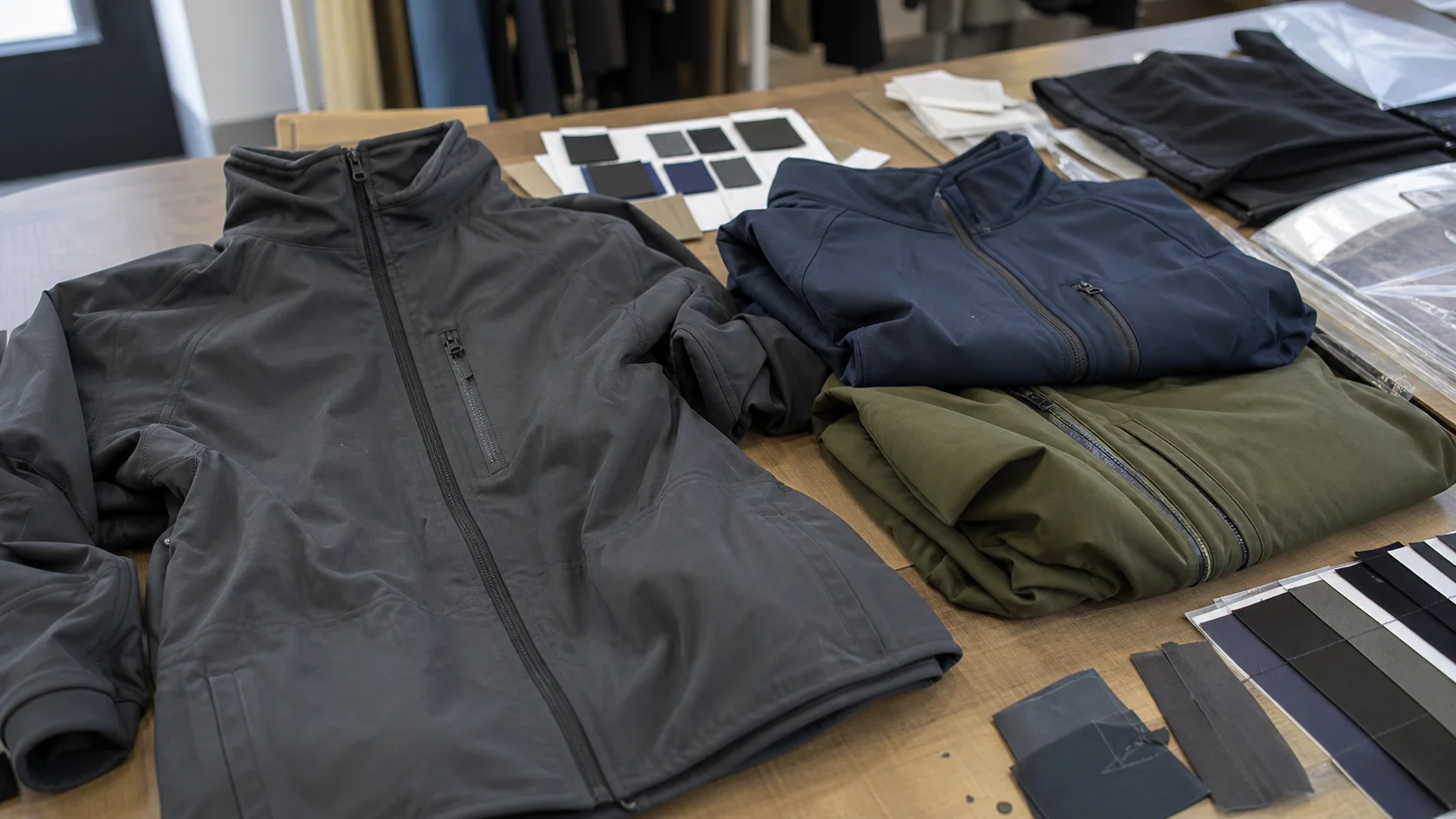
A practical SEO outline for buyers ordering softshell jackets in bulk for cleaning crews, covering fabric specs, decoration methods, sizing, safety...
Softshell Jackets Bulk Order Guide for Cleaning Crews - Outerwear & Jackets manufacturing guide
Buying softshell jackets in bulk for cleaning crews looks simple until the first delivery arrives with the wrong fabric weight, weak zippers, poor logo placement, or sizes that do not match the workforce. For cleaning companies, facilities contractors, janitorial service providers, and property maintenance teams, outerwear is not just uniform branding. It affects comfort during early starts, night shifts, loading dock work, waste handling, exterior window support, and movement between indoor and outdoor zones.
This softshell jacket supplier bulk order guide for cleaning crews focuses on practical sourcing decisions: fabric specification, fit, durability, MOQ expectations, sampling, lead times, decoration, inspection risks, and purchasing tradeoffs. The goal is not to overbuy a premium jacket that staff will not wear. The better target is a reliable, repeatable jacket program that keeps crews identifiable, protected, and comfortable across different work sites.
Softshell jackets are a strong outerwear choice for cleaning crews because they sit between lightweight fleeces and fully waterproof rain jackets. A typical softshell gives wind resistance, moderate water repellency, stretch, and a clean uniform appearance. That combination matters for crews moving between lobbies, parking areas, loading bays, service corridors, schools, hospitals, malls, office buildings, hotels, and residential complexes.
Cleaning teams rarely stay in one temperature zone. A crew may start outside, enter a heated building, handle supplies, push carts, remove waste, and move back outside again. Heavy insulated jackets can become too warm. Thin polos or sweatshirts may look unprofessional and offer little protection. A midweight softshell is often the more wearable option.
Softshell jackets also present logos better than many fleece or padded jackets. The surface is smoother, making embroidery and heat transfer easier to control. For companies that need staff to look consistent across multiple job sites, this is a practical advantage.
Purchasing judgment: softshell jackets are best for cool, windy, and mildly wet conditions. They are not a substitute for certified rainwear, chemical-resistant PPE, or high-visibility safety gear where those are required by the work environment.
For cleaning crews, the most common use cases include early morning building entry, exterior trash removal, parking lot support, post-construction cleaning, facility rounds, supervisor uniforms, and seasonal staff kits. In colder regions, a softshell can also work as a mid-layer under a heavier coat.
A softshell jacket supplier for cleaning crews should understand uniform repeatability, not just one-time promotional merchandise. Cleaning companies often reorder in waves as contracts change, staff rotate, or new sites open. The supplier needs to support consistent fabric, colors, trims, and sizing across multiple production runs.
Start by separating stock uniform suppliers from custom apparel manufacturers. A stock supplier can be suitable when speed and low quantities matter most. A custom manufacturer is better when you need specific fabric weight, brand colors, pocket layout, reflective trim, private label, extended sizing, or controlled repeat orders.
For businesses that need custom production, development support, or a managed apparel program, it is worth reviewing the manufacturing and sourcing scope offered through Fabrikn services. A supplier should be able to translate operational needs into technical garment specifications before quoting.
Be cautious with suppliers that quote immediately without asking about work environment, cleaning chemicals, climate, branding, wash frequency, or fit requirements. A jacket for a hotel housekeeping supervisor is not the same as a jacket for a waste removal crew working around loading docks.
Fabric choice drives most of the jacket’s performance, cost, comfort, and durability. For cleaning crews, the best specification is usually a polyester-rich softshell with stretch, a bonded fleece or microfleece backing, and a durable water-repellent finish. The exact fabric depends on climate and budget.
Most commercial softshell jackets use polyester, spandex, or elastane blends. Polyester provides durability and colorfastness. Spandex improves movement, especially when staff bend, lift, reach, and carry supplies. A fleece-backed interior adds warmth without the bulk of padding.
A practical specification for many cleaning companies is a 280-320 gsm polyester-spandex bonded softshell with microfleece backing. It gives enough warmth for shift starts and outdoor transitions while staying wearable during active work. For warmer regions, 220-260 gsm may be more suitable.
Many softshell jackets are described as water resistant, but this term is often misunderstood. A water-resistant softshell can handle light rain, mist, and short exposure. It should not be sold internally as waterproof unless the fabric, seams, zippers, and construction support that claim.
For bulk specifications, buyers may see water resistance values such as 3,000 mm, 5,000 mm, or 8,000 mm. Breathability may be shown as 1,000 g/m²/24h, 3,000 g/m²/24h, or higher. These figures are useful for comparison, but lab numbers do not guarantee field performance after frequent washing, abrasion, and chemical contact.
Cleaning crews often work hard enough to build body heat. A highly weather-resistant softshell with poor breathability may feel clammy. A lighter breathable fabric may be more comfortable but less protective in rain. The correct choice depends on whether the crew spends more time moving indoors or standing outside.
Cleaning uniforms are exposed to detergents, disinfectants, bleach-based products, degreasers, and surface cleaners. Even when jackets are not used during direct chemical handling, sleeves and fronts may contact residues on carts, spray bottles, mop buckets, or storage shelves.
Ask the supplier about colorfastness to washing, rubbing, and perspiration. Dark navy, black, charcoal, and deep green are common for cleaning crews because they hide marks better than light colors. Bright brand colors can look strong on day one but may show stains and fading faster.
Purchasing judgment: if crews regularly use bleach or strong disinfectants, do not rely on dark softshell jackets to stay perfect. Specify care instructions, test fabric swatches, and consider darker heathered tones or replaceable outer layers for high-contact roles.
A cleaning crew jacket should be practical before it is decorative. Over-designed jackets cost more and may create snagging points. Under-specified jackets look cheap and may fail quickly. The right design is clean, durable, and easy to wear through an active shift.
Hoods are useful outdoors but may not suit every cleaning environment. In some facilities, hoods can interfere with visibility, headsets, or safety policies. Detachable hoods add cost and can be lost. If a hood is needed, specify whether it should be fixed, detachable, adjustable, or helmet-compatible. Most cleaning crews do not need helmet-compatible hoods unless they work in construction or industrial sites.
Reflective piping or reflective tape can improve visibility in parking lots, early morning shifts, or roadside facility work. That said, decorative reflective piping is not the same as certified high-visibility apparel. If the worksite requires ANSI, EN ISO, or another safety standard, source certified garments rather than adding reflective trim to a standard softshell.
Chest pockets can be useful for supervisors but may add cost and bulk. Sleeve pockets may look modern, but they are less relevant for most cleaning staff. Velcro-heavy designs can catch lint and lose grip after washing. For cleaning crews, simpler is often better.
Cleaning work involves reaching, bending, kneeling, pushing carts, lifting bags, and carrying supplies. A jacket that looks neat while standing still may pull across the shoulders during actual work. Request a fit sample and test arm movement before approving bulk production.
Unisex sizing can simplify purchasing, but it may not fit all staff well. Women’s fit options may be worth adding for larger, long-term uniform programs. If the supplier offers both men’s and women’s patterns, compare size charts carefully. A medium in one fit may not match a medium in another.
MOQ is one of the first commercial constraints in a softshell jacket bulk order. Typical MOQ ranges depend on whether the buyer chooses stock decoration, semi-custom production, or fully custom manufacturing.
These MOQ ranges are common reference points, not fixed rules. Some suppliers may accept lower MOQs with surcharges. Others may require higher quantities if fabric must be dyed, laminated, or custom finished. Multiple colors often increase MOQ because fabric and trims need separate sourcing and production planning.
For a cleaning crew program, do not order only the current headcount. Staff turnover, new hires, damaged garments, seasonal contracts, and size exchanges all require buffer stock. A sensible starting point is current headcount plus 10-20% extra units, adjusted by company growth and storage capacity.
Size planning is where many bulk uniform orders go wrong. Generic retail ratios may not match the workforce. If possible, collect staff sizes using the supplier’s actual size chart before confirming bulk production. Do not rely only on what employees usually wear in retail brands.
A common adult unisex size ratio for a mixed workforce might look like this:
Size Example Ratio Planning Note XS 3-5% Keep limited stock unless workforce data supports more. S 10-15% Often needed for smaller staff and fitted preferences. M 20-25% Usually a core size but should not be overestimated. L 25-30% Often one of the highest-volume sizes. XL 15-20% Important for comfort and layering. 2XL-4XL 10-15% Confirm availability and grading before order placement.This ratio should be treated as a starting framework only. Cleaning companies with mostly field-based crews may need more XL and 2XL units because staff prefer room for movement or layering. Hospitality cleaning teams may choose a more fitted appearance for front-of-house visibility.
Purchasing judgment: size exchanges after delivery are expensive when garments are decorated. Approve the size chart, run a fit trial if possible, and order buffer stock in the sizes most likely to change.
Branding turns a softshell jacket into a uniform. For cleaning crews, the logo should be visible, durable, and not so large that it makes the garment uncomfortable or difficult to maintain. Common placements include left chest, right chest, upper back, sleeve, and sometimes lower front.
Embroidery is a common choice for cleaning company softshell jackets because it looks established and lasts through repeated wear. The supplier should test embroidery on the actual fabric, not a random swatch. Stretch softshell can pucker if the stitch density is too high. A large embroidered back logo may also reduce comfort and flexibility.
Heat transfer can be useful for detailed logos and larger back branding. It works best when the transfer type is matched to the fabric surface and care conditions. Ask for wash test guidance. If staff wash uniforms at home using high heat, harsh detergent, or tumble drying, low-quality transfers may fail early.
For help discussing a custom jacket program, artwork files, and order requirements, buyers can start through the Fabrikn contact page. Clear artwork and placement instructions reduce avoidable sampling delays.
Sampling is the main safeguard before money is tied up in bulk production. Skipping proper sample approval may save a week at the start and cost months later if the bulk order arrives with fit, logo, or fabric problems.
The pre-production sample is the most important checkpoint. Bulk production should not begin until this sample is approved in writing. The approval record should include photos, measurements, fabric details, logo placement, color references, and any allowed tolerances.
For cleaning crews, test the sample in realistic movement. Have wearers zip the jacket fully, reach forward, bend down, carry a supply box, push a cart, and move their arms overhead. Check whether the hem rides up, sleeves pull, or collar rubs. These issues are easier to fix before bulk cutting.
Lead time depends on order type, fabric availability, decoration method, production capacity, inspection requirements, and shipping method. Buyers should separate sample lead time from bulk production lead time. A quote that says “45 days” may refer only to production after approvals, not the full timeline from inquiry to delivery.
For stock jackets with logo decoration, delivery may be possible in 1-3 weeks depending on inventory and artwork approval. For fully custom softshell jackets, a safer planning window is often 8-14 weeks from confirmed specification, with more time needed for custom-dyed fabric or complex trims.
Seasonality matters. Outerwear orders placed close to autumn and winter can run into capacity pressure. If cleaning contracts require jackets before a cold season, buyers should start development well ahead of the first weather-driven demand.
Purchasing judgment: the cheapest freight plan can become expensive if jackets arrive after the season starts. Build the calendar backward from the required in-hand date, not from the production start date.
Softshell jackets have more quality risks than basic T-shirts or polos. The fabric is thicker, seams are bulkier, zippers carry more stress, and decoration can interact badly with stretch panels. A structured inspection plan is worth the effort, especially for large cleaning crew orders.
For cleaning crews, pay special attention to sleeve seams, pocket openings, zipper stops, and hem adjusters. These areas see regular stress during daily work. Poor zipper quality is one of the most common reasons jackets become unusable before the fabric itself wears out.
Bulk garments are normally inspected against approved measurement tolerances. For softshell jackets, a common tolerance might be around plus or minus 1 cm for smaller points and plus or minus 2 cm for larger body measurements, depending on the supplier’s standard and garment construction. The tolerance must be agreed before production.
Large differences in sleeve length or chest width can cause major fit complaints. If the order includes extended sizes, inspect those carefully. Grading mistakes often show up at the smallest and largest ends of the size range.
Decoration should be inspected after application and before packing. Embroidery may cause puckering, thread breaks, loose backing, or incorrect logo proportions. Heat transfers may show poor adhesion, scorching, shine marks, crooked placement, or color mismatch.
Bulk orders should include a clear reject standard. A logo placed 2 cm too low may seem minor at the factory, but it will be visible when staff stand together. Uniform programs depend on consistency.
Softshell jacket pricing varies widely because the garment has many cost drivers: fabric weight, membrane type, stretch content, zipper quality, pocket construction, decoration, order quantity, color count, packaging, inspection, and freight. A buyer comparing quotes should not treat all softshell jackets as equal.
The lowest quote is not always the best value. A cheap softshell with weak zippers, poor water repellency, and inconsistent sizing may need replacing sooner. A premium jacket may be unnecessary for staff who wear it only during short outdoor transitions. The right purchase balances wear frequency, brand visibility, climate, and replacement budget.
For many cleaning companies, the best-value order is a midweight black, navy, or charcoal softshell with left chest branding, zippered hand pockets, adjustable cuffs, and optional back logo for supervisors or site leads. It is professional, repeatable, and easier to manage than a highly customized design with many trim variations.
Care instructions are not a minor detail. Cleaning crews may wash jackets frequently, and improper washing can reduce water repellency, damage transfers, shrink backing materials, or weaken trims. The care label should match the actual fabric and decoration method.
Common care guidance for softshell jackets includes cool or warm machine wash, mild detergent, no bleach, no fabric softener, low tumble dry or line dry, and no ironing directly over logos. Fabric softener can reduce water-repellent performance. Bleach can damage color and elastane. High heat can affect heat transfers and bonded layers.
If jackets are laundered by the company, provide written care instructions to the laundry provider. If staff wash them at home, include simple care guidance during uniform issue. A durable jacket can fail early when washed like towels or heavy work pants.
Cleaning companies should track who receives each jacket, by size and date. This helps with replacement planning and discourages unnecessary reissues. For multi-site operations, consider carton packing by location or team to reduce distribution errors.
Keep a small reorder reserve in common sizes. Waiting until all spares are gone can create rushed orders, higher freight costs, and mismatched substitute jackets. If custom fabric is used, discuss reorder fabric availability before the first order is placed.
A well-managed softshell jacket bulk order gives cleaning crews a consistent appearance and useful protection without overcomplicating the uniform program. The best supplier is not just the one that can produce jackets. It is the one that can help control fabric choice, fit, decoration, timing, quality, and reorder reliability.
Companies comparing apparel manufacturing partners can also review Fabrikn’s background to understand the broader sourcing and production approach before starting a jacket program.
Get a free quote from Fabrikn — your trusted B2B clothing manufacturer with 10+ years of experience. MOQ as low as 200 pieces.
Get a Free Quote →A practical choice for many cleaning crews is a polyester-spandex bonded softshell around 260-320 gsm with a microfleece backing. It offers a useful balance of warmth, movement, wind resistance, and professional appearance. Warmer climates may need lighter fabric, while cold outdoor work may need heavier softshell or layering.
Most softshell jackets are water resistant, not fully waterproof. They can handle light rain or brief exposure, but they are not ideal for heavy rain unless the fabric, membrane, seams, and zippers are designed for that level of protection. For certified rain protection, source proper rainwear.
Stock jackets with logo decoration may start around 25-100 pieces. Semi-custom orders often start around 100-300 pieces. Fully custom softshell jackets commonly require 300-1,000 or more pieces per color, depending on fabric, trims, and supplier capacity.
Stock logo orders may take 1-3 weeks if inventory is available. Fully custom orders often take 8-14 weeks from confirmed specification, sample approval, and production scheduling. Custom fabric, complex decoration, and peak outerwear season can extend the timeline.
Embroidery is durable and professional for left chest logos, but it can pucker on stretchy softshell if poorly digitized. Heat transfer works well for detailed or larger logos, especially on the back, but quality depends on correct application and washing. The best method should be tested on the actual jacket fabric.
Use the supplier’s size chart and collect staff sizes before ordering. Add buffer stock for new hires, turnover, damaged garments, and exchanges. For mixed workforces, do not rely only on generic retail size ratios because uniform fit and layering needs can differ.
Softshell jackets can be worn as general uniform outerwear, but they are not chemical-resistant PPE unless specifically designed and certified for that purpose. Bleach, disinfectants, and degreasers may affect color, trims, and water-repellent finishes. High-exposure roles need proper protective equipment.
Black, navy, charcoal, and dark green are common because they look professional and hide marks better than light colors. Bright brand colors can work for visibility and identity, but they may show stains, fading, and shade variation more easily.
Inspect fabric consistency, measurements, zipper function, seam strength, pocket construction, logo placement, decoration quality, loose threads, labels, size markings, and packing accuracy. Zippers, armholes, pockets, and logo areas deserve close attention because they are common failure points.
Custom production is worth considering when the company needs consistent branding, repeat orders, specific colors, better fit control, or functional features not available in stock jackets. Smaller teams with urgent needs may be better served by stock jackets with logo decoration.