
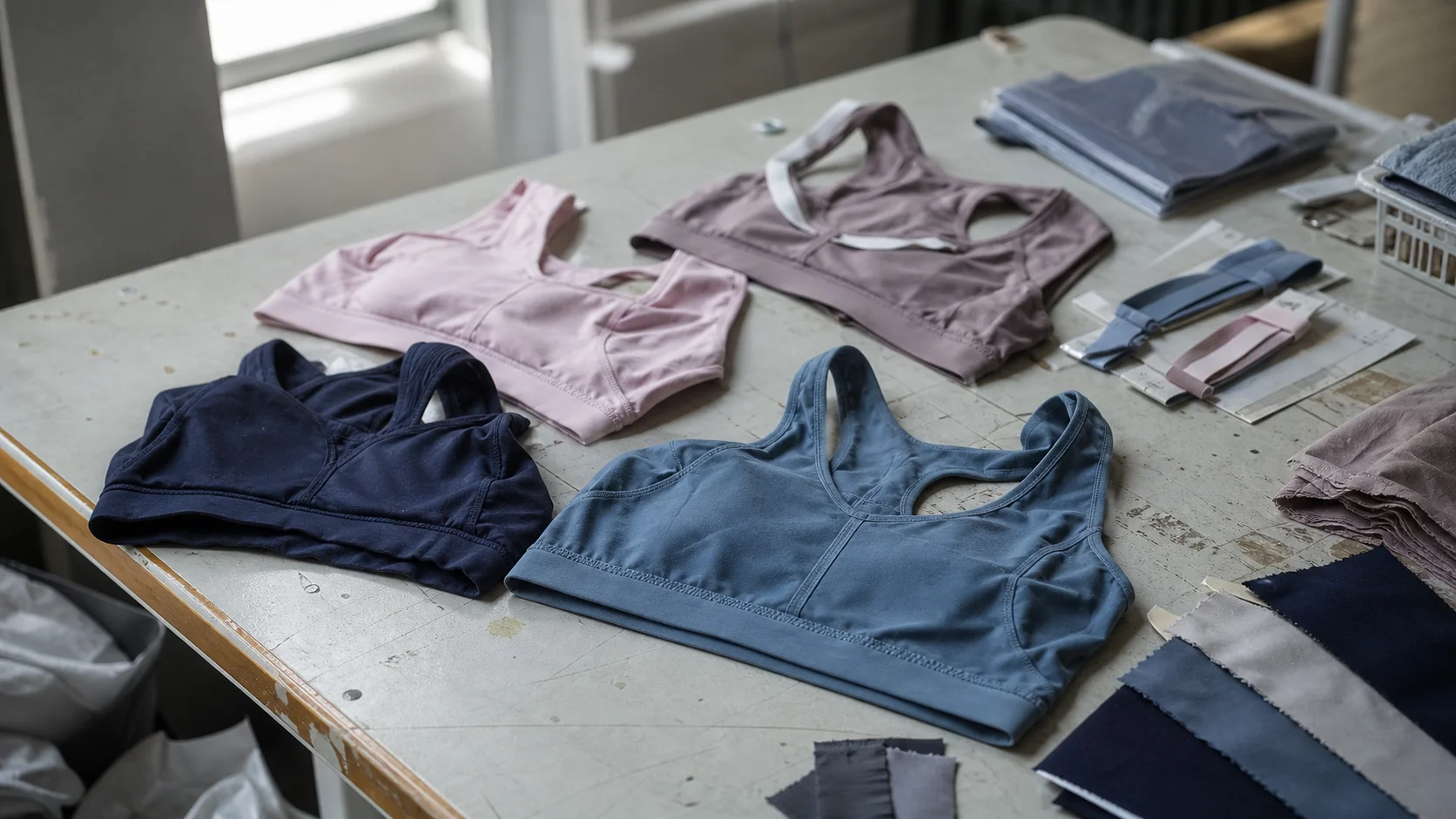
A product-specific outline for hotel procurement teams auditing sports bra factory colorfastness, from lab test reports and shade bands to laundering...
Sports Bra Colorfastness Audit for Hotel Buyers - Activewear & Teamwear manufacturing guide
Hotel procurement teams buy activewear for a different set of pressures than retail brands. A sports bra may be used by spa staff, fitness instructors, wellness ambassadors, housekeeping-linked gym teams, resort activity crews, or sold through a hotel boutique. It may be washed by commercial laundries, packed beside towels, exposed to sunscreen, handled by guests, and photographed under warm hospitality lighting. In that environment, colorfastness is not a minor lab detail. It is a purchasing risk.
A sports bra factory colorfastness audit for hotel procurement teams should confirm whether fabric, elastic, thread, print, lining, and trims can hold color through realistic hotel use. The audit should also check whether the factory has enough control over dye lots, bulk approvals, testing records, shade continuity, and corrective action when color migration appears. The goal is not to make every garment indestructible. The goal is to know the limits before a purchase order is placed.
This guide is written for hotel buyers, sourcing managers, spa and wellness procurement teams, uniform coordinators, and hospitality groups evaluating activewear suppliers. It focuses on how to audit sports bra colorfastness at factory level, what to ask for, which tests matter, where failures usually occur, and how to make a safer buying decision before bulk production.
Sports bras used in hotels face a tougher laundering and handling cycle than many consumer activewear products. A guest may wear one during a gym session, rinse it in a bathroom sink, and pack it damp beside a white robe. A spa therapist may wear the same black or navy bra under a branded top across long shifts. A resort fitness instructor may work outdoors in heat, sweat, and sunscreen. Hotel laundry teams may wash garments in larger loads with stronger chemicals than a household wash.
Colorfastness failures can create visible and expensive problems. Dark dye may rub onto hotel towels, robes, sheets, upholstery, or lighter uniforms. Bright colors may fade after a few commercial washes, making staff look inconsistent. Printed logos may crack or bleed. Contrast bindings may stain the main body fabric. Pale linings may pick up color from outer shells. A minor color issue on a retail shelf becomes a service complaint when it touches a guest-facing hospitality environment.
The purchasing issue is simple: activewear color performance has to be matched to the hotel’s actual use case. A sports bra sold once in a boutique has one risk profile. A sports bra issued to staff and laundered weekly has another. A product used in a high-humidity beach resort is not the same as one used in an indoor urban gym. Procurement teams should define the use case before asking a factory for price.
A low unit price is not a saving if the fabric bleeds into robes, towels, staff tops, or guest laundry. Colorfastness is one of the areas where hotel buyers should buy evidence, not reassurance.
A sports bra factory colorfastness audit should look beyond one finished garment test. The audit needs to review how the factory sources dyed materials, controls approvals, separates color lots, manages records, and checks finished goods. Many sports bras combine several components with different dye systems. The main fabric, power mesh, lining, elastic, hook-and-eye tape, thread, heat transfer label, logo print, and binding may all respond differently to sweat, washing, friction, and heat.
For hotel procurement, the audit should cover five areas: material qualification, laboratory testing, sample approval, bulk production control, and final inspection. Each area should be linked to a purchase decision. If the factory cannot provide test reports for the proposed fabric and trims, a buyer should treat the quotation as incomplete. If the factory can test the shell fabric but not the elastic or contrast trim, the risk remains only partly controlled.
Audit Area What to Check Buyer Risk if Weak Fabric sourcing Fiber content, dyeing method, dye lot records, supplier test reports Shade variation, bleeding, early fading Trim control Elastic, binding, thread, labels, pads, mesh, logo applications Color transfer from smaller components Testing Wash, rubbing, perspiration, water, light, chlorine where relevant Unverified performance in hotel use Sampling Lab dips, strike-offs, proto sample, fit sample, pre-production sample Bulk differs from approved sample Inspection Shade bands, staining, crocking, packaging transfer, logo durability Defects found after deliveryA competent factory should understand that activewear colorfastness is a system. The shell fabric may pass, while black elastic stains a beige lining. A navy thread may migrate during steam pressing. A heat transfer logo may discolor during washing. Hotel buyers should ask factories to test the finished garment or a composite panel made from all approved materials, not only the main fabric.
Sports bras are usually made from nylon/spandex, polyester/spandex, cotton-rich blends, or recycled synthetic blends. Each fabric choice has colorfastness implications. Polyester generally offers strong color retention when dyed and finished correctly, but sublimation or disperse dye migration can still occur under heat. Nylon can feel premium and soft, but certain deep or bright shades may need careful testing for perspiration and wet rubbing. Cotton blends can absorb moisture well but may fade faster under repeated laundering if dyeing and finishing are weak.
Spandex content adds another layer. High-stretch fabrics can expose yarns during wear and washing. If dye penetration is poor or finishing is unstable, color change may become visible after stretching. For sports bras with compression zones, panels may be cut from different fabrics. A black power mesh, navy shell, and tonal elastic may not age at the same rate.
Main fabric specifications should identify fiber content, weight, construction, stretch direction, dyeing method, finishing, and target color standard. A vague description such as “nylon spandex 250 gsm” is not enough for a hotel program. Buyers should ask for composition by percentage, gram weight tolerance, width, stretch and recovery targets, moisture-management finish if used, and whether the fabric is piece dyed, yarn dyed, solution dyed, printed, or sublimated.
Dark hotel-friendly colors such as black, charcoal, navy, espresso, forest green, and burgundy often hide wear better than pale colors, but they carry greater staining risk. Pale colors such as ivory, blush, beige, and light grey reduce crocking risk from the garment itself, but they show stains, sunscreen marks, and shade variation more easily. The safest color choice depends on use, laundry method, and surrounding hotel textiles.
Elastic is a frequent source of color transfer because it sits under tension and often contains different fibers from the shell. Plush-back elastic, exposed jacquard elastic, fold-over elastic, and encased elastic should be tested separately and as part of the garment. Black exposed elastic on a light sports bra is a known risk area. The edge may bleed during washing or leave staining at seam intersections.
Hotel buyers should request elastic specifications covering width, composition, stretch recovery, latex status where relevant, color standard, and wash performance. If elastic is custom dyed, minimums may increase. If stock elastic is used, color matching may be less exact, but replenishment can be easier.
Sewing thread is often overlooked. Polyester thread is common in sports bras, but thread color should still be matched and tested. Contrast topstitching can create visible shade issues after washing. Heat transfer labels and size prints should be tested for adhesion, cracking, and color migration. Removable pads should be checked for yellowing, staining, and fabric cover bleeding, especially when pads are white or beige inside dark bras.
Logo decoration needs special caution. Screen print, silicone print, reflective print, woven label, heat transfer, embroidery, and jacquard elastic branding all behave differently. A hotel logo placed on a high-stretch zone can crack or distort. Reflective or metallic effects may be attractive for retail but less stable under commercial wash. For staff uniforms, a subtle tonal logo often performs better than a large high-contrast print.
Hotel procurement teams do not need to become textile laboratories, but they should know which test categories matter. The exact standard may depend on the buying region, brand policy, and end use. Common frameworks include ISO, AATCC, and GB/T methods. The buyer’s requirement should specify the test type, target rating, sample stage, and whether testing applies to fabric only or finished garments.
For hospitality activewear, the most relevant tests are colorfastness to washing, rubbing, perspiration, water, light, and sometimes chlorine or non-chlorine bleach exposure. If garments will be washed by a commercial laundry, the buyer should provide the actual laundry process or request a simulated wash program. A household wash test may not reflect alkaline detergent, higher temperature, tumble drying, or disinfecting chemistry used in hotel operations.
Test Category Purpose Typical Buyer Expectation Colorfastness to washing Checks color change and staining after laundering Grade 4 or better is often preferred for staff programs Dry rubbing / crocking Checks transfer from friction when dry Grade 4 or better is a common target Wet rubbing / crocking Checks transfer from friction when damp Grade 3-4 or better may be acceptable, deep shades need caution Perspiration Checks staining and color change from acidic and alkaline sweat Grade 4 or better is advisable for activewear Water Checks staining when wet and in contact with other textiles Important for damp packing, towels, robes, and spa settings Light Checks fading from sunlight or display exposure Important for resorts, outdoor classes, and boutique displays Chlorine / pool exposure Checks sensitivity to chlorinated water or cleaning chemicals Needed only if poolside or swim-adjacent use is expectedGrades should be agreed before production. A factory may say “passed” without showing the buyer’s required threshold. For hotel staff uniform programs, buyers usually should be stricter than low-cost promotional merchandise. For boutique resale, wash and rub standards still matter because guest complaints can damage the hotel’s brand even when the garment is sold rather than issued.
Colorfastness to wet rubbing deserves special attention. Deep black, red, navy, and saturated fashion colors can pass washing yet perform weaker under wet friction. A sports bra worn during high-sweat activity may rub against skin, towels, mat surfaces, and outer garments. If the product will be worn under white or cream resort apparel, wet rubbing performance is critical.
A factory audit should begin with documents, but documents should not be accepted blindly. Test reports must match the actual fabric, color, supplier, and season being proposed. Old reports for a similar fabric are useful background, not proof. A report for black polyester jersey does not automatically validate navy nylon/spandex power mesh.
Hotel buyers should ask the factory for a document package before confirming a purchase order. This package can be managed directly or through a sourcing partner. Teams that need broader supplier support can review options through Fabrikn’s services before setting up a sports bra sourcing program.
Procurement teams should compare report dates, material references, color names, supplier codes, and test standards. If a test report lists “polyester/spandex interlock” but the quoted garment uses “nylon/spandex single jersey,” the report does not apply. If the color tested is light grey but the order is black, the report is not enough. If the report only covers the main fabric, trims remain a risk.
Sampling is where many colorfastness issues can be caught early. Hotel buyers should not move from a sales sample straight into bulk production unless the product is stock, previously tested, and used in the same color and material combination. Custom colors, custom logos, contrast trims, or new fabric suppliers require a staged approval process.
The pre-production sample is the key control point. It should be made from actual or production-representative fabric and trims. A proto sample made from substitute fabric cannot approve colorfastness. If the factory changes fabric mill, elastic supplier, dye lot, printing ink, or care label after approval, the buyer should require written notification and re-approval.
Hotel teams should also perform a simple internal handling review, even when lab testing is arranged. Place a damp dark sample against a white towel for several hours. Rub the inside and outside with a clean white cloth. Wash the sample with a white cotton witness cloth according to the intended care instructions. These informal checks do not replace lab tests, but they often reveal obvious risk before a formal report arrives.
Bulk color control is where factory discipline becomes visible. Sports bra production often uses rolls from several dye lots, especially when order quantities are large or repeat orders are placed months apart. Shade variation may appear across panels, between sizes, or between initial and replenishment deliveries. For hotels that issue uniforms across departments, inconsistent shades can look unprofessional.
A factory should inspect fabric rolls before cutting. Roll inspection should include shade grouping, width, defects, skew, bowing, stretch, and relaxation. Stretch fabrics need relaxation time before cutting, often 12 to 24 hours depending on fabric behavior and factory practice. Cutting too soon can affect fit and panel alignment, while poor roll grouping can place slightly different shades in the same garment.
For repeat hotel programs, shade continuity must be discussed before the first order. A factory may not be able to guarantee perfect shade matching across future dye lots, especially for custom colors and small replenishment runs. Buyers should decide whether to buy extra inventory upfront, accept controlled shade tolerance, or use standard stock colors that are easier to repeat.
There is a real tradeoff here. Custom brand colors create a stronger visual identity but increase lab dip rounds, minimums, lead time, and repeat-order shade risk. Stock black or navy may be less distinctive, but it is often safer for staff programs and easier to replenish. For many hotel buyers, the best choice is a standard dark base color with controlled logo decoration rather than a fully custom color sports bra.
Final inspection should not focus only on measurements and workmanship. Color-related issues must be included in the inspection checklist. The inspection team should compare bulk garments against the approved sample, check shade consistency across sizes, inspect panels under suitable light, and look for staining from trims, labels, or packaging. Sports bras should be checked both flat and stretched because color irregularities can become visible under tension.
Inspection should include AQL workmanship checks, but color risks may require a separate critical review. If the order includes several colorways, the darkest color should receive extra attention. If the bra uses contrast components, inspectors should check the color boundary areas carefully. If garments are individually polybagged while not fully dry after pressing or steaming, trapped moisture may increase transfer risk during shipping.
Hotel buyers should be cautious with last-minute shipment pressure. Colorfastness issues found at final inspection are hard to fix. Rewashing may reduce surface dye in some cases, but it can also distort garments, damage pads, or create inconsistent appearance. Replacing trims after production is rarely efficient. The best protection is early testing and strict material approval before cutting.
Minimum order quantities vary widely by factory, material, color, and customization. A stock sports bra with standard colors may be available from around 100 to 300 pieces per style and color through some suppliers, especially if the product is already developed. A semi-custom program using stock fabric with custom logo decoration may commonly fall around 300 to 800 pieces per style and color. A fully custom sports bra using custom-dyed fabric, custom elastic, and branded trims may require 800 to 2,000 pieces or more per style and color. These are typical planning ranges, not fixed rules.
MOQ increases when materials need custom dyeing or custom weaving. Elastic suppliers may have their own minimums. Fabric mills may require a minimum dye lot that exceeds the garment order. A hotel buying 250 units may find that custom color development is disproportionately expensive, while a hotel group buying across multiple properties may have enough volume to justify it.
Program Type Typical MOQ Range Colorfastness Consideration Stock style, stock color About 100-300 pieces per color Ask for existing test reports and current batch confirmation Stock fabric, custom logo About 300-800 pieces per color Test logo application and any heat transfer interaction Custom color, standard trims About 500-1,500 pieces per color Require lab dips and colorfastness testing for final dye lot Fully custom sports bra About 800-2,000+ pieces per style/color Test fabric, elastic, trims, print, and finished garmentLead time also depends on customization. A stock or near-stock sample may be ready in 7 to 14 days. Lab dips can take 5 to 10 days per round, and multiple rounds are common for brand colors. Proto and fit samples may require 10 to 20 days depending on complexity. Bulk production often takes 30 to 60 days after approvals, while custom fabric or elastic can extend the schedule. Testing adds time, particularly if third-party lab reports are required before cutting or before shipment.
Procurement teams should not compress testing to recover time lost in design approval. If a hotel opening, spa launch, or wellness event has a fixed date, the safer move is to select a tested stock color or reduce customization. Pushing a custom dark color through production without proper colorfastness testing is a poor tradeoff.
A sports bra factory colorfastness audit should end with a buying decision, not just a checklist. Hotel buyers need to decide whether the supplier’s controls match the risk level of the program. A boutique capsule in small quantities can tolerate more design experimentation than a staff uniform program that will be washed weekly and worn near guest textiles. A luxury spa environment has little tolerance for fading, bleeding, or inconsistent appearance.
Strong suppliers usually provide clear material specifications, relevant test reports, organized sampling, and realistic answers about limitations. Weak suppliers rely on generic claims such as “no color fade,” “high quality fabric,” or “export standard” without proof. Procurement teams should be careful with very low quotes that exclude testing, lab dips, or approved trim control. Colorfastness assurance costs money because it requires controlled materials, time, and documentation.
For hotel groups building a broader activewear or teamwear program, supplier selection should be aligned with the full range of garments. Sports bras may be purchased with leggings, tank tops, warm-up jackets, staff polos, or resort teamwear. Consistent shade and wash performance across categories requires more coordination than buying one item at a time. Procurement teams that need structured sourcing support can start with Fabrikn’s background and then discuss project requirements through the contact page.
A purchase order should capture colorfastness requirements clearly. Verbal approvals are not enough when a shipment arrives with shade bands or staining. The PO should include material references, approved sample status, test standards, acceptable grades, inspection rights, packaging instructions, and corrective action terms. If the buyer requires third-party testing, the PO should state who pays, when tests occur, and what happens if the result fails.
Care labels should also be controlled. A care label that says “machine wash cold” may be acceptable for retail, but staff garments may go through hotel laundry. If the product cannot tolerate commercial laundering, the procurement team must know before purchase. Issuing delicate-care activewear to staff without laundry alignment creates avoidable complaints.
Buyers should avoid unrealistic clauses. No factory can promise that every dark stretch garment will never release any dye under any condition. The better approach is to specify test methods, minimum grades, care conditions, and use limits. Clear standards are easier to enforce than broad promises.
Hotel laundering is a separate risk from normal consumer care. Some activewear fabrics perform well in household washing but fade or degrade under commercial wash chemistry. Detergent strength, pH, water temperature, extraction speed, drying heat, and disinfectant use can all affect color. Chlorine exposure is especially risky for activewear elastane and many dyed fabrics.
If the sports bra is for staff, procurement should ask the hotel laundry team or external laundry provider for the actual wash formula. The factory can then advise whether the garment is suitable or whether care instructions need adjustment. If the laundry process cannot be changed, the garment specification may need to change. Polyester/spandex in darker standard colors may be more forgiving than delicate nylon-rich fabrics with specialty finishes, but testing is still needed.
For guest retail or wellness kits, care labels should be simple and conservative. Cold wash, wash with similar colors, do not bleach, do not tumble dry on high heat, and avoid soaking may be appropriate depending on the tested garment. Instructions should match what the garment can actually withstand.
For hotel procurement teams, the safest sports bra sourcing route is usually not the most customized route. A tested base fabric, proven dark neutral color, minimal contrast trim, stable logo method, and realistic MOQ often produce better long-term value than a complex design with several untested components. Customization should be added only where it supports the hotel’s brand and can be properly tested.
The audit should answer four buying questions. Does the factory know exactly which materials will be used? Can the factory prove colorfastness performance for the selected color and trim package? Can the factory control shade during bulk production? Can the hotel’s actual laundering and use conditions be supported? If any answer is weak, the buyer should slow down before placing bulk orders.
A good sports bra factory colorfastness audit protects more than the garment. It protects hotel textiles, staff presentation, guest confidence, and the purchasing budget. In hospitality procurement, color that stays controlled is part of the service standard.
Get a free quote from Fabrikn — your trusted B2B clothing manufacturer with 10+ years of experience. MOQ as low as 200 pieces.
Get a Free Quote →A sports bra colorfastness audit checks whether the fabric, elastic, thread, labels, pads, logo, and finished garment can resist fading, staining, and dye transfer during washing, sweating, rubbing, moisture exposure, and normal hotel use.
Hotels use and launder garments in ways that can be tougher than normal retail use. Poor colorfastness can stain towels, robes, sheets, staff uniforms, gym equipment, or guest belongings. Testing helps reduce those risks before bulk production.
Colorfastness to washing, dry rubbing, wet rubbing, perspiration, and water are usually the priority tests. Light fastness matters for outdoor resorts and boutique displays. Chlorine or pool exposure testing is useful when garments may be worn near pools or washed with harsh chemicals.
Typical planning ranges are about 100 to 300 pieces per color for stock styles, 300 to 800 pieces for stock fabric with custom logo, 500 to 1,500 pieces for custom colors, and 800 to 2,000 or more pieces for fully custom development. Actual MOQ depends on fabric, trims, color, and factory capacity.
Simple stock-based sampling may take 7 to 14 days. Lab dips, fit samples, logo strike-offs, and pre-production samples can extend development to several weeks. Bulk production commonly takes 30 to 60 days after approvals, with longer timelines for custom fabric, custom elastic, or third-party testing.
No. The main fabric is only one part of the garment. Elastic, binding, thread, pads, labels, prints, and contrast trims can all bleed, fade, or migrate. Finished garment or composite testing is advisable for high-risk colors and staff uniform programs.
Dark colors hide wear and stains better, but they usually carry higher dye-transfer risk. Black, navy, burgundy, and deep green should be tested carefully for wet rubbing, perspiration, washing, and water staining, especially if worn near white towels or robes.
A factory should not make broad unsupported guarantees. A reliable supplier should provide test reports, approved samples, material traceability, and clear care instructions. Buyers should rely on agreed test standards and inspection criteria rather than general claims.
The purchase order should list approved materials, color standards, sample references, required test methods and grades, no-substitution rules, commercial laundry requirements where relevant, inspection terms, and packaging instructions to reduce color transfer risk.
A buyer should pause or reject when the supplier cannot provide matching material specifications, current test reports, controlled samples, dye lot records, or a realistic testing timeline. A very low price without colorfastness control is usually a false economy for hotel procurement.