
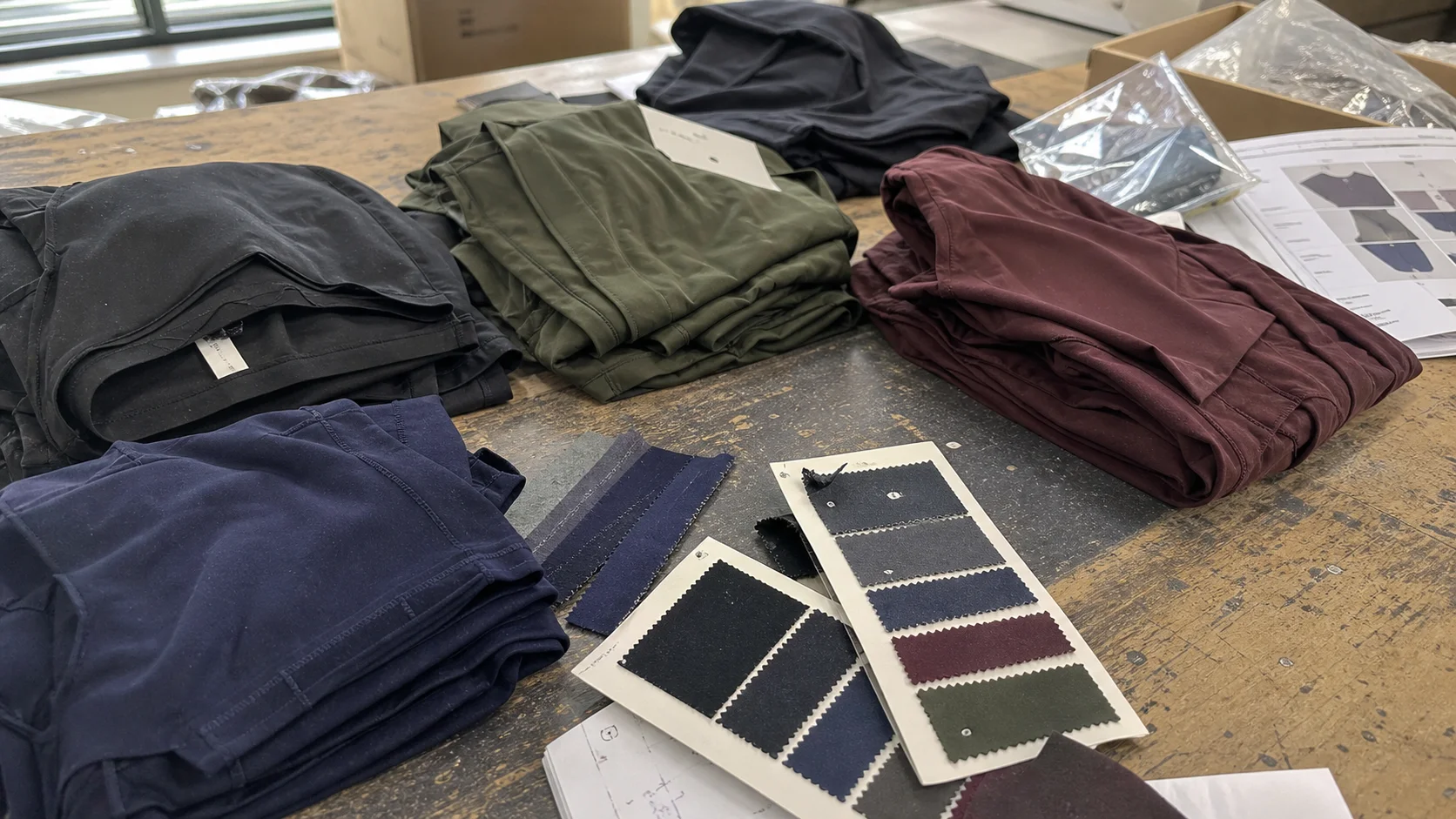
A practical outline for retail operations teams auditing sports bra factory colorfastness, from lab dip controls and wash testing to perspiration,...
Sports Bra Colorfastness Audit for Retail Teams - Fabrikn production reference
Colorfastness is one of the easiest sports bra quality issues to underestimate and one of the hardest to explain after goods have reached stores. A bra that looks correct in a factory light box can still bleed onto a white tank, fade after two washes, stain foam pads, or transfer dye onto the wearer during a high-sweat workout. For retail operations teams, the cost is not just returns. It affects product reviews, replenishment planning, customer service scripts, vendor scorecards, and future line adoption.
A sports bra factory colorfastness audit should be treated as a retail risk-control process, not a lab formality. The audit needs to confirm whether the supplier is controlling shade, dye fixation, print durability, wash performance, and trim compatibility before bulk goods ship. This is especially important in activewear because sports bras combine stretch fabrics, elastics, linings, foams, heat transfers, bonded details, mesh panels, and contrast color blocking in one compact garment.
This guide is written for retail operations, sourcing, QA, and production teams that need a practical framework for auditing colorfastness at the factory level before shipment.
Sports bras carry a higher colorfastness risk than many casual garments because they are worn close to the skin, exposed to sweat, washed often, and stretched repeatedly during use. Dark shades, neon tones, red families, saturated blues, and garment panels with contrast colors need particular attention. A failed product can create customer complaints even when the bra looks visually acceptable at receipt.
Retail operations teams should look at colorfastness through the full product journey. The fabric is dyed or printed, stored, cut, sewn, pressed, packed, transported, merchandised, worn, sweated in, washed, and dried. Color can fail at several points. Some failures come from poor dye fixation. Others come from incompatible trims, incorrect detergent during testing, inadequate rinsing after dyeing, or heat-press transfers that crack or discolor after laundering.
For a retail team, the right question is not only “Did the lab test pass?” The better question is “Does the factory process make repeatable passing results likely across all colors, sizes, panels, and replenishment lots?”
A factory colorfastness audit gives retail teams evidence before purchase orders move too far. It also helps separate a one-off lab certificate from a controlled production system. That distinction matters when a style is expected to repeat across seasons or move into a higher-volume program.
A useful audit should cover the full construction of the sports bra, not only the shell fabric. In many failures, the main body fabric is acceptable, but the elastic, lining, foam pad, underband, heat transfer, or contrast mesh creates the complaint.
The audit should confirm fiber content, construction, weight, stretch recovery, dye method, and finish. Common sports bra fabrics include polyester-spandex, nylon-spandex, recycled polyester-spandex, ribbed knits, interlock, tricot, power mesh, and brushed performance fabrics. Each has different dye behavior.
Nylon blends can feel premium and soft, but some vivid shades may need careful control in wet rubbing and perspiration testing. Polyester can perform well in wash durability, but sublimation, disperse dye migration, and heat sensitivity must be checked. Recycled yarns are widely used, but retail teams should not assume sustainability claims mean lower color risk. The dyeing and finishing process still determines performance.
Elastic is a frequent source of color transfer, especially in black, navy, red, burgundy, and fashion colors. Underbands are exposed to sweat and pressure. Binding edges rub against the skin and adjacent garments. A sports bra may pass shell fabric testing but fail because the elastic bleeds or stains the cup lining.
Retail teams should require colorfastness confirmation for exposed elastic, encased elastic, jacquard logo elastic, brushed elastic, and binding tape. If the elastic is yarn-dyed, piece-dyed, printed, or silicone-backed, that should be specified clearly.
Removable pads introduce a different risk. White, beige, or light grey foam can pick up dye from dark linings during storage, washing, or high-humidity transport. Molded cups can also discolor if exposed to high heat during finishing or packing.
Where pads are included, the audit should inspect pad staining, pad cover fabric, migration from lining, and washing performance. Retail teams should also specify whether pads are removable, tacked, molded, perforated, or laminated.
Brand marks can create colorfastness and appearance problems even when fabric passes. Heat transfers may crack, peel, yellow, or leave adhesive residue. Reflective prints can dull after washing. Silicone prints may attract lint or transfer under heat. Foil and metallic effects need special caution.
For retail operations, logo failure is highly visible. It may not be a safety issue, but it damages perceived value quickly. Print and transfer components should be included in wash, rubbing, perspiration, and stretch checks.
The most common factory-level failures tend to fall into predictable categories. A retail audit should be designed to catch them before carton sealing.
These risks increase when a style has contrast construction, tight delivery timing, small-batch custom colors, or multiple suppliers for fabric and trims. They also increase when retail teams approve lab dips under pressure without complete bulk fabric confirmation.
Retail teams do not need to become lab technicians, but they should know which tests belong in a sports bra program. The exact method depends on market, buyer requirements, and product claim. The most common references include ISO, AATCC, and retailer-specific protocols.
Risk Area Typical Test Reference Why It Matters for Sports Bras Colorfastness to washing ISO 105-C06 or AATCC 61 Checks fading and staining after laundering. Colorfastness to rubbing/crocking ISO 105-X12 or AATCC 8 Critical for dark shades, sweat exposure, and skin contact. Colorfastness to perspiration ISO 105-E04 or AATCC 15 Essential for activewear worn during exercise. Colorfastness to water ISO 105-E01 Useful for damp storage, sweat, and wet handling risks. Colorfastness to light ISO 105-B02 or AATCC 16 Relevant for bright colors, window display, and outdoor activewear. Dimensional stability and appearance after wash ISO 6330 / ISO 5077 or AATCC 135 Supports color review after real laundering cycles. Print durability Buyer-specific wash, rub, stretch tests Confirms logo and graphic performance.Acceptance ratings vary by retailer, color, end use, and fabric type. Many activewear buyers target Grade 4 or better for staining and shade change, with Grade 3-4 sometimes accepted for difficult shades if risk is disclosed and approved. Dark and fluorescent shades may require realistic discussion before purchase order placement. A low target may reduce cost or speed development, but it increases customer complaint risk.
One caution: a passing test on a lab dip is not enough. Retail teams should require bulk fabric or bulk trim testing, especially for first orders, dark colors, contrast designs, and replenishment lots.
The most effective colorfastness audit starts before the factory cuts fabric. Once panels are cut and bundled, the cost of correction rises quickly. Once bras are sewn with elastics and pads, color migration problems can become expensive to isolate.
Lab dips should be reviewed against approved color standards under controlled lighting. Retail teams should define the standard clearly: Pantone reference, physical swatch, previous season standard, or customer-approved fabric. A digital color reference alone is not enough for production control.
For printed sports bras, strike-offs should include the actual base fabric and print technique. Sublimation on polyester, screen print, heat transfer, digital print, and silicone print will not behave the same way. A print that looks clean on a flat swatch may distort on a high-stretch sports bra panel.
Before cutting, the factory should check roll-to-roll shade variation. Rolls should be grouped by shade lot, width, weight, hand feel, and stretch. For sports bras, shade variation can become visible because panels are small and often placed next to elastic, mesh, and lining.
Operations teams should ask whether the factory uses a shade band, light box, spectrophotometer, or visual roll inspection. A spectrophotometer can help, but visual approval still matters because customers judge garments by eye.
Trim compatibility is often skipped when timelines are tight. That is a poor tradeoff for sports bras. Elastic, binding, hooks, labels, pads, and printed logos should be checked with the shell fabric before bulk assembly.
A simple pre-production risk check can include dark shell fabric stored against light lining and foam under pressure, damp white cloth rubbing on elastic, and a wash test with the complete garment construction. These checks do not replace accredited lab testing, but they help catch obvious problems early.
Colorfastness performance must match the care label. If a sports bra is tested on gentle cold wash but the label allows warm machine wash and tumble drying, the testing protocol may not reflect customer behavior. Retail teams should align lab testing, care instructions, fabric limitations, and market expectations.
A sports bra factory colorfastness audit should be structured enough to compare vendors, yet practical enough for production reality. The checklist below focuses on evidence that retail operations teams can request and review.
Many factories run basic in-house checks such as wash tests, crocking checks, and shade inspections. These are useful as process controls, but they are not always equivalent to third-party lab results. Retail teams should ask what equipment is used, how results are recorded, who approves failures, and how failed lots are handled.
Retail teams should treat missing records as a risk signal. It does not always mean goods are bad, but it means the buyer has less protection if complaints arise.
Colorfastness control is tied closely to MOQ and lead time. The smaller the order and the faster the delivery, the less room there is for custom dye correction, repeat lab testing, and trim redevelopment.
MOQ varies by supplier, fabric, dye method, and customization level. For planning purposes, retail teams often see the following ranges in activewear sourcing:
Program Type Typical MOQ Range Colorfastness Implication Stock fabric, standard colors 100-300 pieces per style/color Faster start, but shade control depends on available stock lots. Custom dyed fabric 300-800 pieces per style/color Better color targeting, but lab dip and bulk testing time are needed. Custom print or sublimation 200-500 pieces per print/colorway Strike-off approval and print wash testing are important. Custom elastic or jacquard underband 500-1,500 pieces or more Elastic colorfastness and logo durability need separate validation. Private-label retail program 500-2,000 pieces per style/color More room for full testing, but failures affect larger inventory exposure.These ranges are indicative, not universal. A highly specialized fabric, recycled certified material, branded trim, or seamless construction can change the MOQ quickly. Retail teams should ask suppliers to separate garment MOQ from fabric MOQ, elastic MOQ, pad MOQ, and packaging MOQ. That breakdown helps identify where color risk is coming from.
A disciplined sample process reduces colorfastness surprises. For sports bras, the approval path should usually include:
Skipping the pre-production sample is risky when the style uses dark fabric with pale lining, contrast binding, novelty print, or custom elastic. A fit sample made from substitute fabric is not a colorfastness approval.
Sports bra lead times depend on material availability, lab dip cycles, dyeing capacity, trim booking, testing, production line availability, and inspection scheduling. A simple stock-fabric style may move faster, while a custom color with matching elastic and branded heat transfer needs more time.
Retail teams should allow time for failure and correction. A colorfastness test that takes several days can affect the whole production calendar if results fail. Re-dyeing, washing-off, changing trim, or rebooking fabric may add weeks. For seasonal activewear drops, this can decide whether the style ships on time or misses the selling window.
Final inspection is not the best place to discover colorfastness failure, but it is the last practical checkpoint before retail exposure. Inspectors cannot fully replace lab testing, yet they can identify signs that the factory process may not be stable.
Inspect finished sports bras under consistent lighting. Compare against approved samples and within the shipment. Inspect multiple cartons, sizes, and production dates. Shade variation may appear between size groups if fabric rolls were not managed properly.
Turn the bra inside out. Check light linings, mesh inserts, foam pad pockets, and labels. Look for staining, shadow marks, or dark lint contamination. Remove pads and inspect both sides. Pad staining is a common customer complaint because it looks unhygienic even if performance is unaffected.
A damp white cloth rub check during inspection is not a formal crocking test, but it can reveal severe transfer risk. This is especially useful for black, red, navy, royal blue, burgundy, and neon shades. If visible transfer appears during a simple field check, shipment should be held pending proper review.
For higher-risk orders, pull random samples from bulk and wash them according to the care label. Inspect shade change, staining, logo condition, elastic appearance, and pad behavior. If timing does not allow full wash testing before shipment, the retail team should understand the risk being accepted.
Sports bras are often packed tightly, sometimes with pads inserted and straps folded under pressure. High humidity and compression can encourage color transfer. Check whether dark garments are packed with white tissue, pale hangtags, light pads, or adhesive labels that can mark the product.
Retail teams should also confirm carton marks, polybag warnings, and packing ratios. Mixed-color packs require caution. A white or pastel bra packed directly against a dark bra is a preventable risk.
Good sourcing requires judgment. Not every colorfastness risk means the order must be canceled, but every risk should be priced, timed, and approved consciously.
Dark, saturated fashion colors often sell well in activewear. They also carry higher wet rubbing and perspiration risk. If a supplier cannot achieve strong ratings, retail teams need to decide whether to adjust the shade, change the fabric, add a warning, limit the channel, or reject the colorway.
The safer choice is not always the commercial choice. Black and navy are core colors in sports bras, so the answer is usually better process control rather than avoidance. For bright reds, neons, and novelty shades, the tolerance for risk should be lower if the product will be worn under light tops.
Low MOQ programs are useful for market testing, influencer capsules, and small retail drops. The tradeoff is reduced control over fabric dyeing and trim matching. Stock fabric may come from existing lots with limited replacement availability. If a color fails, there may be no practical way to correct it without moving to custom dyeing.
For replenishment programs, custom dyeing and controlled trim booking are usually worth the added MOQ. Consistency matters more once a style becomes a core item.
Fast production can be attractive, especially for trend-driven activewear. The risk is that testing gets compressed or replaced by assumptions. Retail teams should define which tests are mandatory and which are conditional. Colorfastness to perspiration, washing, and rubbing should not be casually dropped for sports bras.
Changing fabric mills, elastic suppliers, dye houses, or pad materials to reduce cost can reset the colorfastness risk profile. A one-dollar saving per unit may be reasonable if testing confirms performance. It is a poor saving if it creates returns, markdowns, or reputational damage.
For retail operations, the strongest decision rule is simple: do not approve bulk shipment on a sports bra colorway if the complete garment has not been checked against the conditions customers will actually create: sweat, stretch, wash, friction, and storage.
Documentation does not guarantee quality, but it gives retail teams leverage and traceability. It also helps operations teams respond quickly if a complaint appears after launch.
The document pack should be tied to the purchase order, style number, color name, supplier reference, and production lot. Generic test reports are weak evidence. If the report does not clearly match the goods being shipped, treat it as incomplete.
Colorfastness audit results should feed into vendor scorecards. A supplier that catches and corrects a failed trim before bulk sewing is more reliable than one that ships without records. Track repeated issues by color family, material type, and factory process. Over time, this helps buyers choose the right vendor for high-risk products rather than the cheapest available slot.
A sports bra colorfastness audit works best when expectations are clear before quotation. Retail teams should share the target market, care requirements, test standards, packaging method, colorways, and trim expectations at the development stage. Waiting until final inspection to introduce testing requirements usually creates cost disputes and shipment delays.
When discussing a new sports bra program with a supplier, ask for a practical risk review. Which colorways are difficult? Which trims need longer booking? Which fabrics have prior test data? Which elements require separate approval? A good sourcing process does not hide these questions; it brings them forward early.
For brands planning activewear or teamwear production, Fabrikn provides manufacturing support across development, sourcing, and production coordination. Retail teams can review available capabilities through the Fabrikn services page, learn more about the company background on the about us page, or start a project discussion through contact us.
The main benefit of a structured supplier conversation is not paperwork. It is reducing uncertainty before fabric is cut and cash is tied up in inventory. Sports bras are technical garments, and colorfastness is part of that technical requirement.
The following template can be adapted for internal QA files, vendor onboarding, or pre-shipment review. It is intentionally direct because retail teams need usable checkpoints, not vague quality language.
Audit Point Evidence Required Risk if Missing Purchasing Judgment Approved color standard Physical swatch or confirmed standard reference Shade disputes and inconsistent approvals Do not start custom dyeing without a controlled reference. Bulk fabric test Lab report matching style, color, and fabric lot Unknown wash, rub, and perspiration performance Mandatory for darks, brights, and first production lots. Trim test Elastic, binding, transfer, or print test as applicable Shell passes but garment fails in use Require for exposed elastic and logo details. Complete garment wash Washed bulk or pre-production sample review Pad staining, logo peeling, shade change missed Strongly recommended before shipment approval. Shade lot control Roll inspection and cutting allocation records Panel mismatch within same garment or shipment Essential for multi-roll production. Final inspection AQL report with color and staining observations Visible defects reach retail or customer Final gate, not a substitute for testing.In the Activewear & Teamwear category, colorfastness carries both performance and identity value. A sports bra sold as part of a training set must match leggings, shorts, warm-up tops, or team colors. If the bra fades faster than the companion garment, customers see the set as defective even if each item technically passes a basic test.
Teamwear adds another layer. School, club, studio, and corporate team colors are often fixed. Substituting a safer shade may not be acceptable. Logos, numbers, heat transfers, and contrast trims can all introduce additional wash and rubbing risks. The audit should include the decorated garment, not only the blank sports bra.
For retail operations, this means the sports bra should be tested as part of the assortment when possible. If a black bra is sold under a white team singlet, wet crocking matters. If a red team bra is packed with pale shorts, migration during storage matters. If the bra includes a metallic logo, print durability matters.
Some audit findings deserve immediate escalation. A shipment hold can be expensive, but releasing known colorfastness risk into retail can cost more.
Retail teams should have a pre-agreed escalation path. Options may include sorting, repacking, additional washing, trim replacement, downgrading to a different channel, negotiating discount, delaying shipment, or canceling the affected colorway. The right answer depends on severity, selling channel, brand position, and customer use case.
A sports bra colorfastness audit is not a narrow lab exercise. It is a retail operations safeguard that connects material development, supplier discipline, production control, inspection, and customer satisfaction. The highest-risk areas are usually predictable: dark shades, bright colors, contrast linings, elastic underbands, foam pads, prints, and rushed production.
The best purchasing approach is to build colorfastness requirements into the program from the first quotation. Define the tests, approve the standards, check the trims, review bulk lots, wash the complete garment, and hold suppliers accountable for traceable records. This does not eliminate every risk, but it gives retail teams a defensible process and much better odds of shipping sports bras that perform as customers expect.
Get a free quote from Fabrikn — your trusted B2B clothing manufacturer with 10+ years of experience. MOQ as low as 200 pieces.
Get a Free Quote →It is a factory-level review of materials, testing, production controls, and inspection records to confirm that sports bras resist fading, bleeding, staining, and dye transfer during wear, sweat exposure, washing, and storage.
Colorfastness to washing, rubbing or crocking, perspiration, and water are usually the most important. Light fastness, print durability, and complete garment wash testing may also be needed depending on color, fabric, decoration, and selling channel.
Dark and saturated shades such as black, navy, red, burgundy, and royal blue often carry higher wet rubbing and perspiration risks. They can still be suitable for retail, but they need stronger testing and process control.
Yes. Elastic, binding, heat transfers, labels, and foam pads can create failures even when the main fabric passes. Exposed elastic and dark underbands are especially important in sports bras.
Typical ranges may start around 100-300 pieces per style/color for stock fabric programs and 300-800 pieces for custom dyed fabric. Custom elastic, special trims, or larger private-label programs may require 500-2,000 pieces or more, depending on the supplier and material setup.
No. Final inspection can identify visible shade issues, staining, packaging risks, and severe dye transfer, but it cannot replace controlled lab testing for washing, rubbing, perspiration, and staining performance.
Bulk testing should be requested before shipment and preferably before full production continues. It is especially important for first orders, new suppliers, dark colors, bright shades, contrast styles, custom prints, and replenishment programs.
The retail team should hold shipment and request root cause analysis. Possible actions include retesting, sorting, washing-off, changing trim, reworking, discounting, redirecting to a lower-risk channel, or rejecting the affected lot. The decision should be based on severity and customer exposure.