
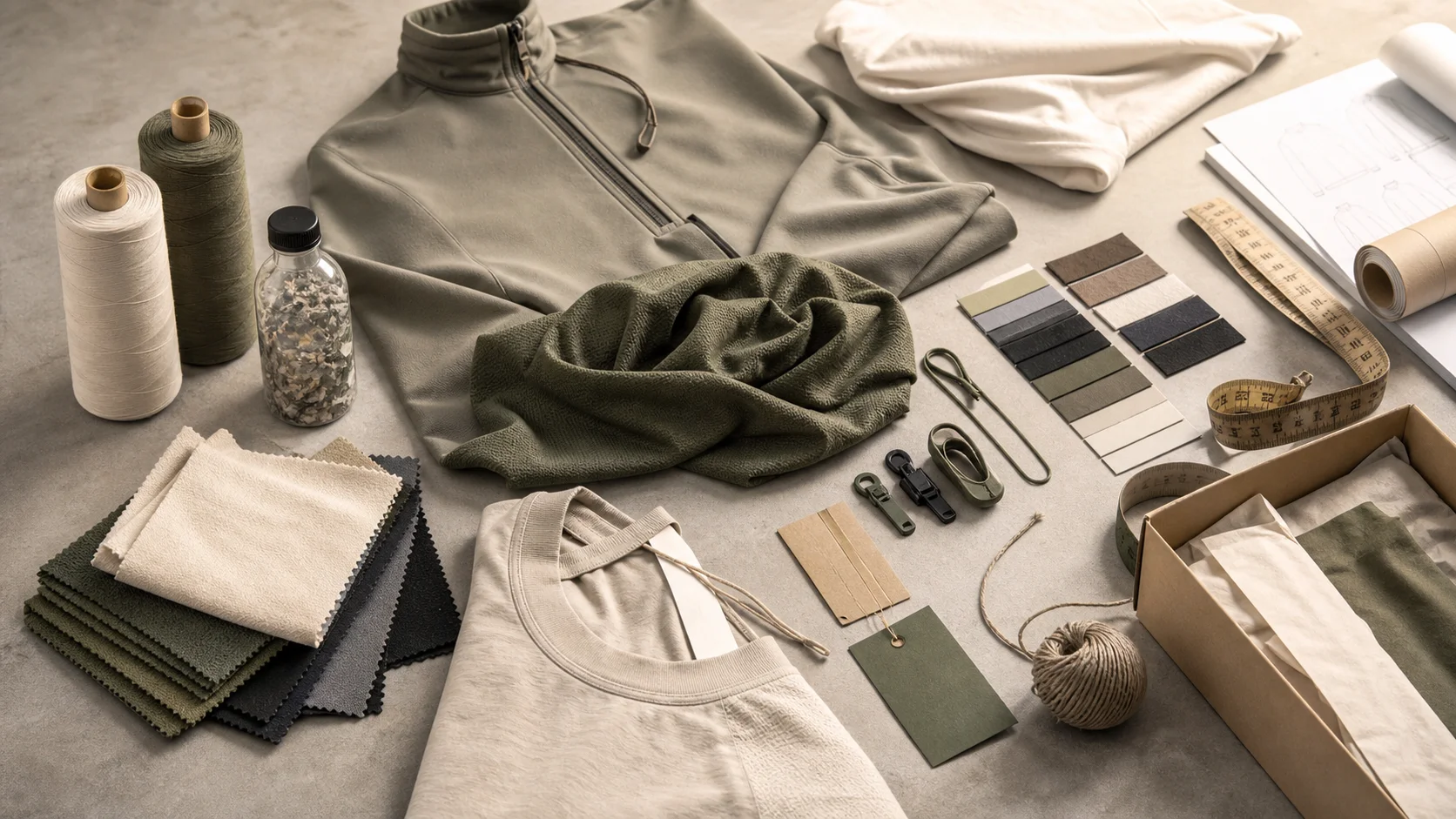
A production-focused outline for pharmacy operations teams managing sports bra orders, covering specs, QC checkpoints, labeling, packaging, and delivery...
For pharmacy operations teams that source branded or functional activewear for staff, wellness campaigns, community programs, or private-label resale, a sports bra order production control brief is one of the most useful documents in the procurement process. It turns a broad product idea into a controlled manufacturing request. That matters because sports bras sit at the intersection of fit, support, comfort, and compliance with brand standards. Small specification gaps can create big problems at sampling, approval, or bulk inspection stage.
This guide covers how to structure a sports bra order production control brief for pharmacy operations teams, what to specify before placing production, where the manufacturing risks usually appear, and how to reduce delays through better sample control. It is written for sourcing teams that need practical, production-facing guidance rather than general merchandising advice.
Sports Bra Order Control Brief for Pharmacy Teams - Fabrikn production reference
Pharmacy operations teams often manage purchases that are more regulated, more visible, and more time-sensitive than standard retail buying. A sports bra order may be part of staff uniform support, a health-and-wellness initiative, a corporate gift, or a retail assortment linked to pharmacy wellness positioning. In each case, the team needs consistency in quality, size range, delivery timing, and packaging.
A production control brief helps in three practical ways:
Without that brief, buyers often receive uneven quotes based on different fabric weights, different elastic quality, or different construction methods. A low initial price can become expensive when the bulk order fails fit testing or needs rework.
A sports bra is not a simple cut-and-sew item. Support level, stretch recovery, and seam construction all affect wear performance. In sourcing terms, the cheapest option is rarely the safest option.
Before asking manufacturers for pricing, the pharmacy operations team should confirm the intended use. Sports bras for staff events are not the same as retail products. A support bra for light exercise may have different material and trim requirements than a more technical performance bra sold under a private label.
Start by documenting the following:
The more clearly this is written, the better the supplier can match materials and construction. It also prevents quoting on a generic gym bra when the buying team actually needs a more supportive product with wider underband elastic and higher recovery fabric.
A production control brief should go beyond a simple product name. A manufacturer needs enough detail to build, quote, and sample accurately. At minimum, specify the following.
State whether the item is a compression-style sports bra, encapsulation-style bra, or a hybrid. If the team does not know the technical category, describe the intended feel and support rather than using a broad label alone.
These details affect both comfort and cost. A bonded style may offer cleaner lines, but it usually increases material and production complexity. Flatlock seams may improve comfort and reduce chafing, but they need well-controlled stitching and alignment.
Record the functional expectations in plain terms. Examples include moisture-wicking, quick dry, four-way stretch, anti-odor treatment, or high recovery after washing. If the buyer wants a premium feel, that should be noted separately from technical performance.
Pharmacy teams often want logo placement on the center front, underband, back panel, or care label area. Specify the method:
Be careful with decoration on stretch zones. A logo placed on a high-stretch area can crack, distort, or create a rough hand feel. Suppliers should confirm the best placement before bulk printing.
Fabric choice drives fit, durability, and cost. For sports bras, a buyer should not approve fabric based only on appearance. The key is recovery, stretch balance, and long-term wash performance.
For most bulk orders, a fabric weight in the mid-range is the safest starting point, but weight alone does not tell the full story. Two fabrics with the same GSM can perform very differently if one has weak recovery or poor elastane quality.
Pay close attention to elastic, hooks, sliders, cups, pads, and labels. These small items often cause production delays because suppliers source them separately from the base fabric. The brief should define:
If the order is for private label or pharmacy-branded resale, trim consistency matters almost as much as the body fabric. A mismatched elastic shade or off-spec label can make an otherwise usable lot unsellable.
Sports bra fit is where many orders slow down. A supplier may accept the order, but if the team’s size range is vague, sample approvals become difficult. The brief should include a size chart or request one from the supplier before sampling.
For pharmacy teams ordering for staff or community distribution, a broad size range is usually necessary. A narrow size run may look cheaper on paper but creates inventory imbalance. Sizing should be selected based on the actual audience, not just the assumed average wearer.
A controlled approval process usually works best in this order:
Skipping a step often creates avoidable cost later. If the fit sample is approved too quickly, the bulk order may reveal a tighter underband, weak shoulder strap recovery, or cup deformation after wash testing.
Sampling is where the production control brief proves its value. A clear brief allows the supplier to respond with the right sample type instead of guessing.
Pharmacy teams should keep written comments on each sample round. Comments should be specific and measurable wherever possible. “Too tight at underband” is more useful than “fit not right.” “Need 1 cm more strap length and softer elastic” is more actionable than “make it more comfortable.”
Samples can take longer if custom trims are involved, especially when logos, branded labels, or special packaging are required. If the order date is fixed, these items should be approved early.
For teams that want to understand support options or request development help, fabrikn.com/services/ is a practical starting point. For direct project discussion, the contact page at fabrikn.com/contact-us/ can be used to share specs, target quantities, and timeline needs. Company background and capability context are listed at fabrikn.com/about-us/.
MOQ is a key buying decision. For sports bras, the minimum order quantity depends on the supplier’s machinery, fabric sourcing model, and degree of customization. A simple stock-fabric style may allow a lower MOQ, while a fully custom design with special trims will usually require a higher commitment.
Typical ranges seen in the market can vary widely, but a practical planning guide is:
These are not fixed rules. A supplier may offer lower MOQs for stock materials and higher ones for custom fabric colors, custom elastic, or unique packaging. Buyers should compare full landed cost, not only MOQ size. A smaller MOQ with a higher unit cost can still be sensible for a pilot program or first-time release.
Pharmacy teams should also ask whether the supplier can hold repeat stock or reserve the same fabric lot for reorders. If continuity matters, this should be written into the brief from the start.
Lead time for a sports bra order is influenced by more than sewing capacity. The schedule depends on fabric booking, trim sourcing, sample approval, print approvals, and inspection timing.
For a straightforward order using ready fabric and standard trims, a supplier may quote a shorter timeline. Custom work usually extends the schedule. A realistic brief should ask the supplier to separate sample lead time from bulk production lead time, since these are often different.
Late approvals are one of the most common causes of missed ship dates. If the pharmacy team needs goods for a campaign or event, the internal approval process should be mapped before the order is placed. One delayed signature can affect the entire purchase order schedule.
Quality control for sports bras should focus on construction, measurements, elasticity, stitching, shade consistency, and packaging accuracy. These are the points that most often create rejects or customer complaints.
Inspection should include both measurement checks and appearance checks. A garment can pass visually but fail in stretch or measurement tolerance. If the order is for resale, even minor shade variation between lots may create problems across a size run or colorway.
It is also worth asking whether the supplier can support third-party inspection or in-line checking. That does not replace buyer review, but it improves control on larger orders.
A well-run production control brief should be supported by documents that leave little room for interpretation.
When these documents are assembled early, the supplier can quote more accurately and production can start with fewer clarification rounds. That is especially useful for procurement teams that manage multiple categories and cannot spend weeks resolving garment details.
A supplier briefing should be concise but complete. It should not read like a marketing memo. It should read like a manufacturing instruction set. The best briefs make it easy for the factory to price, sample, and produce without guessing.
Keep questions specific. Ask the supplier to confirm any constraints that could affect cost or timing, including fabric availability, sample lead time, and whether custom trims will raise MOQ. A good supplier will point out issues early. That is valuable, even when the answer is less convenient than expected.
For teams that want a manufacturing partner with broader activewear support, it can be useful to review service scope first at fabrikn.com/services/, then contact the team through fabrikn.com/contact-us/ once the brief is ready. If the buying team needs to understand the company’s background before starting, fabrikn.com/about-us/ is the right place to begin.
This article is aligned to the search intent behind phrases such as:
For SEO purposes, the strongest page structure is one that pairs product intent with procurement language. Buyers search for “MOQ,” “sample approval,” “lead time,” and “fabric specs” because those are the decision points that matter in real purchasing. Search terms tied to pharmacy operations are narrower, but they are useful because they attract the right audience: operational buyers who need dependable production control, not general fitness shoppers.
When sourcing sports bras for pharmacy operations, avoid over-customizing the first order unless the business case is clear. A complex style with custom molded cups, multiple trims, and special packaging can look impressive, but it also increases risk. First orders usually perform better when the construction is disciplined, the fabric is proven, and the size range is realistic.
If the goal is staff wear or a small branded run, a clean basic style with solid fabric recovery and well-controlled sizing is often the smarter purchase. If the goal is retail margin, then the buyer can justify more design complexity, but only if the team can support stricter QC and longer lead times.
The main tradeoff is simple: more customization gives stronger brand differentiation, while simpler construction gives better control and fewer defects. Most teams do best by balancing those two factors instead of chasing the lowest quote or the most elaborate design.
A sports bra order production control brief gives pharmacy operations teams the structure needed to source with fewer surprises. It aligns product intent, fabric choice, fit expectations, sampling, MOQ planning, and inspection standards before production begins. That control is what reduces rework, missed deadlines, and avoidable quality claims.
For teams managing activewear and teamwear sourcing, the right brief is not extra paperwork. It is the tool that turns a concept into a repeatable purchase process. The better the brief, the cleaner the quote, the faster the sample approval, and the lower the risk in bulk production.
Get a free quote from Fabrikn — your trusted B2B clothing manufacturer with 10+ years of experience. MOQ as low as 200 pieces.
Get a Free Quote →It is a procurement document that defines the product, materials, fit, branding, packaging, sample stages, and quality standards before production starts. It helps suppliers quote and manufacture the same item accurately.
Typical MOQs can range from 300 to 500 pieces for a simple custom style and 500 to 1,000 pieces or more for technical or highly branded versions. The final MOQ depends on fabric, trims, and customization level.
Common options include nylon/spandex and polyester/spandex blends, often with power mesh inserts for support or breathability. The best choice depends on the required feel, recovery, and cost target.
Most controlled orders move through proto, fit, sales, and pre-production samples. Some projects need fewer stages, but skipping too many checks can lead to bulk production issues.
The most common risks are poor fabric recovery, incorrect underband tension, weak straps, uneven pads, printing defects, and incorrect labeling. Measurement tolerances should also be checked carefully.
Lead time depends on whether the order uses stock or custom materials, how many sample rounds are needed, and how quickly approvals are completed. Fabric and trim sourcing are often the main variables.
Yes. The brief should clearly state the intended use, because staff distribution, promotional use, and retail resale can require different quality levels, sizes, and packaging standards.