
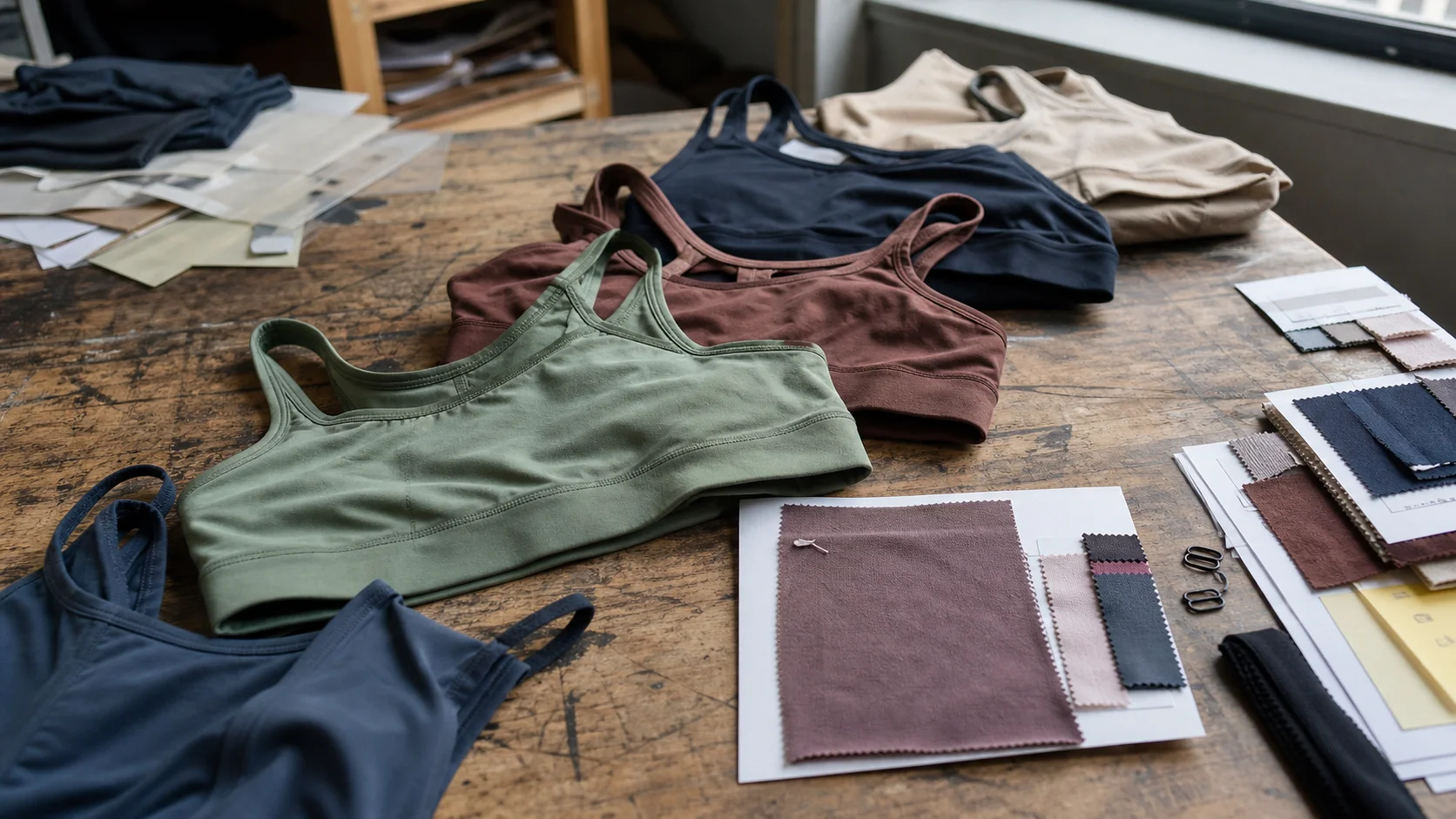
A production-focused outline for hotel procurement teams ordering sports bras, covering fit specs, fabric controls, branding, QC checkpoints, packing, and...
Sports Bra Control Brief for Hotel Procurement - Activewear & Teamwear manufacturing guide
A sports bra order for hotel procurement is not a normal retail activewear buy. Hotels, resorts, wellness clubs, spas, and branded staff programs need a product that sits between performance apparel, uniform supply, amenity merchandising, and guest retail. The buying decision is practical: the garment must fit a broad user group, survive repeated laundering, support movement without looking too technical, and match the hotel’s brand standards.
This control brief is written for procurement teams managing sports bra production orders for hotel environments. It covers product specification, fabric and trim control, MOQ planning, sampling, production approval, inspection, and the commercial tradeoffs that usually decide whether an order runs smoothly or becomes a fit and quality problem.
The safest approach is to treat the sports bra as a controlled uniform-adjacent product, even if it will be sold in a hotel boutique or issued to wellness staff. Sports bras have more technical risk than T-shirts, leggings, robes, or basic gym shorts. Small changes in elastic tension, cup coverage, strap placement, lining, or fabric recovery can change comfort and support dramatically.
Procurement judgment: do not approve a sports bra order from artwork and size chart alone. The sample must be fitted, stretched, washed, and checked against the intended hotel use case before bulk production.
For hotel procurement teams building activewear and teamwear programs, a structured brief reduces supplier guesswork. It also makes price comparisons more meaningful. One supplier may quote a lower unit price by using lighter fabric, weaker elastic, narrower underband, or simpler sewing. Another may include lining, bar-tack reinforcement, better recovery fabric, and branded packaging. Without a production control brief, those quotes are not comparable.
Teams that need support defining production requirements can review the apparel development and sourcing scope at Fabrikn services. For hotel buyers still deciding whether the product should be staff uniform, guest retail, or amenity merchandise, the brand and supplier alignment process should happen before the first sample is cut.
Hotel procurement has a different risk profile from fashion retail. A retail brand can segment by customer type and style preference. A hotel often needs one product to work across varied body shapes, movement types, and brand settings. A sports bra may be used by fitness instructors, spa team members, wellness retreat guests, housekeeping teams in active roles, or sold as part of a resort activewear capsule.
The product must meet operational expectations. Staff-issued garments need durability, consistent replenishment, and easy laundering. Guest retail products need stronger packaging, visual finish, and perceived value. Wellness amenity products need size flexibility and comfort over high-impact performance. These use cases affect fabric weight, support level, pad choice, labeling, and MOQ.
Hotels also have brand constraints. A luxury resort usually avoids harsh compression, loud contrast stitching, and aggressive sports branding unless the property has a performance-led fitness concept. A lifestyle hotel may accept bolder color blocking and visible logos. A corporate hotel gym program often needs simple black, navy, charcoal, or neutral tones that coordinate with other activewear.
The challenge for procurement is balancing wearer comfort, visual consistency, price, and operational control. A very supportive high-impact bra may be too compressive for all-day staff wear. A light yoga-style bra may look good on a mannequin but fail during trainer-led classes. A removable-pad style may improve modesty but creates laundry and replacement-pad issues. Each decision has a cost and service consequence.
Before requesting quotes, define the hotel use case clearly. A supplier cannot properly recommend fabric, construction, or MOQ without understanding how the sports bra will be worn and washed.
For fitness trainers, yoga teachers, spa movement coaches, and wellness retreat staff, the sports bra may be worn under a tank, polo, zip jacket, or branded top. Comfort across long shifts matters more than extreme compression. Medium support is usually the safest starting point unless the hotel operates high-impact training classes.
Key requirements include stable straps, clean neckline coverage, moisture management, non-irritating seams, and an underband that does not roll. A racerback shape can support movement well, but it may not suit all uniform outer layers. Straight or convertible straps can be more flexible but need better adjustment control and stronger hardware.
Sports bras sold in hotel boutiques need a more retail-ready finish. Guests judge handfeel, packaging, color, branding, and fit confidence quickly. The product should coordinate with leggings, shorts, or tops if sold as part of a capsule. For this channel, size presentation and hangtag information matter.
Removable pads may be expected by some retail customers, but they add control issues. Pads can crease, shift, or be lost after washing. If removable pads are included, specify pad shape, thickness, pocket opening, pad size by garment size, and replacement policy.
A sports bra used as an amenity or temporary-use garment needs broad fit tolerance. A longline crop-bra silhouette can work better than a narrow underband style because it gives more coverage and may feel less exposed. The support level should be moderate, the fabric should be soft, and the size range should be simple.
This use case is not suitable for highly tailored cup sizing unless the hotel can manage inventory depth. Alpha sizing from XS to XL or XS to 2XL is often easier for hotel operations than band-and-cup sizing. The tradeoff is less precise fit.
Some hotels provide active underlayers for teams with physically demanding roles. In this situation, procurement should prioritize durability, sweat control, modesty, and repeat washing over fashion detailing. A clean black or neutral sports bra with strong elastic recovery is usually more useful than a trend-driven silhouette.
A useful sports bra brief should be specific enough for supplier comparison but not so rigid that it blocks practical manufacturing input. The strongest briefs define the intended wearer, activity level, support level, materials, construction, sizing, branding, packaging, testing expectations, and approval process.
Brief Area Recommended Control Point Procurement Note Use case Staff uniform, guest retail, wellness amenity, or capsule activewear Use case drives fabric, support, packaging, and replenishment planning. Support level Light, medium, or high support Medium support is often the safest hotel default. Size system XS-XL, XS-2XL, or cup-based sizing Alpha sizing is easier to stock but less precise. Fabric Nylon/spandex or polyester/spandex knit Nylon usually gives softer handfeel; polyester can improve colorfastness and cost. Construction Racerback, scoop neck, longline, lined front, removable pads Each design choice affects fit, support, and inspection risk. Branding Heat transfer, woven label, silicone logo, embroidery, or jacquard elastic Branding must withstand stretch and laundering. Packing Individual polybag, belly band, hangtag, size sticker, retail carton Guest retail needs higher presentation control than staff issue.A good starting silhouette for many hotel programs is a medium-support, lined, scoop-neck or racerback sports bra in a nylon-spandex blend, with a clean underband, soft seams, and minimal branding. Longline versions can improve coverage and styling, but they use more fabric and may ride up if the body length is poorly graded.
High-impact sports bras are more complex. They may require encapsulation panels, molded cups, hook-and-eye closures, adjustable straps, power mesh, or higher compression fabric. These features increase unit cost, sample rounds, and size risk. Unless the hotel program specifically requires running, HIIT, or performance training support, medium support is usually more commercially reliable.
Fabric selection is one of the most important cost and performance decisions in sports bra production. Procurement teams should request fabric details by composition, weight, stretch direction, recovery, handfeel, colorfastness, and finishing. A vague phrase such as “premium active fabric” is not a specification.
Typical sports bra fabrics include nylon/spandex, polyester/spandex, or blended performance knits. Nylon/spandex often feels softer and more premium, which suits resort retail and guest-facing wellness programs. Polyester/spandex can be more cost-effective and may perform well for colorfastness and sublimation, though handfeel varies widely by yarn and knitting quality.
Common fabric weight ranges for hotel activewear sports bras are roughly 220-300 gsm for medium support. Lighter fabrics around 180-220 gsm may work for low-impact yoga-style bras but can lack modesty and support. Heavier fabrics above 300 gsm can feel compressive and warm, especially in resort or spa climates. The exact choice depends on knit structure, spandex percentage, lining, and garment construction.
Front lining improves coverage and comfort. A self-fabric lining gives a clean premium feel but increases cost and drying time. Power mesh can add support, especially in the front panel or side wing, but it must be soft enough for direct skin contact. Scratchy mesh is a common wearer complaint.
For light-to-medium hotel programs, front lining is often worth the cost. Full lining may be used for premium retail, but it can make the garment warmer. If removable pads are used, the inner pocket opening should be tested for ease of insertion and stability during movement.
The underband is a major failure point. It should feel secure without digging into the ribcage. Typical underband widths may range from about 25 mm to 50 mm depending on style. Wider bands can improve stability and visual balance, but they require careful tension control and may roll if the wearer’s torso shape or garment grading is not considered.
Specify elastic type, width, stretch, recovery, and whether it is enclosed, exposed, brushed, or jacquard branded. Exposed elastic with a logo can look strong for retail, but it risks skin irritation and color bleeding if not tested. Enclosed elastic is cleaner and more comfortable for uniform programs, though it may be less visually distinctive.
Sports bras need stretch-compatible seams. Common sewing methods include flatlock, overlock, coverstitch, zigzag reinforcement, and bar-tacking at stress points. Flatlock can reduce bulk and improve comfort, but it must be executed cleanly. Poor flatlock tension creates popped stitches or rough seam ridges.
Procurement should confirm seam type by location: shoulder strap attachment, underband join, side seam, neckline, armhole, pad pocket, and label area. A neat sample is not enough; bulk inspection should check stitch stretch under tension.
Labels should be soft, secure, and placed where they do not irritate. Heat transfer labels are common for sports bras because they reduce scratchiness. The risk is cracking, peeling, or poor adhesion after washing. Woven labels feel more traditional but can irritate skin if placed near high-friction areas.
For hotel programs, size marking must be easy for staff or retail teams to identify. Size stickers on packaging help distribution, while garment labels help long-term sorting and guest purchase confidence.
Fit is the highest-risk area in sports bra production. A sports bra can meet fabric and sewing specifications but still fail if coverage, compression, strap angle, or underband tension is wrong. Hotel procurement teams should avoid relying only on supplier standard size charts unless the product is a reorder from a proven pattern.
For staff or broad amenity use, XS-XL is a common basic range. XS-2XL is more inclusive and often better for hotel teams, though it increases inventory complexity and may affect MOQ per size. For guest retail, size range should match expected customer profile, sales channel, and replenishment ability.
Cup-sized sports bras offer better fit precision but are rarely the easiest choice for hotel procurement unless the program is large and performance-focused. Band-and-cup sizing multiplies SKUs quickly. More SKUs mean higher stock risk, more complex forecasting, and harder size exchanges.
Grading must be checked carefully. A sample size medium may fit well, while XS is too tight at the armhole and XL lacks sufficient support. The underband, strap length, front height, and armhole curve must scale logically across sizes.
Procurement should request a full size-set sample for new sports bra styles whenever possible. If budget or MOQ limits prevent a full size set, check at least base size, smallest size, and largest size before bulk approval. The largest size is especially important because support and coverage issues are more visible there.
Support level is not just a marketing claim. It depends on fabric stretch, panel shape, underband stability, lining, strap design, and coverage. A light-support bra may be suitable for yoga, stretching, spa wellness, or lounge-active use. Medium support suits gym floor work, Pilates, cycling, strength training, and general staff wellness uniforms. High support is better for running and high-impact classes but requires more engineering.
Hotels should define the intended movement level in the purchase brief. If the product will be used by trainers demonstrating classes, do not buy a low-support crop purely for visual reasons. If the product is for all-day spa staff under a tunic, do not over-specify a high-compression running bra that becomes uncomfortable after several hours.
Branding should match the property position. A hotel sports bra does not always need a large logo. In many premium settings, discreet branding is more wearable and has better retail potential. For teamwear, branding may need to align with other uniform pieces, including leggings, track jackets, polos, or wellness tops.
For sports bras, logo placement should avoid heavy stretch zones where cracking or distortion is likely. Center back, lower side, underband, or small front chest placements can work depending on construction. Large front prints are risky on highly elastic fabrics.
Hotel procurement should specify color using Pantone, lab dip approval, or a physical standard. Black is not always the same black. Navy, charcoal, beige, and muted resort tones can vary significantly between fabric batches. Color consistency matters when the sports bra is paired with leggings, shorts, or outer layers.
For activewear, check colorfastness to washing, perspiration, rubbing, and chlorine exposure if the product may be used near pools or spa wet areas. White and light colors require opacity testing, especially when stretched. Pale resort colors can look attractive but may show sweat, pad outlines, and seam shadows.
For buyers developing a broader hotel apparel program, company positioning and sourcing support can be reviewed through Fabrikn’s about page, especially when aligning brand standards with practical production requirements.
MOQ depends on fabric availability, dyeing requirements, trim customization, branding method, size range, and packaging. Sports bras usually carry higher control risk than basic tops, so procurement should avoid forcing too many colors and sizes into a small first order.
These ranges are indicative, not universal. Some suppliers can produce lower quantities using available fabric and trims, while others require higher minimums because of dye lots, cutting efficiency, or elastic production. A very low MOQ may be useful for testing, but it often raises unit price and may limit customization.
A disciplined sample process prevents expensive bulk mistakes. For a new sports bra order, procurement should expect several approval stages.
Skipping the size set may save time, but it increases risk. Skipping the pre-production sample is more dangerous because sports bra quality depends on final elastic, fabric recovery, label placement, and sewing tension. A proto sample made in substitute fabric cannot predict final support accurately.
Typical lead times vary by sourcing setup. A simple stock-fabric order may take around 4-8 weeks after sample approval. A custom-dyed activewear order may take 8-12 weeks or longer after lab dip and pre-production approval. Custom elastic, molded pads, imported trims, or retail packaging can add more time.
The critical path usually includes fabric booking, lab dip approval, trim sourcing, pattern corrections, size set approval, pre-production sample, bulk cutting, sewing, inline inspection, final inspection, packing, and freight. Delays often come from late artwork approval, color changes, size ratio changes, or unresolved fit comments.
Procurement judgment: if the hotel needs the product for a seasonal launch, retreat opening, or wellness campaign, lock the design and size ratio early. Late changes to elastic, color, or fit can reset the production clock.
Production control should translate the approved sample into repeatable bulk output. The goal is not only to make a good first sample; it is to make hundreds or thousands of consistent garments.
Inline checks are useful for sports bras because sewing tension and elastic application can drift during bulk production. Procurement teams should ask the supplier to monitor underband length, strap length, neckline stretch, armhole symmetry, and logo placement.
Bulk cutting should respect fabric direction and stretch direction. If pieces are cut off-grain or with inconsistent tension, garments may twist, feel uneven, or recover poorly. Shade control should also be checked if fabric rolls vary. Mixing fabric lots within the same garment or size run can create visible shade differences.
Measurement tolerances should be realistic. Overly tight tolerances can create unnecessary inspection failure, while loose tolerances allow fit inconsistency. For sports bras, critical measurements usually include chest width, underband relaxed length, underband stretched length, front body height, back body height, strap length, armhole, neckline width, and bottom opening.
The stretched underband measurement is especially useful. A relaxed measurement alone does not show how the bra will feel on the body. Ask the supplier to define the stretch method so the measurement is repeatable.
Final inspection for sports bras should include appearance, measurements, function, labeling, packing, and basic performance checks. A visual-only inspection is not enough. Many sports bra failures appear when the garment is stretched, worn, or washed.
Procurement teams should request wash test evidence or conduct internal wash checks before approving repeat orders. Key risks include shrinkage, twisting, fading, elastic relaxation, pad deformation, logo peeling, and seam failure. For hotel staff programs, industrial or frequent laundering may be harsher than normal home washing. The care instruction must reflect the actual laundering environment.
Activewear garments can pass initial appearance inspection and still fail after several washes. Elastic relaxation is a common issue. Once the underband loses recovery, the garment feels loose and unsupported. Heat transfer labels and logos also need wash durability checks, especially if the garment will be laundered at higher temperatures.
Hotel procurement often needs clean distribution by department, property, size, or sales channel. Packing instructions should be clear. For staff issue, bulk packing by size may be efficient. For retail, individual polybags, hangtags, belly bands, barcode labels, and carton assortment control may be required.
Carton markings should include style number, color, size, quantity, purchase order, and destination if needed. Poor carton control creates receiving delays and stock errors, especially across multi-property rollouts.
Sports bra sourcing involves practical tradeoffs. The cheapest unit price is not automatically the best procurement result. A low-cost garment that fits poorly, loses elasticity, or creates staff complaints becomes expensive through replacements, returns, and brand damage.
Reducing fabric weight, lining, elastic quality, or seam complexity can reduce cost. It can also reduce support and durability. For staff programs, comfort is not optional. If team members are expected to wear the product regularly, underband feel, seam softness, and breathability deserve budget priority.
Custom colors, branded elastic, special trims, and retail packaging improve brand alignment but increase MOQ and lead time. For a first order, it may be wiser to use stock fabric colors and discreet branding until fit and demand are proven. Once the product is validated, customization can be added to a repeat order.
A sports bra with removable pads, custom hangtags, color stories, and matching leggings may sell better in a hotel shop. It also creates more SKU complexity. Staff uniform programs usually benefit from fewer colors, fewer trims, and simpler replenishment.
Higher support often requires more structured sizing and stronger compression. This can make fit less forgiving across body types. Medium support with good coverage is often the best compromise for hotel procurement because it serves more wearers with fewer size issues.
Fast production is possible when using stock materials and an existing supplier pattern. Speed becomes risky when the design is new, the color is custom, or the support level is technical. Procurement teams should protect time for fitting, wash checks, and pre-production approval.
For teams ready to discuss a controlled sports bra or activewear production brief, use the enquiry route at Fabrikn contact. A clear brief at the start normally reduces sampling loops and avoids price comparisons based on incomplete specifications.
The following brief structure can be adapted for hotel procurement, resort retail, wellness uniforms, or activewear capsule programs.
Section Information to Provide Buyer profile Hotel type, property count, destination, staff or retail use, launch date. Product type Sports bra, crop bra, longline bra, racerback bra, low/medium/high support. Wearer and activity Yoga, gym staff, spa team, guest retail, resort wellness, high-impact training. Fabric target Composition, gsm, stretch, recovery, handfeel, color, moisture management. Construction Lining, pad pockets, removable pads, seam type, underband type, strap design. Size range XS-XL, XS-2XL, or other range with estimated size ratio. Branding Logo file, placement, size, branding method, color standard. Packing Staff issue packing, retail packing, barcode, hangtag, carton requirements. Compliance Care label, fiber content, destination market requirements, testing expectations. Approval process Proto, fit, size set, lab dip, pre-production sample, final inspection.For many hotel activewear programs, a practical starting point is a medium-support sports bra in 75-80% nylon and 20-25% spandex or a comparable polyester/spandex performance knit, around 240-280 gsm, with front lining, enclosed elastic underband, soft heat transfer label, and discreet logo placement. This is not the only option, but it gives suppliers a clear performance and quality target.
For more cost-sensitive staff orders, polyester/spandex may be acceptable if handfeel and recovery are approved. For premium guest retail, nylon-rich fabric, refined stitching, better packaging, and a coordinated activewear set may justify the higher cost. For high-impact fitness programming, add stronger structure and expect more sampling.
Procurement teams should start with one core style, one or two proven colors, and a manageable size range. Validate fit and wash performance before expanding into multiple colors or custom trims. If the first order is for a new hotel wellness concept, the best commercial move is usually controlled simplicity: good fabric, stable support, clean branding, and reliable replenishment.
A sports bra is close-fitting apparel. Fit complaints are more personal and more immediate than complaints about a loose T-shirt or hoodie. This makes approval discipline essential. A supplier’s standard activewear sample can be useful for reference, but the final hotel product should be approved against the property’s wearer, brand, and laundering reality.
Get a free quote from Fabrikn — your trusted B2B clothing manufacturer with 10+ years of experience. MOQ as low as 200 pieces.
Get a Free Quote →A sports bra control brief is a production document that defines the garment’s use case, support level, fabric, trims, sizing, branding, sampling, quality checks, and packing requirements. It helps hotel procurement teams compare supplier quotes properly and reduce fit or quality problems during bulk production.
Medium support is often the safest choice for hotels because it works across gym staff, wellness teams, yoga programs, and resort retail. Low support may suit lounge or spa use, while high support should be reserved for running, HIIT, or performance training programs that justify more technical construction.
Typical MOQs may range from 100-300 pieces for stock fabric and simple branding, 300-800 pieces for custom colors, and 500-1,500 pieces or more for custom elastic, deeper branding, or more technical construction. Actual MOQ depends on supplier setup, materials, size range, and trim requirements.
Removable pads can improve modesty and retail appeal, but they add laundry and inspection risks. Pads can shift, crease, or get lost. If they are used, specify pad shape, thickness, pocket opening, pad size by garment size, and replacement expectations.
Nylon/spandex usually gives a softer and more premium handfeel, which suits resort retail and guest-facing programs. Polyester/spandex can be more cost-effective and may provide good colorfastness. The better choice depends on budget, brand positioning, climate, and laundering requirements.
A new sports bra order should usually go through proto sample, fit sample, size set sample, and pre-production sample approval. The pre-production sample should use final fabric, elastic, labels, branding, pads, and packaging. Bulk production should not start until the sealed sample is approved.
The most common risks are uneven underband tension, poor elastic recovery, strap length inconsistency, puckered seams, stitch popping, logo peeling, pad problems, shade variation, and incorrect size packing. Stretch checks and wash checks are important because many failures do not appear in a flat visual inspection.
Alpha sizing such as XS-XL or XS-2XL is usually easier for hotel operations than band-and-cup sizing. Procurement should approve a size set, check the smallest and largest sizes, and confirm size ratios based on the actual staff or guest profile rather than using a generic supplier ratio.
A simple stock-fabric order may take around 4-8 weeks after sample approval. Custom-dyed fabric, special elastic, retail packaging, or technical construction may take 8-12 weeks or longer. Lead time depends heavily on how quickly fit, lab dips, trims, and pre-production samples are approved.
Start with one core medium-support style, one or two practical colors, a manageable size range, and proven materials. Approve fit and wash performance before expanding into more colors, custom trims, or a larger retail capsule.